
Sights of Pskov – 30 most interesting places
Pskov is an old Russian city. It carefully preserves the traditions and centuries-old history of Russia. The city survived battles, wars, baptisms and the birth of the Christian faith. It is rightfully considered the spiritual heart of Russia. Pskov is widely known for its ancient preserved fortresses, temples and architectural structures. The city bears a great legacy for posterity. It is of great interest to tourists from all over the world. We offer you to get acquainted with the most popular sights of Pskov.
Pskov Kremlin
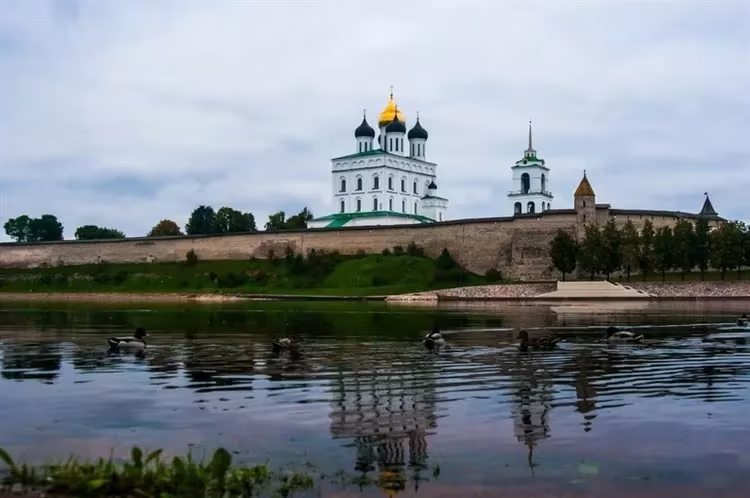
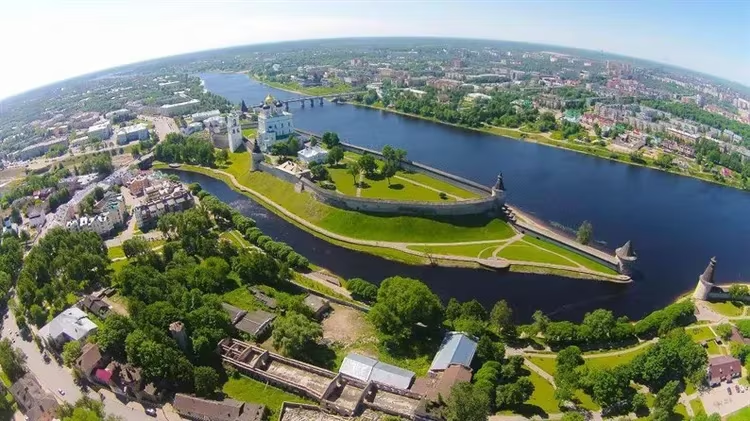
The Pskov Kremlin is called “the heart of the Pskov land”. The fortress is located on the part of the land where the Pskov River merges with the waters of the Great River. The golden domes of the Trinity Cathedral rise above the majestic white building. Previously, the Kremlin was called “Krom”. The name was later changed.
Now the building has two names. The fortress survived many battles and battles in its lifetime. She repelled the attacks of the Golden Horde, the Principality of Lithuania and the Livonian knights with dignity. Krom is built to protect the people from enemies. Therefore, its beauty lies in the power and strength of the structure. When you are near such a structure as the Kremlin, you feel safe.
And the view of Krom from afar is simply amazing. A snow-white cathedral above huge powerful fortress walls, and all this surrounded by two rivers. The territory of the fortress is surrounded by stone walls with transitional platforms. The Krom walls are 435 and 345 meters long. And the thickness of the wooden roof of the floors reaches 6-8 meters in height. You can get to Krom by buses No. 1, 5, 8, 11, 14, 15, 17. The Kremlin opens its doors for tourists from 8 am to 10 pm. The entrance is free.
Trinity Cathedral
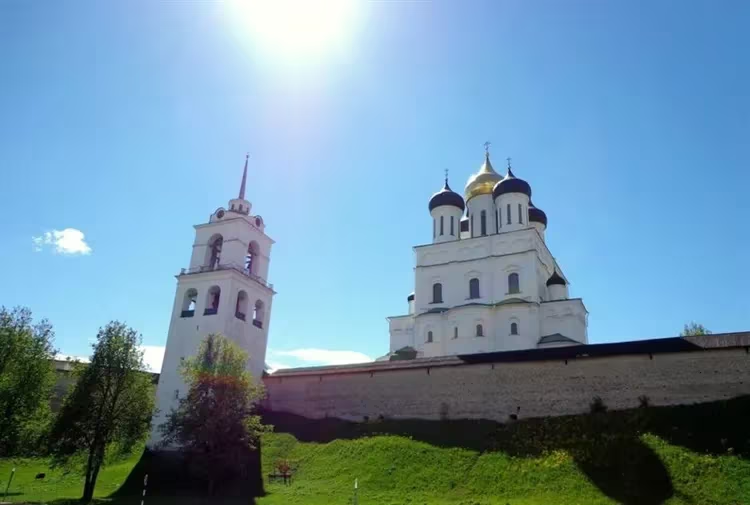
Trinity Cathedral is a shrine of the entire Pskov land. The temple is located on the territory of Krom. He owes his appearance to Princess Olga, who ordered to put the church on a cape between two rivers. The cathedral was the center for all the great feasts.
Princes were appointed here, meetings were held, chronicles were kept. The first temple was wooden, but now the cathedral is snow-white, lined with cement. It consists of several churches. The most important building is 2-storey, it is crowned with 5 domes. The temple is equipped with interesting 2-tier windows, decorated with beautiful stucco and ornaments. The first floor of the cathedral is occupied by a tomb. Church ministers found peace here: metropolitans, bishops.
The interior of the temple delights visitors. Here you can see ancient icons and paintings in chic frames. In the main hall of the cathedral there is a huge iconostasis. It consists of 7 tiers, which is quite rare in Orthodoxy. In the churches of the cathedral there are such unique things as the cross of St. Princess Olga.
True, he is the second, created instead of the first, which burned down in a fire. The shrines with the relics of Prince Dovmont-Timofei and Nikolai the Holy Fool miraculously remained intact in the flames. The famous icons of the “Holy Trinity”, the Chirskaya and Pskov-Pokrovsky icons of the Mother of God were brought from Germany to their native walls. There is a bell tower next to the temple. Its foundation was the tower of one of the walls of the Krom fortress. There is a clock on the bell tower.
You can get to the Trinity Cathedral by buses No. 1, 5, 8, 11, 14, 15, 17 from the railway station. Entrance to the church is free. However, be aware of appropriate clothing. The cathedral is open from 8 am to 10 pm.
Thunder tower
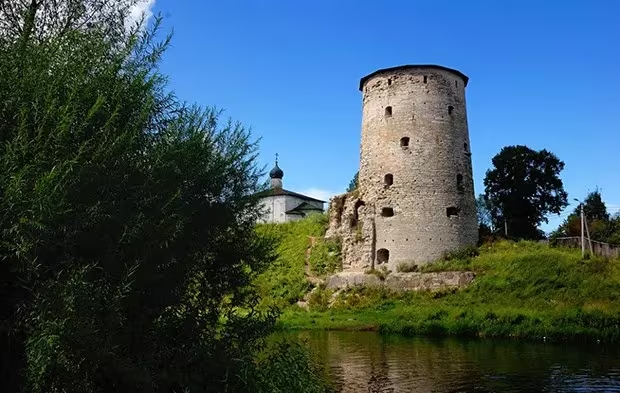
The Gremyachaya Tower is located on the steep bank of the Pskov River. The structure is dilapidated, but this does not prevent it from towering majestically above the water. Previously, the tower was part of the fortification of the fifth ring of the city. It served as protection from enemies and from the river at the same time. Now, the building covered with legends attracts tourists from different countries. The Gremyachaya Tower is named Kosmodemyanskaya.
This was the name of a nearby building that was destroyed. After his name began to be called the Gremyachy tower. The structure reaches 22 meters in height. The tower consists of 6 tiers and stone passages. The basis of the structure was a huge limestone rock.
In the tower you can see large stone vaults, many loopholes and loopholes. They say that earlier under the Kosmodemyanskaya tower there was a basement with a secret passage to the river. But then it was laid with a stone. Local residents are happy to tell legends about the princess cursed by her own mother and the brave prince who tried to save her. The structure, although dilapidated, is still interesting. The picturesque area, the proximity of the river and the church create a beautiful picture.
Legends captivate children, and the tower, as a monument of history, interests adults. Located near the Pskov Krom. You can get to the tower from the Kremlin along the street. Herzen to st. Gremyachnaya, along the wall of the fortress. The journey will take about 15 minutes. You can visit the tower on your own, admission is free. Or book a tour.
Dovmontov city
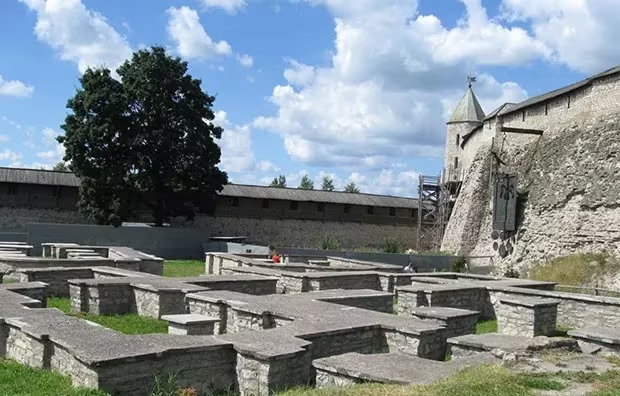
The ancient city is located near the Pskov Kremlin. It is part of the complex. The city got its name thanks to the Lithuanian prince Dovmont. The prince is considered the protector of the city. After leaving Lithuania, he settled in the Russian lands.
Here he was baptized, married and won a large number of victories in battles, defending Pskov from enemies. It was the Grand Duke who built the second defensive ring of the city. Now it is called “Domantova wall”. The prince erected 17 temples near the ring, but after they were demolished. Later, during excavations, the remains of 2 churches were found.
Now in the city of Dovmont you can see the ancient surviving buildings made of stone. The huge fortification walls of the city remained partially. However, these remnants can be used to judge what strength and power the Russian city possessed. The largest wall in front of the Dovmontov city is called Percy. On it is a memorial sign – the shield and sword of Alexander Nevsky.
The city of Dovmont is also called “Pskov Pompeii”. The place is somewhat similar to the ruined ancient Roman city. It's interesting and beautiful here. On a quiet morning, when there are few tourists in the city, there is a feeling of calm and security. The foundations of the temples, the remains of the walls, the domes of the cathedral towering further – all this briefly transfers ancient Pskov to the ancient times.
Kaverin Museum “Two Captains”
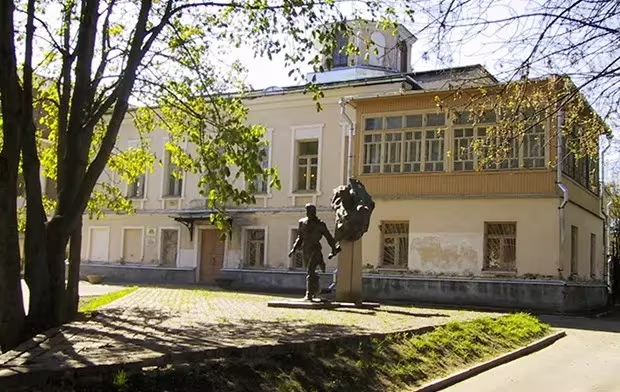
Many people know Veniamin Kaverin, but not everyone is aware that he is a native of Pskov. Having written the novel “Two Captains”, the writer gained immense popularity. And the residents, in turn, paid tribute to the wonderful book. Museum “Two Captains” was opened in 2002 in the regional youth library of the city. Its opening was timed to the birthday of Kaverin. The institution is called the “museum of one book.” However, there are quite a few exhibits here. The exhibition is divided into two parts.
The first shows the life and career of Veniamin Kaverin. His family, environment, the history of the creation of the work, dreams and their implementation. In the second part of the exhibition, you can see manuscripts and draft versions of the works of the great master. Here they talk about the prototypes of the heroes of “Two Captains”. The novel has been published in many languages. In the museum you can see different editions of the book from different countries.
Suitable for fans of the musical “Nord-Ost”. There are also some props from the famous act signed by the actors.
You can get to the museum by buses No. 1, 8, 11, 14, 17 to the stop “House of Soviets”. The institution can be visited on any day except Friday and the last Tuesday of the month. The opening hours of the museum are from 11 a.m. to 5 p.m. All exhibitions can be viewed free of charge. If you want to listen to the information, you can buy a tour ticket.
Chambers of the Menshikovs
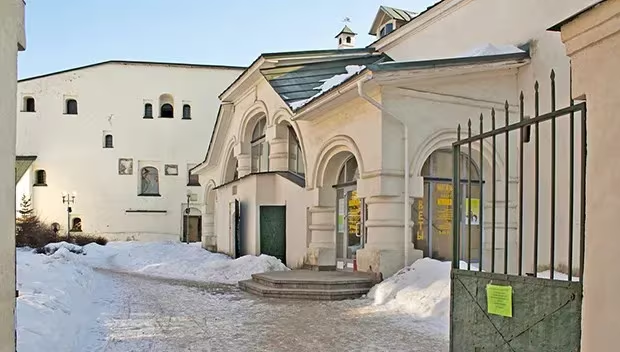
The famous chambers are located on Romanovskaya Gorka – this is a fairly well-known respectable area. The founder of the building is the merchant Semyon Menshikov. The complex erected by him consisted of a 5-storey building. Two of them were stone, and 3 were wooden. The first chambers were soon joined by the second. They were built by Semyon's son Foma Menshikov. Semyon's chambers were 3-storey with a beautiful stone porch with columns and stairs. The 3rd floor was especially luxuriously furnished. It is called “fun chambers”. The house of Thomas differs from other buildings in its atypical appearance.
The chambers of the youngest of Menshikov's sons are located a little further from the first two buildings. They are very similar to the house of Thomas, but smaller in size. The last, fourth chambers are located opposite the house of the head of the Menshikov family. They were badly damaged during a fire in the 18th century. This tragic incident forced the heirs of the princes to sell the chambers and leave.
This place is of interest not only to tourists, but also to historians and lovers of ancient Russian art. Now in the chambers there are shops with souvenirs, as well as flowers, books and clay products. You can get to the memorial place by buses No. 1, 3, 4, 5, 11, 14, 15, 17 to the stop “Children's Park”. The operating hours of the chambers are from 11:00 to 18:00 from Monday to Friday. The entrance is free.
Monument to Pushkin and Arina Rodionovna
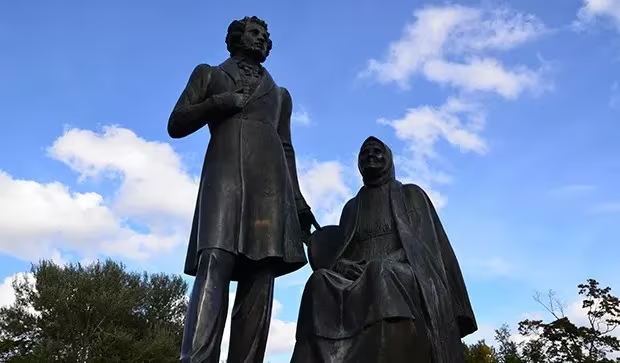
The monument to the famous poet Alexander Pushkin and his nanny is located in the Pskov Summer Garden. The sculptor called his creation “Pushkin and the Peasant Woman”. A warm relationship was connected with the nanny of Alexander Sergeevich, she was very close to him. Pushkin sang Arina Rodionovna in many of his works. Pskov has always occupied a large place in the heart of Pushkin.
He often came here, in the city some of the best works of the poet were written. The monument “Pushkin and the Peasant Woman” reaches about 4.5 meters in height. It is made of bronze by the sculptor Oleg Komov. The master spent about 10 years to bring his idea to life. During this time, hundreds of sketches were redone and many ideas were rejected.
Komov thoroughly studied all the available information about Arina Rodionovna. The sculptor even found a model, who, in his opinion, looked like Pushkin's nanny. Now, on the site near the sculpture, mass festivities and holidays dedicated to Pushkin and poetry are held. You can get there by buses No. 1, 11, 14, 15, 17 from the railway station. From Krom you can arrive at number 3, 5, 11 to the stop “Summer Garden”.
Pogankin Chambers
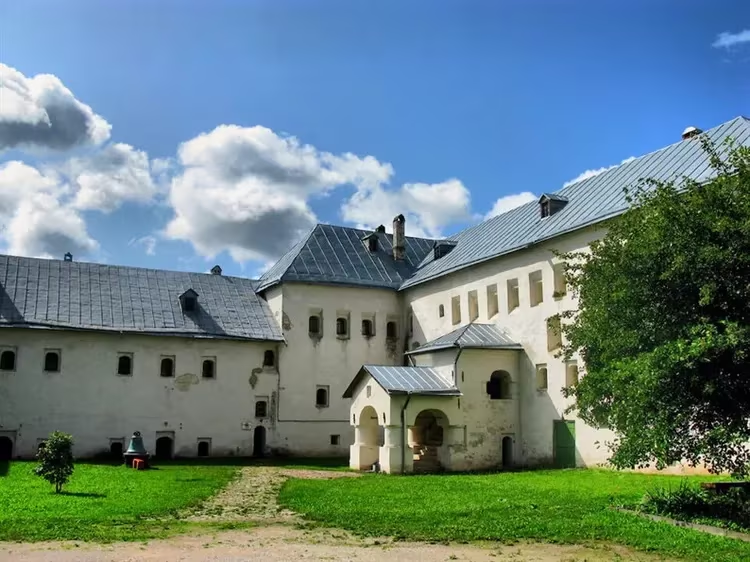
One of the well-known sights is the museum complex of the Pogankin Chambers. The story goes that a poor cooper once found a large treasure and built luxurious apartments with this money. And since the wealth found by chance was considered bad (filthy), then the newly-minted merchant began to be called Pogankin. The chambers are huge structures.
Outwardly, it does not seem very attractive. However, at that time, such a building was considered an indicator of prosperity and beauty. The building has been perfectly preserved to our time. Only the porch of the merchant's house underwent restoration.
Now there is a museum in the chambers. In it you can see old icons, unique silverware, folk costumes and ancient household items. Inside the Pogankin house itself there are silver items from the city's treasures, rare weapons and church books. Pagankiny Chambers is an architectural monument. You can get into them through the territory of the Pskov Museum.
You can buy tickets for the tour here. They are held several times a day. There are quite a lot of various exhibitions, expositions and museums on the territory of the complex. You can buy tickets for each separately, or you can buy one (single) ticket.
The operating hours of the complex are from 11:00 to 18:00. Day off – Monday. You can get to the chambers by buses No. 1, 3, 4, 8, 11, 15 to the stop “Children's Park”.
Order chambers
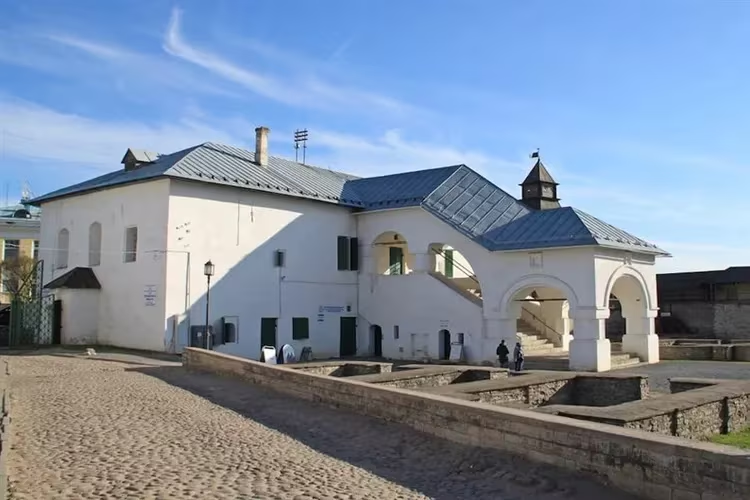
The clerk's chambers are located on the territory of the city of Dovmont. This is the only building that has been completely preserved. Previously, the cellars of the building served as a prison, where they kept criminals imprisoned in shackles. Voevodas lived on the upper floors of the building. Officials served in the chambers themselves.
The structure has survived a number of fires and restorations. In 1995, a huge reconstruction was carried out in the wards. Chambers tried to return to its original form. Show the people the life of the inhabitants of the chambers in the 17th century. Now in the building you can see a unique tiled stove and hand-forged products.
There is a gallery on the territory of the Order Chambers. It opens the eyes of tourists to the works of museum workers, restorers and artists who worked on the reconstruction of the structure. Here you can buy unique icons painted according to all the traditions of icon painting.
The chambers are easy to find, they are located on the territory of the Pskov Krom – one of the main attractions. The information center is open from 10:00 to 18:00 every day. Exhibitions are open from 11 to 18 from Wednesday to Sunday.
Railway Museum
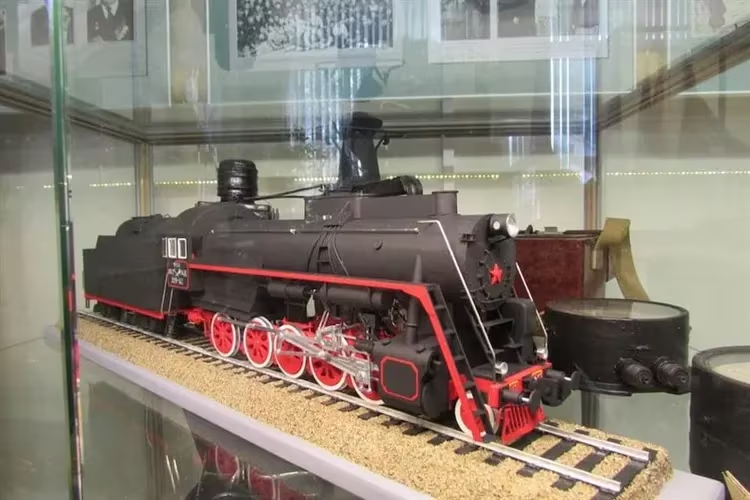
Previously, the museum occupied part of the railway station. Now it is located in the center of the railroad microdistrict. You can't miss the museum. Near its entrance there is a large semaphore and a cart on wheels. The Railway Museum is the pride of Pskov.
Here they talk about the traditions, foundations and culture of the city. The museum carefully preserves and honors the memory of the ancestors. The history of the city is closely connected with the railways. During the Second World War, a large flow of weapons and equipment passed through the Pskov lands. And after the end of the war, the railway workers of the city actively helped to restore the areas that had suffered from the hands of the Nazis.
The main exhibitions of the museum are devoted to this. The institution owes its appearance to a WWII veteran named Valentinka. He did an incredible job gathering information. The man studied the archives, talked with eyewitnesses and systematized the information received. The museum meets visitors on Tuesday – Friday from 11 am to 5 pm. On Saturday its doors are open from 11 am to 3 pm. Days off: Sunday, Monday.
You can get there by bus number 6 or minibus number 306 to the stop “Railway Station”.
Planetarium
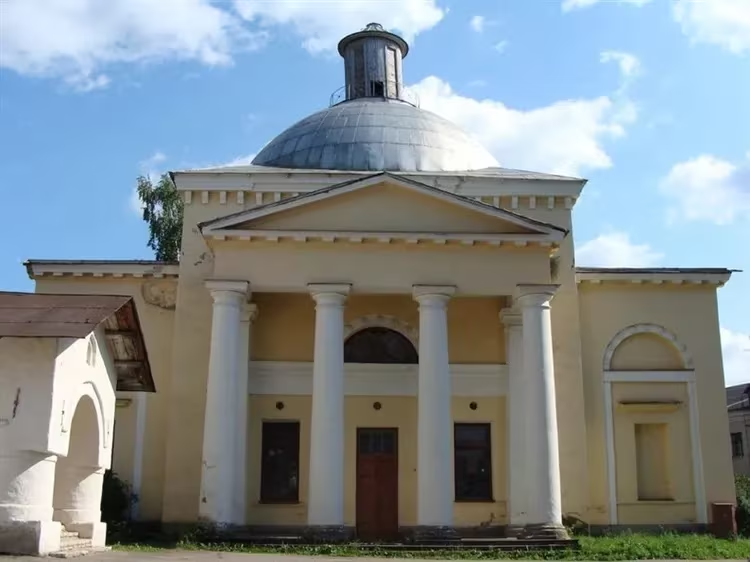
The planetarium is a unique institution that is unlike any other. The fact is that it is located in the building of the former temple. The Church of the Nativity of the Virgin was built in the 19th century and existed until 1970. Later it was decided to turn the temple into a planetarium. In the course of large-scale restoration work, a starry sky appeared under the dome of the former church.
The planetarium has a varied repertoire. Here you can visit various programs with special effects. The institution hosts instructive lectures and reports. Their themes are the galaxy, the starry sky, constellations and celestial bodies. For children, special programs have been developed in which fairy-tale characters take part.
The planetarium is located in the center, it is not difficult to find it. You can get to the institution by buses No. 3, 4, 11, 17 to the stop “Summer Garden”. The planetarium is open to visitors from 9 am to 6 pm on Mondays and Thursdays. On Friday, the restaurant closes at 17:00. On Sunday, the planetarium begins its work at 11 o'clock, and ends at the end of the last program.
During holidays, programs start at 13:00 and 14:30. On other days, applications are accepted. It should be borne in mind that a child is only allowed to enter the planetarium from the age of 4.5. A feature of the institution is that children from large families, participants in the Second World War and disabled people of 1-2 groups can attend absolutely free of charge.
Spaso-Mirozhsky Monastery
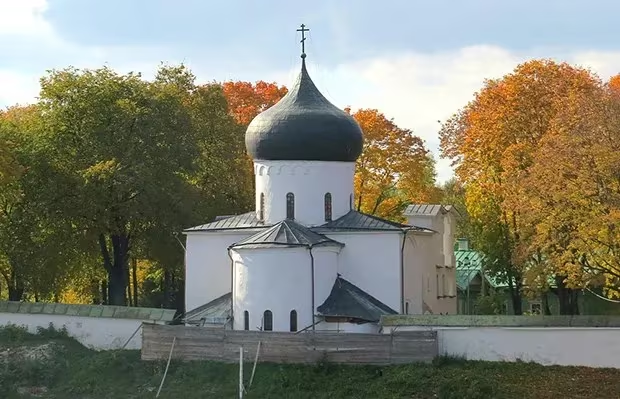
The monastery complex is known far beyond the city limits. It is located in seclusion in the Zavelichye area. It is believed that it was here on Russian soil that Christianity was born. There are very few ancient buildings on the territory of the complex. One of them is the Transfiguration Cathedral. Its architecture is amazing and unusual. The structure was built in the shape of a cross with ends of different sizes.
The temple is famous for its ancient pre-Mongolian frescoes. Inside the walls of the church are almost completely covered with them. They represent one continuous picture. This is a unique and amazing sight. You can pray here in the current church of St. Stephen. It contains the icon of the Mother of God “Mirozhskaya Oranta”. She is considered miraculous.
The wonderful iconostasis of the temple is also painted with frescoes. And the doors and windows of the church are very beautifully decorated with columns and pediments. There is an icon-painting workshop in the church. The complex is open to visitors from 8 a.m. to 7 p.m. daily. You can get to it by buses number 2 and 6 to the stop “Damba”. The entrance is free.
Temple of Alexander Nevsky
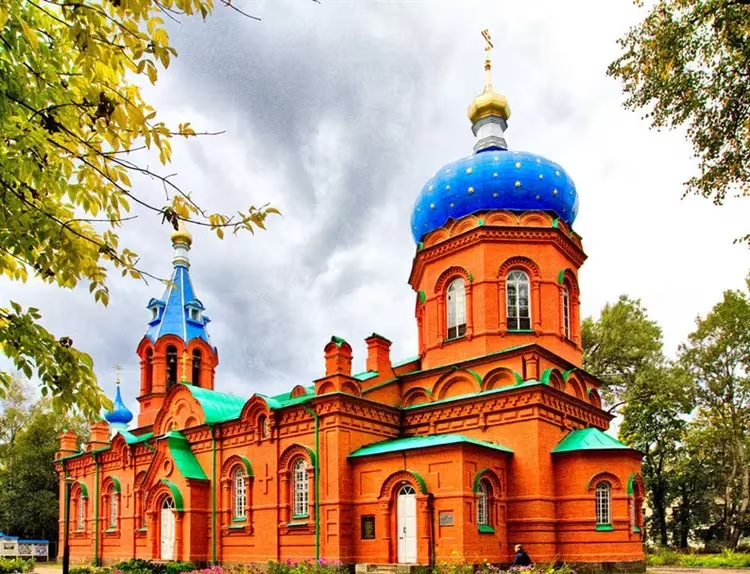
In 1908, a military temple appeared in the city, it belonged to the infantry Omsk regiment, and since then it has been serving and lending a shoulder to military families in difficult times. The building only benefited from the mixture of styles during the construction of the temple – a high red brick bell tower is visible from afar, and green roofs and blue domes with golden crosses on them attract even those who do not believe in God.
As a museum, the temple of Alexander Nevsky began its activity in 1996, when it received the first collection of icons as a gift from the patriarch, among which there is an icon of the Mother of God and the Most Holy Theotokos. In addition, the cassocks of priests, the Old Testament with the notes of Nicholas II and collections of poems, published by the church itself, were transferred here.
During the Christmas holidays, the church organizes events dedicated to the memory of the fallen paratroopers in Chechnya and Serbia, and their names are engraved on its walls. The temple can be visited from 6:00 to 22:00, and it is better to check the time of worship on the official website.
Mason's House
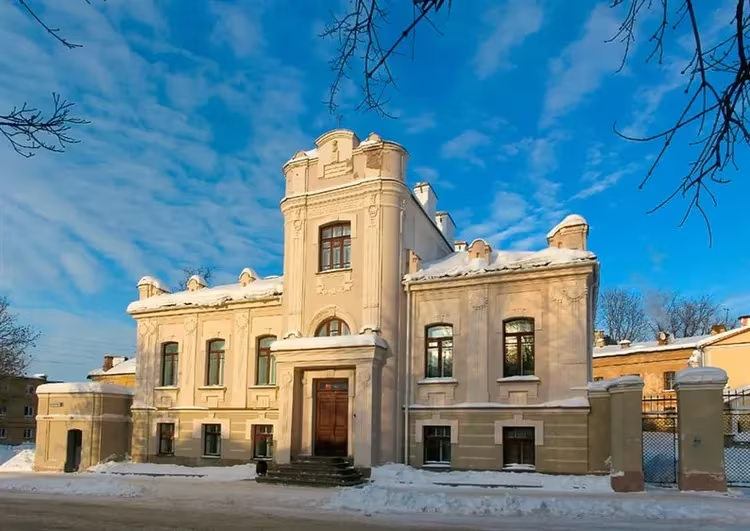
At the beginning of the 20th century, the teacher and archaeologist Ludwig Mason moved to Russia and decided to build his own house on the site of the former Zlatoust Monastery. After his death, the house was handed over to the state, and now a museum is located within its walls. This choice was due to the finds that were discovered in 2002: in the basement of the building there were dozens of bodies dating back to the 16th century.
Now the Mason's House stores ancient weapons, jewelry, gold, coats of arms, orders and medals, porcelain, household items (watches, cutlery, a samovar, a matchbox), clay toys, clothes and hats of the 19th-20th centuries. Many of the exhibits were directly related to Catherine II, for example, a silver dish, on which she was served bread and salt.
John the Baptist Monastery
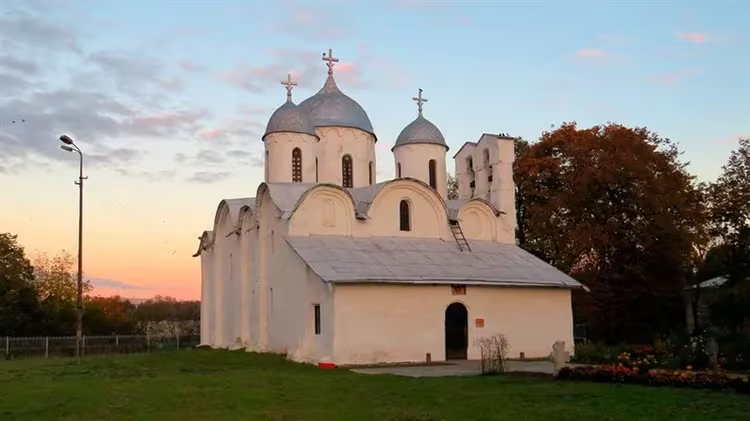
After the assassination of Princess Efrosinya Rogvolodovna, her body was transferred to the John the Baptist Monastery founded by her, which from now on began to serve as a burial place for other Pskov nobility. The history of the convent begins presumably from the 12th century, according to ancient sources, there was a cemetery, cells, household premises, stables, baths and gardens, but due to the events of the Great Patriotic War, almost all the buildings were destroyed, and only the cathedral was preserved.
The appearance of the building, despite the simplicity of forms and the monochromatic white color, looks monumental and severe, whose style was related to the architecture of pre-Mongolian times. A tour of this monastery is carried out in combination with others. The monastery is open every day except Sunday, on the electronic site you can track the time of worship and order a service, a prayer service.
blacksmith yard
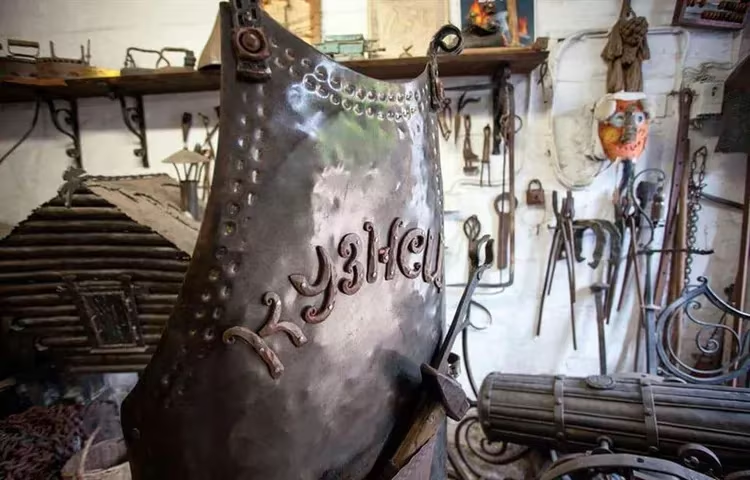
Like other monuments, the Blacksmith's Yard suffered from a fire, but it managed to save the forge. Today, within its walls there is a museum, one part of which is devoted to the history of the development of blacksmithing and master classes in artistic forging, and the other is represented by the works of modern blacksmiths (you can buy them or try to make them yourself).
Not only tourists come to see the author's masterpieces, but also delegations from different countries. For more than 1000 years blacksmithing has continued to be passed down from generation to generation, and this type of activity is rare in our time.
At the entrance, you will be met by an iron figure of a “staple”, a “Kazan-Lunokhod” and a revolver on wheels. With the advent of the Christmas holidays, museum workers create a special atmosphere of magic – a forged snowman and a Christmas tree in the yard are dressed up, an iron star is lit, fulfilling wishes. About 50 unusual exhibits can be admired from Monday to Friday from 10:00 to 17:00.
Roundabout city
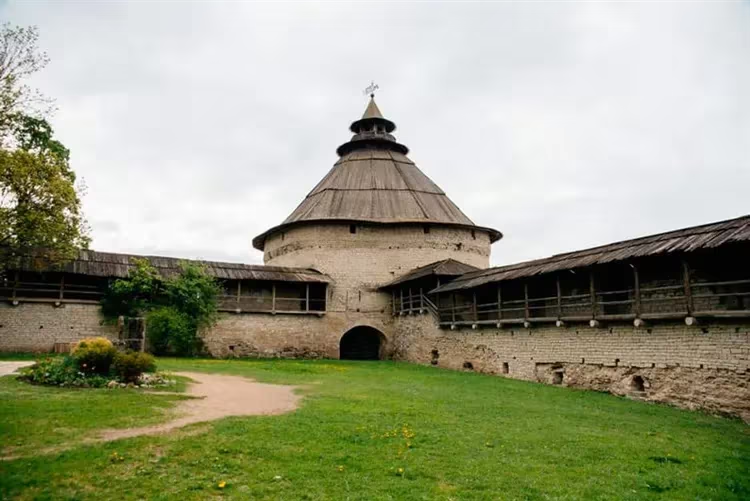
The roundabout city is known for the impressive size of the five-meter walls, 7000 meters long, which were built to protect Pskov by the middle of the 15th century. One of the most powerful fortresses in Western Europe was attacked and failed to overcome about 20 times. The builders have provided for everything from underground passages to secret ammunition depots. Of the 16 towers, only half survived, but among the ruins you can see loopholes and an embrasure, besides, restoration work is constantly being carried out here.
On the territory of the complex, you can also visit a number of temples of the 15th century and museums: Pogankin's Chambers, where icons, weapons and money of the 13th-17th centuries are kept; “Two Captains”, where you will be introduced to the history of the creation of this novel and the life of its writer; apartment-museum of Lenin and the Spegalsky Museum. Impressed by the historical events of Pskov, you can fix it in the numerous medieval-style restaurants located here.
Olginskaya chapel
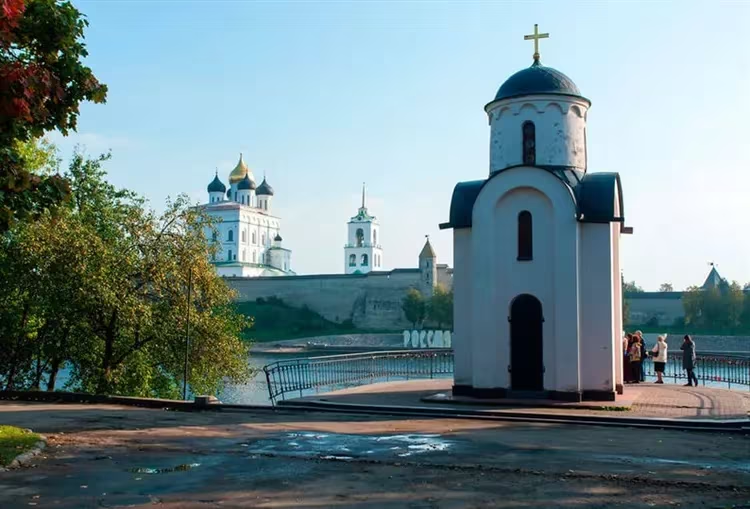
The first Christian church appeared thanks to the faith of the Kiev princess Olga in signs – three bright rays of the sun through gloomy clouds pointed to the exact place where the chapel now stands. The long-suffering fate of the church nevertheless defended its right to exist, and after dozens of restoration works, it was presented in 2004 in an updated form, which, of course, has nothing to do with the one that was erected under Olga.
The strict façade of the light pink building with zakomaras and narrow arched windows is similar to the design of the John the Baptist Monastery. During religious events, the niche under the chapel is filled with sacred water. There is access to it both from the building itself and through the side external stairs.
Monument to Princess Olga
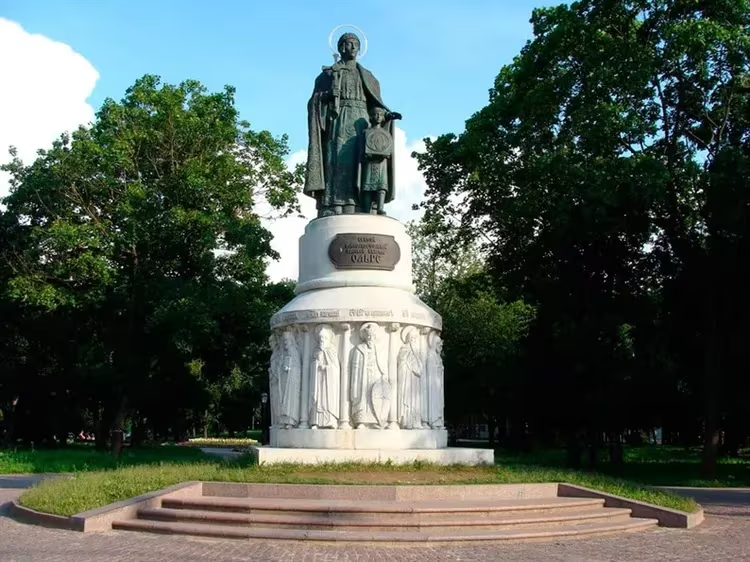
For several years now, the city has been following a good tradition of opening cultural monuments on the city's birthday, and 2003 was no exception. Now the statue of the “bronze” Olga adorns the October Square in the Children's Park. The story of a strong-willed and wise woman began with her romantic meeting with Prince Igor, who was in love with her at first sight, mistaking her for a simple boatman. After the death of her husband, even the Byzantine ruler sought the hand of the princess, but Olga wore mourning and swore to her people that she would never marry again, especially with pagans.
She stands on the pedestal with her grandson Vladimir, who adopted the faith of his grandmother, the first ruler of Kievan Rus, who converted to Christianity. Her face looks strict and adamant, if in religious sources she is portrayed as a fair and exceptionally positive person, then according to historical documents, the princess was cruel and merciless. Nevertheless, she is loved and respected by the inhabitants, and her image is repeatedly sung and immortalized here.
Pokrovskaya tower
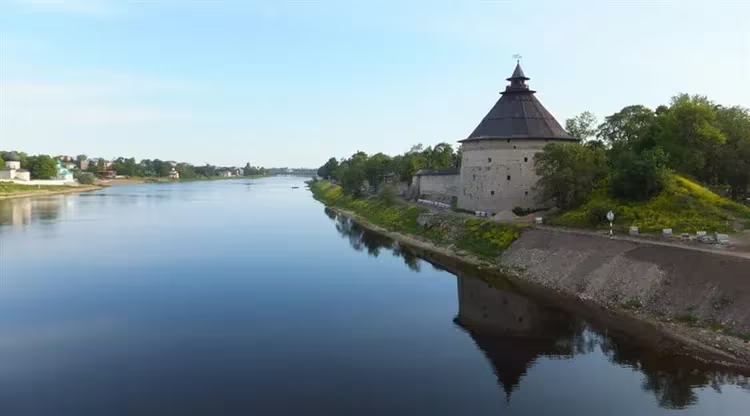
During a tour of the Round City, special attention should be paid to the Pokrovskaya Tower, which held the enemies for more than a hundred years before the arrival of the Polish-Lithuanian army led by Stefan Batory. In 1581, the opponents managed to break through a five-tiered tower 6 meters thick. But the Russian people were so strong and warlike that overnight a new wall was erected on the site of the hole, repulsed all attempts to attack, and the Poles had to leave the Pskov lands, conclude a truce and return the loot.
The next attack on the tower took place during the Northern War at the beginning of the 18th century, but it was not seriously affected. Thus, for more than 200 years, this building has stood untouched and remembers the events of those difficult times for it. Of course, part of the walls and the roof of the building have been repaired to be able to conduct tours, but architects are still working on the interior, and the deadline for the project has not yet been announced.
Snetogorsk monastery
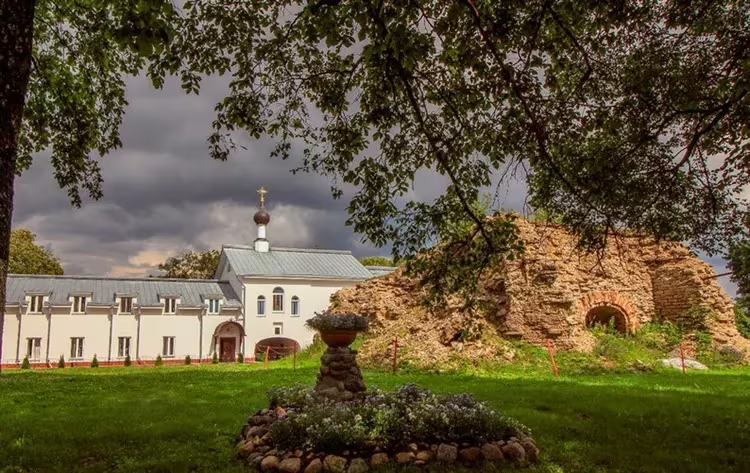
First mentioned at the beginning of the 14th century, the convent went through three wars and managed to “survive” to this day. Today, novices live here, they are engaged in gardening and other household chores, so only the cathedral and the church of St. Nicholas are available for tourists.
Future nuns are brought up in strictness, they are not allowed to contact curious tourists, so you will not see treats and souvenirs here. The Snetogorsk monastery is not as interesting as other shrines, there are wall paintings inside it, but they are less than 100 years old. You need to arrange an excursion in advance by calling the administration, whose contacts are on the official website of the monastery.
Monument to the 6th company
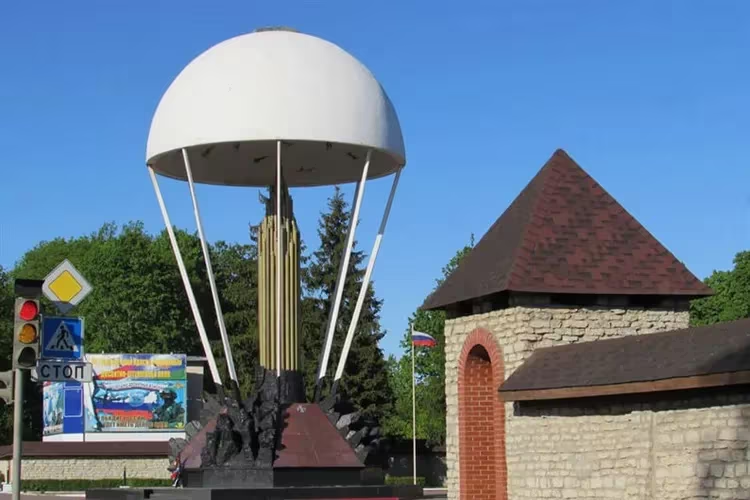
The whole country knows and mourns about the sad feat of Russian paratroopers from the sixth company of the 76th Pskov division. After the decree of Russian President Vladimir Putin on the establishment of a monument in their honor in the village of Cherekha, where the 104th parachute regiment is located, the Russians had the opportunity to bow and lay flowers at the memorial. In 2000, certain death awaited the guardsmen in the Argun Gorge, 84 fighters did not return home.
For the heroism shown in the battle, they received the title of Hero of Russia and the Order of Courage. The monument is designed in the form of a parachute descending on a mountain, and lists of all participants in the Russian-Chechen clash are engraved on the granite slabs on its sides. In the center of the monument, under the dome of the parachute, there is a composition of candles equal to the number of dead – every night they are lit.
Church of St. Nicholas from Usokhi
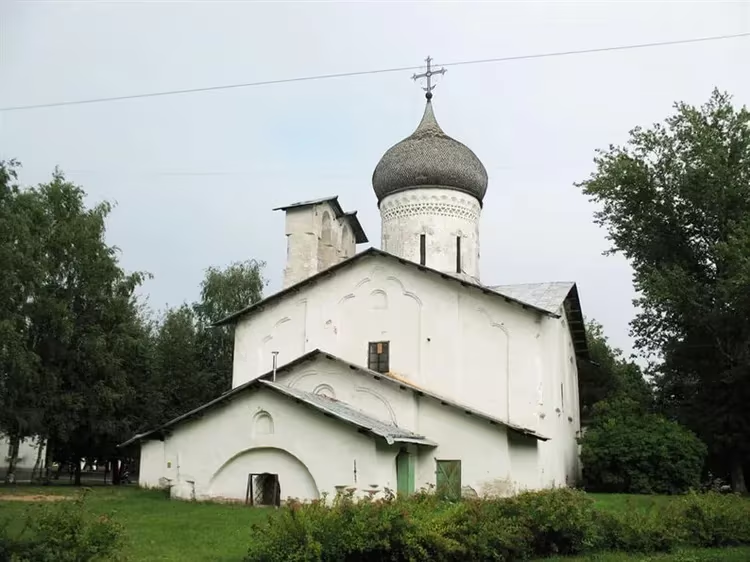
In the second half of the 14th century, the first wooden temple appeared near the Usokha swamp, and a century and a half later, one of the most beautiful shrines at that time arose in its place, whose dome of bright green tiles was visible from afar. In 1570, the Church of St. Nicholas witnessed the massacre of local residents by order of Tsar Ivan the Terrible, with which the following legend is connected: the royal horse heard the ringing of the Nikolsky bell and reared up, for which it was immediately ordered to destroy it.
Blood gushed from the cut down bell, but even this terrible sign did not stop the ruler of Russia in cruelty. By the beginning of the 20th century, the temple expanded noticeably, a chapel appeared, but after the Second World War it had to be rebuilt, and the interior decoration could not be restored at all – ancient frescoes show through in some places, but St. Nicholas Church is not rich in paintings and icons. From 8:00 to 20:00 it can be visited by absolutely everyone and absolutely free.
Embankments of the rivers Pskov and Velikaya
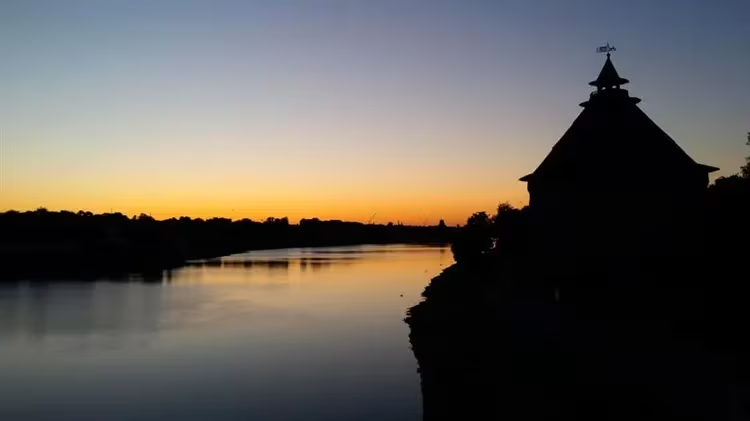
It is impossible to visit the city and not enjoy a walk along the embankments, where on one side there is a quiet expanse of rivers, and on the other, historical sights. Tourist boats are moored along the rocky shore of the Great River, but there are very few people, which is surprising considering the fact that this is the center of the city.
After the reconstruction of the Great Embankment, play areas, street cafes appeared here, flowers and topiaries were planted, benches and gazebos were installed, but the Pskova River is known for the settlements of wealthy citizens and the Gremyachaya Tower along its banks. If you know about the military merits of the Roundabout City, and the walls and towers included in its complex, then the Gremyachy Tower also has terrifying legends.
Once upon a time, the prince's daughter was chained here in a crystal coffin by her own mother, and it was possible to free her only by reading the psalter for 12 days. One of the volunteers held out for a week, after which he fell asleep and was thrown out of the window by dark forces under a weeping willow – now the forged tree is decorated with many colorful ribbons. Residents claim that at night the groans of the same girl are heard from the tower, and the tourists themselves feel terrified at the walls of the dungeon for inexplicable reasons.
Monument “Battle of the Ice”
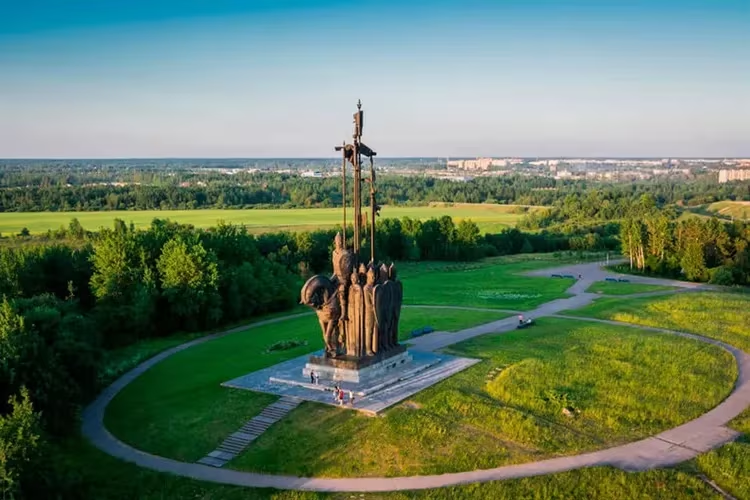
Every inhabitant is proud of the great battle on the ice of Lake Peipsi under the leadership of Alexander Nevsky, because not without their participation in 1242 the city was liberated from the Livonians. In 1993, it was time to erect a copper-bronze thirty-meter monument to this commander and his associates.
Historians have established that it was here, on Sokolikha Mountain, that the path of Alexander Nevsky passed – he is depicted as warlike and gloomy, sitting on a horse, and to his right, warriors in chain mail, helmets and with shields stand in a row. On the other hand, there are people from simple peasants in bast shoes and with an ax in their hands to representatives of the upper classes, all longed for reprisals against enemies.
Museum “Honey Farm”
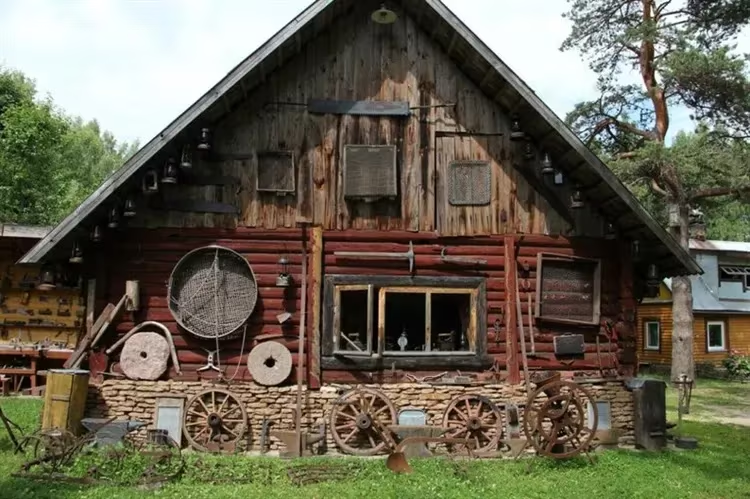
If you want to immerse yourself in the world of the original culture of the Russian people, feel like a peasant or a gentleman, breathe in the freshness of your native wild forests, pick up berries, mushrooms or honey, try your hand at carpentry, honey or linen, then Gennady Vasilyevich Glazov's farmstead fulfill these desires and more.
In the rooms of the house, the life of ancient times seems to have frozen, there are samovars, jugs, irons dating back to the 19th century on the tables, tools and working machines are laid out in the yard. At the end of the tour, you will be taken to the refectory, where traditional Russian treats will be offered: bagels, honey, cheese, berry jam, compotes and wines, herbal teas and the famous mead.
You can rent the homestead and hold a holiday, arrange an event with barbecue, it is especially cozy here in winter when the stove is kindled. “Several Russian celebrities have already appreciated the warm atmosphere from childhood, and you will too,” guarantees the owner of the farm. The museum is open all year round, seven days a week.
Drama Theatre. A.S. Pushkin
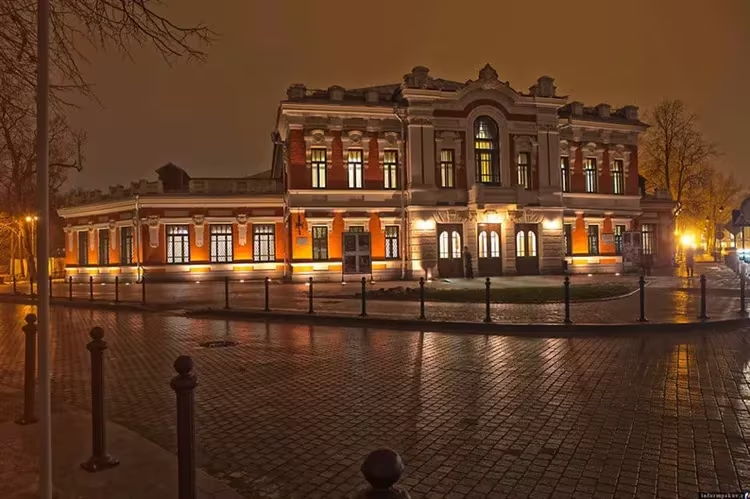
Since 1906, Pskov has boasted its own theater, in which L. Blok, F. Chaliapin, A. Duncan performed at one time, but after the October Revolution, the People's House. Pushkin (as it was called earlier) most of the actors left, and during the Second World War the theater was generally captured and destroyed by the Germans. The next era of development came for the theater with the arrival on the stage of E. Vitorgan, T. Rumyantseva and other folk artists who achieved success and recognition not only in Pskov circles, but also abroad, where they actively toured. Russian performances receive awards and nominations.
After the reconstruction of the theater, V.V. Putin himself arrives here, and notes the excellent work of the architect in the Art Nouveau style. You can reserve a ticket for a performance at the Pushkin Drama Theater on their official website, the box office is open from 11:30 to 19:30 every day.
Mikhailovskoye Museum-Reserve
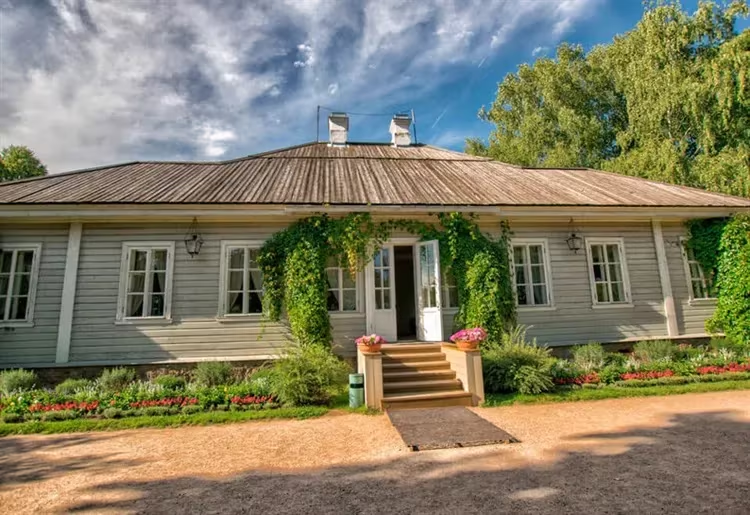
Once upon a time, several generations of the Pushkin family lived here, who were granted lands by Catherine I for the good service of his great-grandfather-general. Alexander Sergeevich himself was here often, but not for long. In 1899, the house was transferred to the possession of the state and a museum was organized. After numerous fires, only Petrovsky Park with linden alleys, the Nanny's House, the Kitchen and the estate itself, inside which the poet's personal belongings and the interior of the rooms are kept, have survived.
The complex of memorable places associated with the name of Pushkin also includes the Trigorsky estate (belonging to the Osipov family, with one of whom the writer was exiled and often visited him afterwards) and the Svyatogorsky Monastery, where he was buried. Works from 10:00 to 18:00 daily.
Basil's Church on Gorka
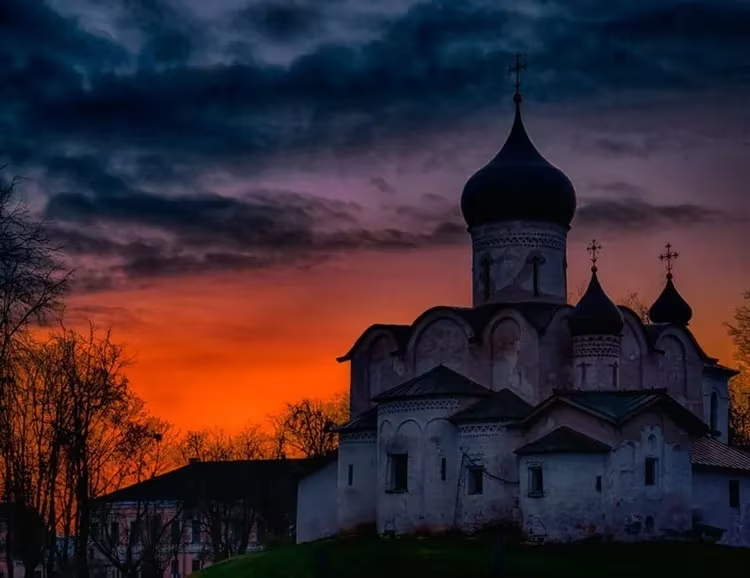
In 1337, on a small hill near the Great River, the first wooden church was erected at the expense of a German merchant. He converted to the Orthodox faith and took the name Vasily, which explains the name of the church. By the 19th century, the temple was overgrown with outbuildings and doubled in size, a bell tower and a gallery appeared. Today, divine services are held here, a Sunday school for the children of parishioners is open, and there is an icon painting, sewing, and blacksmith workshops. The church is open every day for everyone from 8:00 to 19:00.
Church of St. Nicholas the Appeared from Torg
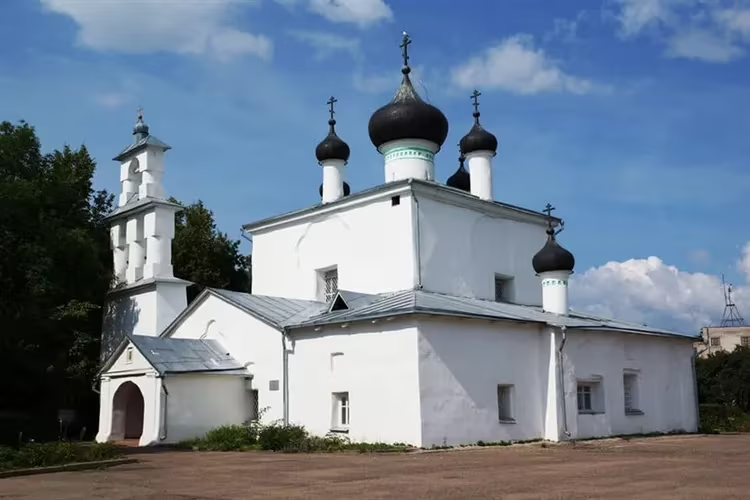
More than one temple in the city is dedicated to St. Nicholas the Wonderworker, he was born into a wealthy family of believing Christians, and after their death he donated his inheritance to the needy and gave his whole life to serve the Lord and people. By the way, he is revered not only among our peoples, but throughout the world – it was St. Nicholas who became the prototype of Santa Claus, throwing gifts into children's socks at night. Christians believe that once he helped a poor man by throwing a purse of money through the chimney, which from there fell into a sock hanging over the fireplace.
The church is mentioned in the writings only at the end of the 17th century and the architects confirm this information by examining the buildings characteristic of that time – a fundamental four-sided two-tiered white building in a strict, sustained style without frills with five domes. Unfortunately, the church survived many fires and lost almost all its wealth, so there is little information about it, but several dozen ancient icons are available for viewing from 9:00 to 19:00 on weekdays, and on Saturday from 9:00 to 15:00.