
Sights of Ryazan – 30 most interesting places
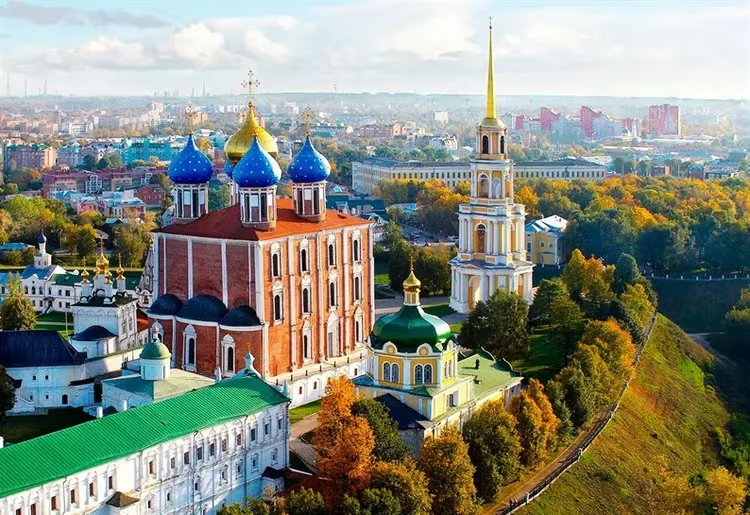
One of the ancient cities of Russia, the capital of the Grand Duchy of Ryazan, begins its history earlier than Vladimir, Moscow. This is known from the pages of the surviving annals. It has always been an important point in the military operations of the country. The Ryazan Kremlin, numerous military monuments, beautiful cathedrals can tell a lot about the history of the ancient city. To learn it, to look at the sights of Ryazan, residents from different places of the planet annually strive. To visit them all, you need to live in one of the modern hotels for a couple of weeks. Take advantage of excursion offers and find out information, for example, about the following significant places.
Church of St. John of Kronstadt
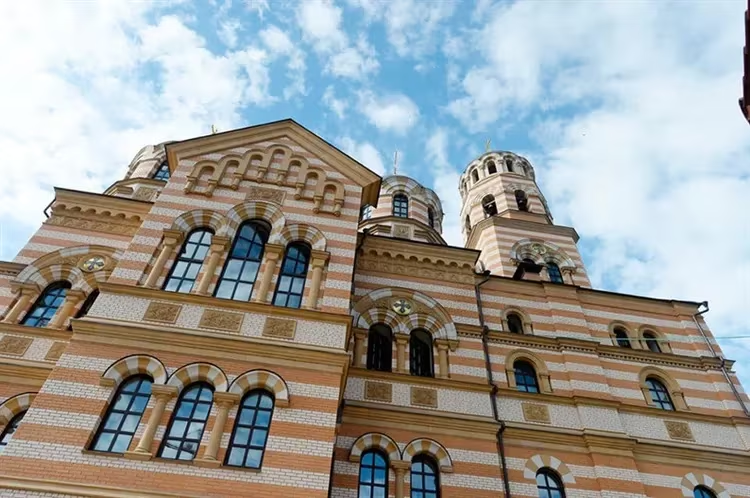
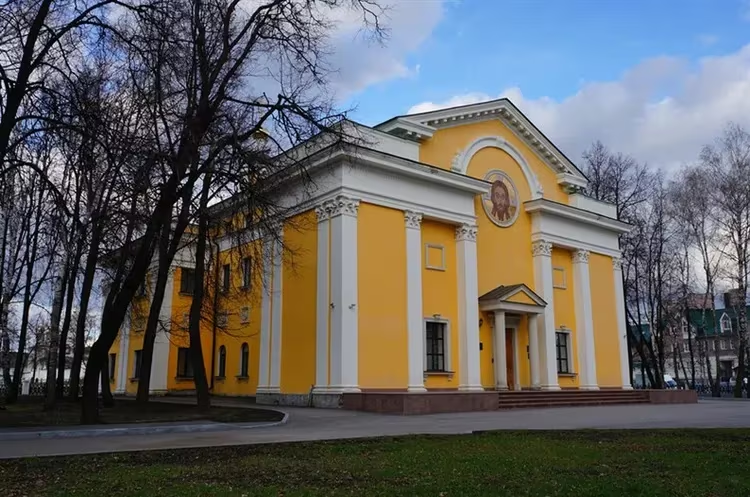
Today it can be difficult to organically combine elements of modernity with its technical and stylistic requirements and the classical style – and we are not even talking about the construction of churches, but about the general outline. Fortunately, such a “fate” did not turn from a perspective into a given in relation to the Church of St. John of Krondstadt, whose construction was officially completed two years ago, although some minor finishing work was still not completed.
The external neo-Byzantine style of decoration is a tribute to traditionalism in the elements of church art and at the same time a “visible” association with another architectural monument – the Cathedral of the Twelve Apostles, located today in the former capital of the country. Both temples stand out noticeably due to the originality of the color scheme and the presence of horizontal stripes on the outer walls. And yet modernity makes its way – and not only in the details.
The Church of St. John of Krondstadt conducts not only services and rituals, but is also involved in cultural activities – and the presence of a comfortable conference room makes it possible to hold meetings, seminars and summits.
Monument “Mushrooms with eyes”
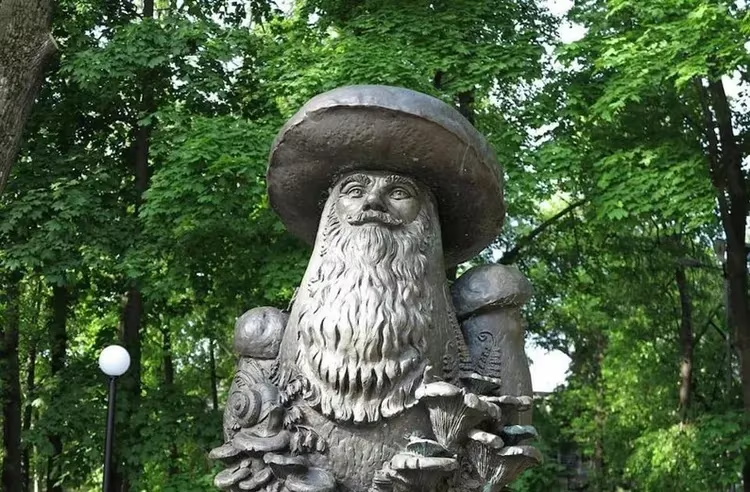
An interesting monument appeared on the territory of the Lower Park of Ryazan in 2013. He was chosen from the results of a competition to create a folklore symbol of the city. The theme of the composition was a local proverb “And here in Ryazan – mushrooms with eyes! They are eaten, and they look! The strange expression is associated with two local legends. The first speaks of the difficult hunt for the “cunning” gifts of nature. They see the mushroom picker approaching and warn the brethren to hide. The second came from wartime. A border violator is still being identified if someone cuts mushrooms on the border strip.
As a tribute to folk ingenuity, the monument looks like a bronze sculpture of a huge boletus dad with two cute sons. They are surrounded by forest dwellers (lizards, ladybugs, frogs, snails). He is all with eyes carefully looking around the surroundings. Kind eyes, clear faces, smiles and a bulbous nose seem to guard the cozy benches nearby. Address of the monument Lenina, d.26. Numerous souvenirs are made with the image of “big-eyed mushrooms”.
cathedral park
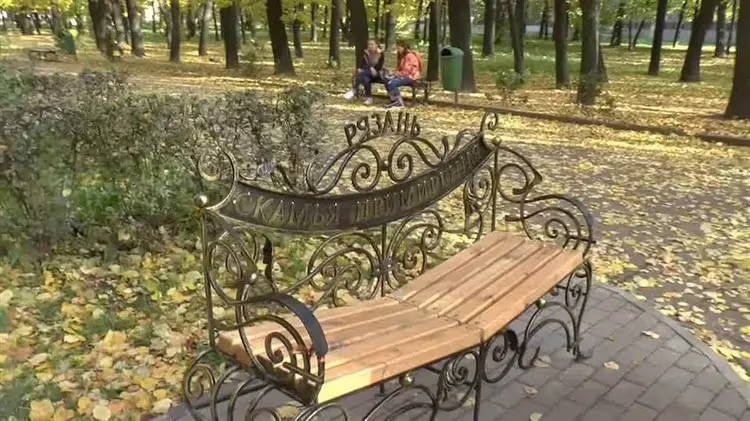
Having decided on the place of residence, the first trip around the city is most often a trip to the ancient Kremlin. It is proposed to go to it along the alleys of the Cathedral Park. This is a favorite recreation area of the townspeople, a popular tourist destination filled with architectural sights. The ennobled square, along with the Kremlin rampart, the Stables Yard, is one of the popular, romantic places where festive festivities take place.
Historically, an ancient city was born here, the city of Ostro towered. Until now, the atmosphere of the “place of power” hovers over every corner of the park. The mysterious energy of the park calls for a visit more than once. Entering the holy place is easy through the Propylene or ancient pillared gates. The park is conditionally divided into two parts. One of them, located next to the Kremlin, leads to the beautiful Glebovsky Bridge, hanging over a deep moat created to protect the Kremlin in ancient times.
Cathedral bell tower
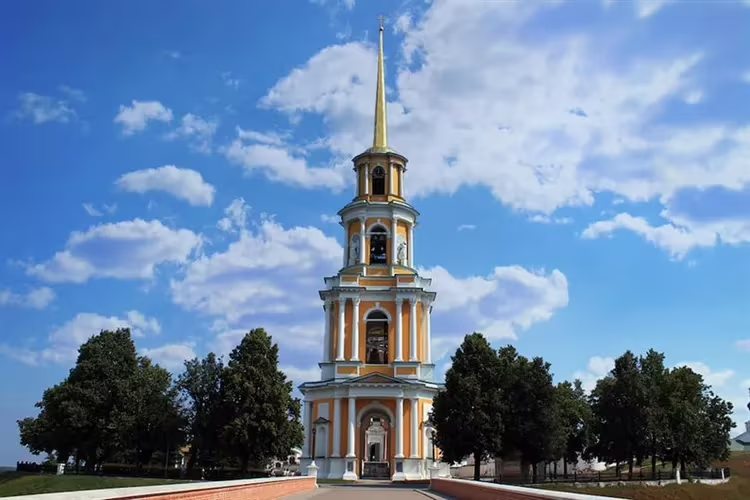
Immediately behind the Glebovsky Bridge is the tallest building in the Kremlin – the Cathedral Bell Tower. It is her bells that sound over the surroundings, informing Orthodox believers about the services of the winter Nativity and Assumption Cathedrals. The multi-tiered building was built for 50 long years, starting in 1783 according to the designs of three architects on the site of the old Glebovskaya tower of the Kremlin. All four tiers are made in different architectural styles.
The outer walls of each tier are decorated with sculptural compositions in the form of angels with copper pipes. Circular galleries allow a good view of the surroundings. An observation deck is equipped on the third tier. The bells are placed on the last tier, and the 25-meter gilded spire completes the austere beauty of the building. The height of the bell tower is 83.2 m. It rises above all the buildings of the Kremlin and is the tallest building in the region.
Monument to Evpaty Kolovrat
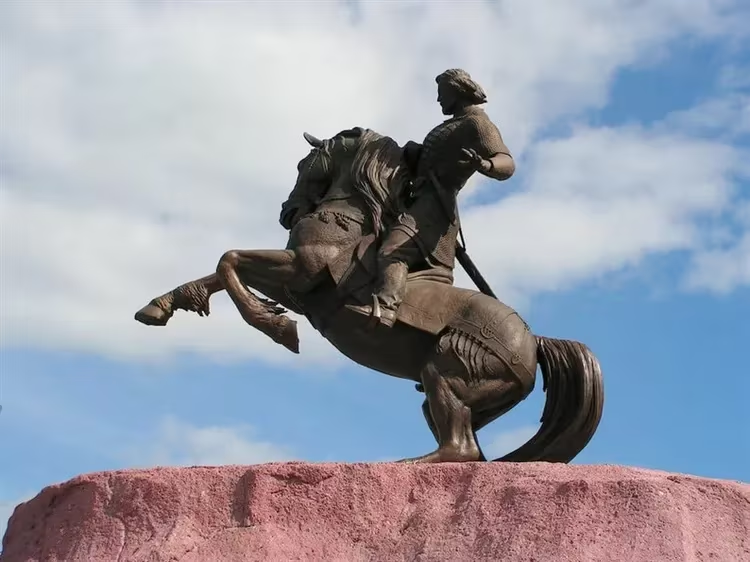
In honor of the 70th anniversary of the Ryazan region, a monument appeared to one of the heroes of the Ryazan land, the Russian hero boyar Yevpaty Kolovrat (he lived in the 13th century). The mighty warrior has become an eternal legend. In 1237, together with a retinue of 1,700 fighters, he organized a worthy rebuff to Batu's troops. His courage conquered even the heart of a merciless enemy, and he gave the body of the dead soldier to the Russians and set the living free. The monument depicts a mighty warrior on a muscular rearing horse.
The figure is mounted on a red granite stone, which has become a symbol of shed blood. The author of the composition is an amateur sculptor, designer, decorator Oleg Sedov with the participation of the architect Lavrentiev. The feat of Kolovrat is described in the old Russian “The Tale of the Devastation of Ryazan by Batu”. The height of the sculpture together with the pedestal is 7 m. You can see the attraction on the street. Postal, 49. A monument was erected on October 18, 2007 on the street. Postal, d. 49. Sculptor Oleg Sedov.
Museum of the History of the Airborne Troops
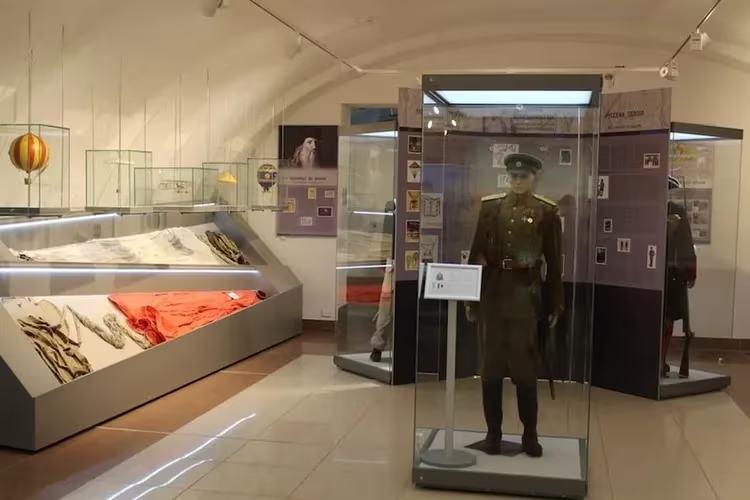
On the implementation of modern peacekeeping tasks in the hot spots of the planet, for example, Kosovo, Abkhazia, Bosnia. Participation in the Great Patriotic War, etc. the fighters of these troops are known to the inhabitants of Russia. The brave, courageous fighters of the airborne troops are popularly called the “winged guard”, “polite people”, “Uncle Vasya's soldiers”. Officers for the brainchild of the famous General Margelov are being trained at the Higher Air Force School in Ryazan.
It is not surprising that in the city (1930) a museum was created (the only one in the world of its kind), where it is proposed to learn the rich history of an important military unit. The Vasily Margelov Museum has 16 rooms. They house expositions with large collections: parachutes, banners, weapons, military uniforms, documents, personal items. In total, the museum's archive contains 80,000 exhibits. The guides are former paratroopers. And right at the entrance to the museum, real combat vehicles stand on special pedestals. Museum address: Margelov Square, 1.
Museum of the History of Ryazan Lollipop and Tea Sakharovar
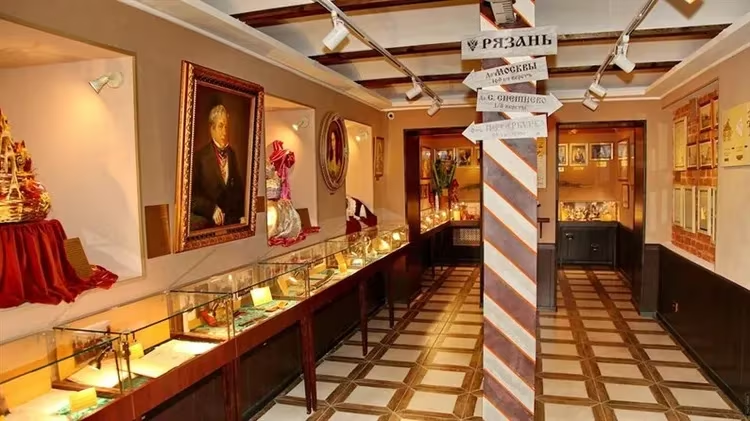
The childhood of any child in Russia is not complete without delicious, bright lollipops. Red, yellow, green cockerels on a stick were loved by our great-grandmothers. They were an obligatory attribute of any Russian fair. You can find out the detailed history of the appearance of sweet treats in Russia (starting with the production of sugar in India) in an unusual museum. Here, a model of an old sugar factory was created, which appeared thanks to the founder of sugar production from beets in Russia, N.P. Shishkov.
In one of the four halls of the museum, it is offered to make a delicacy according to his recipe, decorate a fragrant figurine. You can discover the magic of the formation of a large sugar loaf, catch your luck on the Wheel of Sweet Fortune, make a wish at the Sugar Fountain, sit in the Sakharovar teahouse. Tea drinking in it is a delicious, unusual process.
There are 25 varieties of “loose” teas. Among them are black, green, herbal teas. Sbiten honey, lemongrass, “Museum on honey”. Tasty Russian pancakes are served with tea. The museum is located on Professor Nikulin Street, 41.
Long-Range Aviation Museum
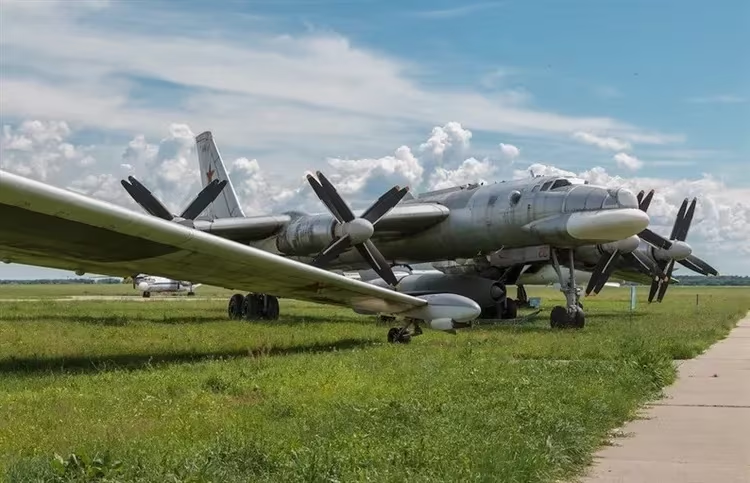
When the sound of an airplane is heard in the sky, the eyes automatically try to find a shiny modern handsome man. We are accustomed to flying on vacation, on trips, on business on powerful cruise liners. Among them are those whose work remains a mystery, and they serve to protect our borders. You can get acquainted with the history of such aircraft at the Museum of Military Aviation. It is located in the town of Degilev military unit. You can go through the guarded gate along with the tour.
The exposition of military aircraft tells in detail about the history of aeronautics in Russia. In the open area there is an exposition of real combat aircraft. At various times, they were part of the existing aviation equipment of the Long-Range Aviation. Among them are TU-95, Tu 22M3, Tu-16, TU-33 and others. In the halls, among the exhibits, there are many personal items, documents, samples of military uniforms from different periods, portraits and photographs of aviation heroes, mysterious “black boxes”.
Models of different models of aircraft, the first dead loop, made by P. Nesterov, were installed. The main asset of the museum is the Ilya Muromets aircraft. The history of long-range aviation begins with him. The museum is located at: st. Belyakova, 9, and in the Diaghilev town. You can go by trolley bus number 1.
Upper city park
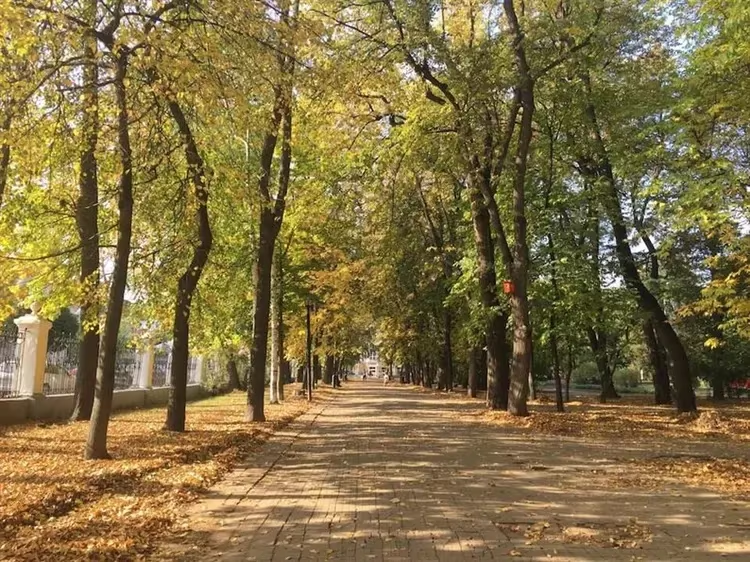
There are always a lot of people walking here and the administration is carrying out activities for its reconstruction, creating new conditions for recreation. The people call the garden Natashkin Park. It has to do with local legends. According to one of them, the daughter of a rich merchant named Natasha hanged herself in the garden. According to another assumption – that was the name of the daughter of the royal official Klimov.
For participation in the terrorist movement, she was sentenced to death, through the efforts of an influential father, the execution was replaced by exile. Having escaped from the royal prison, after long painful wanderings, Natasha ended up in Paris and in 1918 died of influenza. Walking in the park, it is proposed to see numerous monuments dedicated to famous people of the Ryazan region.
Among them are monuments to Yesenin, Golovin, Tyan-Shansky, Maria and Volodya Ulyanov. In the park there is a strange object in the form of a balloon in honor of the creator of the world's first balloon Kryakutny (the legend is not confirmed by facts). Before visiting the park, you should fulfill the traditional condition: bring a stone from your city and leave it in the park. He will be waiting for your next visit.
Monument to George the Victorious
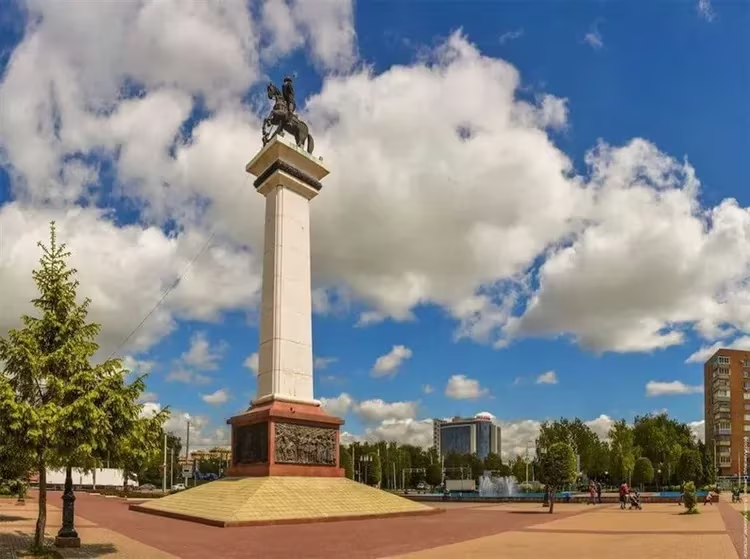
Among the symbolic places of the city is Pobedy Boulevard, which runs parallel to the Moscow Highway. Residents of the city from this place went to the Great Patriotic War. In honor of the victory, a monument to George the Victorious (the patron saint of warriors) was erected, which has become a landmark. It was installed on the day of the death of the Saint in May 2005. On a granite pedestal there is a 22 m high stele with a figure of George sitting on a mighty horse.
The pedestal is decorated with thematic compositions of four bas-reliefs. They reflect the history of the city's warriors. The first depicts the feat of Evpaty Kolovrat. The second depicts the heroes of the Patriotic War. The composition of the third side of the pedestal is dedicated to the holiday in honor of the victory. The fourth bas-relief is dedicated to the home front workers.
Amusement park “Prio-Land”
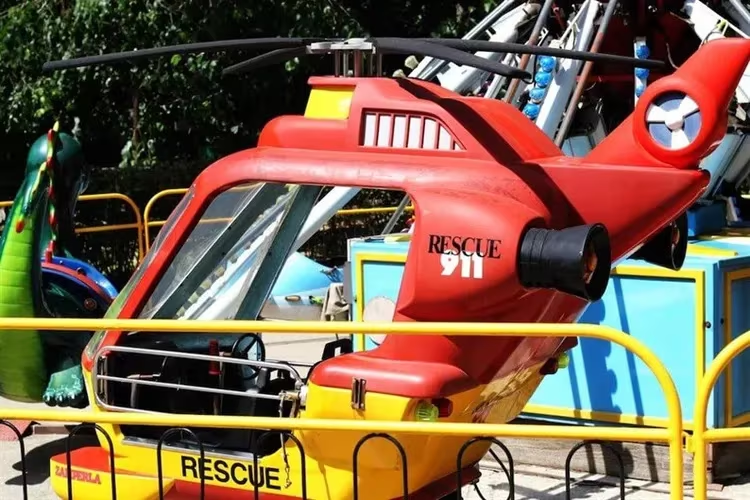
The most favorite place for children who have long since become grandfathers was here, in the Railway Workers Park. Chain carousels, swings in the form of boats, helicopters, cars, a rotating plate and unusually tasty cotton candy attracted the children of the city here. The low cost of tickets allowed to stay here for at least a whole day. The park received a new life under the name “Prio-Land” in the spring of 1998. It is located in the central part, not far from Victory Square.
Now it is a modern park with a large number of different attractions for children and adults. Dizzying “Hip-Hop”, “Chain Carousel”, “UFO”, several autodromes, shooting gallery. Trampoline, trains, swings for kids, etc. There are many interesting wooden sculptures in the park, for example, “Baba Yaga”, “Uncle Chernomor”, comfortable recreation areas. There is a pond in the form of an artificial pool. In it you can swim in inflatable boats. A lot of positive emotions are received by children and adults by visiting a small but cheerful and popular park.
Aquaclub “Acapulco”
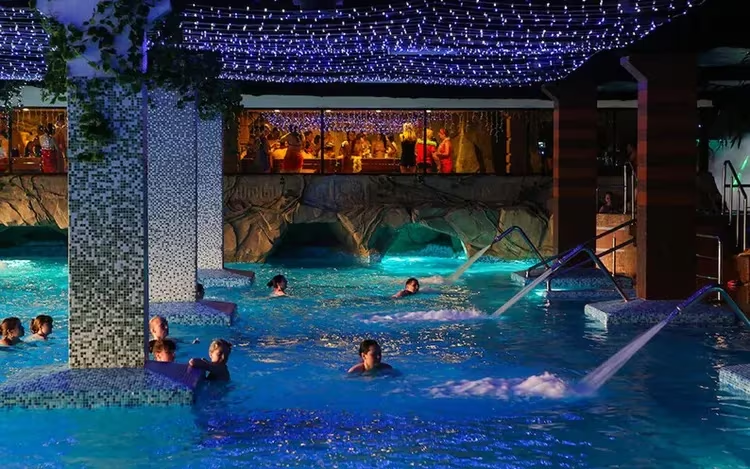
Modern water parks have appeared in many large cities of Russia. The main entertainment offers in them are represented by numerous types of water slides, extreme attractions on the water, various types of guns, shower devices, and pools. Aquaclub “Acapulco” was opened in 2009 on Mayakovsky street. According to the list of services provided in the club, it differs from the usual water park. In a well-organized atmosphere of eternal summer (as in the hottest resorts of the world with an air temperature of 30 ° and water temperature of 28 °), a wide range of SPA services is provided here, along with typical beach activities.
All the needs of adults and children, even toddlers, are taken into account. This is a pool with slides (Barracuda, Dorado, Marlin), a tunnel with geysers, a real fast river. Russian bath, Turkish hammam, Finnish sauna, various jacuzzi options, waterfalls. Under the tunnel is a restaurant where you can taste delicious local and Mexican dishes. Interesting events are held in the aqua club: a beach party, discos in the water, special animation holidays for children.
theatre square
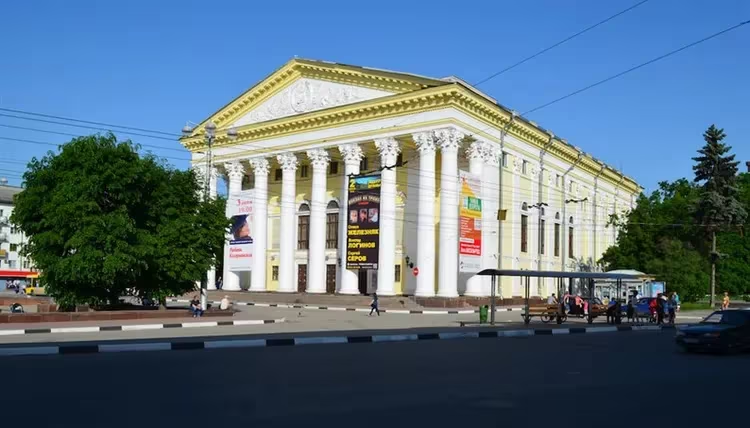
The small square of the city used to be on the outskirts and was called Yamskaya Sloboda. Here was the entrance to the city from the south side and was marked by two stone pillars, destroyed during the years of the revolution. They performed the functions of an outpost with customs. There was a chapel in the central part of the square. It was built to commemorate the arrival of Emperor Alexander I in the city in 1819. Fun fairs were held nearby three times a week. The Ryazan region was a well-known region of Russia for its crafts: mat-makers, potters, spoon-makers, coopers. The modern name of the place was given after the construction of the building of the Drama Theatre. Instead of the chapel, the fountain “Masks” appeared.
It is built of red granite, has a rectangular shape and adorns a small park in front of the theater building. Buildings built in the style of the Stalinist Empire appeared around the square, which became local attractions. Among them is also a monument to Tsiolkovsky, the Institute of Culture. With the growth of the city, the Theater Square ensemble became the historical center of the city.
Chocolate History Museum Choco Rua
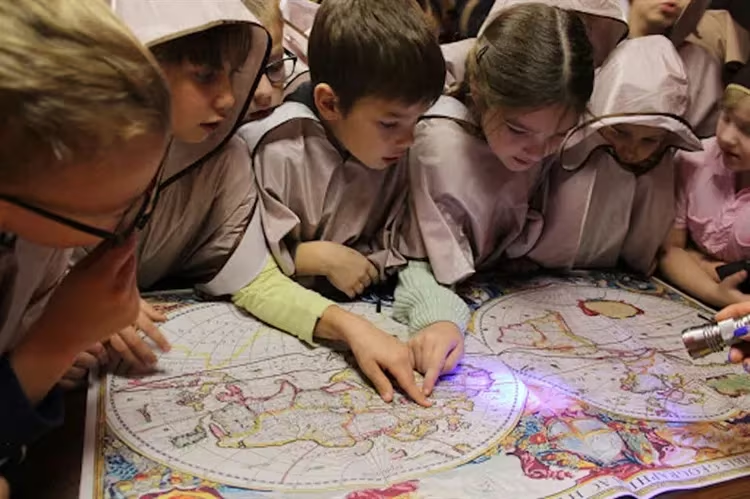
An interesting institution of the city opened in July 2109 on the basis of the Shoko Rua workshop at 22 Soviet Army Street. The museum has exhibits that demonstrate the history of the creation of chocolate delicacies. During the excursions, it is proposed to learn one of the legends of the region associated with Peter I, his acquaintance with local sweets and great interest in the Ryazan region.
It was he who called the delicacy that Louis XV treated him to, the chocolate king or “Chocco Rua”. In the museum you can try and see the process of making delicacies according to the old recipes of the mother of Peter the Great, Natalya Naryshkina, in the form of fruits dried in sugar.
Interactive programs are designed for specific age groups. This attracts families with different children here. You can visit on your own with an audio guide. At the same time, learn the history of chocolate, look at the chocolate tree, try the original drink “chocolatl”. Go to the “Chocolate Kingdom Embassy” and taste delicious gifts from Princess Choka's surprises.
Central Park of Culture and Leisure
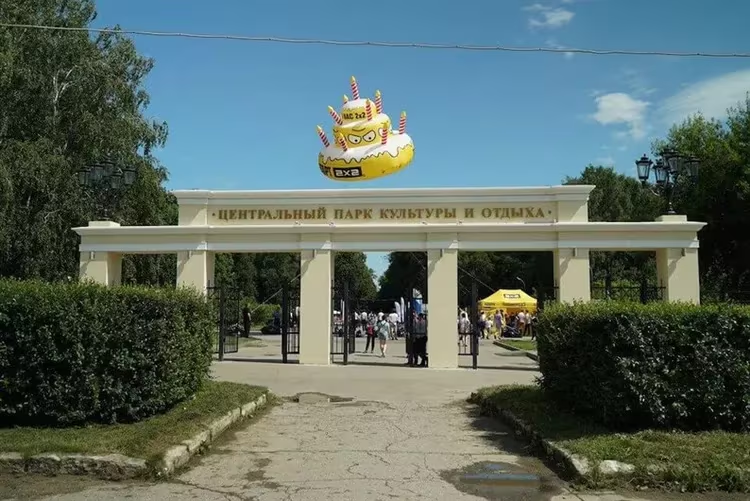
The park is considered the largest in the city. It consists of two parts: Lower and Upper garden. The layout was developed by the specialists of the architectural and design department of academician Vesnin. Both areas of the park have their own history, features in landscape design. Gavrila Ryumin's estate used to be in the Lower Garden. Fountains, ponds with swans, and rare plants were characteristic elements. Until now, individual trees have been preserved in the alleys of the old park.
The upper part (Natasha's Garden) is associated with the life of a wealthy official, Tsar Klimov. Until now, flowers are carried to the old linden, ribbons are tied as a sign of marital fidelity, where, according to one of the legends, Natasha hanged herself as a sign of unhappy love. There are monuments to Yesenin Ulyanov in the park, benches for rest have been installed, many playgrounds have been built. Entrance to the park without payment. There are always a lot of city dwellers here.
Museum “Toy Factory”
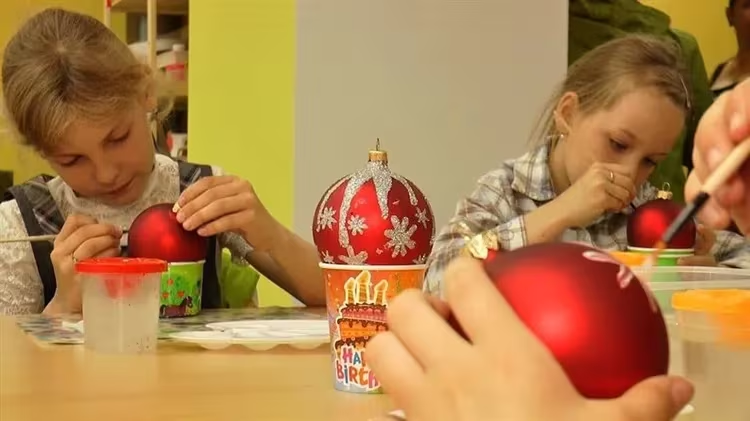
A place where fairy tales come to life, characters from distant childhood reign, exciting children's games come to life, and pleasant memories are formed. It is not for nothing that a day care center for children is organized here. They can spend holidays in a fabulous, kind atmosphere, during the time from 8 am to 19 pm, when parents calmly continue to work. Among the museum expositions there are toys created in different periods of time.
You can look at what our grandmothers played with for a long time, admire the ensemble of New Year's toys. The museum's toy collections tell in detail about the creation of Christmas tree decorations according to traditions, starting from the 18th century. It has its own glass-blowing workshop, where it is shown how glass balls appeared, and you can decorate them yourself in master classes. It became possible to touch toys made of cotton wool, created according to old technologies, to take part in a disco with the Snow Maiden, to receive a gift from Santa Claus since May 21, 2018. It is located on Münsterskaya street 3.
Solotchinsky Nativity of the Virgin Convent
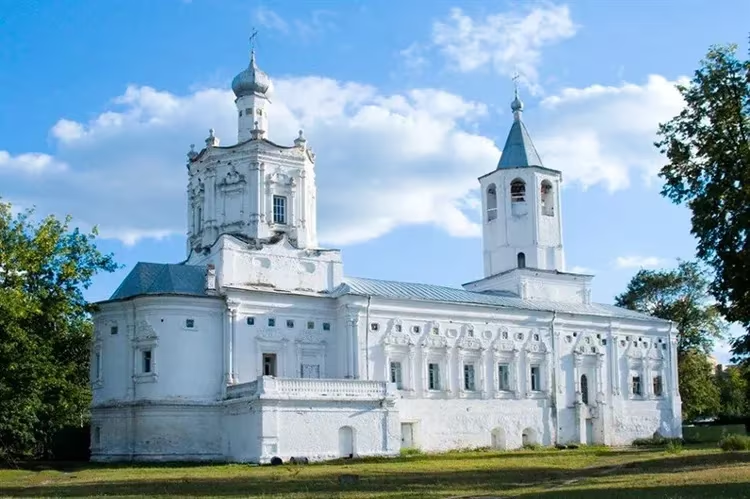
The fourteenth century of domestic architecture was marked by the emergence of a new vision and, accordingly, new specific design elements, whose complex was called the Moscow Baroque or Naryshkin – after one of the richest families at that time. This style was also noted in Ryazan, more precisely, not in the modern city, but twenty kilometers from it – in the snow-white walls and the elegance of the design of the Solotchinsky Nativity of the Virgin of the convent, standing on the banks of the same old river, repeating the first part of the name of the monastery.
It is believed that the monastery itself was founded under Prince Oleg, who ruled at the end of the fourteenth century. The meeting with two hermit elders, who managed to entertain the prince with a conversation, prompted the construction of its high walls. And previously religious – like all children of his time – Prince Oleg eventually took the veil as a monk, continuing to help the recently appeared monastery. This idea of assistance was continued by his heirs.
The Solotchinsky Monastery of the Nativity of the Virgin has an enveloping atmosphere of calm, spilled over wide courtyards, flooding the buildings of two ancient churches that are part of the monastery complex. But to get here from the city will have to spend their own time and effort. Of course, the simplest option would be to call a taxi, but such a trip can significantly hit your pocket and spoil the joy of meeting, but a trip by a regular bus from the Prioksky bus station to the Solotcha Village stop will be the best option.
Cathedral Square
Previously, all roads led to Rome – but this is in a simplified and more scaled form. If we take a specific area, say, Ryazan, then all roads will lead to Cathedral Square, which can be reached literally by any mode of transport – it is enough not to miss the stop of the same name.
During its rather impressive history, the modern Cathedral Square has managed to change several names and several images that today stand as fragments at its extremities. Perhaps the most organic tandem is made up of two temple buildings – a chapel built quite recently, and a monolith of the seventeenth century – the Church of Elijah the Prophet.
The snow-white chapel clings tightly to the ground and its shape resembles the helmet of an old bearded knight thrown carelessly from ancient frescoes. One of the sides of the modern Cathedral Square is crowned with two series of colonnades with an interesting design – this also quite young architectural element appeared in order to mark the entrance to the park. And after a short pleasant walk to the accompaniment of the rustling voice of the wind, you can go to the embankment and even to the Ryazan Kremlin.
Embankment
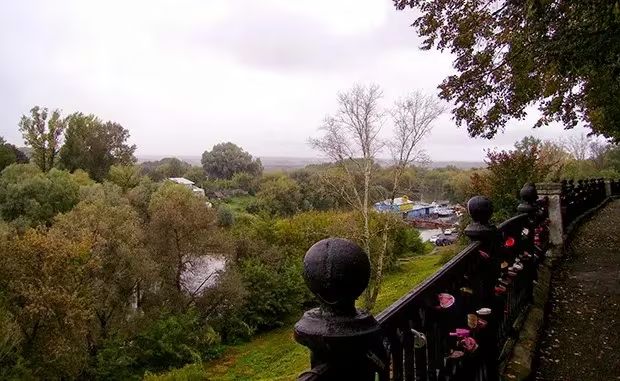
The right tributary of the Oka, the full-flowing and clear Trubezh River, is enclosed today in concrete banks and armor from centuries. Literally and historically colorful, the embankment offers its guests impressive panoramic views of the steep banks that connect the building of the Ryazan Kremlin with the architectural ensemble of the Cathedral Park. Unfortunately, the modern embankment has somewhat decreased in size compared to the end of the past century, but this does not prevent it from remaining a traditional place for walking young people, older couples bound by marital vows, and tourists.
You can get to the embankment itself by trolleybus following the first route, or by bus, however, you can only get to the Sobornaya Ploshchad stop, after which you will have a short walk to the banks of Trubezh. The main “beacon” for those who want to get to the embankment is the rather remarkable building of the Church of the Savior on the Yar.
It is from him, passing the Cathedral Park and stoically ignoring all the stalls with street food and souvenir shops, you can go to the Glebovsky bridge – a kind of souvenir of history, a monument of the fifteenth century. A little further, the rumble of the local floating station becomes noticeable – a small pier is never empty and captivates with observations of its work. And a little further than the pier, the promenade itself begins with its views of the river floodplains.
Monument to Sergei Yesenin
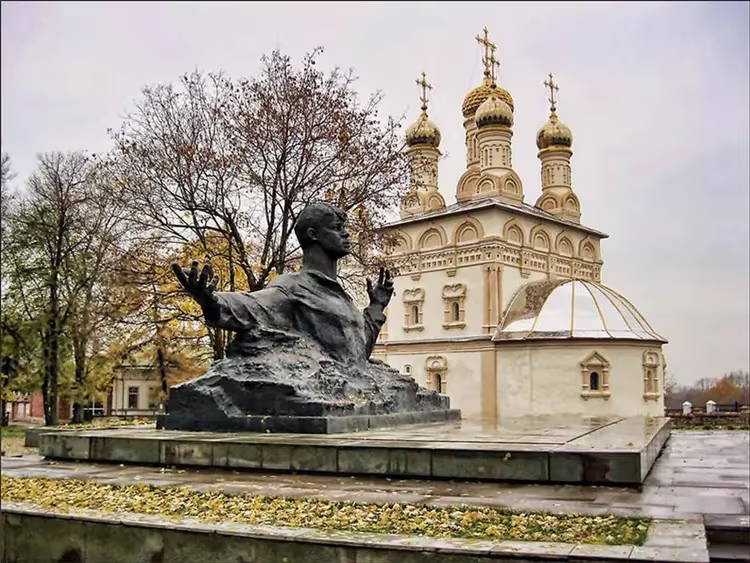
Oka – one of the most full-flowing and most beautiful rivers in Russia, has repeatedly appeared in the poems of Sergei Yesenin, the recognized son of his country. Therefore, there is nothing surprising in the establishment of monuments that are unique in their style, depicting this person – the great poet forever remains close to his native element – and this is already symbolic.
One of the most unusual monuments to Sergei Yesenin is a bronze giant, whose powerful figure “entrenched” in the Cathedral Park – and this “entrenched” should not be taken allegorically. The bronze composition of A. Kibalnikov has a rather peculiar appearance – the poet appears before the guests of the park with his arms spread wide, loudly reciting poetry – a giant of bronze comes out of the ground, crowning a horizontal composition, which in itself is amazing. The pedestal, made of a rare breed of granite, has a muted emerald-smoky shade.
It is decorated with a thin bas-relief – a figure of a crane soaring freely. The monument to the man who glorified his country surprisingly suits the poetic mood of the Cathedral Park with its panoramic views of the wide branches of the Oka tributary and the eternal rustling of old trees, which become especially beautiful in autumn and at the dawn of winter – rowan reddens purple, birches gently glow, sprawling trees fill with a hot blush maples.
Pavlov's Estate Museum
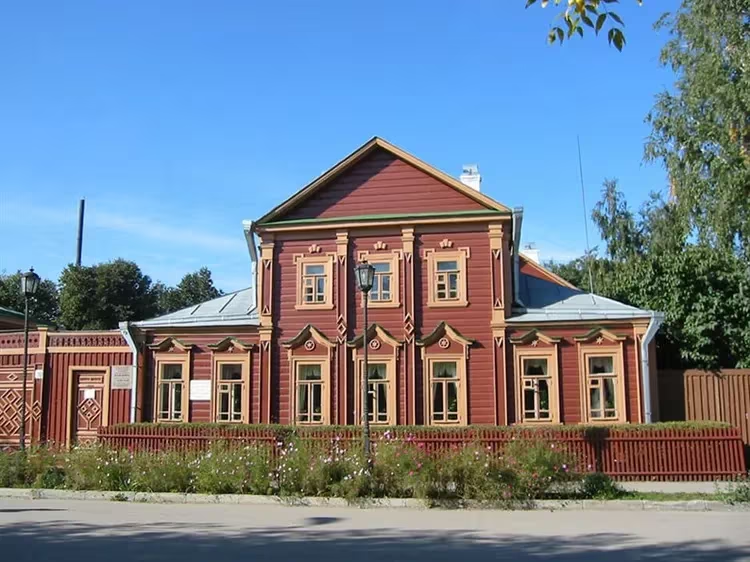
The name of Academician Pavlov, one way or another, was encountered by most people, including those far from the world of high science and physiology, and Pavlov's dogs also caused and continue to cause a certain resonance, and therefore a visit to the museum-estate, whose exposition is completely devoted to this outstanding without exaggeration man, will be a great addition to the tourist route. This place is endearing, because it is quite difficult to call it a museum in the full sense of the word – and this is wonderful in its own way.
The estate, where the scientist was born and spent part of his life, is a really cozy place – warm solid wooden buildings, sloping green roofs, an orchard that has grown rapidly over the past years – and all this came from the nineteenth century. And the exposition itself is everything that can help guests of the museum-estate to get to know Pavlov more like a person – these are his personal diaries, numerous correspondence and notes, as well as the memoirs of contemporaries who were lucky enough to get acquainted with the great mind of their time.
The museum conducts excursions of various kinds. Each of them illuminates a certain component of the life of an academician: whether it is a review of the scientific activity itself, the place that literature or painting occupied in his life, a somewhat unusual interpretation of dreams according to Pavlov’s teachings, features of the “relationship” between Pavlov and the sports world, and so on. The cost of excursions and the possibility of ordering them should be found in the contact center of the museum.
Museum-Reserve “Estate of S. N. Khudyakov”
As a rule, the name of Sergey Nikolaevich Khudyakov is associated with his most ambitious brainchild – the arboretum in Sochi, where a truly impressive collection of a wide variety of plants is collected, however, few people know about the origins of the creation of this place, and these sources are located in the Ryazan region, namely in the village of Erlino, where the first park-arboretum of Khudyakov was created.
The site for the first arboretum was excellently chosen – the noble nineteenth century architecture and the subtle English landscape style of the local parklands provided the perfect canvas for the work of a man of such extraordinary abilities. Initially, only local plants flourished on the territory of the then estate, sometimes diluted with something more exotic, but with the transfer of the estate to the ownership of Sergei Khudyakov, the situation changed rapidly – now even the rarest seeds were supplied from four corners of the world.
Today, the former park-arboretum has received the status of a museum-reserve, however, on its territory there are not only greenhouses, greenhouses and alleys, but also the old manor itself, a small cozy church, a rather modest nursery and even a boat pier, which were given their historical appearance. A visit to all these places in the complex leaves a really deep impression, and the ticket price, which does not exceed one hundred rubles, depending on the category of citizens, makes this place more than affordable to visit.
Ryazan Art Museum
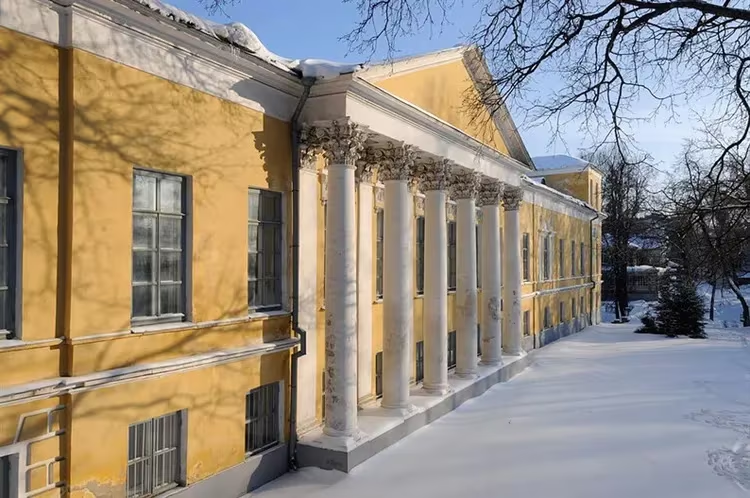
In the city you can find many monuments of architecture related to the periods of its most rapid and pathetic outward development. These monuments date back to the eighteenth and nineteenth centuries, when the most grandiose – even on a global scale – religious buildings were created. But the building, which today belongs to the art museum, was erected to this wave.
Classicism – solemnity and rigor, antique-style colonnades and a clear selection of the center. All this is clearly seen in the appearance of the mansion, which was built at the expense of Gavrila Ryumin, so that after some time it would be transferred to the local gymnasium, which arranged a boarding house for their pupils here. The history of this place already as a museum begins at the dawn of the twentieth century.
It is noteworthy that most of the collection – and it is by no means small, numbering more than twelve thousand exhibits – are art objects voluntarily donated to the museum by ectusiast artists and patrons interested in the dynamic development and popularization of both Russian art and European cultural traditions.
The permanent exposition is represented not only by canvases, but also by sculptural compositions, engravings, jewelry, and porcelain items. It is worth visiting this museum, especially since tickets for one of the most complete collections of art objects in Russia cost up to forty rubles.
Kazan Convent
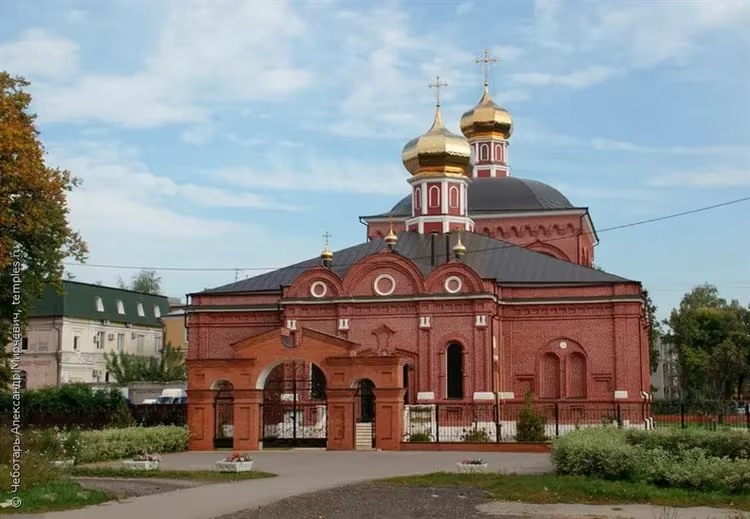
It is regrettable to realize, but the fate of some of the most ancient monasteries, temples and churches, one way or another, was associated with many dramatic or even bloody events to a greater extent than the history of the same ancient monuments, but not of a religious orientation.
This is especially noticeable against the backdrop of the history of the Kazan Convent, which, over the five centuries of its existence, managed to change its location, turn from a house of prayer into a house of prisoners – there was a concentration camp on its territory, it was destroyed and beheaded, in order to eventually be restored and again allowed to conduct services. The first name of the modern Kazan convent was Yavlensky. It was a generalized name for those holy places where the “appearances” of icons took place – and in our case it was the well-known Kazan icon.
The first monastery was founded on a high hill, from which an impressive panorama of the confluence of the Trubezh and Lybed rivers opened, but today's monastery is located in the historical part, nestled among rather old, but, nevertheless, residential buildings today. The main landmark in the search for the building of the monastery is Freedom Square – it is up to it that trolleybuses three and ten, as well as bus number eighteen, follow. The monastery itself is within walking distance.
Ryazan Kremlin
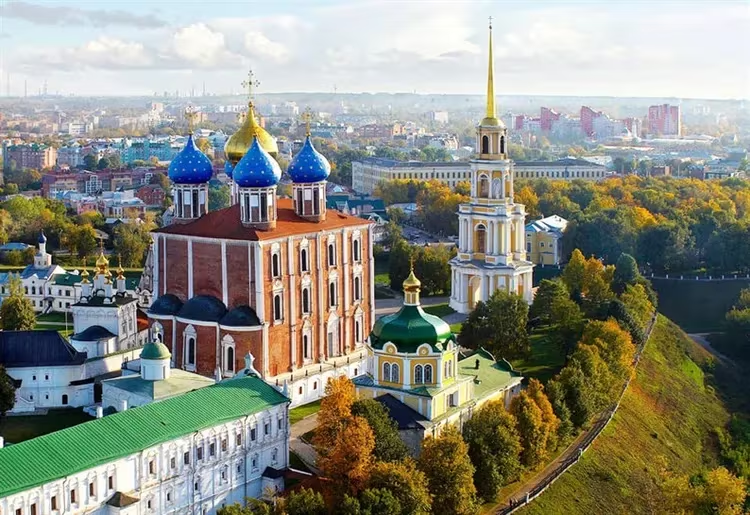
It is precisely the place where the concentration of what can be called the material embodiment of history is greatest. These are architectural monuments erected, or at least fragmentarily preserved, starting from the eleventh century. Of the eighteen main elements of the Ryazan Kremlin complex, the most notable are the Assumption Cathedral, as well as the bell tower located nearby.
The cathedral was built according to the project of the talented architect Yakov Bukhvostov, who managed to create an ensemble of unique beauty, made of white stone and decorated with fine carvings, and none of its elements was repeated. The master himself, despite the recognition of his talent, remained a serf. It is noteworthy that once these buildings served as a “lighthouse”. They were visible and still visible from almost all corners of the city.
Another large-scale building is Oleg's Palace, which is considered the most important non-religious building in the Kremlin complex. The palace is made in the baroque style in combination with tower elements, which gives it a peculiar charm. Today there are six permanent exhibitions, which can be visited separately and, accordingly, paid separately for each ticket, or you can visit the Ryazan Kremlin in a complex, while excursion support is possible only for a fee.
Drama theatre
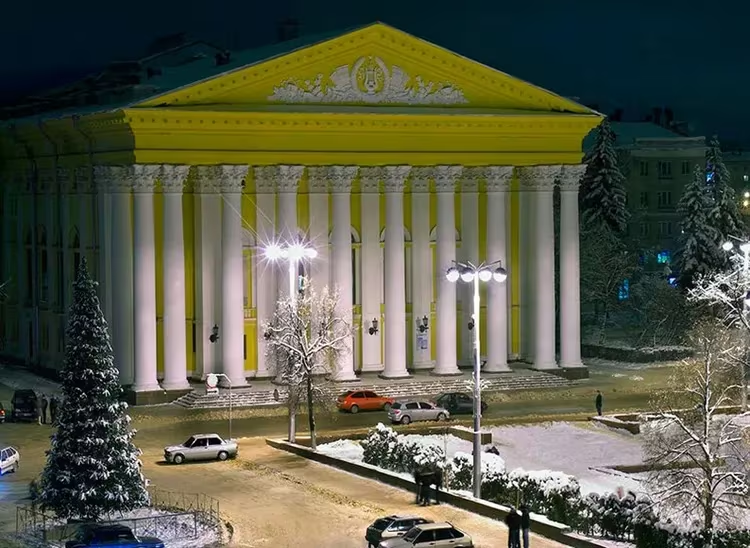
The cultural life of the city would be incomplete without its theatrical component, which is traditionally associated with the name of the well-known poet Gabriel Derzhavin. It was with his all possible assistance that the then first Opera House was opened, which gradually turned into a drama theater. The importance of the drama theater as a cultural element can be judged at least by the fact that the premiere of the comedy, as the author himself defined it, Nikolai Gogol's The Inspector General, was first held not in the then brilliant capital – St. Petersburg, but precisely in Ryazan, precisely on its stage.
And in the future, the theater continued to hold its positions, giving a start to the career of actors who received all-Russian fame, periodically deciding on adventures and unusual elements of productions, which were often noted in theatrical circles. The modern repertoire of the theater is quite diverse and is perfect for people who are ready to perceive the works of the classics, complex in structure and semantic content – Dostoevsky, Ostrovsky, Nabokov.
In addition, the work of the brilliant English playwright William Shakespeare often comes to life on stage. The theater is accessible to the public – the price of the most expensive tickets does not exceed six hundred rubles, and a flexible system of discounts can reduce the cost by almost fifty percent. Another plus worth noting is the desire of the theater to keep up with the times – the official website, where you can also order tickets, works quite stably.
Aquapark “Gorki”
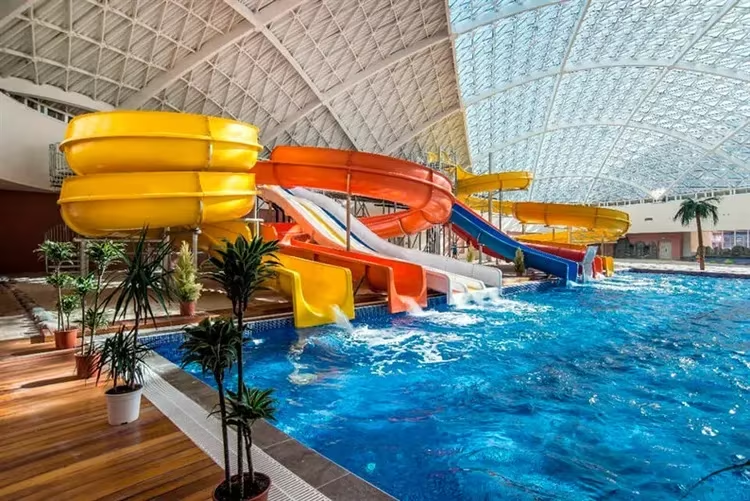
Not far from the city there is a small village of Polyany, however, it is difficult to say that this place is a classic version of the Russian hinterland, and it is even more difficult to call it sparsely populated – there are always a lot of people here – mostly tourists who decide to spend time with benefit and pleasure in the local entertainment complex.
Okskaya Zhemchuzhina combines a rather impressive list of various establishments under one roof, but the most popular is the Gorki water park, which is one of the largest indoor water parks in the country. Spending just an hour or a whole day – this, of course, depends on the financial capabilities and personal preferences of everyone, but a visit to the water park will not leave indifferent either children, for whom there is a special amusement zone, or adults who are not averse to experiencing their share of extreme sports.
For those who are not interested in extreme sports, the Gorki water park offers an equally pleasant stay, but already in a jacuzzi. Adherents of traditionalism can spend time in a real Russian bath. For those who are hungry, there are cafes and several restaurants with quite decent cuisine in the water park complex.
Friendship Park
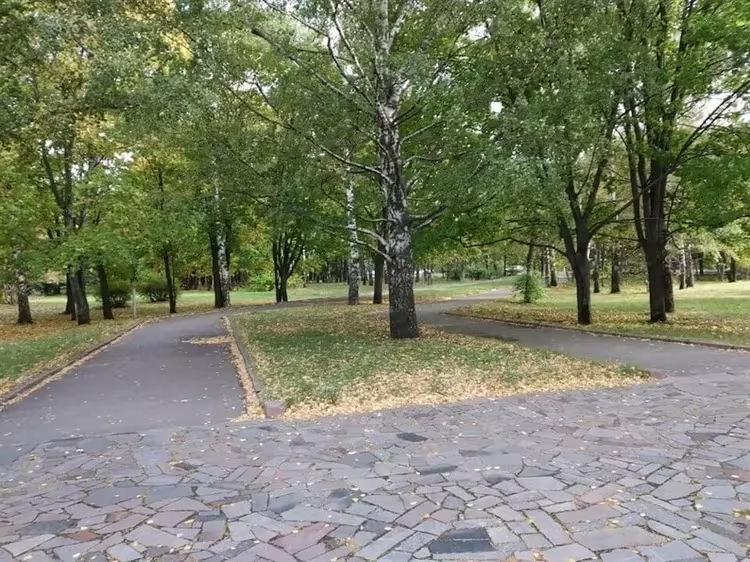
The city has many gardens and parks that appeared at different historical times. Many of them have special places, original monuments associated with the name, specific events. The city's Friendship Park was created as a gratitude for the joint actions of the Soviet-Polish Brotherhood in Arms. This is evidenced by a monument erected in 1983 at the main entrance to the green zone. The architectural ensemble consists of figures of two soldiers of the Soviet and two Polish armies running with weapons.
They are shown during a general attack on the enemy. Between them, a jet volley of the famous Katyusha rushes to the height. Similar monuments stand in Sennoy Square in Ryazan and in Warsaw on the square of the Vilensky Station. The walking area of the park does not have modern attractions, entertainment buildings. Mothers with prams and elderly people come here for peace and quiet. The park is clean, work is underway to decorate flower beds, repair paths, and install benches for relaxation.
memorial park
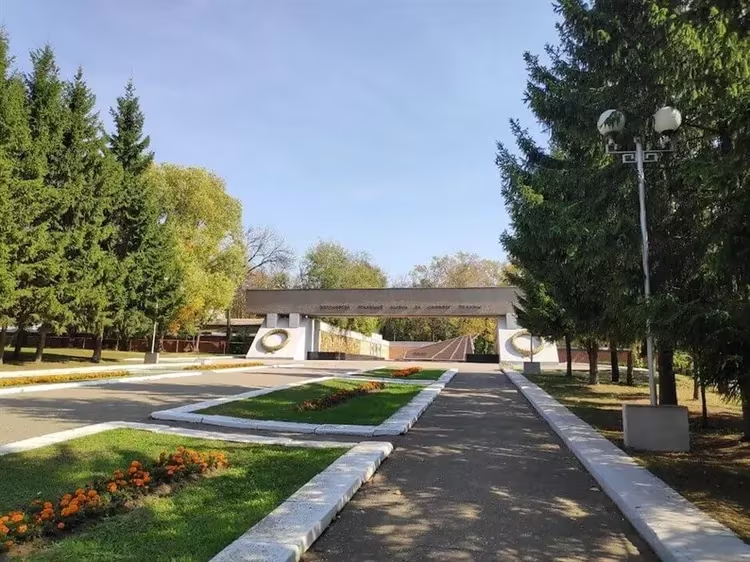
The ancient place is associated with burials of the 18th century or the Sorrowful Cemetery. Here, in 1807, a church appeared, which is still operating today. At the beginning of the 20th century, the remains of victims of repressions, soldiers who died in the Great Patriotic War were buried here. Now there are graves of more than 2 thousand soldiers, Leningraders, evacuated to Ryazan. During the 40th anniversary of the victory in it, a memorial of memory appeared here, which gave the name to the park.
Together with him, the memory zone became the venue for special events related to public holidays in honor of anniversaries. The project of the monument at the military cemetery was developed by local architects. Above the entrance to the park, on a massive arch, the words “Immortal who gave his life for the freedom of the Motherland” are written. A bronze bas-relief has been erected and the Fire of Memory is burning.
Lower city park
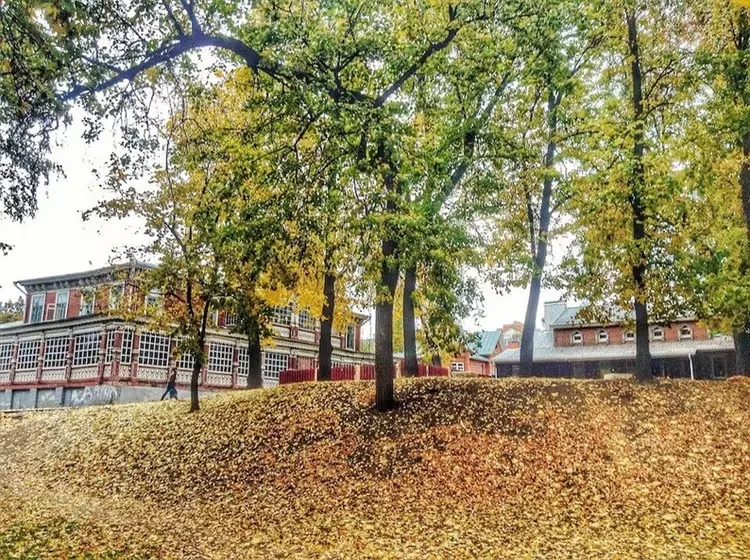
Part of the city park or “Drunken Park”, as the townspeople used to call the green zone, is famous for the sculpture “Mushrooms with Eyes” and is a popular recreation area for residents. The famous cascade of ponds of the old Ryumin estate no longer exists. Only hilly terrain with lowlands and ravines reminds of them. But there is something to see here. Until now, there is a beautiful wooden mansion or the place of residence of the Nobility Assembly. The bizarre carved elements of the building arouse interest and surprise.
The buildings of the Ryazan Philharmonic Society, the Gostiny Dvor, the monument to Pavlov, the Pozhalostin Art Museum have been preserved in the park. The building used to house Ryumin's palace. Graceful snow-white columns, exterior elements, collections of little-known world artists, collected by the patron, attract people to get acquainted with the historical center. In a quiet green area it is nice to take a walk, relax, visit a cozy cafe.