




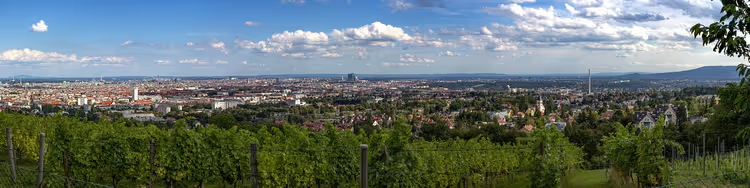
Millal minna Viini: ilm ja pühad hooajati
You can plan a trip to Vienna any time of year, but the month makes a big difference. In July the city heats up above 30 °C, and you look for shade by the fountains. In May you stroll through blooming parks with almost no lines. There is no distinct rainy season here, and winters in Vienna are milder than in the rest of Austria (according to the Vienna tourist office, 09/2026).
The difference between months is noticeable in both prices and events. We have gathered Vienna's seasons in one article: weather by month, major holidays, tourist flow, and tips for each time of year.
Ad: this article contains affiliate links, we earn a commission if you book through them, at no extra cost to you.
When to go to Vienna: seasons in short
💡 In short:
- Best months for the city and walks: May and September.
- Swimming and waterfront beaches: July and August.
- Christmas markets: from mid-November to late December.
- Wiener Eistraum ice rink: from January to March.
- Fewest tourists: January and February.
- Weather and best months: 09/2026, verified on the WienTourismus website.
Below we break down each season separately. You will see what is happening in the city, which events fall on your dates, and where accommodation is cheaper at that time.
Vienna in spring: March-May
Weather in spring
In March the air has not warmed up yet, and a warm sweater will come in handy. By mid-April it becomes noticeably warmer. May often turns out to be the most pleasant spring month: sun, greenery, and the first cafe terraces.
In spring the weather is changeable. Sun gives way to wind and a short rain within an hour, so keep an umbrella in your bag. Overall, spring serves as a gentle transition between the cold and the summer heat (according to WienTourismus data, 09/2026).
What to see in spring
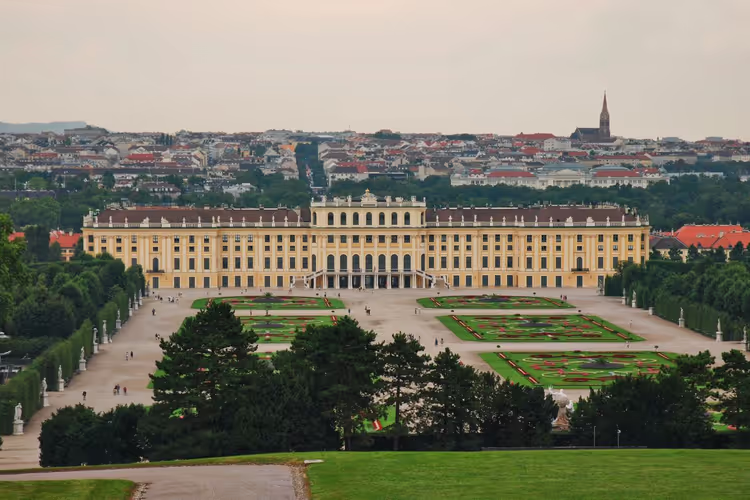
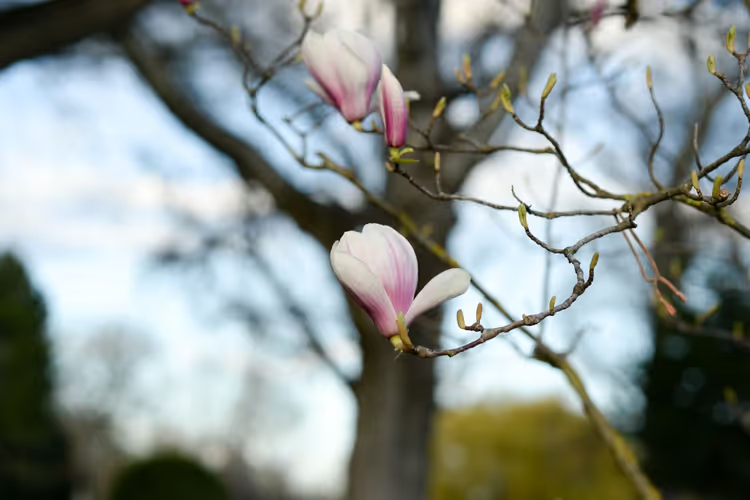
Parks and gardens come alive: roses bloom in the Volksgarten near the Hofburg, and the park of Schönbrunn Palace turns fresh green. Look for quiet in the university's Botanical Garden: there are few tour groups and many rare plants. Coffeehouses open their Schanigärten, summer terraces on the sidewalks, and you can sit outside again with a cup of Melange.
Events in spring
- Easter market in front of Schönbrunn Palace (March-April): craft stalls, painted eggs, and concerts on the baroque square.
- Easter markets am Hof and on Freyung: the same goods, but in the center and with fewer tourists.
- Genussfestival in Stadtpark (May): Austrian producers bring cheeses, wine, and sausages.
- Wiener Festwochen (May-June): the city's main cultural festival with theater, music, and performances.
Spring tip
April and May are good for combining the city and nature. The summer crowds are not there yet, museum lines are shorter, and hotels are cheaper than in high season. Do a museum in the morning and leave the park for the afternoon.
Vienna in summer: June-August
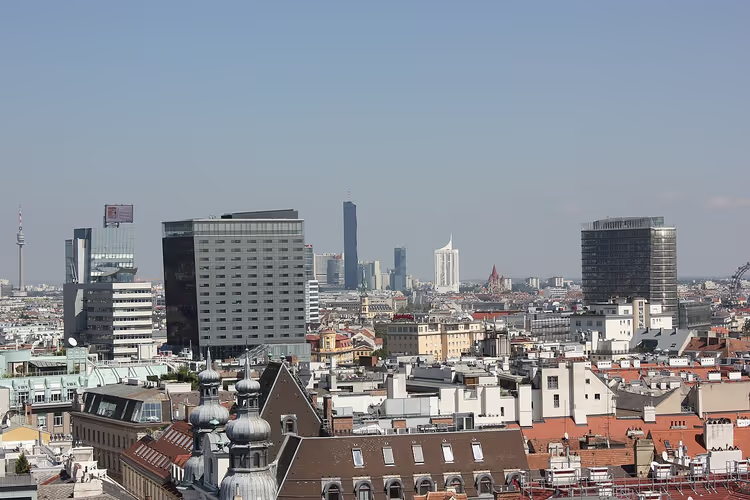 © Andrzej Otrębski · CC BY-SAFoto: Andrzej Otrębski, CC BY-SA (https://creativecommons.org/licenses/by-sa/4.0), Wikimedia Commons
Weather in summer
Summer in Vienna can be hot. During the day the temperature crosses 30 °C, and on some days it goes above 35 °C. In the afternoon a thunderstorm often builds up and quickly cools the city. By evening the air stays around 20 °C, and you can comfortably walk until dark (verified on 12.09.2026 on the WienTourismus climate page).
What to see in summer
The Danube Canal (Donaukanal) turns into an urban promenade with summer bars, beach volleyball courts, and graffiti. In the heat you head to the Danube Island and the Old Danube: there are swimming areas, sailboats, and paddleboards. Museums, where the temperature stays pleasant, offer relief from the heat. The Albertina, the Kunsthistorisches Museum, and MuseumsQuartier provide both cool air and art.
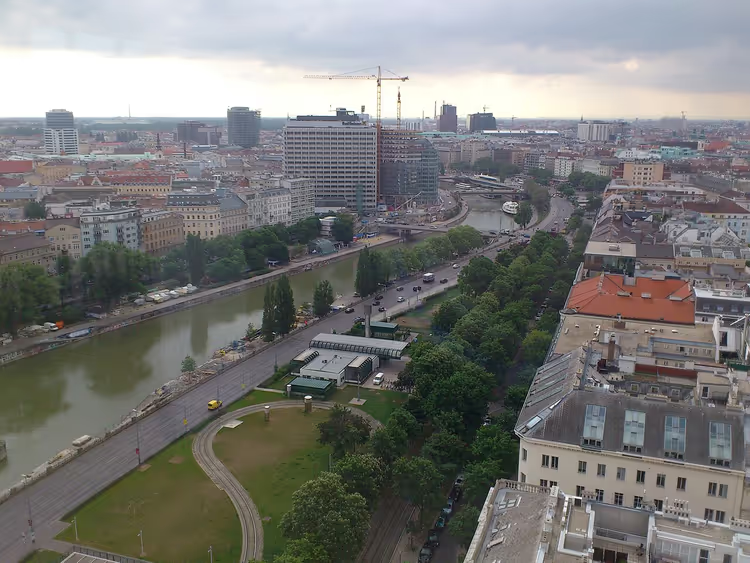 © Herbert Ortner · CC BYFoto: Herbert Ortner, CC BY (https://creativecommons.org/licenses/by/3.0), Wikimedia Commons
In the evening the city lives outdoors. In the MuseumsQuartier courtyard people sit on Enzis, the colorful lounge chairs, and on Rathausplatz they watch operas and concerts on a big screen.
Events in summer
- Donauinselfest (June): Europe's largest open-air festival, three days of music on dozens of stages, free admission.
- Film Festival am Rathausplatz (July-August): music and cinema under the open sky, free admission.
- Jazz Fest Wien (June-July): world jazz names at the Vienna State Opera and other venues.
- ImPulsTanz (July-August): a dance festival with performances and workshops.
- Sommernachtskonzert Schönbrunn (June): the Vienna Philharmonic plays for free in the Schönbrunn park.
Summer tip
Bring a swimsuit. The city has many swimming areas, and Gänsehäufel on the Old Danube is the most popular choice. See the center in the morning before it gets scorching, and head to the water after lunch.
Vienna in autumn: September-November
Weather in autumn
September often turns out summer-warm and is considered one of the best months for a trip. In October golden foliage and clear air arrive. By November it gets colder, fog appears, and in the evening you already need a jacket.
What to see in autumn
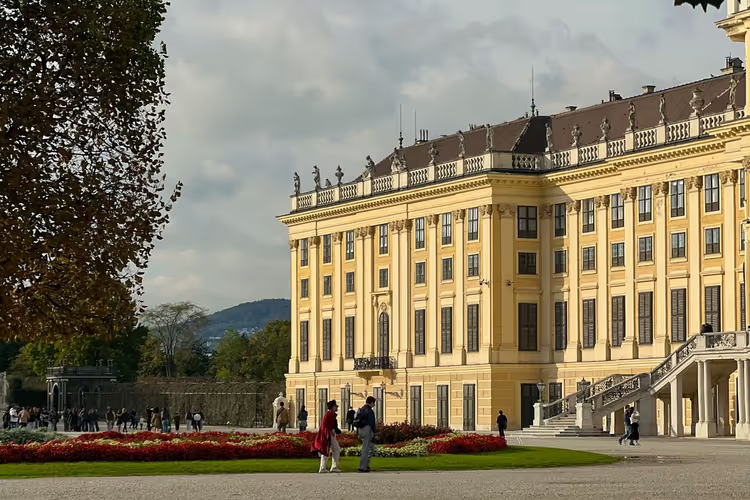
The avenues of Schönbrunn Park glow yellow, orange, and red in September and October. The boulevards of Pötzleinsdorfer Schlosspark, Türkenschanzpark, and Augarten look just as good. The vineyards on the outskirts are also ready for harvest, and with them the Heurigen season opens: in the wine villages of Grinzing, Nussdorf, and Stammersdorf they serve Sturm and young wine, with cold plates of cheese and sausages. You get there by tram, look at the city from above, and return to the center the same evening.
Events in autumn
- Wiener Weinwandertag (September): routes through the vineyards with tasting stations.
- Viennale (October): an international film festival in the city center.
- Nationalfeiertag (October): federal museums are open for free.
- Lange Nacht der Museen: more than a hundred museums stay open until late night on one ticket.
- Halloween in the Vienna sewer system: special evening tours through the collectors.
Autumn tip
September is chosen by those who want warm weather without the summer crowds. The cultural season starts anew, the grapes are already being harvested, and accommodation prices go down. Take the tram to the vineyards one evening and look at Vienna from the hilltops.
Vienna in winter: December-February
Weather in winter
Winter in Vienna is cold but rarely harsh. The temperature stays around freezing, and snow does not fall every year. January is usually the coldest, and in February the days become noticeably longer. Warm layers, a good coat, and weather-appropriate footwear are essential (according to Viini turismiinfo andmed, 09/2026).
What to see in winter
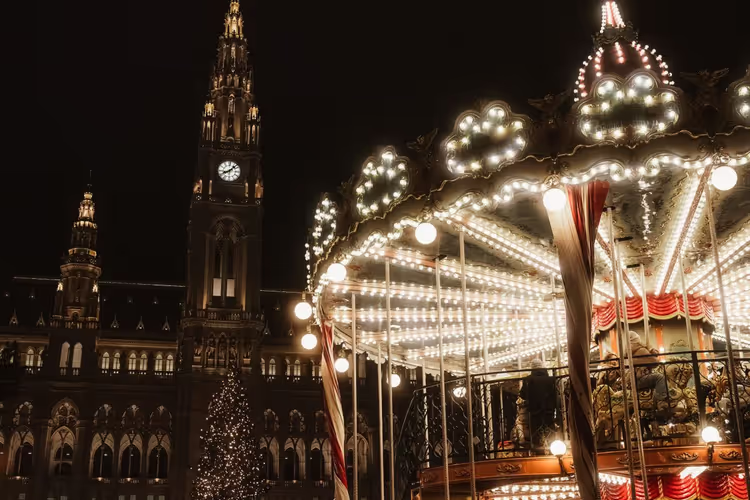
From mid-November the Christkindlmärkte Christmas markets open, and there are more than two dozen of them in the city. The largest one stands on Rathausplatz: lights, mulled wine, and craft stalls against the backdrop of the neo-Gothic city hall, where the whole city heads in the evening. Other spots are more atmospheric: Spittelberg with handmade goods in the lanes, in front of Schönbrunn Palace with its imperial setting, and Freyung with the Altwiener Christkindlmarkt.
From January to March the Wiener Eistraum ice rink operates on Rathausplatz. The paths wind into a lit park, and skating to music is memorable for a long time. The balls follow the same seasonal rhythm: from January to March the city hosts hundreds of dance evenings, from the Opernball to small guild balls that guests can also attend.
Between walks you step into coffeehouses. Café Central and Café Sperl are especially cozy in winter, and Vienna's coffeehouse culture is listed as UNESCO intangible cultural heritage.
Events in winter
- Christkindlmärkte (from mid-November to late December): more than twenty markets across the city.
- Silvesterpfad: on New Year's Eve the center turns into one stage with waltzes, music, and celebration at St. Stephen's Cathedral.
- Wiener Eistraum (January-March): ice skating on Rathausplatz.
- Opernball (February): the main ball of the year.
- Fasching (February): carnival parades that children love.
Winter tip
The best days fall at the end of December, between the holidays. Most markets close on December 24-26, and only a few remain open after Christmas. The city is lit up, and museums prepare special programs. On New Year's Eve follow the Silvesterpfad from St. Stephen's Cathedral through the center.
Weather in Vienna by month
Below are average values for the period from 1991 to 2020 according to data from the Hohe Warte station (WienTourismus, 09/2026). Noticeable deviations are possible during the day, so check the forecast before your trip.
Month | Daytime | Main thing | Tourists |
|---|---|---|---|
January | around 0 °C | Wiener Eistraum, ball season | few |
February | around 0 °C | Opernball, Fasching | few |
March | from 3 to 10 °C | Easter markets | average |
April | from 8 to 16 °C | parks blooming, Schanigärten | average |
May | from 12 to 22 °C | Wiener Festwochen | average |
June | up to 26 °C | Donauinselfest, swimming areas | many |
July | up to 30 °C | Film Festival on Rathausplatz | very many |
August | up to 30 °C | ImPulsTanz, swimming areas | very many |
September | from 13 to 23 °C | grape harvest, Heurigen | average |
October | from 8 to 16 °C | Viennale, Nationalfeiertag | average |
November | from 3 to 9 °C | Christmas markets open | average |
December | around 0 °C | Christmas markets, Silvesterpfad | many |
Pick the row that matches your goals: swimming, markets, or museums without lines. If you want both warmth and uncrowded streets, look at May and September.
When to book a hotel in Vienna
In high season prices rise, and good options disappear several weeks in advance. December, May, and September are exactly such months. During ball season it is expensive only on the dates of major balls. It is easier to find accommodation in January after the holidays, in February, and in November.
Book two to three months ahead if your dates are tied to the Opernball or the Christmas markets. If you are traveling for the city and parks, choose a hotel inside the Ringstraße boulevard and do not waste time on commuting. Compare options and check Hotellid: Vienna (Trip.com).
⁉️🤔 Frequently asked questions
When is the best time to visit Vienna for the first time?
May and September are good for a first trip. The weather in these months is steady, lines are shorter than in summer, and the city lives its normal life: Schanigärten are open, and the Heurigen season is underway. If the Christmas atmosphere matters more to you, come in December and book your hotel in advance.
What to do in Vienna in summer when it is hot?
Head to the water: Danube Island, the Old Danube, and the Gänsehäufel swimming area offer real coolness. During the day hide from the heat in museums like the Albertina or the Kunsthistorisches Museum, and in the evening return to Rathausplatz for a free open-air film screening. In the hottest hours, early morning and evening will help you.
What to do in Vienna in winter if there is no snow?
In winter the city runs on three things: the Christkindlmärkte Christmas markets, the Wiener Eistraum ice rink on Rathausplatz, and coffeehouses. Between them, go to a museum or a ball. Vienna gets little snow, and it often just dusts the rooftops, so count on the lights and architecture rather than snowdrifts.
Is it worth going to Vienna in November?
In November the city quiets down between the Heurigen season and the Christmas markets. The weather is gray and cool, but there are fewer tourists, and you can easily get museum or opera tickets. The opening of the Christkindlmärkte in the middle of the month makes a pleasant finale for the trip.
Is autumn really cheaper?
After the September peak, accommodation prices drop, and the weather in October still allows you to walk all day. September itself remains popular, so it is better to book a hotel in advance. But in October and November you get golden parks, the Viennale, and uncrowded museum halls.
In short: what is worth booking
If you have a short trip in May or September: take a hotel in the center and a ticket for a morning museum slot.
If you are going in December for the atmosphere: plan your evenings on Rathausplatz and Freyung, and book accommodation two to three months ahead.
If you have a family and hot weather: look at the swimming areas on the Old Danube and morning walks through Schönbrunn Park.
Compare dates using the table and check ekskursioonid ja piletid GetYourGuide'is.

Väike toimetus, mis kirjutab reisijuhte omal käel reisijatele. Reisime ise, kuid ei ole käinud igal pool, seepärast kontrollime hindu, lahtiolekuaegu ja kohalesõitu ametlikest allikatest.