
10 best museums in Suzdal – list, photo and description, opening hours, prices 2021, map
Suzdal is one of the forged links of the Golden Ring of Russia, a fabulous city in which monuments of hoary antiquity naturally combine with the richest natural splendor. For Suzdal, the landscape is almost canonical, in the foreground of which spilling river arms shine. And above them, sharply crashing into the blue of the sky, white-stone walls rise, bells sparkle.
Museum complex “Kremlin”
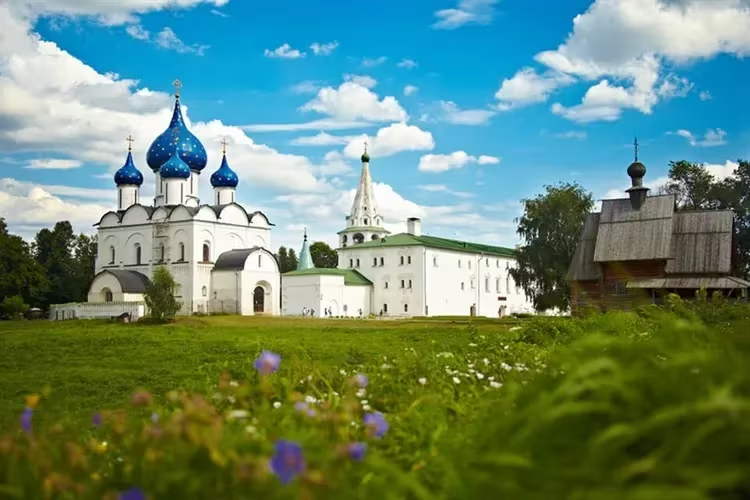
Due to the fact that state cultural institutions, private interactive sites in the Vladimir region resemble nesting dolls or fabulous multi-headed snakes in structure, it is rather difficult for tourists to figure out which of the Kremlin complexes they are talking about.
There is only one Kremlin on the territory of Suzdal. This museum site includes several temples built in different styles, partially preserved fortifications, and chambers. It is here that visitors get a great opportunity to get acquainted with the masterpieces of ancient Russian art, including icon painting.
The second complex of monuments is located in the regional center itself. The landmark is associated with the name and biography of Prince Andrei Bogolyubsky. The correct name for such a Kremlin is “children”. The first fortifications were erected here more than 800 years ago. “Detinets” survived after the Mongol-Tatar invasion.
More precisely: a significant part of its buildings was completely rebuilt by the 15th century. They became the basis of the Pecherny city. On the territory of the Vladimir citadel, as in Suzdal, earthen ramparts, fortress walls, and temples have been preserved. Its magnificent white-stone cathedrals form a single architectural ensemble.
Museum of Wooden Architecture
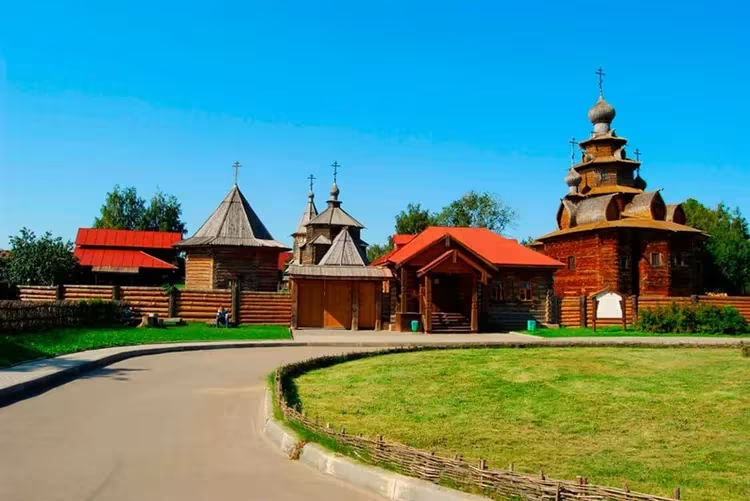
There is no other place like it anywhere in the world. Its unique buildings are located in different parts of the Vladimir region. The most famous objects of the museum-reserve are located in Suzdal. We are talking about buildings that are recognized as its main exhibits.
It is from Suzdal that it is better to start acquaintance with the unique monuments of wooden architecture of the Vladimir region. The distance between it and the regional center in a straight line: 32-36 kilometers. On the Suzdal part of the museum complex, the authentic life of the Russian village is recreated. The restored huts contain: original peasant utensils, furniture, household items.
An important part of the Vladimir-Suzdal complex: the Church of the Transfiguration and the Resurrection. Bell ringing floats above them today, prayers are regularly held in the buildings. In Suzdal you can see authentic windmills.
It is noteworthy that the residents and guests of the city call the outbuildings recreated near them near the river “huts on chicken legs”. They look so colorful. Another well-known attraction of the museum-reserve is the “Tea house” of the merchant Agapov.
Museum Complex of the Spaso-Evfimievsky Monastery
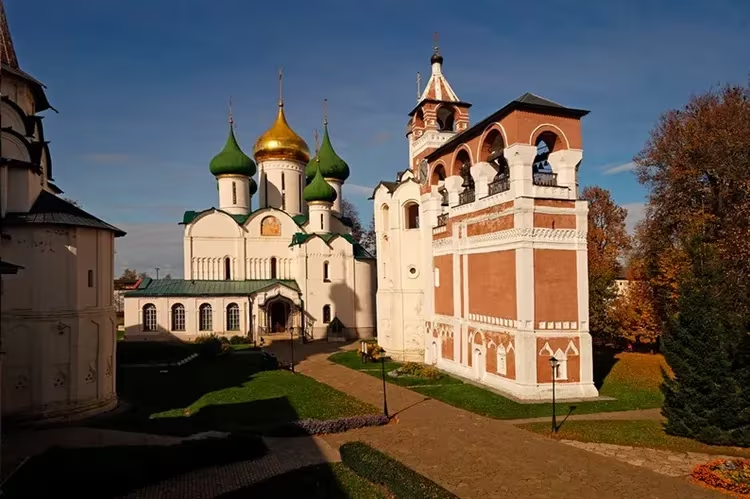
A unique ancient monument on the territory of the Suzdal region of the Vladimir region went down in history under the name “Russian Bastille”. For its time, it was an absolutely impregnable fortress, where the princes took refuge from the persecution of enemies.
It is natural that today you can see ancient weapons in the museum halls, and not just church books, precious temple utensils. The monastery is closely connected with the name of St. Euthymius. He was a contemporary of Sergius of Radonezh and did a lot in an attempt to stop the enmity between the Russian princes.
The temple structures have a heavy gloomy fate. These walls remember various prisoners, including the legendary seer Abel, the Decembrists, and church leaders. Power changed in the state, but the “prison status” of the monastery remained.
Full restoration work was carried out only half a century ago. Specialists saved towers, temples, outbuildings from further destruction. Nowadays, a museum and a monastery coexist on the territory of the complex, new expositions are opened, cultural events, divine services, blessings of water, processions are held.
Posad house
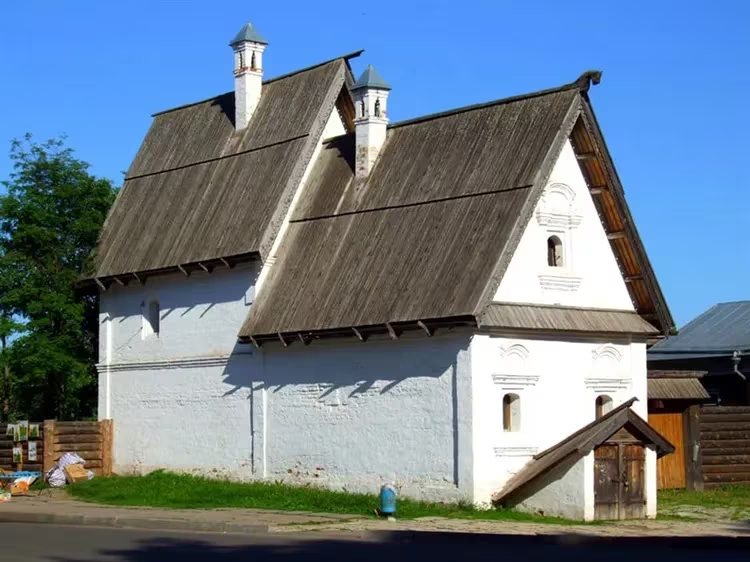
This house is the rarest not only within Suzdal, but throughout Russia, a monument of residential stone architecture. It dates from the end of the 17th century. Until now, researchers cannot agree on who was the first owner of the township house – some argue that it was some kind of clergyman, others insist that the house belonged to a wealthy family of taverners or kalachniks.
One way or another, but the Posadsky house consists of two buildings of different times, each of which is covered with a gable roof. The stonework was upholstered with yew from the outside, and the walls were modestly decorated with fine stone carvings.
At the end of the last century, the house was purchased at the expense of the Vladimir-Suzdal Museum. After a series of restoration works, the furnishings of the camp house resembled the pre-Petrine era with a rich iconostasis, wide benches, wooden chests and a tiled stove.
The townhouse is open from 10:00 to 16:00 from Saturday to Tuesday, on other days it is open until 17:00. The day off is Thursday.
Command hut of the Intercession Monastery
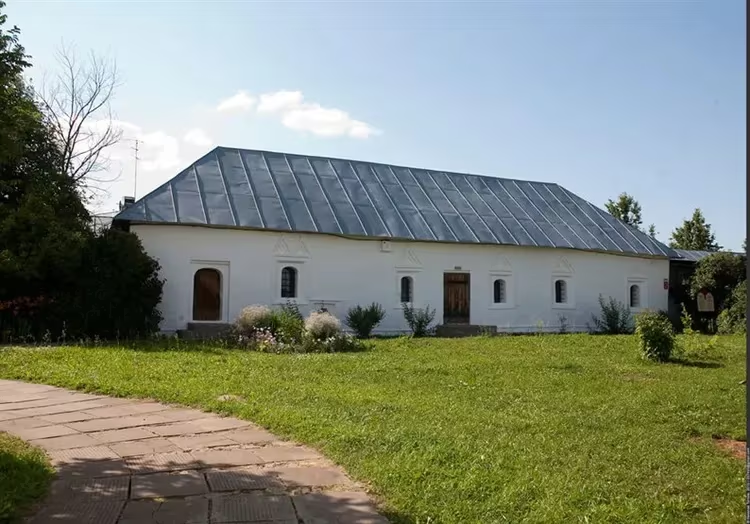
The command hut is also known as the Judgment House, which is not surprising, because not only the administrative center of the monastery itself was located here, but also an interrogation room for delinquent nuns. The sentences were carried out here. The hut itself was built in the first years of the 18th century.
Beneath this seemingly bright building, where dilapidated documents were stored in large chests, there is a stone bag in which peasants from the surrounding villages or nuns sat on “bread and kvass”, if the grounds for detention turned out to be compelling enough.
Similar structures are quite common among the architectural monuments of this period.
The command hut is open to the public from 10:00 to 18:00 on all days except Wednesday.
The Wax Museum
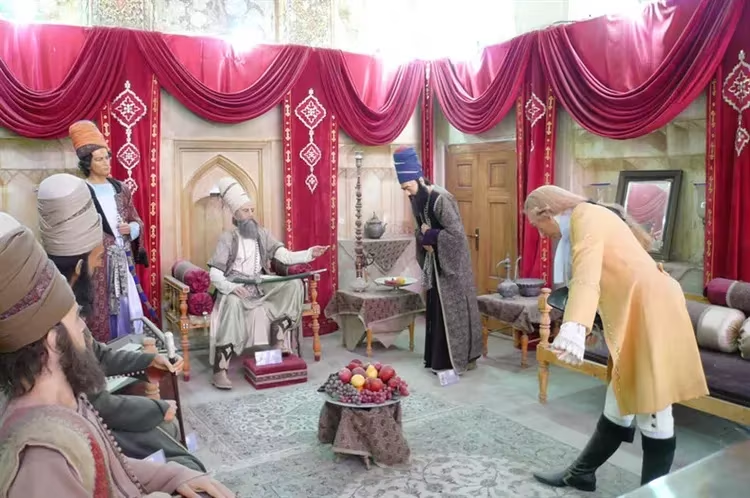
The beginning of the modern exposition of the Suzdal Wax Museum was laid in Moscow at the end of the twentieth century, when a small exposition was opened in Sokolniki, which at that time consisted of nine figures. The central place was occupied by the sculpture of Vladimir the Great.
The exhibition was successful, and over the next twenty years it not only expanded significantly, but also traveled all over Russia, North America and many European countries.
Now the exhibition is located in Suzdal and has more than a hundred and fifty exhibits. With a special similarity, the faces of Ivan the Terrible, Peter the Great, as well as the masters of the Russian word: Pushkin, Gogol, Dostoevsky and others are made.
There are more modern political figures here, for example, the perfectly recognizable Fidel Castro with a cigar and the eternally frowning Churchill.
Open daily from 10:00 to 19:00.
Temple of Boris and Gleb
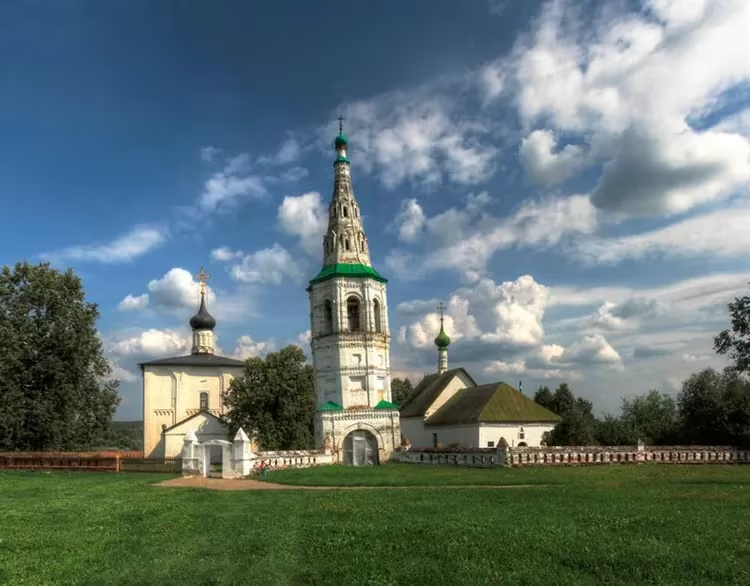
Before visiting Suzdal itself, it is worth visiting the small village of Kideksha, which is located in its vicinity. It was here that the residence of Yuri Dolgoruky was once located. It, like other buildings of this village, belongs to the XII-XVII centuries.
This fact automatically makes local architectural monuments indisputably significant. The most valuable is the temple of Boris and Gleb, which is the oldest white-stone church of all those now standing on Suzdal land.
The temple has retained its rugged beauty. Its decoration would be considered scant today, but this place has a different character, and the old faded frescoes with images of birds and flowers best convey it.
From Thursday to Sunday, the temple is open from 10:00 to 17:00, on other days it closes at 16:00. Day off – Wednesday
Shchurovo settlement
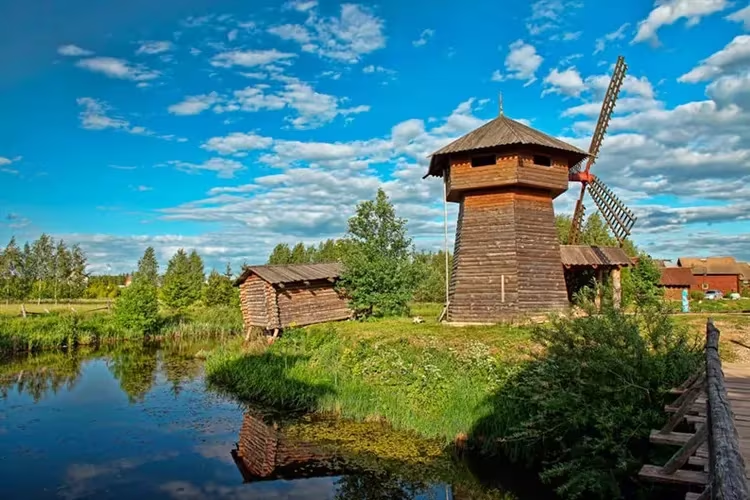
Shchurovo hill fort is made in the style of an ancient Slavic settlement. To some, the setting may seem vaguely familiar. There is nothing surprising in this, because it was the Shchurovo settlement that became part of the entourage in Lungin's film “The Tsar”.
A forge, a mill, an armory, wooden huts with tiled stoves and even a field kitchen – all this allows you to truly immerse yourself in the atmosphere of old Russia. There are also numerous platforms for those who want to learn how to throw a spear, shoot from a bow or even bake bread in the oven.
The complex is available for visiting from 11:00 to 16:00 daily. Usually on weekdays, by 14:00, those wishing to visit a guided tour gather.
Icon painting workshop of Andrey Davydov
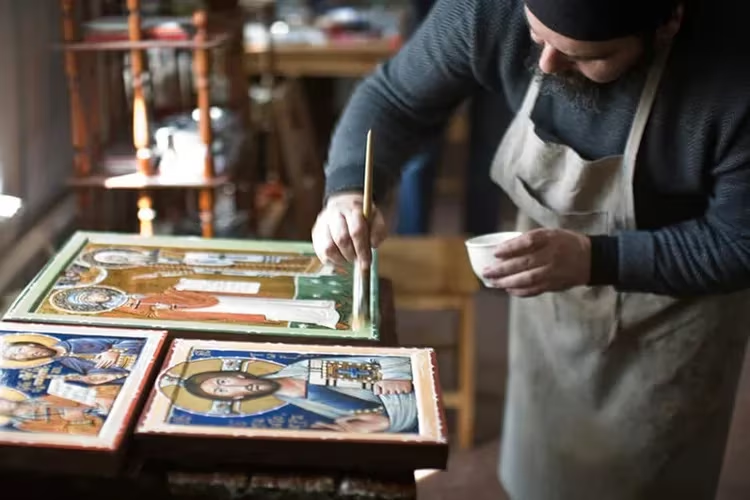
This workshop belongs to Andrei Davydov, the rector of churches located on the territory of the Suzdal Kremlin. He is one of the brightest representatives of modern Russian religious painting.
In the workshop you can buy icons made in a traditional manner using natural pigments. Sizes and plots vary, but it is not they that cause delight, but how masterfully the master has learned to deal with the almost canonical technique of egg tempera.
In addition, he works with wax painting, within the framework of which the most ancient icons of the 1st-6th centuries were created. Workshop visit is free. You can purchase icons on the spot or place a pre-order.
Andrey Davydov's workshop is open from 09:00 to 22:00 daily.
House of Misha Balzaminov
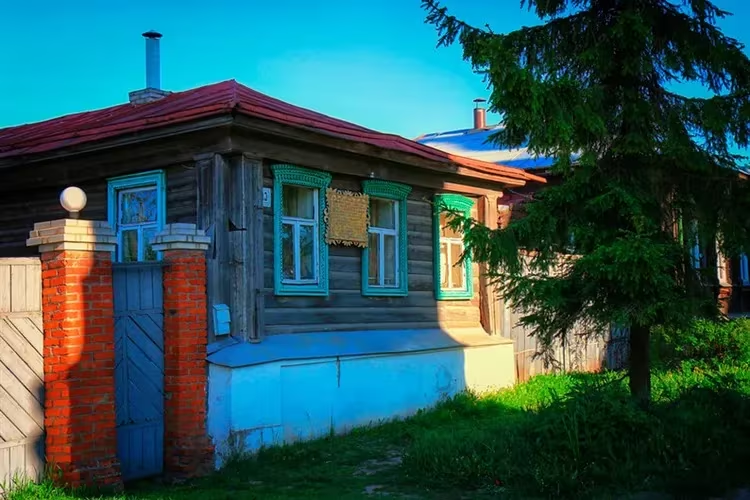
More than thirty years ago, the filming of the cult film “Balzaminov's Marriage” took place, but even today the guests of Suzdal are happy to visit memorable places, one way or another connected with this film.
The house, which even today evokes persistent associations with Georgy Vitsin, stands on Staraya Street. The thirteenth house does not stand out against the background of similar buildings. In addition, the dovecote, which was then specially completed for the duration of the filming, is not here now. But the yard is excellently preserved.
If you go to Suzdal and decide to find Balzaminov's house, it will be much easier for you to find it than, say, five years ago. Today, a sign is installed on the house, which says that it was here that filming took place back in 1964.