
Sights of Tula – 25 most interesting places
The Tula region has a really colorful history. Many traditional crafts such as the production of gingerbread or the manufacture of samovars got their start here. That is why the sights of Tula are so diverse and interesting in cultural, historical and even national aspects. We will tell you where to go and what to see first. And with the help of our review you can make an interesting route plan around the city.
Tula Kremlin
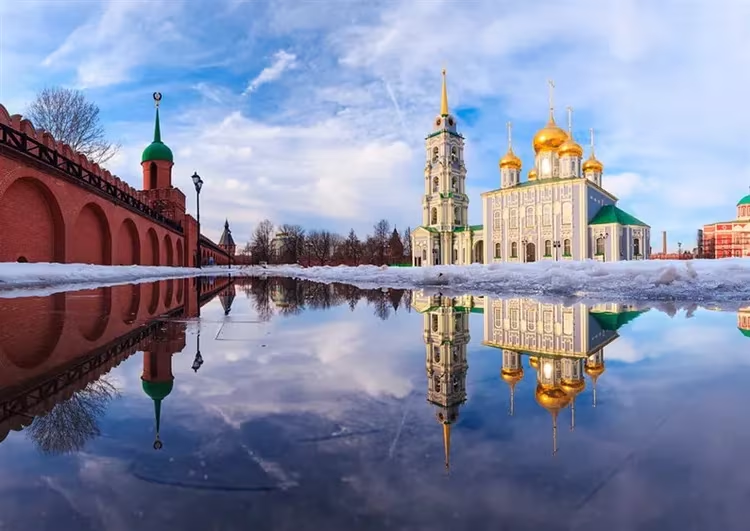
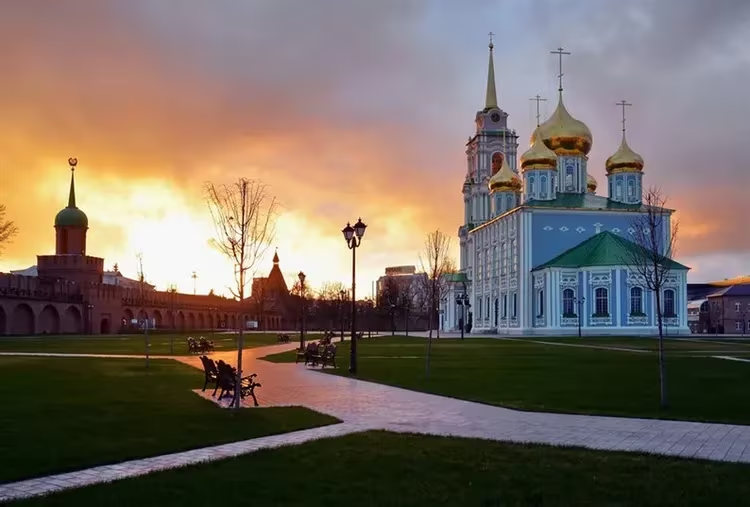
The Tula Kremlin appeared just five years after the city was in the power of the Moscow princes. Then it was a powerful, oak fortress, which was to become the main outpost on the Crimean Tatar route. Today, this large monument of defensive architecture has turned into a huge museum. The architecture of the Kremlin whimsically combines the features of traditional Russian architecture and the Western format of fortifications.
In addition to the regular fortress in the shape of a regular rectangle, the territory also houses shopping arcades, several cathedrals and even the city's power plant of the twentieth century. The entrance to the territory of the Kremlin is free. Additional payment will be required only if you want to use the services of a guide. The Kremlin is open for visiting from 10:00 to 20:00, on weekends the working day is reduced by two hours. On Monday the complex is closed to the public.
Assumption Cathedral of the Tula Kremlin
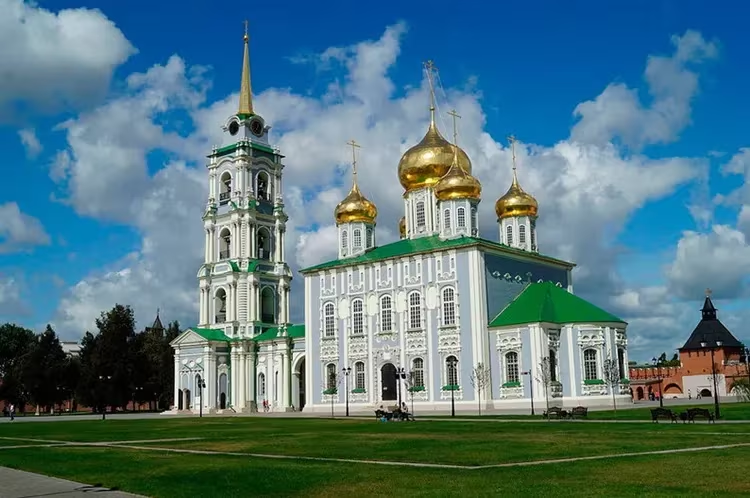
This cathedral makes a refreshing impression. The majestic building, filled with light, is distinguished by the richness of the decor and the completeness of the details. The cathedral looks like a magic box in which fairy tales are locked, because of its many symbolic bas-reliefs and complex multi-colored ornaments. It instantly stands out against the background of other religious buildings of the Kremlin with its unusual light lilac color. Initially, a small wooden church stood on the site of the cathedral, but at the beginning of the seventeenth century it was decided to rebuild it in stone.
The moment was chosen perfectly – later, the Baroque was rapidly losing its positions, and classicism had not yet found completeness. If the external design of the temple is sustained in exquisitely strict forms, then the interior rooms are exemplary Russian baroque with a white stone double-headed eagle in the center, rich stucco and numerous floral ornaments.
Epiphany Cathedral of the Tula Kremlin
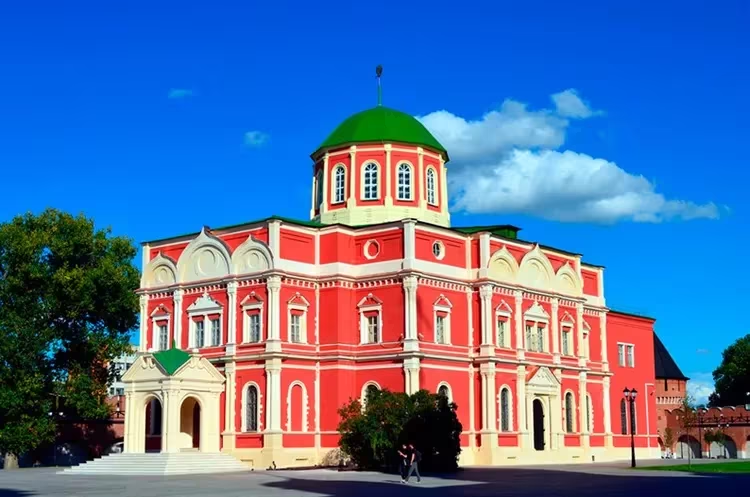
This cathedral appeared much later than the Assumption. At that time, the inhabitants needed a new, warmer church, as opposed to the “cold” Assumption Cathedral, which could not be heated in the winter. So, on the site of the premises in which military training took place, it was decided to build a cathedral named after the Epiphany of the Lord. A strikingly homely atmosphere of quiet joy still reigns in the cathedral. Perhaps this impression is created due to the fact that only Russian craftsmen participated in its construction – many of them were local residents.
If the Assumption Cathedral is famous for its bas-reliefs, then the Cathedral of the Epiphany can be proud of its murals – not only the walls are painted from floor to ceiling, but also the dome. To keep the cathedral warm, two huge ovens were built. The Soviet authorities were especially cruel to the cathedral – it was not only closed, but ruthlessly plundered. The small domes of the temple were demolished almost immediately, and the colorful murals were smeared over. A faded ghost remained of the cathedral. Restoration work is still underway.
All Saints Cathedral
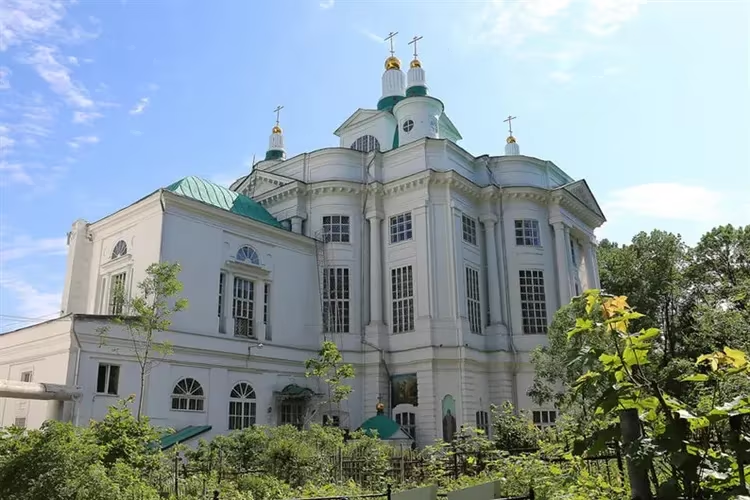
The bright and so elegant bell tower of the cathedral with a high spire is visible from almost every corner of the city, which is why the contrast between the fine architecture of this temple, frozen on the verge between the pomposity of the Baroque and the sophistication of early Russian classicism, and the ancient graves that surround the cathedral is even more clearly visible. The fact is that the first – then still wooden – church was erected in the cemetery to bury the dead.
Gradually, the temple was rebuilt already in stone, but the graves became more and more – ancient tombstones, dating back to the seventeenth century, overgrown with moss and huddled in the shade of sad statues of angels – this place resembles an ancient necropolis somewhere in England. The cathedral houses an ancient relic – the Kazan icon of the Mother of God, as well as the marvelous image of St. Nicholas the Wonderworker of Athos writing. The temple is open to the public from 6:30 to 19:00.
Nikolo-Zaretskaya Church
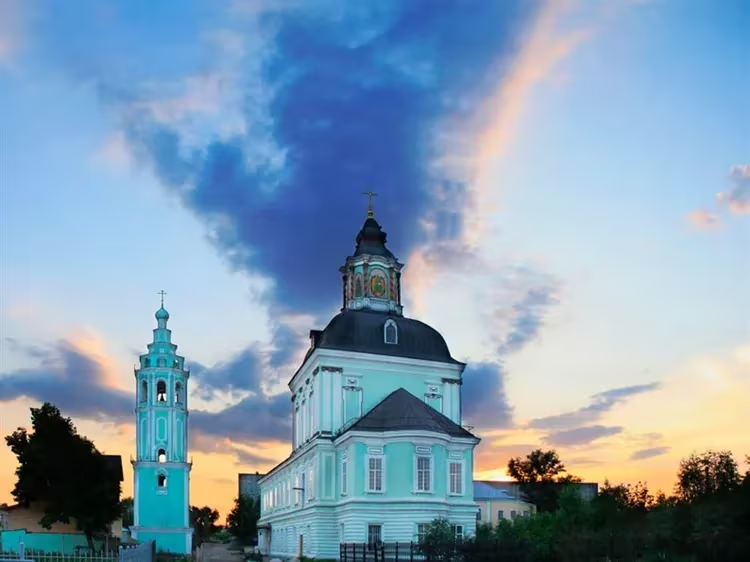
In pre-revolutionary times, this temple was one of the richest in the city. Initially, on the site of a modern stone church, there were two small wooden churches. It is noteworthy that most of their parishioners were gunsmiths. The construction of the stone church was initiated by the Demidovs, who, as you know, had huge funds. Apparently, the capital architect was invited to work on the project, however, the name of the master was not preserved in history.
Nikolo-Zaretskaya Church with its smooth walls, simple, but at the same time elegant decor is strikingly different from similar buildings of the early eighteenth century. It is designed in the style of Peter's baroque and resembles a palace rather than a temple building. In the church today, despite the fire and the destruction of the temple in Soviet times, the objects brought here by the Demidovs have been preserved: a cast-iron altar, a chandelier made of Ural copper. The church can be visited from 7:00 to 18:00.
Central Park of Culture and Leisure. Belousova
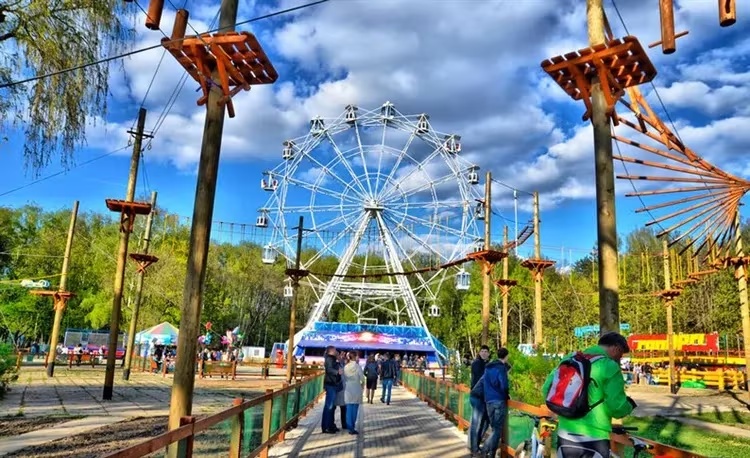
Today, walking along a huge green area or relaxing on the banks of one of the three ponds, it is hard to imagine that there was once a landfill on the site of this green and such a cozy park. At one time, the expansion of the city began to take place more and more rapidly, and its sanitary condition worsened. So, at the very end of the nineteenth century, on the initiative of Pyotr Belousov, the landfill was covered with fresh soil, and planted with trees with the onset of spring.
Today, various recreational areas are concentrated in the central park. So, foxes, rabbits, goats and roe deer live in the zoo on a permanent basis. On the shores of the lakes you can see white and black swans. The modern sports zone smoothly turns into the complex of extreme and family attractions “Drive”. Adults can visit the fairy tale, immersed in an imitation of virtual reality, while children can visit the fairy tale in their physical body – “Fairy Kingdom” is the largest free children's town.
Tula State Museum of Weapons
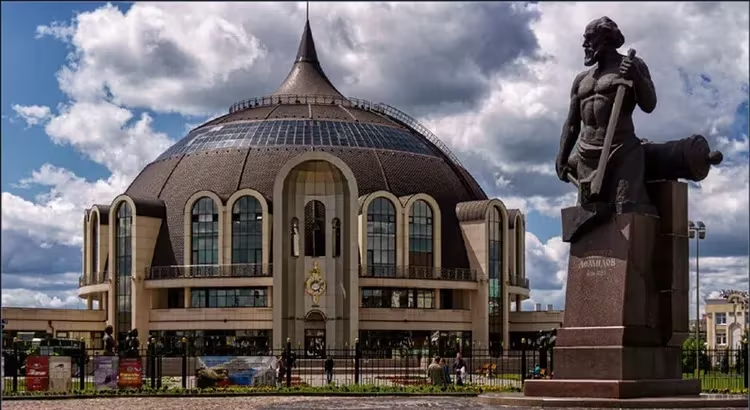
The museum houses large-scale weapons collections, which allow you to visually trace how exactly the approach to the manufacture of weapons has changed from the end of the sixteenth century to the present. This museum appeared thanks to the efforts of the arms factory, from which, at the end of the nineteenth century, the initiative to open a museum fund was received. The real pride of the museum are the guns, which were made especially for members of the royal family.
Today the museum funds are housed in two buildings. One is located on the territory of the Kremlin and previously belonged to the Epiphany Cathedral, while the second is an original project by Bedrina, Shatokhin and Zhezhoma, distinguished by its appearance – this building is round in plan and ends with a dome in the shape of a heroic helmet. Both buildings operate on the same schedule: Monday is a day off, on Tuesday, Wednesday and Sunday they are open to the public from 10:00 to 18:00, on the remaining days the museum closes at 21:00.
Memorial to the Defenders of the Sky of the Fatherland
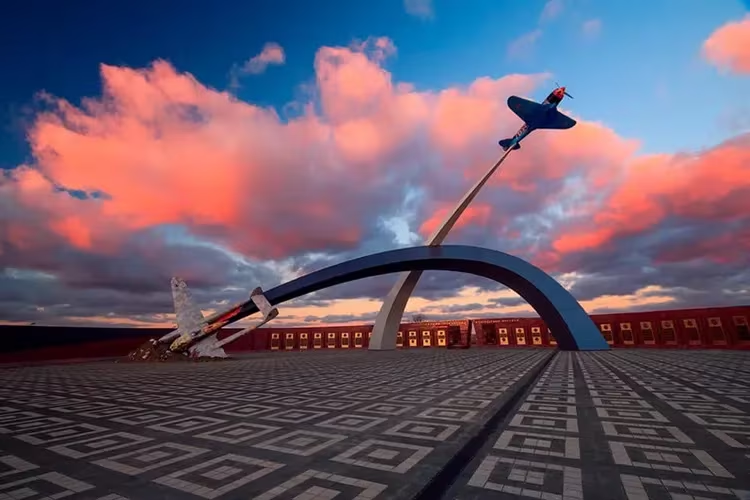
This memorial complex is located right at the entrance to the city. It was erected on the 71st anniversary of the victory over fascism. The construction impresses with its scope – its diameter is almost 100 meters, and its height is 27 meters. The monument consists of two key elements – the La-5FN aircraft, a fighter hovering at its highest point, as well as the Rama aircraft, which is located right on the ground. Both cars are full size. The authors of this project took as a basis a very real episode of the Great Patriotic War, which took place in the sky above the city, when two enemy aircraft were shot down by Ivan Vishnyakov.
Museum “Tula Gingerbread”
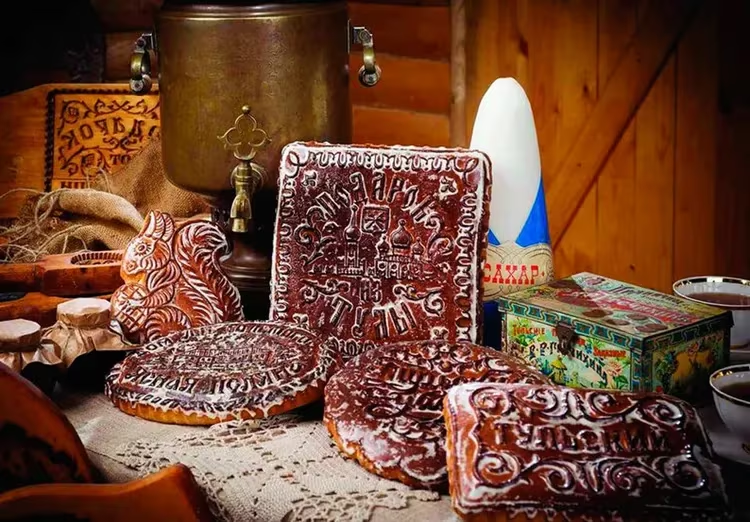
The sweetest museum always welcomes guests. It is not difficult to guess what the expositions of this museum will be devoted to – here you will find all possible types of gingerbread: congratulatory, nominal, honorary, curly. The record-breaking gingerbread is also stored here – its weight is 50 kilograms. Among the museum exhibits, there are really valuable specimens – they were made according to the forms of the most famous gingerbread man in Russia, Konstantin Shchukin.
At one time, his sweet masterpieces could be bought not only in Tula, but also in Paris – the French highly appreciated the talent of this man. It was thanks to his granddaughter that the exposition of the museum was replenished with rare photographs, documents, gingerbread molds. The museum is open to the public from 10:00 to 17:00 by appointment only.
Museum “Tula Samovars”
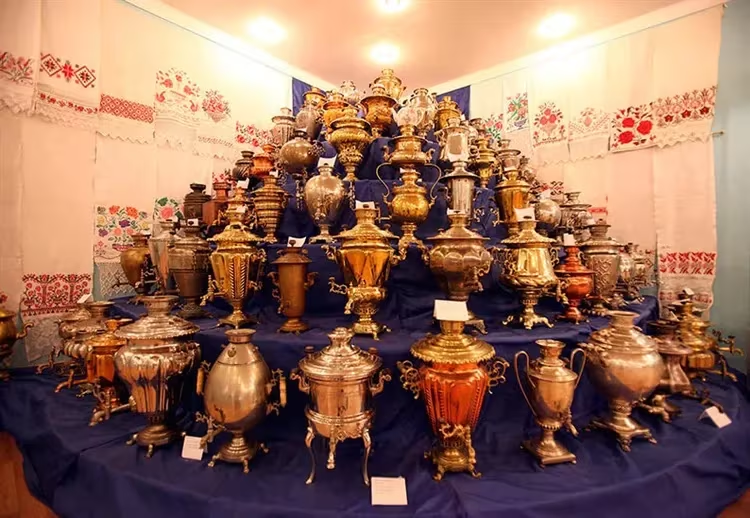
Almost from its very opening at the end of the twentieth century, the museum has become a visiting card. Its expositions were designed to demonstrate how slowly the trends in the production of samovars in the Tula region have changed since the eighteenth century. Samovars were considered not so much as household items, but as unique and completely original examples of decorative and applied art. This approach to the organization of museum collections continues today.
The exposition has been significantly expanded due to the appearance of a new section dedicated to “samovar” dynasties. The building, which houses the museum collections, is in itself an architectural monument in the classical style. It was erected for the arrival in the city of Emperor Alexander II. On Monday, the museum is closed to the public. On Thursdays, Fridays and Saturdays it is open from 10:00 to 20:00, on the remaining days the museum closes two hours earlier.
Moto-Auto-Art Museum
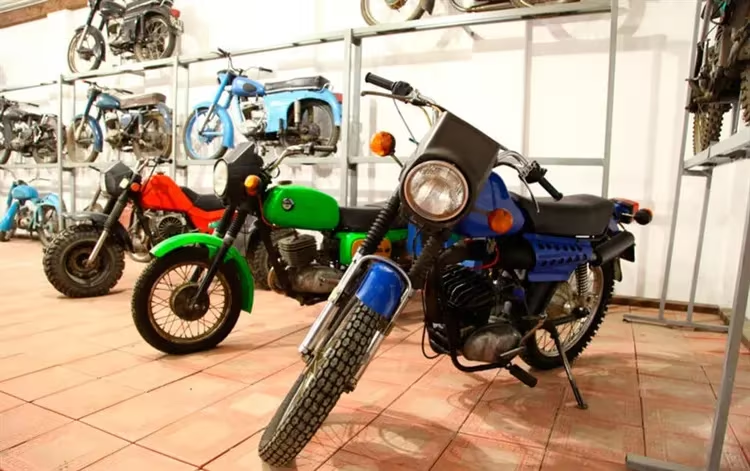
This museum is a kind of continuation of the private collection of Leonid Zyakin, who unofficially opened this institution to a wide range of guests more than thirty years ago. Initially, there was neither a clear opening time nor a fixed ticket price, but motorcycle fans continued to visit here. It is noteworthy that today almost all the exhibits of the museum have been brought to working condition. Some had to be restored according to the drawings, it was more difficult if the drawings were missing.
Mechanics had to assemble motorcycles literally from old photographs. All exhibits were selected with the utmost care. There are also truly rare models here, for example, the notorious L-300, which is a living legend of domestic motorcycle production. Now the museum is officially registered. It is open daily from 11:00 to 18:00 except Mondays.
Art Museum
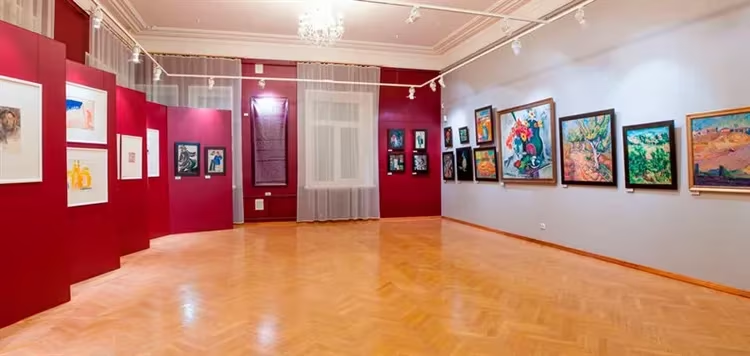
The museum was opened in the first quarter of the nineteenth century. Its building was designed by the Tula architect Zaitsev. He was entrusted with a great responsibility – to create a building that will store more than 23 thousand works of art. Such a large fund has made the Tula Museum of Fine Arts one of the largest in Russia. Museum guests can see the works of Russian masters of the 16th-20th centuries. There is also a rich collection of Italian, Dutch, French paintings of the 16th-19th centuries.
The museum has an excellent reputation not only in Russia but also abroad. Many exhibits were taken to exhibitions in France, Sweden, Spain, the USA and other countries more than once. Tourists can visit it on any day except Monday. The doors are hospitably open from 10:00 to 20:00 on Thursdays, Fridays and Saturdays, on other days the museum closes two hours earlier.
Necropolis of the Demidovs
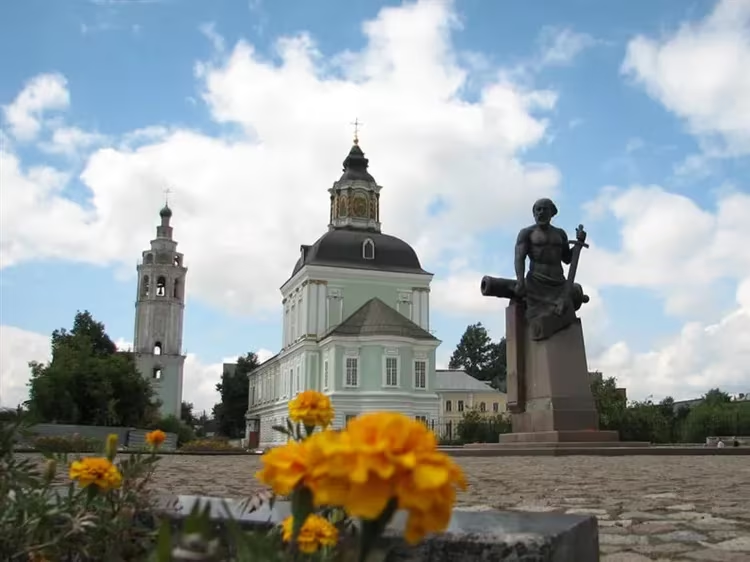
The necropolis is dedicated to the legendary noble family, whose descendants became famous industrialists, philanthropists and gunsmiths. Its building is located on the territory of the historical buildings of the city. Once upon a time, this place was located Kuznetskaya Sloboda. In the center of the necropolis is the family tomb of the first half of the eighteenth century. There are no other similar intra-temple structures belonging to dynastic families on the territory of Russia. The ensemble of the temple, in which the tomb is located, is made in the style of the St. Petersburg Baroque.
It is ideally complemented by a bell tower, reminiscent rather of Suzdal belfries. The exposition of the museum includes not only artifacts associated with the Demidovs, but also samples of weapons, unique examples of lock and hardware art, as well as measuring instruments of the nineteenth century. A ticket to the museum will cost 100 rubles. You can visit it from 10:00 to 20:00 from Thursday to Saturday, Monday is a day off. On the remaining days, the museum closes at 18:00.
Monument to Levsha
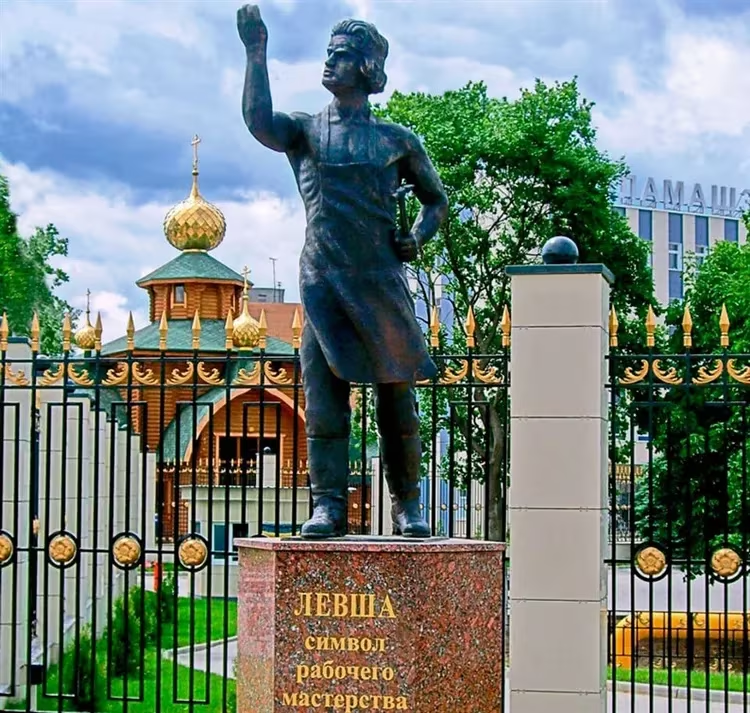
It is not surprising that it was in one of the oldest centers of weapons craftsmanship in Russia that a monument to Levsha appeared – a craftsman who, as you know, managed to shoe even a flea. The monument was erected on the initiative of the machine-building plant on its fiftieth anniversary. The project was led by the former head of the communications department of the same plant.
For a long time, the monument was located directly on the territory of the enterprise, but soon it was handed over to the city authorities as one of the symbols of the city. If you look closely at the figure of Lefty, it will become noticeable that he is depicted slightly squinting. The master considers how well he has done his job, and from his somewhat proud posture it is clear that the work was done admirably!
Monument “Taming the Flea”
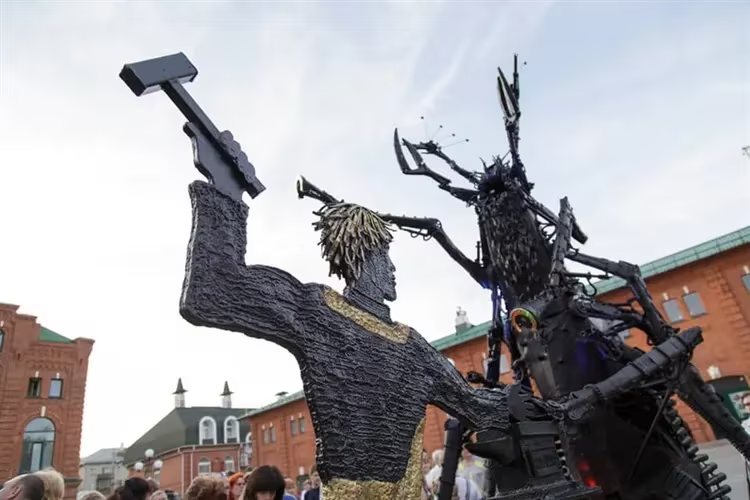
Continuing the theme of fleas, which simply needed to be shod, another unusual monument appeared in the city, offering a slightly different look at the events described in the famous episode. The monument is made in a hyperbolic form. The plot remained the same – there is a master and there is, in fact, a flea, only the latter is almost twice as large as a person. At the same time, she bears little resemblance to an ordinary insect with all the cogs, wheels and other mechanized details that can be seen by looking a little more closely at her avant-garde figure.
Igor Zolotov, the author of the project, explained with a laugh that the flea had to be enlarged so that one could see in detail the notorious carnation and Lefty's signature. However, a deeper meaning is also embedded in the monument: Lefty is a truly brilliant master who can shoe not only a tiny insect, but almost a giant.
Monument to Tula gingerbread
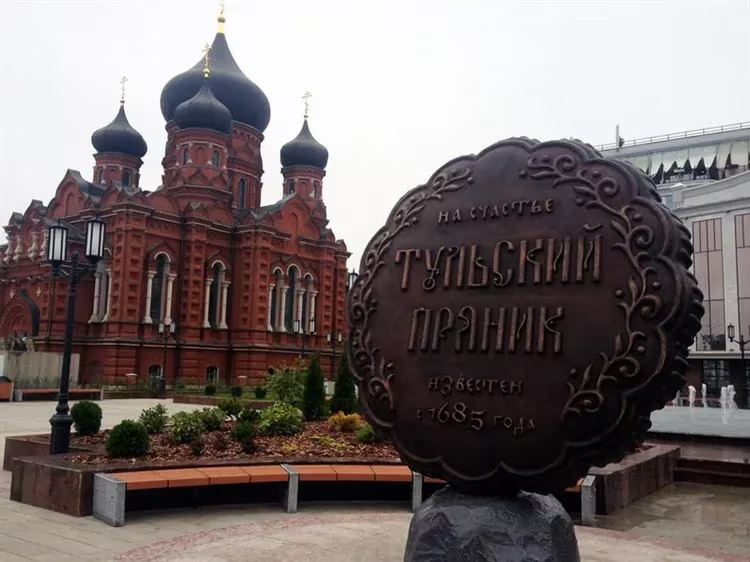
On the central Lenin Square there is a rather large monument to Tula gingerbread. It is made of bronze and is a stylized disk with a diameter of two and a half meters. Its weight is more than a thousand kilograms, and it is simply impossible not to notice this sculpture. Due to the fact that Tula gingerbread has been a visiting card for centuries, tourists always come here to take a couple of photos.
If you look closely, you can see the engraved inscription “1685” on the back of the monument. This is not the date of the installation of the monument, as one might first think. In fact, the monument appeared in the city only ten years ago. No, in 1685, according to official documents, the first Tula gingerbread appeared in Russia.
Sculpture “Tula Tea Party”
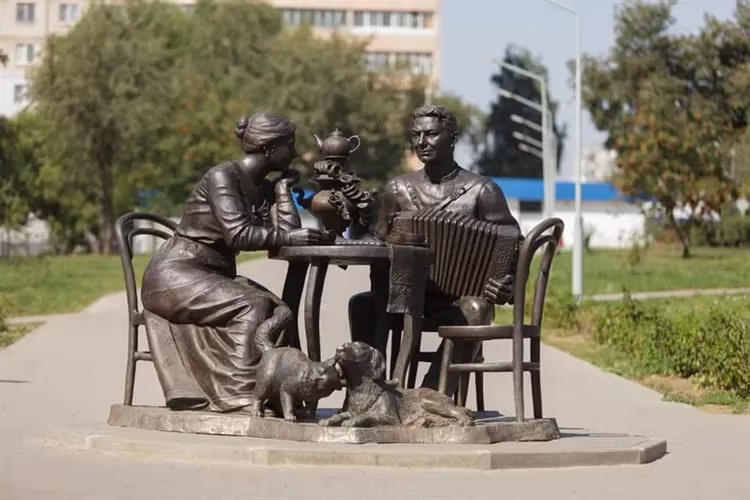
Not far from the temple of Sergei Radonezh, on the 868th anniversary of Tula, a new sculpture was installed, from which it literally breathes comfort. It fully lives up to its name. In the center of the composition are a man and a woman who are about to start drinking tea. On the table in front of them is a samovar and a bowl of gingerbread – traditional crafts for the Tula region.
The girl is happy to listen to the guy playing the button accordion. At their feet lie a cat and a dog. It is noteworthy that the table has a free chair – anyone can join the tea party. This sculpture was intended to symbolize the cordiality and hospitality with which the city welcomes each of its guests.
Reserve “Tula notches”
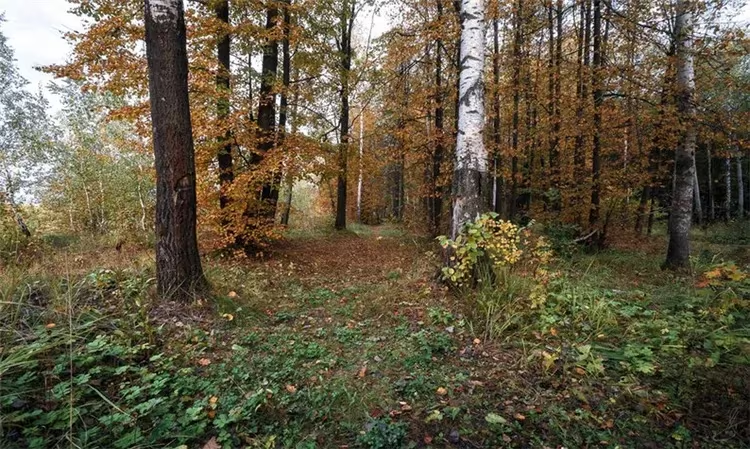
Historical reserve with a rich past. As you know, cut forests, which are impenetrable wilds, are called notches. The Tula notches appeared through the efforts of the Moscow princes as early as the sixteenth century in an attempt to secure their borders from the Crimean Tatars. The modern reserve is located just on the site of the so-called Zasechnaya line. Since the time of the Northern War, notches have not been used for fortification purposes, but due to the density of local forests, people have not been able to adapt these territories for themselves.
As a result, a unique ecosystem with many relic trees, animals and birds has formed on the territory of the reserve. Twice they tried to destroy the reserve in a barbaric way: during the Civil War, when the city experienced a shortage of coal, and during the Second World War, when the bombing began.
At the moment, there is an active restoration of the reserve, namely the Krapivensky reserve, which is the oldest component of the Tula Zasek. You can go for a walk around the reserve on your own, or you can wait for one of the excursions. Walking in the company of a specialist will allow you to take a completely different look at the local flora and fauna.
Exotarium
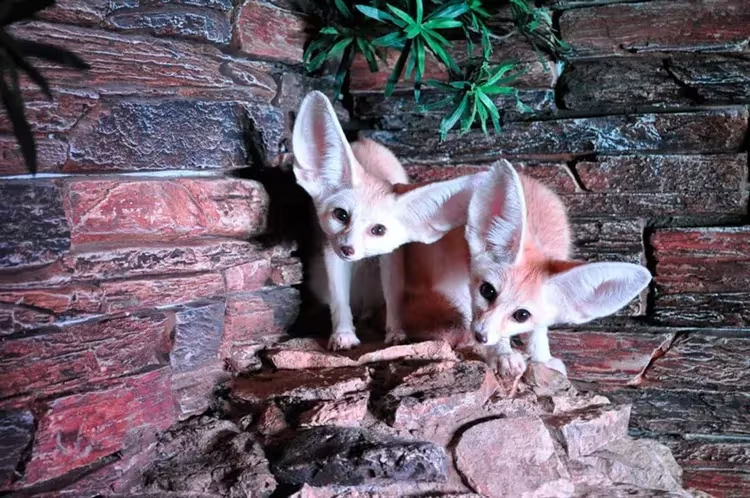
Exotarium was founded at the end of the nineteenth century. Today this place is world-famous due to the fact that local experts have repeatedly sought to breed offspring from truly rare, and sometimes little-studied animals. Today, the exotarium contains one of the largest collections of snakes in the world.
In addition to anacondas and the world's largest reticulated python, huge land turtles, various lizards, monitor lizards, chameleons and many others also live here. During the summer period, the exotarium is open from 12:00 to 20:00 on Mondays and Tuesdays and from 10:00 to 20:00 on other days. In winter, it closes to the public at 18:00.
Circus
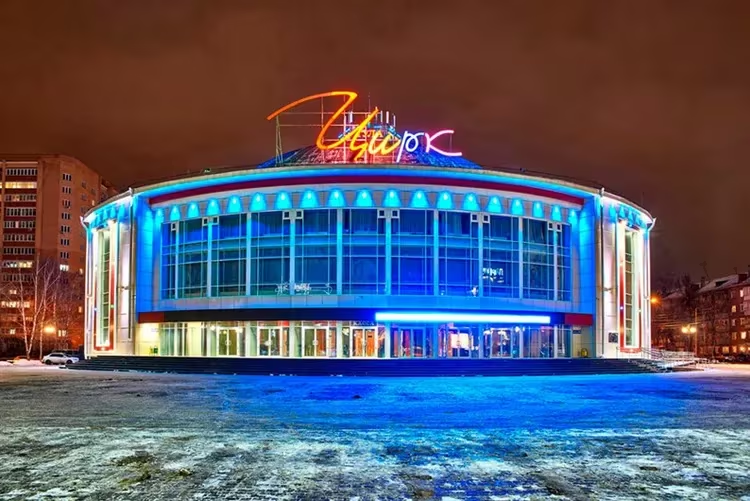
The first circus appeared in the city at the end of the nineteenth century. Then a huge wooden building was built on the main street of the city. Thus began the history of one of the oldest circuses in Russia. The building of the circus that we see today was built relatively recently – about half a century ago, and the very next year after the construction was completed, the artists returned with a new program.
Often the circus hosted foreign artists, and the main circus staff gathered full houses in the arenas of France, Italy, and Germany dozens of times. The circus is open from 09:00 to 18:00. The program is constantly expanding. Today here you can see not only enchanting numbers with the taming of predators, but also an insanely bright motorcycle show. The cost of tickets depends on which seat you prefer to take.
Museum-Estate Polenovo
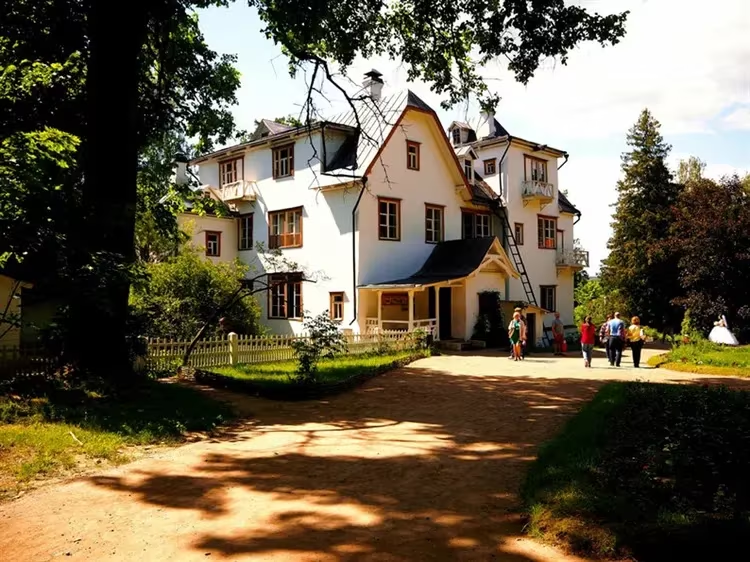
Vasily Polenov, a famous Russian artist, personally worked on sketches of the estate, in which he was to live for many years. This bright, elegant building is located on the picturesque banks of the Oka River. The artist took an active part in the construction of the house and its design. Most of the trees that adorn the huge garden were planted by Polenov himself. The estate was lucky to survive the Civil War and two world wars. Only minor buildings were lost, which in no way affected the integrity of the perception of this architectural monument.
The estate complex includes a number of buildings: boats and tackle were once stored in the Admiralty, and now exhibitions and art evenings are held; in the City of Masters is the main exhibition hall; The abbey – the former personal workshop of the artist – has become an interactive scene. The museum is open from 11:00 to 18:00. Days off are Monday and Tuesday.
Bogoroditsky Palace-Museum and Park
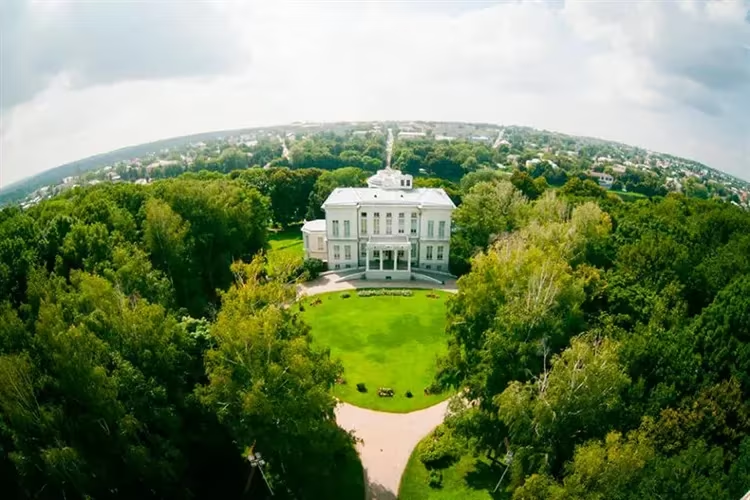
The modern Mother of God Museum is located in a building built by order of Catherine the Great for her illegitimate son. The great architect Starov was engaged in the construction of the palace, as well as the design of the luxurious park area. The snow-white building in the style of early classicism is rightfully considered the architectural pearl of the Tula region. The exposition of the museum fully corresponds to the elegant restraint of the palace: collections of porcelain, items made of precious stones, unique sculptural compositions, a rich collection of paintings.
The museum ensemble also owns a tower whose architect remains unknown, as well as the Kazan Church. Guests of the palace with no less interest inspect the park area with a picturesque pond. The play of the sun on a normally calm surface becomes the subject of universal admiration. Monday is a day off. On Thursdays, Fridays and Saturdays, the territory is open on visiting days from 9:15 to 20:00, on other days the palace closes at 18:00.
Museum complex “Kulikovo field”
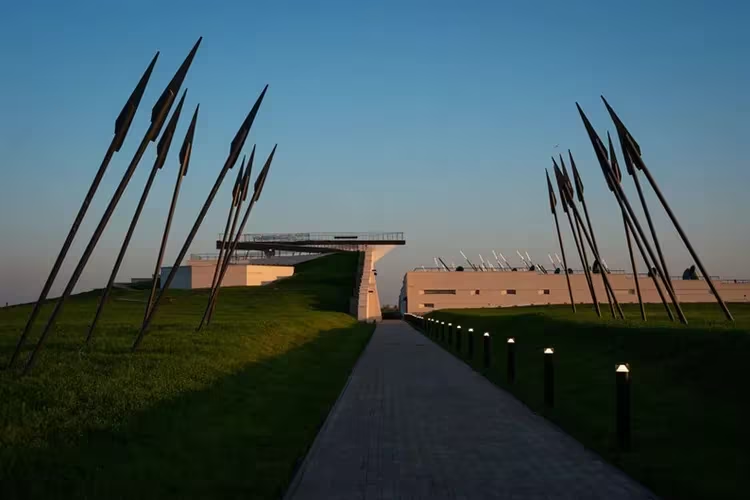
The unique project in the style of postmodernism was designed to combine the rich historical materials that are dedicated to the Battle of Kulikovo Field with the brighter ideas that modernity wants to see. The complex is located in close proximity to the battlefield itself. First, the guest of the museum is immersed in the atmosphere of the “Tale of the Battle of Mamaev”, and only then, in the company of an experienced guide, subjects this event to a thorough analysis.
A showcase-pyramid occupies a special place in the complex, in which the realities of the sixteenth century are reconstructed, when Russian troops crossed the Don. In winter, the complex is open from 10:00 to 16:00, in summer – from 10:00 to 19:00. During the off-season, it closes at 17:00. The day off is Tuesday. This does not apply only to the summer period, when the museum is open to the public all week. A number of institutions lead to the museum complex.
Station-Museum “Kozlova Zaseka”
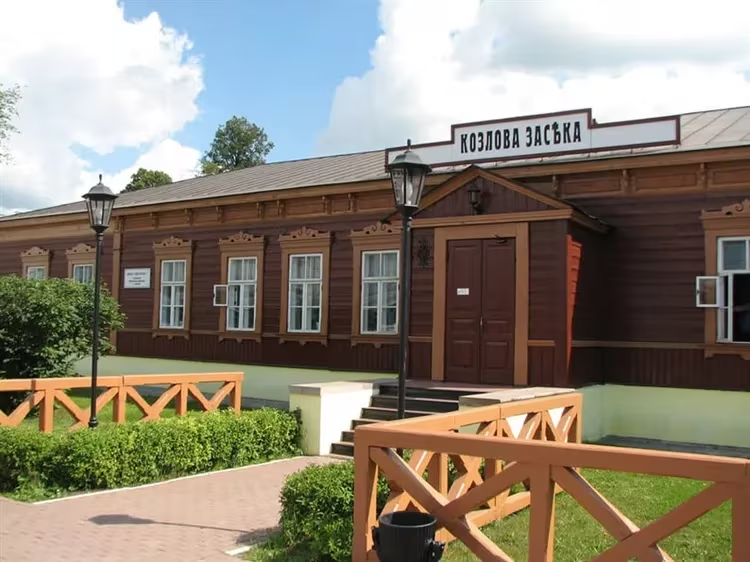
Kozlova Zaseka is quite a working railway junction, where trains of different distances arrive daily. But recently this station has turned into a museum. Usually the station-museum is not visited as part of an independent tour.
It is enough that her visit is included in most of the excursion programs dedicated to Yasnaya Polyana. And the museum's exposition is not so large-scale – half an hour will be enough to see everything in detail. However, one should not refuse the opportunity to see the old station as Leo Tolstoy saw it.
He regularly visited here to pick up mail, it was from here that he called his many friends, and it was here that the coffin with the great Russian writer was brought. Thanks to the efforts of historians and literary critics, the station was returned to its original appearance.
For work, archives were raised, hundreds of photographs were viewed. Today, neat halls with wooden benches, openwork mirrors, inscriptions in the old, pre-reform version of the Russian language create an amazing atmosphere. Open for tourists from 09:00 to 16:30. Monday and Tuesday are days off.
Yasnaya Polyana
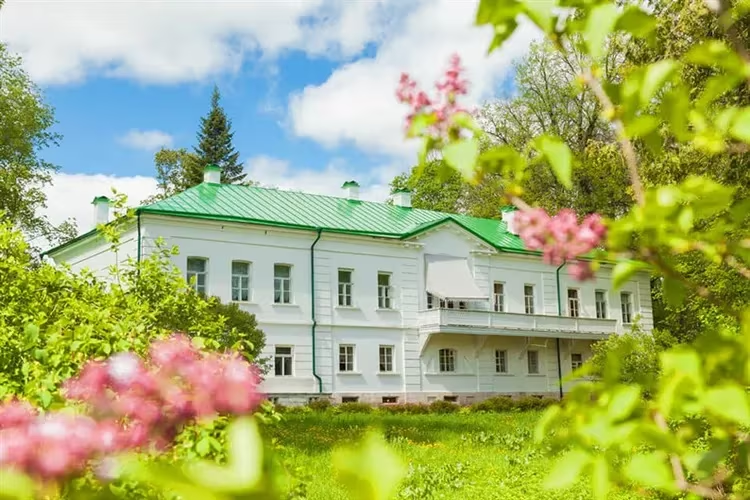
As you know, Yasnaya Polyana is the same estate where Leo Tolstoy lived. There is no need to introduce this person or talk about his very special relationship to this place. These facts are widely known. This extensive museum complex consists of several buildings, each of which has been preserved in its historical appearance. This is the Tolstoy house-museum itself, which stores old books, which are forbidden to touch due to their age, and the Volkonsky house – the oldest component of the complex, built in the spirit of eclecticism, and the Kuzminsky wing.
The birch alley, picturesque ponds and even the bench on which Tolstoy liked to rest – all this can be seen by paying for a ticket. Unfortunately, it does not give the right to get into the museum itself. His visit is purchased together with the excursion program. Memorial buildings are open from 10:00 to 15:30 on all days except Mondays.