
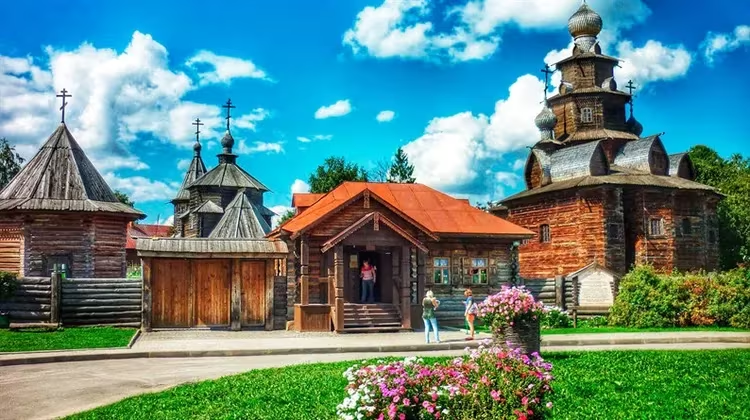
Sights of Suzdal – 30 most interesting places
A small town in the Vladimir region to this day has preserved not only the buildings of past eras, but also the unusual atmosphere of a quiet old Russian city. The sights of Suzdal can be viewed more than one day. There are a huge number of temples here, and around the city there was once a ring of monasteries, many of which have been preserved almost in their original form.
Suzdal Kremlin
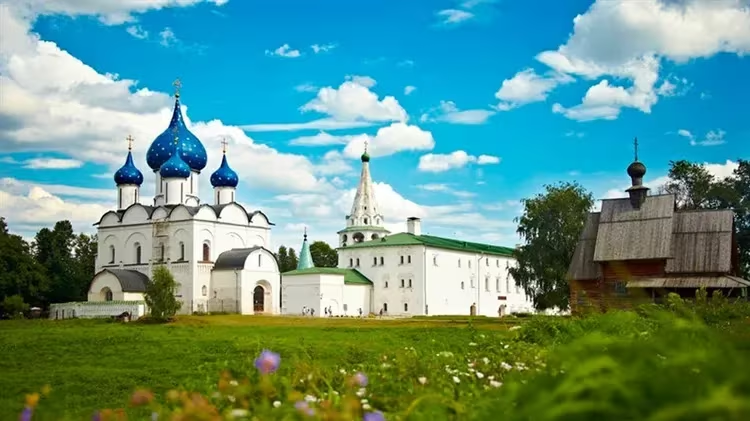
The history of the city begins from this place. The Suzdal Kremlin was built back in the 10th-12th centuries, and almost all of its buildings have survived to this day, except for the defensive walls and towers. The Kremlin performed a protective function – it saved the city from the enemy from three sides: east, west and south.
In the north, the Kamenka River flowed, which also blocked the path of the enemy. From all sides, the Kremlin was surrounded by ditches and earthen ramparts, more than a kilometer long. Walls with observation and protective towers and gates were placed on them. Their ruins are still preserved.
On the territory of the Kremlin there was a princely court and a squad. It was the center of the political, spiritual and cultural life of the city. All the main sights of the Kremlin are connected with religion.
Several ancient cathedrals and churches have been preserved here, as well as household and residential buildings – Bishops' Chambers. You can visit the complex from 10 am to 6 pm daily, except Tuesday. And on the last Friday of the month they have a sanitary day.
Mother of God-Nativity Cathedral
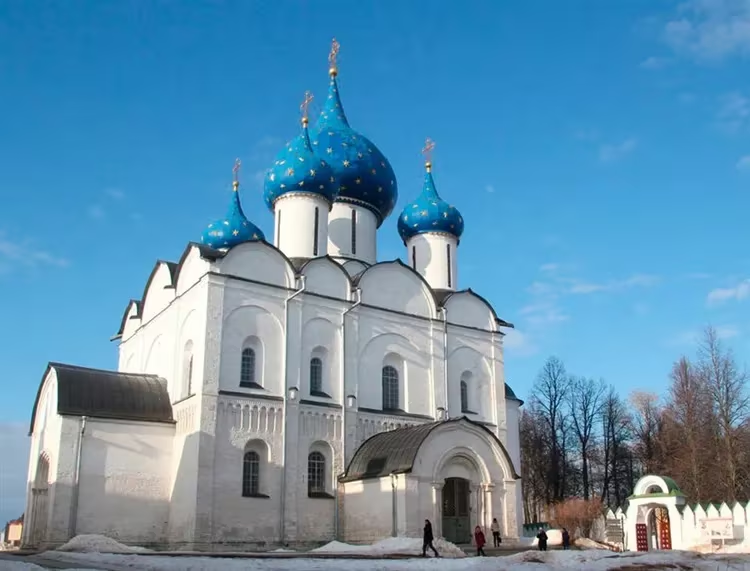
The Cathedral of the Nativity of the Virgin was built in the 13th century under Prince Yuri Vsevolodovich on the site of the Assumption Cathedral, which is considered the first Orthodox church in the city.
It was rebuilt many times under Yuri Dolgoruky and Vsevolod the Big Nest. The new temple was built in just three years. They illuminated it on September 21 – the day of the Nativity of the Blessed Virgin Mary, and they decided to dedicate the cathedral to this. This is the oldest surviving Kremlin building.
The majestic building is lined with thin brick and lined with limestone slabs. Ornamental carvings run along the facade, while the interior decoration is decorated with frescoes by Byzantine icon painters and multi-colored tiled floors. The cathedral survived many upheavals, but each time it was restored.
In the 20s of the last century, the service here ceased, the temple received the status of a museum along with the entire Kremlin complex. In the 90s it was returned to believers. The cathedral is included in the UNESCO World Heritage List.
Wooden St. Nicholas Church
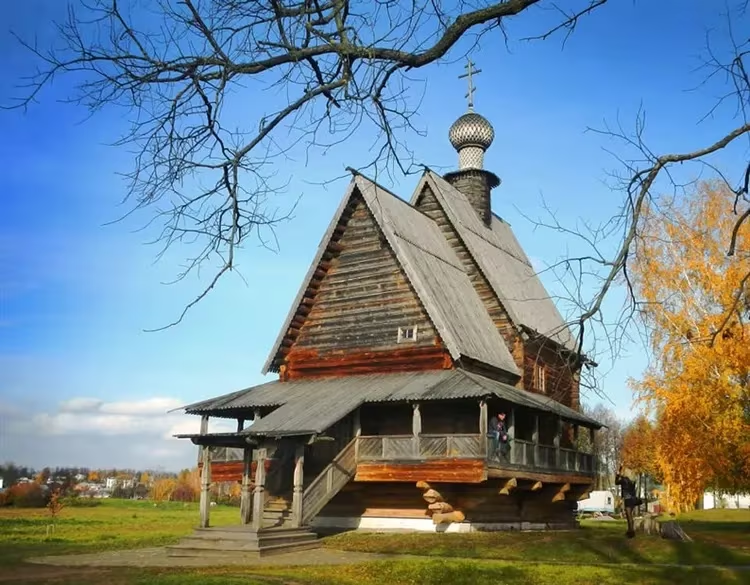
The wooden St. Nicholas Church adjoins the Cathedral of the Nativity of the Virgin. It was built in Glotov, a small village in the Yuryev-Polsky district, around 1766. The church was built without a single nail and is a unique monument of ancient Russian wooden architecture.
The shape resembles a simple village house, consisting of two log cabins, surrounded by a covered gallery. The roof is crowned with a traditional wooden onion. The church was insulated, winter services were held here.
However, in the Soviet years, it stood abandoned and gradually collapsed. In the 60s of the last century, an employee of the Suzdal Museum, historian A. Varganov moved the building to the territory of the Suzdal Kremlin.
To do this, the building was completely dismantled and reassembled on the site of the old Church of All Saints, which burned down during a fire in the 18th century. Nikolskaya Church became the first exhibit of the Museum of Wooden Architecture.
Assumption Church
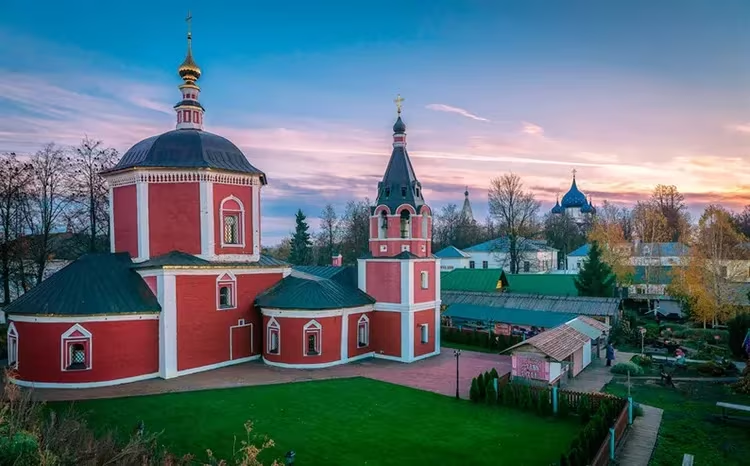
Elegant, bright red with white pilasters and architraves, the Assumption Church is the only building that has survived from the former princely court. It is located immediately behind the former ramparts, on the banks of the river.
In the 15th century, the court of Ivan III stood here. The Assumption Church, which at that time was still wooden, is listed in the documents as the courtyard church of the princely estate.
Later, around 1650, a stone temple was built in its place. Once the church had a bell tower and a warm chapel of Sergius of Radonezh and his disciple Nikon. The temple was surrounded by a low fence with stone pillars and gates.
In the 20s of the last century, the bell tower and the chapel were destroyed, since the administration of the prison for political prisoners, located in the Spaso-Evfimiev Monastery, needed a brick. As a result, part of the Assumption Church was dismantled.
House of Misha Balzaminov
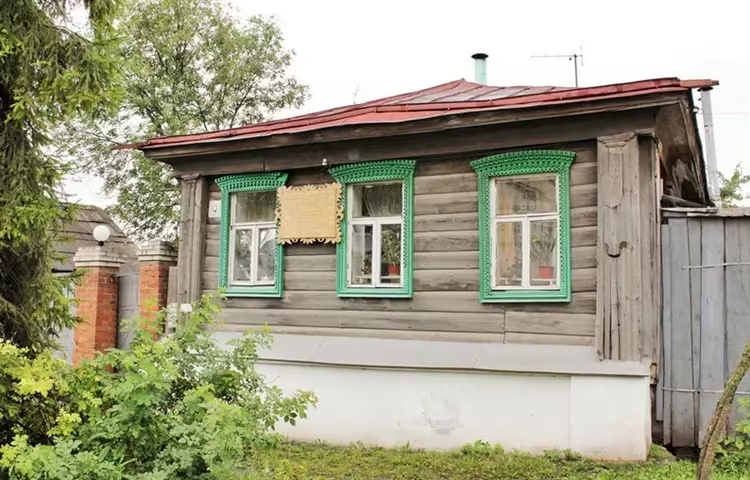
In 1925, Fyodor Firsov bought the old house on Staraya Street from a saddler. His family lived here and a simple but profitable business was established: Fedor baked and immediately sold rolls.
The business was going well, and his family did not feel the need. In 1964, the Firosvas agreed to provide their house and yard for the filming of the film Balzaminov's Marriage. Since then, this house has been invariably associated with the image of Misha Balzaminov.
Almost all interior scenes were filmed in the Mosfilm pavilions, but the courtyard and all the buildings are very easy to recognize. The film crew built a dovecote next to the house, borrowing birds from local boys for filming. Over time, the house sank heavily, which is why its first floor became a semi-basement.
The fence has been repainted and the architraves have been redone, but the building can still be recognized, especially since there is now a plaque on the facade that reminds that the famous comedy was filmed here.
The Wax Museum
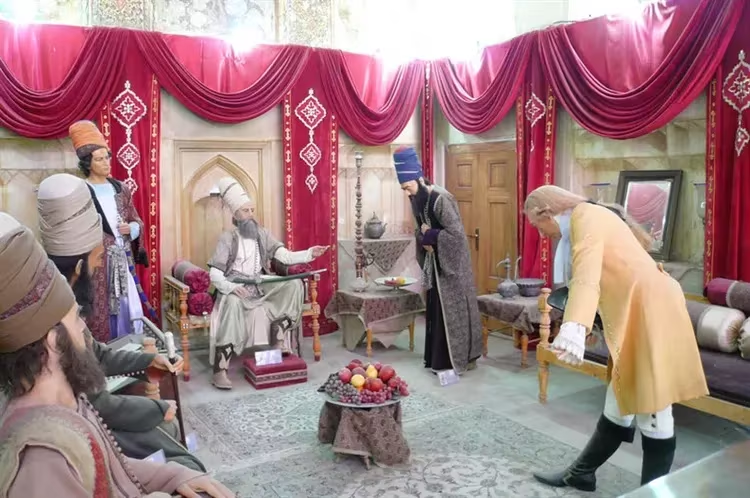
In fact, the wax museum is the first Moscow exposition of such sculptures. At that exhibition, only 9 figures were presented, depicting members of the government of the Soviet state. Today, in three halls of the museum, one can trace the history of our country in faces from the 9th to the 20th centuries.
In the first hall, the main figure is the Baptist of Russia, Prince Vladimir. The next room is dedicated to the Russian tsars and emperors – Ivan the Terrible, Peter I, Catherine II, as well as our great commanders.
The following are Russian writers and poets, enlighteners of the golden age of Russian literature – Pushkin, Turenev, Dostoevsky, Tolstoy, etc.
Modern times are represented by the figures of Stalin, Churchill and Roosevelt from the time of the Yalta Agreement, as well as the famous trinity from Gaidai's comedies – Coward, Dunce and Experienced.
Churches of the Nativity and St. Nicholas
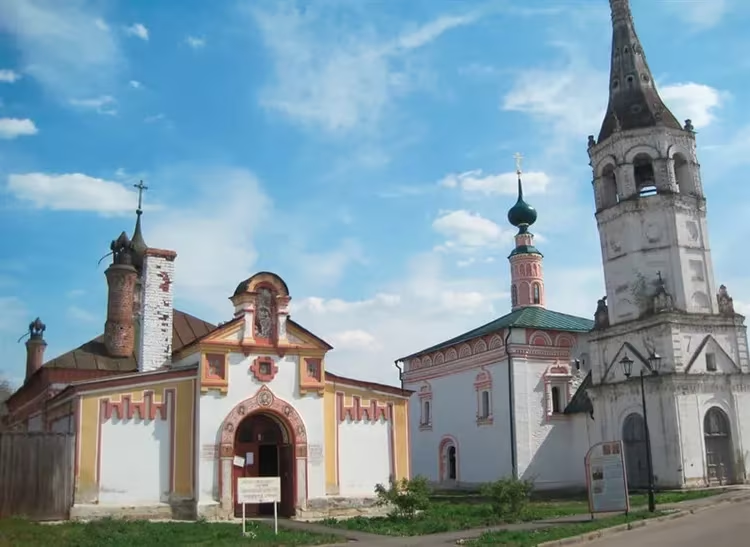
One of the most revered saints in Russia – St. Nicholas has always been considered the patron saint of travelers, therefore the church dedicated to him was built next to the ancient Nikolsky Gates not far from the ramparts in the southeastern part of the citadel in 1720-1739 on the site of the church that burned down in 1719.
The architect was an unknown Suzdal master. In the last quarter of the 17th century, a winter church of the Nativity of Christ was added to it.
A beautiful, richly decorated building consists of a main building and a bell tower, which are connected by a refectory. This building is one of the visiting cards of the city. You can also recognize him in one of the episodes of the film “Balzaminov's Marriage”.
Since 2007, an icon-painting workshop has been operating at the church, it is headed by the rector of the church, Andrey Davydov. Master classes are held here, where you can get acquainted with the basics of fresco painting and encaustic art. The works of Father Andrei are also exhibited here.
Shchurovo Gorodishche Museum
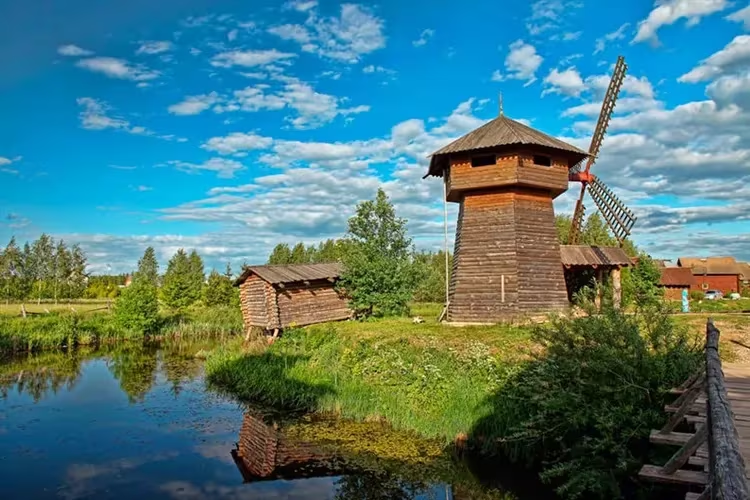
The unique museum will help anyone who wants to feel like a resident of Russia of the past. It contains not only architectural structures typical of the time when Yuri Dolgoruky or Vsevolod the Big Nest ruled in the Vladimir-Suzdal Principality.
The basis was the scenery that was used for the filming of Pavel Lungin's film “The Tsar”. On the territory of the museum there are wooden huts and dugouts, in which the ancient Slavs lived, forges, a cattle corral, a field kitchen of the prince's squad, and a weapons workshop.
Here they teach how to saddle a horse and manage it, shoot from a bow and fight with swords, like Russian knights, and women how to bake a loaf in a real oven. Children will be able to feed the rabbits and kids, communicate with other pets, find out what games their peers played at that time. Reenactments of historical events, including famous battles, are arranged here. The museum is open only on weekends, it is better to sign up for excursions in advance.
Spaso-Evfimiev Monastery
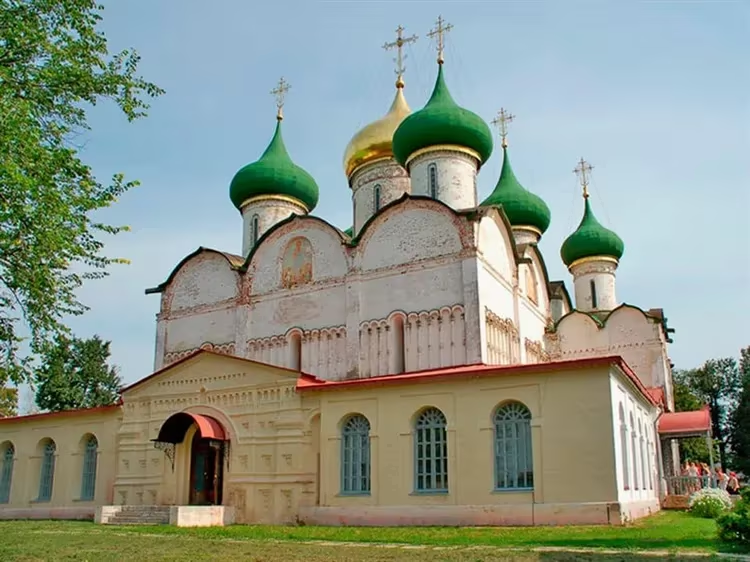
This monastery on the banks of the river was founded in 1352. He received his name after his first hegumen Euthymius was canonized as a saint.
During the Polish-Lithuanian invasion, in the troubled 17th century, the monastery was plundered, its wooden buildings burned down. After that, powerful walls with defensive and sentinel towers were erected around. By the end of this century it had become one of the largest Russian monasteries.
Already under Catherine in 1766, political criminals and mentally ill prisoners were sent here. After the revolution, there was a prison for political criminals, then a filtration camp and a corrective labor colony for minors. The monastery received the status of a museum only in 1968 and today it is part of the Vladimir-Suzdal Museum-Reserve.
Posad house
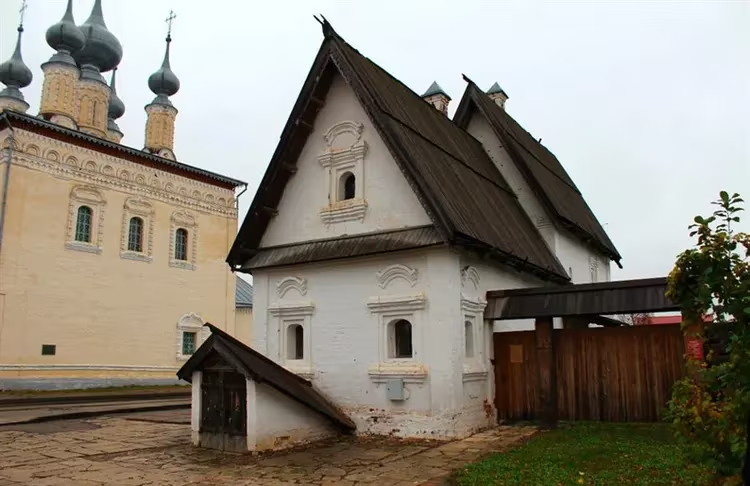
This is one of the first examples of civil engineering. Until the beginning of the 16th century, all private houses were built mainly of wood. Brick was more expensive and for many such buildings were too expensive. It is to this period that the posad house belongs.
The name of the architect remained unknown, but information about the first owners of the house has been preserved. At first, Koska Dobrynka, a tailor, was its owner, and then he moved on to the Bibanov family, who had their own tavern and tavern.
In the 19th century, the house was bought by the merchant Boldin. In 1970, the building was handed over to the Vladimir-Suzdal Museum, where the interiors of residential buildings of the 16th-17th centuries were restored. Guests can see how ordinary citizens lived, where they kept supplies and clothes, received guests, and slept.
There are several rooms in the house – utility rooms: a cold vestibule and a closet where food was stored, and residential rooms – upper rooms, which were located on the first and second floors.
Rizopolozhensky Monastery
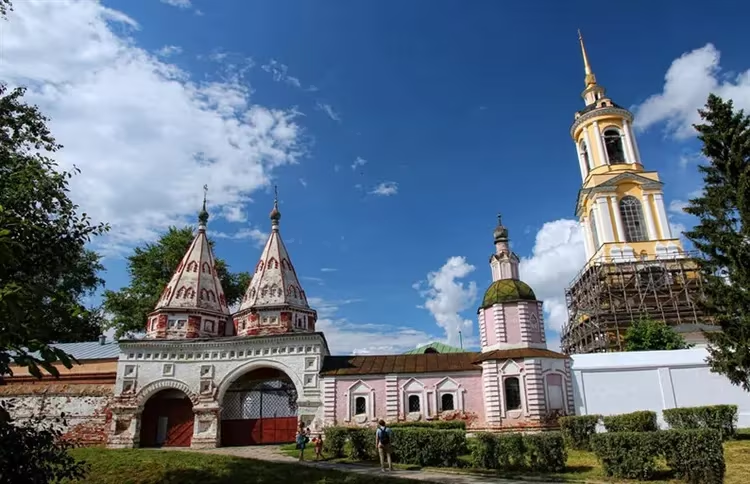
According to scientists, the monastery was founded in 1207 and is one of the oldest not only in Suzdal, but in Russia in general. Unfortunately, the first buildings were wooden and did not survive numerous fires and attacks.
Stone buildings began to be erected from the 16th century, and they are perfectly preserved. The most majestic of them is the Rizopolozhensky Cathedral. Next to it is the 72-meter tower of the Reverend Bell Tower, which was erected in 1812 in honor of the victory in the Patriotic War.
The refectory of the Sretenskaya church dates back to approximately the same time. Once upon a time on the territory of the Rizopolozhensky Monastery there was a women's Trinity Convent. Trinity Monastery was destroyed in the 30s of the last century. Only the Holy Gate remained of it. In the Soviet years, the monastery was closed, a power station was located here. In the 90s it was returned to believers.
Vasilyevsky Monastery
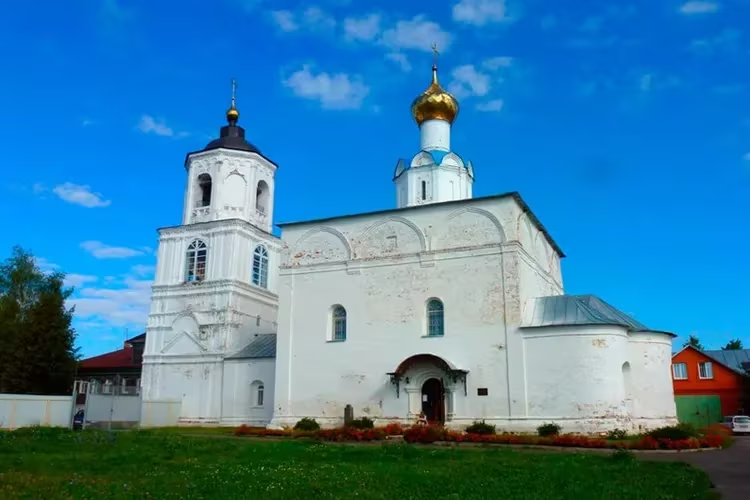
On the outskirts of the city, on the way to Kideksha, at the direction of Vladimir the Red Sun, this monastery was founded in the 13th century. It performed not only a spiritual function, but also served as an additional defensive structure.
According to legend, it was in the wooden church of the Vasilyevsky Monastery that the Suzdal people converted to Orthodoxy. The monastery itself bore the name of the heavenly patron Prince Vladimir, who in baptism bore the name of Vladimir. This church has not survived, like the rest of the wooden buildings.
In the 17th century, white-stone walls and temples were put in their place. The Sretenskaya Church, Vasilyevsky Cathedral and the Holy Gates have survived to this day. In 1916, this monastery became a convent, but in 1923 it was closed.
In the Soviet years, warehouses were located in it. In the 90s, the monastery began to operate again, only now it has become male. Today, the monastery has a small hotel where pilgrims usually stay, but ordinary tourists can also visit the monastery.
Alexander Monastery
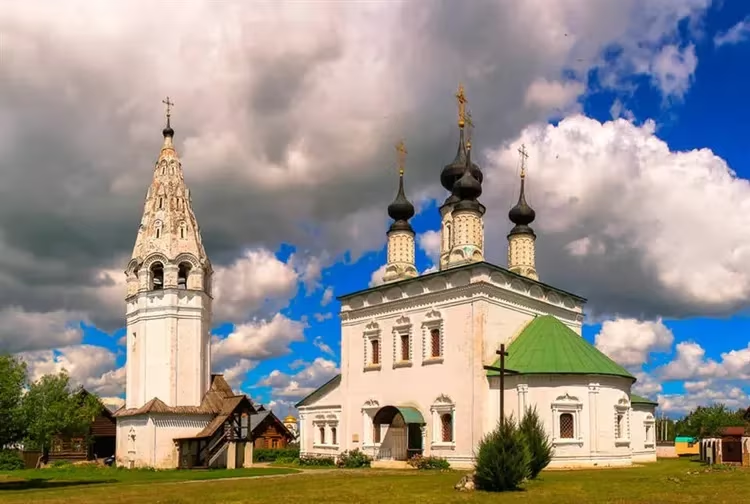
Back in 1240, this nunnery was founded by Alexander Nevsky, but nothing remained of those buildings – during the years of the Polish-Lithuanian expansion of 1608-1610, everything burned down. At the end of the 17th century, at the expense of Natalia Naryshkina, the mother of Peter I, the Church of the Ascension was restored, and later the rest of the buildings, the bell tower and low monastery walls with towers were built.
The holy gates are reminiscent of those that stand in the Rizopolozhensky Monastery, they were erected at approximately the same time and according to the same principle. By decree of Catherine in 1764, the monastery was abolished, since then the Church of the Ascension has become a regular parish for the townspeople.
In Soviet times, it was closed. In 2006, novices appeared again in the monastery. Now there is a small male monastery in which 5 monks live. Unlike other monasteries and temples, there are not so many tourists here, so it is always quiet and calm.
Intercession Monastery
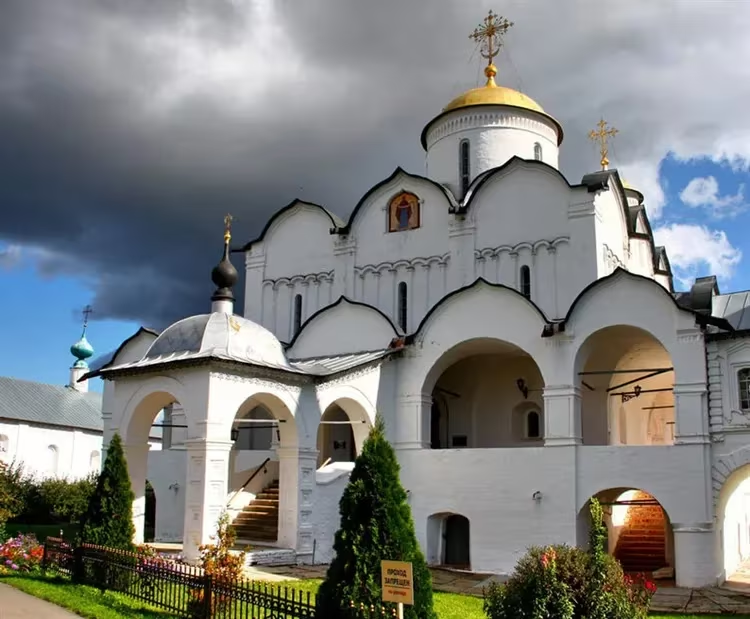
This nunnery, founded in the XIV century, is one of the most mystical and mysterious places. He was a witness to dramatic events, and for many centuries was used as an exile and prison for women of the highest circle.
Here they sent to objectionable and simply bored princesses and queens. For such nuns, not only special cells were built, but also crypts for future burial. On the territory of the monastery, the main Intercession Cathedral and the majestic bell tower, the refectory, the Holy Gates and numerous outbuildings have been preserved.
The command hut with a punishment cell, in which women who fell into disgrace were kept, has also survived to this day. After the revolution, the monastery was closed. Here they arranged a hotel with a restaurant, a concert hall and a bar. The monastery was returned to the church in 1992. Now all its premises, except for the rooms in which the nuns live, are open to tourists.
Fire Tower
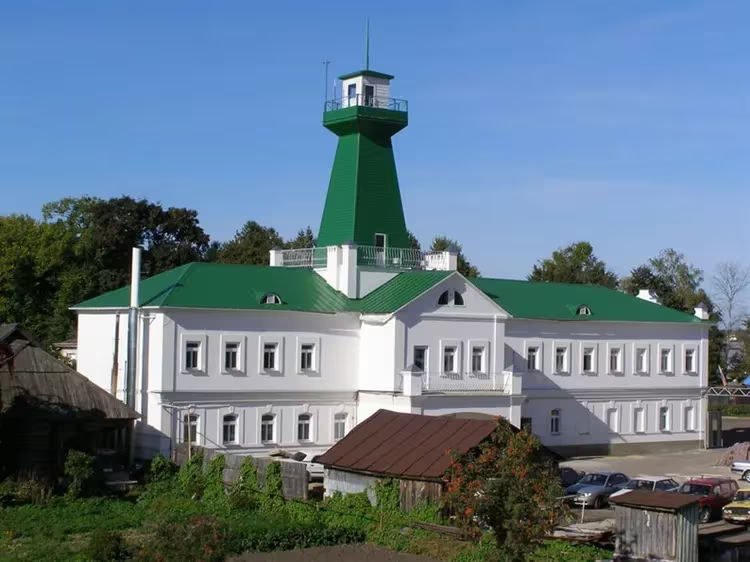
In 1864, a fire brigade was created in the city. It was located in the building of the former stables and had only one hand pump in its arsenal. In 1890, a fire tower was finally built in the city, from which the whole city was viewed.
Since then, the fire brigade has been located here, in the building on the ground floor. Over time, it became very dilapidated and was almost in disrepair. Only at the beginning of the 20th century, through the efforts of the city's fire department, it was possible to find funds for the restoration of the building.
It was decided to restore the building in the form in which it was built. To do this, they used the drawings stored in the archives of the Suzdal Museum. At the end of 2005, firefighters moved into a new building that meets all modern requirements and at the same time harmoniously fits into the overall historical appearance of the city, being its decoration.
Peter and Paul and St. Nicholas churches
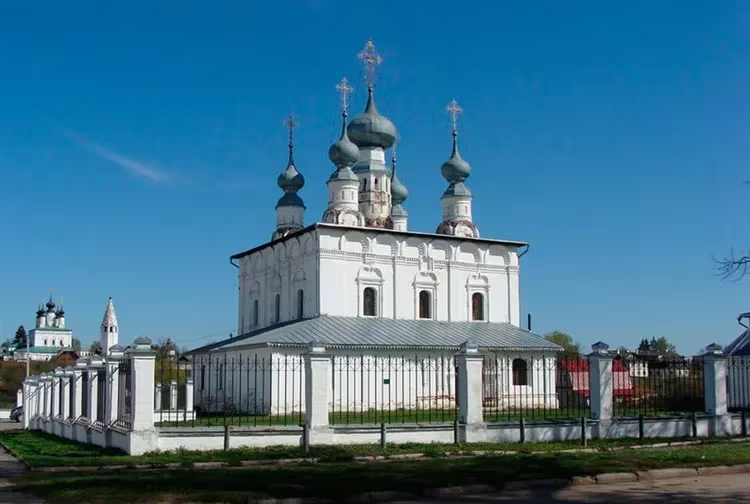
In 1694, Metropolitan Hilarion blessed the construction of a church in honor of the Holy Great Martyrs Peter and Paul. The church was built thanks to the diligence of the novices of the Intercession Monastery. According to rumors, the idea of its construction belongs to Evdokia Lopukhina, the first wife of Peter I, who was exiled to the Intercession Monastery and lived there for 20 years.
One of the aisles of the temple was consecrated in honor of Alexy, the man of God, in memory of the murdered prince. In the 19th century, the throne of St. Mitrophany was organized in the church at the expense of the townswoman Ekaterina Petrova.
The majestic five-domed church was the size of a cathedral. Once, a bell tower adjoined it, which was completely completely destroyed. In 1712, the summer church was supplemented by the winter Nikolskaya. This is the first warm church in the city.
Later, the construction of twin churches became traditional for Suzdal and other cities. This is a small temple with a very simple and concise design.
Elias Church
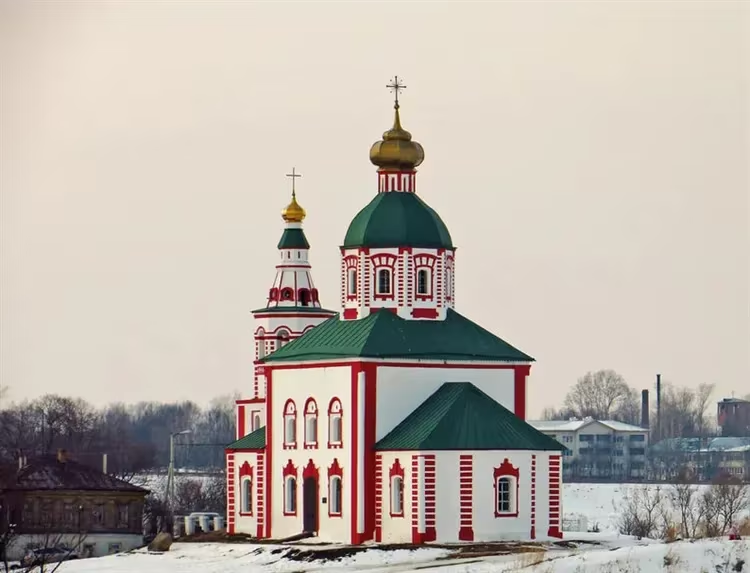
Opposite the Kremlin, on the bend of Kamenka, on the protected Ilyinsky meadows in 1744, a stone church was erected in honor of Elijah the Prophet. Once there was a bishop's settlement and a wooden church. It was decided to build a new temple on a hill – Ivanova Gorka.
It was built in the style traditional for the 18th century – a pillarless quadrangular building is crowned with one dome on a drum hoisted on an octagon. In addition to the main building, a refectory and a bell tower were added to it, and later a winter church in honor of John the Theologian was completed.
But during the years of Soviet power, the Ivanovo Church, the refectory and the bell tower were destroyed. The temple suffered a lot during this time, and the restoration, the project of which was developed back in the 70s, dragged on for many years. Only in 2010, the bell tower and the refectory were recreated, practically returning the Ilyinsky Church to its original appearance.
Museum of Wooden Architecture
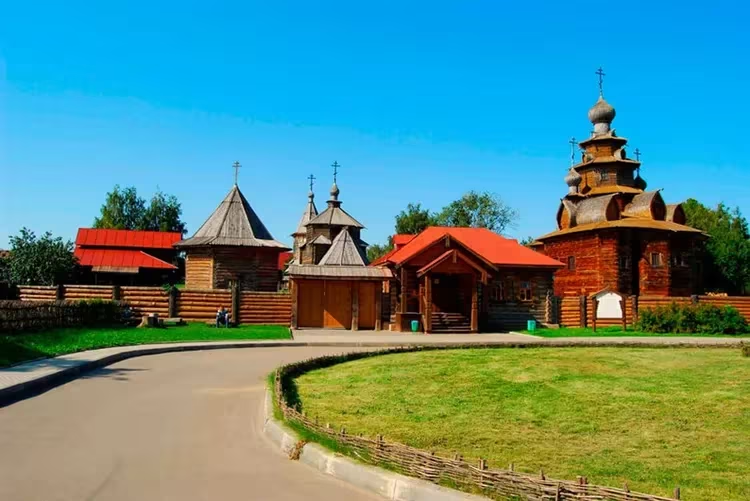
An amazing open-air museum will introduce you to unique examples of ancient wooden architecture and help you imagine how our ancestors lived in the 17th-18th centuries. All the exhibits were collected in the villages and villages of the Suzdal region, dismantled piece by piece and restored already on the spot.
Here you can see a merchant's house, outbuildings, mills, the house of a wealthy peasant. You can enter every hut. The museum staff completely recreated the life of a peasant or a merchant family of that time: all furniture, dishes, household items are carefully selected and convey the atmosphere of that era.
There are also two wooden churches – Resurrection and Transfiguration. Like all the buildings around, they were made without a single nail, but they have been perfectly preserved to this day. Every summer there is a fun holiday – Cucumber Day.
Church of Boris and Gleb in Kideksha
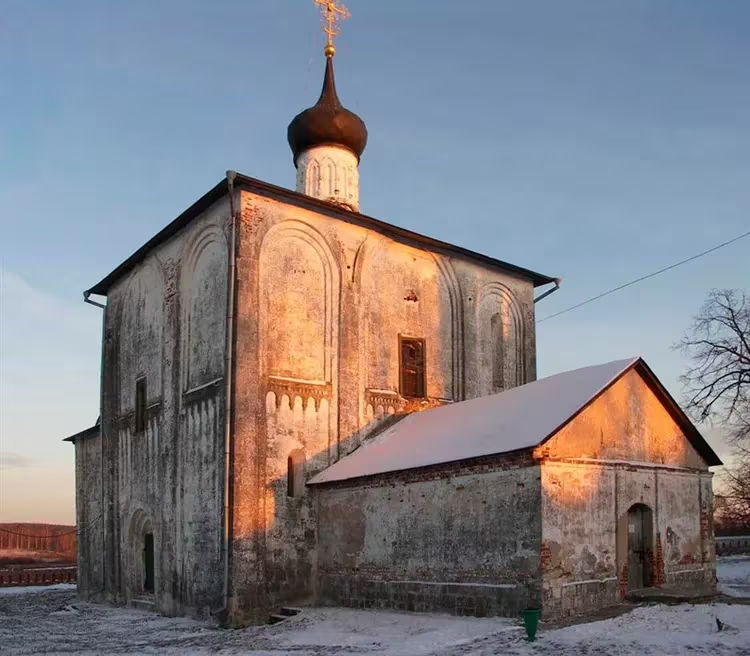
5 km from the city, where the Kamenka flows into the Nerl, there is a small village of Kideksha. Now it has several hundred inhabitants, and once there was the residence of Yuri Dolgoruky. By his order, in 1152, a temple was erected in honor of Boris and Gleb.
According to legend, it was here that the brothers Boris and Gleb met before going to Kiev. This single-domed four-pillared church with restrained decor and simple lines makes a stern majestic impression even on the modern viewer.
Inside, fragments of a fresco are still preserved, which depicts brothers among the flowers and trees of the Garden of Eden. The son of Yuri Dolgoruky Boris, his wife and daughter were buried in the church. During the Tatar-Mongol invasion and in the Time of Troubles, the temple was badly damaged, but then it was restored.
Research and archaeological work is constantly carried out in the church. Since 1992 it has been on the UNESCO World Heritage List.
Trading rows
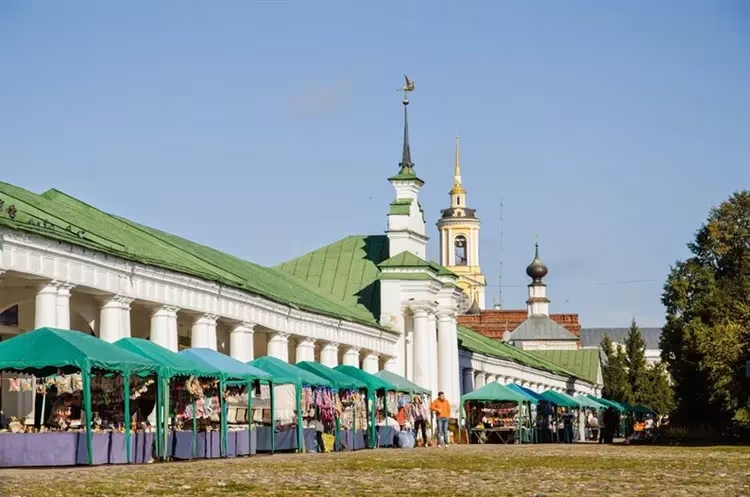
At the beginning of the 19th century, Gostiny Dvor was built in the center, taking similar shopping arcades in St. Petersburg as a model. There were 100 shops here, which later turned into ordinary shops. It was one of the busiest places in the city.
And now Gostiny Dvor, which is an example of civil engineering and the Empire style, remains the center of the commercial and tourist life of the city. Unfortunately, the building has not been completely preserved in its original form, but the main gate with the old coat of arms remains, and there are still many tourists here: stalls with traditional souvenirs, mead and Pokrovsky gingerbreads are placed in the galleries.
There is a restaurant and entertainment center nearby. In addition, other sights are located not far from the malls – the temples of the Lord's Entry into Jerusalem and the Ascension, the churches – Kazan and Constantine and Helena and other objects.
Resurrection and Kazan churches
The Church of the Resurrection stands next to the Gostiny Dvor on the Trading Square. Therefore, “at the Market” was often added to its name. The wooden temple that stood here before burned down in 1719, and a year later a stone church was erected on this site.
This is a summer “cold” church, and services were held in it only in the warm season. In order for parishioners to attend services in winter, later, in 1739, the Kazan Church was built nearby.
The tradition of putting paired winter and summer churches next to each other was very common in this era.
The ensemble fits very harmoniously into the overall picture of the center and, together with Gostiny Dvor and the domes of churches, creates a unique atmosphere of this city. Here it is very easy to imagine how the city lived 100 years ago. That is why historical films are often shot at this place.
Tsarekonstantinovskaya and Sorrowful churches
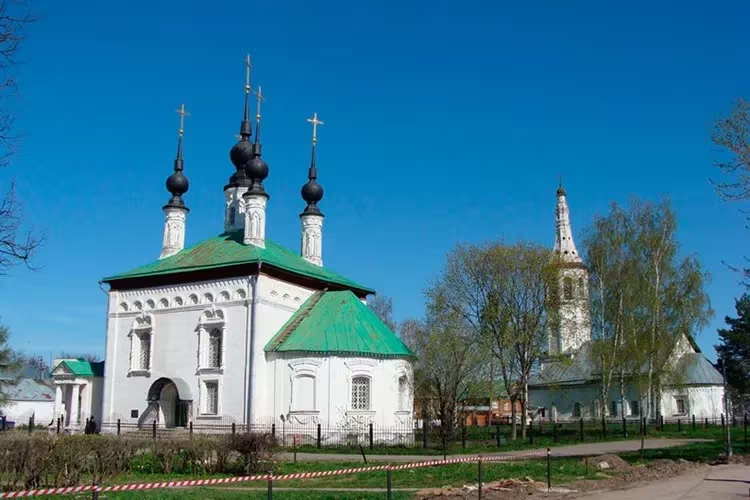
The townspeople often call the Tsarekonstantinovsky Church simply Tsareva. It is known from the chronicles that a wooden church once stood in its place, consecrated in honor of Tsar Constantine. Over time, it fell into disrepair, it was dismantled and made of stone in 1707.
Five elongated drums with the same long spiers and elongated crosses are mounted on a high cube with a hipped roof. The snow-white temple is decorated with a decorative cornice with arches made in the form of horseshoes, kokoshniks and carved platbands on the windows. This is the last Suzdal five-domed church.
In 1750, a warm Sorrowful Church was added to it. It consists of low stands with a gable roof. Next to it rises an elegant bell tower, decorated with decorative carved cornices and majolica balusters.
In 1923, the temples were closed and a garage was placed in them, and later a public toilet. In 1976 they were returned to the church, and in 1977 the rector of the temple, Archimandrite Valentin Rusantsov and his community, was completely restored.
Kamenka river
Kamenka is a river in the Vladimir region, which is the right tributary of the Nerl. Once it was full-flowing and navigable. Ships sailed along Kamenka to the Nerl and further through the Oka and the Volka to the Caspian Sea.
The river was part of the famous trade route, along which Suzdal merchants brought honey, wood, flax, furs and wax to overseas countries, and brought back silks, spices, gold and precious stones and other exotic treasures.
Once the water in the river was so clean and transparent that all the stones at its bottom were visible, hence the name “Kamenka”. The main attractions of the city are also located along its banks. Once upon a time, the river also played an important defensive role.
Now it has become much shallower and is not navigable. But its picturesque shores still attract Suzdal residents and tourists. There are many hotels and guest houses here, from the windows of which you can see its beautiful banks and the domes of churches.
Entrance-Jerusalem and Pyatnitskaya churches
Another traditional paired ensemble of churches. The entrance-Jerusalem summer temple is located in the center, next to the Kremlin and the trading square. On the site of an ancient, completely dilapidated wooden church, a stone building in the classical style was built in 1707.
Smooth walls with windows located at the same height and decorated with skillful carvings crowned the temple with five domes, mounted on high thin drums. However, by the end of the 18th century, five-domed churches were almost never built, so when repairs were made, four domes were removed. They were restored during the restoration in the 90s.
In 1772, the winter Pyatnitskaya was added to the church. At first it was called Nikolskaya, but since it was built instead of the wooden Pyatnitskaya, the new name never took root. The temple is a large quadrangle with an octagon with a large dome placed on it. It is crowned with an unusually shaped dome in the form of an onion. Once there was a bell tower at the church, and the whole ensemble was surrounded by a low white stone fence, which have not survived to this day.
Holy Cross Church
A plague raged in 1654-1655. By tradition, the townspeople performed prayers for deliverance from this misfortune, and later they put a cross on this place, and later laid the wooden church of the Holy Cross with a chapel dedicated to the most popular saint in Russia – Nicholas the Wonderworker.
In 1770, a stone church was built in its place. The church is located to the north of Gostiny Dvor and overlooks Lenin and Staraya streets. The building has a special two-tone design, and if you look at it from different streets, it is hard to imagine that this is one and the same building.
From the side of Lenin Street, you can see the main part, painted yellow with white pediments and cornices, and from Staraya Street you can see the bright bell tower and the whitewashed refectory added in the 19th century. They obscure the cube of the main volume and give the impression of an outside building.
Lazarevskaya and Antipievskaya churches
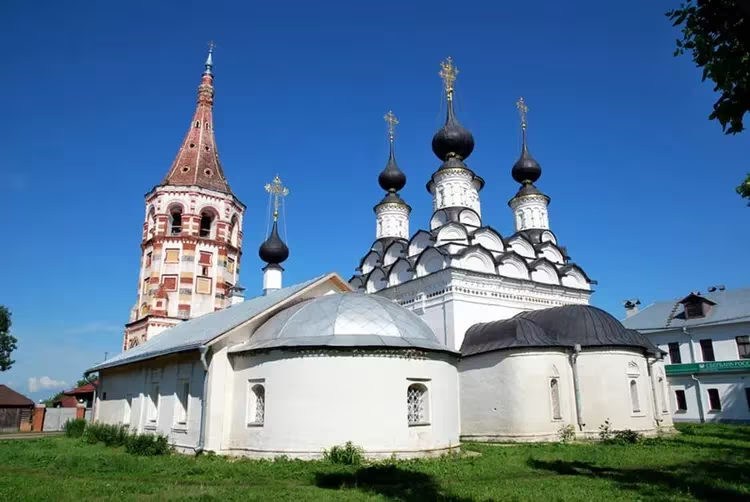
Lazarevskaya Church is one of the oldest stone buildings. It was built in 1667 on the site of an old wooden church of the same name. For the first time, decorative techniques were used in its design, which then became traditional for Suzdal churches.
The temple impresses with its interior decoration. Divine services were held in it only in the warm season, and in 1745 a paired winter church was built – the Antipievskaya Church. It has a more concise design, but it stands out primarily for its bell tower with a concave hipped roof.
The bell tower was erected before the main building. This is one of the tallest and most beautiful buildings in the city, and during the restoration of 1959 its external design was restored in accordance with the decorative details characteristic of the 17th century.
Church of Cosmas and Damian on Jarunova Hill
In the XII century, here, on the banks of the Kamenka River, there was a monastery of Cosmas and Damian. By the 17th century, only one wooden church remained from it. In 1725, it was replaced by a stone church in honor of Cosmas and Damian, or Kozmodemyanskaya church.
It was erected on Yarunova Hill – the place where in pagan times there was a temple of Yarun. They put the church on a hill so that it could be clearly seen from afar. And today a great view of it opens up from Lenin Street.
The church has an asymmetrical structure, which was often used in this era. A simple cube of the main building is crowned with just one cupola on a high drum. On one side, a bell tower adjoins it, and on the other, a low chapel, also with one dome.
Once the temple was surrounded by a low fence, and a stone staircase led to the river, but in our time the fence and stairs have not been preserved.
Smolensk and Simeonovskaya churches
Craftsmen lived outside the walls of the Spaso-Evfimievsky Monastery – masons, blacksmiths, weavers and tailors, a settlement was formed here, which received the name Skuchilikha, either because of the “crowded” settlement of a large number of people, or because of the constantly crowding convoys of merchants from Yaroslavl, Vladimir, Moscow and Kostroma.
Near the corner monastery tower, the inhabitants of the settlement erected a wooden church in honor of the Smolensk Icon of the Mother of God. In 1709, a stone one was built in its place. The five-domed light, elegant church stood on the road leading from Yaroslavl, and, as it were, was the gate to the city from this side.
It was a summer, unheated temple. According to tradition, it was later supplemented with a warm chapel – the church of Simeon the Stylite. At first, it was also wooden, and then, in 1749, it was replaced with a stone one.
This is a small temple, made very restrained, without any special decorative elements. At the end of the century, the ensemble of churches was supplemented with a bell tower, connecting them with a gallery.
Kozmodemyanskaya and Holy Cross churches
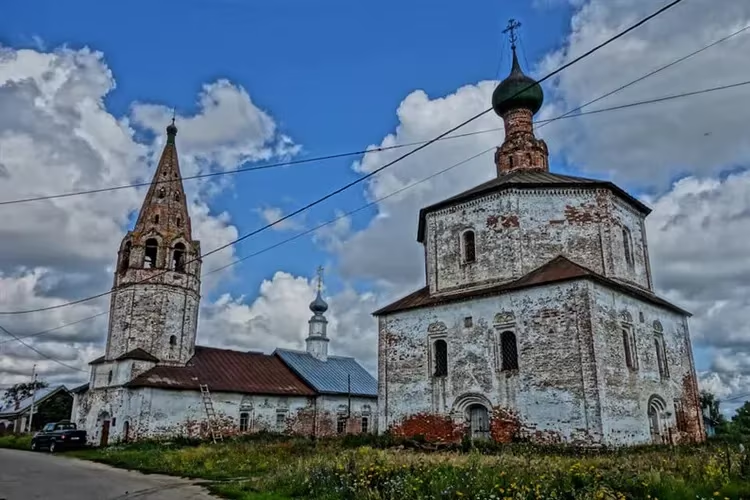
Traditional for medieval Russia, the ensemble is a pair of winter and summer churches, located on the banks of the Kamenka, away from the central and busiest part of the city. Winter services were held in the warm Exaltation of the Cross Church. It was built in 1696 and consists of two stands, one of which is crowned with a cupola, planted on a high decorated drum.
The summer Kozmodemyanskaya church was added later. This is a single-dome building with a beautiful patterned drum. Both churches are made in a rather restrained style, without a large number of decorative elements. Services have not been conducted in both churches for a long time and restoration has not been carried out for many years, which, incidentally, gives them a special charm.
Monument to Tarkovsky
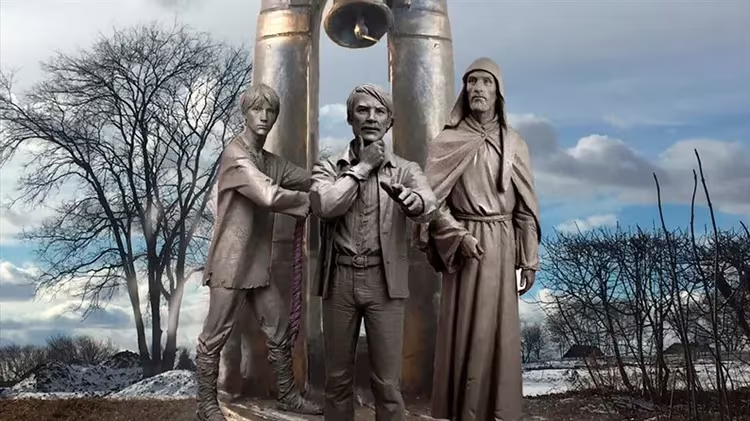
Is it worth explaining who Andrei Tarkovsky is? The film of this director “Andrey Rublev” is familiar to everyone. On July 29, 2017, the grand opening of the monument took place, the idea of u200bu200bcreating which belongs to Nikolai Burlyaev and Maria Tikhonova. The 4.5-meter composition is installed next to the Spaso-Evfimiev Monastery.
The sculptor worked on it for free for three years, and as a result, now this “symbol of unification” is an adornment of the city and an important reminder of “what Russian cinema can and should be.”