
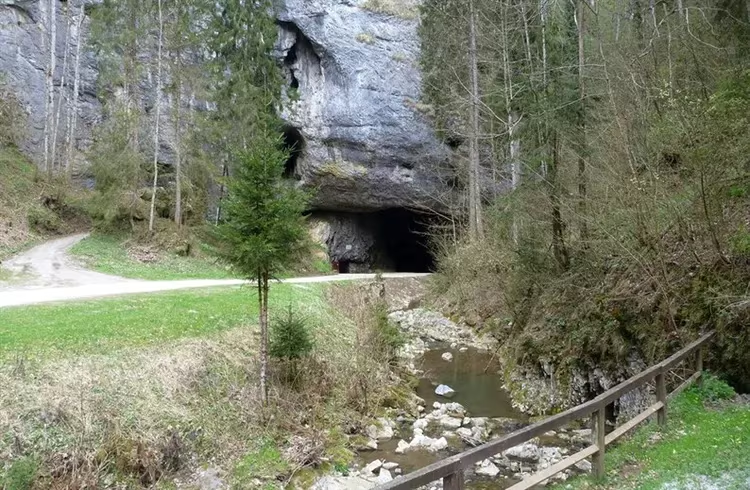
In the southeastern part of Austria, within the federal state of Styria, not far from the second largest city of Graz, there is an amazing place – the Lurgrotte karst cave, stretching between the cozy alpine villages of Peggau and Semriach, near which is the most convenient entrance to this underground world.
Description
This realm of stalactites and stalagmites is located at an altitude of 420 m above sea level, and the explored length of Lurgrotte is about 6 km. It is believed that this cave is the largest in Austria. Many speleologists suggest that its length can be much greater.
Taking into account the factor that calcareous rocks predominate in the composition of the rocks of this area, karst processes can cover fairly large areas. The temperature regime of this natural object depends little on external factors. Therefore, the temperature here is mostly kept at around 10 degrees.
Expedition
Lurgrotte Cave was known as early as the beginning of the 17th century, as evidenced by the images of its entrance on the canvases of artists of those times. In 1822, the first mention of Lurgrotte appeared in written publications. Much later, on April 1, 1894, many people learned about the cave thanks to the Italian speleologist M. Brunello.
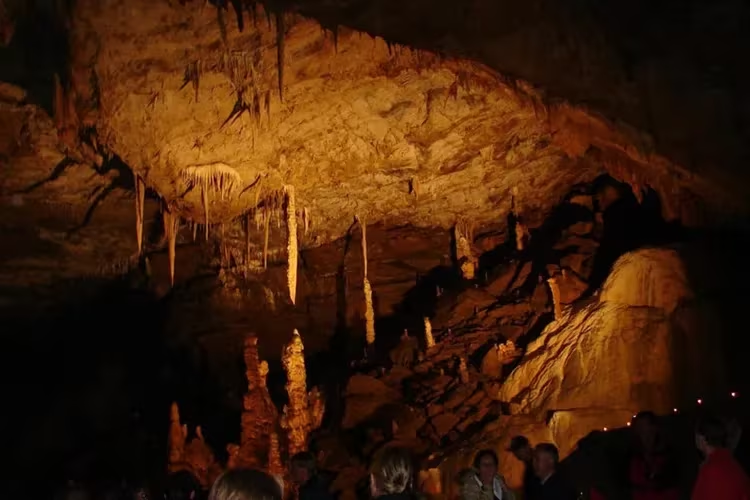
It was on this day that a curious Italian explorer of the underground depths managed to get to the farthest corridors of the cave and to the most impressive chamber of Lurgrotte, called the Great Dome. Members of the expedition led by Brunello made a number of measurements of this huge hall and determined that its length is 120 m, width – 80, and height – 40 meters.
It was later established that the Great Dome is the largest underground hall in Central Europe. Given the importance of the information obtained during the expedition, April 1, 1894 was the date of the official opening of Lurgrotte. At the end of April of the same year, a new expedition of speleologists set off to explore in detail the underground galleries discovered by Max Brunello.
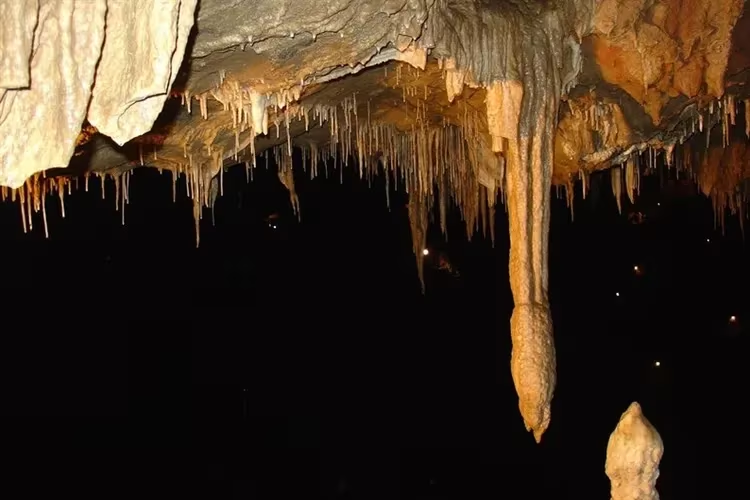
Before the expedition members had enough time to admire the bizarre underground structures made of stalactites and stalagmites, water blocked their way. A sudden flood caused a sharp rise in the water level in the underground river, and cavers could not get to the surface on their own.
The fact is that the cave river Lurbach flows through the territory of the cave, the length of which underground is 6 km. It flows into the underground vaults near the settlement of Semriah, and comes to the surface near Peggau.
To save the expedition, the imperial engineering battalion was involved. The rescue operation lasted nine days and ended successfully for researchers and rescuers. During this period, all of Europe closely followed the news of the events in Lurgrotte. This, at first glance, an unpleasant event brought wide fame to the cave. Speleologists, scientists, landowners and townsfolk started talking about it.
natural tunnels
Interest in Lurgrotta grew so much every year that in 1912 a special company was founded to study this natural object. A year after the formation of the company, a drainage adit was installed providing access to the cave from Peggau.
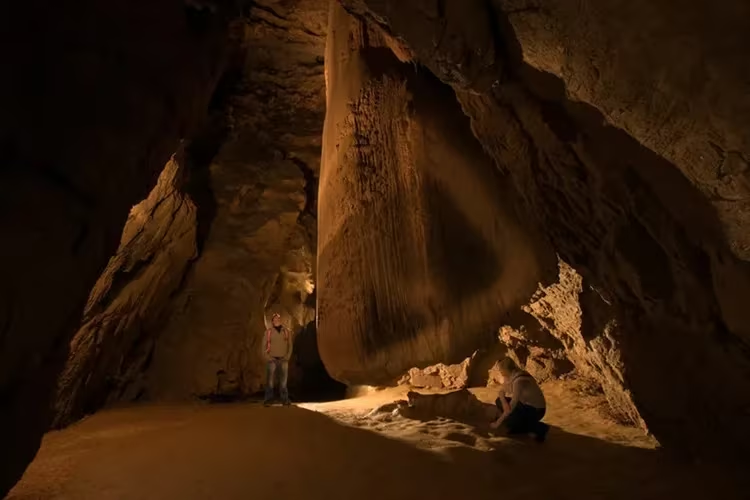
As a result of the studies of the underground corridors of Lurgrotte, specialists discovered in 1924 connecting natural tunnels between the settlements of Peggau and Semriach. In 1935, for the first time, cavers managed to overcome the entire underground path between these villages.
Austria is interesting for tourists for many reasons – we have analyzed all this in our life hack, read and draw conclusions.
Ways for visitors
In 1937, specialists began to equip the entrance to the cave within Peggau. Twenty years after the start of work, the cave was opened to the general public. Work on strengthening the cave and equipping paths for visitors did not stop, and in 1962 visitors were already offered walks through the underground halls for 5 km.
However, a year later, another flood destroyed the tracks, which were quickly restored. The flood of 1975 destroyed the tracks so much that they were completely out of order. Nowadays, the cave can be viewed both from the side of Peggau and moving from the settlement of Semriah. From both entrances, the length of the paths for inspection is 2 km each.
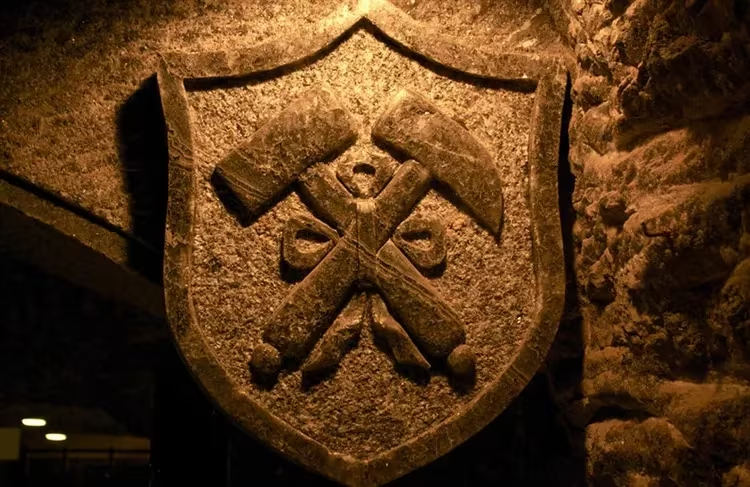
The mass of visitors to Lurgrotte began to bring considerable profit. Therefore, the territory on which the cave is located was put up for sale at auction in 1927. Ultimately, ownership of the underworld passed to the successful merchant Pezzi.
The new owner Lurgrotte organized the engineering work to design the cave for visitors, and also actively contributed to the construction of the railway in the area.
Underworld
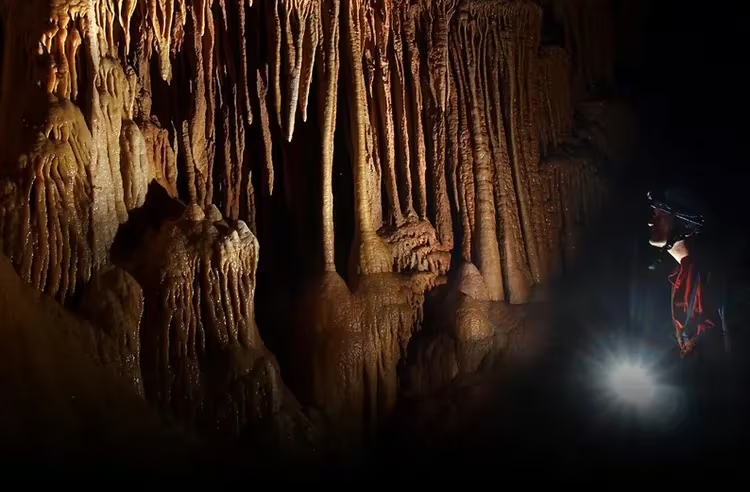
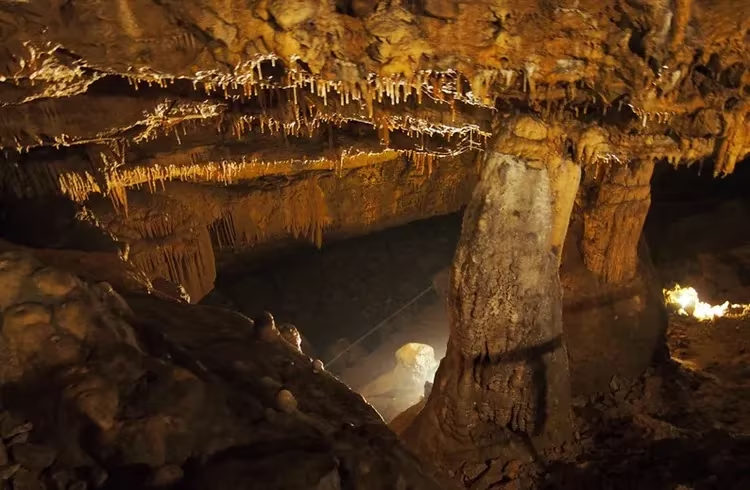
Lurgrotte is a real underground kingdom. Fanciful columns formed by stalactites and stalagmites support the vaults of numerous corridors and halls. One of these natural wonders is Wonderful Polyana, discovered in the 20s of the last century. Later, a new vault was opened, called the Lion's passage.
It was in this underground gallery that the remains of a predator that once lived unknown to modern science were found. Many biologists have suggested that the remains found in Lurgrotte belong to the progenitor of the modern lion.
Cave halls
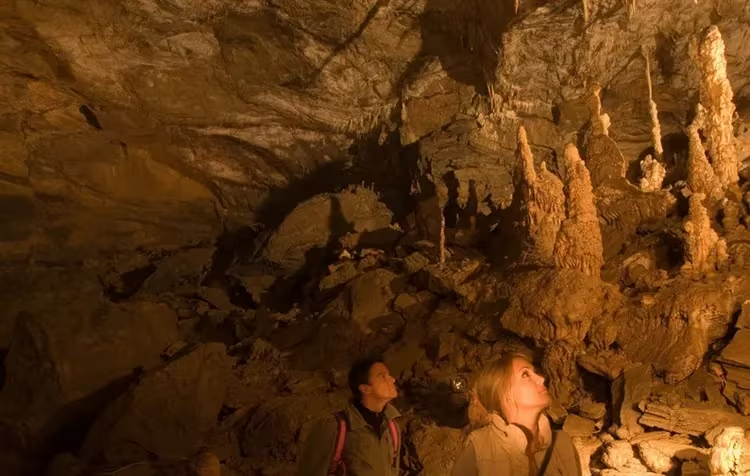
Each of the halls of the cave is amazing and admirable. No wonder each of them has its own name. Among all, the 100-meter Collapse Hall, whose height is 28 meters, causes special delight. In addition to the grandiose size of this hall, visitors are amazed by the amazingly beautiful corralite flowers on the walls and elegant sintered columns.
Located next to the Landslide Hall, a small compartment bears the promising name of the Gallery of Hope. It is possible that the stone altars formed by the streaks near the walls resemble a small church in which you can ask the Almighty, hoping to be heard.
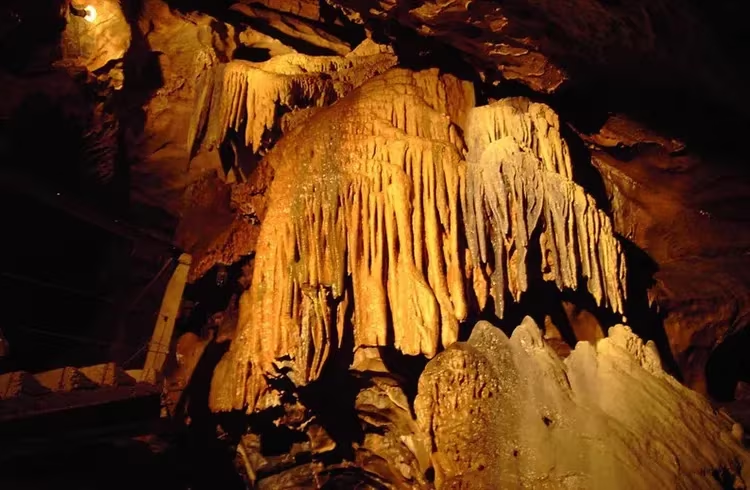
A huge porous stone block 13 meters high rises in one of the halls and strikes the imagination of visitors with its impressive appearance. It is no accident that she is called the Giant.
In the huge Grand Dome, in summer you can watch a special sound show accompanied by video images. It is worth noting that this performance is possible only in summer, since in winter there are many bats hibernating here and they should not be disturbed.
In winter, visitors are offered adventure tours of the old sections of the cave. Armed with carbide lamps, each of them during such an excursion feels like a real explorer of the underground depths.
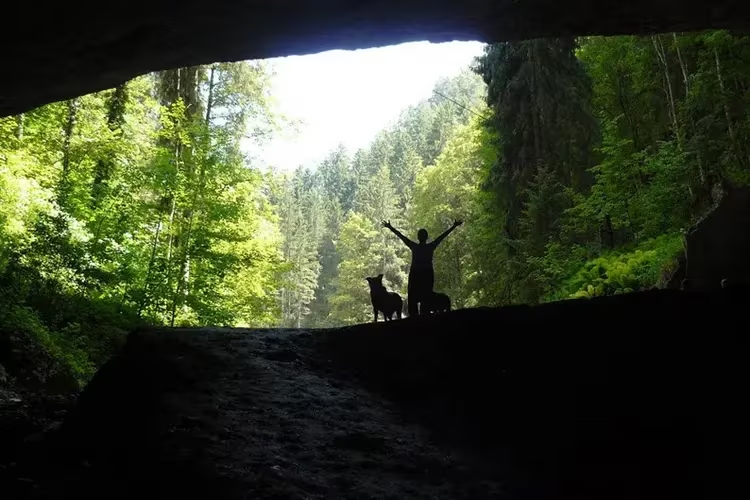
Tourists are interested in the Peggauer and Rötelstein rocks, near which scientists have found traces of the presence of an ancient man.
For the convenience of visitors, the cave is equipped with paths, observation decks and bridges. Special lighting makes it possible to see all the wonderful underground formations of Lurgrotte and appreciate their extraordinary beauty. From the settlement of Semriah, railway tracks were laid through the entrance to the cave. Therefore, it is possible to make an underground journey even by train.
By the way, it is in Austria that the famous Benedictine monastery is located. – Have you heard about him? If not, then read on the pages of our website.