
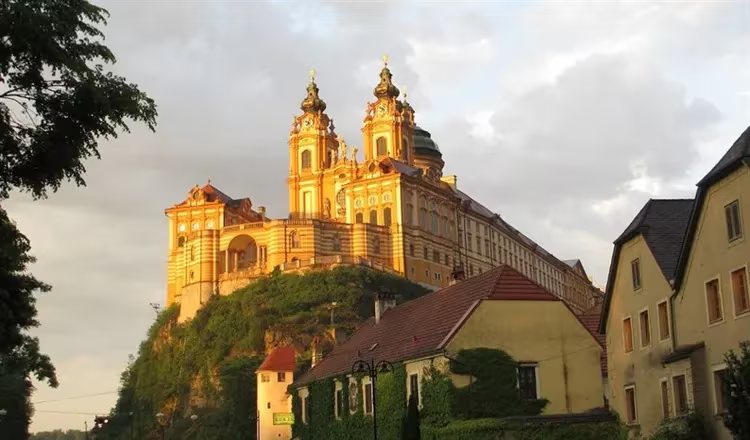
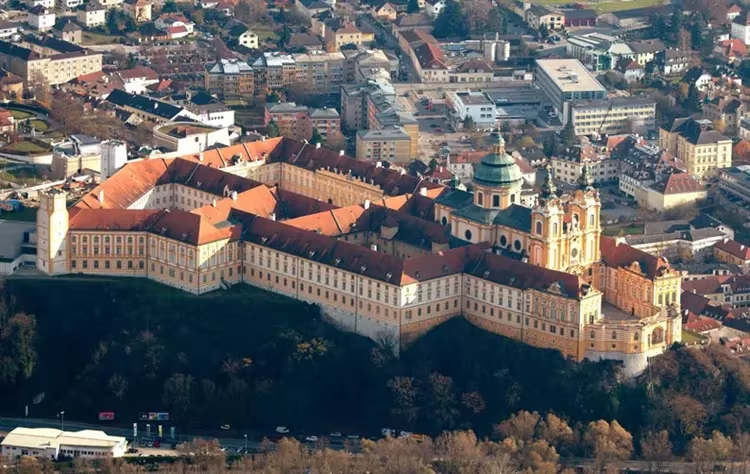
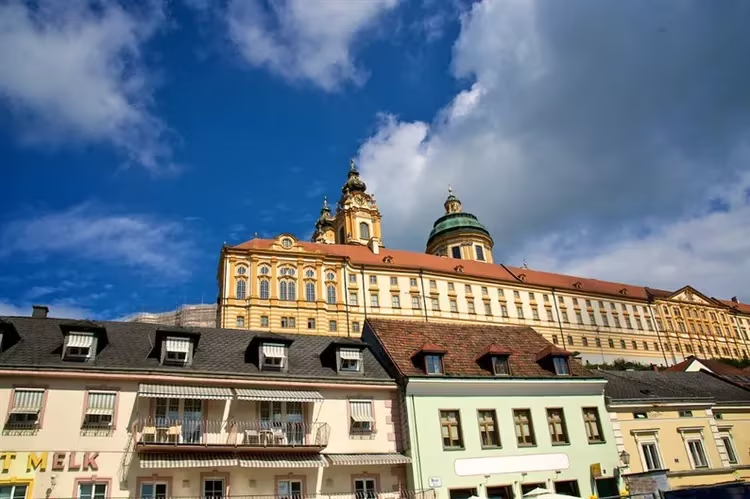
On the rocky upland of the southern bank of the Danube, the still functioning Benedictine monastery flaunts with an impregnable fortress. Its terraces offer picturesque views of the city of Melk and the vine-covered Wachau Valley.
Story
On the lands of present-day Lower Austria, this is almost the best place for military fortifications. Until 976, there was a fortress on this site, which belonged first to the Romans, then to the Slavs and Germans. Until the Margrave Leopold I of Austria from the Baberbeg dynasty seized these lands and chose this building in Melk as his residence. And in 1089, his follower Leopold II gave the palace, filled with various precious objects, for the use of Benedictine priests.
During these more than 900 years, the monastery has undergone many ups and downs. Numerous fires repeatedly destroyed the library and destroyed the walls, but each time, the abbey, like a Phoenix bird, was reborn from the ashes. Plague epidemic, economic difficulties, church schism in the 14th century. In the 16-17 centuries, during the war with Turkey, the monastery was in serious decline.
It got to the point that up to 10 monks lived within its walls. At the beginning of the 19th century, Napoleon set up his headquarters in these buildings. During the First World War, the monastery lost some valuable relics, for example, he had to sell the Gutenberg Bible, a rare and valuable edition. The prisoners of the Mauthausen concentration camp were here during the Second World War.
In the 12th century, a school was opened here, the monks expanded the building and turned the city into a church, spiritual and cultural center. Duke Rudolf IV, who ruled in the 14th century, presented the abbey with an invaluable relic – an inlaid cross of Jesus Christ, which later became the Melk Cross.
In the 15th century, the abbey in Melk became the focus of a reform movement that strengthened monasticism in Austria and southern Germany. In 1742, the construction of the main buildings, decorated in the Baroque style, was finally completed and their restoration after another fire.
In the 20th century, the abbey was equipped with electricity, water supply and sewerage. And, after the celebration of the 900th anniversary and a two-year interesting exhibition, which was visited by more than a million guests, it is almost completely open for tours. Free parking, a restaurant and a souvenir shop have been built, and excursions are held from May to October.
Description of the monastery and its territory
The Benedictine monastery occupies an area of 17.5 thousand square meters. meters. A large-scale and majestic building, attracting the attention of a huge number of travelers, lovers of beautiful historical monuments. Several courtyards decorated with arches and sculptures, an elegant fountain. It is noteworthy that initially a fountain with the image of Koloman was installed in the Prelate Court, then it was transferred to Melk Town Hall Square. And here they put a fountain, which was brought from the closed Waldhausen.
History of St. Koloman
An interesting story of St. Koloman, the patron saint of the city and the whole country. During a pilgrimage to Jerusalem in the summer of 1012, he was taken prisoner and mistaken for a military spy, since, originally from Scotland or Ireland, he did not really know German. After terrible torture, he was hanged. The body of the criminal was not buried, according to the tradition of those times, but for 1.5 years it did not decompose. These miraculous events interested the clergy, and Coloman was buried with due honors.
In 1014, Margrave Henry I, mostly out of curiosity, opened the crypt and discovered the same imperishable relics. He reburied them in Melk. But the miracles don't end there. The king of Hungary took away the relics of the saint from the city, but fearing the natural disasters predicted by the clergy, he returned them. The body returned without the lower jaw, no one understood where it had gone. And in 1752 she “miraculously found herself.” And now every year in October it is shown to believers.
Historical Museum
Guests are first advised to visit the historical museum, for a better perception of all other attractions. Here you can get acquainted with the theatrical and musical heritage, the economy, traditional pedagogical foundations and innovations, antiquities from the time of the Babenbergs, the decoration of the monastery in its reduced copy, the clothes of the abbot, embroidered with gold. All this in an exceptional setting and many mirrors, which makes the museum itself a piece of art.
marble hall
The marble hall, which served as a dining room for the imperial families, for ceremonies and receptions, impresses with its decoration. A bright, spacious hall, huge windows are separated by columns of pink marble with golden sculptures.
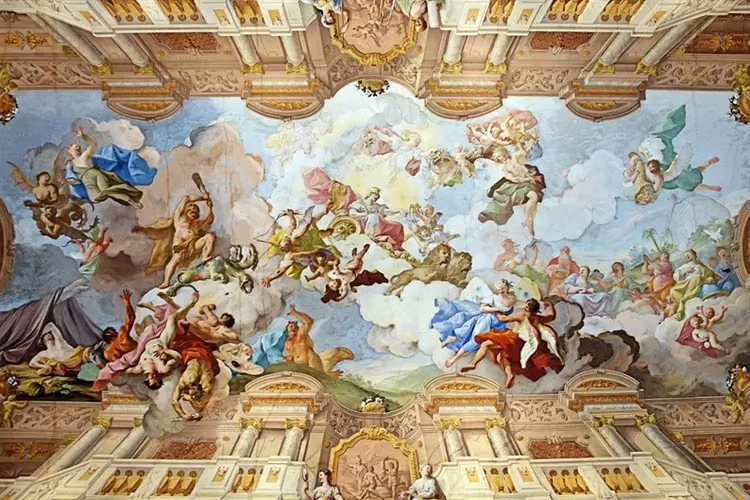
The high vaulted ceiling is decorated with paintings depicting Pallas Athena in a chariot drawn by lions, Hercules killing a three-headed serpent, many angels in the clouds against the blue sky.
Library
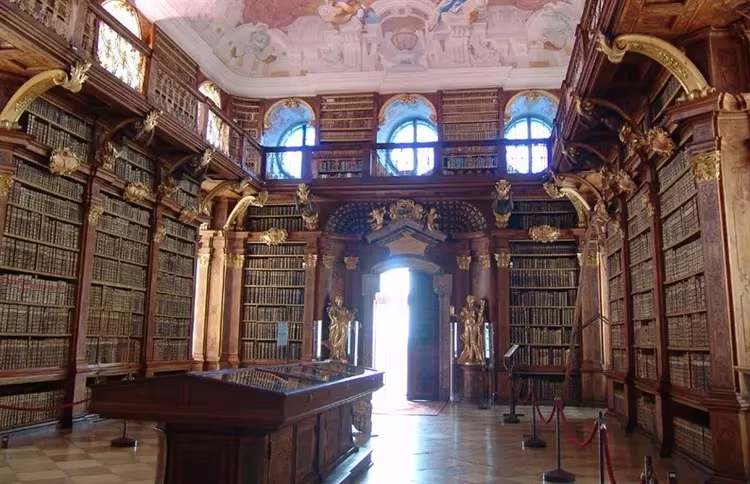
The library also has a breathtaking ceiling worthy of all praise. But the main source of pride is, of course, books. 16 thousand essays are stored here, systematized by topic.
An amazingly beautiful spiral staircase with wrought iron railings leads to the upper floor, where the main treasures are kept: 1888 manuscripts, 750 incunabula (books printed before January 1, 1501). Not all of the twelve rooms are open to tourists, but each is worthy of the greatest reverence, not only for its interior decoration, but for the wisdom of the ages that is preserved here.
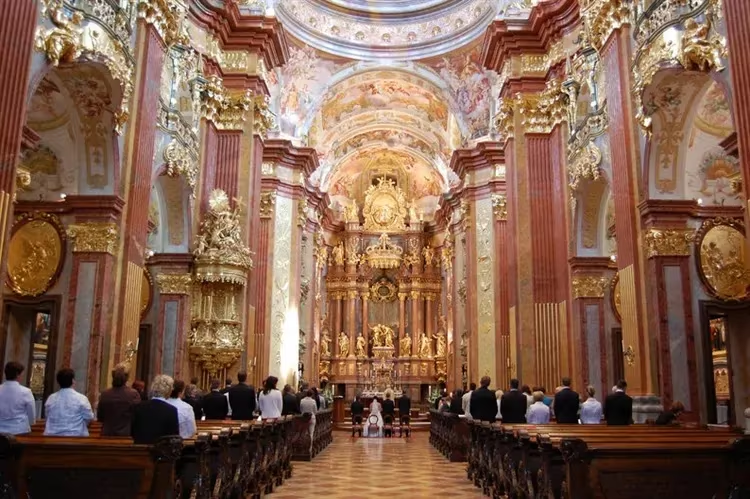
Church of Saints Peter and Paul
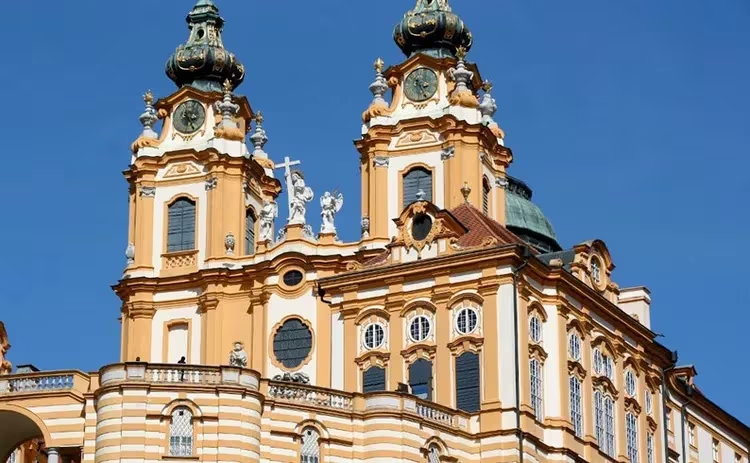
One of the most beautiful in Austria. Its graceful interior arrangement is simply dizzying. Painting on the ceiling, red marble columns, gold statues and various ornaments, all this makes you feel the atmosphere of old Europe. Five bells were cast in 1735. One of them, the largest in Lower Austria, weighs 7480kg. Interesting fact: Mozart, at the age of 11, played the organ in this church when he stayed here on his way back to Vienna from Salzburg.
The monastery impresses with its architecture. All halls, corridors, courtyards amaze tourists with their elegance. A walk in the garden will also not leave anyone indifferent. Well-groomed paths between 250-year-old lime trees, benches where you can rest forever, admiring the unsurpassed landscapes.
Before traveling to Austria, do not forget to read interesting facts about this country – only on our website.