

🎭 Las Fallas Festival in Valencia: a grand fire show 🎆
At the beginning of spring, Valencia lights up with thousands of colors and lights. There is a smell of gunpowder and carnations all around. The real Las Fallas fiesta is coming to the city. Once upon a time the holiday was not so large-scale. Rather, it was a tradition dedicated to St. Joseph's Day and the arrival of spring.
Every year on March 19, artisans brought wooden lamp stands to the doors of their workshops and set them on fire. Sawdust, leftover materials and some unnecessary things went into the fires. Over time, the tradition grew into a citywide holiday.
Then they began to attach limbs to the stands, dress them up and give them human images, like dolls. And to create large ninot dolls (Spanish: ninot), from which they then create sculptures – faya (Spanish: falla), they began to use papier-mâché, wood and wax.
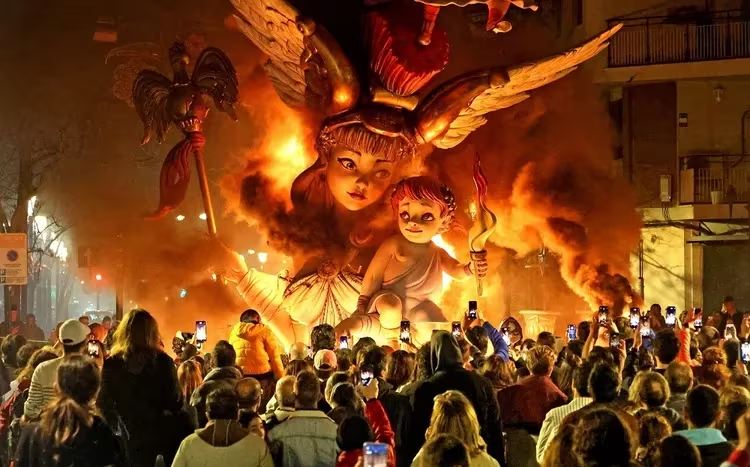
True, plastic and foam plastic are now used to make sculptures. Although this reduces the cost of production, the smoke from such fires is black and very acrid.
All sculptures are created in duplicate. Full-size and “children’s” or falla infantil.
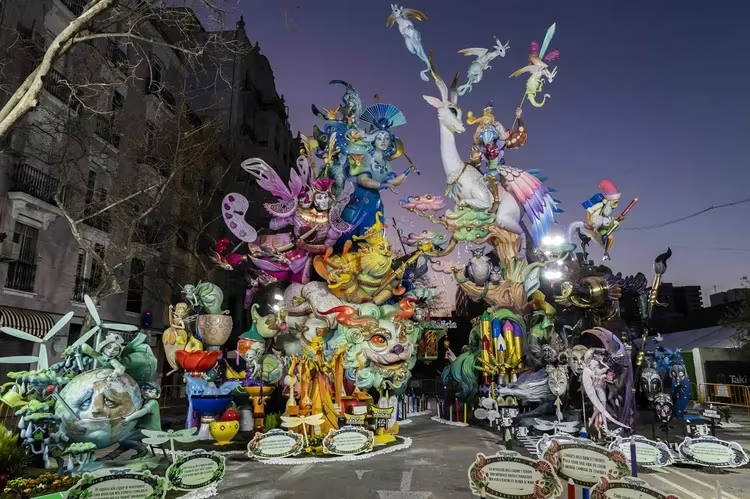
Faya, which is voted the best by popular vote, is not burned. She will be pardoned and then sent to the Las Fallas Museum.
To create dolls, Valencian residents who want to compete for victory unite in teams. Participants get together and develop architectural concepts for the sculptures long before the sculptures appear in the central square. Within the team, they choose the best firefighter, who can be either an adult or a child. Those selected then compete in a citywide competition.
In addition, as part of the festival there is a competition for the title of “best street lighting”. All residents of Valencia participate in decorating the city.
- “Bloody” tomato fights: La Tomatina festival in Spain
- Sand sculpture festival kicks off in Zhejiang province
- Five festivals in Lebanon you shouldn't miss this summer
- 10 Best Summer Festivals in Croatia 2023
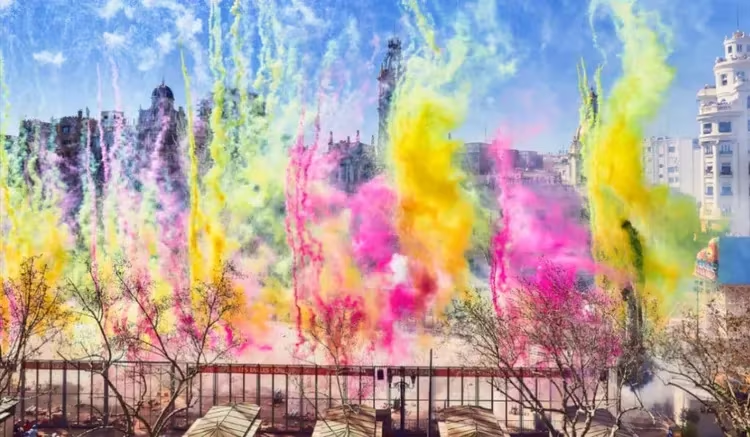
The festival program is not limited to the creation of sculptures.
From March 1 to March 19, Mascletà pyrotechnic shows take place in the Plaza del Ayuntamiento in front of the city hall. There are a lot of explosions, noise and smoke, which symbolize the fiery spirit of the holiday. This is all very impressive. Organizers recommend keeping your mouth open during the show to avoid damaging your ears. After all, judging by the volume meters installed on the square for the celebration, the sound level reaches 120 decibels.
The official opening of The Plantà festival falls on March 15th. On this day, you can see how throughout the city, and especially at the ritual burning sites, the final preparations for the competitions are underway. On March 17, the winner of the children's and full-size sculptures will be awarded.
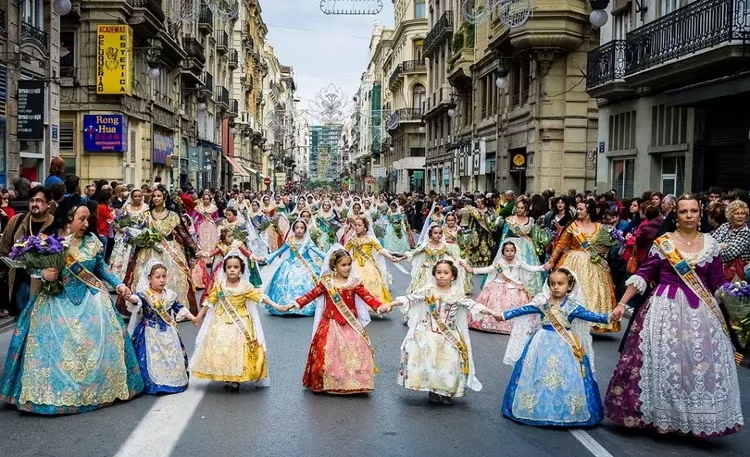
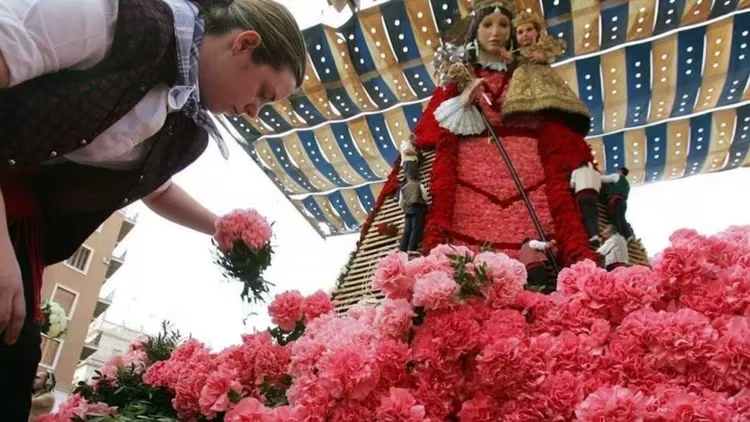
One of the most important ceremonies of the Flower Ofrenda holiday takes place on March 17 and 18. During it, townspeople walk through the streets to present flowers to the Holy Virgin de Los Desamparados in La Virgen Square. The firemen wear bright costumes, and women and girls wear Valencian national costumes with lots of decorations. The hollow 15-meter figure of the Saint is filled with carnations, and just before the holiday, a whole flower carpet is laid out at the feet of the statue.
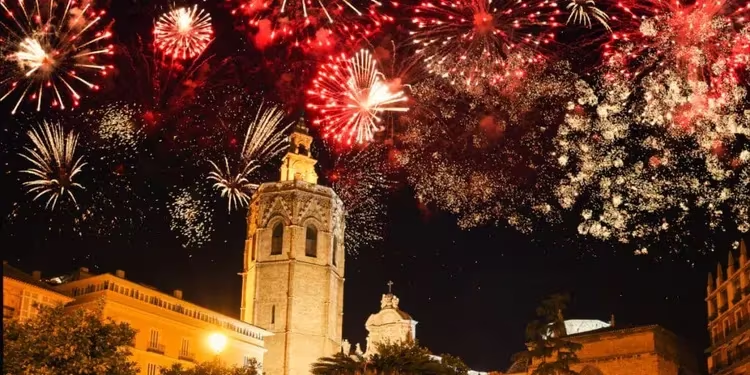
Despite the fact that explosions of fireworks and firecrackers thunder all days from March 15 to 19, the largest pyrotechnic action occurs on March 18. Nit del Foc is the night when the sky over Valencia flares up with a bright half-hour glow and colorful flashes. And in the background there are burning fires. There is something demonic about this, as if the whole city had gathered for an unbridled, cheerful Sabbath.
All dolls, small and large, must be burned on March 19. This stage of the holiday is called The Cremà.
They say that anyone who has visited the festival once will definitely want to return there again!