Mikhailovsky Palace in St. Petersburg – photo, history, opening hours, address, map
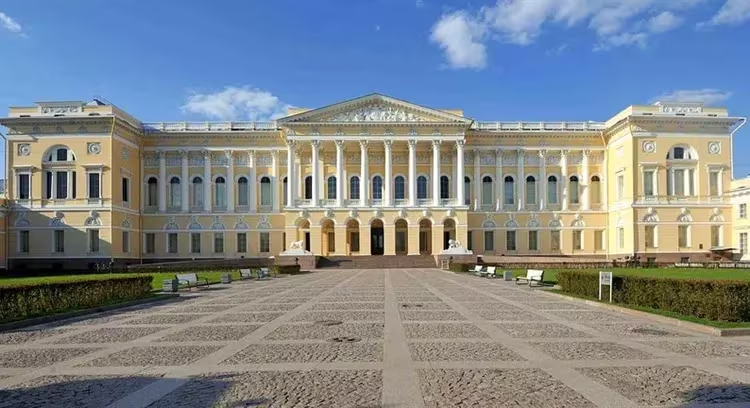
The Mikhailovsky Palace is one of the architectural masterpieces of St. Petersburg. Today, without its rather large-scale premises, the Northern Capital would look meager, however, for the most part, only external attributes remained from the original splendor – the internal layout and decor suffered greatly during the next reconstruction, when it was decided to build a permanent exhibition of the Russian Museum within its walls which is here today. It is here that more than a complete collection of ceremonial portraits of Russian emperors and empresses, some statesmen and military geniuses is collected. It is worth noting that the creation of such a portrait gallery was the first experience for the Russian Empire as a whole, but the experience was really successful.
Story
Initially, it was assumed that the Mikhailovsky Palace would be the result of the restructuring of one of the St. Petersburg buildings, however, after some calculations, it turned out that it would be easier and cheaper to start building from scratch, rather than rebuilding or, even more so, reconstruction.
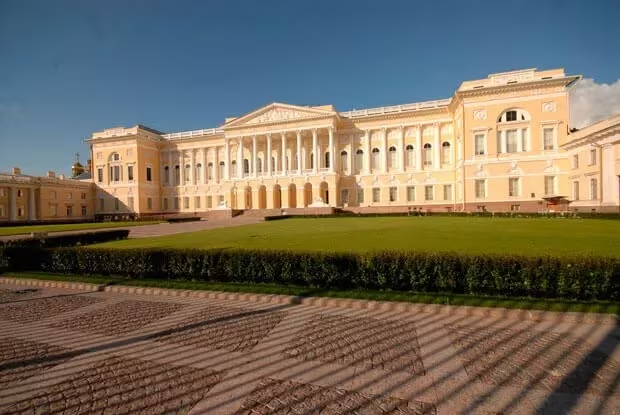
Even Paul I seriously thought about building a palace complex specifically for his son, Mikhail. Based on these considerations, considerable sums were set aside every year, only the loving father did not live to see the realization of his own plan. The palace was built already during the reign of brother Michael. Another remarkable fact is connected with this moment: Karl Rossi expressed the wish that the Mikhailovsky Palace, on which he was just starting to work, be smaller and more modestly decorated than the Anichkov Palace, which then served as the imperial residence. After all, if the estate of the brother of the reigning monarch overshadowed the splendor of his own palace, the situation would become somewhat awkward. In the end, this “wish” was forgotten, and the great architect was allowed to create on the scale he was used to,
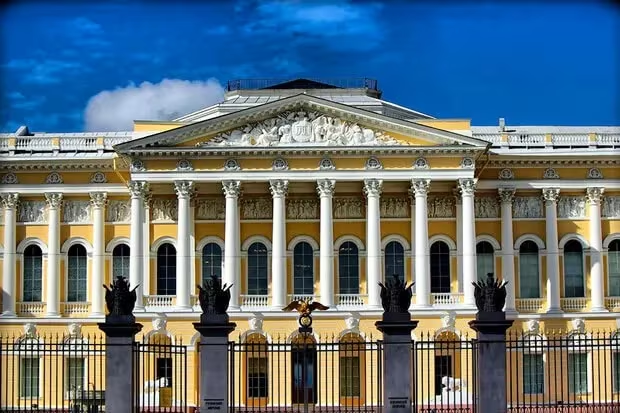
So the project of an ordinary palace turned into another layout of urban planning. On the new map of St. Petersburg, very suddenly there was a place for the palace, and for the square in front of it (now it is called Arts Square), and even for two new streets – Mikhailovskaya and Inzhenernaya. And this project was carried out with all possible brilliance.
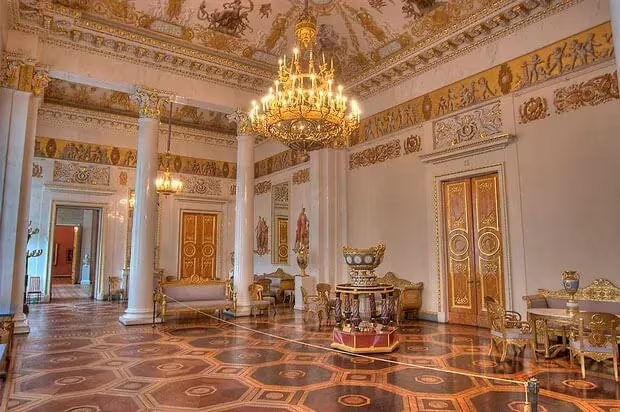
The real treasure of the Mikhailovsky Palace, the crowning achievement of Rossi's creation was the White Hall, which for several centuries amazed and discouraged the guests of the palace, including foreign ones. So, at the request of the British ambassador, a model of this hall was even made, which was later solemnly handed over to the British crown. The murals and furniture, made according to the sketches of the greatest architect, have survived to this day, as well as some elements of the main staircase, but one can only read about the sublime beauty of everything else in enthusiastic descriptions of balls and memoirs of people who visited this religious building before its last looting already in at the end of the nineteenth century, when it was decided to place here some of the exhibits that simply did not fit in the Hermitage.
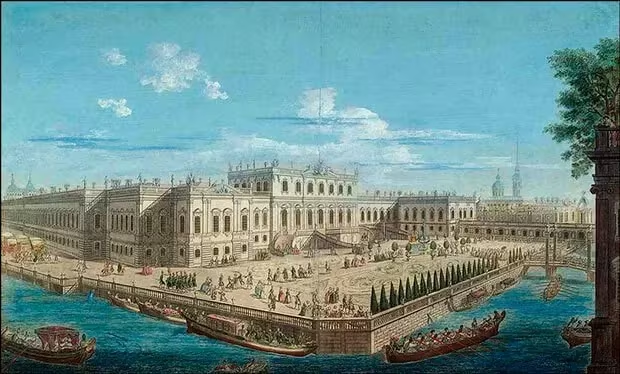
Perestroika was entrusted to V. Svinin, whose surname simply obliged him to commit some kind of atrocity against the culture of this place. And so it happened – the new architect turned out to be a staunch hater of everything that in one way or another reminded of the genius of Karl Rossi, and therefore most of the bas-reliefs, wall paintings, statues, chandeliers, upholstery fabrics and everything else simply did not survive during this “reconstruction”. All these priceless elements of the appearance of the Mikhailovsky Palace were simply destroyed and ended their lives with a short flight from the palace windows.
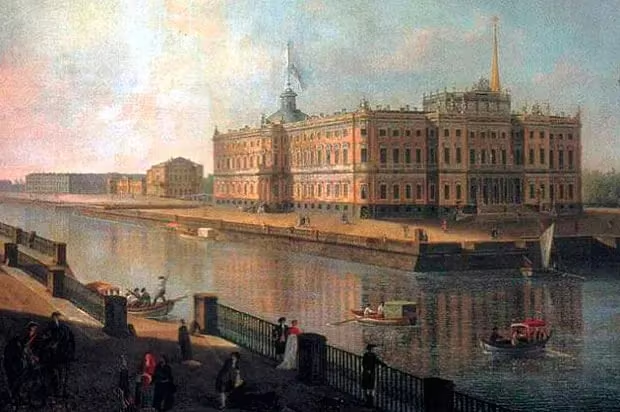
But, despite this, it is also impossible to ignore the fact that the Mikhailovsky Palace still remains part of the Russian Museum, and the presence in its collections of works by Vrubel, Bryullov, Shishkin, Rublev, Malevich and other recognized masters of the world of fine arts compensates for the violence that was committed over the original building.
Ticket price
The Mikhailovsky Palace has a fairly good location. So, you can get here using the metro – you just have to get off at one of the nearest stations, namely at Gostinichny Dvor or Nevsky Prospekt. There are two options for visiting it. The first is in a “duet” with the Benois body. A single ticket for an adult will cost 450 rubles, for a child – 200 rubles. There is also a comprehensive visiting option, which includes excursions to all the buildings located in the complex of the Russian Museum: Mikhailovsky, Stroganov and Marble Palaces. Such a ticket will be considered valid for three days from the date of purchase and will cost 600 rubles for an adult and half the price for students and schoolchildren. Tuesday is considered a day off