
💻 South Korea for digital nomads: all about the new visa
South Korea has launched the digital nomad visa. Foreigners will be allowed to stay in the country for up to two years while maintaining employment in their home country. The digital nomad visa is ready to be issued for a year, and then it can be extended for another year.
To obtain a visa, you must provide a package of documents to the South Korean Embassy. In this case, you will have to confirm your annual income – it must exceed 84.96 million KRW ($65,961).
A certificate of no criminal record will also be required. In addition, applicants must have health insurance with coverage of at least KRW 100 million ($77,602 at the time of writing). The latter is a kind of guarantee that in the event of an emergency, the nomad will be able to return home. The age requirement for applicants is 18 years or older.
Now that we’ve sorted out the design issue, let’s find out what the country offers to digital nomads.
K Lima t
Winters in Korea are quite mild. The average temperature is about -6°C. Summer is also not very hot, but quite humid. On average – +25.4°C.
Safety
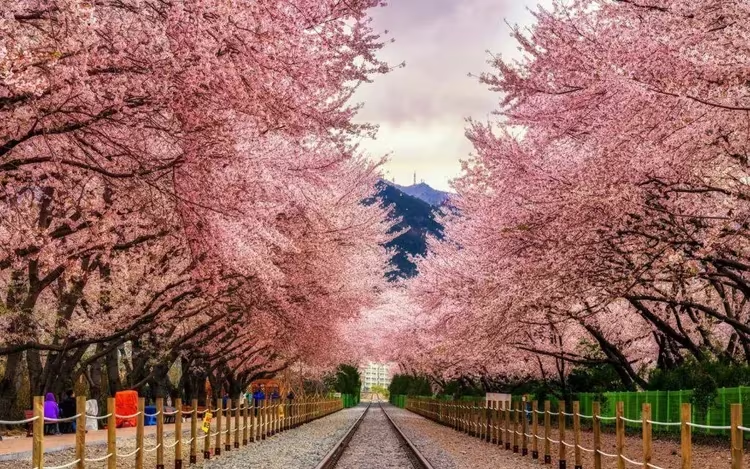
South Korea is one of the safest countries in the world. Most local residents do not worry about things left somewhere, and some do not even lock their cars. But it’s still better not to do this.
Although Korea is a safe country, fights and petty thefts can often occur in clubs and similar places.
It is also better for foreigners not to participate in rallies and strikes. Because there may be problems with the police.
Medicine
Korean medicine is at a good level both in public clinics and in private ones. But keep in mind that it is not at all budget-friendly.
There are private medical centers for foreign visitors, for example, Severance Hospital. In addition to providing the necessary medical care, the institution also has translators who will help you fill out the documents.
The best option is to purchase NHIS insurance. You can find out more information here.

Transport
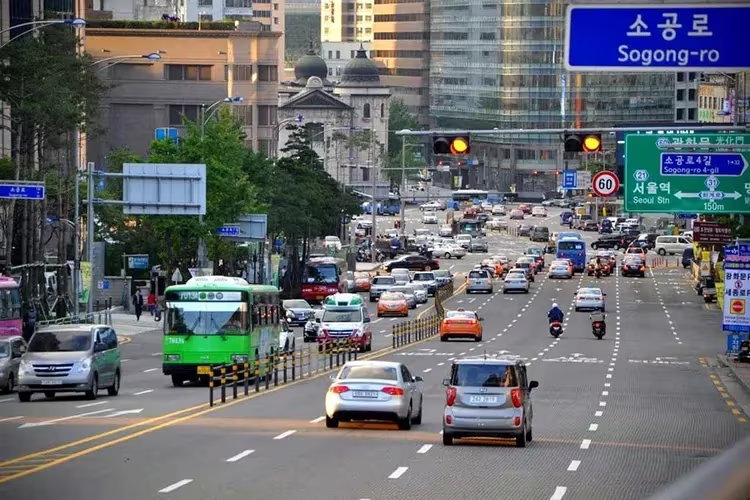
Public transport in Korea is well developed. There are buses, high-speed trains, metro and, of course, taxis.
The most convenient is the metro. You can purchase a special travel card at any station. It is more profitable to take reusable special passes. For example, T-money, M-Pass and Seoul City Pass. The cost will be 2500 KRW ($1.9).
The average price for bus e is 850-1500 KRW ($0.65-1.14). A taxi for the first 2-3 km will cost about 1600 KRW ($1.22). At night, rates will be more expensive.
Internet
There are no problems with the Internet here. Free Wi-Fi can be found in any public place, including subways, train stations, airports, and cafes.
You can purchase mobile Internet from operators such as KT, SK, LG. Internet costs average from 32,000 KRW ($24.34).
Housing
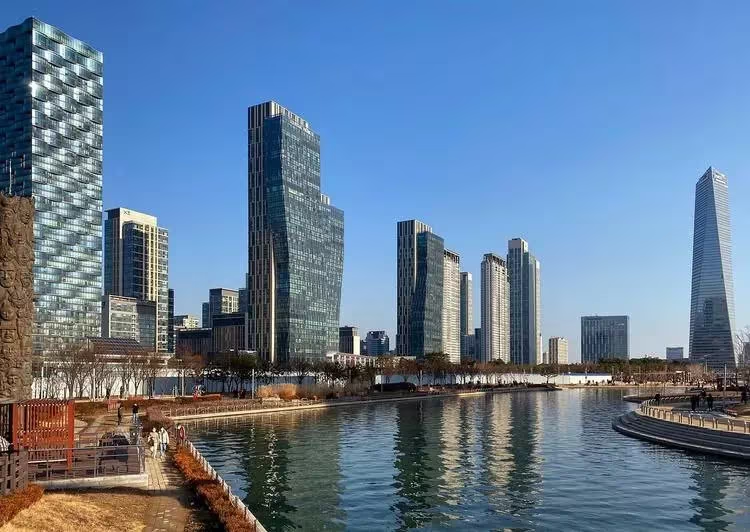
Housing in Korea is expensive. A room can cost from $300 per month. Everything, of course, depends on the area of residence and conditions. Also be prepared to allocate money for a deposit. The approximate amount is $50-100.
Nutrition
Lunch at McDonald's will cost an average of 7,000 KRW ($5.32). For a cup of coffee in a regular coffee shop you will have to pay about 4,000 KRW ($3.04).
And if you want to try ramen in a cafe, you can pay about 10,000 KRW ($7.61).
As for products in stores, approximate prices look like this: cheese (1 kg) – 17,285 KRW ($13.15), rice (1 kg) – 4,500 KRW ($3.42), water (1.5 l) – 1,356 KRW ($1.03), chicken fillet – 11,938 KRW ($9.08).
By the way, in June 2023, the country’s authorities decided to simplify entry rules. Citizens of 112 countries can enter South Korea without a visa. Tourists must have an electronic K-ETA (Korea Electronic Travel Authorization) permit with them. However, children under 17 years of age and senior citizens over the age of 65 are exempt from issuing a K-ETA.
If you get to South Korea, then in Seoul you can see the filming locations of the series “The Squid Game”, ” The Story of the Nine-Tailed Fox” and ” The Glaciers of Us “.
And to the south of the Korean Peninsula is Jeju Island. Along the way you can see tropical beaches, fishing villages, houses with thatched roofs and curious humanoid statues of “haribana”. This is also a great place for hiking.