
What to see in Suzdal in 1 day on your own – route, photo, description, map
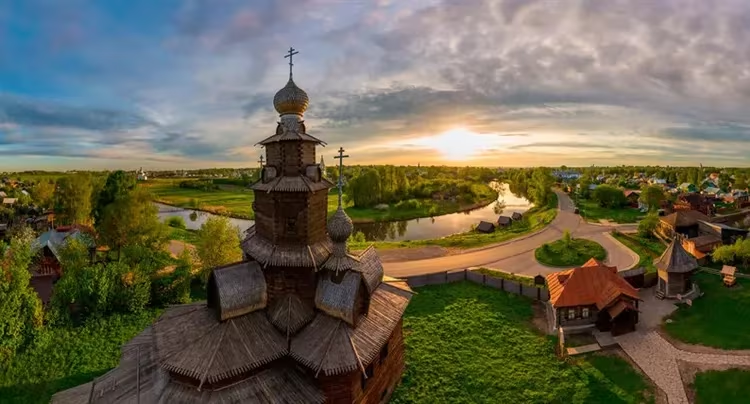
Suzdal is one of the main pillars of the Golden Ring of Russia. This is a huge open-air museum. There is a unique combination of natural beauties and ancient Russian architecture dating back to different periods.
There are no large enterprises, high-speed highways or other consequences of civilizational progress – instead, the authenticity of the old Russian settlements, which managed to preserve the uniqueness of their appearance. Not surprisingly, many local attractions are protected by international organizations.
The tourist popularity of Suzdal never weakens, but, unfortunately, not all guests of the city have enough time to fully explore all its beauties, and the question of what can be seen in Suzdal in 1 day remains relevant.
Vasilyevskaya street and Vasilevsky monastery
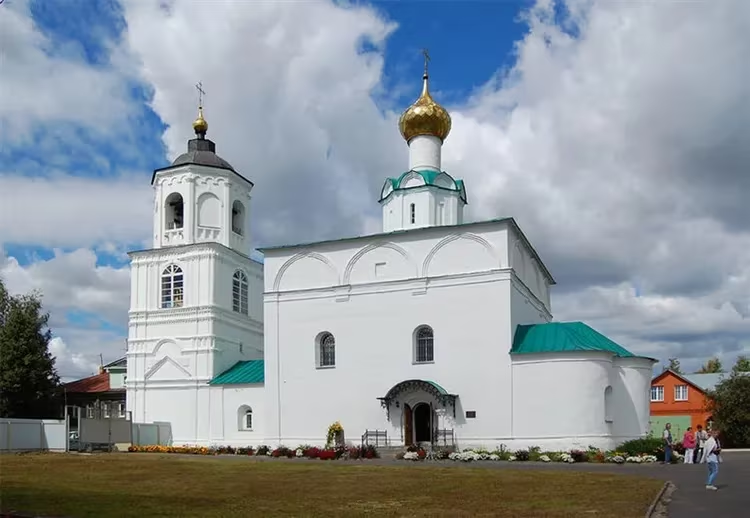
Vasilyevsky Monastery seems cold and ascetic. Such an impression appears due to the fact that, despite its relatively large size, the monastery has extremely narrow embrasure windows, low portals and a rather restrained design. These features make it look like an ancient fortress.
This architectural monument is quite unusual in terms of its design – it has two pillars. During its more than four hundred years of history, it has been rebuilt more than once. The last to appear on the territory of the monastery was the bell tower, which is decorated with pilasters and carved cornices.
Compared to other buildings, it is quite brightly decorated. The foundation of the monastery is associated with the name of Vladimir the Great.
It is the Vasilyevsky Monastery that is a kind of starting point – that component of Vasilyevsky Street begins here, which has retained some authenticity. Local houses are built of wood with all the elements characteristic of ancient architecture.
Carved platbands are especially distinguished, by which it is possible to determine the time of construction of a particular house.
Museum of Wooden Architecture
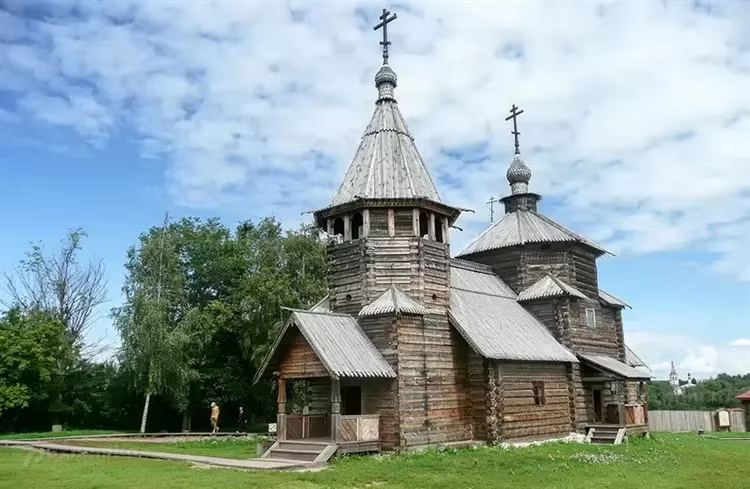
This complex is a unique architectural nursery of the 17th-19th centuries. All the buildings that are today on its territory – the huts of ordinary peasants, large houses of merchants and landowners, several churches, mills, barns, sheds, wells – all this was brought from various parts of the Suzdal Territory.
Historical buildings that needed reconstruction were dismantled and rebuilt, but already as part of the museum. It is worth noting that not only the external attributes of the corresponding centuries were preserved, but also the elements of everyday life and the interior design of all rooms were carefully restored.
Today, folk festivals in the old Russian color are often held on the territory of the museum, for example, Maslenitsa is celebrated.
Market stalls and Eternal flame
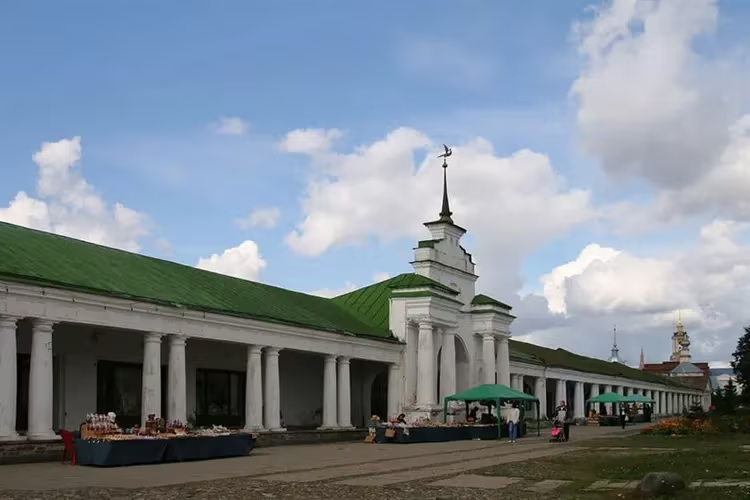
The shopping arcade is an atmospheric place in the historical sense. They are located on a square paved with cobblestones. The old church rises above the square. The project of the square was developed and implemented at the beginning of the nineteenth century according to the sketches of the architect A. Vershinsky.
It was assumed that shops of merchants from all over the Russian Empire would be located here. However, the expectations were more than justified – the Trading Rows were never empty. Today, the original function of the Market Rows has been preserved – a kind of sketch in stone on the theme of a provincial town of the nineteenth century.
They sell mainly various handmade souvenirs, as well as such attributes of visiting Suzdal as mead and kvass. Directly opposite the Trade Rows there is a park where the Eternal Flame burns today.
Water tower
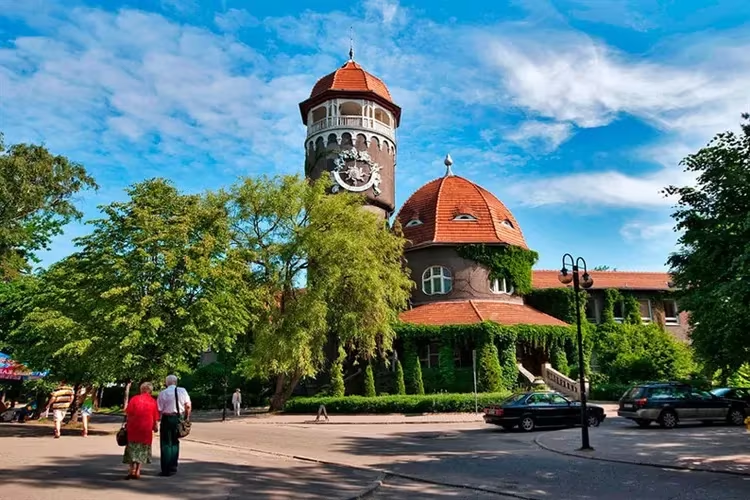
The water tower of Suzdal is a landmark, which, unfortunately, has retained its historical and architectural significance only from the outside. The interiors belong to the boutique and will not be of interest to fans of pre-revolutionary architecture.
The exact date of the tower's construction is not known. It is believed that this happened at the beginning of the twentieth century. The tower consists of four tiers, the top of which is framed by a balcony, which rests on wooden consoles.
The roof is made in a tent style, which is more typical for religious buildings. The building is crowned with a lightning rod. According to the plans, the tower was erected to provide water to the neighboring hospital building, which today also has not retained its original functions.
However, only five decades ago, both the water tower and the hospital were successfully operating.
Bishops' chambers
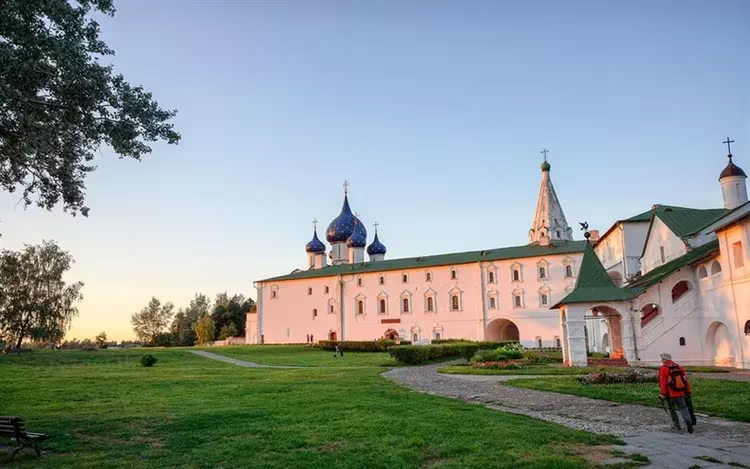
Bishop's court is a significant component of the Suzdal Kremlin. The construction of this complex proceeded rather slowly – from the fifteenth to the eighteenth centuries. However, from the very beginning, the chambers became the place of direct residence of the local spiritual ruler.
The appearance of the Bishop's Court has changed more than once. The most noticeable changes occurred during the greatest activity of Metropolitan Hilarion, a prominent historical figure, who actually created a new complex, complicating it in architectural and structural terms.
The complex includes a number of residential premises and churches built at different times.
Elements of natural oak, arched ceilings, tiled tents, scarlet cloth – all this is intricately intertwined in the design of the Bishops' Chambers.
At the moment, this complex is one of the components of the museum. It is used as an exhibition hall where you can get acquainted with the art of icon painting. Here exhibits are collected, whose age exceeds three hundred years. A special pride of the museum are the works of Simon Ushakov kept here.
Mother of God-Nativity Cathedral
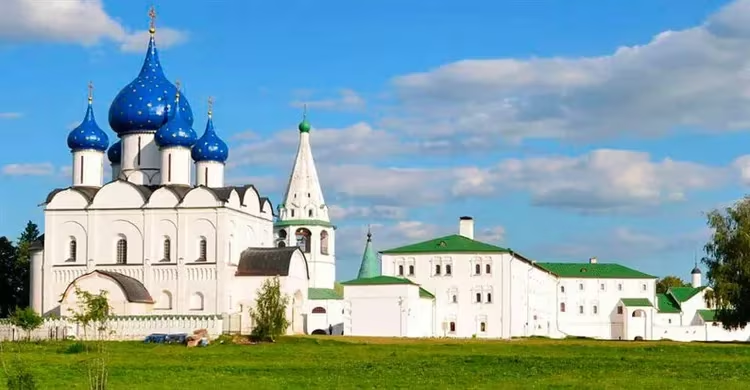
This cathedral is the oldest stone building in Suzdal. It is part of the Suzdal Kremlin complex and is perhaps its main dominant.
An elegant snow-white building with blue domes crowning five chapters stands out among other buildings of this complex. The white-stone cathedral was built over many centuries, undergoing strong changes.
Its history is closely connected with such iconic people of its time as Vladimir Monomakh, Yuri Dolgoruky, Yuri Vsevolodovich and others. Today, the remains of many Russian princes are kept here.
Various elements are found in the decor of the Nativity Cathedral, for example, the paintings on the southern doors, dedicated to the deeds of angels, clearly belong to the Byzantine school of icon painting, but in the external appearance of the sculptural elements, for example, lions, the influence of the Romanesque style can be traced.
In the design there are elements of gilding and precious metals are used.
Complex of churches of the Parish of the Entrance to Jerusalem
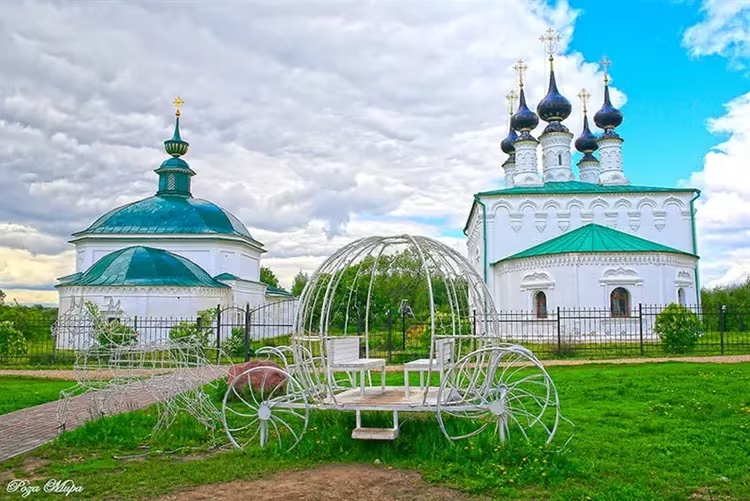
The first mention of this complex dates back to the seventeenth century. At the moment, it includes two temples: the Church of St. Nicholas the Wonderworker and the Church of the Entry of the Lord into Jerusalem. Both temples were built in the first decade of the eighteenth century and are similar in many ways.
The buildings are quite typical of the Suzdal architecture format, but, nevertheless, they fit perfectly into the panorama of the city. Both churches are summer and were erected on the site of old churches, the reconstruction of which would require even more investment.
Rizopolozhensky Monastery
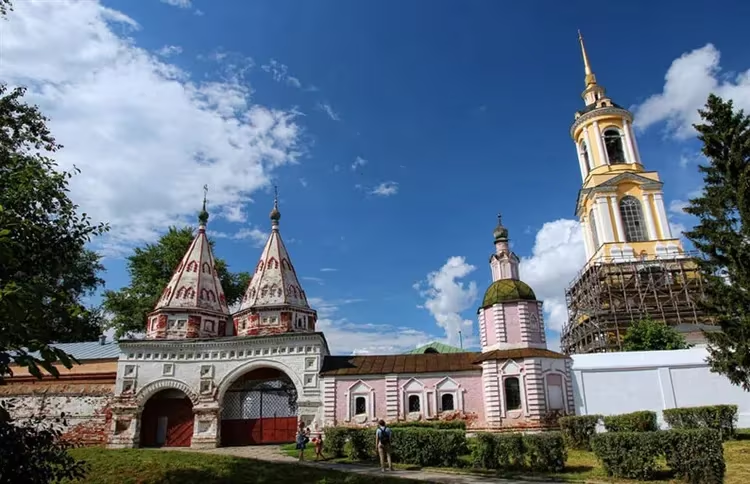
The construction of this temple dates back to the middle of the sixteenth century. It is difficult to call it a typical building of its time for a number of reasons. By itself, the three-domed cathedral with three apses is an unusual phenomenon, if we talk about the Suzdal type of architecture. The cathedral belongs to the non-stop type of buildings.
There are no internal supports, which is why the domes crowning the cathedral had to be lightened by thinning. The interior of the Rizopolozhensky Cathedral does not correspond to its external outlines, since the zakomaras and shoulder blades that adorn the side facades are false.
The interior design is based mainly on skillful work with tiled inserts, patterned coatings and stone carvings. Throughout its history, the cathedral did not experience any particularly serious reconstruction, but during the Soviet Union, the temple was badly damaged and was closed.
At the moment, the restoration work has already been completed, the plundered riches of the cathedral, although not in full, have been returned to his property.
Posad house
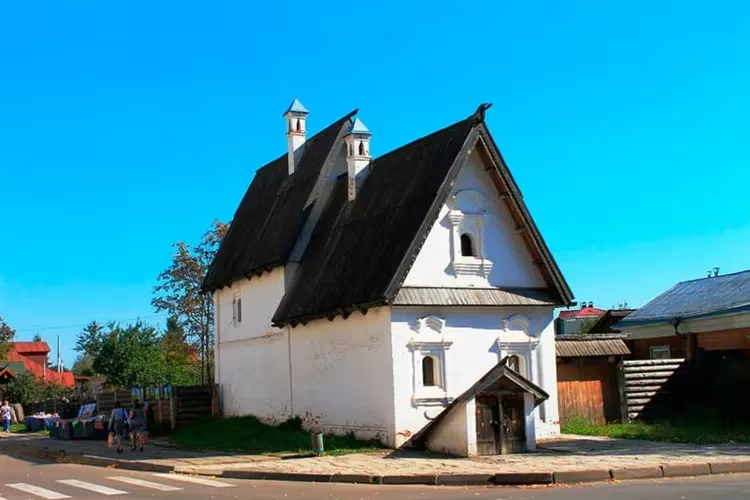
This architectural monument is without exaggeration unique. It was built around the end of the seventeenth century, when there was a transition to using stone, not wood, as the main material for construction. It also became the first “hybrid” structure of the new formation.
In its form, it repeats the wooden houses of that time, however, it is a building made of stone. Initially, the house was covered with boards and rather modestly decorated – mostly with fine carvings.
Of particular interest are the windows with old architraves. Today, the house is used as an interactive museum – the alleged environment in which the trading townspeople of Suzdal lived was restored here.
At the moment, it is not known exactly who the real owner of the house was. According to the most popular versions, he could be a fairly wealthy clergyman, a tavern keeper or a kalachnik.
Simeonovskaya and Smolenskaya churches
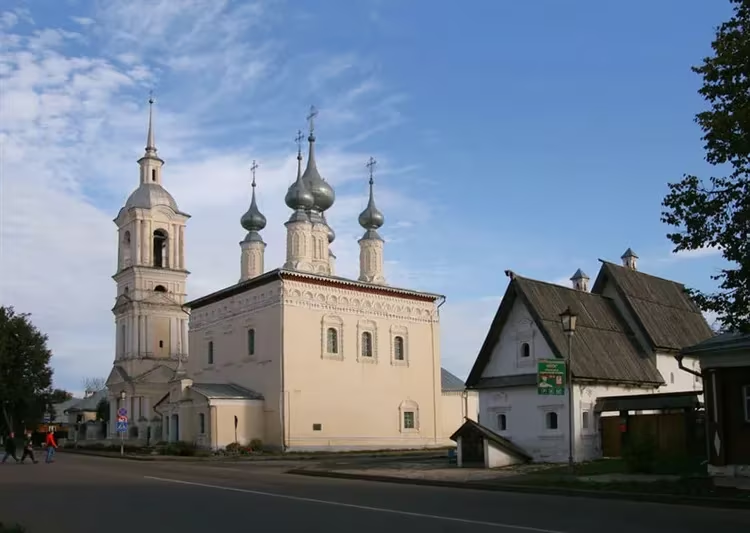
Simeonovskaya Church is located not far from the Posadsky House. It was erected in the second third of the eighteenth century in a manner typical of Suzdal masters. A low building with light walls and a blue roof, this church has been rebuilt several times.
The church also includes a bell tower, which was built almost a century after the completion of work on the church itself. The dominant style in the appearance of the bell tower is classicism. The Smolensk church adjacent to it dates back to an earlier time of construction.
It is in no way connected with the city of Smolensk, but was named after the icon of the Smolensk Mother of God. It is noteworthy that by the seventeenth century, which fell on the construction of the church, the five domes as a phenomenon had already practically disappeared, however, in the appearance of the Smolensk church, we see exactly five domes.
The church is devoid of ponderous monumentality – on the contrary, it is full of lightness and grace.
Monastery of Saint Euthymius
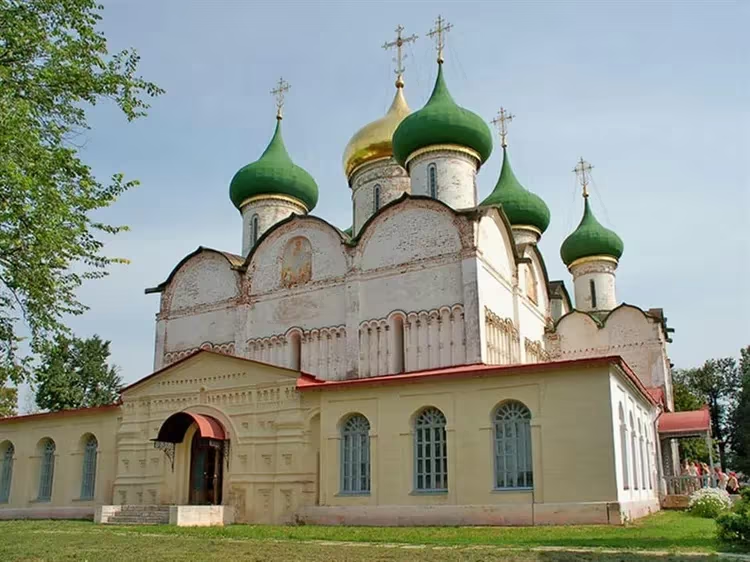
This monastery is located on the banks of the Kamenka and was included in the UNESCO World Heritage List as a unique architectural monument. The monastery was founded in the middle of the fourteenth century.
The first buildings, unfortunately, have not been preserved. We have survived only those buildings that belong mainly to the sixteenth century. The monastery complex includes a number of churches, residential premises, buildings and even the Prison Yard.
Tourism.com.de recommends the following hotels in Suzdal: