
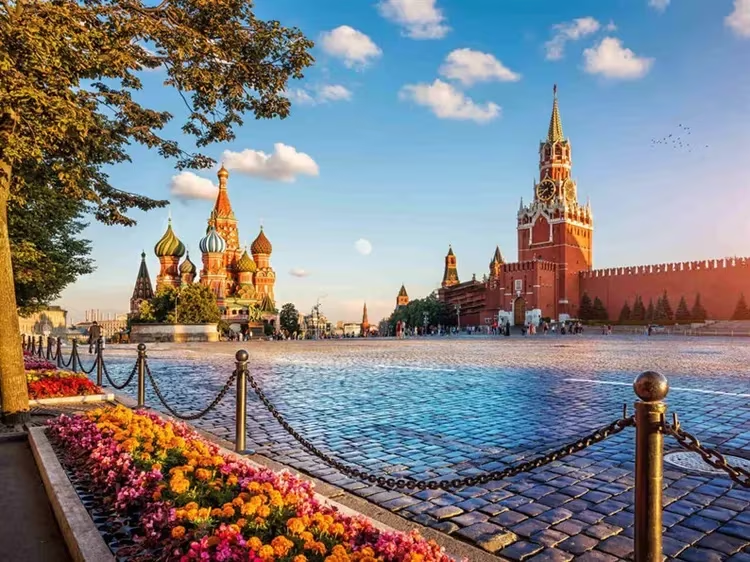
For centuries, the majestic appearance of the capital of our Motherland has been shaped. Outstanding masters created here Cathedrals, Temples, palaces, estates, parks, which have become unique sights of the country. Many wall paintings, icons, sculptures, paintings are included in the list of masterpieces of Russian art. Walking around Moscow is pleasant at any time of the year. But in spring, even the most remote corners come to life and reveal their beauty with renewed vigor.
the Red Square
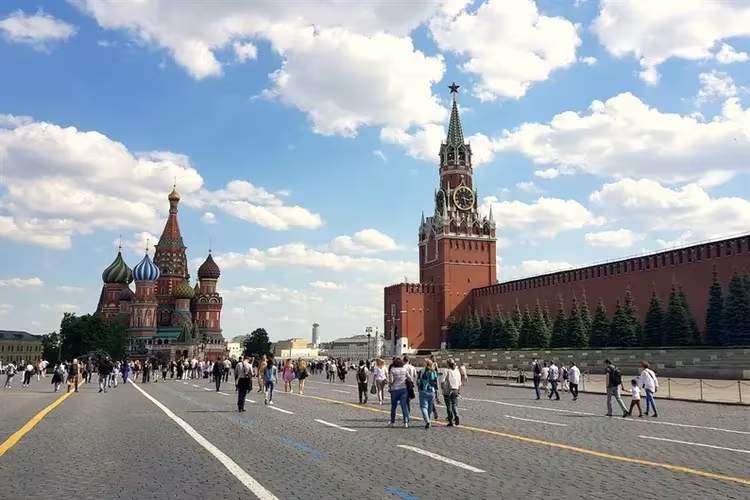
All traditional tourist paths lead to the heart of the capital – to Red Square. This name was given to the square by the decree of the king in 1661. And since then, she has become a silent witness to the fateful events of Russia, retaining this role in our time. Terrible royal decrees were voiced at the frontal place, troops of recruits going to war passed through the ancient Spassky Gate. The rulers were decorously nursed here (now they drive in modern cars).
The beautiful square is surrounded by architectural monuments created by the architects of the country. Above it, the domes of St. Basil's Cathedral sparkle, the play of bells sounds. There is Lenin's mausoleum. It became one of the dominant elements of the square and reflects one of the pages of the history of Russia. The gaze of any tourist will involuntarily stop at the building with a severe black and red facade made of eternal granite. Unusual celebrations and colorfulness await the square this spring. Address: Aleksandrovsky Sad metro station, Red Square.
Alexander Garden
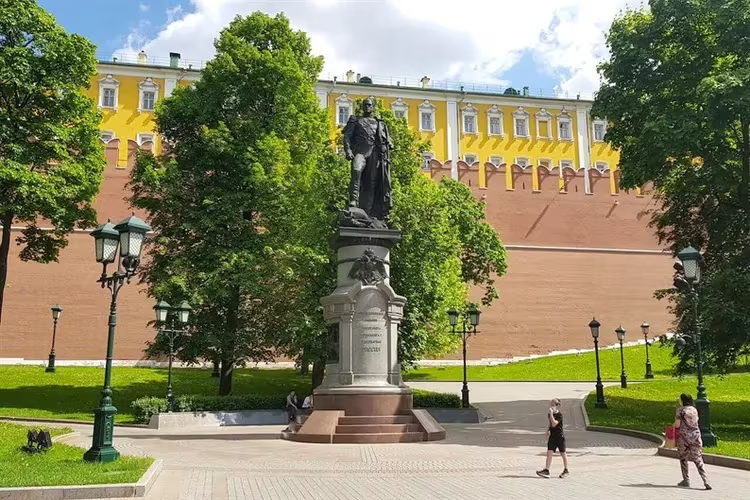
It is recommended to continue walking near the Red Square along the ancient Alexander Garden. Nearby are the main attractions of the central part of the capital. The garden is considered one of the first gardens in Russia, created for the relaxation of ordinary people. It appeared in 1819-1822 on the site of the Neglinka River and the bastions of the 18th century. These were the years of the reign of Emperor Alexander I.
Until the 1980s, the green zone was called Alexander Gardens (Lower, Middle, Upper). The Trinity Bridge (it passed over the Neglinnaya River) is still considered the dividing line between the Upper and Middle Gardens and connects Kutafya and the Trinity Towers of the Kremlin. In the middle of the 16th century, the famous Pharmaceutical Garden was born on the territory of the Middle Garden. His first fruit trees, plantations with medicinal herbs appeared at the behest of Ivan the Terrible.
The conditional division of the garden is as follows: from the Revolution Square to the Trinity Gate – the Upper Garden. Further to the Borovitsky Gates – Sredny and from them to the Kremlin Embankment – the Lower Alexander Garden. The main attractions of the park are the Tomb of the Unknown Soldier, a restored obelisk in honor of the 300th anniversary of the Romanov dynasty. Grotto “Ruins”, fountains, 200-year-old oak.
Sparrow Hills
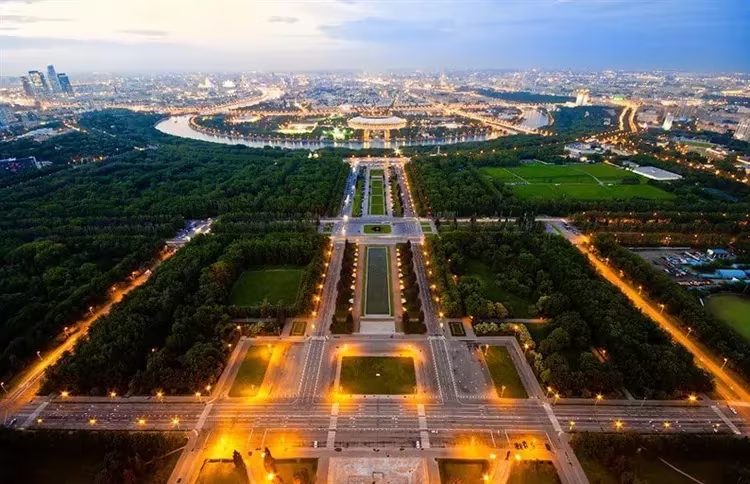
A high place on the right bank of the Moskva River, where in ancient times the waters of the Chura, Krovyanka, Kotlovka rivers murmured. Forests rustled, healing springs were born from the bowels of the earth, it has always been attractive to the local population, various conquerors. It was difficult for them to find a better overview of the city and its environs than Sparrow Hills.
The name of the beautiful place was named after the village of Vorobyov, located here in the XIV century. The Temple of the Life-Giving Trinity reminds of its existence. The natural wealth of the area determined the appearance here of the famous Rublevsky water pipeline, factories for the manufacture of glass, mirrors, residences of kings, estates near Moscow, majestic churches, monasteries. Now interesting excursions are offered here to a sports complex with a ski jump, the buildings of Moscow State University and the Academy of Sciences, the main observation deck of the capital. In 2013, the Andreevsky Monastery began its work (its history began in 1648).
Mamon's dacha is still located next to it. Along the paths of the Vorobyovy Gory nature reserve, there are routes of excursions of an ecological, historical nature. This is a specially protected area. Near the huge city, three ancient ponds, a unique broad-leaved forest, its fauna and flora have been preserved.
Museum-Reserve “Tsaritsyno”
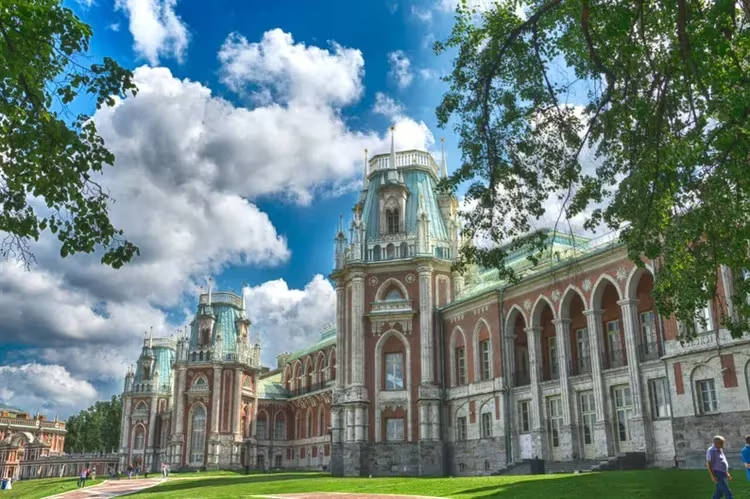
The beautiful nature of the Moscow region, the wealth of its rivers, forests of the bowels of the earth attracted residents here. It was enough for Catherine II to drive past the Black Dirt estate, as a decision appeared to build a beautiful residence here. The last owners were the princes of Cantemir. It was with them that next to the estate there was a greenhouse where rare vegetables and fruits were grown. Since 1775, by decree of the Empress, the architects Bazhenov and Kazakov created an architectural and landscape ensemble here.
Elizabeth's plans included the construction of 4 palaces. History has changed their implementation, the construction of the Tsaritsyno ensemble dragged on for 200 years. After 1917, the back ones were occupied by the services of the Soviet government. In 1960, Tsaritsyno became a district of Moscow. The ensemble received the status of a museum-reserve in 1992. A new stage in the life of Tsaritsyno began after restoration work in 2004. The main element of the landscape composition is the Grand Palace (it houses the permanent exhibitions of the museum).
The Bread House (the building of the second Cavalry Corps) has been completely restored. Above it is visible the monogram “X”, “C” (bread and salt). Tower ruin, Small, Middle Palaces of the Empress. Various cultural events are held in the palaces, classical and jazz music concerts are heard. The famous Tsaritsyno ponds with dams, piers, a horseshoe-shaped island, where the largest LED fountain was built, have found a new life. Bridges over ravines, rivers, openwork arches, sculptures, 14 greenhouses with rare plants are offered to be seen along with an interesting tour of the popular Muscovite recreation area.
Patriarch's Ponds
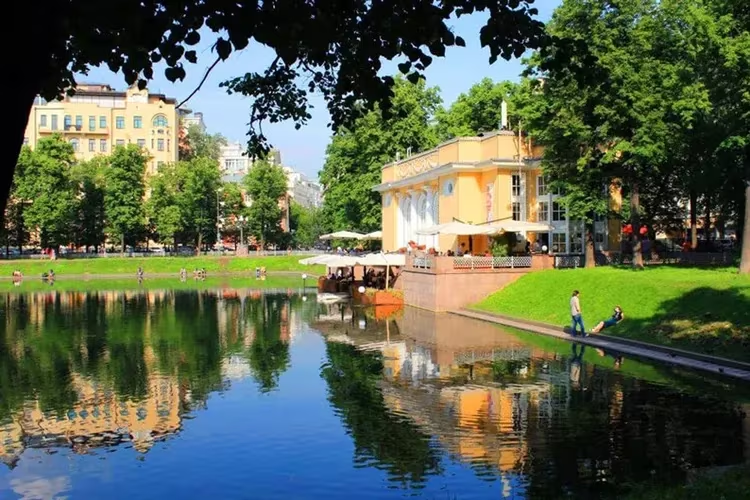
The life of any city continues in the emergence of new architectural ensembles. Among them are high skyscrapers, houses of complex shape, fantastic attractions, water parks. For the younger generation, they become common, permanent. But there certainly comes a time when you want to hide in green silence, breathe in the atmosphere of the old city, listen to the hidden legends of historical places. Patriarch's Ponds are considered one of such areas of the capital.
Not just one renovated pond with a skating rink, merry festivities, surrounded by well-groomed alleys, but those three ponds of the Goat Bog, where in ancient times Patriarch Hermogenes founded the famous Patriarchal Sloboda. Where, after re-reading the work “The Master and Margarita”, it is easy to imagine a picture when the priests of an ancient cult perform their rituals on the shore. In reality, there are tricks of evil spirits and confirm the mysticism of the place. The impression is complemented by the preserved names of lanes, houses associated with the great names of artists, poets, writers, scientists of Russia who lived in them.
It seems that Marina Tsvetaeva, who was born here, received her talent, powerful energy thanks to the hidden forces of a special place. In 1976, an amazing monument to Krylov, surrounded by famous heroes from the master's eternal fables, appeared in the favorite recreation area of Muscovites. It's nice to see how comfortable old people play chess, young people frolic at the skating rink, the fun of fairs thunders, and the old place retains its unusual strength.
Sokolniki Park”
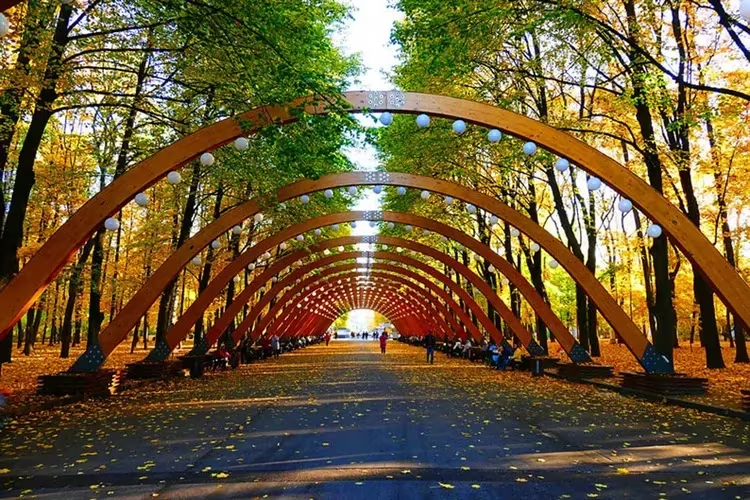
A detailed history of the interesting place in the capital, where the ancient forest raged, and fascinating falconry took place, is offered to be found in the Park Museum, opened in 2015. Ivan the Terrible, Tsar Alexei Mikhailovich came here to hunt. At the end of the 17th century, separate groves were formed among the forest: Alekseevskaya, Olenya, Sokolnichya. The young Tsar Peter I organized festivities in a cut-through space called the May Glade. The alley still exists today.
The main fun took place on May 1st. Exhibitions, expositions, lectures of the museum tell about the emergence of the status of a special protected zone (there are three parts: reserved, promenade, zone of historical objects). After restoration work in the park, 13 reservoirs came to life again. This is a cascade of six Putyaevsky ponds, five Deer, Golden, Dog pond. All of them are decorated in the form of excellent recreation areas. Amazing water lilies are grown using a special technology to decorate the surface of the ponds. The layout of the park was developed by Dolganov in 1937. Many pavilions were built here in 1959 before the international exhibition.
Along with modern buildings, architectural complexes of the Soviet era have been preserved in the park. Unfortunately, the famous labyrinth that existed back in 1950 has not been preserved. It included passages along circular alleys created in the shape of the Olympic rings. The park has always been and remains a favorite place for sports and outdoor activities.
There is a sports complex “Sokolniki” with popular sections of various martial arts. There is a rental service for any sports equipment, cars, motorcycles. An autodrome, a climbing wall, a karting track have been created. The largest tubing slide, with a surface used all year round, “Panda Park” skate park.
Chistye Prudy
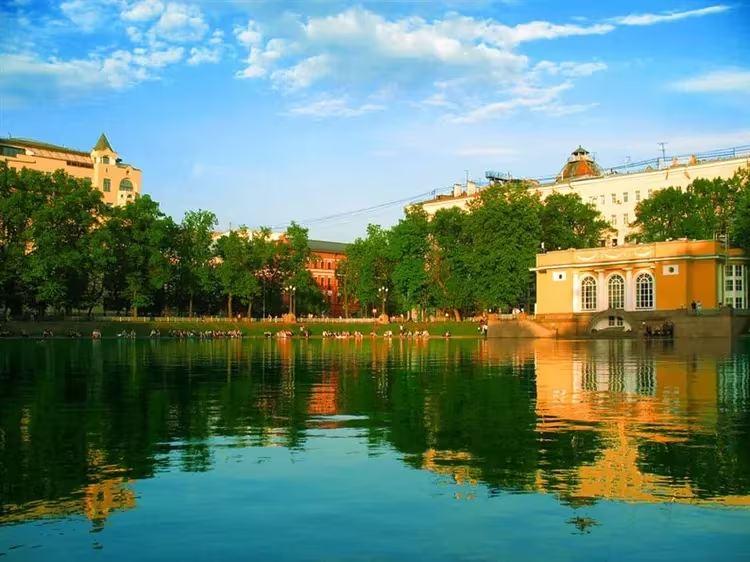
In the old place, which has become a prestigious area of the city, you can most often meet representatives of the bohemian hangouts of the capital. Cultural and business life is in full swing here around the clock. Political rallies, flash mobs, traditional photo exhibitions are held here. In winter, like many years ago, a favorite ice rink spontaneously forms. Many generations of its inhabitants grew up here, skated, made romantic meetings.
Unsolved mysteries, legends drowned in thickets of weeping willows, “green dreams for centuries” and preserve the special atmosphere of the old city. The history of the name of Chistye Prudy (on the site of the Poganoe Bog) has remained interesting in a cognitive sense. There are several versions about the life of the place that existed before Belokamennaya Moscow. But in any of them, the person who created Chistye Prudy is called Alexander Menshikov, who at the end of the 17th century ordered to clean Poganye Prudy.
On the site of the destroyed walls of the White City during the reign of Catherine II, the first boulevards of the capital appeared (including Chistoprudny Boulevard). Today, it is proposed to travel along it on a special tram with a functioning cafe, listen to the history of the area, its attractions.
Among them is the Sovremennik Theatre. It is located in the building of the popular cinema “Coliseum”. At the very beginning of the boulevard rises a monument to Griboyedov (a meeting place similar to the monument to Pushkin, standing near the former Rossiya cinema).
A new entertainment complex “White Swan” rises in the central part of the park area. It is pleasant to walk along the shady alleys of the Chistye Prudy park, sit, remembering the famous songs performed by Talkov, have fun racing along the skating rink, and take part in traditional folk festivals.
Park “Kolomenskoye”
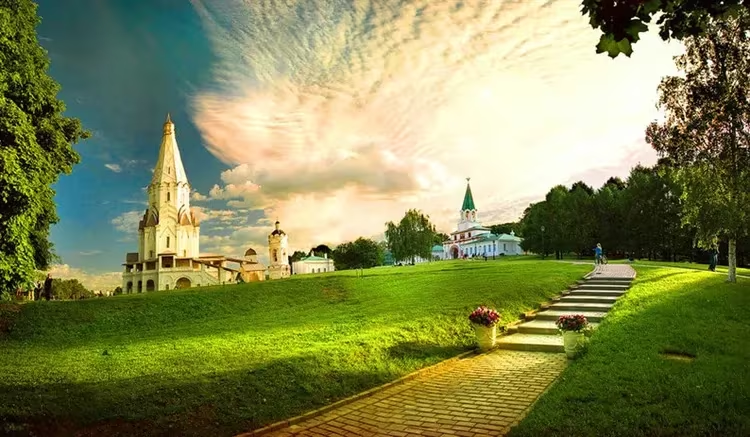
The flow of vacationers, guests of the capital to the most popular park increases with the arrival of spring. Some rush here to take a walk around the historical site, look at the monuments of ancient architecture collected from different parts of Russia and restored in the open space of the park. Others – to inhale the aroma of flowering apple trees in the old Voznesensky Garden.
Still others walk through the halls of the palace, examine the interior of churches. A separate group of people rush for help to the healing spring that gave life to the town of Kolomenskoye in the distant XIV century. Manor, park, museum-reserve. According to the surviving drawings, the palace of Alexei Mikhailovich, once called the eighth wonder of the world, was restored. 270 rooms shine with the outfit of the former interior and are allowed to be visited together with excursion groups.
Before the appearance of elegant towers, towers, chambers, quaint galleries of the palace, the Church of the Ascension of the Lord stood here for almost 100 years. The last restoration of the architectural heritage took place in 2007. A carved stone throne has been preserved, and a healing spring is still beating from the ground nearby, helping women get rid of infertility.
The attractions of the park include: the towers of the Bratsk, Sumy prisons from the northern possessions. Palace pavilion of 1825, Petr Alekseevich's house, Voznesensky garden with oak trees 400 years old. There are legends that Tsar Peter I spent his childhood under them.
VDNH
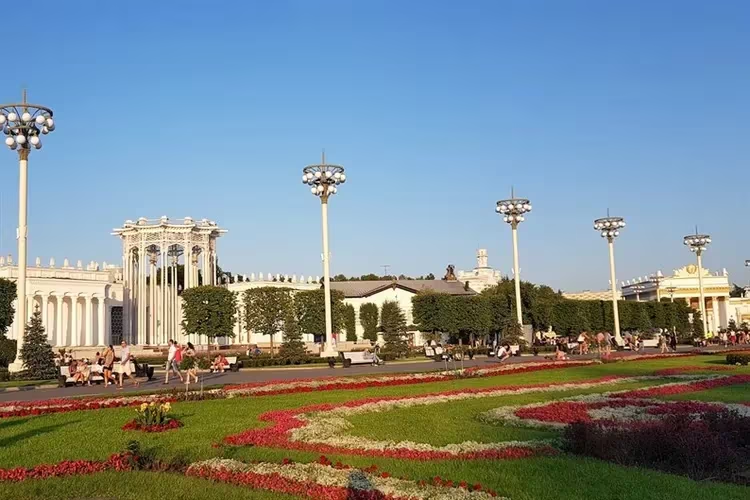
The city of dreams, the city of the future, as it was imagined in Soviet times, was created to demonstrate the country's achievements in various fields. And there was something to show the whole world (over a 20-year period). The Exhibition of Achievements became an effective advertisement for the victorious socialist society. Mukhina's sculpture “Worker and Collective Farm Girl” became its symbol.
All republics had specific pavilions on the territory of VDNKh and decorated them with elements of their achievements. The unique ensemble consists of 49 architectural buildings included in the lists of cultural heritage. Gradually, new pavilions dedicated to cybernetics, astronautics, and astronomy appeared. Only here it is offered to see a copy of Gagarin's spaceship, the first aircraft for passengers. Now VDNKh is considered an entertaining and educational ensemble of Russia.
Restored pavilions, well-groomed alleys, fountains, recreational areas in green park areas attract residents and guests. Permanent exhibitions introduce visitors to the best products of various industries. Interesting music concerts, festivals, fairs, sporting events are held on the territory of VDNKh on a regular basis.
Catherine Park
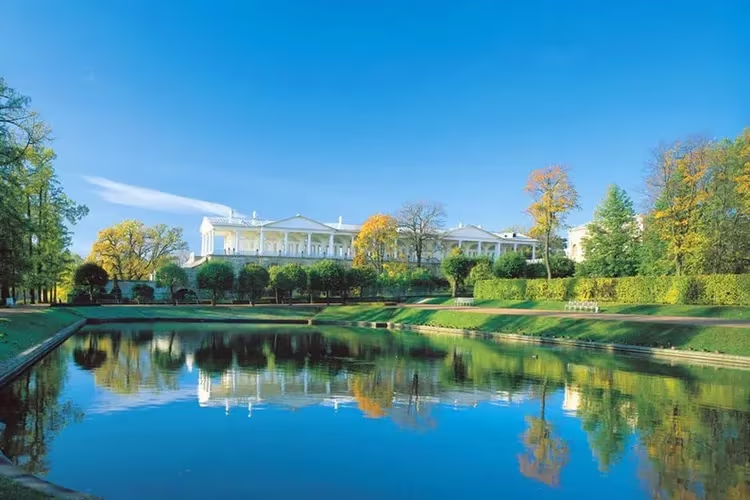
The ancient place of the city has not yet been put in full order in accordance with modern possibilities. But this did not make it worse and did not lose its popularity among people who love silence, peace, beautiful nature. There is no Internet access here, attractions are not noisy, but lilac, cherry, apple thickets bloom in spring. Bushes of wild roses, roses, autumn chrysanthemums continue the extraordinary flower parade. Noisy century-old oaks, three-hundred-year-old willows. The first alleys of the park appeared on the territory of the country estate of Count Saltykov.
Later it housed the Catherine Institute for Noble Maidens. Hence the name of the park. Ponds are considered to be the heart of the ancient park. Despite the fact that they have long been hidden in the pipes of the Naprudnaya and Neglinka rivers, their underground currents, ponds retain the breath of the earth, create a favorable atmosphere for a relaxing holiday.
In the summer it is offered to ride a boat, sit in a cozy cafe “Prichal”, see a chapel built in the spirit of the baroque of the Elizabethan period of the XVIII century, a memorial complex erected in honor of Suvorov. Nearby is the Olympic Stadium, built in 1979.
Poklonnaya Hill and Victory Park
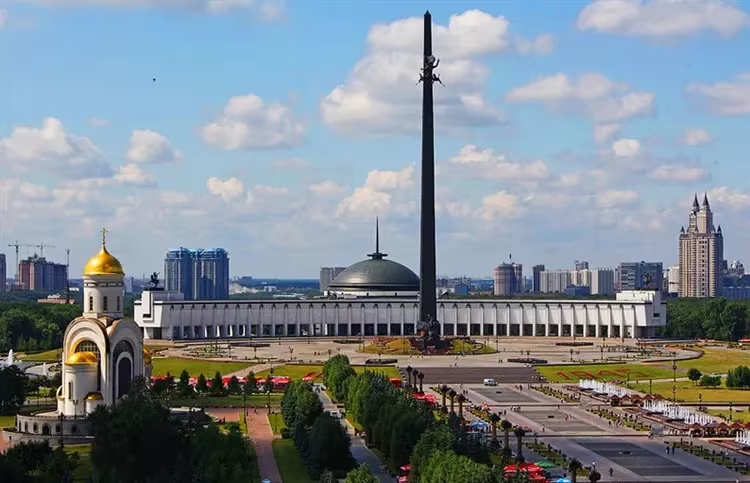
The Second World War passed like a terrible hurricane through many cities of Russia. The victory in it went to difficult battles with heavy losses. In memory of the exploits of the living and dead heroes, the largest (in the world) memorial ensemble was created on the Poklonnaya Hill of the capital. The place was not chosen by chance: the conquerors stopped on the ancient hill, dreaming of capturing the city. Here, many defenders of their native land took their last battle.
In 1958, the idea of creating the Victory Park, the Museum of the Great Patriotic War was born. Symbolically, a bayonet with a height equal to the number of military days and the figure of the goddess Nike is installed in front of the arched structure. On the territory of the complex there is the Church of St. George the Victorious, the Synagogue, the Mosque, the Holocaust Museum, monuments to the soldiers of the internationalists. Every evening, the red illumination of 225 fountains (according to the number of weeks in the war) of the Years of War complex lights up. Poklonnaya Hill hosts solemn events dedicated to the great victory.
Boring Garden
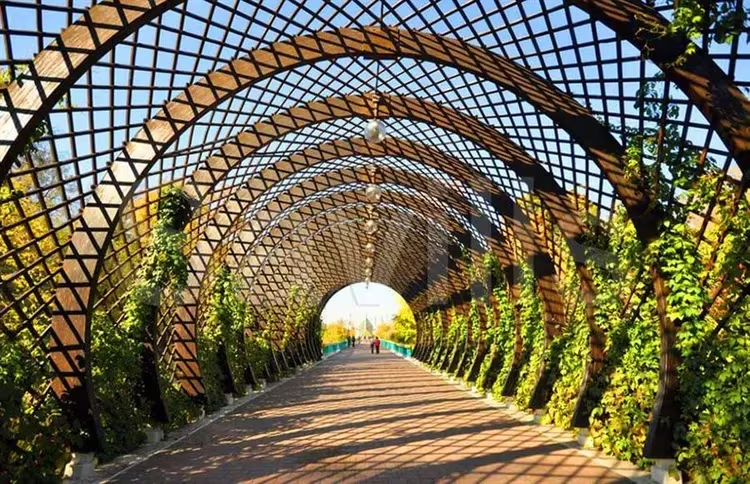
The largest landscape park in the center (on the right bank of the river) appeared on the site of the old noble estate Neskuchnoye, which existed here since 1728. The owner held magnificent celebrations in the estate, ennobled the territory. Later, the noble families of Trubetskoy, Orlov, Golitsyn, and the landowner Demidov settled here. Since 1843, the entire territory was bought by the royal family.
At this stage Neskuchny Garden becomes the center of social entertainment in the city. In 1928 it became part of the territory of Gorky Park. The Green Theater for 20,000 seats was built there. During the Soviet period, it was the venue for the main events of the Central Park of Culture and Culture. The park's attractions include the Orlovs' summer house. The Rotunda of the 18th century or the Hunting Lodge, where the filming of the program “What? Where? When?”.
Alexandria Palace, Mineral Museum, fountains, stone bridges over deep ravines. Sports and theatrical events are regularly held here. For younger visitors there is a mini zoo and a kids club. The rental service offers to rent roller skates, bicycles. You can evaluate the skill of physical training in the rope park. Take a walk among the picturesque places on the banks of the river in the center of the metropolis.
Hermitage Garden
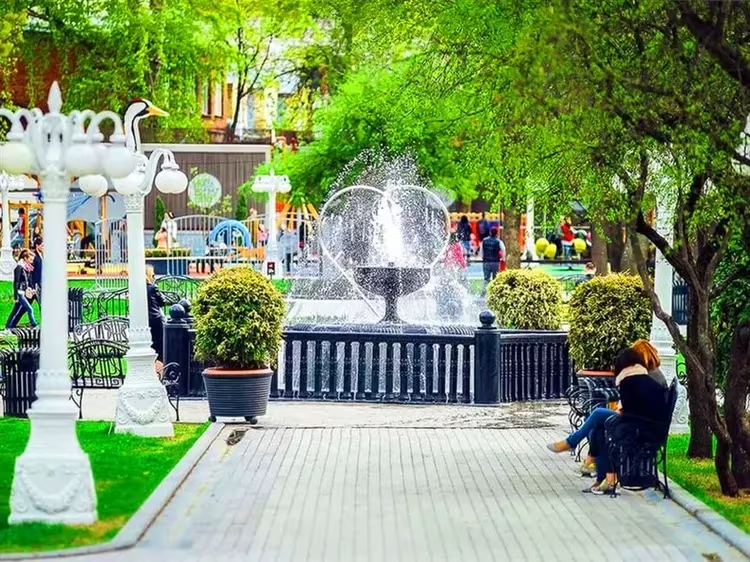
The Hermitage recreation area has been considered the center of summer theatrical life for the second century. On a small area there are theaters “Sphere”, “Hermitage”, “New Life”, “SUMMER TIMES”. The latter has a feature: it is silent, all actions are broadcast through headphones. Spectators sit on brightly colored cushions scattered across a clearing where an ice rink is flooded in winter. Scenes, alleys, pavilions of the old park remember the performances of Nezhdanova, Chaliapin, Sarah Bernhardt, Yermolova, etc. The famous Moscow Art Theater opened on its territory in 1898.
He began his work with the play “Tsar Fedor Ivanovich” and Chekhov's plays. Often the garden is called Shchukinsky by the name of the theatrical patron Ya. V. Shchukin (creator of the Hermitage Theater). Thanks to the efforts of this man, the abandoned area of the Vorontsov estate turned into a favorite recreation area for the city's bohemia with numerous pavilions and pop scenes.
There are many interesting sculptures and monuments in the garden. In 2006, the “Monument to All Lovers” appeared in the form of a large Silver Heart. Inside are bells jingling in the wind. Many garden buildings have been restored in honor of the city's 850th anniversary.
Frunzenskaya embankment
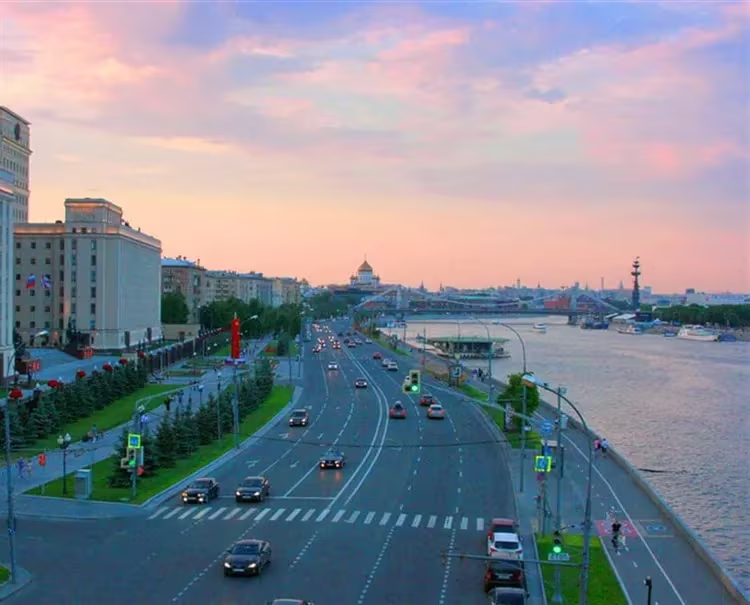
Not far from Gorky Park and Neskuchny Garden is one of the most beautiful embankments. It is laid along the left bank of the river and stretches from the Crimean bridge to the Khamovnichesky shaft. Until the 30s of the last century, it was called the Khamovnicheskaya embankment. For 2.5 km, the river bank is “protected” by residential buildings with pompous entrances, fancy turrets, built of yellow brick in the style of “Stalin classicism”.
The area was considered prestigious and important people of that time lived here (often they were related to the Kremlin). House No. 50 is sometimes referred to as the “house of deposed chiefs”. In the last century, the embankment was expanded, new giant buildings were erected. Among them is the building of the headquarters of the Russian ground forces. There are local legends about its underground communications.
Izmailovsky park
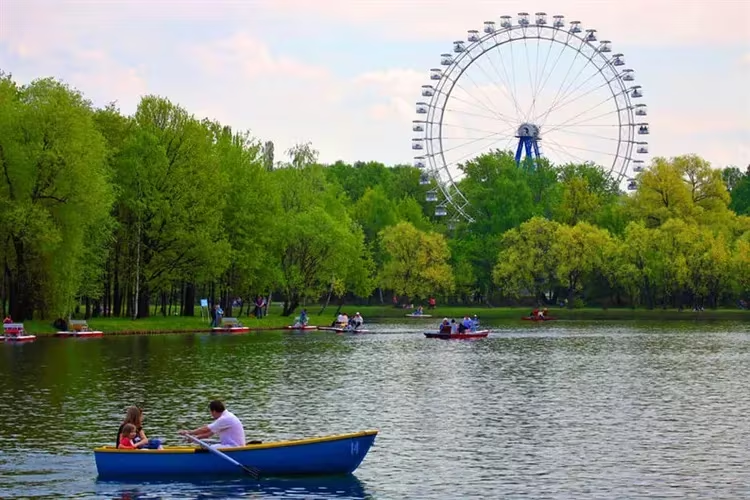
I can't even believe that impenetrable forests were noisy on the territory of one of the largest parks in the city, bears and other animals roamed. The hobby of Tsar Alexei Mikhailovich the Quietest (XVII century) for hunting gave life to the Izmailovo estate, from which the development of the wild territory began. Here appeared “Wonderful Gardens”, decorative elements in the form of towers, towers, a menagerie (at that time it was considered the largest in Europe). Lions, tigers, lynxes, monkeys, rare species of birds roamed freely on its territory.
In 1930, the Soviet government decided to create the Izmailovsky recreation park for Muscovites. Until 1961, it was called the name of Stalin. Now the natural-historical ensemble includes forest parks Terletsky, Izmailovsky, Serebryano-Vinogradny pond (together with the Izmailovo estate), ancient birch groves, numerous monuments. The park has many recreation areas, attractions for children. These are “Krokha”, “Zabava”, 5D cinema, two Ferris wheels (for children and adults).
There are many convenient sports grounds in the park, there is a cafe “Forest”. On a large area within the city, natural flora and fauna, clean air have been preserved. The park is called the cleanest recreation area in Europe.
Manor Arkhangelskoye
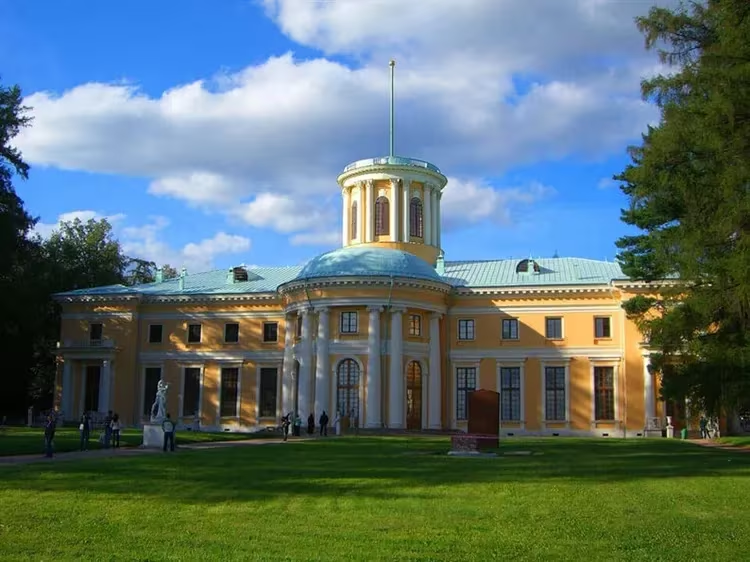
Not far from the city of Krasnogorsk, 20 km from Moscow, there is an old estate (formerly called Upolozy), which can be called a model of cultural life from the time of Ivan the Terrible. The owner of the village was the brothers Kireevsky, and then F. Sheremetev. The last owners of the estate were the Yusupovs. The favorable location of the Yusupov buildings made the place the center of public life.
Emperors of the 19th century, Pushkin, Herzen, Serov, Benois, Korovin, visited the estate several times. Collections of paintings, sculptures, expensive jewelry, architectural elements were constantly replenished. The manor park has become a model of landscape proposals. Rare plants grew in the greenhouses, striking the beauty of the guests. Lamas, camels, pheasants calmly walked along the territories of the enclosures. In 1919, a museum began to work on the estate. It included a palace, a park, a village, a church.
Visitors can view individual rooms of the Palace. The main expositions are located in the Office Wing. During excursions it is offered to learn the history of the estate and its rich collections. View the temple-tomb “Colonnade”, “Terrible Theatre”, “Tea House”, the Church of the Archangel Michael, the Small Palace.
Serebryany Bor Park
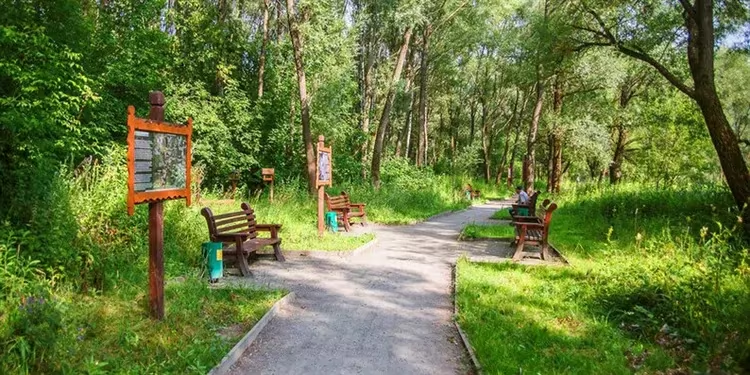
Since ancient times, Muscovites have known a forest with unusual silver pines (it sparkled with silver in the first rays of the sun), bordering the road to Zvenigorod. People came here for mushrooms, berries, for picnics. Khoroshevsky Forest Park is now considered a paradise for residents of the metropolis. After the construction of the canal, the creation of the water surface of the Bottomless Pond, Sosnovy Bor became a beach area for lazy and active summer recreation. The forest adjoins the Moskva River.
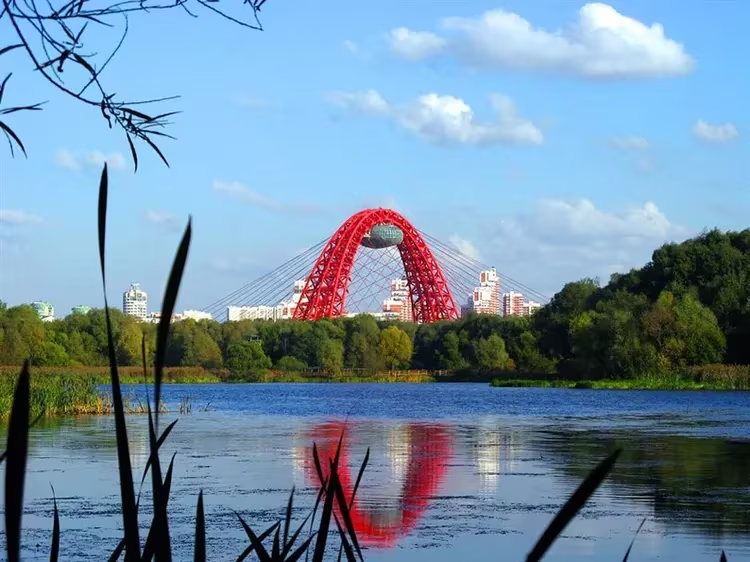
Now beaches with the necessary infrastructure are equipped here, children's and sports grounds have been created. It is pleasant to walk along the shady alleys of centuries-old pines, to breathe in silence. The route of the ecological path with enclosures in which birds live has been laid. From the ornithological tower you can see the surrounding swamps, which create unusually clean air. Near the beach number 2, an oak tree grows, under which Lemeshev rested, and a Veterans Park is equipped. Serebryany Bor has become an island with a pier, rowing bases, which makes it even more attractive for recreation.
Observation deck Panorama 360
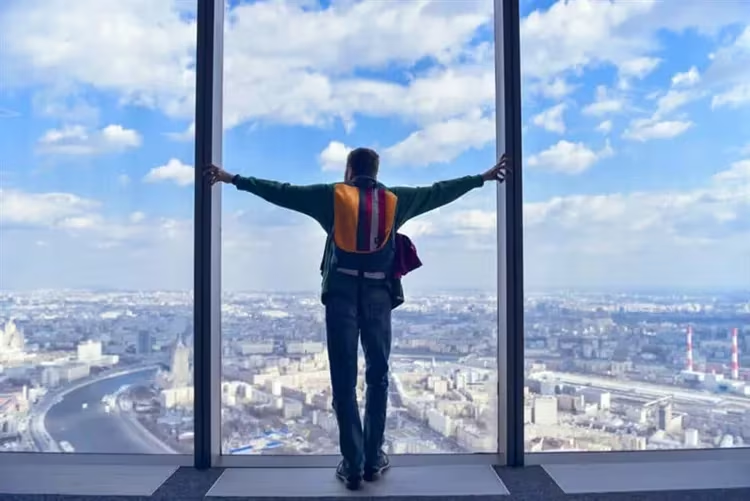
Not so long ago, the first visitors saw the city from the height of a new observation deck. She appeared on the 89th floor of the Federation skyscraper. The review is 360 °, comfortable, safe design allows you to take high-quality pictures. At night, a modern telescope makes it possible to enjoy the sky, stars from an open area. On the territory fenced with panoramic windows, 9 interactive zones, restaurants, a 3D cinema have been created.
There are premises for holding master classes, exhibitions, schools for studying the history of the capital. Children under 7 years old are not allowed to the open area located on the roof of the tower. But they can taste the delicious chocolate produced here at two special factories (the highest in the world). Tours to the observation deck take place every hour. The rise to the 89th floor is carried out using four modern high-speed elevators. After 22:00 you can use them without a guide. PANORAMA 360 is considered the highest observation deck in Europe.
Arbat
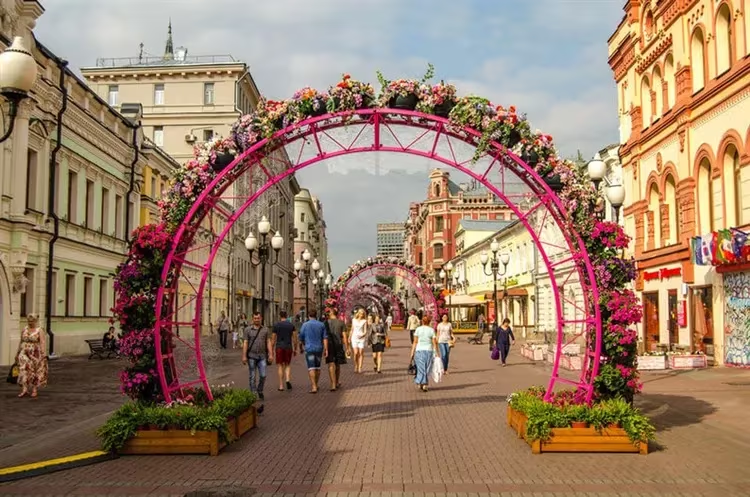
Pedestrian Arbat begins near the Arbatskaya and Smolenskaya metro stations. Every guest of the capital strives here to plunge into the world of past centuries, the historical spirit of the city, filled with the sounds of Okudzhava's famous songs, to pass next to the wall of memory of Viktor Tsoi for a short walk. Small lanes, silent small courtyards evoke a special state of mind, memories of many famous personalities who worked in these places.
The memory of them forever froze in the buildings surrounding the Arbat. For example, house number 4 takes us back to the life of Pushkin's muse Natalia Goncharova. The first information about the street has been known since 1493. Along it was the road to Smolensk. Buildings in the Empire style on the Arbat appeared in the 20th century. Instead of wealthy merchants, musicians, artists, poets, people of art settled here. It houses the Vakhtangov Theatre. Now the Arbat is considered an open-air museum with restaurants, markets, fashion stores, art exhibitions.
Botanical Garden of Moscow State University “Pharmacy Garden”
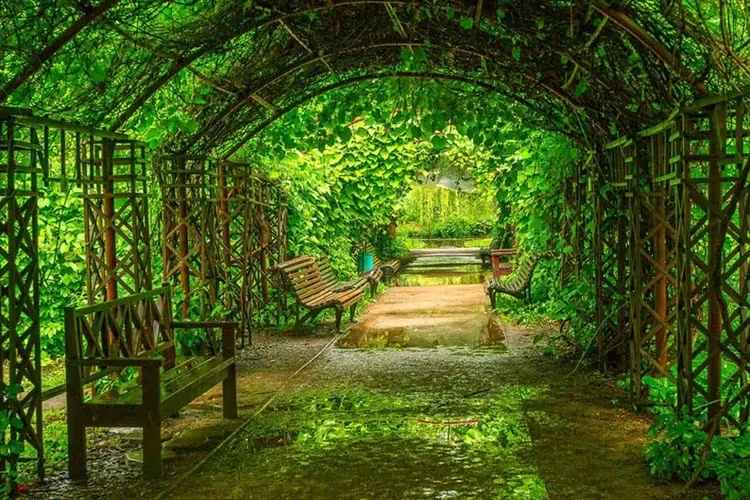
Near the busy Mira Avenue there is an amazing green corner, created in 1706 through the efforts of Peter I. According to legend, the larch planted by him still grows. Initially, it was conceived to create plantings of medicinal herbs (Pharmaceutical garden). It has been preserved as an invaluable living archive of plants collected from different places on the planet and used to preserve human health. Gradually, well-groomed flower plantations, greenhouses with rare tropical species were formed.
For over 300 years they have been growing, adapting to the local climate, and have become a unique base for MSU students. Even the well-known lilac has 130 flowering varieties. Thousands of varieties of orchids, 700 varieties of irises, 5000 botanical taxa fill the open and closed space of the Botanical Garden. Of interest is the examination of the exposition of plants that are in the Red Book. You are welcome to see them at any time. The botanical garden is open to everyone and is considered a popular recreation area for citizens.