
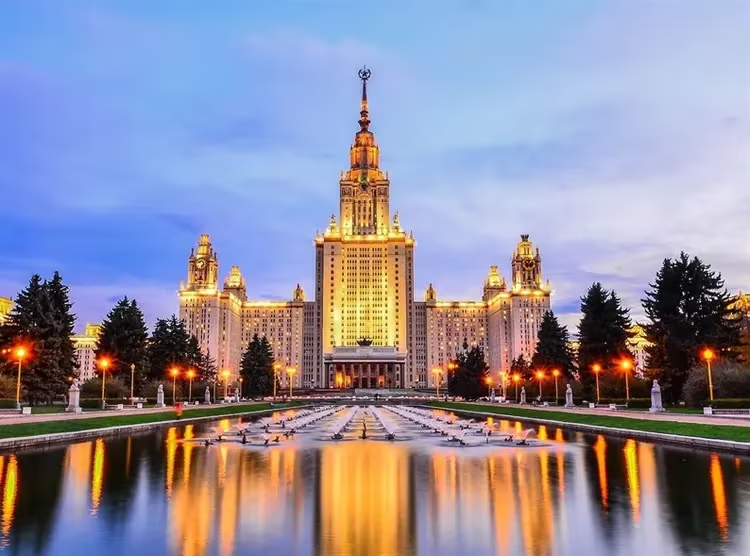
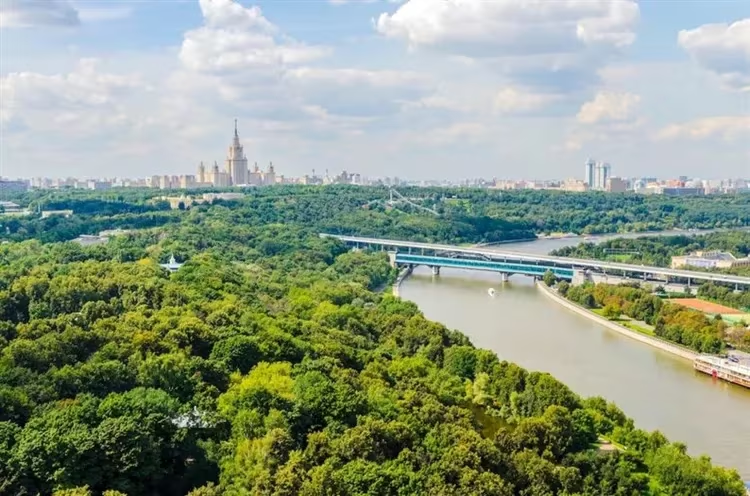
Sparrow Hills is one of the key sights of Moscow. By their nature, they represent a hill on the banks of the Moscow River and are the main observation deck of the capital of Russia. From the top of the hill, a picturesque panorama of a dense forest, a park area opens up, architectural buildings, structures and temples are visible. On the observation platform, the soul of Moscow, its strength, grace and grandeur are revealed to the residents and guests of the city. A lot of solemn and cultural events are held at this unique place. Muscovites and tourists come here to relax, take pictures, play sports, and also seek inspiration and peace.
Story
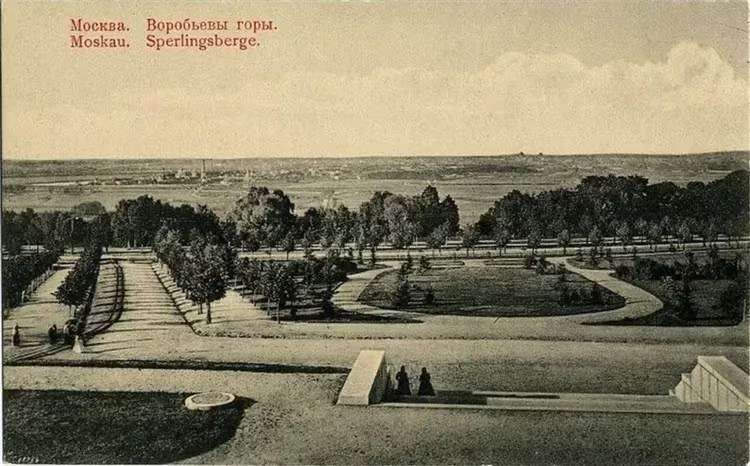
In the XIV century, the village of Vorobyovo was located on the modern territory of the Sparrow Hills. It belonged to the boyars Vorobyovs. In 1453, the wife of the Moscow Prince Vasily I, Princess Sofya Vitovna, bought the village from noble owners, where the estate was built. So the Vorobyov Palace was erected.
In the future, it was the summer residence of the Grand Dukes of Moscow and All Russia Ivan III, Vasily III, Ivan IV the Terrible, as well as the Tsar of All Russia Alexei Romanov. Young Peter I liked to come to the village of Vorobyovo. Here he repeatedly conducted military exercises with his “amusing army.” The territory of Sparrow Hills has long been famous for its fine white sand. Thanks to this, Peter I initiated the construction of the first mirror glass factory in Moscow on this site.
During the reign of Catherine II, the architect Matvey Kazakov was engaged in the restructuring of residential and public buildings in Moscow. Especially for the Empress, who came to the celebrations in honor of the victory of Russian troops over the Ottomans, a palace was built on Prechistenskaya Street. However, the location of the building turned out to be inconvenient for the royal person.
At the end of the festive events, by decree of Ekaterina Alekseevna, it was decided to transfer the Prechistensky Palace from the center of Moscow to the village of Vorobyovo. Under the supervision of M. Kazakov, the structures of the building were delivered on barges along the Moscow River. Thus, on the site of the old manor, which fell into decay, a new palace appeared. But none of the Romanovs ever lived in it. In 1812 the residence burned down. Nothing was built on this site for a long time.
In honor of Russia's victory in the Patriotic War over Napoleon, Emperor Alexander I issued a decree on the construction of the Cathedral of Christ the Savior. The sovereign approved the project of the architect Alexander Vitberg. According to the plan, the construction of the structure was supposed to begin on the Sparrow Hills. According to the plan of the architect, the temple should be built of marble limestone.
The raw materials were mined a few kilometers from the Sparrow Hills, so the marble was delivered on barges along the river. The building was built slowly due to the unstable ground foundation and soon stopped altogether. In addition, fraudulent schemes of theft by local officials were revealed. All this was the reason for the cessation of the construction of the temple on the Sparrow Hills.
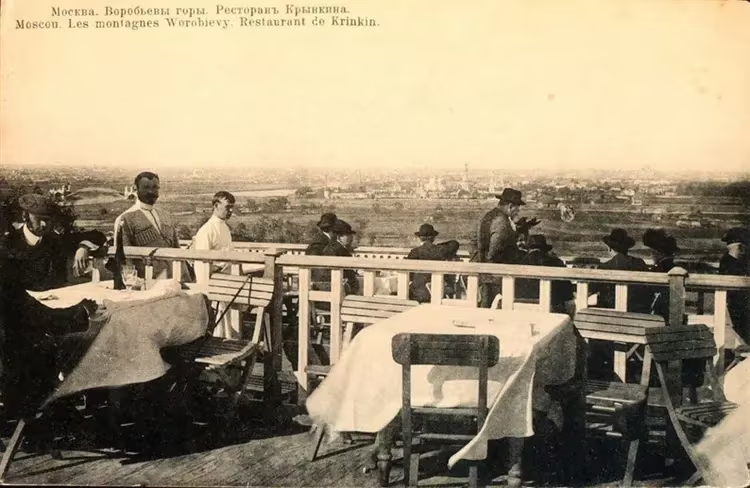
Before the revolution, there was a restaurant on Sparrow Hills. The institution was very popular among Muscovites and guests. The spacious terrace was located on an elevated slope, from where a stunning view of Moscow opened up. The famous singer Fyodor Chaliapin often visited here, who delighted the audience with his talent. In the Soviet era, the Sparrow Hills began to flourish.
The territory began to be transformed into a park and sports and entertainment area. Here were erected: a ski slope, a springboard and a funicular. An observation deck has been set up. In the mid-1950s, the Moscow State University building and the Luzhniki stadium were built. Since then, Sparrow Hills have become a truly iconic and favorite vacation spot for Soviet youth.
Observation deck today
It is difficult to find a more suitable and accessible place for admiring the central part of Moscow than the observation deck on Sparrow Hills. The large-scale panorama is impressive and breathtaking. A single glance covers a large number of unique historical sights. If you arm yourself with binoculars, you can see in detail the appearance of the capital of Russia. Behind the terrace rises the Moscow State University building, surrounded by a large garden.
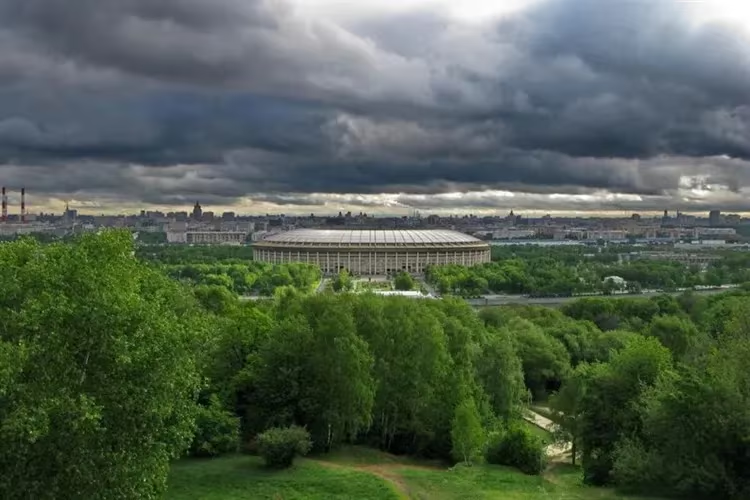
From the observation platform you can see the dense forest, the embankment of the Moskva River. In the center of the panorama is the grandiose Luzhniki Stadium. Behind the arena bowl, the domes of St. Basil's Cathedral and the Cathedral of Christ the Savior are visible. To the left rise the modern skyscrapers of the business center of the capital, and you can also see the Ostankino Tower, the House of the Government of the Russian Federation and the building of the Ministry of Foreign Affairs.
On the right side there is a two-level arched Luzhnetsky metro bridge designed for cars and the subway. Behind the bridge you can see the twenty-two-story building of the Russian Academy of Sciences and the famous Shabolov Tower.
What to see
Sparrow Hills are the main observation deck of the capital. From a high place on the steep bank of the Moskva River, an unusually beautiful panorama of the Kremlin opens up. One of the most beautiful places has preserved the ancient atmosphere hidden in the streams of healing springs, on the paths of the primeval forest, in legends and legends about the life of the first inhabitants of the area. Modern man-made structures, architectural masterpieces complete the list of attractions.
Main building of Moscow State University
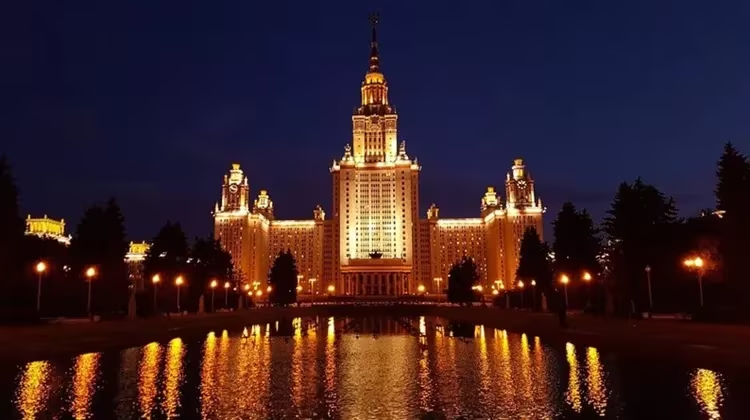
The monumental building in the Stalinist Empire style is considered one of the architectural symbols of Moscow. This is the highest skyscraper of the 7 unique buildings of those times. Together with the openwork spire, the height of the structure is 240 m. Until 1990, the building was the tallest among the buildings in Europe. Construction took place between 1949 and 1953.
The facades were designed by specialists from the workshop of Vera Mukhina. Architectural elements, expensive finishing material were determined in accordance with the current ideology. The whole appearance of the building confirmed the strength, power, the role of science and education in a young country. A site on a high plateau, allocated for the construction of a university, made it possible to create this unique ensemble.
According to the original project, it was planned to make the main decoration of the spire in the form of a sculpture of Lomonosov. At Stalin's suggestion, it was completed with a star with yellow glass and aluminum amalgam. The entire infrastructure of the Main Building was created taking into account the needs of students and teachers. Now there is an indoor swimming pool, several cafes, an assembly hall, and numerous auditoriums for students. And in front of the building is the largest square of the capital.
Botanical Garden of Moscow State University
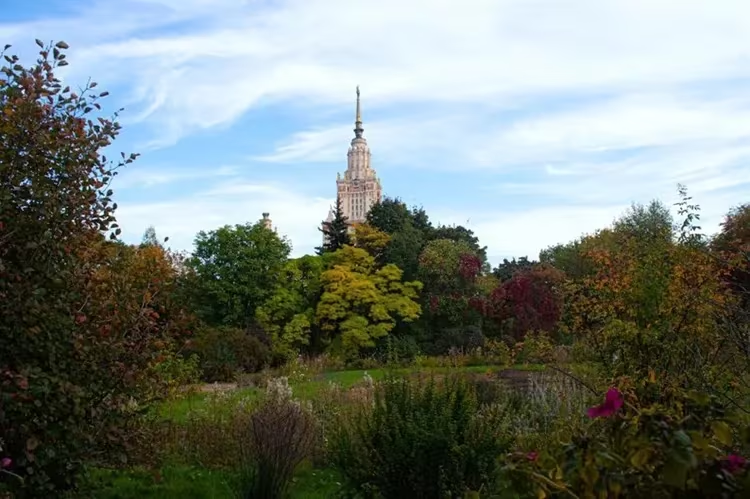
The territory of the university covers an area of about 168 hectares. The main part is a green zone in the form of parks, squares, green boulevards. Among them, the Botanical Garden of the University occupies a huge place. The territory under it was determined in October 1950. The organization of the life of the special zone was formed according to the type of the Pharmaceutical Garden in the area of Prospekt Mira (now it is a branch of the Botanical Garden of Moscow State University).
Educational and scientific activities of the Faculty of Biology of the University are organized in the protected area. Unique collections of natural and garden plants have been created. Special landing strips are made of tall coniferous trees. They reliably protect plantings of heat-loving species. In the central part of the garden there is an interesting rock garden. It was built on the basis of granite blocks brought from Karelia.
Terraces of the rock garden repeat the landscape of different mountain systems with their collections of plants. At the top of the rock garden, snow-white water lilies bloom in a lake formed in a convenient basin. The highest point of the rock garden is above the surface of the lake surface. In special areas of the Botanical Garden, work is underway to obtain new varieties of different plants.
In the beautiful apple orchard, a crop of rare, reliable varieties ripens every year. If you're lucky, you can buy a cutting of an apple tree of a rare variety.
Aquacomplex “Luzhniki”
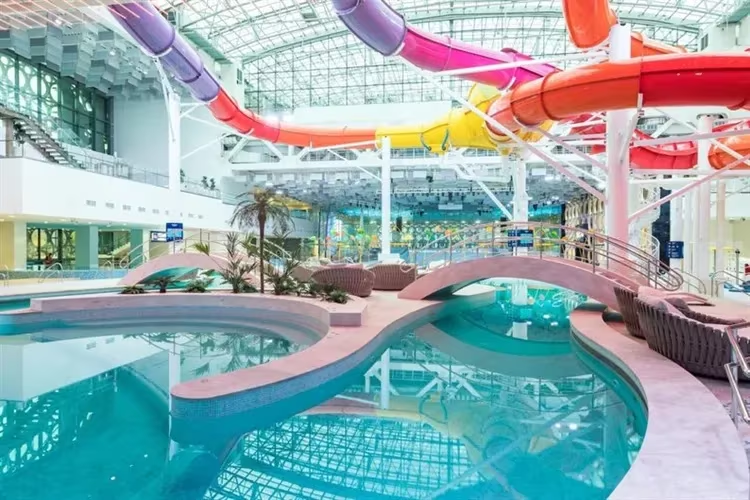
On the squares of the huge sports complex in Russia, there are new buildings of the Palace of Water Sports. Among them are 9 pools, hot tubs, water slides. The water park is considered the largest indoor water entertainment center in Russia. At the same time, about 2000 people can rest in it. Visitors can be on 6 levels for different purposes throughout the day.
The ground floor is occupied by a shopping center and a new artificial wave simulator. They can be used by professional participants. On the second floor there is a water park with water slides, a children's playground, a 50 m swimming pool for sports competitions. The third floor is occupied by two 25 m swimming pools and a thermal complex.
Thermae contain 8 types of baths, saunas, a variety of options for a contrast shower, swimming pools, beach space with sun loungers. For kids, a SPA area with a salt room, an artificial beach, and a playroom is organized. Visitors get dizzying sensations on the water slides of the 4th floor. Boxing Academy, fitness center, cafe are located on the 5th floor. The popular Water Palace is located next to the Vorobyovy Gory metro stop.
Temple of the Life-Giving Trinity
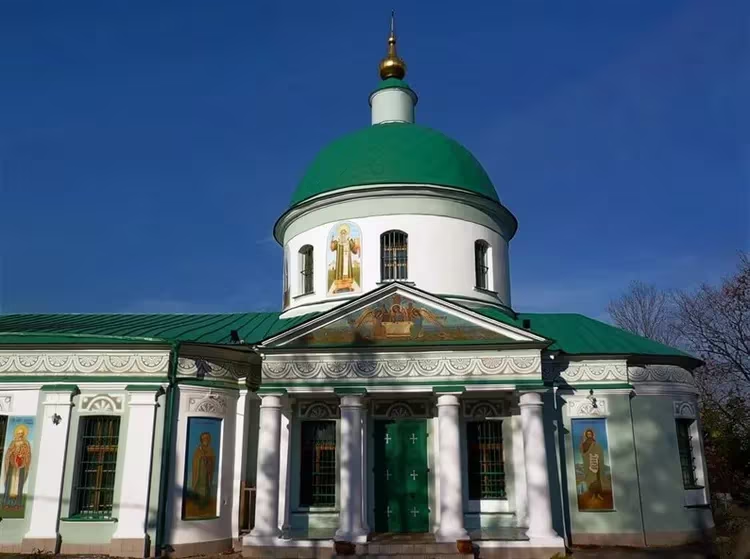
Despite the difficult fate, this Temple has been preserved in its appearance, created in 1813. The mention of the Trinity Church in the village of Vorobyovo has come to us since 1453. At this time, Princess Sofya Vitovtovna bought the village. It was a wooden building. In its place, in 1811, a stone cathedral in the Empire style grew. The project was led by the architect Vitberg.
The church was created as a single-dome version with a two-tiered bell tower, portals decorated with slender columns. Even the decree banning bell ringing did not affect the work of the church. The village was not part of the city. Kutuzov prayed in the church; Napoleon's troops did not destroy it. The old interior of the church has been preserved. And now you can see the white stone monument, erected in 1811 on the site of the altar of the ancient temple.
Powerful green domes carefully guard the shrines of the church. Among them are many icons of the 17th century. Including the icon of the Kazan Mother of God, “Assuage My Sorrows”, “Burning Bush”, John the Baptist, St. Nicholas the Wonderworker. Regular services, eternal bell ringing still invite Orthodox believers, guests of the capital.
Vorobyovskaya embankment
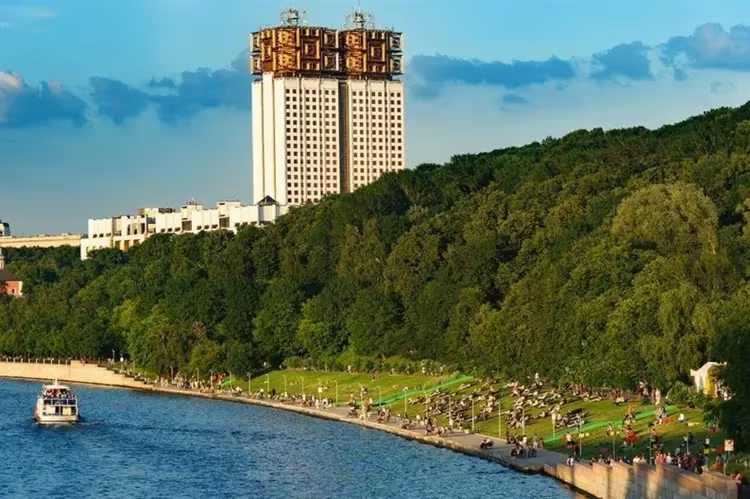
Walking around Moscow, guests, residents of the capital often come to Sparrow Hills. Having exited at the metro station with the same name, you can start your journey to an interesting place in the city near its historical and natural attractions. Going down the low stairs, acquaintance with one of the embankments of Moscow, located along the coast at the foot of the Sparrow Hills, begins.
Their picturesque hills have always attracted people for recreation and walks. A popular walking area appeared in 1911, when they began to improve the river bank. The construction of the embankment is closely connected with the appearance of many architectural buildings on the Sparrow Hills: a cable car, an observation deck, the Luzhnetsky metro bridge.
In 1961, the pedestrian embankment was decorated with flower beds, paths, recreation areas, and a pier for river boats. Near the river pier there is a sports equipment rental service, a number of cafes. On the embankment it is convenient to take cycling, hiking, rollerblading, skateboarding or lie down on a soft lawn, admiring the green attire of the Sparrow Hills.
Andreevsky Ponds
Now the cascade of ponds are a decorative decoration of reserved places. Basically, they include the Big and Small Andreevsky Pond. There is also a Lesnoy Pond, where carp still live, frogs croak, mighty reeds grow, snow-white water lilies bloom. Andreevsky ponds appeared during the construction of the Andreevsky monastery in the late 18th and early 19th centuries.
Residents of a nearby village bred fish in artificially created reservoirs. Later they became part of the possessions of the princes Dolgorukov. Along the shores of cascading ponds, gazebos for relaxation are installed, and places for picnics are equipped. Nearby passes the route of the ecological trail. Not only ducks swim calmly on the water, but also small black dives with fiery eyes. Not in every pond they choose for themselves a habitat, breeding.
cable car
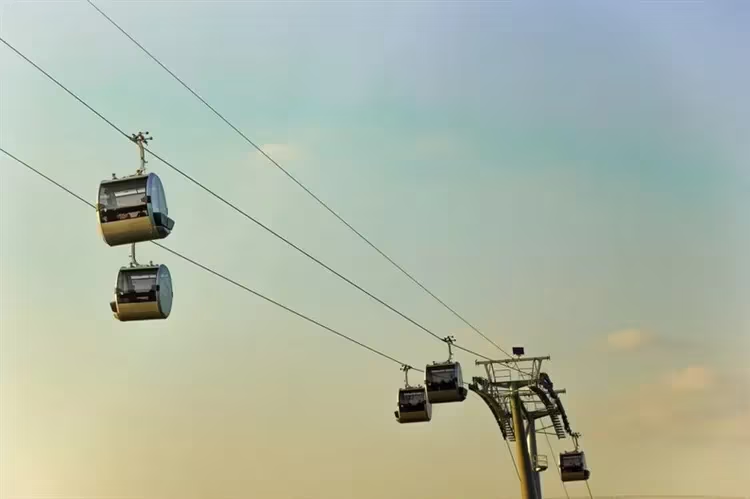
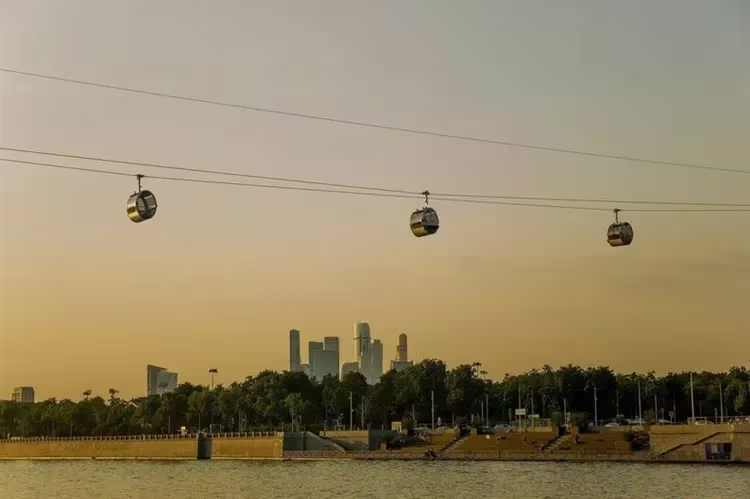
The first version of the cable route appeared in 1953 to serve the events of the Big Ski Jump. It was a simple chair lift with two stations. It was dismantled in 2016. For the 2018 FIFA World Cup, a new cable car sparkled over the Moscow River. She connected the Luzhniki stadium and the observation deck.
The length of the cable car is 720 m. There are three stations on it: Luzhniki along the left bank of the river, Novaya Liga on the right side. At the very top is the Vorobyovy Gory station. A feature of the cable car is its dual purpose. In addition to the usual delivery of athletes, it provides interesting tourist offers. Two routes are organized: sports (New League – Sparrow Hills) and tourist (Luzhniki – Sparrow Hills).
35 closed cabins have been installed for tourists. Each accommodates 8 passengers. For important guests there are separate VIP cabins. A tradition has already been born to use them for the first trip of the newlyweds. There are 10 open-type chair cabins on the sports track. It is convenient to get and carry the necessary sports equipment in them. During the trip, a panorama of the city with numerous sights opens up from a bird's eye view.
ecological trail
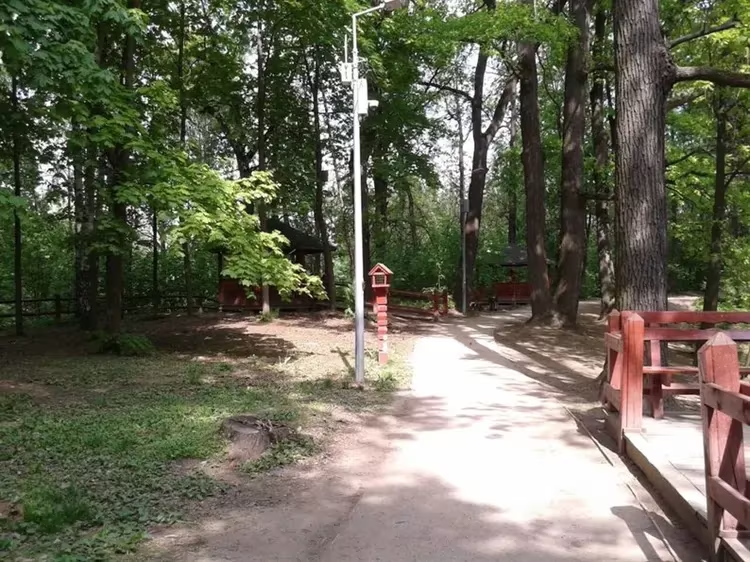
Active leisure options include an interesting offer in the form of walks along specific ecological paths. Now many parks, forests, mountains, where tourists visit, have such routes. The first route of the Moscow ecological trail was a proposal on the territory of the Vorobyovy Gory reserve. She appeared in 2005. The general path consists of three sections: “Andreevsky Ponds”, “On the slopes of the Sparrow Hills”, “On the terraces of the Sparrow Hills”.
For the correct orientation along the entire length there are signs, information stands. They reflect information about archeology, the history of the place. It tells in detail about the flora and fauna of the reserve. Walking can be done independently or together with the tour. Along the entire length of the trail there are wooden paths, floorings for careful walking. Near the ponds there are enclosures with rare ornamental birds, cheerful and fearless squirrels. Hiking along the ecological path helps to learn many geological and natural features of this place.
Interesting Facts
It is impossible not to tell about interesting facts about this unique place. Among them is the following information:
How to get there
Moscow has an excellent transport infrastructure. From the city center to Sparrow Hills can be reached by different transport. The easiest way to get to the place is to use the subway services.
The exit from the Vorobyovy Gory metro station is 80 meters from the observation terrace. A well-groomed asphalt path goes up the slope through a vast park area. In the summer, silence reigns here, interrupted by the singing of birds. A green oasis dampens the city noise of the capital. In winter, you can see a lot of people skiing down the snowy slope.
You can get there by river tram along the Moscow River. Swim to the pier at the foot of the slope, and then climb in the cable car to the viewpoint. It will not be difficult to get on buses of routes No. 57, No. 111, No. 113, No. 119, No. 661 to the MGU stop, which is located next to the viewing terrace. Sparrow Hills is a visiting card of Moscow.
The observation deck offers a beautiful view of the city. During the day, a wide view of the capital opens up, and the evening view from the hill fascinates with the bright colors of the city lights. The visit will leave an unforgettable impression.