
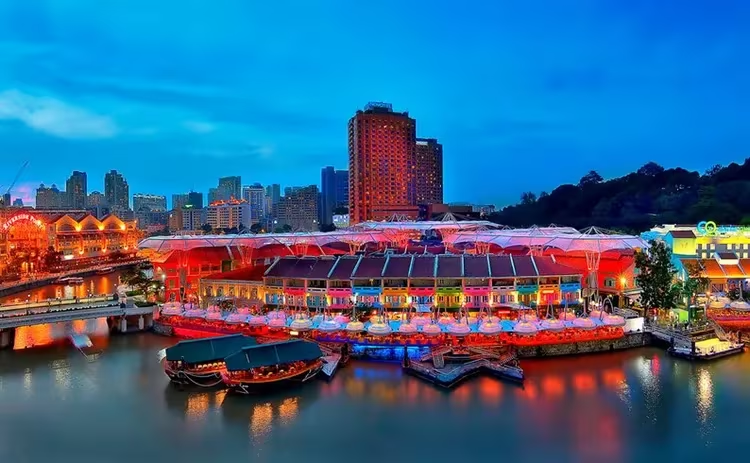
Clarke Quay in Singapore – history, photo, description, how to get there, what to see, map
The small country of Singapore attracts travelers who want to learn more about the mysterious islands washed by the waves of the Indian Ocean. While walking along the Clarke Quay, which is a landmark of the city – the state of Singapore, you plunge into an amazing atmosphere created by a harmonious combination of culture, traditions of different peoples inhabiting the famous “Lion City” that came from ancient legends. You can talk about the embankments of the city, stretching for a distance of more than 3 km, for a long time. Travelers will always admire them, be surprised by rare architectural structures. At the same time, the question will definitely arise who, when, why created such beauty on the banks of the Singapore River?
Story
The development of the waterfront cannot be seen separately from the history of Singapore. Now it is considered the main lure of tourists to the city. The origin of life in this place, located near the equator, is associated with the famous Singapore River. The historical center of the country, the city, grew up next to the waterway, starting next to the Kim Sent bridge and ending on the shore of the bay, called Marina Bay. Now three embankments are equipped here, which have become the center of the country's tourism infrastructure. Although earlier the river bank was used for the purpose of an industrial trading zone.
Numerous trading moorings, piers made the river the main transshipment point for goods in Southeast Asia in the years of the 19th century. Huge warehouses filled with rare goods prized in Europe, such as spices, exotic offerings in the form of shark fins, swallow nests, filled the endless storage areas. In Chinese documents dating back to the 3rd century, Singapore was referred to by the Javanese name Tumasik. Even then, it was an important point of trade for the Srivijaya empire, the center of which was in Sumatra.
Residential developments, buildings of state institutions appeared on the coast in all directions. The neighborhood of a dirty river, noisy ports, floating barges interfered with the residents of the city. The decision to clean up the river and change its status was made in the 20th century. Cargo ships began to be suitable for unloading at the new berths Boat Quay, Clarke Quay, Robertson Quay, and the embankment turned from an industrial zone into a favorite place for tourists.
Description
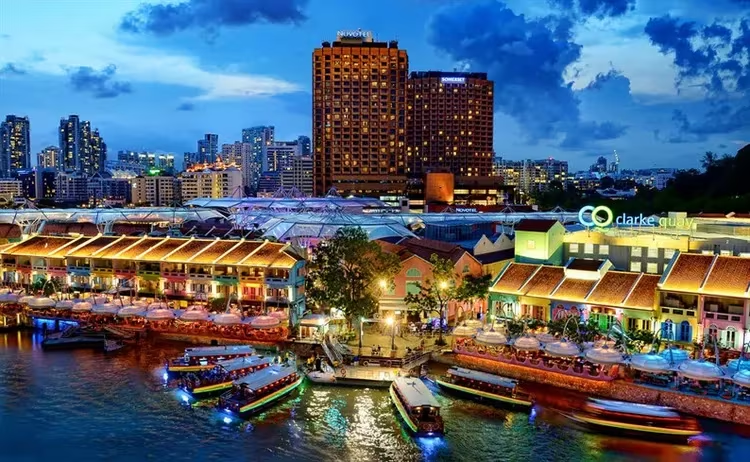
Already at the first stage of the reconstruction of the embankment, the area acquired a modern look. Chinese entrepreneurs used existing docks, warehouses, abandoned ships, old barges for cafes, restaurants, trendy dance clubs, floating bars with live music. Glittering ships, beautiful sightseeing boats filled with tourists from different countries, are now approaching the moorings of the old trading piers. This is how modern Singapore was born. The capital of one of the prosperous countries of the Asian region. Sir Andrew Clark, acting as the second governor of Singapore, made a great contribution to the organization of the modern waterfront. The embankment, which has become the center of the city's nightlife, is named after him.
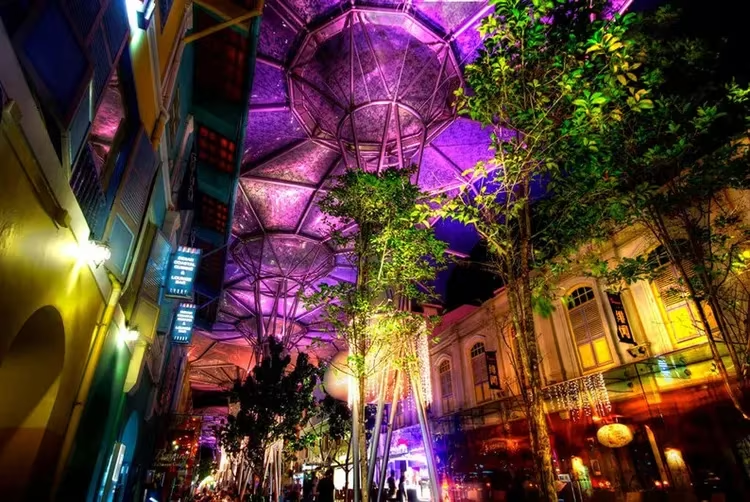
Even on hot evenings, it is easy to breathe on the embankment thanks to the numerous air conditioners equipped along all the streets. The sounds of music coming from numerous cafes, clubs, bars, open verandas invite those who wish to the epicenter of Singapore's nightlife.
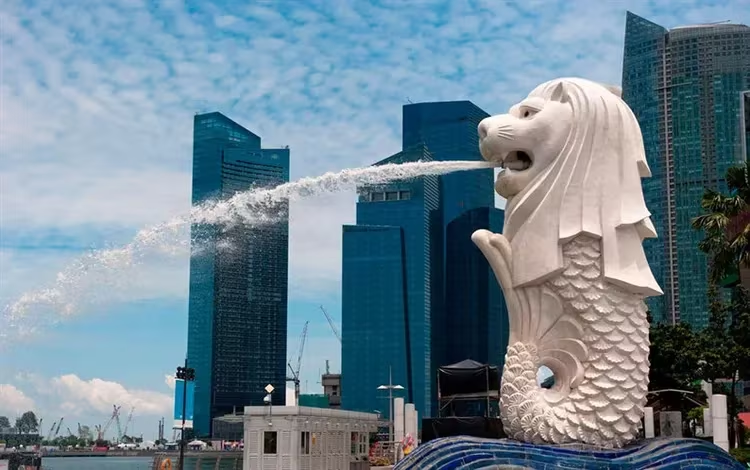
Numerous sculptures decorating the sidewalks, illuminated in an original way at night, are easily confused with the figures of living people. They complement the atmosphere of the waterfront with a mysterious Asian spirit against the backdrop of historical and modern architectural masterpieces. Among them majestically stands the figure of a mythical animal with a lion's head and a fish's tail, called Merlion. According to ancient legend, the monster protected the inhabitants from enemies. From his eyes, lit up with bright fire at the sight of the enemy, a stream of fire escaped, incinerating the enemy. During a severe storm, he rescued sinking ships from the water. By the way, the mythical animal has become a symbol of the country. A monument in the form of a beautiful fountain in the form of a creature was built in the city according to the project of the sculptor Lim Nang Seng in 1972.
What to see
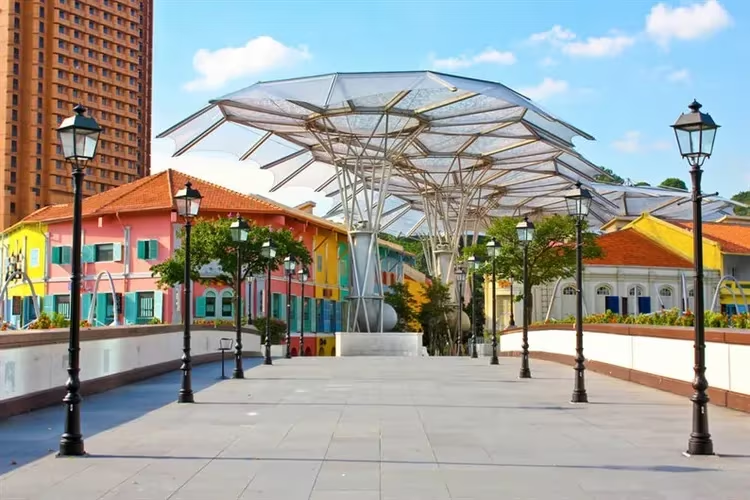
Walking along the embankment, one is struck by the atmosphere of the coexistence of the traditions of Eastern and Western cultures. Starting with the usual treats, without which no trip is complete, you can equally successfully taste dishes of Indian, Chinese, Spanish, Brazilian, Irish, Russian cuisines. Cafes, pubs, bars, restaurants beckon with luminous advertisements to try local drinks and treats. Along with a pleasant dinner, you can admire the fabulous panorama of the city at night. Those present get an unforgettable impression, looking into the millions of multi-colored lights reflected in the calm waters of the river. Or, sitting in a small cafe garden, under ornamental ficus, palm trees, surrounded by rare flowers of potted plants.
It is impossible to pass by the central illuminated fountain installed on the embankment. Jets of clear, clean water fly out of the ground and water the vacationers. An interesting attraction for lovers in the form of a net with locks that they fasten and throw the key into the water. It is located near the local metro station. Or the daredevil attraction G-Max Reverse Bungy in the form of an open capsule attached to a cable. The aircraft is a hit with the most intrepid visitors. The famous flea market always offers interesting offers on Sundays. Huge malls Clarke Quay Central, Liang Court invite you to shop daily.
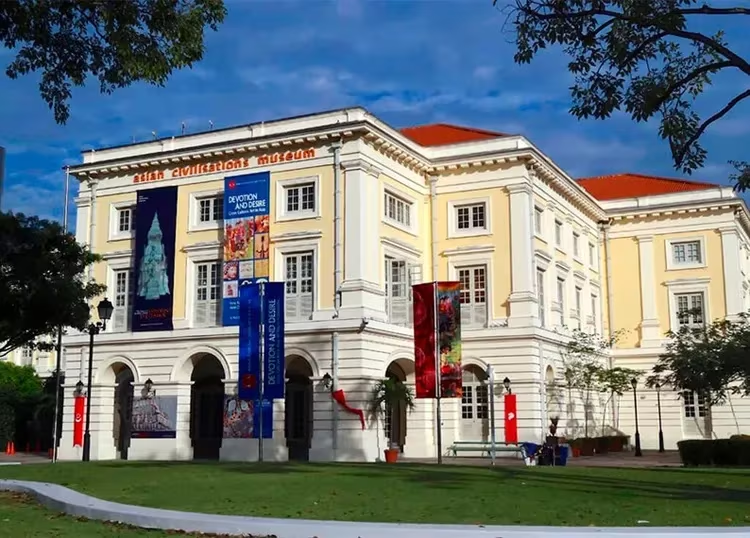
Among the architectural sights located on the embankment, the Asian Civilization Museum, the parliament building, the bridge connecting the two river banks in the form of a DNA molecule are of interest. Arts House, Singapore Theatre, sculptural monuments, compositions such as First Generation, River Traders, etc. One can marvel at the shape of the durian fruit-like roof, the air conditioning that is indistinguishable from a lotus flower.
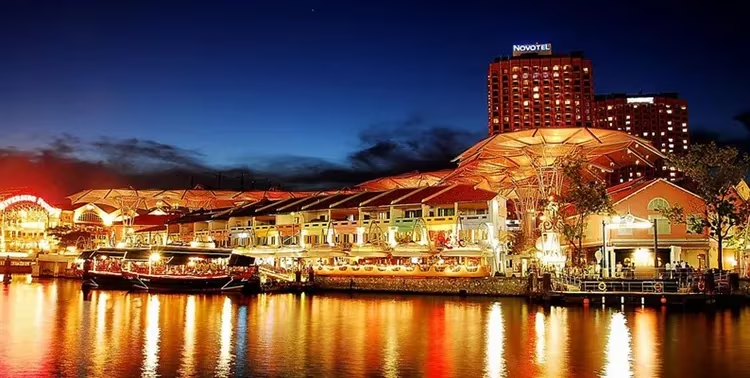
A night trip along the river on a tourist boat, a sightseeing tram that departs every half an hour from several berths on the embankment. You can admire the beauty of the embankment while sitting on an authentic Chinese boat, an amphibious bus that cuts through the river waves. The main problem while walking along the embankment is the task not to miss interesting moments in the sparkling fuss of unusual lights.
How to get there
Public transport of the city connects all its points with the famous embankment. For example, you can take buses No. 2, 33, 12, 54, 147, 190, going from the Clarke Quay metro station. You can walk through Fort Canning Park by getting off at Dhoby Ghau station. You need to know that the city has a very convenient simple subway system, consisting of four branches leading to all areas of the city. The metro is not expensive, there are various options for paying for trips. It is a popular, public mode of transport throughout the country. While saying goodbye to the city, you can throw a coin, go to the famous “Fountain of Wealth”. Stretch out your palms to him and take with you a small piece of good luck, luck, success.