
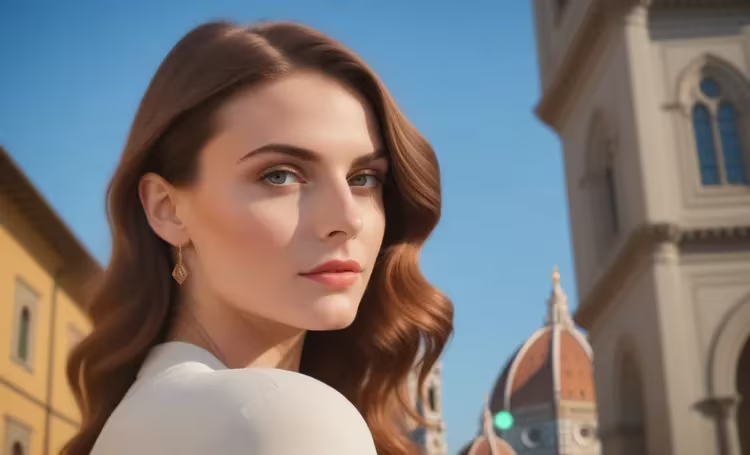
🏛️ Florence in 24 hours: the perfect route
Florentine sculptors became the founders of the realistic style in architecture . Florentine artists developed the laws of perspective. And Florentine thinkers marked the beginning of the Renaissance.
This city of art gave the world many brilliant people: Leonardo da Vinci, Michelangelo, Donatello, Niccolo Machiavelli, Dante Alighieri, Galileo Galilei. People come to Florence to be inspired by the beauty of ancient streets and to see the original works of great creators. Still wondering: what to see in Florence? I'll give you the answers now.
I hasten to warn you: it is better to buy tickets to museums in advance, for example, on this website. There may not be any on site or you may be waiting in long lines at the cash register. Entrance to the main galleries will cost about 20-30 euros, to the houses of the nobility and temple exhibitions about 10-15 euros.
Five facts about the city
- Florence is translated from Latin as “blooming”.
- This place was founded half a century BC.
- The brightest period in the history of Florence is the 15th century. This is the reign of the Medici dynasty, during which the city became the capital of the arts.
- Florence is the administrative center of the Tuscany region.
- Now about 400 thousand people live here.
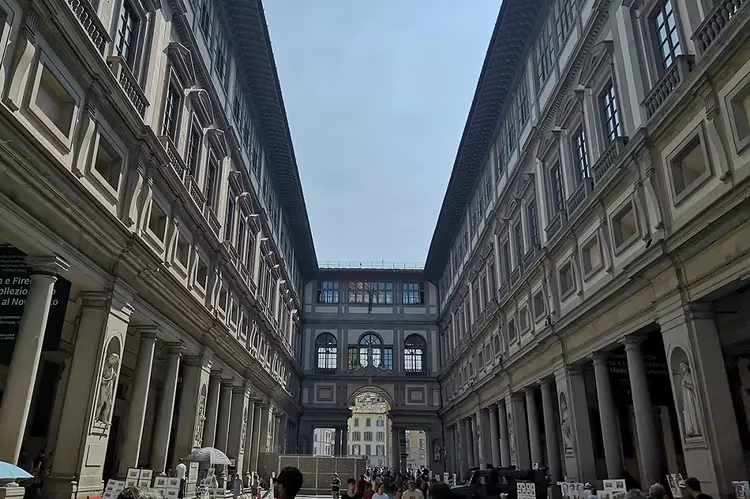
G. Uffizi Gallery (Galleria degli Uffizi)
The Uffizi is the most popular museum in Italy. This is a real treasury – masterpieces by Michelangelo, Giotto, Botticelli, Leonardo da Vinci, Peru Gino, Raphael, Caravaggio, Titian, Rubens and works by other famous masters of the Renaissance, the Middle Ages and the present day are kept here. The majestic U-shaped building was built by the Medici family to store their art collection. In addition to the gallery, surrounded by hanging gardens, the palace housed a theater.
H. Piazza della Signoria
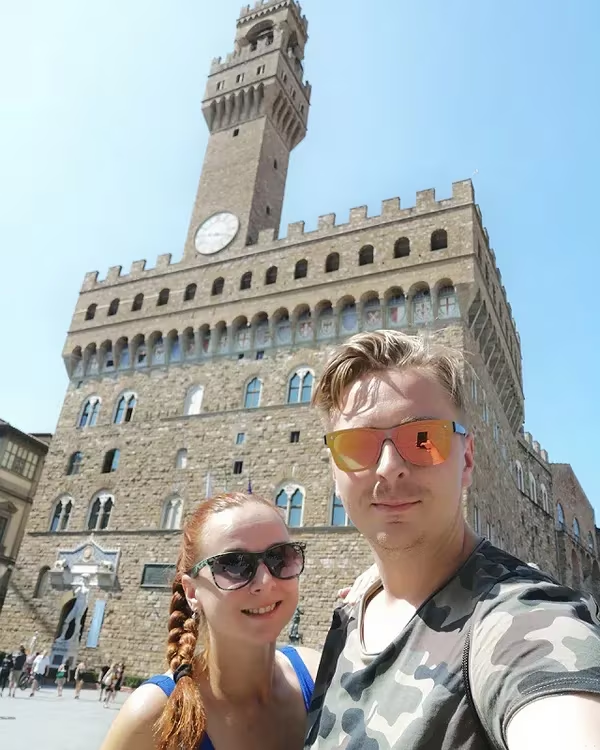
You can see copies of Michelangelo's David, Donatello's Hercules and Judith in Piazza della Signoria. There is also a marble fountain “Neptune”, made in the 16th century according to Bandinelli’s design.
In the square, in the Palazzo Vecchio, the government of the Florentine Republic (signoria) was located. And even now this place retains its reputation as the political center of the city – the late 13th century palace now serves as the city hall. The 94-meter clock tower is named after the master who built the fortress – Arnolfo di Cambio. For some time, the castle was the residence of the Medici family. And, like all the houses of the Italian nobility, it boasts rich interior decoration and majestic interiors. Therefore, part of the Old Palace is given over to the museum.
I. Basilica of Santa Croce
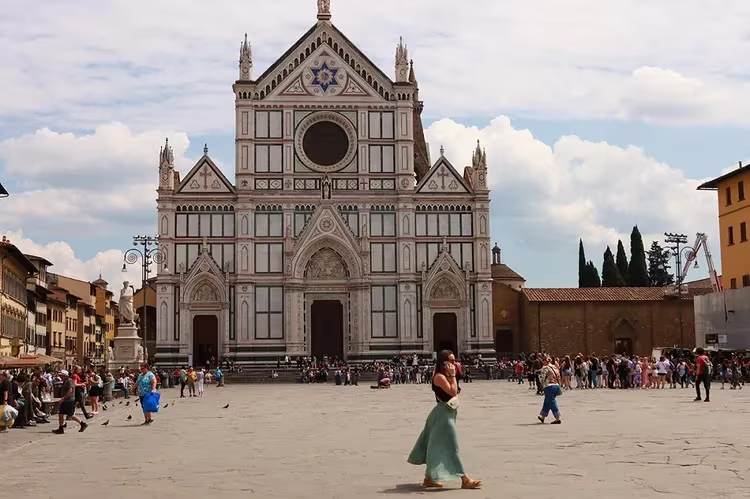
The Church of the Holy Cross is a pantheon for many prominent Florentines: Galileo Galilei, Michelangelo, Niccolò Machiavelli, Gioachino Rossini. Construction of the temple began at the end of the 13th century, and was completed in the middle of the 15th. Giotto and Donatello participated in the painting of the walls of this church. The basilica was to be the largest in the world. This didn't work out. But it is the largest Franciscan church in Italy.
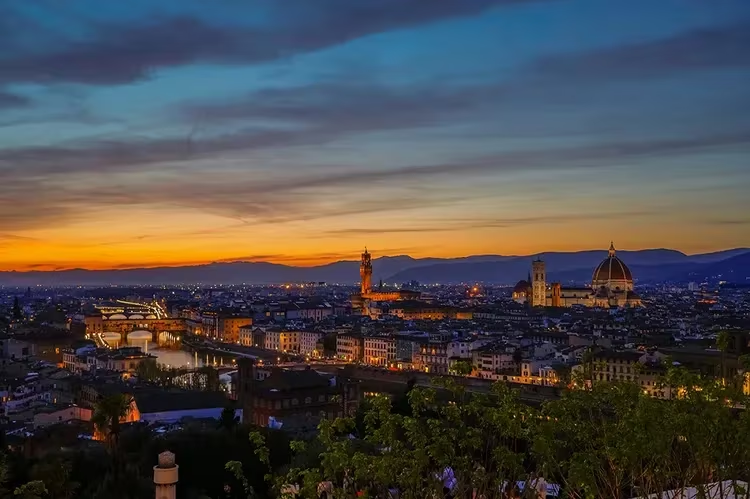
J. Piazzale Michelangelo
There is no better place to watch the sunset. The most famous view of the city opens from here. The square itself was created in the 19th century during the large-scale reconstruction of Florence.
5 more places worth seeing if time permits
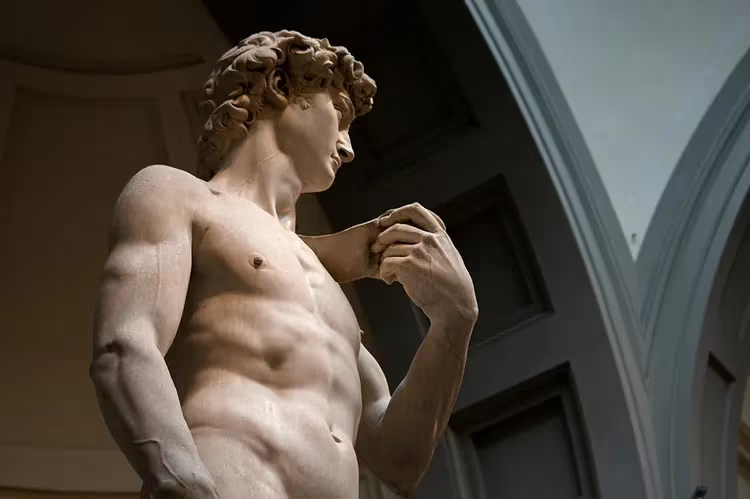
Gallery of the Academy of Fine Arts (Galleria dell'Accademia)
The collection of this museum was conceived as a teaching aid for art students. It is here that the original of Michelangelo’s “David” and four more of his statues are kept. In the halls you can find many other works by famous Renaissance creators – Uccello, Ghirlandaio, Botticelli, del Sarto. Therefore, the Gallery is the second most popular museum in Florence. The educational institution itself became the first European academy of painting. It was founded in the 16th century with the support of the Medici.
Bargello Museum (Museo Nazionale del Bargello)
Many works of famous masters are kept in this museum. The exhibition is located in the halls of a medieval castle. What this palace was not before: a prison, a barracks, the residence of a judge, a magistrate.
Palazzo Pitti
This palace is located on the other side of the river. It was built in the mid-15th century for Luca Pitti. A century later, his family went bankrupt – and the castle became another residence of the rulers of Florence. Nowadays, several large exhibitions are kept within its walls: the Palatine Gallery, the Gallery of Modern Art, the Silver Museum, the Porcelain Museum, the Carriage Museum and the Costume Gallery.
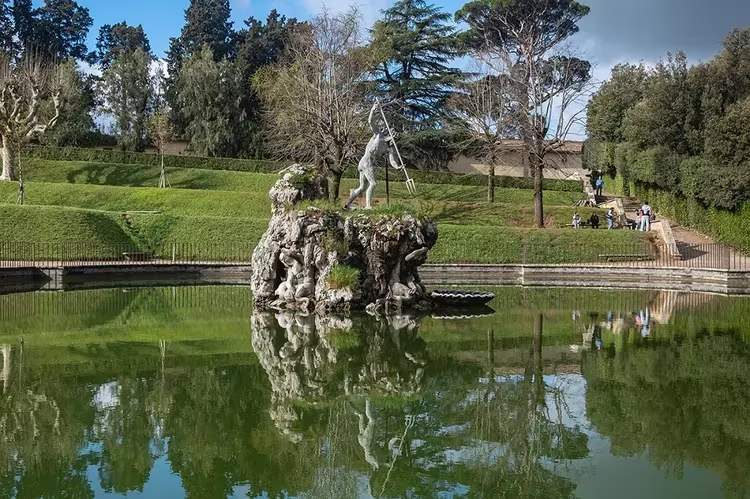
Boboli Gardens (Giardino di Boboli)
Behind Palazzo Pitti lies one of the best park ensembles of the Italian Renaissance. Please note that there is also an entrance fee here. This garden was founded in the mid-16th century by the Medici family. Then many gardens in Florence were built in his likeness. The Boboli Gardens became the prototype for many royal parks, including the French Versailles. Terraces and grottoes, fountains and gazebos, marble statues and an amphitheater – there is a place to relax from the bustle of the city.
Galileo Museum (Museo Galileo)
The development of science and technology was no less interesting to the Medici than art. The ground floor of the building, located next to the Uffizi Gallery, houses the family's extensive collection as proof of this. By the way, the museum itself was previously called the Museum of the History of Science; it was given the name of Galileo after restoration in 2010. The exhibition actually includes artifacts from Galileo himself, which once belonged to the Chimento Academy. The second floor of the museum houses the most valuable scientific collection of another dynasty ruling Florence – the Lorraine. The building also houses a library with 150 thousand scientific and historical works.
A little about food
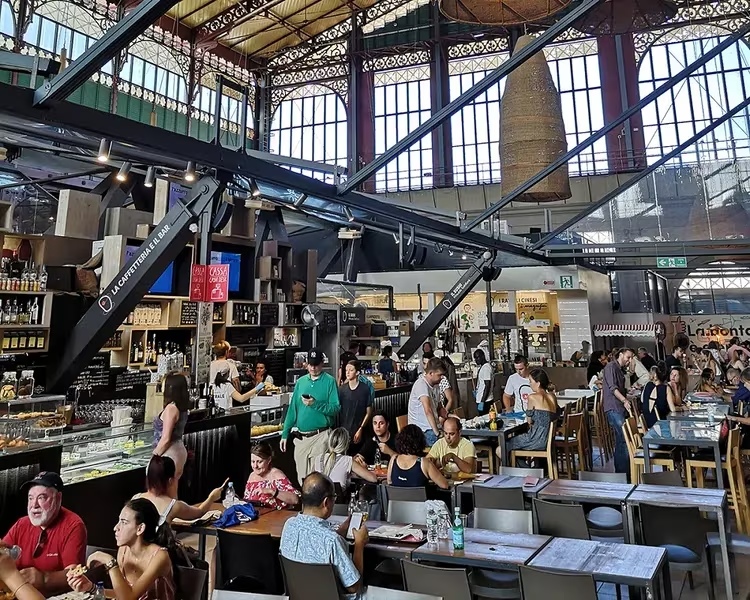
Central Market (Mercato Centrale)
You won't be satisfied with art alone. I won’t tell you about all the cool restaurants in the city; I’ll focus on the main market. The first floor of the mercato is reserved for trade. Here you will find meat, fish, fruits, oil and much more. And on the second there is a food court. Here you can eat pizza or pasta, and also take part in cooking classes.
Vivoli Gelateria
This is the oldest ice cream maker in Florence. It is now run by the fourth generation of the same family. Homemade gelato – fabulous! And the prices here are good.
And finally, the Bartolucci store
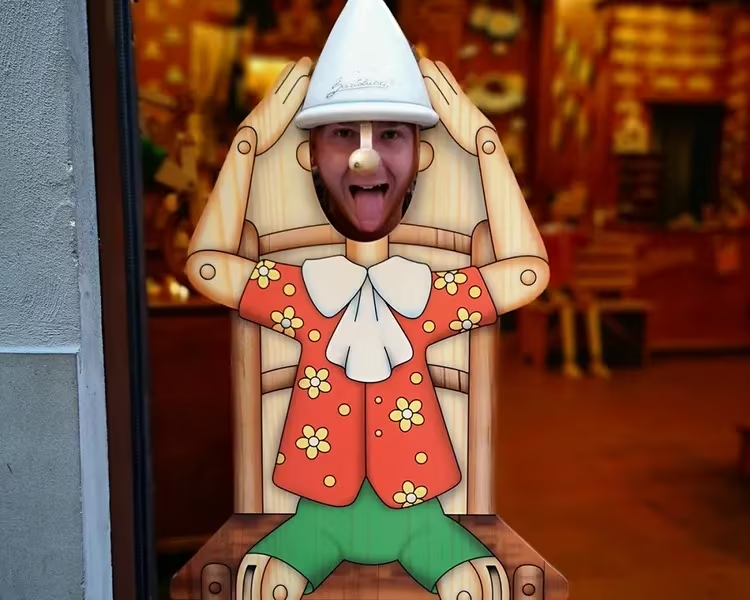
Carlo Collodi, author of The Adventures of Pinocchio, is from Florence. Therefore, the long-nosed boy is very popular in the city – they even organized a chain of wooden doll stores. I marked one of the Bartolucci shops on the map. It’s always nice to plunge into a fairy tale, especially around Christmas.
If you are just going to Italy, we recommend reading this text. We also talked about the benefits of traveling by train and collected life hacks for road travel.