
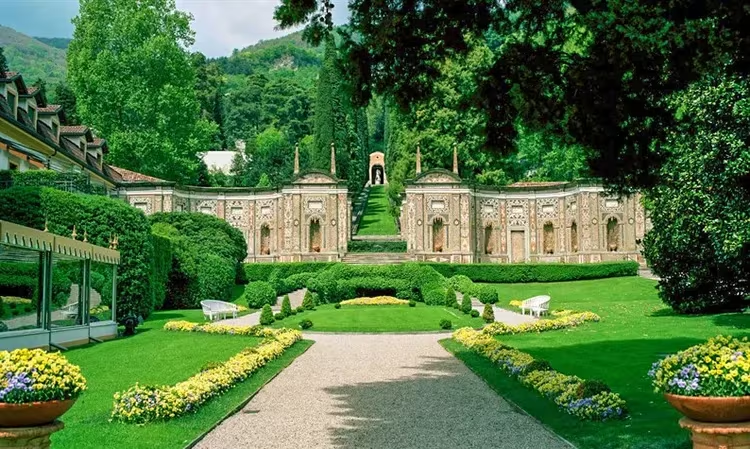
Villa d’Este in Tivoli – history, photo, description, map
Just 24 km from Rome, in the city of Tivoli is one of the greatest creations of Italian architecture. Villa d'Este in Tivoli is famous for its fountains, shady alleys, quaint grottoes, unique hydraulic and musical structures and is an example of Baroque garden and park architecture.
Construction history
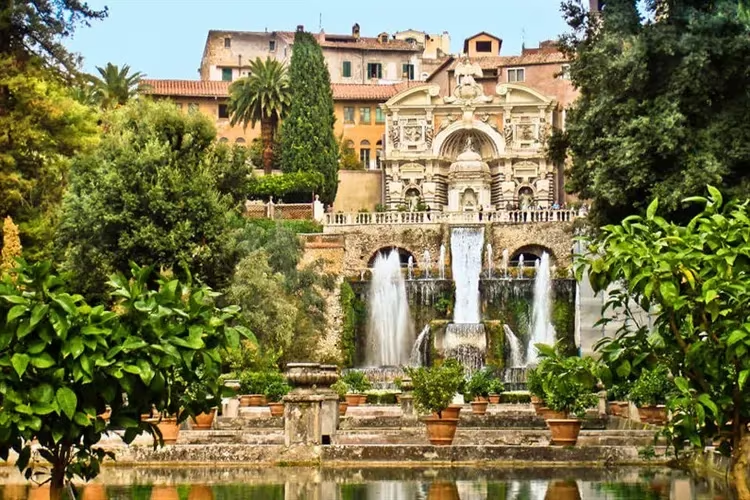
This ensemble was built by Cardinal Ippolito II d'Este. Ippolito was the son of the Duke of Madena and Ferara, Alfonso d'Este and Lucrezia Borgia. In the middle of the XVI century. he was appointed governor of Tivoli. This appointment was supposed to brighten up a little for him an unsuccessful attempt to take the place of the pope. The residence of the new governor was the monastery of Santa Maria Maggiore. But the dull gray building of the monastery did not meet the needs of the new governor, who was considered a high connoisseur of art. He decided to build a palace on this site, and plant gardens on the hills in the vicinity.
The project of the residence was developed by the antique dealer from Naples, Pirro Ligorio, and in 1560 construction began. In addition to Ligorio, the cardinal attracted architects and builders to work on the villa, led by Alberto Galvani. The construction took over 10 years. First, the builders took care of supplying water to the villa: they built an aqueduct and dug underground tunnels, through which water from the Aniene River flowed to the construction site. Only after that they began to equip the park and install fountains.
The villa was inaugurated in September 1572, but Ippolito himself died a few months after this event. A decade later, the villa was taken over by the Sacred College of Cardinals and gradually fell into disrepair. And only at the very end of the century, at the insistence of one of the heirs of its first owner, Alessandro d'Este, the estate was transferred to the family ownership of the d'Este family. He and his successors managed to reconstruct the water supply system, repaired some fountains and built several new ones.
Architectures and interiors
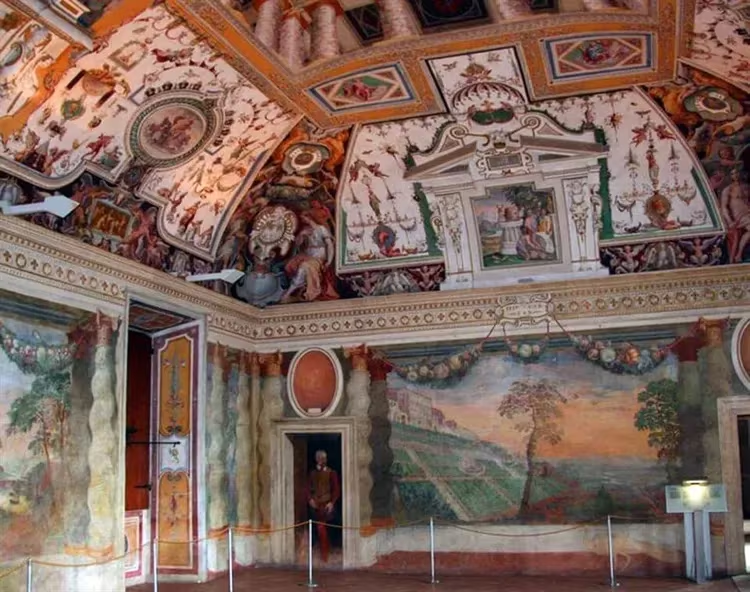
The villa is a single ensemble consisting of a magnificent palace and a picturesque garden, which occupies almost 4 hectares. The residence was intended for meetings with cultural figures – musicians, poets and artists. All the interiors of the palace were created with this in mind and were supposed to emphasize the high status of this place as a cultural and artistic space.
In the personal apartments of Cardinal Ippolito, frescoes and stucco moldings on the walls, traditional for the Renaissance, have survived to this day. In addition to them, the halls were decorated with antique statues, many of which, unfortunately, have already been lost; Flemish tapestries were hung on the walls. The whole concept of interior decoration was developed at the very beginning of construction by the best architects and artists of that time.
Garden
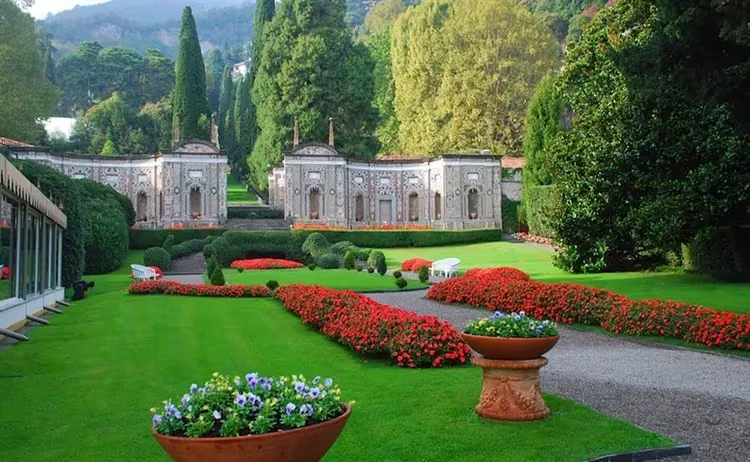
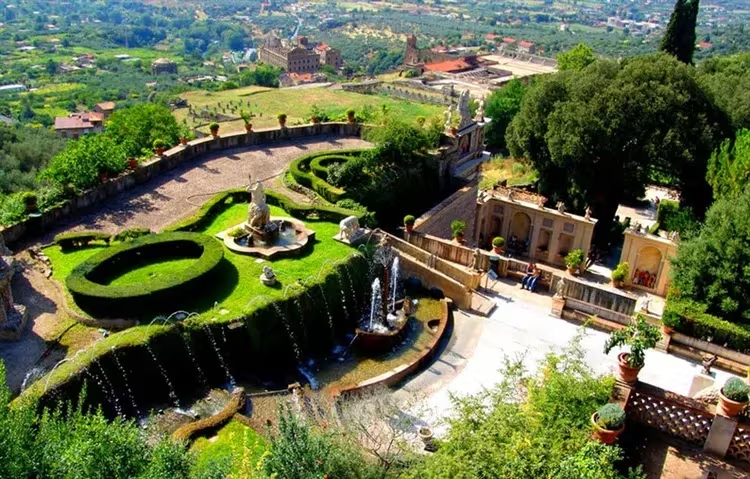
In the Renaissance, any artistic object had to carry some kind of unified humanistic thought. Landscape architecture also obeyed these requirements. Therefore, the concept of the garden in Tivoli expressed several philosophical and political ideas, consonant with the time and thoughts of the owners of the estate. The main entrance to the garden is a wide open terrace with stairways leading to it on both sides. There are fountains in the center of the terrace, and it ends with a fancy grotto. The overhanging tiers of the terrace are reminiscent of one of the wonders of the world, the gardens of Babylon.
In the garden itself, there are many more references to the myths and legends of antiquity. The statue of Hercules, from whom, according to legend, the d'Este family originates, is the main figure of the ideological design. Two paths depart from it at once – one leads a person to vices, and the second – to the knowledge of truth and goodness. A similar choice has to be made before the image of Venus – to choose earthly love or eternal, heavenly. In his garden, Ippolito wished to arrange a small copy of the Eternal City – here you can see the most famous monuments of Rome.
Fountains
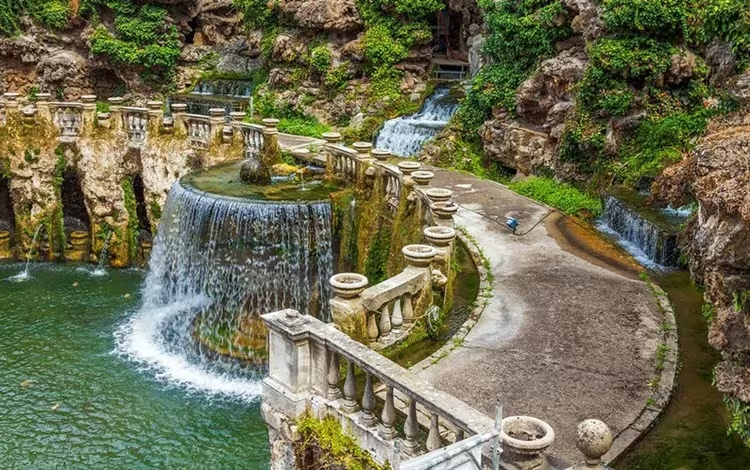
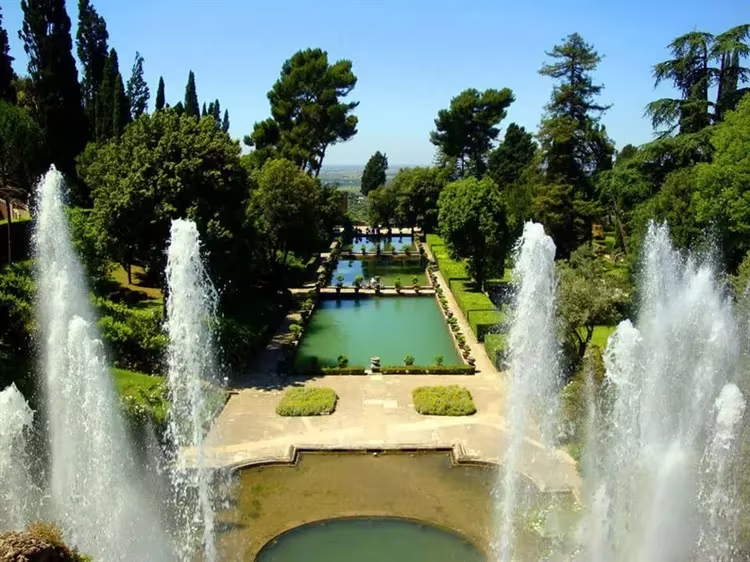
The main attraction of the villa, despite the magnificent decoration of the palace and the collection of works of arts and crafts presented there, are its fountains. They not only performed the function of water supply and irrigation of a beautiful garden, but they themselves became its best decoration. It is no coincidence that contemporaries called the garden of Villa d'Este the Theater of Water.
Numerous cascades, ponds, canals and waterfalls give coolness and relaxation on a hot summer day. Today, there are more than five hundred fountains in the garden. All of them were designed and built in different periods of the villa's history, but the placement of each fountain in the park is carefully thought out and has not only aesthetic and hydrological functions, but also a deep philosophical meaning.
Fountain of Neptune
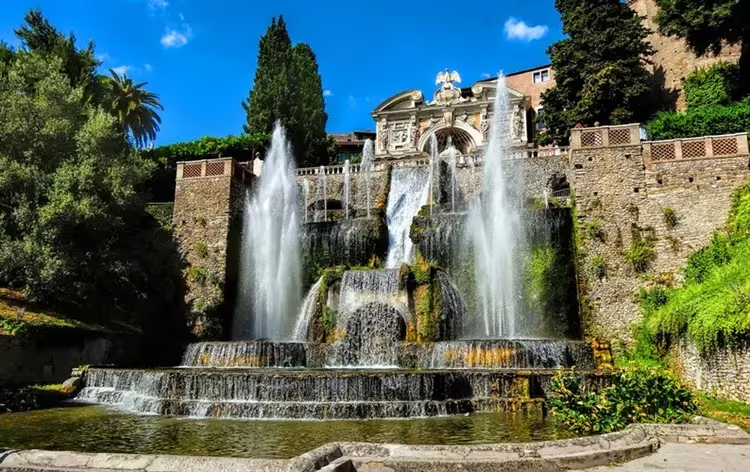
One of the latest fountains installed in the garden was built in 1927, but it blended in very organically with the overall composition. It is located right in the middle of the park. The majestic statue of the sea lord is visible through the waterfall, which falls on him from the Organ fountain. In front of the fountain of Neptune, rectangular ponds with fish are broken.
Fountain del Bicchierone
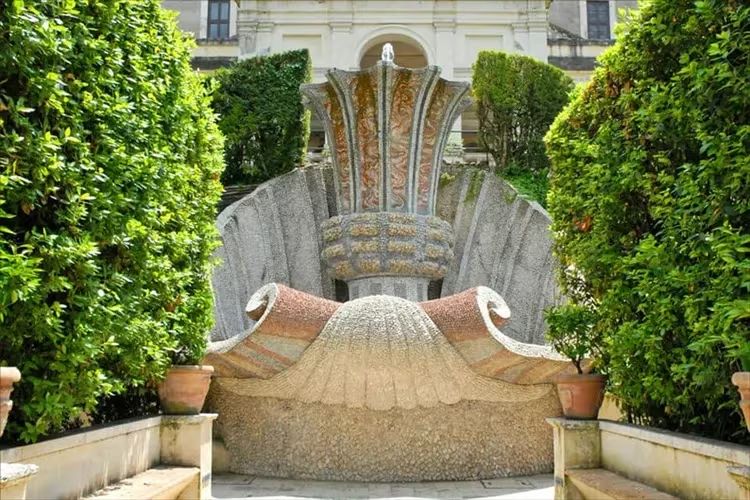
It was built by the famous Italian sculptor Gian Lorenzo Bernini in the 17th century and therefore bears the second name “Bernini Cup”. It resembles a giant wine glass mounted on a large sink. Bernini personally oversaw the progress of its construction and himself regulated the power of the water supply and the height of the jets of the fountain so that they did not block the view of the neighboring fountain.
Fountain “Rometa”
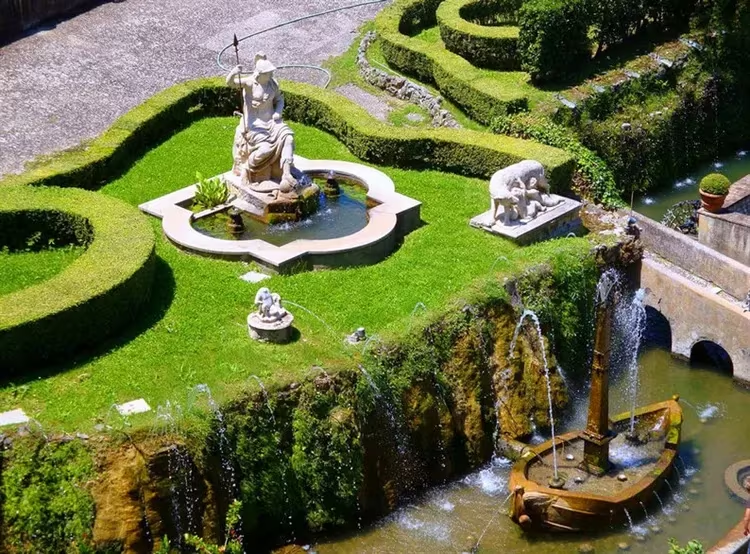
One of the incarnations of the idea of the cardinal to reproduce in his garden all the Roman sights in miniature. The fountain is called “Little Rome”. In the very center is a sculpture of Roma the Victorious, and further on is a statue of a she-wolf feeding Remus and Romulus. The whole composition is made using the features traditional for Roman architecture of that time: columns, arches, obelisks.
Alley of the Hundred Fountains
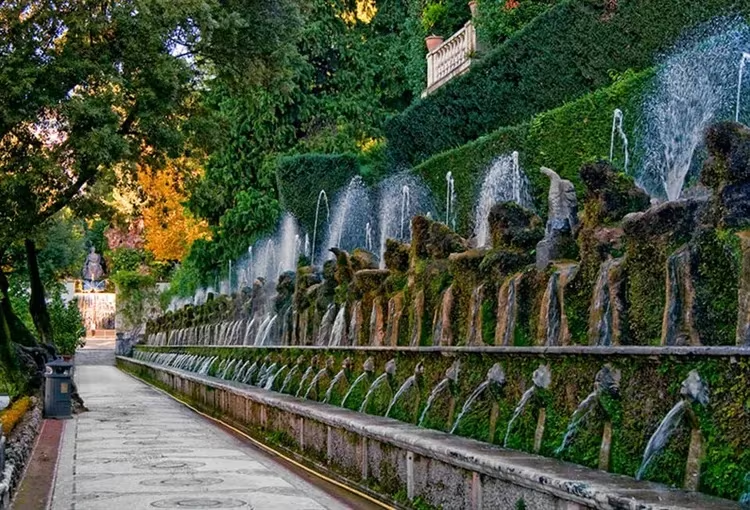
This is perhaps the most famous attraction of the villa. The alley connects two fountains – Tivoli and Rometta (“Little Rome”). Along the entire alley, more than 100 fountains make their way through the dense greenery. Each fountain, according to the plans of the architects, had to correspond to its own relief, echoing the themes from Ovid's Metamorphoses. The alternation of high cascading structures and small fan creates an extraordinary effect.
dragon fountain
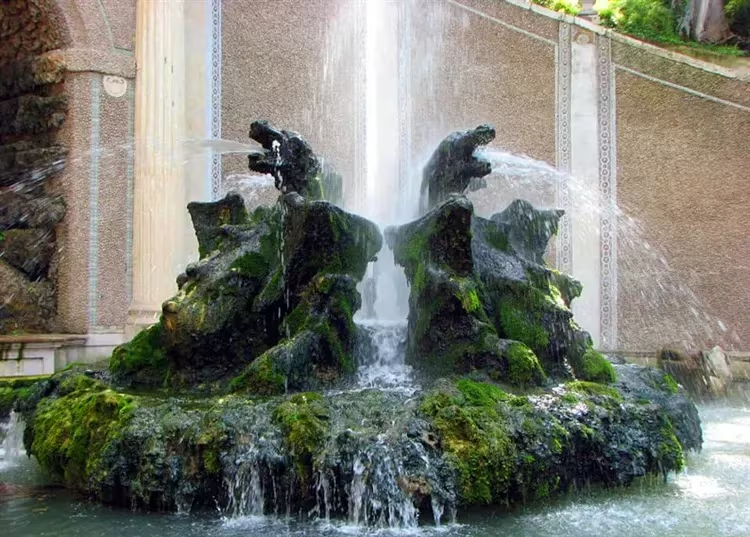
It is a composition of 4 dragons sitting in a circle, with their backs to each other, from the mouths of which streams of water fall. As conceived by Ligorio, the fountain was dedicated to the theme of the struggle between good and evil, so figures of Hercules and Mars with gladiators were going to be installed in the niches. To emphasize the drama of the idea, during the time of the cardinal, the fountain also made loud sounds imitating cannon volleys or fireworks. Due to the death of Ippolito, the fountain remained unfinished; its construction was completed only centuries later. At the same time, the niches on the sides remained empty, and a statue of Jupiter was erected in the center. At the same time, a single, forty-headed dragon was replaced by four dragons, looking in different directions.
Fountain “Organ”
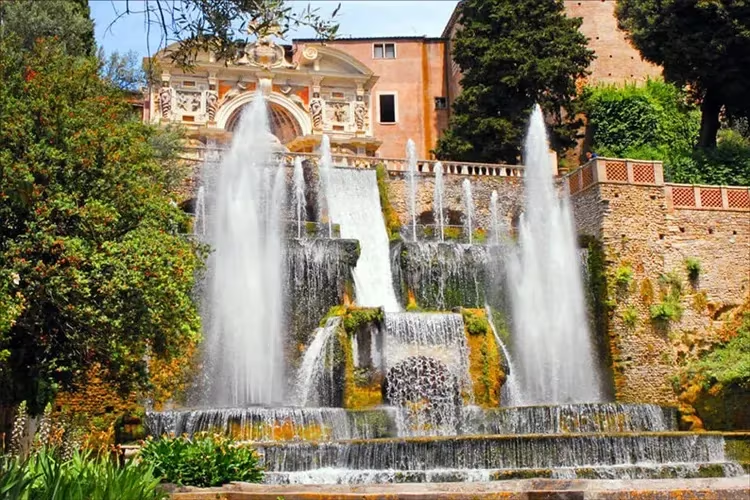
Copies are now installed almost all over Europe. Its uniqueness lies in the fact that, thanks to a special hydraulic design, water, passing through special tubes, bursting out, makes melodic sounds. The fountain impressed contemporaries so much that Pope Gregory XII, who was present at the opening of the villa, looked into the interior to check if the real organ was hidden there.
In 2003, the fountain was reconstructed, the musical mechanism was repaired, and now every two hours visitors can hear 4 small Renaissance compositions.
Opening hours and ticket prices
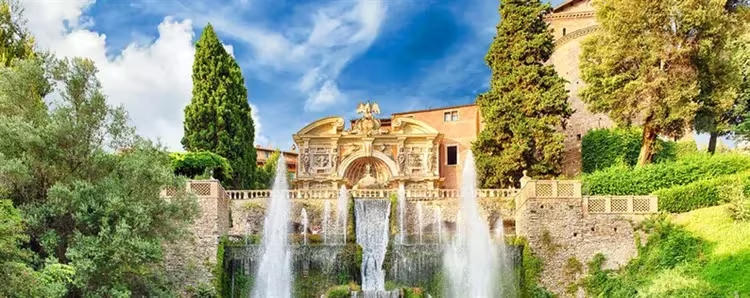
Open for visits every day except Monday, from 8:30 to 19:45. The opening hours of the garden depend on the season: from May to August the garden is open until 19:30, in winter and late autumn it is open until 16:45 or 17:15. Sometimes the museum is open on Mondays. It is best to check the opening hours on the official website before visiting the villa. Holidays: December 25, January 1 and May 1, the villa is closed. From May to November, a full ticket costs 13 euros, the rest of the time – 10 euros. Children under 17 can visit the villa for free.
Excursions
You can also see the villa on your own. But you will have much more impressions after an individual tour. You can choose one of the excursions around Rome, including a visit to Tivoli.
For example, the tour “Masterpieces of Tivoli: Villa d'Este and Villa Hadrian” is an opportunity to delve deeper into ancient Roman history and the Renaissance. A professional guide, a resident of Rome, will take you through the shady streets of the ancient city and tell you the most interesting facts about its history. You will learn why Cardinal d'Este's villa became a model of landscape art and became the prototype of the Versailles garden.
Villa d'Este is dedicated to the excursions “The Enchanting Tivoli and the Luxurious Villa d'Este” and “Tivoli – the City of Emperors”. You will see the magnificent decoration of the cardinal's palace, look at the ancient frescoes and preserved stucco, learn about the fate of the cardinal himself, who belonged to the famous Italian family.
Go down the marble steps to the garden, where among the ancient cypresses and olive trees fountains beat, learn the history of their creation and what philosophical meaning is contained in each of them, listen to the sound of the fountain “Organ”. Excursions are conducted both individually and for groups of up to 6 people. All children can participate. Tickets to visit the villa are not included in the price of the tour and must be purchased on the spot.
Where is it located and how to get there
The complex is located in the historic center of Tivoli on Trento Square. From Rome you can reach the villa by train or bus. The bus leaves from Ponte Mammolo metro station. A ticket to Tivoli costs 2.2 euros. It is better to immediately buy a ticket for the return trip. It is more convenient to get off at the Garibaldi Square stop. Cross the square diagonally, and further on you will find the road to the complex by numerous signs. Buses depart from Rome from 06:00 to 23:00, and from Tivoli to Rome from 04:30 to 00:00. The journey takes approximately 50 minutes.
If you decide to get to Tivoli by train, then you should study the schedule in advance, because trains run approximately once an hour. They depart from Termini Station or Tiburtina Station. The ticket costs 2.6 euros. Trains of the Trentitalia company follow to Tivoli, in the direction of Rome – Pescara. From the railway station to the villa is approximately a little more than one km.
In addition to traditional public transport, a shuttle can be ordered to Tivoli. Its advantages are obvious: an individual approach and the ability to choose the departure time, comfort, saving time on the road. You can choose a car for one or two travelers, for a whole group of tourists or a large family. If you book a car, then remember that you need to do this in advance, at least a day before the planned excursion.