
Mainz Cathedral (Mainzer Dom) in Germany: photo, description, history, architecture, map
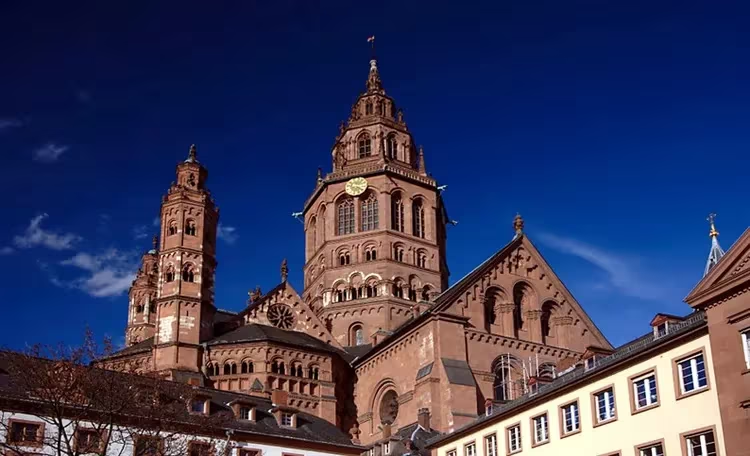
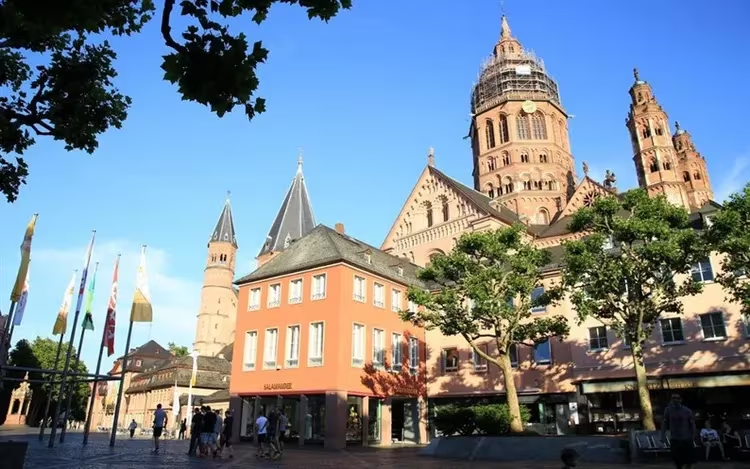
Mainz Cathedral is located in the city of Mainz, located in southwestern Germany at the mouth of the Main River. The majestic building of the Roman Catholic era is located in the center of the historical part of this German city on its Market Square. It is no coincidence that this divine temple was erected at the intersection of many paths, which later became the main religious center north of the Alps.
Description
The cathedral building is impressive in size. Inside the structure has a length of 109 meters, and outside its length is 116 meters. The height of the highest western tower is 83 meters. It is amazing how at the beginning of the first millennium a building of such grandiose dimensions and such enormous height could be built.
Germany hides a lot of interesting facts – read more in our life hack.
This gigantic building is the hallmark of Mainz and its main attraction, embodying the centuries-old history of the city's development.
Story
The construction of the cathedral coincided with the reign of Archbishop Willigis, who simultaneously served as Archchancellor of the Holy Roman Empire. Thanks to his outstanding abilities, Willigis quickly rose to high rank. When Willigis served at the court of the Roman emperor, he highly appreciated his mind, and after the death of the crowned nobleman, he was honored to be the manager of his heir.
There is a legend that Willigis was the son of a commoner who was engaged in the manufacture of carriages. Being at court, Willigis suffered enough from the nobility of all kinds of ridicule and taunts because of his ignoble origin. One night the coachman's son painted ordinary wheels on the wall of his house, as proof that he was not ashamed of his coachman father. This act was very popular with the people of Mainz, and they used the image of the wheels as the coat of arms of their city.
Inspired by the view of St. Peter's Cathedral in Rome, Archbishop Willigis set about building a similar structure in Mainz, devoting almost his entire life to the construction. The cathedral was built over more than two centuries, starting in 975 and ending in 1239, when the basilica was consecrated and appointed as the patron saints of St. Martin and St. Stephen. The names of these patron saints can be read in the name of the cathedral.
The protracted construction is explained by the destructive fires that from time to time occurred on the territory of the building under construction. So in 1009, the fire that arose after the consecration of the cathedral was so destructive that Willigis could not survive the collapse of his hopes associated with construction, and soon died. The archbishop, who devoted his life to the construction of the cathedral, was buried within its walls, and the Catholic Church, in order to perpetuate the name of the archbishop, celebrates February 23 as the day of St. Willigis.
Cathedral restoration
Throughout its existence, the walls of this temple have been mute witnesses of seven devastating fires, several wars and occupations. Therefore, the building of the cathedral was constantly completed and restored. At the beginning of the 19th century, the once majestic building already had such a deplorable appearance that the question arose of its demolition. But at some point, common sense prevailed, and the building began to be rebuilt, resuming restoration work.
Coronation of royalty
Mainz Cathedral for several centuries in a row was the main center for the coronation of royal persons, among which the first were blessed for the emperorship of St. Martin of Tours and St. Stephen, and in 1002, Archbishop Willigis crowned Henry II for the reign. Conrad II, Frederick II and other German kings also received the imperial crown here. The largest celebration of the Middle Ages, which took place within the walls of this temple, marked the knighting of the offspring of Emperor Frederick II in 1184.
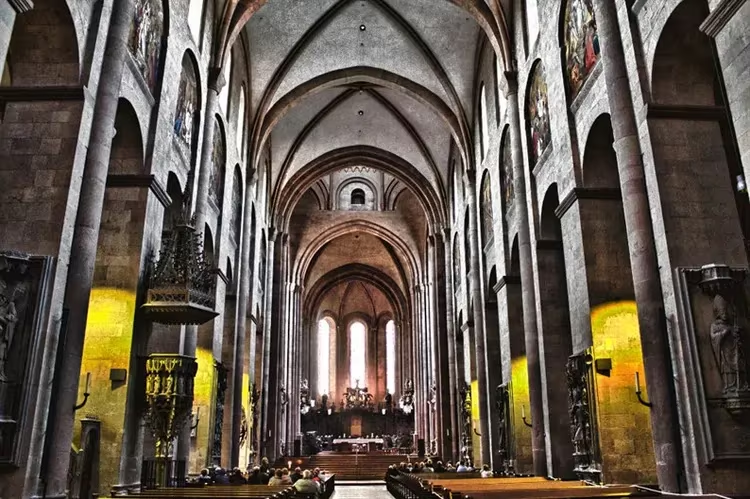
Mainz Cathedral interior
Mainz Cathedral is considered the largest in Germany. Despite the series of destruction that the main residence of the Roman Catholic bishopric had to endure, the interior of the building retained its richness and splendor.
The central nave is decorated with amazingly beautiful frescoes illustrating the life path of Jesus Christ. Near the majestic columns there are tombstones of the archbishops of the city. To this day, visitors to the temple are amazed by the luxury of the font, decorated with golden sculptures, in which babies were baptized as far back as the 14th century.
Religious works of art inspire admiration for the work of the ancient masters. Many of them are stored in the treasury of the Mainz Cathedral. The Episcopal Museum, located in the basement of the building, contains an extensive collection of ancient paintings, sculptures, sacred vestments, household items and ancient cult objects.
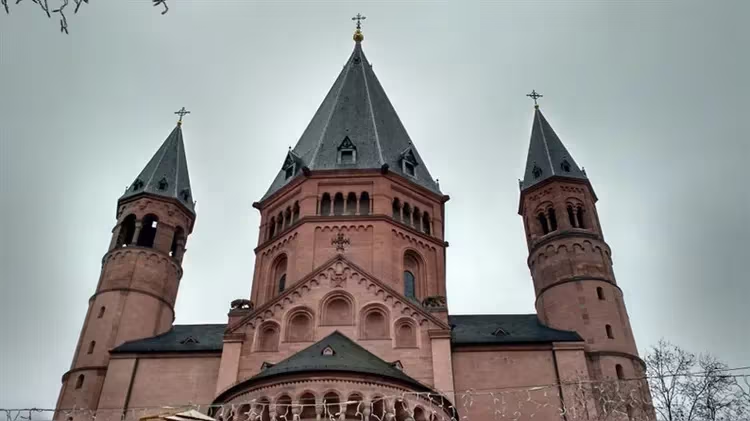
For thousands of years, real masterpieces have been created in the temple, including amazingly beautiful ornaments from the Romanesque basilica, tapestries of the 15th-16th centuries, as well as wonderful altars. A distinctive feature of the temple is the presence of two altars: the western Bardo and the eastern Henry IV, symbolizing the unity of state power and the church, as well as spirit and body.
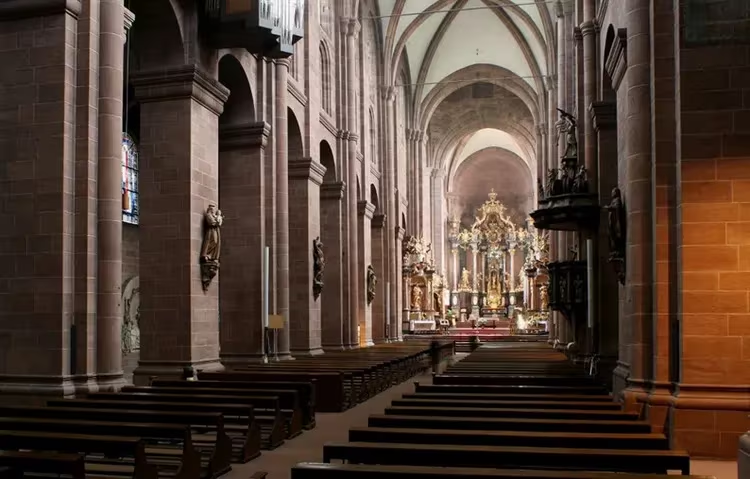
Architecture
For the construction of the temple, sandstone of a reddish hue was mainly used. A contrast to the common building is the Gotthard Chapel built of light stone. Initially, the cathedral was built in the Romanesque style. However, fires and destruction and subsequent restoration work brought other styles to its architecture.
In the current appearance of the Mainz Cathedral, elements of Gothic, early Baroque and Renaissance are traced, which are mixed in one building, making it possible to trace the history of the development of architecture. The Baroque style dominates the central tower and the two side towers, designed by the architect Neumann in 1767-1773, who in 1778-1779 built the cathedral houses with fire-resistant roofs. This architect built on the western tower, which was damaged by a lightning strike, a new spire similar in shape to a bell tower.
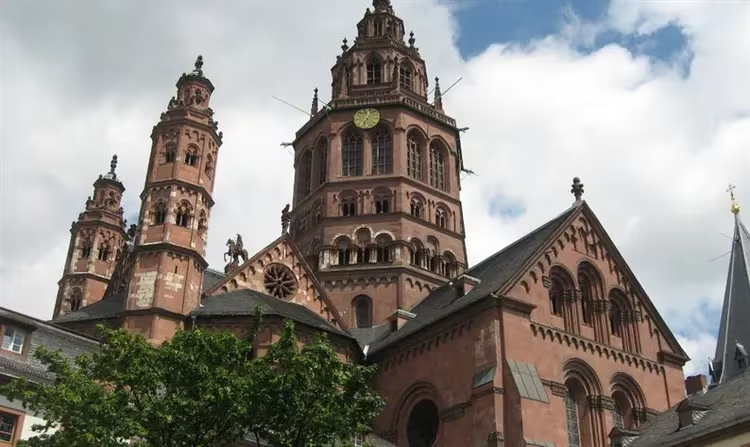
The choirs located inside the temple belong to the Romanesque era, and the massive bronze doors were created in the 10th-11th centuries. The choirs are dedicated to the patrons of the building: the western one is dedicated to Saint Martin, and the eastern one is dedicated to Saint Stephen.
Starting from the 11th century, sculptures began to be installed near the walls of the majestic building, which were supplemented by new sculptural sculptures until the 20th century. Nowadays, they all form a gallery that attracts the attention of tourists and visitors.