
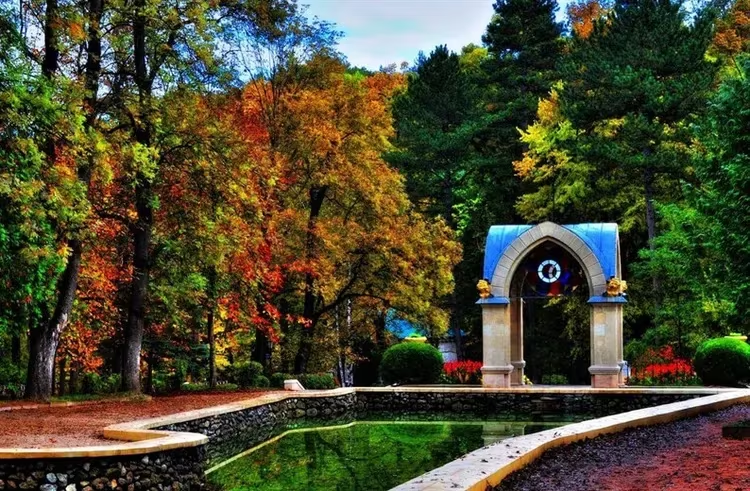
Sights of Kislovodsk – 30 most interesting places
Kislovodsk is a picturesque southern city in the Caucasus, founded in 1803 as a defensive fortress on the southern borders of the Russian Empire. Thanks to its bewitching nature, wonderful climate and healing mineral springs, since 1812 it began to develop as a summer balneological resort. Then the first baths and residential buildings of wealthy Russians were built. The city became a favorite vacation spot for the Russian intelligentsia. It keeps the memory of the stay here of the hero of the war of 1812, General Nikolai Raevsky and the poet Alexander Pushkin, the poet Mikhail Lermontov, the singer Fyodor Chaliapin and other prominent Russians who visited him. Today, the historical and cultural sights of Kislovodsk have been preserved or restored almost unchanged, excursions to which are pleasant to combine with recovery in sanatoriums and boarding houses.
Narzan Gallery
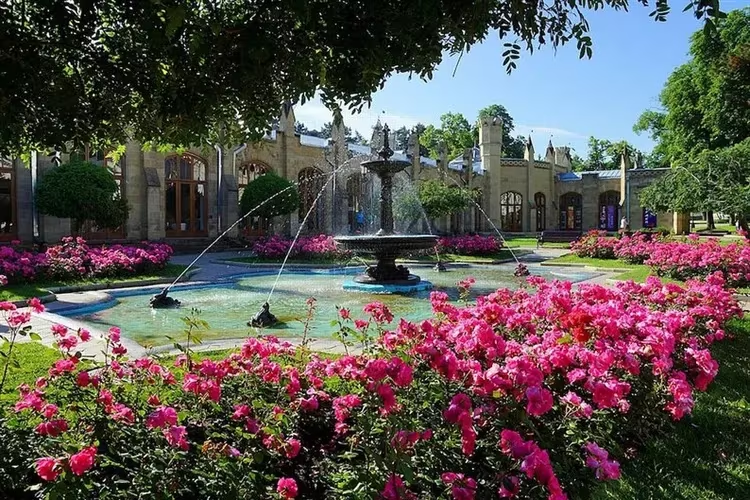
One of the main visiting cards of Kislovodsk was a colorful Gothic building of the 19th century – the Narzan Gallery, built in the shape of a key. Starting with a round compartment with narzan baths, it continues with an extended gallery with two pavilions adjacent to it on the right and left. Between them is the main treasure of the gallery – a deep well with narzan, covered with a glass dome. The main building of the narzan baths, built in the oriental style with turrets on the pediments, rich stucco cornices and architraves, a colorful ornament of the facade and an elegant arched balcony, delights.
Inside the gallery, thanks to the marble walls and floor, it is always cool even in hot summer. The gallery has 16 pump rooms with 3 types of narzan of different temperatures: general, sulfate and dolomite. The Narzan Gallery is surrounded by a green square, where it is pleasant to sit on a bench with a glass of healing water admiring the streams of the fountain shimmering in the sun.
Lermontov site
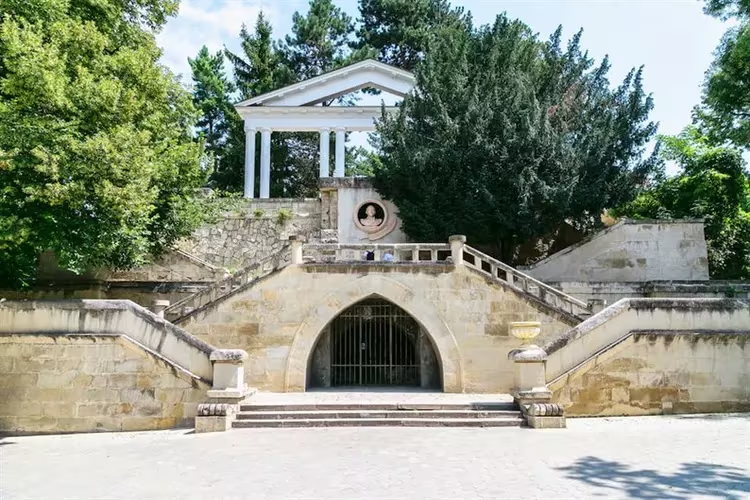
It is impossible to pass by the Lermontov platform – the place where the poet used to be. It is located next to the entrance to the Kurortny Park opposite the Colonnade. Your attention will be drawn to the architectural ensemble standing on a small hill from a platform with two three-flight stairs and a bust of Mikhail Lermontov in a wall niche. Under the bas-relief, the poet's lines from the poem “Caucasus” are carved. At the bottom of the site you will be interested in a mysterious grotto with a figure of a Demon imprisoned in a cage.
At night, the sad eyes of the Demon, as planned by the sculptor, are illuminated with red light, giving the sculpture an ominous look. The platform with stairs was built in 1825-1826 from yellow sandstone. Lermontov himself ran up these steps, being in exile in the Caucasus. It is noteworthy that the bust of Lermontov was installed in the middle of the 20th century, and the sculpture of the Demon in 1970. During the recent restoration, the Lermontov area was decorated with a portico and columns, expressing the entire ensemble in the same style.
Colonnade
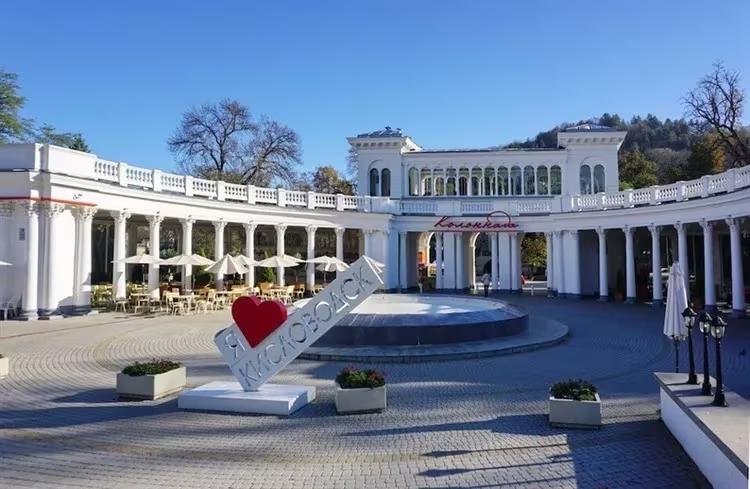
Not far from the Narzan Gallery and Kurortny Boulevard you will see the Colonnade – a snow-white neoclassical rotunda, which precedes the entrance to the Kurortny Park. Built in 1912 to commemorate the centenary of the victory over Napoleon's troops, it has become a symbol of the city, featured on numerous souvenirs. The elegance of the structure with columns of the Corinthian order, supporting a flat roof, fenced with a balustrade with figured columns, admires.
Attention stops on the upper tier with an elegant arcade, completed by turrets on the sides. If we compare the current appearance of the colonnade with the original one that has come down to us from a photograph, then for 100 years it has practically remained unchanged, only a fountain in the center of the semicircular square has been added. In the evenings, the Colonnade and the fountain look fascinating in multi-colored illumination, gathering lovers and guests of the city to admire the fabulous magic.
Cascading staircase
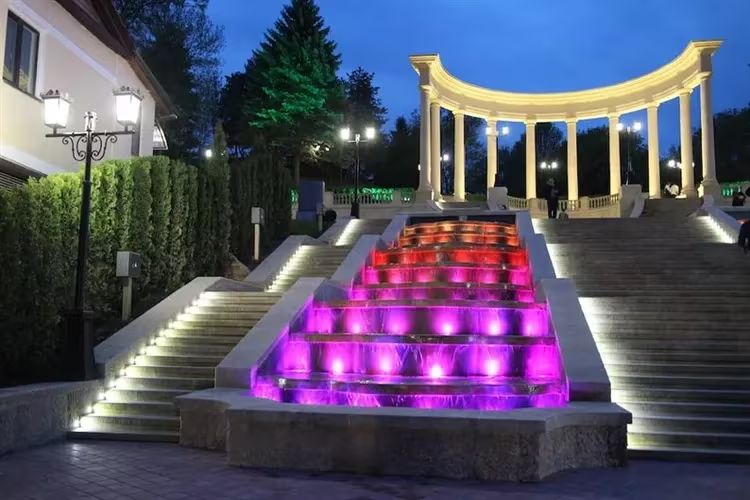
The cascading staircase, built in the 30s of the last century, is almost 100 years old. It was built to climb to the sanatorium, located on the Georgievsky plateau of the National Park. The unique architecture of the cascading staircase with fountains and ponds immediately became the hallmark of Kislovodsk. It is represented by two parts with 170 steps, where the middle of the rise is divided by a small terrace with an observation deck decorated with columns. At the bottom of the stairs there are 2 wide marches, separated by a wide straight strip, where all the tiers are highlighted by fountains.
From the paved terrace, further ascent is presented in the form of a three-flight wide staircase in the center and narrow stairs on the sides. The central part is separated from the flights of stairs by tiers with semicircular ponds. The completion of this miracle of architectural thought was the colonnade, to which 2 semicircular stairs lead, embracing the fountain between them. You get to the observation deck, which opens an amazing panorama of the city.
cable car
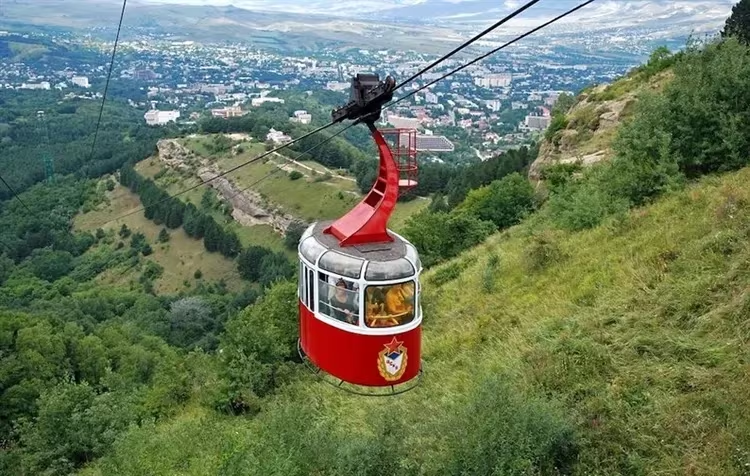
The launch of the cable car, which connected the Old Park with the Mountain Park and opens up an amazing panorama of the Caucasus Mountains and the city, took place in the spring of 1973. The cable car with a length of 1743 m consists of one span with two simultaneously cruising cabins, accommodating 25 vacationers. They follow from the lower station called the “Temple of the Air” to the upper station – the “Olympic Complex”, located on the observation deck of the Small Saddle mountain. The entire journey from top to bottom takes no more than 7 minutes.
Rising to a height of 250 m above the ground, you embrace the boundless scope and beauty of the National Park covered with pines, firs and firs. And among the lush southern greenery, magical landscapes open one after another with the Rose Valley, the Temple of the Air and the Blue Stones. After getting off at the top station, enjoying the landscape views, you can extend the pleasure by walking down a specially equipped path, inhaling the healing aromas of pine needles.
Mount Small Saddle
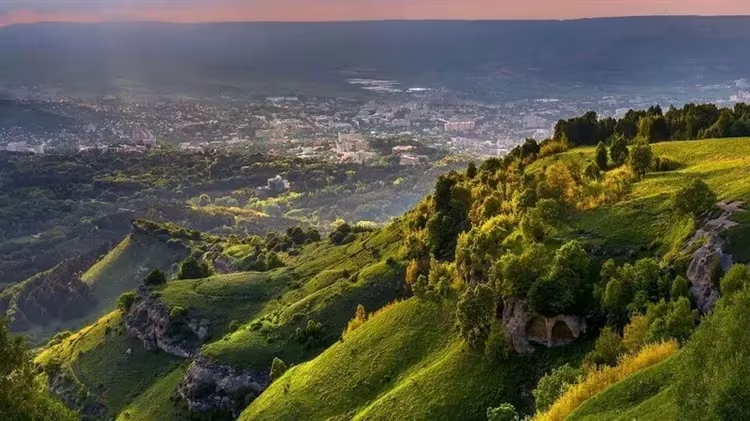
Mount Small Saddle – being a colorful natural landmark, serves as a magnificent observation deck. It offers stunning views of the resort town with its surroundings – the Podkumka valley and the Bermamyt plateau with bizarre pictures of gorges and the greenery of its beams. The mountain rushed up to 1325 above sea level and 500 m from the level of the central square. From the site of the Small Saddle, the path leading to the two-humped mountain peak with the name Big Saddle is perfectly visible.
The Small Saddle Mountain area is part of the Kislovodsk National Park, with an abundance of local and exotic tree species, diverse mountain vegetation and numerous species of fauna. Clean and healthy coniferous air invigorates tourists who take health walks along specially laid routes. Climbing to the top of the mountain here is made by tourists all year round, because at any time of the year nature gives an unprecedented feeling of beauty and fullness of life.
Mount Big Saddle
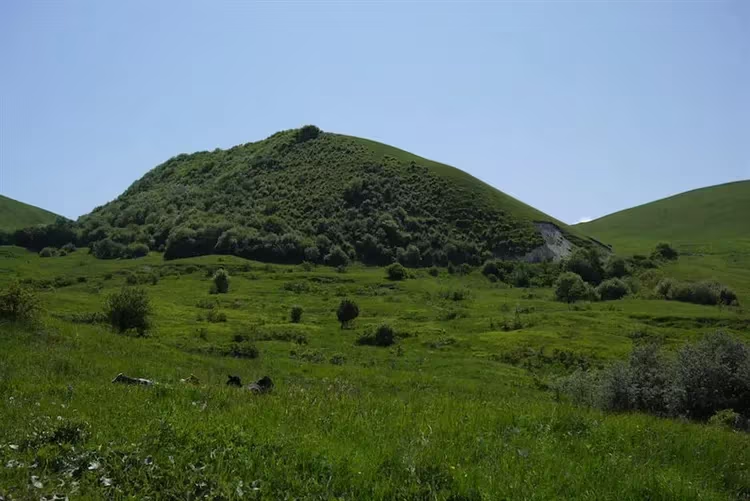
The elder sister of the Small Saddle mountain is called the Big Saddle mountain – the highest mountain peak of the Dzhinal mountain range at 1408 m from sea level. This name was given to the mountain peak due to its concave shape, which evokes associations with a saddle. The slopes of the mountain are covered with flowering herbs, where you can often meet grazing cows and horses, and high-flying eagles in the sky looking for prey. Several species of shrubs and trees surround small clearings with abundant vegetation.
From the height of Mount Big Saddle, from the south side, you can gaze at the landscapes of the Caucasian Mineral Waters with the majestic Mount Elbrus, wrapped in clouds on the horizon. Standing on the northern side of the peak in clear sunny weather, you can see the outlines of Pyatigorsk and the Beshtau and Mashuk mountains towering next to it. Those wishing to climb should take into account that it is colder and windier on the mountain than in the city, so you need to dress warmer.
Kislovodsky National Park
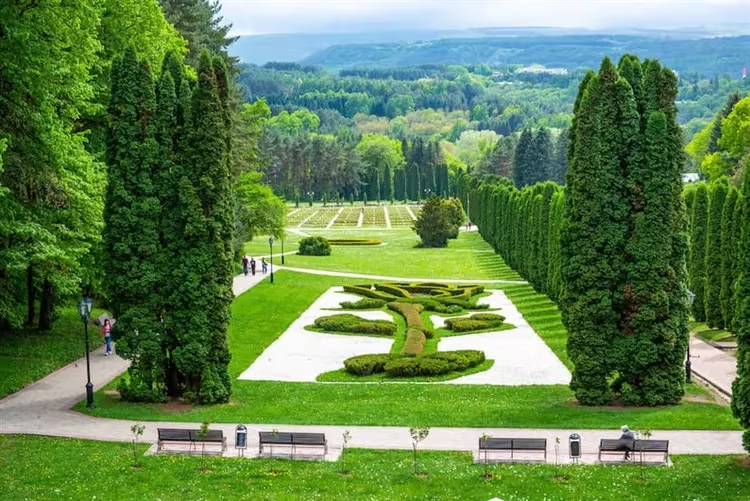
Acquaintance with the Kislovodsky National Park begins with the main entrance – a snow-white semicircular two-tiered colonnade. On the other side, the entrance to the National Park is a unique cascading staircase with columns and picturesque pools with mini-waterfalls on both sides. The territory of the park is divided into Lower, Middle and Upper parks.
The lower park will meet you with the “Lermontov platform” with a stone staircase and a sculptural composition, including a stele with a bas-relief of the poet. Then you will see a unique gazebo – “Glass Stream” and “Mirror Pond” next to it. Further, the construction of the Narzan Gallery, the work of fountains, the beauty of the flower clock and the Kissing Corner grotto will please the eye. After walking along the bridge “Lady's Caprice”, find yourself near the “Crystal Spring”. It remains to look at the monument to Pushkin and visit the Horseshoe Museum.
On the square of the Middle Park, the “Red Stones” surprise – the rocks of their red-brown sandstone with a sculpture of an eagle sitting on top, tormenting a snake. The main place in the middle park is occupied by the Valley of Roses, striking with iridescent beauty and intoxicating aroma. The “Temple of the Air”, the cascading staircase and the observation deck, which opens the panorama of the park with alleys and glades, the rocks “Grey Stones” are also interesting here.
The Upper Park is famous for the Red Sun mountain, where the cable car terminal station and the monument to Mikhail Lermontov are located. Near the monument there are unique Blue stones, passing between which they get to the Kosygin trail leading to a natural grotto with rock carvings. In the upper park, it is interesting to climb Mount Small Saddle, sit in the gazebo of the seven winds and visit the “Master of the Mountains”.
rose valley
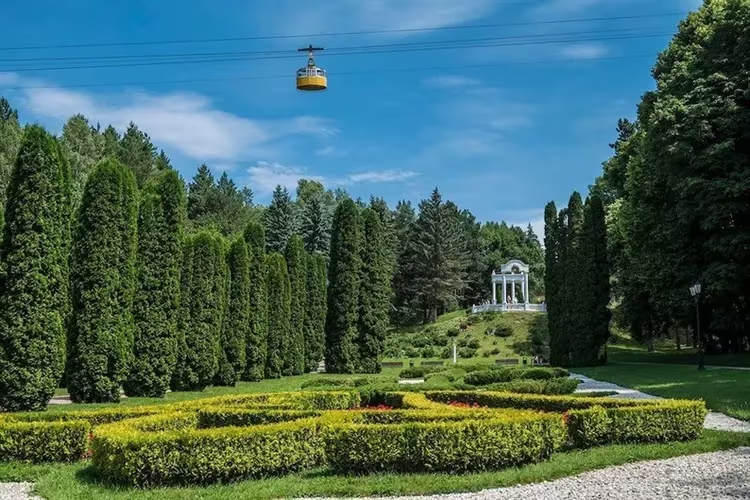
The Rose Valley is recognized as the most picturesque attraction of the resort park. Numerous tourists, spa guests and townspeople come to admire it. Resembling a flower carpet, it is especially beautiful during the mass flowering season of all 35 varieties of roses planted in different areas on an area of 2 hectares. The main place is given to the central rose garden, divided into dozens of square flower beds, alternating in a checkerboard pattern with green lawns.
The highlight of the valley was a flower bed in the form of a huge rose, formed by low decorative bushes against a snow-white background of granite chips. The rose garden looks beautiful in the form of a circle, called the “Sun” with the rays of footpaths emanating from it. After admiring the beauty of roses, it will be a pleasure to walk along them along the main park alley, bordered by two rows of thujas. In the depths of the alley there is a 15-meter stone crocodile – a sculpture chosen for selfies by tourists.
Mirror Pond and Glass Jet
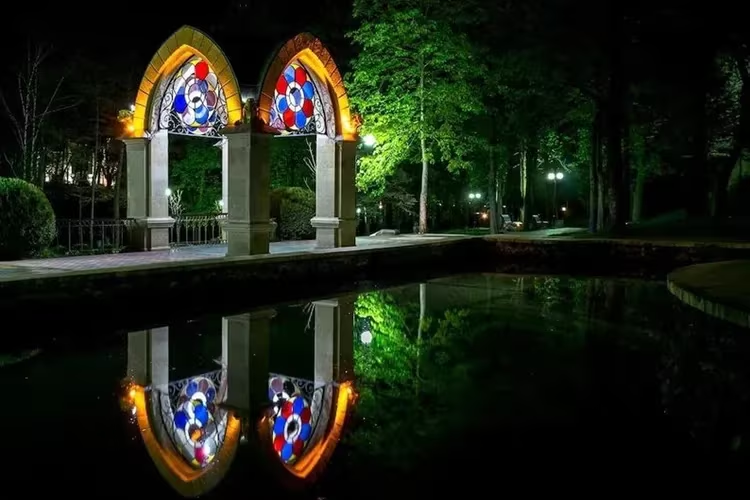
The lower park is adorned with two picturesque sights – the Glass Stream and the Mirror Pond, which make up an integral picturesque ensemble with a small pond with a mirror surface and a rotunda with a stylized waterfall. They harmoniously fit into the surrounding landscape of the old part of the park near the left bank of the Olkhovka River. The birth of the Mirror Pond took place in 1897, when a pool was cut out in the limestone surface of the shore and an original elegant gazebo was built next to it, illuminated in the evenings.
The pond is filled with crystal clear fresh water from a source that maintains the same temperature of 7 degrees all year round. The shore according to the parameters of the pond is lined with travertine stone. Two transparent jets flowing from the gazebo in cascades along a special tray, forming small man-made waterfalls, were called a glass jet. A beautiful main alley of the Lower Park with the name “Promenade” leads to the Mirror Pond.
Mount Red Sun
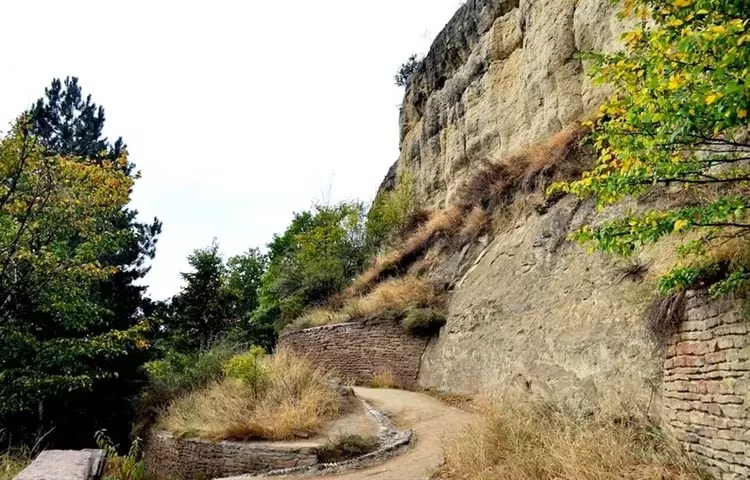
Red Sun Mountain is a natural landmark of the Upper Resort Park, rising 1042 m above sea level. You can get to its top by cable car or by two health paths starting from the bottom of the Narzan Gallery. The mountain captivates with a rocky platform, ending on the south and west sides with bizarre rocky ledges that look like fantastic monsters. Coming out of the cable car, you will see a gazebo-rotunda from which a stunning view of the entire Kislovodsk park opens.
The Red Sun cafe, notable for its semicircular entrance with columns and crowned with a dome, also serves as a decoration of the mountain. Here you can drink fragrant herbal tea, coffee and taste dishes of Caucasian cuisine. On the southern slope of the mountain, several caves will attract attention. From the Red Sun, hiking trails are laid upwards – to the mountains Small Saddle and Big Saddle and a trail diverging into two mountain forest serpentine ribbons to the lower park.
Monument to Lermontov M. Yu.
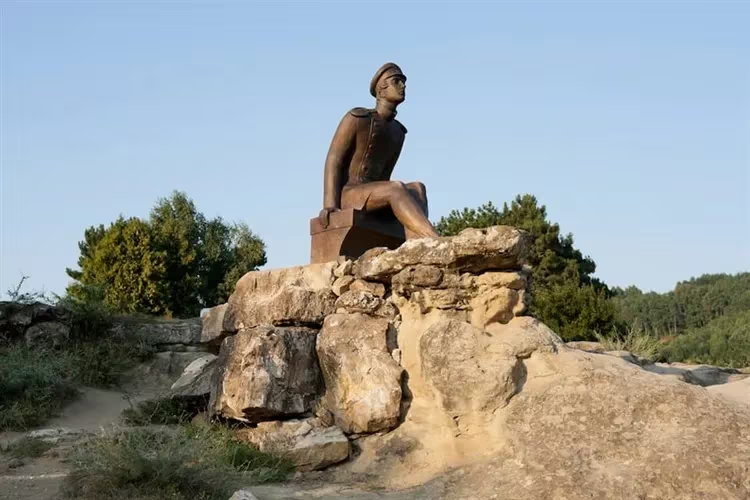
Before leaving the top of the Red Sun, tourists always come to the monument to Mikhail Lermontov, standing a little further from the cable car station. It was installed on an elevated platform of the mountain at the beginning of our century, but has already managed to fall in love with numerous tourists. A bronze poet in the uniform of an officer sits on a low pedestal set on a massive flat stone, looking thoughtfully into the distance. His gaze is directed to the south, where a picture of the majestic two-headed Elbrus appears beyond the horizon.
The size of the sculpture is 2.5 m, which is slightly larger than the natural size of the poet. Lermontov's knees are rubbed to a shine by tourists taking pictures while sitting on them. Before the monument finally registered on the top of the Red Sun, he visited the Lower Park near the Glass Lake. There Lermontov looked unnatural, and in 2017 he was returned to the top of the Red Sun, where the poet looks towards Elbrus, often mentioned in his poems.
blue stones
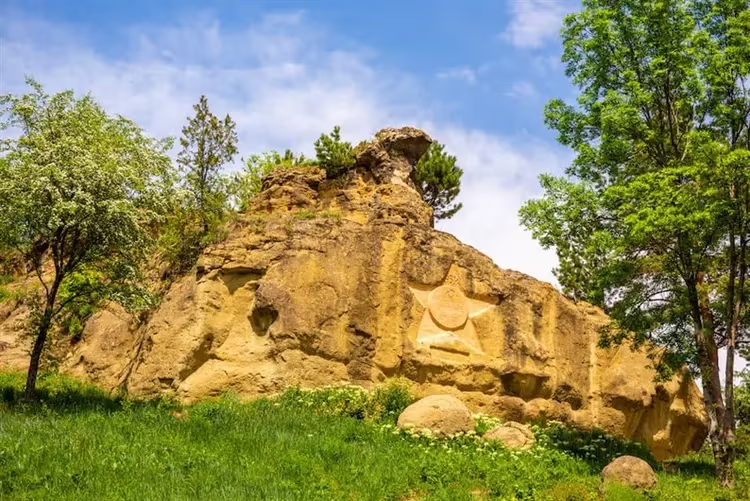
The blue stones were called sandstone cliffs located at an altitude of 1150 m, by analogy with the Red stones of the Lower Park. But if the color of Red stones is natural, then in reality stones of ordinary color look blue in gloomy light or when they are enveloped in haze. From the influence of wind and water, in addition to the unreal blue color, they acquired bizarre shapes. Having piled on each other, the boulders formed natural stone arches. Not far from the Blue Stones there is a gazebo from which a panorama of the entire park and resort town appears.
Climbing the Blue Stones, you can clearly see the Rebrovaya Balka and see a five-pointed star carved by the Austrian communists on a rock with an inscription in German: “To the heroes who fell in the February battle.” You can see this natural attraction by climbing along special paths from the entrance to the National Park to Mount Big Saddle or by climbing the cable car to the final stop “Olympic Complex”.
Air Temple
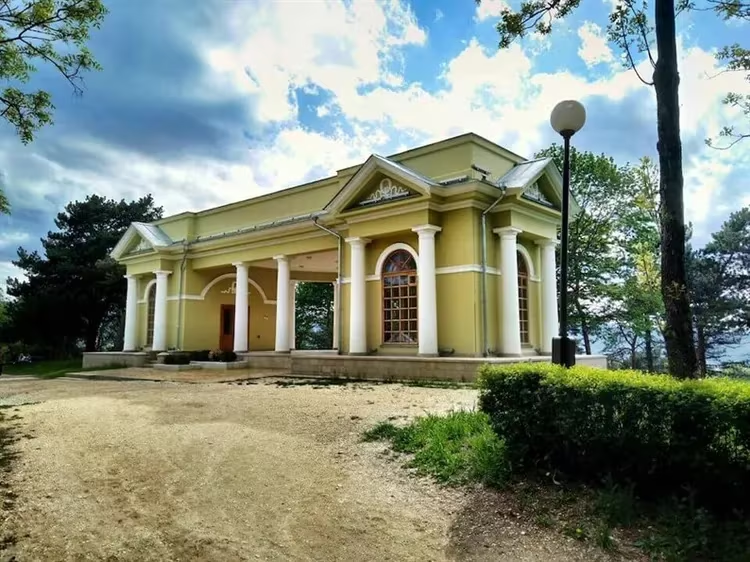
In addition to healing Kislovodsk springs, the air of the resort, filled with coniferous aromas, promotes health. A kind of monument to the unique air was erected here in 1914 on the Upper Park Square, calling it the Air Temple. Over time, the building fell into disrepair, so it was revived in our century. The harmonious architecture of the Air Temple conveys its airiness. It is created by a classic semi-rotunda with windows facing west. Six columns support a flat roof covering a semicircular platform.
It can be accessed via a wide front staircase. On both sides, rooms decorated with arched windows adjoin the main building. The decor of the facades with stucco molding from flower wreaths decorated with ribbons is interesting. Admire the ornamental marble floor of the Temple of Air, similar to an ancient temple. Like a continuation of the temple, there is a gazebo nearby, which, thanks to its special design, emits melodious sounds of the wind.
Manor A.I. Tvalchrelidze
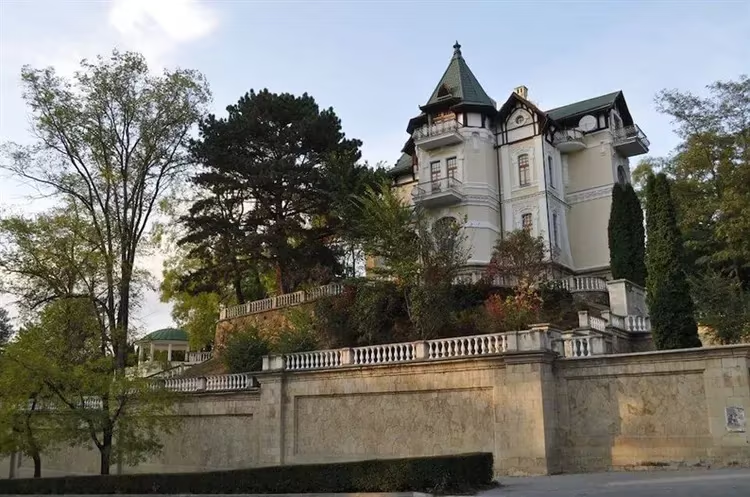
A beautiful yellow brick building with towers and skates on the roof, rising on top of a hill, is the most famous private villa in the city, built in 1905 by the townsman A.I. Tvalcheridze. For its similarity to the architecture of castles, the yellow sandstone mansion was nicknamed the “golden castle”. The estate is a three-story Art Nouveau villa with an asymmetric layout, located on a wide terrace with a balustrade and retaining walls.
The building connected several buildings of different shapes, distinguished by the individual shape of the roof, windows and different design of the facades. The original appearance of the complex is given by the abundance of skillfully decorated stairs, balconies, mezzanines and attics. Historians suggest that in 1918 the ballerina of the Mariinsky Theater Matilda Kshesinskaya, who left Petrograd, engulfed in revolutionary events, lived in the villa. In addition to her, the walls of the “golden castle” keep the memory of Princess Vyrubova, artist Nikolai Yaroshenko, singer Fyodor Chaliapin.
Chaliapin's dacha
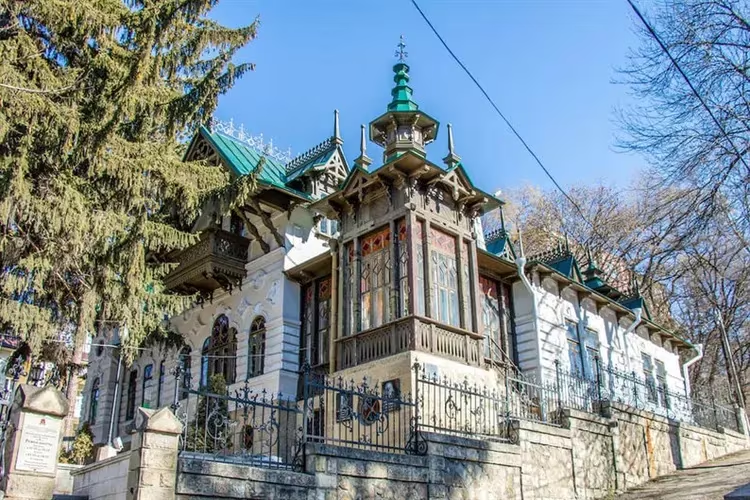
Chaliapin's dacha is a name given to the Art Nouveau mansion, located on a hill surrounded by pines and firs, dating back to 1903. It was filmed for the summer vacation of the family by the famous singer Fyodor Chaliapin. Built of white stone with a high plinth, the dacha is distinguished by colored stained-glass windows decorated with wood carvings and original turrets. When decorating the facades, tin decoration details and artistic stucco molding were also used. The balcony-veranda, from which a beautiful Kislovodsk landscape opens, is finished with wood.
The building, which is associated with a fairy-tale tower, has now become the house-museum “Dacha Chaliapin”. Going inside, you will see the wall paintings made by the Russian artist K. Korovin, the decoration of the living room ceiling with multi-colored stucco, the fireplace designed by N. Roerich and the furnishings of the rooms with antique furniture decorated with carvings. The museum preserves the personal belongings of the singer and his relatives, and the annual Chaliapin Seasons are held.
Church of Panteleimon the Healer
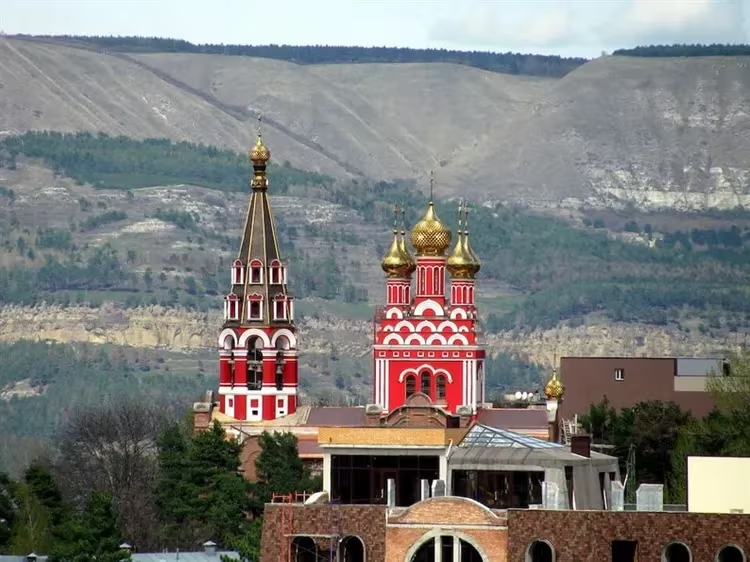
In the historical area of Rebrovaya Balka, on a hill, stands the Church of the Holy Great Martyr and Healer Panteleimon, recreated according to the drawings and photographs of the temple dating back to 1905, destroyed in 1965. Starting in 2002, the reconstruction of the church in the Old Russian style was based on old plans and photographs. Upon completion of construction, a 17-meter one-altar handsome temple of red brick with figured masonry and white trim on the facades grew. Eight domes of the church end with golden onions of various sizes, crowned with crosses.
The largest cupola rises above the central octagonal drum with windows. Along the perimeter, the side bulbs are girded with decorative kokoshniks, giving the temple an elegant look. The entrance on the western facade is beautifully decorated with a figured porch, and the side entrances are made in the form of arches. There are shrines in the temple – particles of the relics of the Holy Healer Panteleimon and an ancient icon of Saints Cosmas and Damian.
Dolphinarium
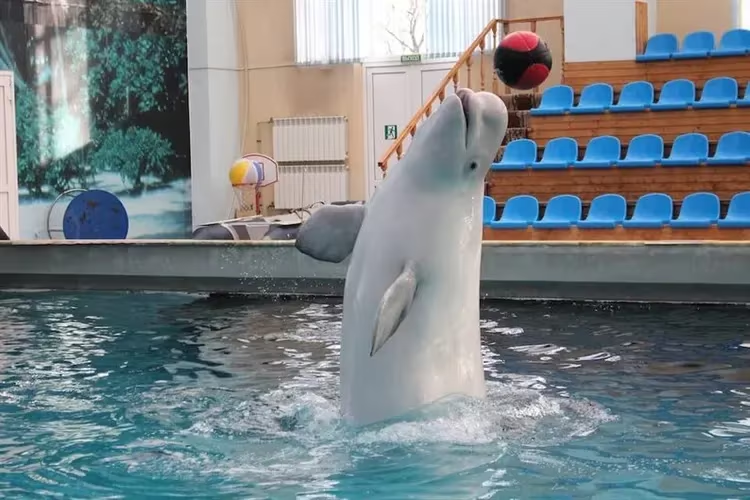
This is one of the most favorite vacation spots for citizens and holidaymakers. Its opening took place in 2008. Today, it demonstrates show programs at the highest artistic level with the participation of talented artists. You will certainly be surprised and enjoy the performances of the Black Sea bottlenose dolphins, sea lions and seals, walruses and sea lions. Beluga whales became the highlight of the program. The program with the participation of these cute and funny marine animals takes place both in the water and on the shore.
It is impossible to look without admiration at the amazing tricks of dolphins, amazing with their synchronized jumps, virtuoso ball juggling and painting, which, at the end of the performance, are put up for auction among the audience. Other maritime artists amaze with their artistic abilities to sing, dance, solve logical puzzles. After an unusual concert, you can take pictures with your favorite artists.
Museum of History and Local Lore “Fortress”
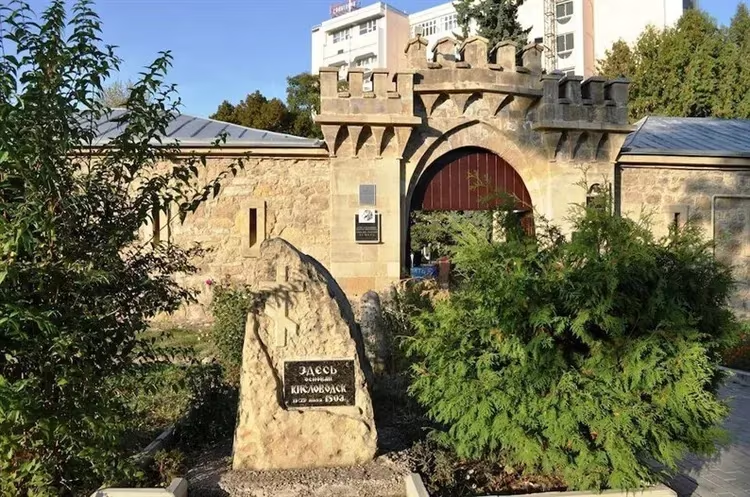
The Kislovodsk fortress was built from 1803 to the middle of the 19th century and has been preserved to the fullest extent in good condition. It was visited by the famous Russian poets Pushkin and Lermontov. The entrance to the fortress is represented by a beautiful gate with an arched opening, decorative machicolations and carved consoles on top. The fortress gates have become a symbol of the city and are depicted on its coat of arms. Near the entrance to the fortress, a massive stone sign with a sign informing that a city was founded on this place attracts attention.
In the fortress wall, built in the same style as the gate, multiple loopholes stand out. The powerful building of the round tower impresses, weapons workshops, barracks and an arsenal are also interesting, transferring in the imagination to the distant 19th century. The fortress houses a local history museum with archaeological, historical, ethnographic expositions, a collection of local porcelain and numerous thematic exhibitions.
Lermontovsky waterfall
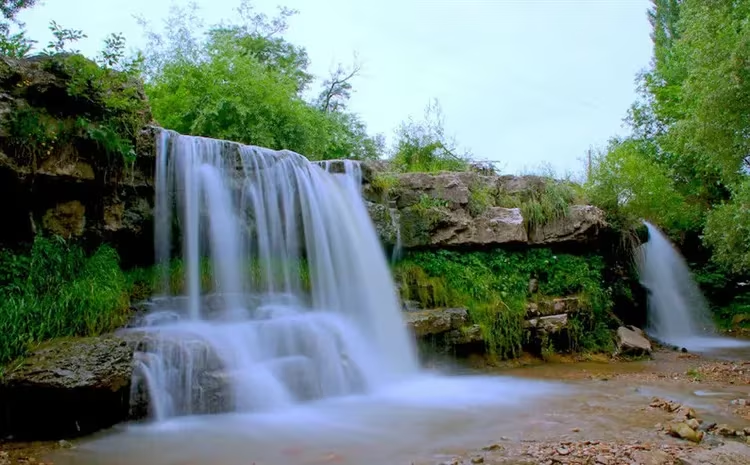
The southern outskirts, where the Olkhovka river flows, is notable for the picturesque Lermontov waterfall, the same place where “Pechorin watered his horse” in the novel “A Hero of Our Time” and mentioned in the story “Princess Mary”. According to legend and some testimonies of the poet's contemporaries, Lermontov liked to visit this place, admiring the water stream flowing down into the river from above. The waterfall, named after the poet, does not exceed 3 meters in height, but it looks very picturesque when, in free fall, its jets fly down from a flat platform, scattering fireworks of splashes shining in the sun.
If you want to admire a natural attraction, it is best to do this from a rocky platform or standing near a flowing stream of water. Near the Lermontov waterfall it is interesting to look into the domed caves – unique creations of nature. You can get to Lermontovsky Falls from the center along Prudnaya Street or by city bus.
singing fountain
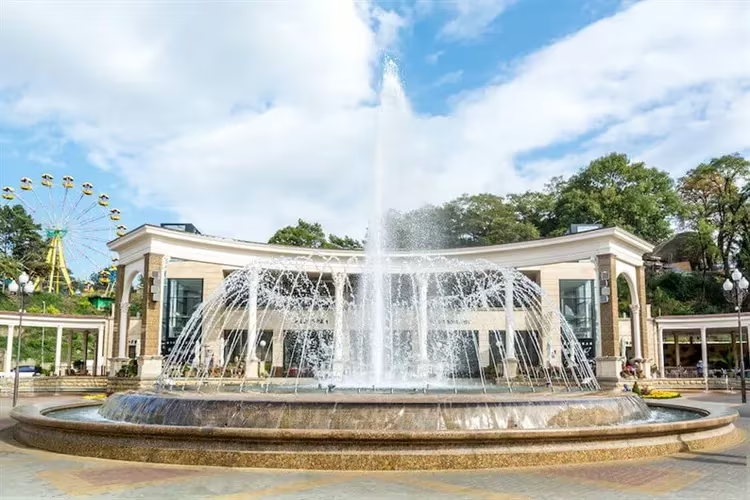
Opened in July 2016, delighting people with its enchanting beauty ever since. Being an inspired creation of Italian masters, the fountain harmoniously blended into the surrounding space of the city square. In the bowl of the fountain with a diameter of 21 m from the center, the jets fan out in a dance, rising to a height of up to 15 m. To the music, they change their direction, surprising with a variety of tempo and speed of the dance.
The fountain is indescribably charming when the city is covered with twilight. Its jets delight with fabulous illumination. The highlight of the program of the singing fountain was the flames escaping from the water, creating a mysterious atmosphere. Water jet dances are accompanied by romantic classics, instrumental melodies in various genres, compositions by popular foreign and domestic performers. The singing fountain is open daily from 11.00 to 00.00 in the warm season.
Mount Ring
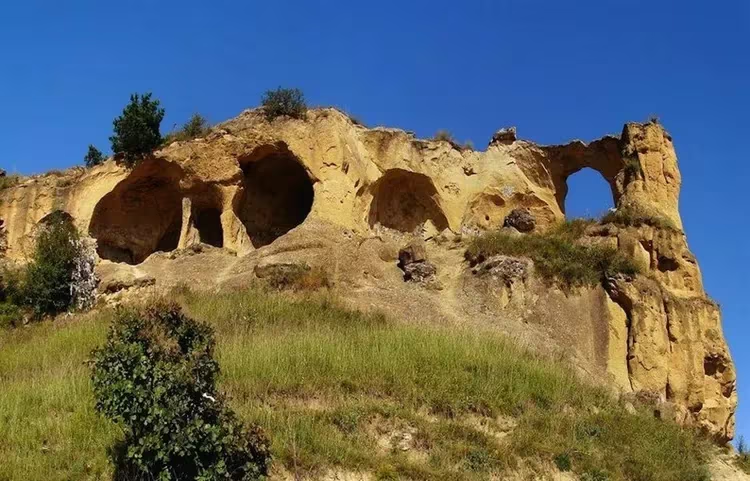
An amazing natural landmark – Mount Koltso at an altitude of 900 m was created over the centuries by nature itself: winds, rains, temperature changes. It was these skilled craftsmen who cut through an 8-meter arch in the Borgustan Range in the northern part of Kislovodsk, calling it Ring Mountain. The approach to it is possible only from one side, and the other three sides hang over the cliffs. Near the legendary Ring, several grottoes have formed in the rock, distinguished by bizarre shapes.
Such a miracle created by nature contributed to the fact that the locals considered Mount Koltso sacred and for centuries passed on legends about love and courage associated with it. Thanks to the legends, even today they believe that after passing through the mountain ring and drinking from a water source, you will gain strength of mind and body. Having entered the Ring, enjoy the amazing panorama of the mountain river Podkumok with the Alikonovka tributary, where the waters of the Medovye waterfalls rush and the mysterious Castle of deceit and love is visible.
St. Nicholas Cathedral
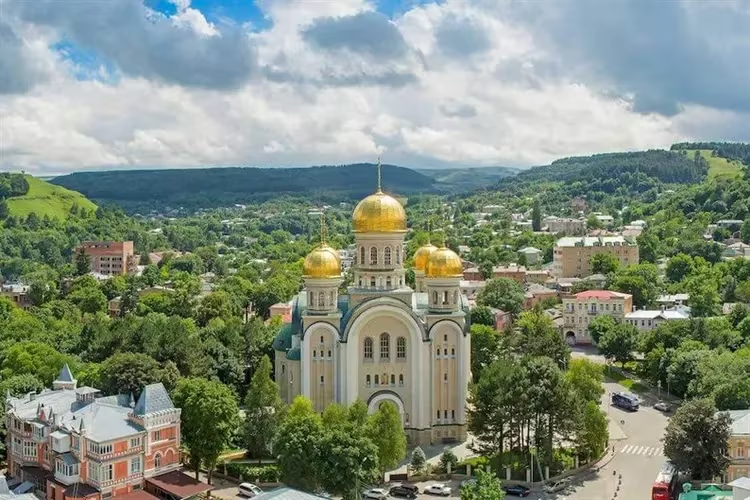
The construction of the main temple of the city – St. Nicholas Cathedral dates back to 1999. The basis of its architectural appearance was the former church, blown up in 1936. The cathedral building, 54 m high, was built in the shape of a cross with three side apses. It is crowned with 5 helmet-shaped domes on light drums. The temple, which can accommodate 3,500 parishioners, creates a feeling of lightness thanks to the arched shape of the facades, semi-circular windows and the horizontal arrangement of architectural details that visually direct the cathedral skyward.
In the interior, you admire the rich painting of the walls and ceilings, the floor lined with granite slabs. Golden openwork lattices became the decoration of the altar. The four-tiered Main Iconostasis impresses with gilded decorative details. The relic of St. Nicholas Cathedral is an old icon of St. Nicholas the Wonderworker, miraculously survived the destruction of the old church, in which the voices of the greatest Russian singers M. Sobinov and F. Chaliapin sounded in the old days.
Bas-relief Master of the mountains
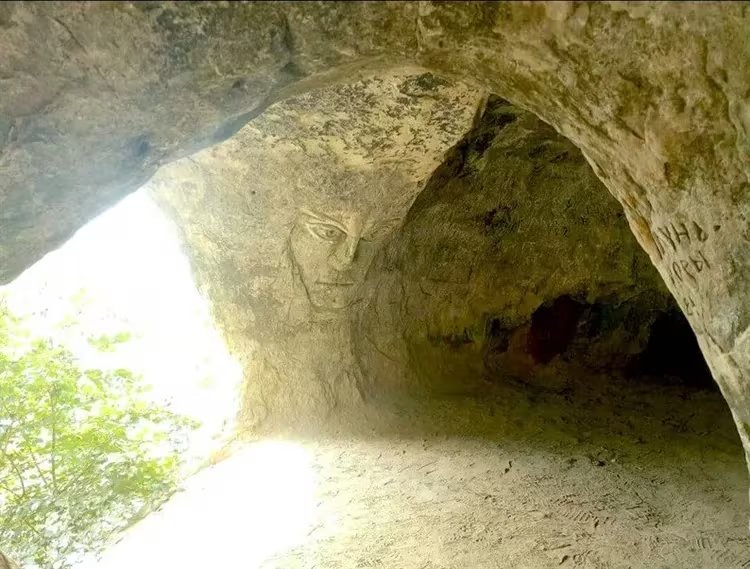
In the park near the monument to Lermontov on Mount Yasnoye Solnyshko, at a sharp turn there is a sign: “Tourist trail. To the natural grottoes and the owner of the mountains”. After walking about 100 m along a little-traveled path, you get to the mysterious grottoes and caves, where, according to legend, their guardian lives in the grotto of the Leaky Rocks – the mysterious and demonic Owner of the mountains. His bas-relief face is about 1.5 m protrudes from the rock wall, as if forbidding to go inside.
From moving around the grotto, it seems that from different angles the view of the Master of the Mountains changes, becoming either sad, or ominous, or attentive. It is known that a menacing looking face was carved into the rock in the 70s of the last century by an unknown amateur sculptor. For a long time, this rock figure was called the Demon, by analogy with Lermontov's lines “a sad demon, the spirit of exile flew over the sinful earth.” However, on the tourist stand in the Kurortny Park and all the signs, he is listed as the “Master of the Mountains.”
Museum of A.I. Solzhenitsyn
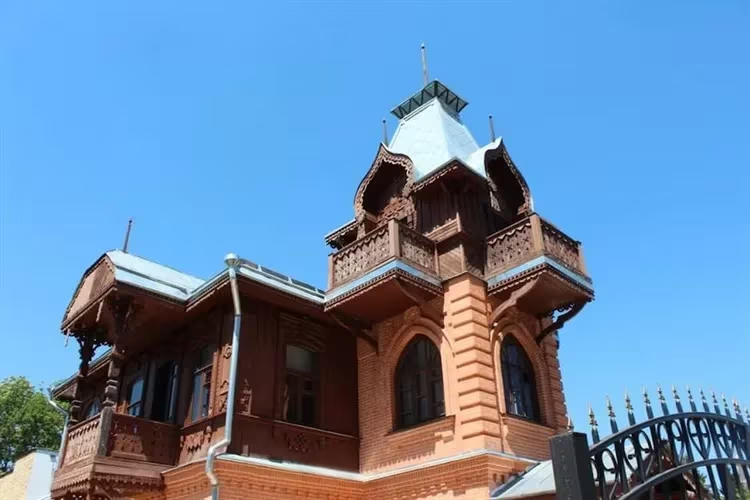
Heading towards the center from the railway station of Kislovodsk, it is impossible to pass without stopping near the country house of Maria Gorina, which stands out on the mountain slope. Resembling a small Orthodox church with a bell tower and an entrance to the east, the mansion captivates with its facade with wide window openings with lancet arches, the dome of the tower, decorated with openwork carvings. The mansion of Gorina, who was the writer's maternal aunt, is the only house in the city associated with the name of Solzhenitsyn. Here he spent his childhood and youth.
Since 2008, the mansion has become part of the State Literary Museum. The permanent exhibition contains documents about the writer's childhood and youth, the tragic events of the war, imprisonment and exile. Here are editions of his works that have received recognition in the world, videos of the writer reading his works, interviews and fragments of documentaries and films based on the works of Solzhenitsyn.
Monument to military doctors
Kislovodsk is the only city in the Caucasus that was awarded the Military Order of the Patriotic War, I degree. A considerable merit in this belongs to the physicians of the Kislovodsk hospitals, who returned more than 600 thousand soldiers of the Red Army to service. When the Nazis entered the city, the medical staff managed to evacuate some of the soldiers who were being treated, some were taken home, risking their lives, and the rest were placed on a mountain in the Semashko sanatorium, hoisting a white sheet with a red cross over it.
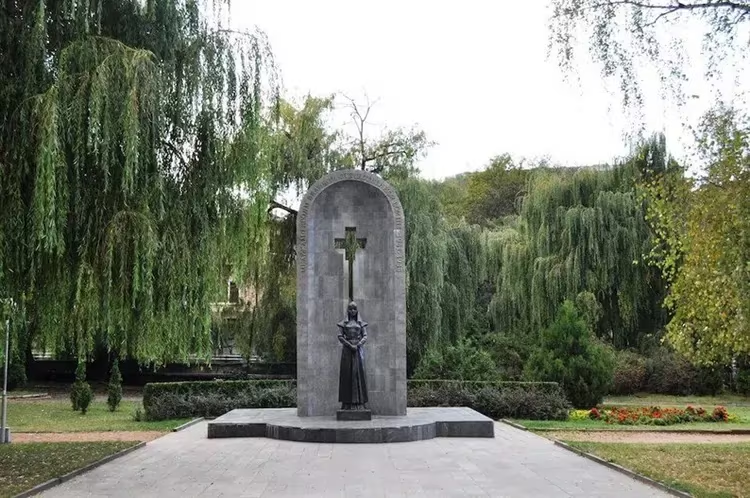
Their civil feat is immortalized by the only monument to military doctors in our country. It is installed on the central alley of Kurortny Boulevard, not far from the Main Narzan Baths. The monument stands on a low granite pedestal. It is a huge concrete arch with a cross on the wall, in front of which a fragile woman stands inside the arch, symbolizing the courage and dedication of the sisters of mercy who saved the lives of fighters during the war. Fresh flowers always lie in front of the monument.
Castle of deceit and love
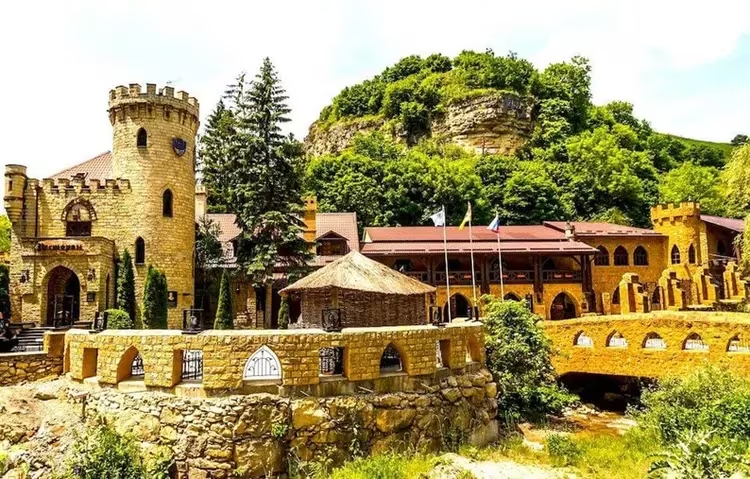
The castle of deceit and love is usually called a bizarre cliff in the spur of the Rocky Range on the western outskirts of Kislovodsk. The natural monument arose from the destruction of rock from dolomitic limestone under the influence of winds, showers and natural elements. The view of a ridge of unevenly high steep cliffs, formed at an altitude of 950 meters above sea level, resembles a dilapidated fortress wall with towers. If you come closer to the rocks, you can see images on their surface with the outlines of sad human faces.
According to local legend, they are attributed to two lovers who jumped down from a cliff because of the ban on the wedding by the girl's father. Not only bizarre rocks attract tourists here. The castle of deceit and love is also called the hotel and restaurant complex, stylized as an old castle. Amazing views of the Alikonovsky gorge open from its territory. On the way to the Castle of treachery and love, a narzan spring springs from a well 260 m deep.
honey waterfalls
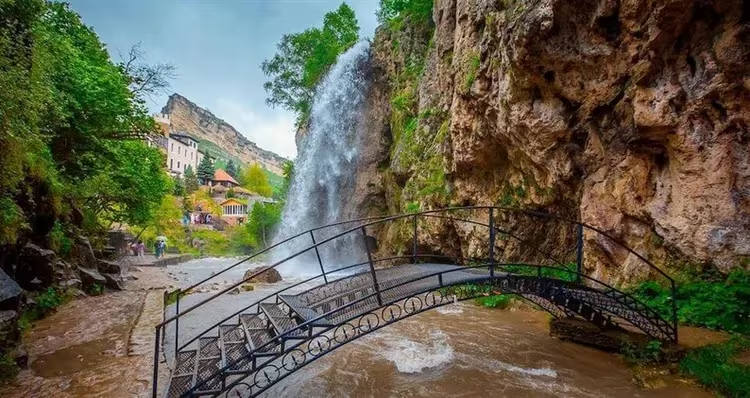
Not far from the Castle of Cunning there is another miracle of nature, hidden among the Caucasus Mountains – Honey Waterfalls. Overthrown from a height of 5 water cascades of various shapes amaze with the power and beauty of water streams sparkling under the rays of the sun. Each of the waterfalls has its own name. Pearl – the most picturesque and powerful. Falling only from a six-meter height of an openwork cascade, it gushes with spray to a height of 10-12m. The waterfall with the name “Girl's braids” intertwines with its jets behind a huge boulder.
The sound of the “Devil's Mill” waterfall, rushing from a cliff in a rushing stream, drowns out everything around with a strong volume at a great distance. The mighty Big Honey Falls, flying down from a height of 18 meters, is recognized as the main one in the family of honey waterfalls. And the landscape is completed by the Snake waterfall, flowing like a stream over a massive boulder. From the bridge near the Big Waterfall, you can enjoy a breathtaking view of the surrounding nature and the honey aromas of flowering herbs.
House of Colonel Mistrov
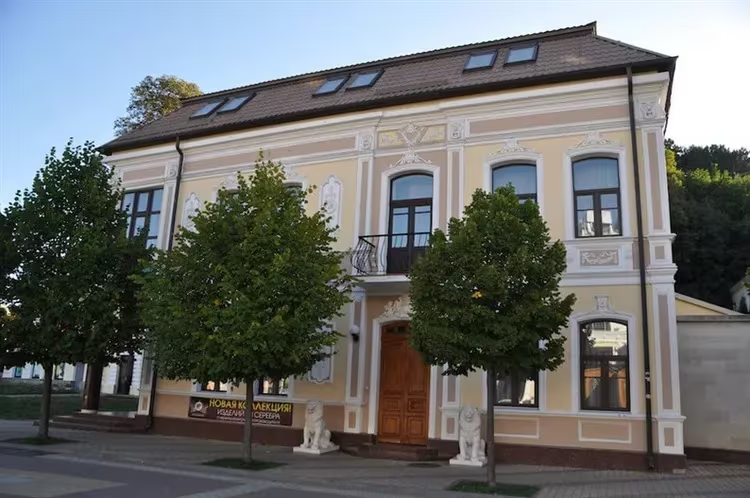
Where Kurortny Boulevard begins, a two-story palace-like building built in Baroque architecture is noteworthy. Its erection by Colonel Mistrov on an empty city site dates back to 1878. The house was built as a hotel with a gallery column for 12 furnished rooms for those who came for treatment with mineral waters. The house owner, who made changes to the architecture of the building, was the surgeon Pavlov-Silvansky, who transformed the column gallery into rooms and opened a private hospital in the house. During the years of Soviet power, the house served as a communal apartment.
In our time, it was rebuilt, partially preserving the Baroque style. Its cream-coloured façade with white stucco decoration is a constant eye-catcher. Above the entrance to the building there is a small elegant balcony, and two sculptural lions sit like guards near the doors. Today, a jewelry store is located in the Mistrov house, which you can enter and inspect it from the inside.
October Baths
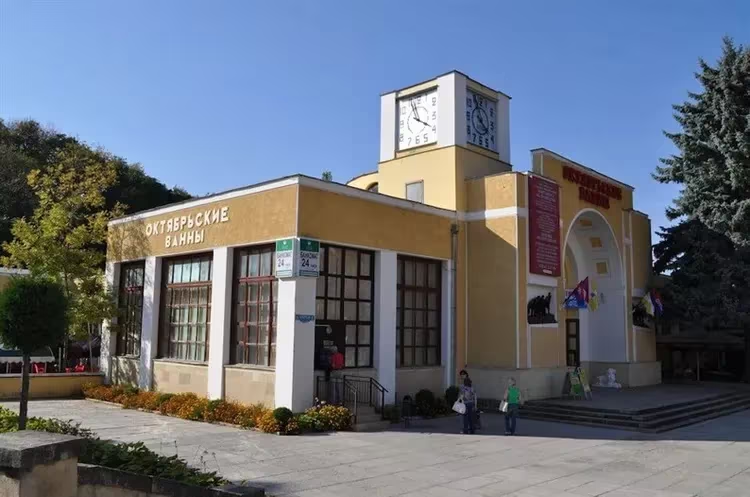
October baths are called the balneological clinic – one of the most authoritative in the resort. It was erected in the historical heart of the resort city in the 20s of the last century on Kurortny Boulevard. The building of the October Baths is surrounded by a bouquet of sights – the Narzan Gallery, the Main Narzan Baths, the Colonnade. Very close to it you can walk to the entrance to the famous National Park.
In terms of architecture, the building in the style of constructivism, built for the 10th anniversary of the October Revolution, looks like a contrast among the ancient buildings surrounding it. Several cubic fragments are combined in its design, there are no architectural excesses and decor. The only architectural decoration was the arch of the central entrance, which in our time was decorated with high reliefs depicting a string of people walking one after another. Above the main building, a massive cubic clock attracts attention.