
Alkhanay National Park – history, photo, description, map
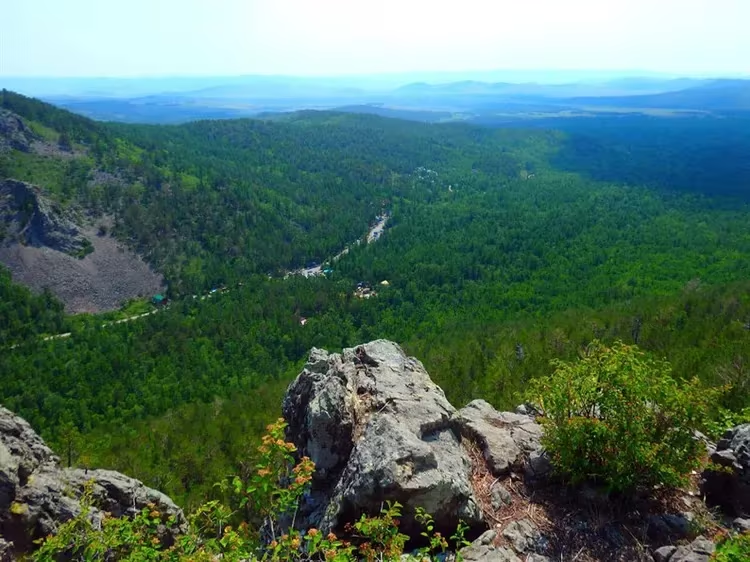
Many millions of years formed the life of our planet. Mountains, oceans, giant waterfalls, endless underground kingdoms of caves, fire-breathing volcanoes appeared. They, like eternal guards, watch the changing generations of people who seek to penetrate into their eternal secrets. Among the wild untouched nature there are many unusual places reflected in legends, songs, religious rites, fairy tales. They are studied, protected, creating wildlife sanctuaries, buffer zones. One of them is called Alkhanay National Park. It is located in the Trans-Baikal Territory, not far from the city of Chita. Where the sacred mountain Alkhanai silently rises, keeping the system of religious monuments of Buddhism.
Story
The park was organized on an area of about 200 (the protected zone occupies 105 hectares) in 1999 and is the youngest in Russia. In the ancient attractive region of Transbaikalia, known for its amazing landscape, a zone has been created that allows preserving the natural heritage for many generations. Here, along with natural attractions, there are outstanding spiritual wealth of Christian, Buddhist shrines (it is considered the fifth Shrine of Northern Buddhism). Several tourist routes (stone paths) have been laid through the park, allowing you to see 20 religious monuments, decorated in 1891. The complex consists of 53 stone buildings (obo or munkhan meaning chapel and baypurs).
Stone structures are used for ritual bonfires, the Khural rite. Since ancient times, the population believes in the magical possibilities of the zone of power of the mountain range with healing springs, complex stone figures. The flow of pilgrims to energy places is increasing every year. Their walk along the stone paths is compared with the spiritual development of mankind, its physical purification.
The number of colored ribbons, gifts left by travelers according to local customs, flutters like a multi-colored carpet in a sacred place. It is noteworthy that in 1991 Alkhanai was attended by the head of the Buddhist religion Dalai Lama XIV Danzan Zhamso and consecrated this place. In honor of the memorable event, a symbolic monument was erected – a stupa.
Many areas of the park are open to the public. The scientific organization of Aginsky University operates on its territory. It has an interesting office with procedures used by Tibetan medicine. Ancient massage sessions, recommendations of medicines from local plants, a pulse method for determining diseases. All of them are available.
Geography
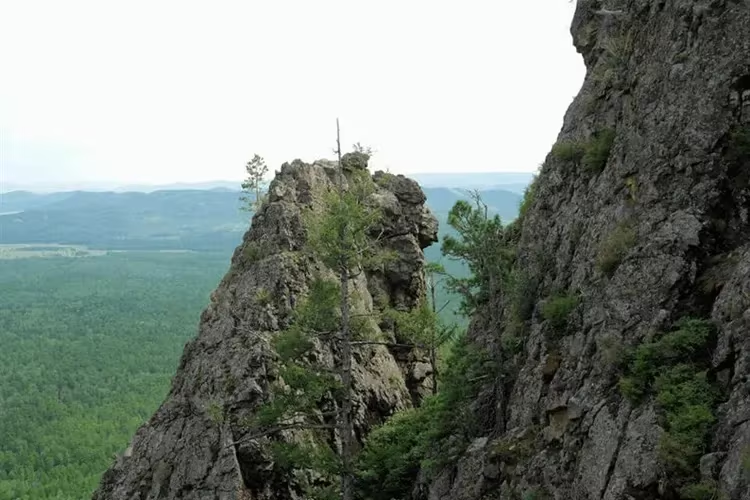
The borders are laid along the Daursky and Mogoytuysky mountain formations along the Ilya River. The center of the park is Mount Alkhanay or an ancient type of paleovolcanary. During a powerful explosion of the top of the volcano, a caldera was formed, the remnants of mountain rocks, weathered lava flows, tuff deposits, mountain terraces, deep faults, volcanic lakes. Scientists attribute the age of the peculiar deposits of the volcano to the late Jurassic period.
Of these, nature has created numerous geological, tectonic, geomorphological types of monuments. Around the volcanic zone, a riverbed of the Early Jurassic time (referring to the period of the existence of volcano lavas before their outpouring), a system of Ilinsky lakes, and mud volcanoes with minicones were found. 37 streams of various sizes flow through the park. The main lakes are Alkhanayskoe, Balzino, Krasnoyarovo. Imprints of their inhabitants, Palaeolynceus conchostracas, have been found in ash deposits.
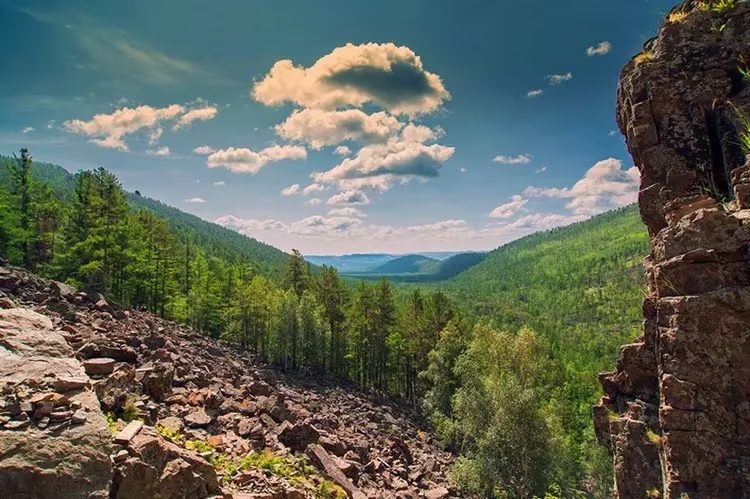
The main part of the park is occupied by ingimbrites or tuffs of a strange shape, formed at the last moment of the volcano's action. The ecosystem of Alkhanay National Park includes steppes, forests, mountains, taiga, rivers and waterfalls (kurums). The combination of the natural wealth of the vast steppes of Dauria, the boreal forests of Eurasia create a special atmospheric zone with a variety of biological species of flora and fauna.
Fauna
The peculiarity of the geographical position of the park is the appearance of conditions for the life of different species of animals. Dense forests, steppes, reservoirs, climate allow representatives of European, Far Eastern, Manchurian species to live and breed. 120 types of vertebrates, 4 classes of amphibians, 30 mammals, 4 reptiles, 95 birds are registered in the protected area. 160 species of insects, 17 fish, 2 amphibians, 4 reptiles have been described. 18 types of fish frolic in lakes and rivers.
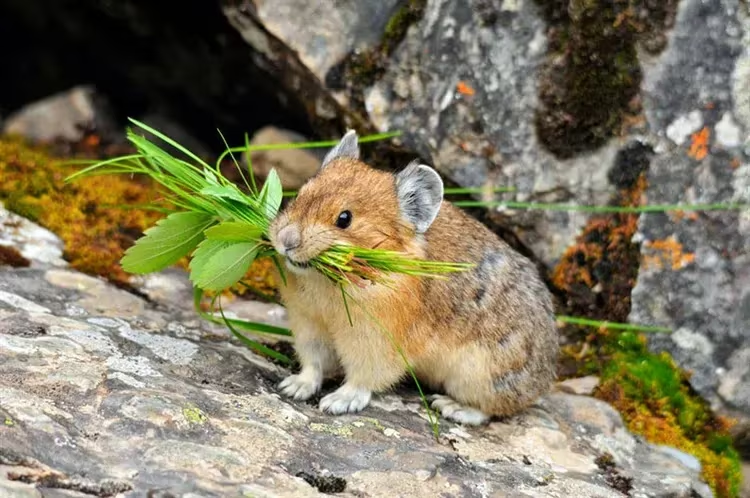
Taimen, grayling, lenok swim among them. Brown bears, musk deer, and roe deer walk through the forests and mountains. Moose, red deer, wolves, foxes, ermines. The living space next to the placers of stones was mastered by the Altai pika from the order of lagomorphs. Its specific whistle is heard next to the tourist routes along the stone paths. The life and habits of all kinds of animals are constantly studied by the park's specialists.
Flora
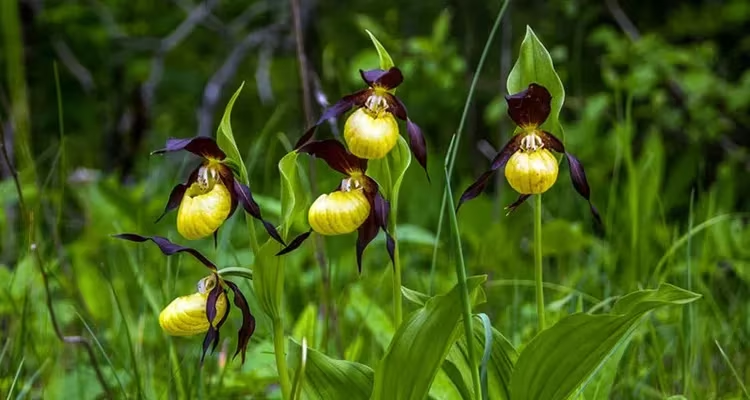
The territory is covered with deciduous and mixed forests. They are pine, cedar, birch, oak groves. A frequent neighbor of thickets are areas of kurums (placers of stones). Plantations of accompanying plants grow next to them: Manchurian elderberry, Siberian barberry and mountain ash. Dense meadows of Altai onion, large celandine, fragrant shield. 960 plant species were found throughout the area. Among them are ferns, lycopsids. Covered and gymnosperm types. About 20 species are included in the Red Book lists and are classified as protected plants.
Landscape diversity has created conditions for the growth of 130 types of mosses. Almost 180 plant species have been used by traditional healers for many centuries. These are Rhodiola rosea, Baikal skullcap, Chinese lofant, compact rhubarb, astragalus. Many plants are depicted in the paintings of famous artists (for example, the Lady's Slipper). The sight of a majestic fern fills the surrounding space with an unusual aroma of freshness and reminds of the times it has preserved since the period of the first plants that appeared on our planet.
What to see
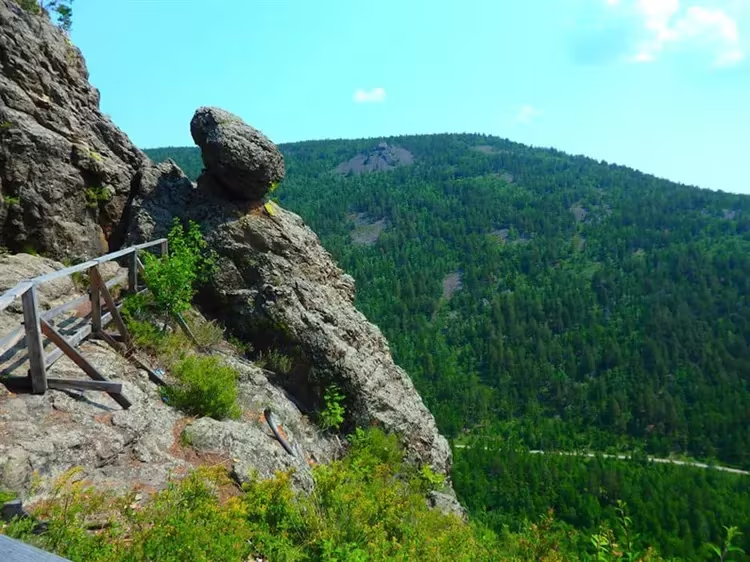
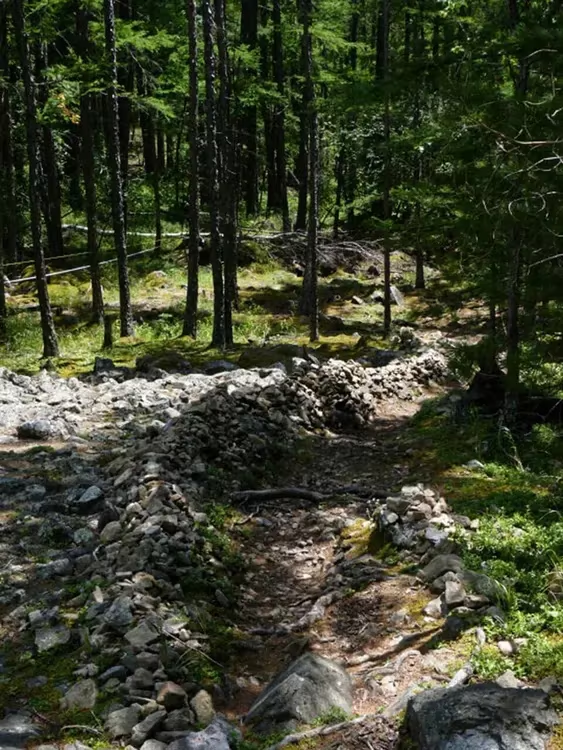
A tourist trip along the path leading to the top of the sacred mountain makes it possible to see the beauty of an extraordinary natural landscape, listen to the murmur of water in healing springs, and touch the secrets of ancient Buddhism. The first question arises immediately when you see a stone wall running parallel to the path. What is it, who built it? The answer lies in the ritual actions of pilgrims walking with the prayer “Om mani padme hum” and lifting a stone that interferes with movement to facilitate the path for subsequent people.
Near the sights created by nature in the form of stone figures of a mysterious shape, Buddhist stupas are equipped, harmoniously combined with natural phenomena. The main sights are the stone wall with the Tibetan text carved on the rocks. Dorje Pagmyn Sume (Temple of the Diamond Queen – wife of the ruler of the mountain), “Sinners' Gap”, Mother's Womb (Ehyn Umai). Nara Khajad (Heavenly Musician), Uuden Sume. A special place is the top of the mountain, where any traveler aspires to. Especially during the annual rite goroo.
Mount Alkhanay
The mysterious alien from the Jurassic period resembles a fabulous ship lost in the millennia. The mountain is the highest point of the park and is a historical heritage of a rare geological phenomenon. Its top ends with a stone platform in the form of a circle of almost regular shape, lined with small fragments of rocks (with a diameter of about 34 m). A ritual (for the goroo rite) path runs along the circumference, and there is a triangulation sign of the state. The ancient streams of the rivers Ilya and Daldurga frame the mountain. There are many legends and myths associated with the cult shrine of Buddhists.
One of them is called “How the gods of the mountain did.” It seems that the peak supports the sky, and the gods calmly descend. The sacred place served as the historical basis of the cult in the religion of the local Buryats. The Dalai Lama himself used to pray on this mountain. Interestingly, the strict requirement to follow the rules of the suburgan (erected in honor of the lama in the surrounding steppes) drove the shamans with their rituals from the holy mountain forever. When visiting the mountain, it is suggested to visit this stupa outside the village of Tsugol. It has small drums with mantras, amazing sound.
Temple of the Greater Good
At the foot of the famous mountain is the temple of the Great Good. This is a mandatory item of any excursion program. Inside the temple there is a natural grotto with a crevice. Healing water oozes from it. Its medicinal properties have been known since ancient times and were used by local residents during illnesses. Pure, crystal water from the arshan (source) has no smell, taste, belongs to the hydro, carbonate, calcium type with a high content of useful microelements. The percentage of iodine, silver, selenium, fluorine is many times higher than the average statistical values in the surrounding water resources of Transbaikalia.
The bathing places of each spring are equipped with gutters, hollowed out from the trunks of young trees. Believers drink water and always leave gifts in the form of grain, coins. In the temple, it is forbidden to make offerings of sweets, sweets, milk, and other products. It must be remembered that further ascent of the mountain after the Temple of the Great Good cannot be done with pets, alcohol, cigarettes. It is forbidden to move stones, tie shreds of fabric (believers decorate the neighborhood with them according to well-known rites). Incense and prayers should be staples anywhere on the sacred grounds of the park.
Sandham Rock
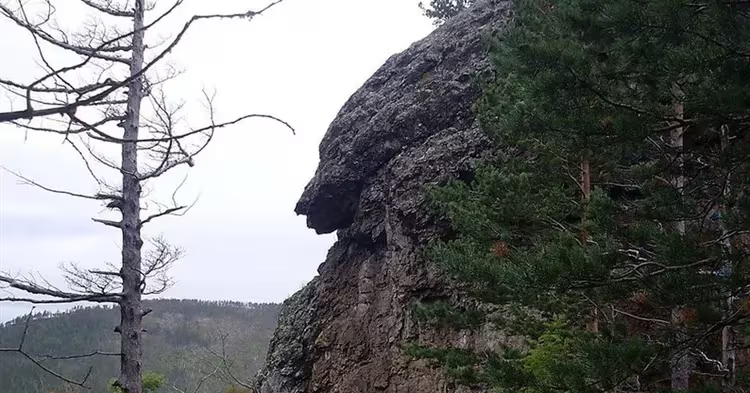
Two kilometers of ascent separate the temple from the rock of Sendema. The heavenly fairy of wisdom or the image of a lion-faced dakini froze in a stone rock statue. The strongest protector of believers, followers of the teachings of the Buddha, endows pilgrims with magical powers while walking around her. Good wins, tranquility triumphs, peace on earth. In our aggressive times, this is needed more than ever. The keeper of the feminine helps in the upbringing of children, their acquisition of knowledge of science.
Many customs and ceremonies (according to local Khori – Buryats) performed anywhere in the park are closely connected with the magical power of Olkhon Island on Baikal. It is believed that they have common elements of culture and until now the sacrifices go directly to the owner of the island. Like any other remnant, the rock grew from the volcanic remains of rocks with white patches against the background of dark volcanic stone. Thickets of meadowsweet, raspberries, elderberries grow nearby, ancient kurums are scattered, covered with mosses and lichens.
Rock Temple Gate
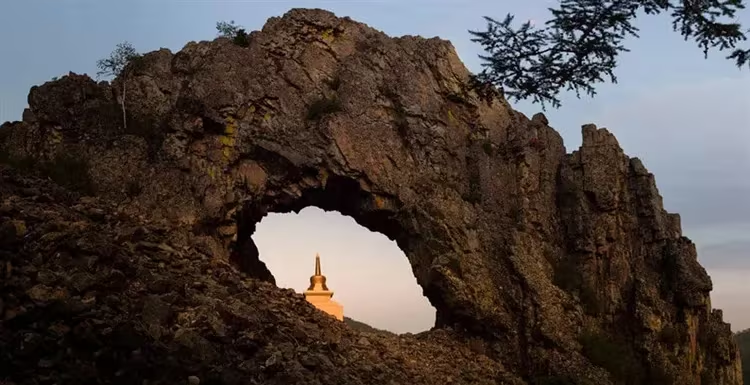
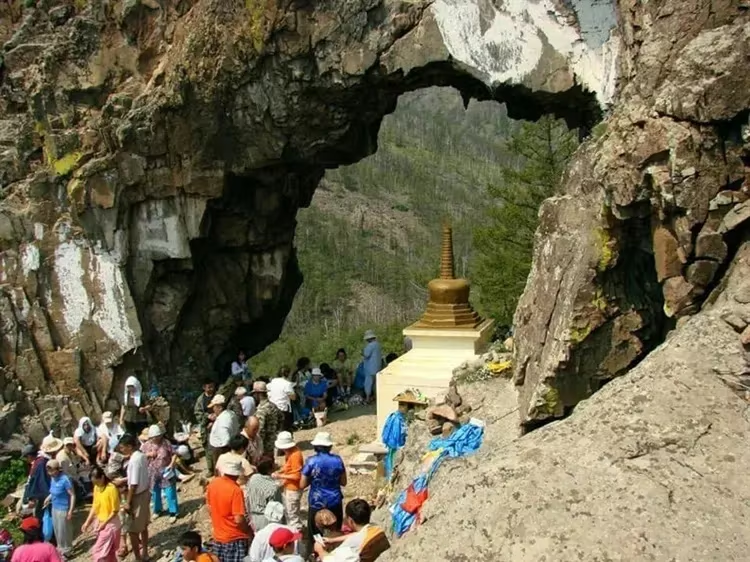
This is a visiting card or the main attraction of the park. The gate to the divine world of Demchog, formed by heterogeneous weathering forces, connects the world with the legendary Shambhala, forming an energy channel. There is a legend about the creation of the Gate by the magical powers of shamans expelled in ancient times (their cemetery can be visited during a trip to the park). The cult place before the Buddhist period is located at an altitude of 1100 m. A narrow stone path leads to it. The remnant has been preserved in the form of two rocky spurs, between which an arch was formed.
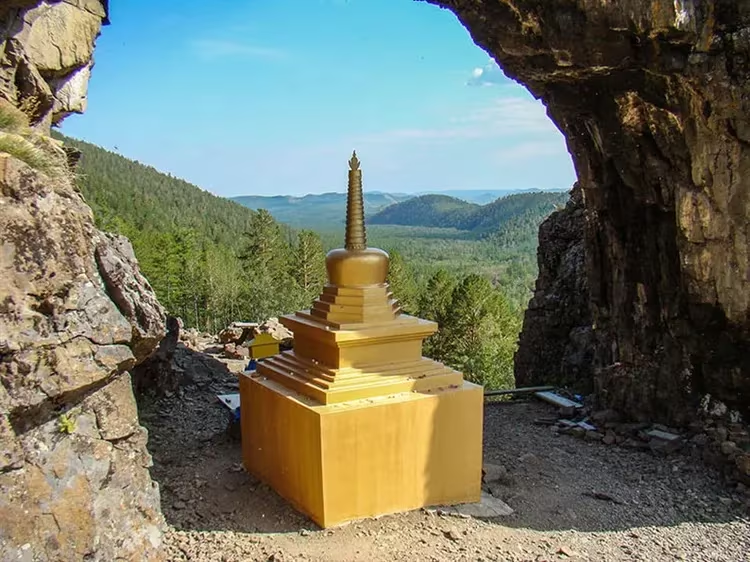
It has an inner radius of about 6 m, an overhanging cornice about 10 m high. But the Tibetan letter “A” can be seen at the edge of the vault. On the rocky ridge there are three groups of drawings made in red and yellow ocher. They depict stylized animals, human figures, crosses, hieroglyphs dating back to the 1st millennium BC. The spur of the southern side sags down, the northern one stretches to the top of the mountain at a distance of about 15 m. A small stupa (suburgan) was built inside.
It was destroyed in 1930 and completely rebuilt in 1956. Around the stupa, pilgrims make a triple detour, read prayers, perform mantras. By these actions, they symbolize the entrance to the world of the deity Dimching. The Buryats believe that passing through the Gate helps to cure cancer and other diseases. Every year on June 29, a Sogshid prayer service dedicated to the deities, the owner of Alkhanai Dimching, sounds at the Temple. The entrance to the temple is guarded by a guard. A little further is the rock Zaguurdi (Intermediate world). The soul of the deceased stays here for 49 days before his rebirth.
Dorji-Pagman
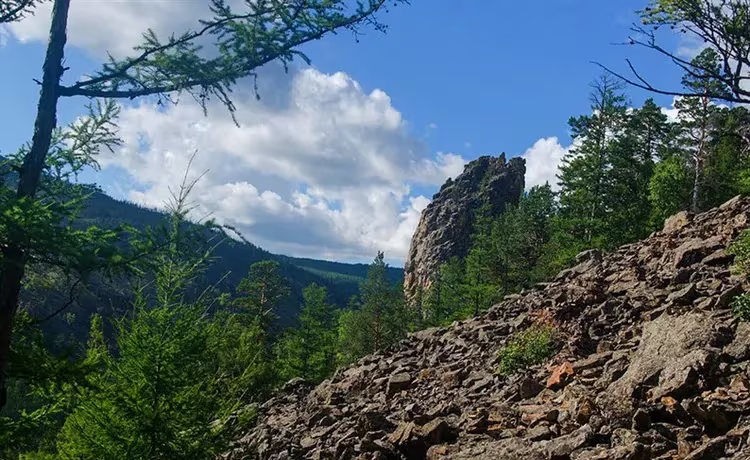
“Diamond princess, diamond wife” means the word “dorji” or “vajra”. A large remnant is located at a distance of about 200 m from the Gate Temple. The height of the rock is about 12 m, the dimensions of the base are over 10 m. The path to it runs along the slope along the river Ubzhogoe. On the southern side of the rock, near its base, nature created a natural niche that became the zone of the Dorzhi Pagmyn altar.
Near the rock “Diamond Princess” travelers get extraordinary relief from mental suffering, gloomy thoughts. As well as near the rock Ekhyn Umai (Mother's Womb), the ritual of the pre-Buddhist cult of Mother Earth is held here. Women ask for help in having children, restoring health. Very often it is necessary to bring as a gift a pebble taken in a nearby cave. Finding it now is very difficult.
Alkhanai gates
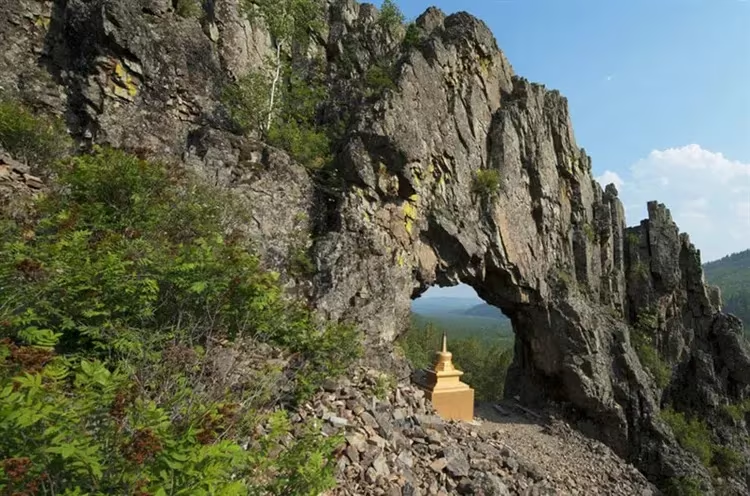
The massive rock occupies an area of about 2 hectares on the spurs of the Mogoytuysky ridge on the left side of the Ubzhogoe valley. There are two sharp ledges on the remnant. An arch formed between them. This is an object of religious rites of local residents. The breath of an ancient volcano, the magical actions of shamans, the preserved rock paintings of ancient people create a special atmosphere of entering the mysterious world of Mount Alkhanai.
Looking closely at the drawings, one can also see old Mongolian inscriptions that replaced the signs of shamans. The history of sacred places is forever frozen in natural creation. The erected stupa and chapel make it possible to carry out existing rituals and maintain ancient customs. This gives rise to an important spiritual, educational, aesthetic, tourist value of the element included in the complex of monuments of the National Park.
Where is it located and how to get there
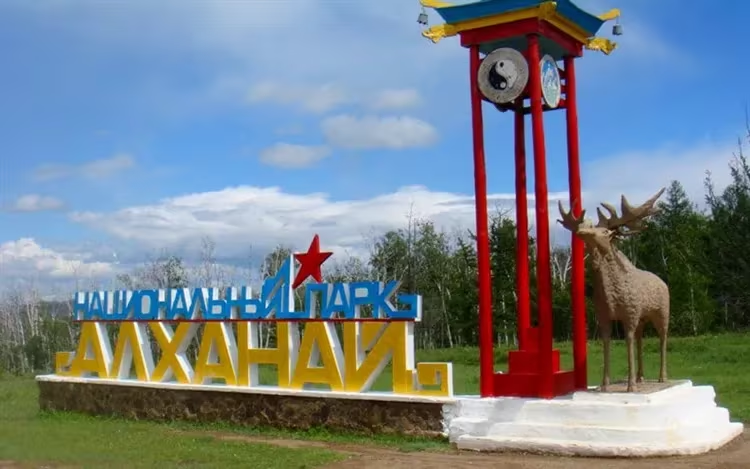
It is located 250 km from the city of Chita in the Trans-Baikal Territory. When traveling by car, you need to choose the A166 road, drive to the Darasun village, turn onto the A187 highway and move towards the village of Daldurga. Then turn to the northwest and get to the settlement of Alkhanai. There are no road signs, which requires special attention from drivers. The entrance to the park is marked 10 km from Alkhanai.
Not far from the checkpoint is a stupa dedicated to the Dalai Lama. At the checkpoint, you need to leave full information about yourself, pay an environmental fee for getting to know the recreational area. The total distance from the city is about 220 km and requires almost 4 hours of driving. The administration of the park is located in the village of Daldurga at st. Gagarin, 47. It is proposed to get to the city of Chita by plane.
Where to stay
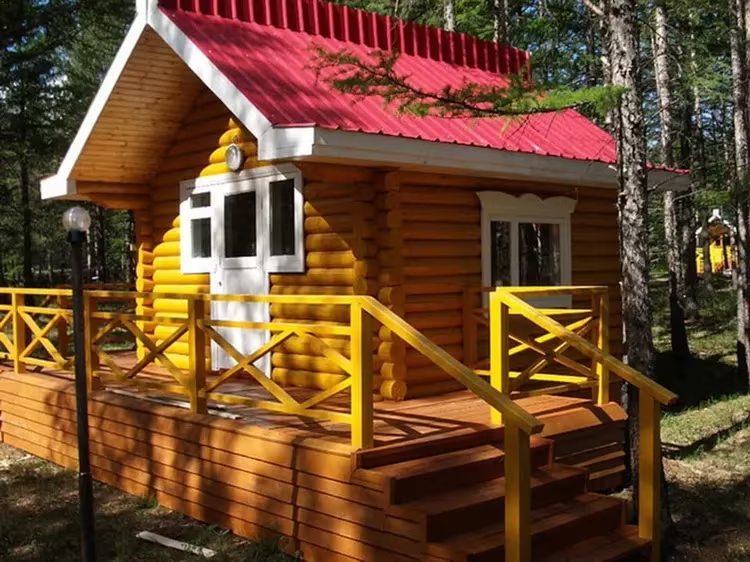
To get acquainted with the amazing place of Transbaikalia, it is proposed to spend several days here. The place of residence can be campsites, cottages, tourist camps. For tourists in the protected area, two tourist bases are provided (“Dali”, “Alkhana-tour”). There are small summer campsites here. They have beds with linens, a table, a heater. On the street there is a toilet, a washstand, a place for a fire.
In the camping town there are 30 quadruple living areas, a dining room, a sauna. Nearby are sanitary zones, places for picnics, car parking. The structure of the cottage town includes 7 two-storey houses with 2, 3, 4 bed rooms. It is proposed to take advantage of accommodation in 30 yurts for 80 people, equipped in the national style. Interesting excursions are recommended for travel under the guidance of experienced guides of the National Park. For three days of work they ask to pay about 3,000 rubles.
Best time to travel
In summer, when the surroundings of the mountains are decorated with lush vegetation, healing streams themselves invite you to take a dip, take a bath, fill the body with new strength, is the best time to travel to the National Park. At the same time, it is useful to know that in the first half of September, nature opens a special period of “Riha”. The strength of the healing waters of Alankhai becomes maximum. Many tend to come here at this time.
Of course, even now on the road it is necessary to take insect repellents, containers for drinking water, a first aid kit with medicines for first aid (there is a medical staff at the base). This will help to have a safe rest: with swimming in the arshan of Sukhoi-Ubzhogoy (the main mineral spring). By visiting the Intermediate World in the rock and determining the degree of one's sinfulness (if a person climbs through a natural crack or purgatory, then there are no sins). Participation in the Buddhist rite oboo on top of the sacred mountain.