
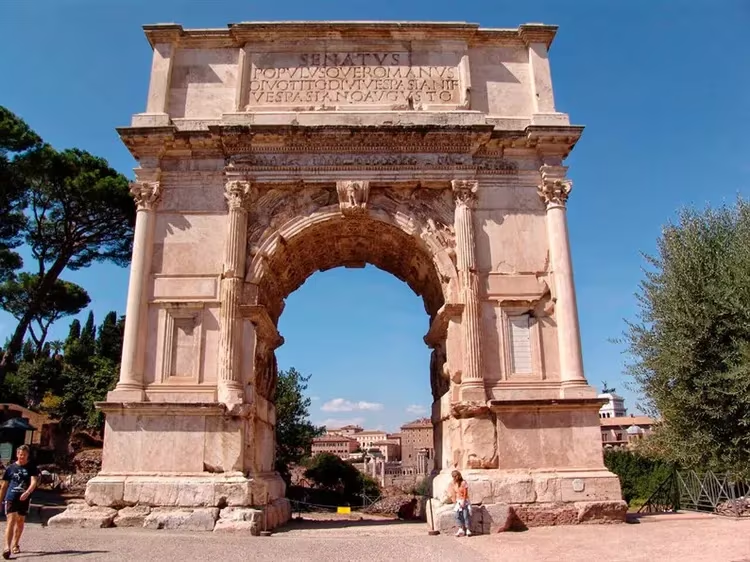
Triumphal Arch of Titus in Rome – history, photo, description, how to get there, map
Triumphal arches were one of the most important architectural structures of ancient Rome. The main motive for the erection of these structures was the exaltation of the exploits of emperors and the military. The arches were front doors and richly decorated with sculptural images, through which the commanders-in-chief, generals and the Roman legions after victories had to pass on war horses or chariots. The Arch of Titus, now located in the Roman Forum, is considered a universally recognized exemplary ancient monument. Its perfectly preserved appearance is the result of painstaking restoration carried out in the 19th century. The arch commemorates the triumphal campaign of the Romans in Judea, as a result of which the Jerusalem palaces and temples were plundered.
Construction history
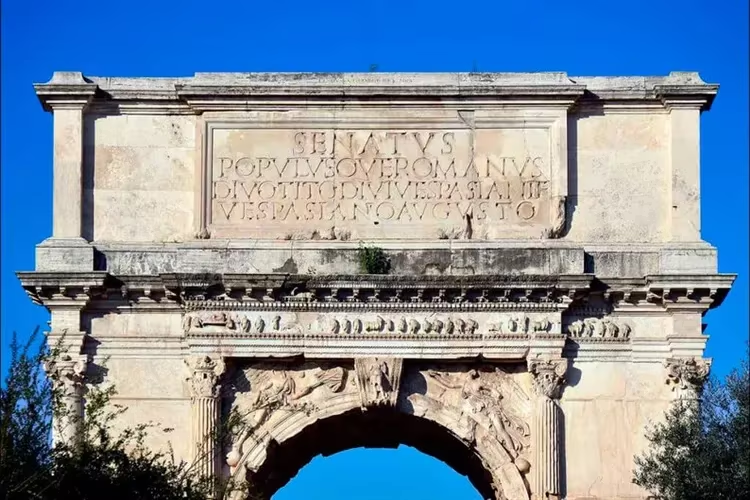
The triumphal arch was installed in 81 AD at the initiative of the emperor Domitian. The ruler of Rome wished to erect a monumental structure in honor of his brother Titus and father Vespasian. These emperors at one time successfully suppressed uprisings in the Judean province. The events preceding the construction of the arch unfolded rapidly and fatefully. In 66, Jerusalem was engulfed in a popular uprising against Roman rule. Emperor Nero, who ruled at that time, sent the experienced commander Vespasian to suppress the conflict, who with difficulty extinguished the popular uprising and gradually stabilized the situation in Judea.
A few years later, the sad news of Nero's death comes from Rome. The great empire is again immersed in internal confrontations in the struggle for power. For the sake of pacifying the political situation, the military legions proclaim the commander Vespasian emperor. He immediately leaves for Rome, leaving his son Titus in Judea in return. Taking advantage of the turmoil among the ruling clans of the empire, the Middle Eastern people decided to continue the uprising against Rome. The finest hour has come for Titus. He besieges Jerusalem with his army for several months. After that, the Roman army proceeds to storm and plunder the temples, as well as the palaces of the city. As a result, the fighting and morale of the rebels was crushed, which was a triumph for Titus.
In 79, Titus succeeds his father and takes the throne of the Roman Empire. Two years later, he suddenly dies. Soon the Roman Senate decides on the official deification of Emperor Titus. The new ruler of Rome, Domitian, begins the construction of an arch, which should solemnly personify the victory of his brother in the Jewish War. It is noteworthy that the captive inhabitants of Jerusalem erected the structure, of which there were about 50,000 people. In the XII century, the arch was built into the complex of defensive fortifications of the palace of the noble and influential Roman family of that time Frangipane. Around the mansion of aristocrats there were fierce battles between the feudal clans. The triumphal arch of Titus has undergone serious destruction, which has damaged its original appearance.
Only in the middle of the 19th century, at the initiative of Pope Pius VII, the monument was restored. The work was carried out by the architect Luigi Valde. The architect skillfully dismantled the building and carefully reassembled it, adding travertine instead of the missing elements. The new material stood out noticeably against the backdrop of pompous white marble, which was originally lined with the arch.
Description and architecture
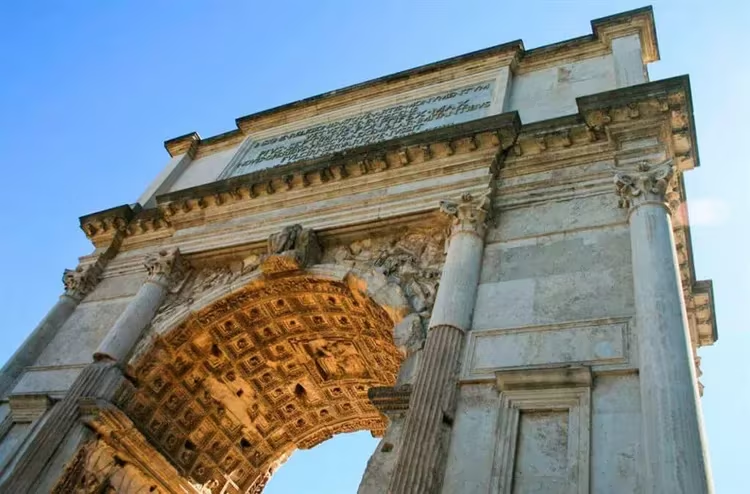
A powerful single-span arch with a round vault rises on a small hill next to the Roman Forum. It is 15 meters high and 13 meters wide. Compared to other historical monuments of Rome, the appearance of the monument is quite modest and austere. The facade is framed by Corinthian columns, the capitals of which are decorated with an ornament in the form of acanthus leaves. At the corners of the span, images of the goddess of victory Victoria with graceful wings are carved.
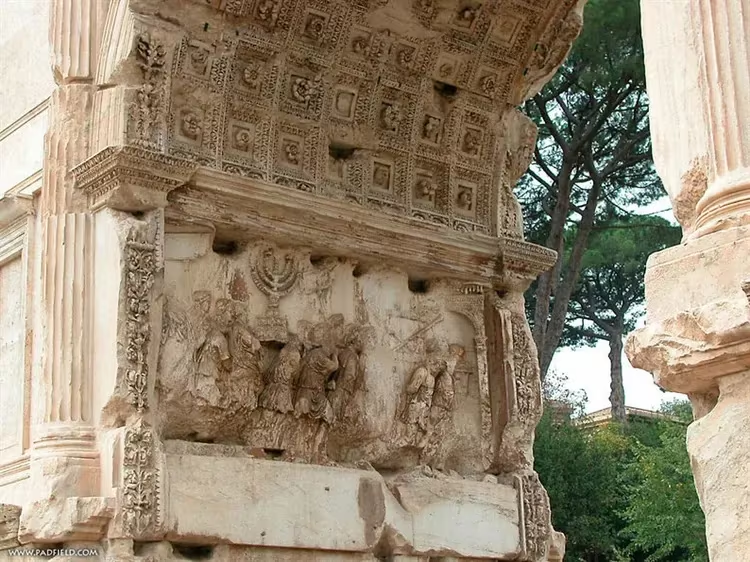
The main decorations of the arch are located inside the span. These are the two main relief images describing the looting of the shrines of Judea by Roman legionaries. On the one hand, the figures of soldiers carry in their hands and on their shoulders trophies taken from the Jerusalem temple. The sculptural panel embodies the traditional triumphal procession, during which the treasures of the conquered peoples were put on public display, thereby emphasizing the greatness of the Roman Empire. Of the jewels, the menorah (candelabra) with seven candlesticks, a wooden table for the “bread of the offer” (an integral attribute of the Jerusalem temple) and silver pipes stand out. The figures of the military are dressed in clothes, the folds of which follow the contours of the body. Thus, a feeling of movement of soldiers in space is created.
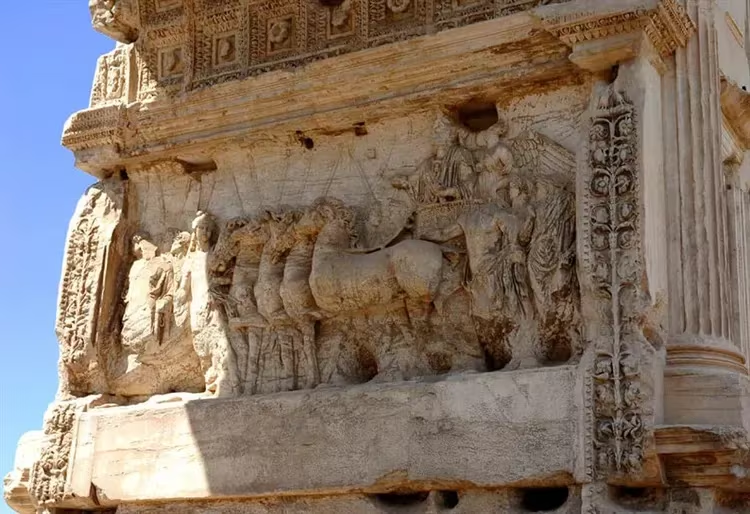
The other inner side of the arch is decorated with a relief design that shows Emperor Titus riding a chariot. His head is crowned with a laurel wreath by the winged goddess Victoria. Four horses are controlled by the patroness of Rome – the goddess Roma. The figures of galloping stallions give dynamics to the sculptural composition. Between the relief images in the center of the arch arch there is a small panel, bordered by decorative recessed square tiles (caissons). It clearly characterizes the deification of Emperor Titus after his death. Here you can see an eagle carrying the ruler to heaven.
The triumphal arch is crowned with an attic, on which Latin inscriptions are made on both sides of the facade. The letter addressed to the Colosseum expresses gratitude to Titus from the Roman Senate and citizens. From the side of the Forum, an inscription is visible stating that the supreme pontiff Pius VII ordered the restoration of this dilapidated monument of art in 1821.
Where is it located and how to get there
The Arch of Titus is located on the territory of the Roman Forum, where the famous ancient architectural monuments of an ancient civilization are located. You can get to it by metro (Colosseo station).