🇮🇹 Turin: hidden treasures of Italy’s first capital
Tour In is not the most popular Italian city among tourists, despite the fact that it is the fourth most populous city in the country. I believe that he is deprived of attention completely undeservedly. I'll explain why.
This is a beautiful city with a rich history in the north of the country and the first capital of a united Italy. It is there that the shroud of Jesus Christ and the famous football club Juventus are located. And in good weather, you can see the Alps from almost anywhere in the city.
I’ll tell you in detail about the advantages and disadvantages later, but I want to warn you right away. Keep in mind that not everyone in Italy speaks English. Even in restaurants, menus are not always translated.
I will share my personal experience. One day, our group wandered into a rather expensive-looking restaurant, but the description of all the dishes there was still only in Italian. Okay, we decided. Burger is a fairly clear word in different languages, so that’s what we ordered. They brought us huge portions, with plenty of greens and chips for a snack.
Of course, you are now waiting for a catch – and there was one. Everything became clear with the first bite of this huge burger. Between the sesame buns and vegetables lay a huge piece of raw (!) minced meat for almost 20 euros. It turned out that we came across a restaurant for raw foodists. It’s very tasty in Italy, you won’t go hungry, they said.
We didn’t experiment with food anymore – we only ate where there was pizza, pasta and wine. And I advise you! Eat classic Italian cuisine in Turin – you won’t regret it. Leave the experiments for conventional Asia.
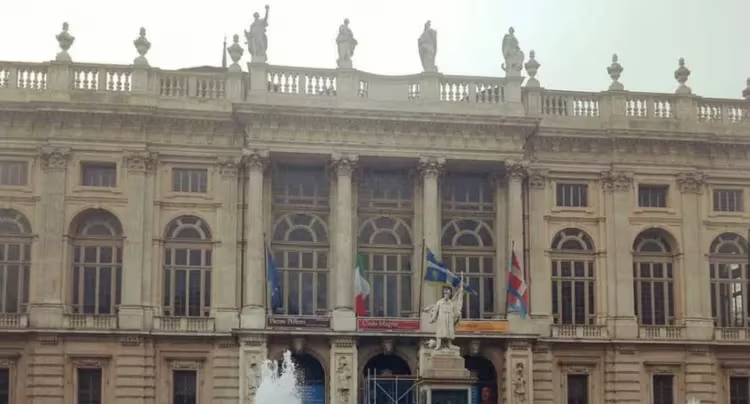
Castello Square
So, you arrived in Turin and go to the center. Be sure to take a walk around Castello Square or, as it is also called, Castle Square. Nearby is the Royal Palace, theatre, library and cathedral. The architectural appearance of the square was formed back in the 16th century. It is from there that all the central streets of the city diverge. During warm seasons, fountains are in full swing on the square.
Piazza San Carlo
This large central square is also hard to miss. In its center there is a monument to Duke Emmanuel Filiberto, the ruler of Savoy, whose capital was also once the city. The square was well reconstructed in 2006 on the eve of the Winter Olympic Games in Turin.
Palazzo Carignano
The 17th century palace complex has grand Baroque architecture and impressive dimensions. The building was built of red brick. In the 19th century, the palace was dominated by parliament. Now it houses the National Museum of the Risorgimento – the first, largest and most important of all Italian museums. It was dedicated to the national liberation movement of Italians against the authorities of other countries.
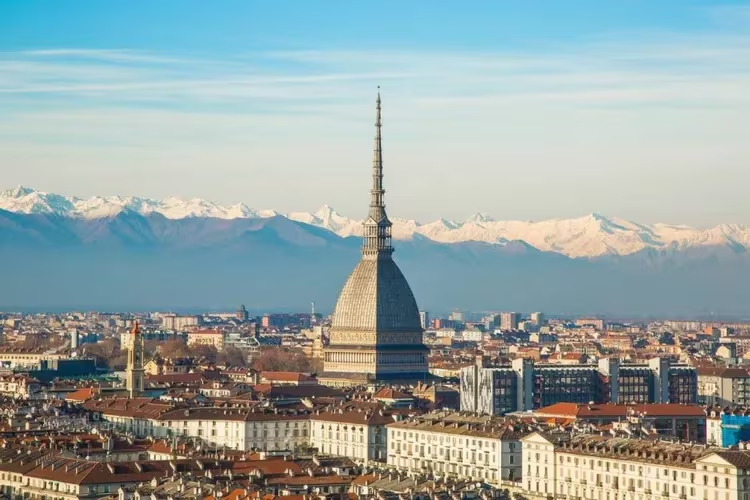
Mole Antonelliana
This tall tower is a well-deserved symbol of the city. It is on almost all postcards and magnets, and you can see it from all points of Turin. It was also minted on 2 euro cent coins. Inside the tower there is a cinema museum. If you have time for museums, be sure to visit. I really liked it there. Entrance to the museum and elevator – 15 euros.
Cathedral of John the Baptist
You should definitely come here. After all, it is in the Turin Cathedral of the 15th century, more specifically in the Chapel of the Holy Shroud, that one of the most important sacred relics of Christianity is located – the Shroud of Turin. Allegedly, this is what they wrapped the body of Jesus in after they took him down from the cross.
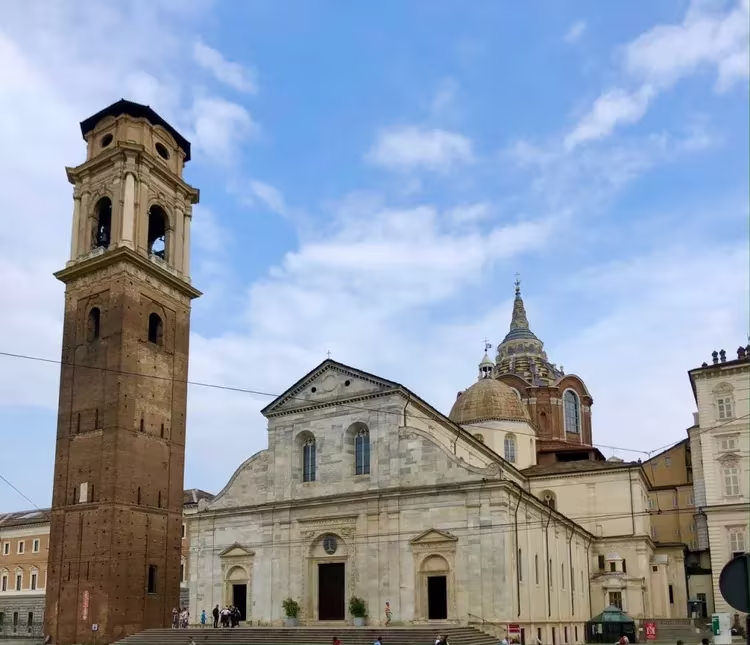
Scientists, by the way, analyzed tissue and blood samples. It is believed that Jesus became the first person with the youngest and rarest blood type – fourth. Can you guess why I remembered this fact?
Church of Gran Madre di Dio
A few more divine legends. It is believed that this church on Capuchin Hill, clearly reminiscent of the Roman Pantheon, stands on the site where the Holy Grail is hidden. Many legends revolve around it. If you love mysticism, come to Turin. Esotericists believe that Turin, together with Prague and Lyon, forms a “triangle of white magic”, and with London and San Francisco – “black magic”.
- Where are the best parties: a guide to music festivals 2023
- Holidays in Rimini: what to expect from it?
- Travel tips: renting a car in Italy
Castle Valentino
The French influence can be traced in one way or another in the architecture. The castle was once one of the residences of the Dukes of Savoy. In the 19th century, the building was given to the local university. Now there is an architecture faculty there. As you can see, Italians take a very rational approach to the use of castles and other attractions.
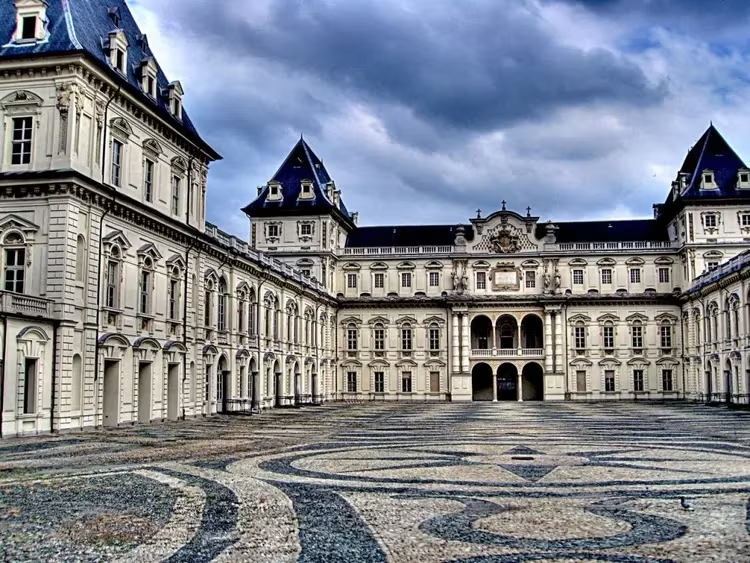
It seems to me that when you are a creative student and literally study in a castle, it gives x10 to motivation and inspiration. The chance of becoming a truly great architect also increases many times over. Do you understand now why I praise Turin so much?
Villa della Regina
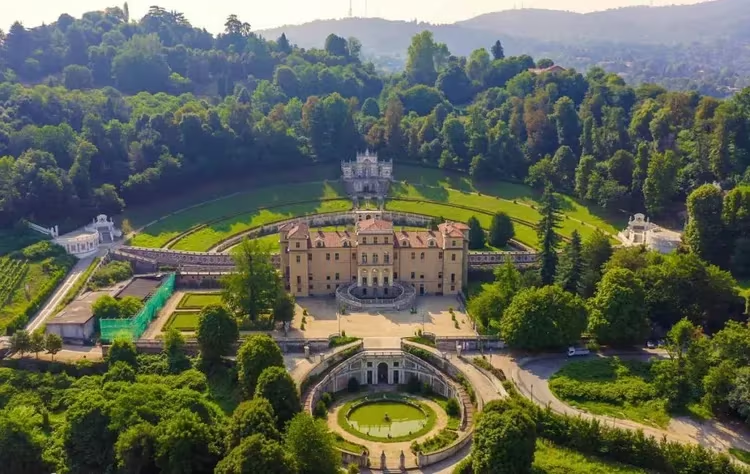
The beautiful baroque royal palace on the hill also came from the Dukes of Savoy. But if you don’t know, you won’t even think. The vibe there is purely Italian, as for me. There is a gorgeous garden all around where you can walk for hours – I recommend it. Although it’s a little far from the center, you can still walk there, and there aren’t usually that many people there.
Palatine Gate
The ancient gate from the Roman Empire appeared around one century BC. They were once the northern passage into the city. The gate is located on the territory of an archaeological park, where excavations are regularly carried out. The statues of Caesar and Octavian Augustus, installed opposite the gate, were created in 1934. These are exact copies of the originals, which, alas, have not survived to this day.
Juventus FC Stadium
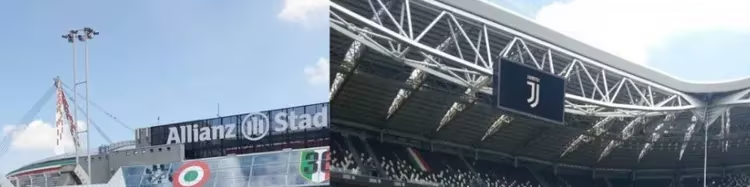
I'm not as big a football fan as my husband. Thanks to him, in fact, I ended up at the stadium. But I remember the tour in English. The complex opened in 2011 to replace the old arena. It seats more than 40 thousand spectators – comfortably, safely, stylishly, plus attractive lighting of the stadium due to its shape.
Mussolini's finger
Architecturally, this is an objectively ugly place, but interesting from a historical perspective. This is Turin's first skyscraper – the Littoria Tower. People called it “Mussolini’s Finger”. The 19-storey building, whose height with the spire is 109 m. The name of the skyscraper was not given by chance: Benito Mussolini ordered it to be built in order to create the headquarters of the fascist party there.
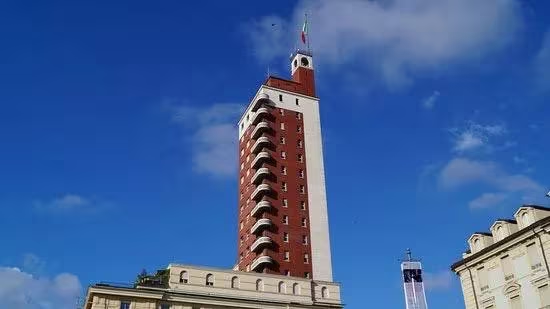
Now there are office buildings and apartments there. It is believed that Mussolini specifically decided to build a building between the palaces of the Old City in order to contrast the new political system with the departed monarchy. According to the locals, with which I agree, the skyscraper clearly spoils the appearance of the historical part of the city.
Egyptian Museum
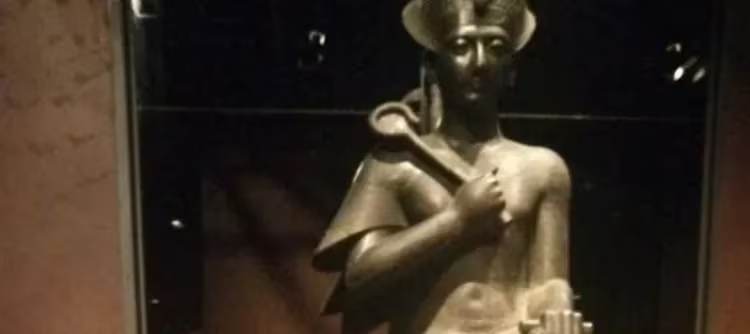
I was in the city for several days. Therefore, museums were not spared either. There are more than 40 of them here. The cinematic one and this one I remember the most. How is Egypt connected to Italy, you ask. Here's how: this is the second collection of artifacts in the world, which, logically, is second only to the Cairo museum of the same name.
If as a child you were interested in the stories of Ancient Egypt, mummies, mythology, you will walk around with your mouth open. The museum grew out of the private collection of King and Duke Charles Emmanuel III. He was a big fan of ancient Egyptian culture. The museum displays dozens of original papyri, statues, ancient scrolls, jars, mummies and pharaonic artifacts. But I warn you, walking there, you will want to immediately book tickets to Egypt.
Turin is a city where you want to walk a lot (we only used public transport twice), eat ice cream and take pictures. I will definitely return there, because the proximity of the Alps tempts me into mountain weather – catch my idea for this summer. And have a great trip!