
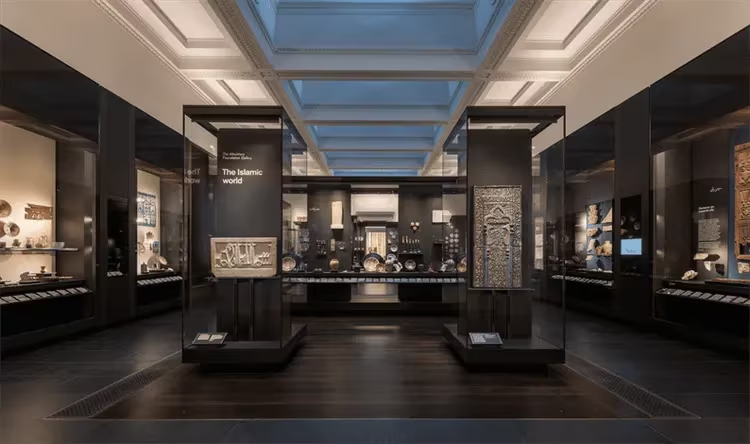
British Museum in London – history, photo, opening hours, how to get there, exposition, map
The British Museum in London is one of the oldest and largest historical museums in the world, an actively visited tourist site, which contains unique artifacts, artistic masterpieces from around the world. We will tell you about the history of the creation of the museum, its secrets, exposition, library and how you can get there on your own.
Story
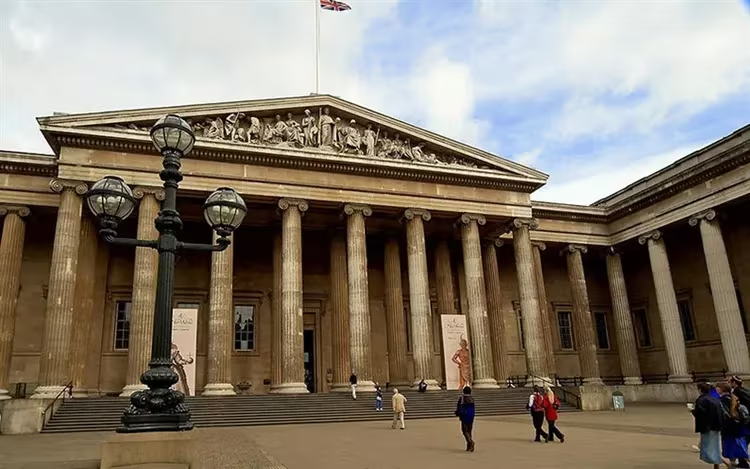
The basis of the museum's expositions were private collections of three well-known personalities in society, who transferred their collections to the newly formed State Historical and Archaeological Museum. The act of its creation was approved by the British Parliament in 1753. The first baronet, president of the scientific Royal Society, Hans Sloan, being an enthusiastic collector, collected many different curiosities of natural origin, which later became priceless rarities of the British Museum.
Antiquary and bibliomaniac Robert Cotton, who collected a large number of manuscripts and books, made a significant contribution to the creation of museum funds: a collection of his manuscripts became the basis of a whole department, which later became the British Library.
Earl of Oxford, politician, public figure Robert Harley, who was friends with Swift and Pope, had an interest in ancient books and manuscripts. All his life he was a passionate collector of book rarities, transferred to the museum and significantly replenished its funds. The names of these public figures are sacredly revered by the British; their biographies are studied in schools and universities, special sections of museum expositions are devoted to them.
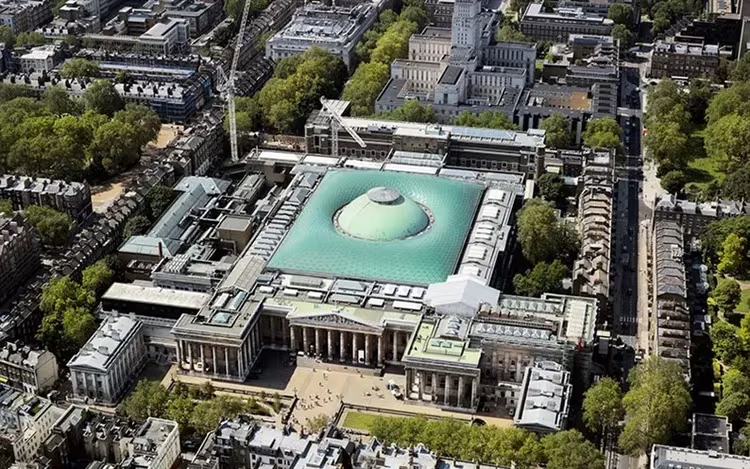
At first, the museum was located in the Montagu mansion in the Bloomsbury area, but it quickly began to replenish with new exhibits, which were already cramped within the framework of one building. During the years of Victorian rule, a colossal classical building was built, which now houses the museum.
Secrets of the Museum
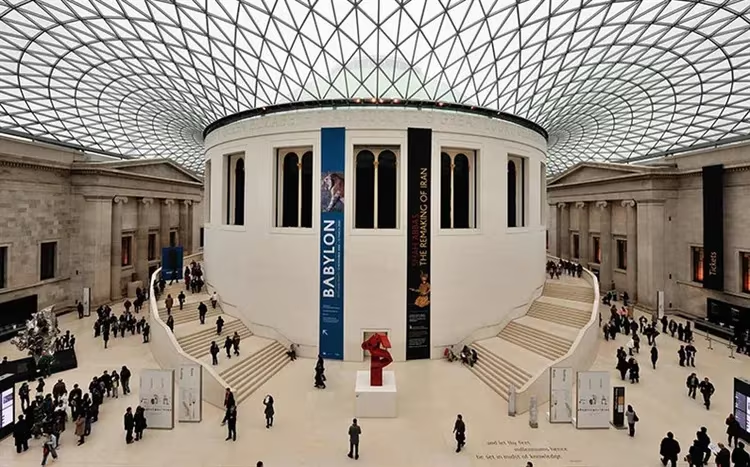
No museum in the world has so many mysterious exhibits, over the origin and history of which scientists-archeologists and ethnologists “puzzle their heads” as there are in the British one. There are many priceless artifacts among them, which played an invaluable help in the study of ancient civilizations, which left significant traces on our planet in the form of the Egyptian pyramids, the giants of Easter Island and other unique ones. With the help of modern technologies, employees can accurately determine the time of creation of artifacts, their location, establish their true original appearance, and the nationality of the person depicted in the sculpture. LED lamps help to find out even the color of already faded paints.
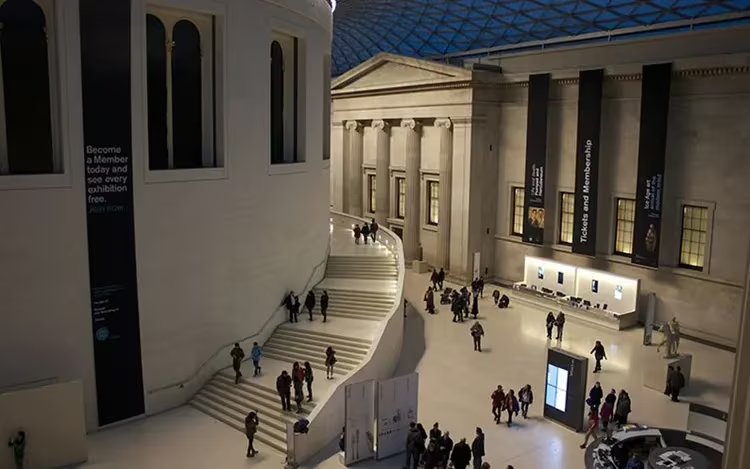
The vaults maintain a constant temperature, which contributes to the quality preservation of rarities. Museum scientists organize expeditions to excavation sites, from where objects of bygone eras were extracted and carefully examine the areas again, deepening and expanding them. Many secrets of the life of the past of ancient states were revealed here, thanks to the study of unique artifacts. Regarding the location of some of them, there are serious claims from other states claiming the right to possess.
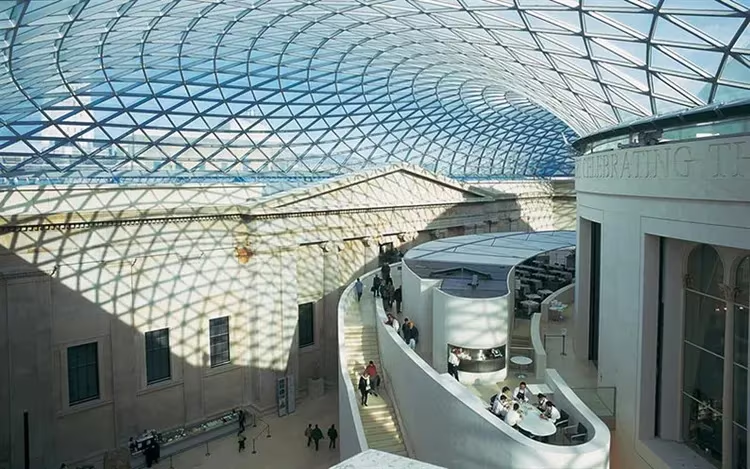
The Egyptians believe that the stone from Rosetta must be theirs; Tajiks demand the return of the Oksky treasure; China lays claim to the manuscripts, paintings and other rarities of the Mogao Cave. Nigerians are seeking the return of Benin bronze sculptures. The expositions of the museum contain the rarest rarities representing the ancient states of Egypt, Hellas, Urartu, Elam, the Median kingdom, India, Babylon, Mesopotamia and others. Enthusiastic scientists, employees of the British Museum carefully examine ancient exhibits, unraveling the mysteries of the past imprinted in them, thereby making an invaluable contribution to the history of the development of society.
Exposure
Artifacts of Ancient Egypt
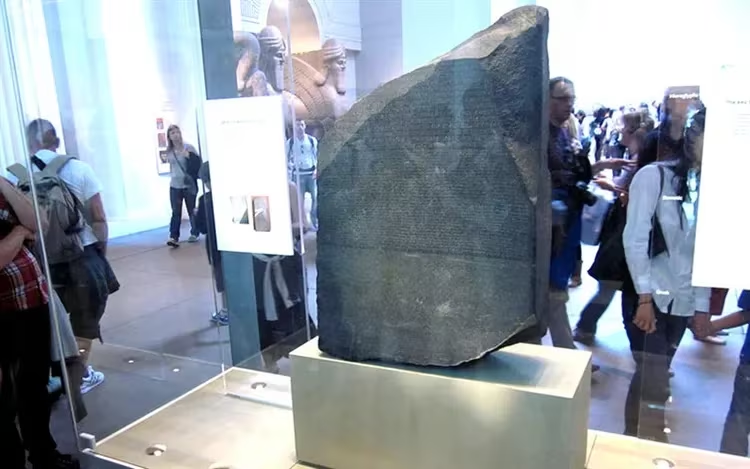
One of the richest expositions of the museum, which presents the diverse history of the most advanced ancient civilization. The Rosetta Stone is the most important exhibit, causing a real controversy in the world about who should own it. It was he who allowed the study of Egyptian writing after deciphering the hieroglyphs printed on it by the French orientalist Champillon, who laid the foundation for Egyptology. During the Napoleonic campaign in Egypt (1798), during earthworks during the construction of the fort, engineer Bouchard discovered a granite slab with inscriptions inscribed on it. The find was sent to Cairo, where scientists began to study the texts and realized that they were dealing with an object of the 2nd century BC. e.
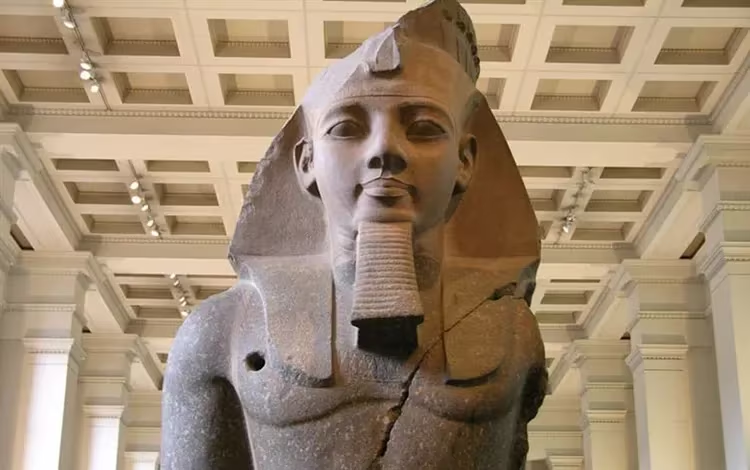
The stone instantly became a priceless artifact, for the possession of which the government of England made concessions and signed the Alexandrinsky Treaty of the Armistice (1801) in exchange for the ancient treasure. Thanks to the intellectual efforts of the famous Frenchman, the stone “spoke” and made it possible to learn a lot about the history of Egypt in the future. The statues of Pharaoh Ramses II, Amonofis III, the sarcophagus of the mummy of Cleopatra – the most valuable exhibits that many museums of the world dream about, are carefully stored here, restored by the most experienced and talented craftsmen (there are 50 restorers on the staff of the museum).
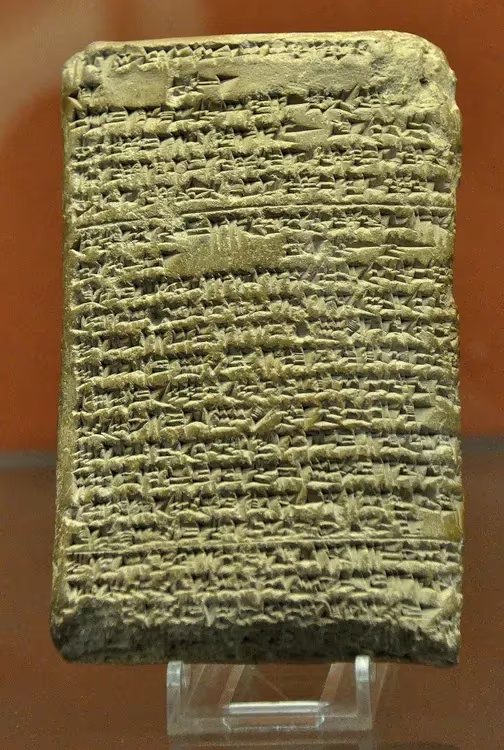
Nowhere else can you see the unique sculptural bust of Pharaoh Amenhotep III, sculpted from stone limestone, his statue and the sculptural image of the head, carved from red granite. In total, there are about 110 thousand items in the expositions of Ancient Egypt: it is impossible to put them all at once for viewing in 7 thematic galleries, which contain only 4% of the exhibits, among them 140 mummies and burial urns. A unique artifact is the Amarna Archive, which provides valuable historical information: 95 clay plates containing the diplomatic correspondence of the pharaohs for 1350 BC. e. and giving a reliable picture of the life of those years.
Greece and Rome
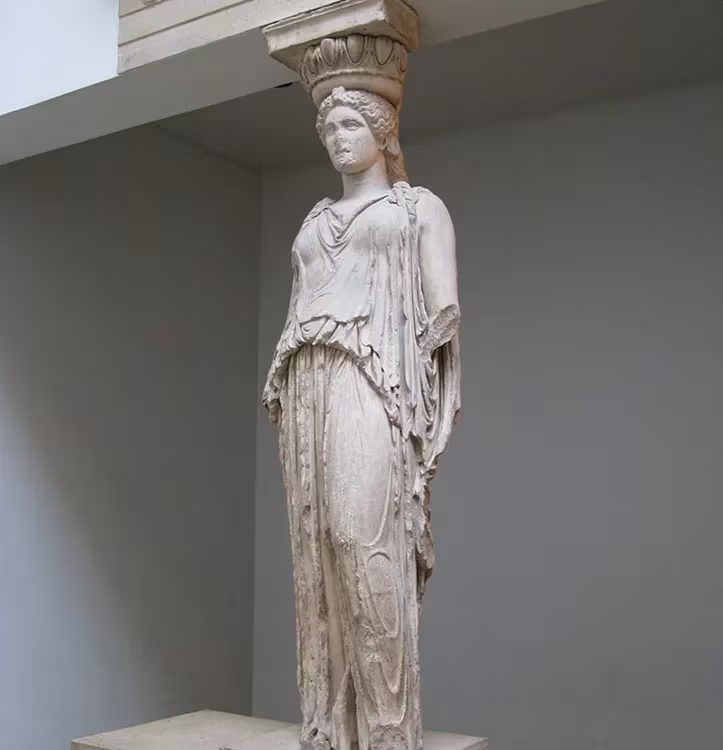
The department, which has more than 100 thousand ancient Greek and Roman exhibits, reflecting a long period of development of the two civilizations. Here are priceless rarities – evidence of the Cycladic, Minoan, Mycenaean cultures of the ancient Hellenes. The true treasures are:
Of great interest are a prehistoric gold jewelry (brooch), a Roman sword with a scabbard; frieze depicting scenes of the war between the Amazons and the Greeks.
Near East
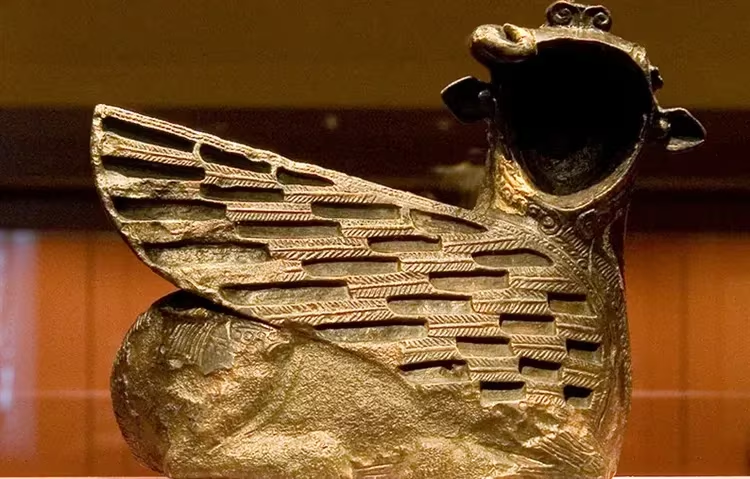
One of the largest expositions of the museum is represented by more than 330 thousand exhibits illustrating the development of ancient civilizations, from Mesopotamia to Phoenicia. The funds of this department were actively replenished in the first half of the 19th century, when expeditions of English archaeologists began to be organized on the territory of Iraq (Mesopotamia, Babylon, Assyria, Sumer), Turkey (Karkemish).
During the excavations, thousands of objects of culture, everyday life, ancient literature, the richest treasures with jewelry (Amurdarya treasure) were discovered. The art of ancient Islam is represented by 40 thousand exhibits: products made of the finest ceramics, glass, bronze, silver and gold are exhibited in 13 galleries, where 4500 items are exhibited at the same time.
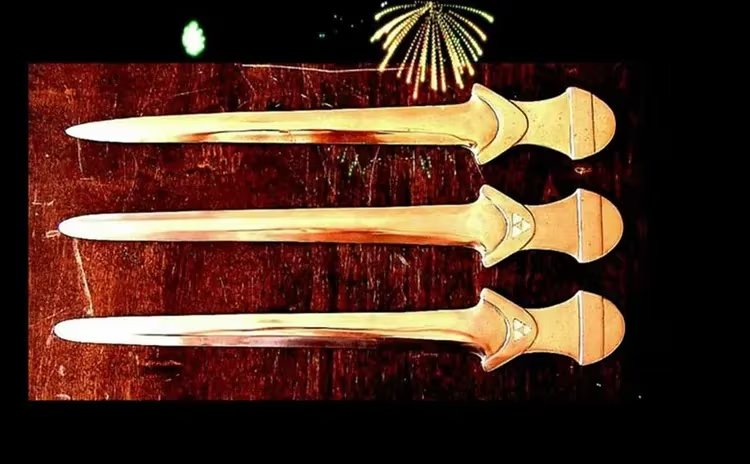
The values of enduring global significance include:
All treasures, including statues, obelisks, bas-reliefs, board games, musical instruments, cuneiform tablets, cannot be counted. To see with your own eyes even a small part of them, you need to repeatedly come to the British Museum.
Ancient history and Europe
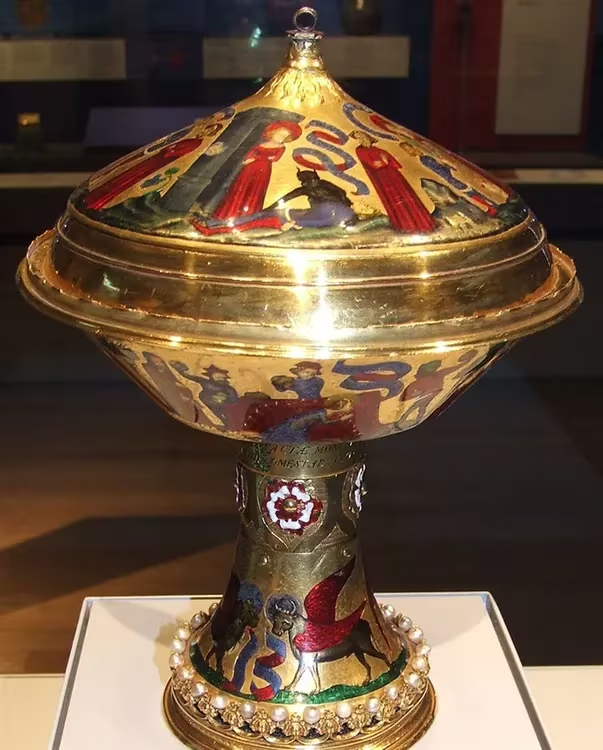
Expositions representing objects related to the most ancient eras of human development (more than 2 million years ago) and material evidence of European history, and the funds of exhibits from the early Middle Ages in Europe are the richest in the world. Among the items there are genuine prehistoric and historical jewelry values:
There are real masterpieces of ivory carving art here: triptychs by Byzantine masters, the Englishman Grandison; 78 chess figures carved from the tusks of a walrus (Scotland) testify to the high degree of skill and artistic talent of the carvers. Porcelain dishes of amazing beauty with magnificent patterns and plot paintings are exhibited in glass showcases.
Asia
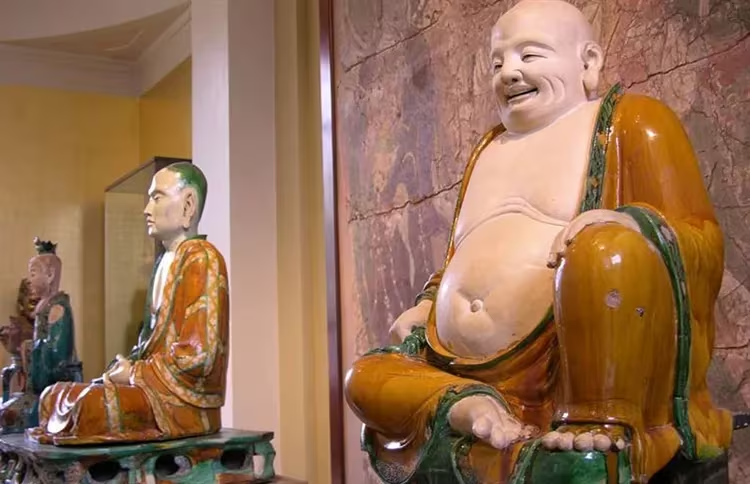
Department, represented by objects of Asian culture from the prehistoric era to the present: Buddhist statues, bas-reliefs (India); porcelain, bronzes, jade and other precious stones, Buddhist paintings and a Buddha statue (China); sculptures of gold and silver (Indonesia, Sambas).
Africa, America, Oceania
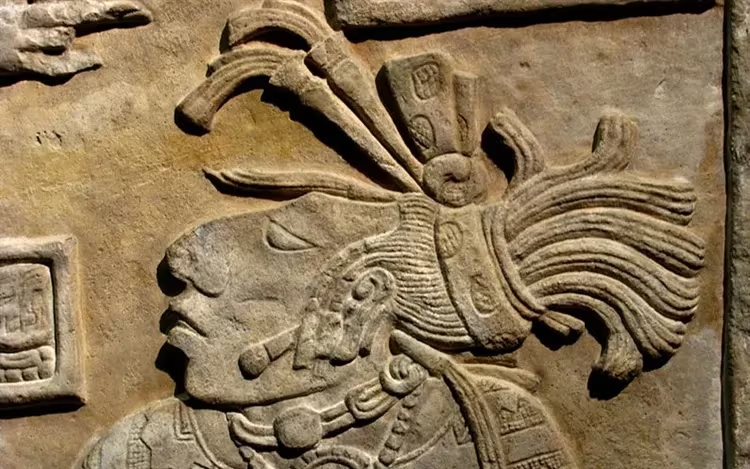
Expositions with a huge ethnographic collection of objects (350 thousand items) illustrating the life of the natives of these continents: the Aztecs, Mayans, Incas (America), Ashanti (Ghana) and representatives of other ancient indigenous peoples. Amazing Aztec mosaics in turquoise; sculptural group from Jamaica.
Coins and medals
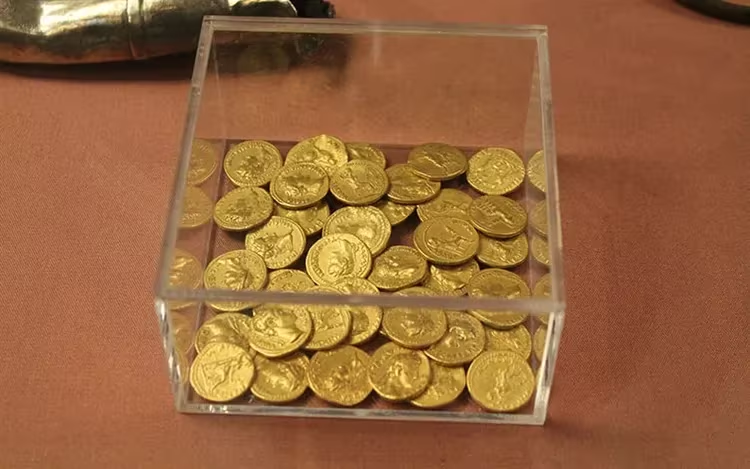
The department, which contains a million exhibits representing the history of the manufacture and use of coins in different periods of human life (from the 7th century BC to the present day). All of them have a high numismatic and historical value.
Engravings and drawings
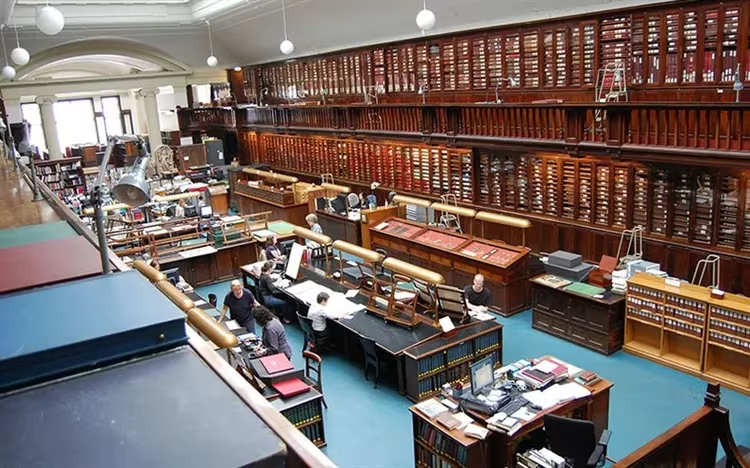
The expositions of this department contain about 50 thousand drawings, more than 2 million engravings and woodcuts of famous European artists (14th century – today) from Leonardo da Vinci to modern avant-garde artists.
Drawings, lithographs, engravings, sketches, watercolors by Durer, Claude, Watt; almost 30 thousand works by British artists of the Middle Ages and the present. An online database has been created for 500,000 exhibits, accompanied by high-quality illustrations.
Library
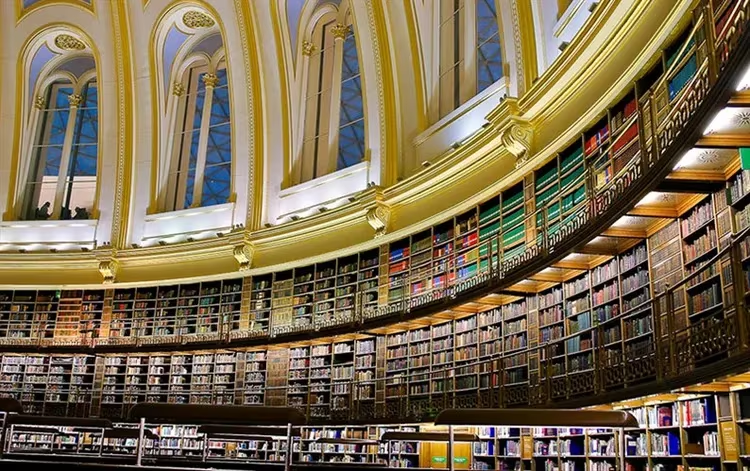
One of the largest repositories of printed and handwritten rarities in the world, with 6 reading rooms for 670 visitors. The library funds contain almost 7 million volumes of various printed publications, 200 thousand copies of manuscripts in European languages, 38 thousand in the languages of the East; 250 thousand printed books; 500 thousand geographical maps; 1 million musical notations. Reference section of science and inventions has a subscription to almost 20 thousand scientific and technical journals. Every year the library funds increase by 1 million copies. Here everyone can find any literary source, work of art or scientific report, historical information or poetic masterpieces.
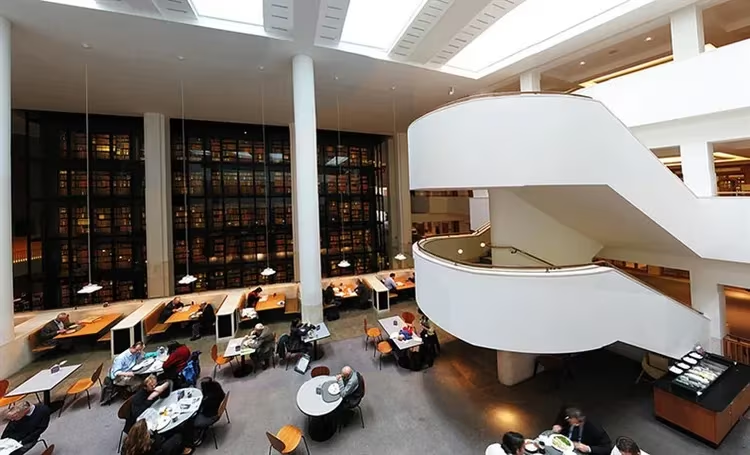
World-famous scientists, writers, artists, musicians, composers, politicians and public figures stayed within the walls of the library: J. Galsworthy, George Byron, K. Marx, V. I Lenin. The library stores more than 10 thousand copies of ancient manuscripts of Egypt, Greece, Rome, which are priceless cultural and historical relics. Funds of literature on the natural, exact, humanities are able to satisfy any demand, will help to find answers to all questions of interest.
The British Museum Library is a grand repository of wisdom, knowledge and progress.
Opening hours and how to get there
Адрес: Great Russell Street, London, WC 1 B 3DG
Metro: Tottenham Court Road station (Tottenham Court Road), st. Russel Square (Russell Square) or Holdorn (Goodge Street). Buses and taxis: get to the above metro stops.
Museum opening hours: 10.00-17.30, Thursday and Friday – from 10.00 to 20.30.
The entrance is free.
k