
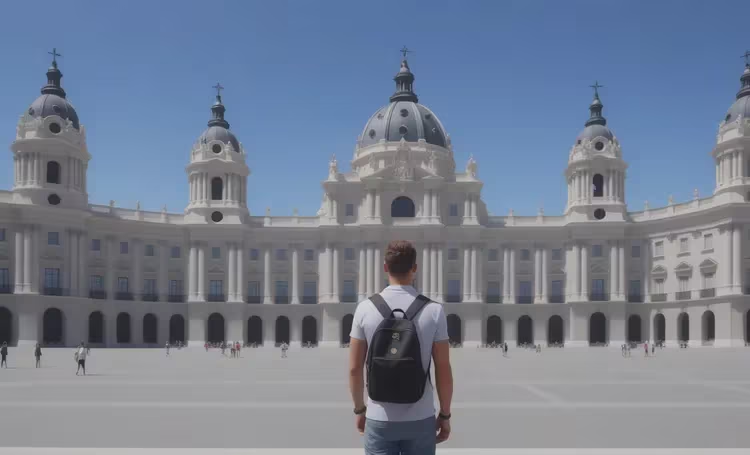
🇪🇸 Madrid in 72 hours: a complete guide to the Spanish capital
Madrid is not about relaxing on the beach and five-star hotels. In the city that never sleeps, life is in full swing: a collection of the greatest art, loud parties and delicious food. Three days is enough to make a first impression and get into the groove. I offer my 10 ideas for your 72 hours in the Spanish capital.
El Retiro Park
Unexpectedly, I realized that this particular park is the reason why I would like to return to Madrid again and again. El Retiro covers 142 hectares. This makes it one of the five largest parks in the European Union.
Until the second half of the 19th century, this territory belonged to the monarchy. Don't be confused by the Crystal Palace, Palacio Velazquez, statues of kings, horse-drawn carriages and other references to luxurious life. Silence cannot be heard here. Every Sunday is especially active here.
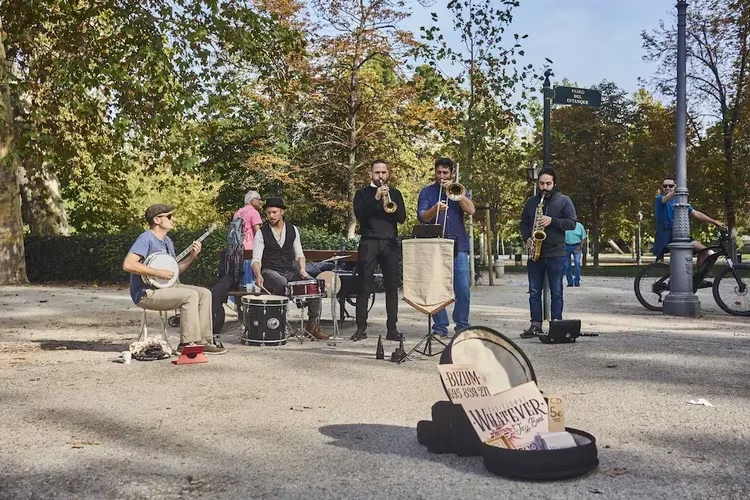
Imagine a series of free concerts from talented street musicians, a city orchestra and a puppet theater for children. Book fairs, art exhibitions and other cultural events and initiatives also take place here. Of course, no one canceled sports. There is also equipment for stretching and strengthening muscles, a cardio zone, and rowing boats.
This park is chosen by joggers. There are also outdoor yoga classes held here in mid-October. For parents, a useful bonus will be the presence of several playgrounds at once.
Atocha train station
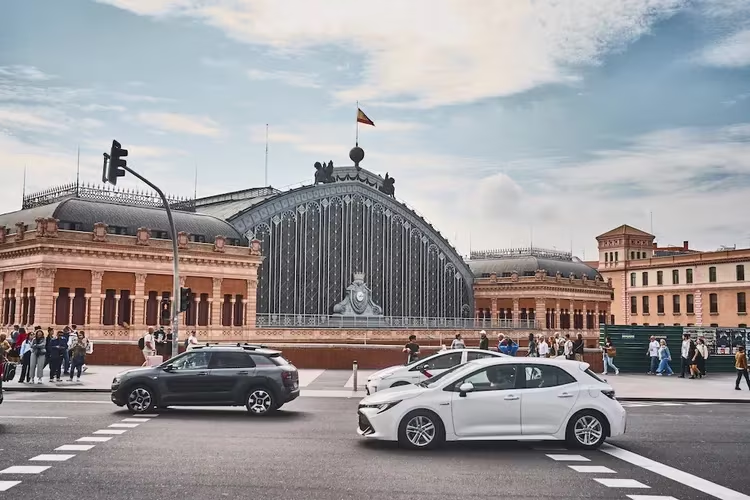
The 170 year old Atocha Station is impressive! And it’s not just the skillful combination of glass and iron. Looking inside, you will find yourself in a real tropical park under the dome of the station. I have never seen such a waiting room in any other city. I really hope that this “wow” effect will become contagious.
“Golden Triangle of Arts”
It just so happens that the giants of world art are located on the same “patch”: the Prado Museum, the Reina Sofia Art Center and the National Thyssen-Bornemisza Museum. Admission to all museums for adults is paid, with the exception of public holidays. So check the calendar.
Thus, on Columbus Day, I visited the Thyssen-Bornemisza National Museum completely free of charge. If you are not particularly keen on art, but feel that you still need to check the box, then below I will give a short description of each museum. They are also suitable for those who have a very limited amount of time.
National Thyssen-Bornemisza Museum
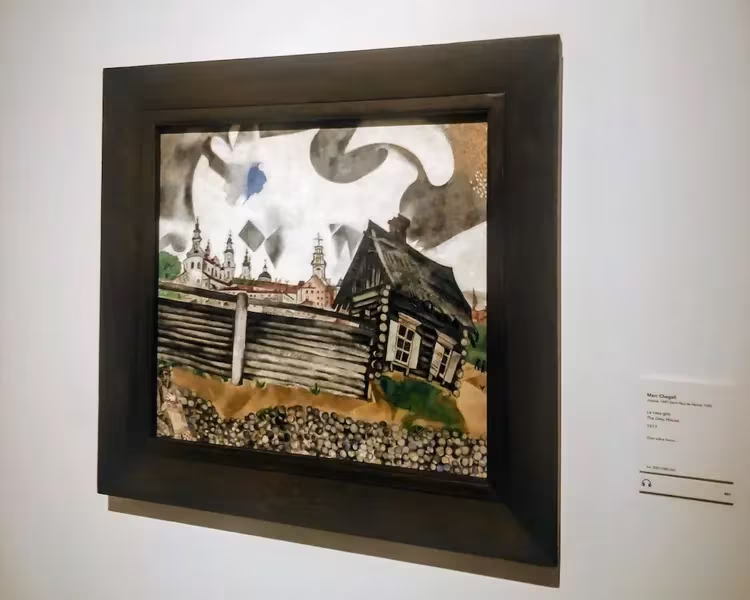
The National Thyssen-Bornemisza Museum is a crash course in the history of European painting over the last eight centuries. There will not be a weighty portfolio of Spanish authors, but rather a megamix from the authorities of the art world like Raphael, Rubens, Claude Monet, Vincent van Gogh, Picasso, Piet Mondrian, Edward Hopper. For Ukrainians, a pleasant bonus will be, albeit small, the presence of works by Marc Chagall and David Burliuk. Their paintings even stand next to each other.
Prado Museum
The Prado Museum is simultaneously included in the list of the largest art museums and among the twenty most visited museums in the world, and let’s not forget about UNESCO. Here you will find a chronology of the development of European aesthetics from the Middle Ages to the 19th century. If you are not a fan of avant-garde or contemporary art, then this is the place for you. The stars of Spanish painting are presented here, or rather the collections of Velazquez, Goya, Murillo and El Greco. Not a single copy of these paintings has yet been able to reveal all the details that you can catch in person. If this hasn’t captivated you yet, let’s add Raphael, Caravaggio and Titian to this list. Or maybe you prefer Albrecht Durer and Lucas Cranach? My final argument in favor of the Prado is, of course, the painting “The Garden of Earthly Delights” by Hieronymus Bosch.
Reina Sofia Arts Center
The Reina Sofia Arts Center is about contemporary art from the 20th century to the present day. Sculpture lovers will also have something to see here. If in the Prado there are “Las Meninas” and “The Garden of Earthly Delights”, then here there is Picasso’s “Guernica” and Kandinsky. Fans of surrealism are shown Dali, Miro, Magritte and Tanguy. Here you will find out “where is our world (of art) going.” You will also get acquainted with the latest trends in the industry and discover new names.
I note that all museums are wildly popular, so expect long lines, especially on rainy days. It is this time that everyone decides to “wait out” somehow culturally. It's also important to note that all three museums are huge. Allow at least 2 hours for each, although it will likely take half a day to hike just one of them.
Deboth Temple
Did you know that while walking around the center of Madrid, you can stumble upon the ancient Egyptian temple of the goddess Isis? In the late 60s, the Egyptian government made such a gift to the city for helping to preserve the Abu Simbel religious complex from flooding.
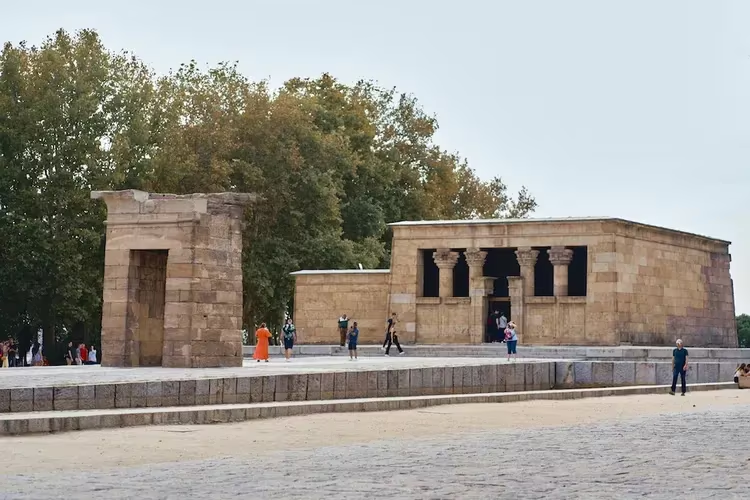
This is the same temple of Ramses from history books and more. Debot is located in a green, peaceful area with an observation deck. Locals say that it is especially beautiful here at sunset, when the sun, descending, walks through the arches of the temple.
Royal Palace
Although high-budget dramas are not made about representatives of the Spanish monarchy on Netflix, and they no longer live in palaces, this does not mean that they have completely disappeared from the radar. I will not go into details about the lives of the royals and will direct your attention to the Palacio Real de Madrid. Its history begins in the 8th century, when a fortress was erected for the ruler of the Damascus Caliphate.
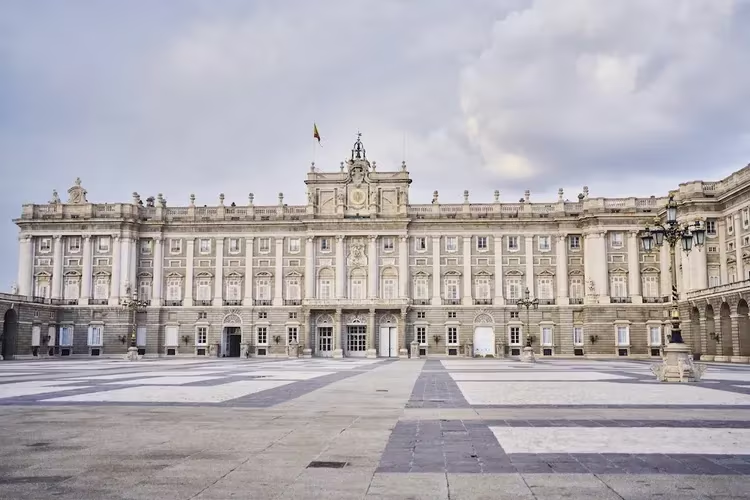
With the change of eras and regimes, as well as due to numerous fires, the image of the palace has changed greatly. The modern appearance was formed in the 18th century during the reign of the Bourbon dynasty. When ceremonies are not taking place here, tourists stroll along the long corridors of the palace. The entrance ticket costs 14 euros, but on some holidays it’s completely free. You can view the offers and schedule on the palace website.
Chueca Quarter
After the pompous Palacio Real de Madrid, I suggest you plunge into the festive cycle of the Chueca quarter. However, this is not just another faceless club district. It has been home to the queer community since the second half of the 20th century. If you opened a guide to Madrid from the 60s to the 80s, you wouldn’t find Chueca there.
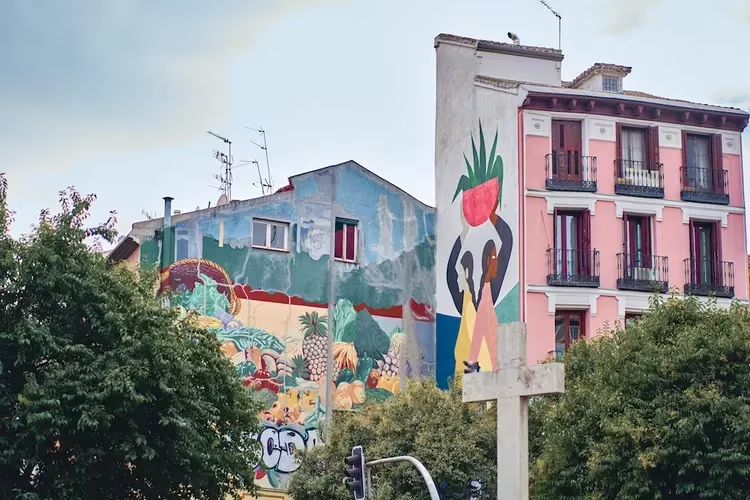
A poor area with high crime and low rents has become a refuge for LGBT+ people who are discriminated against in other parts of the city . Over time, Chueca became a magnet for creative and enterprising people. It is not surprising that this is where the Pride festival takes place. On it you can see works by famous artists such as David Hockney, Jean Kakto and Tom of Finland. In addition to art and music, you can enjoy shopping here to the fullest. With such an enviable number of stores, staying without a purchase is a real challenge.
Writers' Street Barrio de Las Letras
At one time, Barrio de Las Letras sheltered writers from the Golden Age of Spanish literature. Perhaps the names Lope de Vega, Francisco de Quevedo and Tirso de Molina are not very familiar to European readers, but Miguel de Cervantes will definitely bring back memories from the school curriculum.
This is a cozy picturesque street with original souvenir shops and atmospheric chocolate shops. Quotes from writers are printed on the road slabs. It was especially fun to try to translate them from photos using the Google Translate application. I hope this function will work better for your trip and you will tell me what is written there.
In the wake of the literary theme, it is impossible not to mention Ernest Hemingway. In the 20s, the author visited the city nine times. And during the civil war he returned as a correspondent. More than one travel company offers to follow in the writer’s footsteps, but you can also find the route yourself online.
Plaza Santa Ana and Santa Del Angel
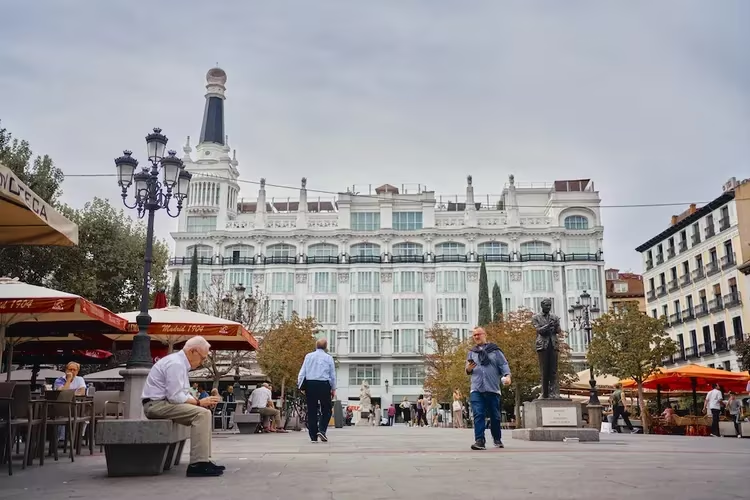
Perhaps most people associate the Spanish capital with Gran Via, where the concentration of majestic buildings with grandiose decorative elements is off the charts.
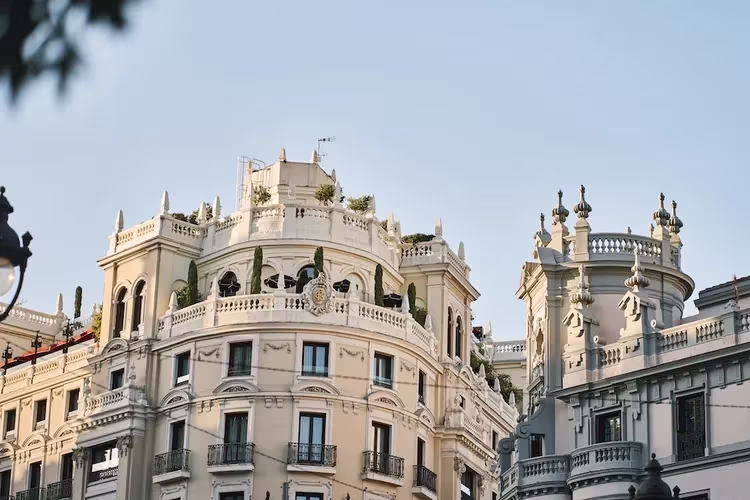
It seems to me that Santa Ana and Santa Del Angel squares, located within a 10-minute walk, will give this street an excellent compliment. The architecture here is not inferior, but the rhythm is a little calmer and you can see more details.
Where to eat?
We can say with absolute certainty that you won’t go hungry in Madrid. From the places I liked, there was a fairly dense list, which I decided to share.
Markets are a special part of Spain's gastronomic culture. It’s definitely worth visiting at least one, especially since now you can try to negotiate through translator apps. Mercado de Abastos | Mercado Santa María de la Cabeza is a typical market where you shouldn’t expect big markups or crowds of tourists, but you can buy fresh meat, seafood, fruits and vegetables. There are also several restaurants and a bakery there. Mercado de Antón Martín | Madrid is a more modern option with a large number of world cuisine restaurants.
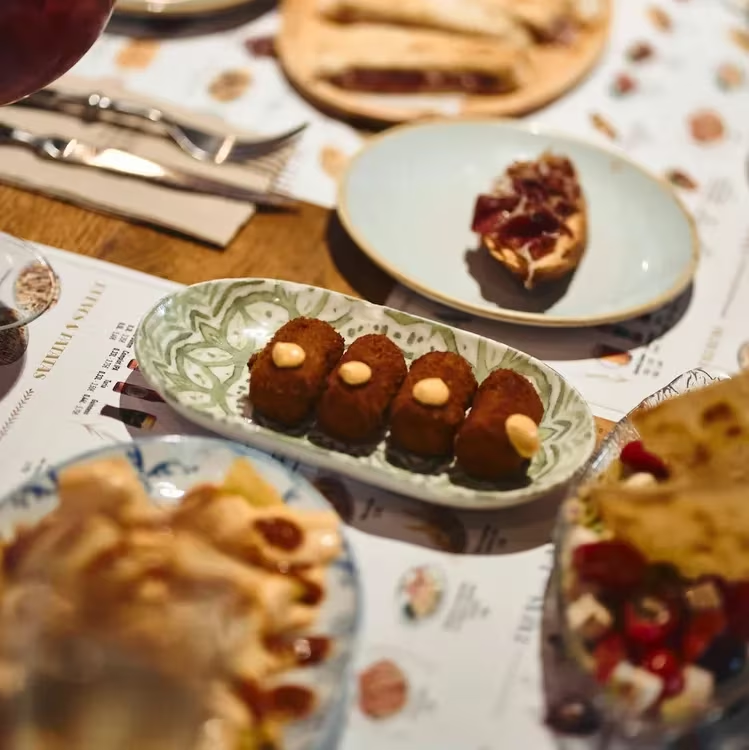
Carmencita offers a simple menu for the perfect brunch or hearty lunch. And at El brillante you will be served authentic churros with hot chocolate for breakfast. The Tia Julia restaurant is suitable for breakfast, lunch and dinner. I especially liked the tuna there.
Órale Burrito is a seemingly simple Mexican eatery, but not everything is so obvious. The Mexicans working here try to reproduce the authentic taste of their homeland thousands of kilometers from home. I can't recommend their juicy burrito enough, especially after a long day on your feet.
And Bardero will complete the list. As the locals explained to us, this translates as “scandalist,” “violator of generally accepted norms.” Indeed, their menu does not follow anyone's rules, but the bold combinations will not leave you indifferent. Bardero ‘s signature cuisine is suitable for both meat-eaters and vegetarians.
Details
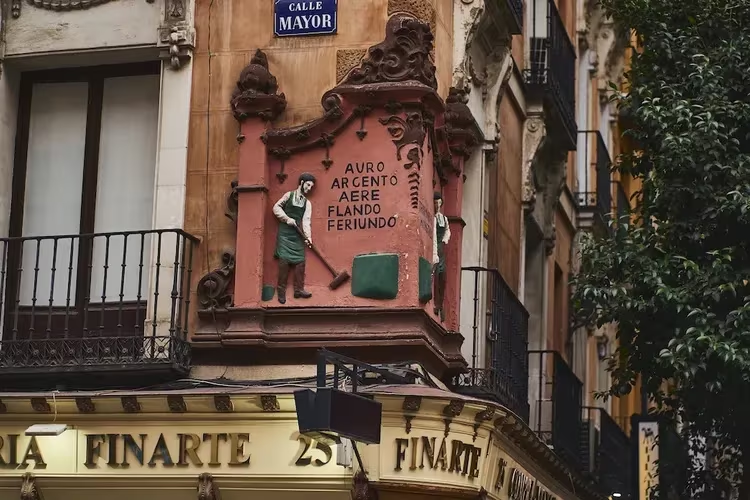
For all the pomp of Madrid, don't forget to look at the details: elaborate street signs, colorful graffiti and neat mosaics. The history of the city lives in such small details.
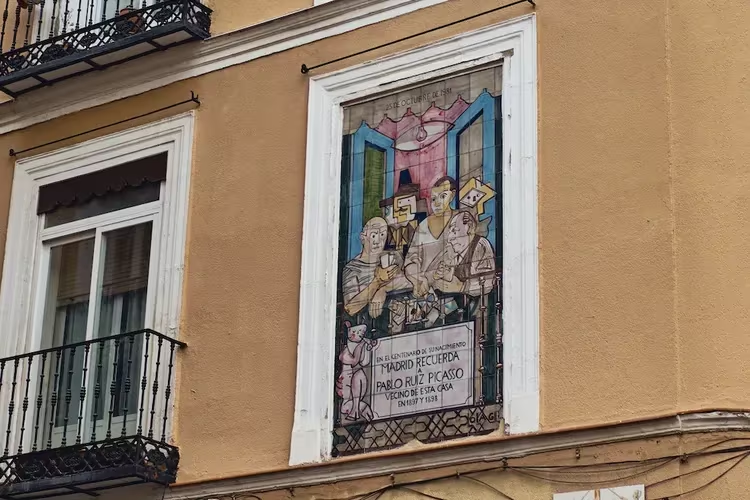
While I was photographing the “beautiful fresco” on the house, my friend noticed that the fresco was dedicated to Picasso. The artist lived in this house for several years.
Let this city open up to you and enjoy its hospitality, and tours to Spain will help you with this.