
What to see in Kaliningrad in 3 days on your own – route, photo, description, map
The Kaliningrad region – the northwestern border of Russia – is of great interest to tourists. Ancient history, many monuments of nature and culture – all this will give guests vivid impressions. It is advisable to come here for a few weeks in order to discover this region for yourself, slowly. But if this is not possible, it is worth seeing at least the main sights. So, what can you see in Kaliningrad in 3 days?
1 day
The first day is best spent exploring the city itself. Of course, you will not have time to visit all its museums, parks, see all the monuments. But you will now learn about the most interesting objects that are worth paying attention to.
Kant Island
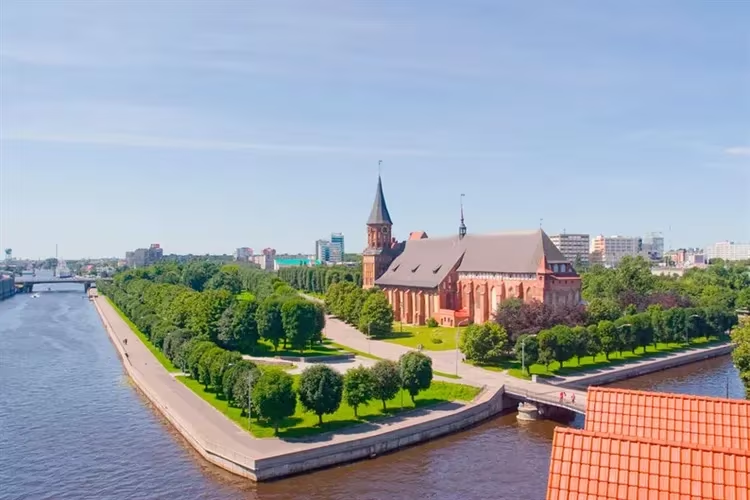
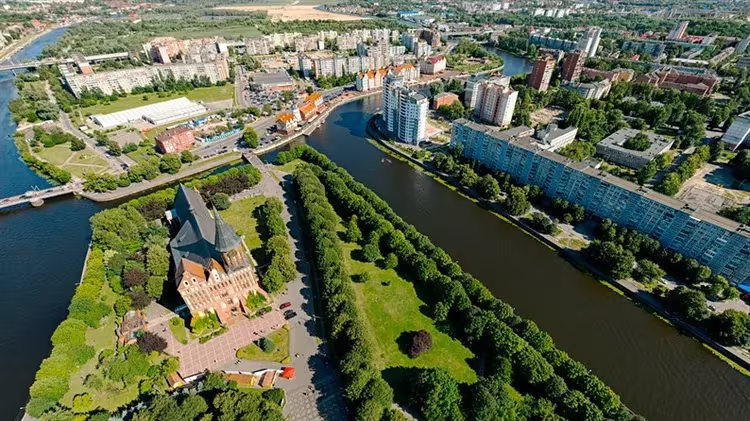
In the 14th century, the island of Kant (then called Kneiphof) was a crowded area of Königsberg built up with houses. Ships moored here, local and overseas goods were traded here. Perhaps it would have remained so, but shortly before the end of World War II, as a result of massive bombardments, both Königsberg itself and the houses on Kneiphof Island were destroyed. From the huge cathedral that was located here, only ruins also remained.
But the cathedral was subsequently restored, and the ruins of the houses were used to restore the buildings of Leningrad. Instead, a park was laid out on the island; today it is decorated with numerous sculptures. The main attraction of the island is the cathedral, near its walls is the grave of the famous Immanuel Kant. Tourists also visit the monuments to Duke Albrecht of Brandenburg and the theologian Julius Rull. They visit the Fish Village, and also leisurely stroll through the park, admiring the views and taking photos.
World Ocean Museum
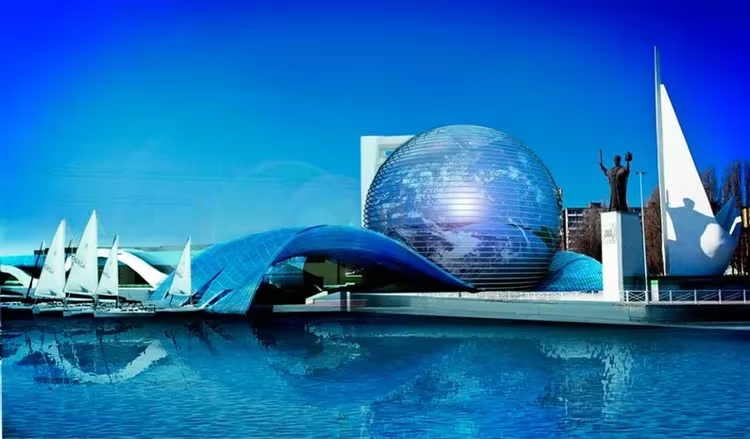
This museum will be interesting to visit for both adults and children. Its main building is located on the embankment of Peter the Great, there are also several branches. Large aquariums are located in the main building, where fish, octopuses, and corals live in sea water. Such marine aquariums are a real rarity. The museum regularly hosts events, one of which you can attend. Souvenirs are also sold here, there is a dining room. You can climb up to the observation deck of the lighthouse and take a look around the city.
The museum also owns a collection of ships and boats. Here is a research vessel, a polar icebreaker, a combat submarine, a fishing logger. But tourists pay the most attention to a ship called the Vityaz, it traveled thousands of nautical miles, scientists from different countries, including Thor Heyerdahl, worked here. You can climb on the ships, inspect them, go down to the engine rooms, get acquainted with the crew cabins. You will also be treated to “naval” food.
Fountain Putti
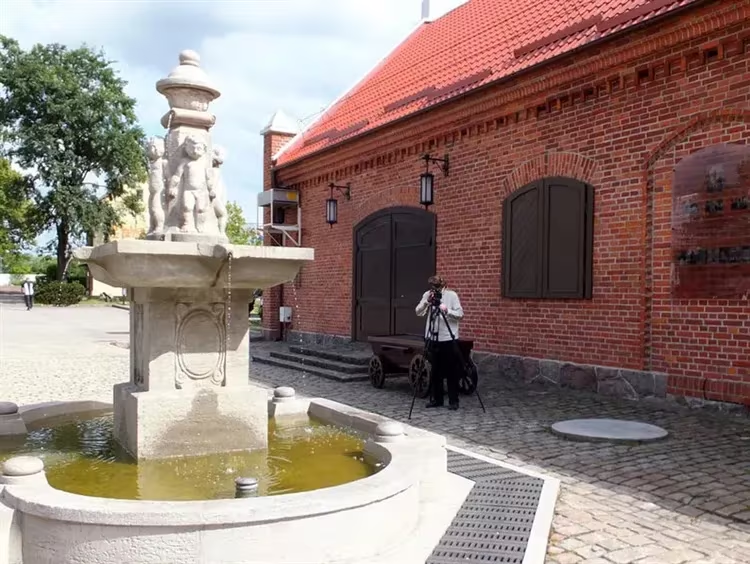
The creator of this beautiful fountain is the German sculptor Stanislav Cauer. And they named it after the word “putto”, in Italian it means “babies”. The composition consists of four young angels holding each other's hands. The fountain turned out so successful that it won first place at the international exhibition in 1912.
The Poles wanted to buy it, but the sculptor refused the money and donated his work to his native Königsberg. Made of shell rock, Putti, nevertheless, survived the bombing of World War II, but after it was not restored for a long time, which affected the appearance of the fountain. Now the Museum of the World Ocean is responsible for it, and in 2011 restoration was carried out. Every year, on April 30, the fountain is turned on, and it works throughout the warm season.
Cathedral
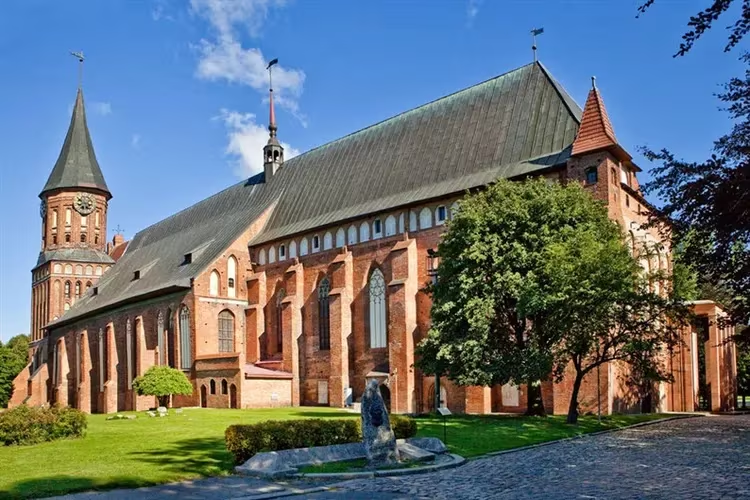
This is probably the most famous building in Kaliningrad. It began to be built in the 14th century and finished in the 17th. There was a university nearby, and its famous professors were buried on the territory of the cathedral. But the cathedral became famous also because Immanuel Kant rested here. During the Second World War, the cathedral was badly damaged: its wooden parts burned out, the decoration was lost. Only walls remain. The restoration of the cathedral began only in the 90s of the 20th century.
Today, the cathedral has lost its former religious significance. True, there are 2 chapels – Orthodox and Protestant. But most tourists rush here not to take part in worship. The guests visiting the old building, visiting the museum, going up to the library. And those who love music come to concerts to listen to the organ. And, of course, all tourists visit Kant's grave.
Memorial Sign to the Baltic Sailors
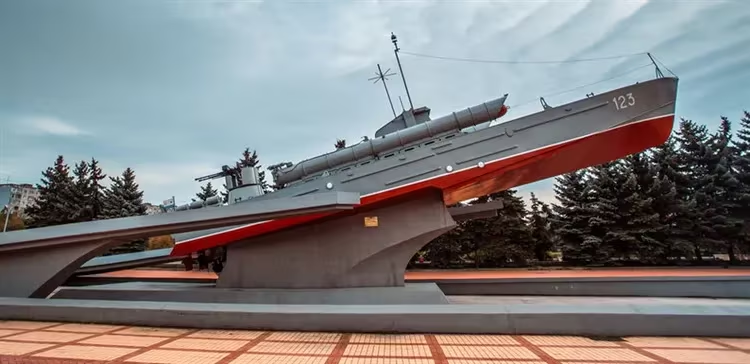
Kaliningrad is a city of sailors. And being here, it is impossible not to visit the Memorial sign dedicated to the heroes. It is a torpedo boat with a swimming pool under it. On a high wall there is a bas-relief: the faces of sailors, the date – 1945, the year the Second World War ended, and the words “The Motherland Remembers”. It was these worker boats that plowed the Baltic Sea during the war years, and their teams took part in the hostilities.
Art Gallery
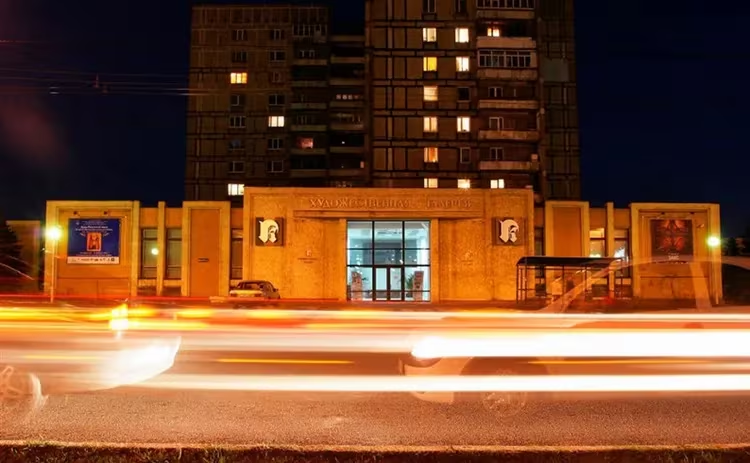
This is a young gallery, it opened only in 1988, but the collection of artworks here is excellent, and it is constantly updated. In addition, various events are regularly held here. The presented exposition includes 5 sections.
These are “Kaliningrad Artists”, “Graphics”, “Folk Crafts”, “Artistic Glass and Ceramics”, “Art and Culture of East Prussia”. You can see the works of domestic and foreign masters: paintings, sculptures, glassware. The gallery is very popular with tourists; visiting it is part of many excursions. It is located on Moskovsky Prospekt.
Holy Cross Cathedral
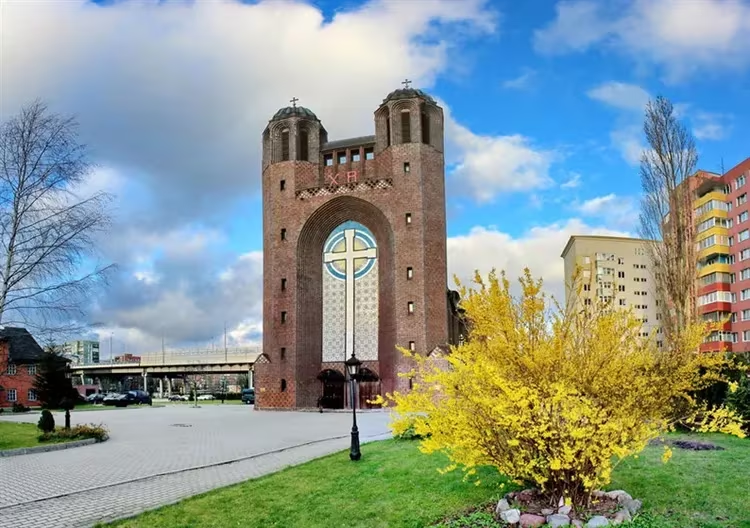
The cathedral is located on October Island. The building was built in the 30s of the last century for the Lutheran-Evangelical community. A. Kikton became the author of the project. The monumental, rather gloomy, church of the Cross was distinguished by its Gothic features. During the Second World War, one of the towers burned down, much of the interior decoration was lost.
In the post-war period, the church was used as a factory building, and then it was completely abandoned. The foundation went into the ground, cracks appeared on the walls… In the 90s of the 20th century, the church was transferred to the Orthodox Church and restored. Now services are held here, and not only believers, but simply art lovers come to admire the beautiful iconostasis trimmed with amber.
Friedland Gate
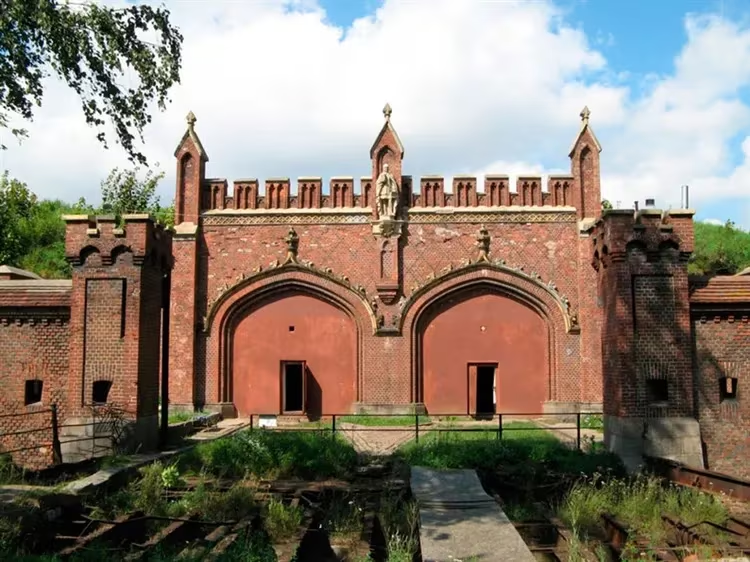
This museum, located at St. Dzerzhinsky 30, very interesting. The gates themselves are part of the defensive system of the 18th century. The museum was born much later. Various old things related to the history of the city find shelter here. When they cleaned the ponds in South Park, they found a lot of interesting little things at the bottom – they became the basis of the collection. In 2002, the museum was officially opened here. Today it includes 3 expositions: “Virtual walk through the streets of Koenigsberg”, “Knight's Hall” and “Civilization begins with sewerage”.
Here you can immerse yourself in the atmosphere of the old Königsberg, learn a lot about the Teutonic Knights, and, of course, get acquainted with how the sewer system arose and improved. In addition to permanent exhibitions, various exhibitions often take place here.
Rossgarten Gate
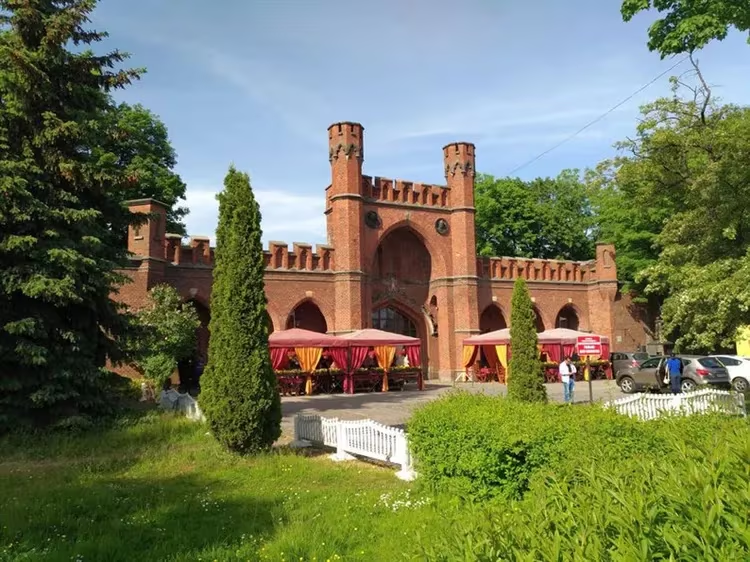
Located next to Vasilevsky Square. Built in the 19th century, on the site of an ancient gate dating back to the 17th century. The project was carried out by engineer von Heil, while Wilhelm Stürmer became the author of the sculptures. When the gate was restored after the Second World War, a restaurant was opened here. The gate bears the stamp of history – after all, once the troops defending the city were stationed here. On the sides of the passage there are three casemates. Their windows overlook the city. All decorations are also located on the “city” side. The outer side of the gate is “harsh”, here you can see only loopholes and a blockhouse from which fire was fired.
Amber Museum
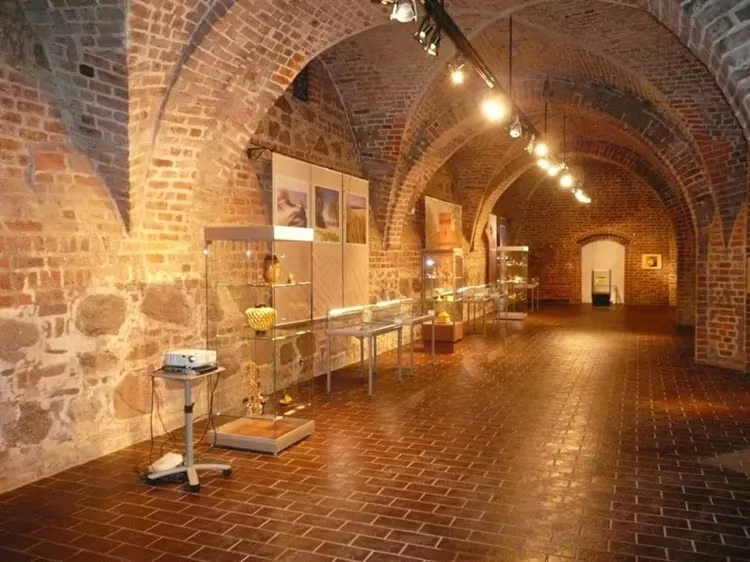
Everyone knows that Kaliningrad is a city of amber, popularly called the “sun stone”. Therefore, such a museum simply had to appear here. It was opened in 1979 in a fortress tower of the 19th century. Now here you can get acquainted with scientific experiments related to amber, and see 28 halls of the museum. First you will learn about the origin of the “sun stone”, you will see ancient products made from it. Some exhibits were obtained from the Kremlin Armory. Then you will be told about the industry associated with the processing of amber. And, of course, your attention will be presented to numerous works of artists-jewelers of our days.
Day 2 – Curonian Spit
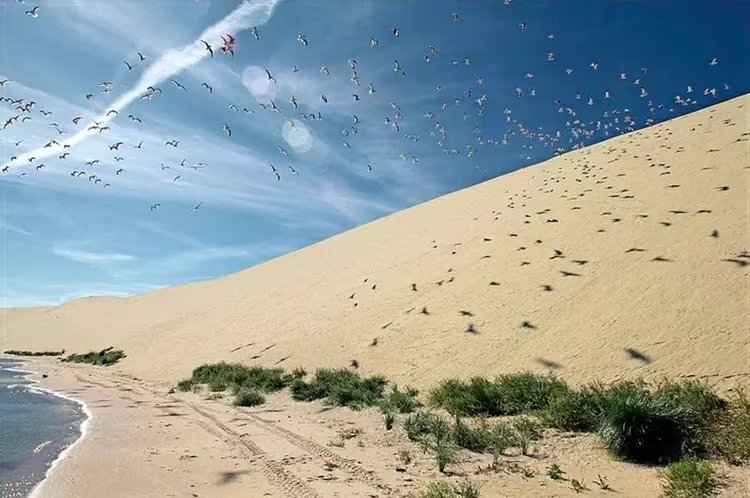
It makes sense to dedicate the second day to exploring the Curonian Spit: this strip of land separates the freshwater Curonian Lagoon from the Baltic Sea. In 1987, a national park was opened here. You can come here by regular bus from Kaliningrad: this type of transport runs about once an hour. If you arrive by car, you will need to pay a small fee. The funds go to a good cause: they help save the ecology of the spit.
The Curonian Spit is a little less than 100 km long, and its width fluctuates, being 400 m at its narrowest point and 4 km at its widest. The spit was formed due to the sand caused by the waves, about 5 thousand years ago. The ancient tribes of the Curonians and the Vikings lived here, so archaeologists have found many interesting finds here.
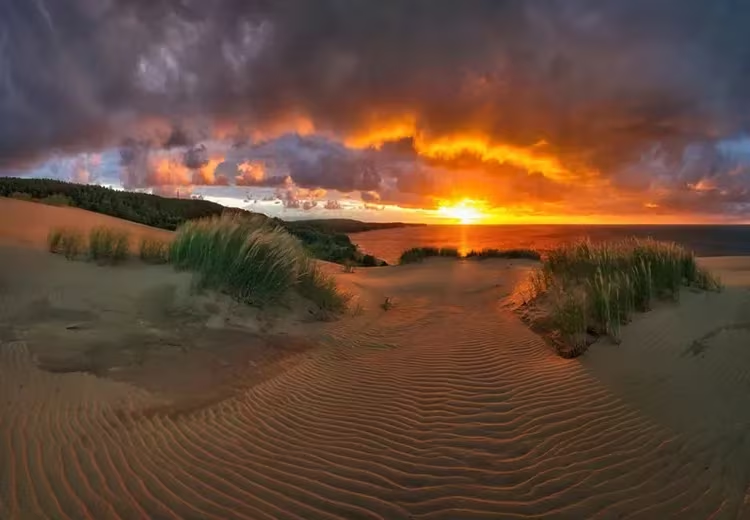
Tourists are interested in the very beauty of the Curonian Spit, its unusual landscapes. Throughout the day, one will replace the other. Passing through the desert, you will step into the meadow, and then find yourself in a pine forest, which will suddenly give way to a swamp. Is it possible to swim here? But how! Summer in these parts is relatively warm, autumn is also mild, water in shallow bays warms up to + 26C. You just need to remember that not all places are available for tourists to visit.
You can visit one of the villages – Rybachy, Lesnoy or Morskoy. By the way, you can always have a bite to eat and relax here. There are hiking trails in the large national park. But in general, the ecology of the Curonian Spit is very vulnerable, so it cannot be violated.
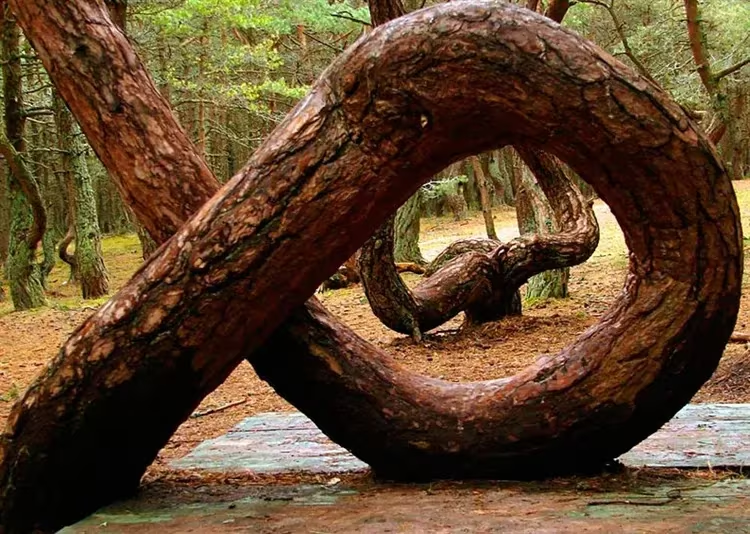
Another treasure of the Curonian Spit is the birds. There are many of them here. It is through the spit that they fly when they follow from the northern countries to Africa or to the south of Europe. An ornithological station operates here, where a lot of scientific work is carried out, bird ringing is carried out. The foundation of the station was laid at the beginning of the 20th century. Here you will forget about time, enjoying the sound of the waves, the voices of birds, inhaling the smell of pine summer. And, of course, you can find amber on the shore.
Day 3 – Baltiysk
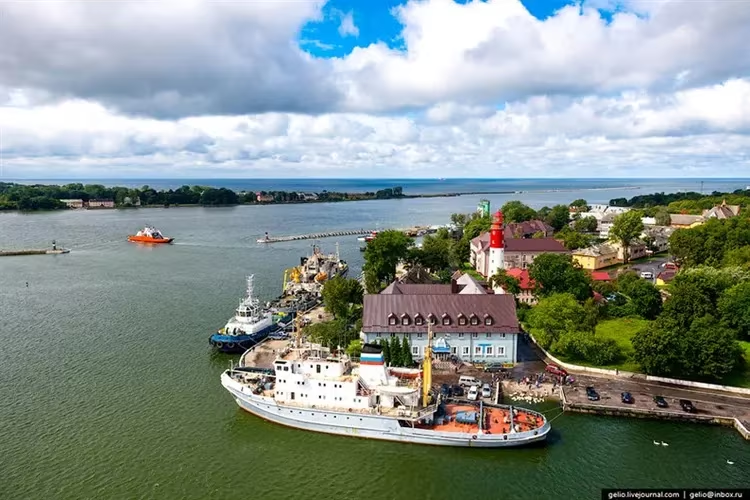
This picturesque city is the westernmost point of Russia. And his story is simply amazing. There are probably more historical and cultural monuments here than in Kaliningrad itself. Back in the 13th century, there was a fishing village on the site of modern Baltiysk, in the 14th century it began to be called “Pil”, which means “fortress”. In the 16th century, a strait formed, which to this day separates the Baltic Spit from the rest of the earth. Pil was transformed into Pillau, and now ships from different countries moored here. Pillau began to be actively built up, the inhabitants also thought about its defense, creating earthen fortifications. In the 17th century, during the Polish-Swedish war, a powerful citadel was founded. The Swedes did it, but then the locals bought this citadel.
In the middle of the 17th century, about 300 people already lived in Pillau, a church, a mill to grind their flour, and a lighthouse were built here. The Russian emperor Peter the Great also visited here three times. Since 1725, Pillau has been considered a city. A quarter of a century later, a Russian dam and an Orthodox church appeared here. This is the merit of Elizabeth II.
In the 19th century, when Prussia was at war with France, the defenders of Pillau defended themselves heroically. With the opening of the Königsberg Canal, the importance of Pillau as a seaport decreased. In 1918, Soviet power was established in Pillau. In 1945, at the end of World War II, there were fierce battles. Since 1946, the city began to be called Baltiysky. A few years later, a naval base appeared here.
What is worth seeing in Baltiysk? You can buy a sightseeing tour of the city. If you look at it yourself, pay attention to:
Of particular interest from this list is the Museum of the Baltic Fleet and the exhibition of military equipment.
If you like songs with a guitar, then there is a chance to get to the festival of bard songs “Baltic Ukhana”, which takes place annually in Baltiysk.
Thus, even in 3 days, you can see a lot in Kaliningrad and the region. May this region forever remain a wonderful memory for you.