
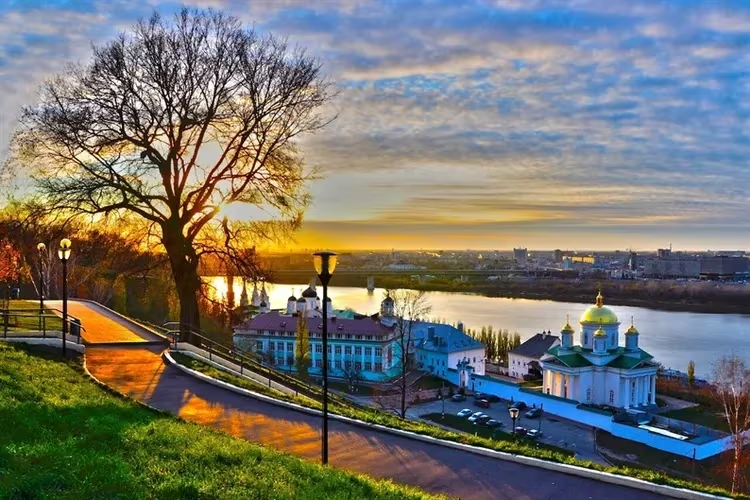
What to see in Nizhny Novgorod in 1 day – route, photo, description, map
Nizhny Novgorod is the capital of the Volga region, as well as one of the largest commercial, industrial and cultural centers of Russia. The ancient city dates back to the beginning of the 13th century. It is quite original and versatile for travelers. Here everyone will find classes to their liking and preference.
The unique nature and diverse landscape, combined with the local architecture, fascinates with its beauty.
cable car
Guests of the glorious city are recommended to take a “flight” over the great full-flowing Volga and enjoy the breathtaking views of the natural beauties of the Volga expanses. This is facilitated by the Nizhny Novgorod cable car, which was launched in 2012. It has become a familiar means of transportation for local residents and a popular attraction.
Transport connects Nizhny Novgorod with the neighboring village of Bor, from where every morning people go to work in the center of the capital of the Volga region. The unsupported span of the cable car above the water surface is 861 meters, which is a record height in Russia and Europe.
Modern passenger trailers are equipped with comfortable seating. Viewing windows allow you to see the picturesque panoramas of the surroundings: the rapid flow of the river, dense thickets of plants on the banks, as well as residential areas with high-rise buildings. All kinds of swimming facilities ply along the water stream.
On one of the hills, the domes of the temple of the monastery stand out. The cable car passes over uninhabited islands covered with forests. The total length of the path is 3,661 meters. The duration of the trip is 15 minutes.
Upper Volga embankment
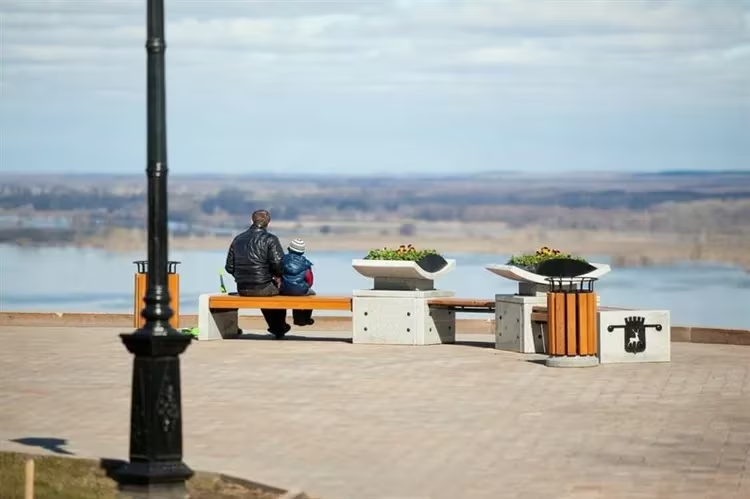
The hallmark and decoration of the city is the Verkhne-Volzhskaya embankment. It stretches along the bank slope over the Volga. The pedestrian boulevard was equipped and ennobled by order of Emperor Nicholas I in 1834.
He highly appreciated the beauty of the Volga landscapes, but the pleasant impressions from admiring the picturesque places spoiled the shacks and numerous heaps of garbage around with their appearance. In record time, the street turned into a wide avenue, paved with neatly hewn cobblestones. Instead of dilapidated buildings, stone houses were erected, which have survived to this day.
Walking along the Upper Volga embankment, tourists will inevitably come across an old architectural ensemble. Restored mansions in the style of pre-revolutionary architecture give the street a unique old Russian look. Of interest is the “House of Railway Workers”, the merchant's estate of Rukavishnikov, the building of the former Institute of Noble Maidens.
The facades of the buildings are decorated with stucco elements, bas-reliefs and sculptures. Many mansions keep no less luxurious interiors behind their pompous facades. Antique furniture, which served as the furnishings of local aristocrats, complement the collection of works of art with its appearance. The sightseeing route will lead travelers to the monument to the famous pilot V. Chkalov and the chapel named after Admiral Ushakov.
Chkalov staircase
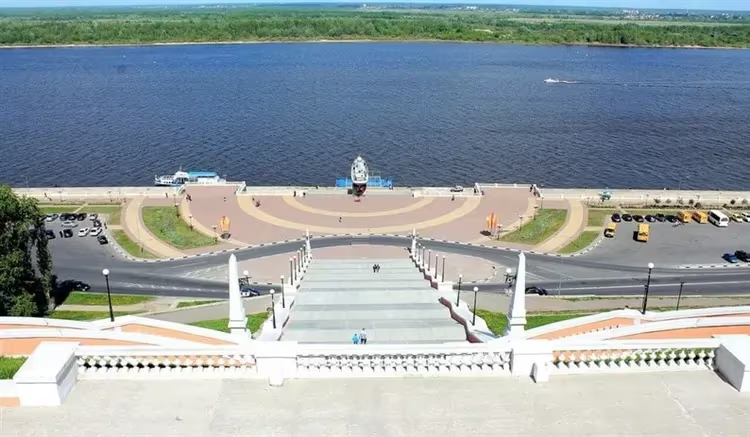
It is impossible to pass by the Chkalov Stairs, founded in 1943 after the victory of the Soviet troops near Stalingrad. The monumental building impresses with its grandiose scale. It is made in the form of an infinity sign and has 560 steps. The staircase starts from the observation deck at the monument to Valery Chkalov and descends along the steep slope of the right bank of the Volga to the memorial – the boat “Hero”.
During the descent and ascent, tourists will have the opportunity to admire the beautiful views of the confluence of the Volga and Oka, protected areas and forests. On the opposite bank you can see the temple of Alexander Nevsky, the Nizhny Novgorod Fair and the magnificent football arena. The decorations of the stairs will appear in all their glory: bas-reliefs of the Soviet era, balustrades, tetrahedral obelisks and lanterns.
Nizhny Novgorod Kremlin
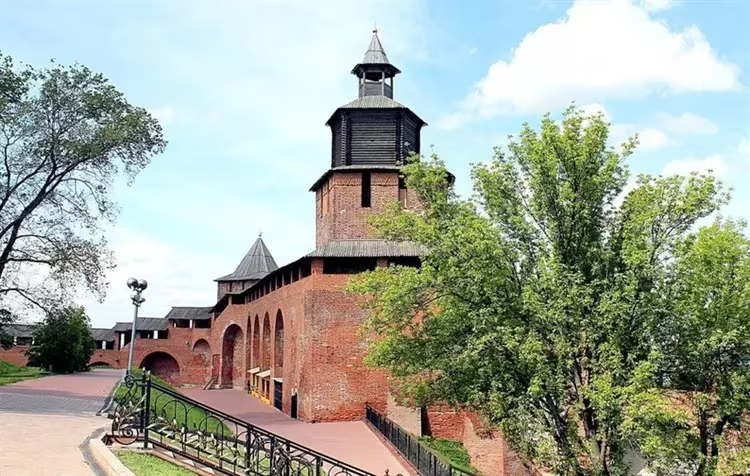
One of the main symbols of the capital of the Volga region is the Nizhny Novgorod Kremlin. It is impossible to ignore him. The impregnable fortification served as a reliable defense of the city for several centuries. She repeatedly repulsed the attack of enemy troops. A unique military engineering structure of the 16th century was erected on a high hill at the confluence of the Volga and Oka. The medieval architectural monument is famous for its mighty fortress wall with narrow slots of loopholes and high towers.
On the territory of the Kremlin there is a picturesque park with well-groomed alleys, lawns and flower beds. It is especially beautiful here in summer, when everything around is literally immersed in the greenery of plants. Museums, a concert hall, a philharmonic society, a governor's residence and other administrative institutions are located in numerous historical buildings.
History buffs should visit the Dmitrievskaya, Ivanovskaya and Zachatskaya towers. They open interesting expositions dedicated to the rich history of the city and archaeological excavations. Of interest is the obelisk to Minin and Pozharsky, the Eternal Flame, a memorial to the fallen Soviet soldiers. The exhibition of military equipment from the times of the Great Patriotic War deserves attention.
Cathedral of the Archangel Michael
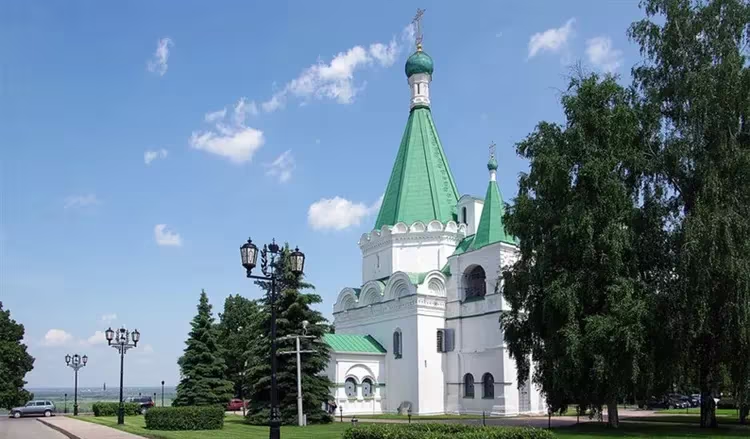
Among the sights of the Nizhny Novgorod Kremlin, the tented Cathedral of the Archangel Michael occupies a special place. Despite numerous repair and restoration works, its historical appearance has been preserved in its original form. According to legend, it was near this temple that Kuzma Minin called on his compatriots to fight against the Polish invaders.
The white-stone building 39 meters high belongs to the masterpieces of ancient Russian Orthodox architecture. The temple is built in the form of an octagon placed on a quadrangle. Its walls end with kokoshniks. The porches are attached to the cathedral and the altar apse adjoins.
The main decoration of the facade of the church is a cone-shaped tent covered with scaly figured green tiles. It is crowned with a small dome with a cross. In the interior decoration, a beautiful iconostasis and skillful fresco painting stand out. Scenes from the history of Nizhny Novgorod are depicted on the walls. The main relic of the temple is the ashes of the militia hero Kuzma Minin.
NCCA “Arsenal”
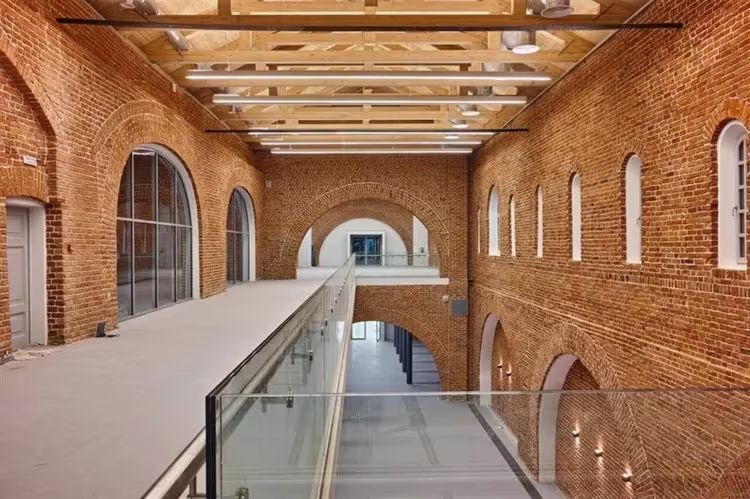
The State Center for Contemporary Art “Arsenal” pleases its guests with various events, film screenings, master classes, art exhibitions and scientific and educational projects. This is one of the most progressive institutions in the city. Its activities are aimed at developing a cultural environment and organizing creative leisure for people of all ages.
The museum exposition is located in the historic building of the Nizhny Novgorod Kremlin. The building, erected in the second half of the 19th century, was intended to store weapons and ammunition. Red-brick masonry walls, narrow loophole windows, vaulted ceilings and cast-iron stairs – all this creates a special atmosphere of antiquity.
The absence of a permanent exhibition allows visitors to see new, original, interesting works of art. Artistic paintings, sculptural compositions, photographs, as well as original installations and art objects are exhibited in spacious pavilions. Festivals, performances and music concerts are regularly held here.
Bolshaya Pokrovskaya street
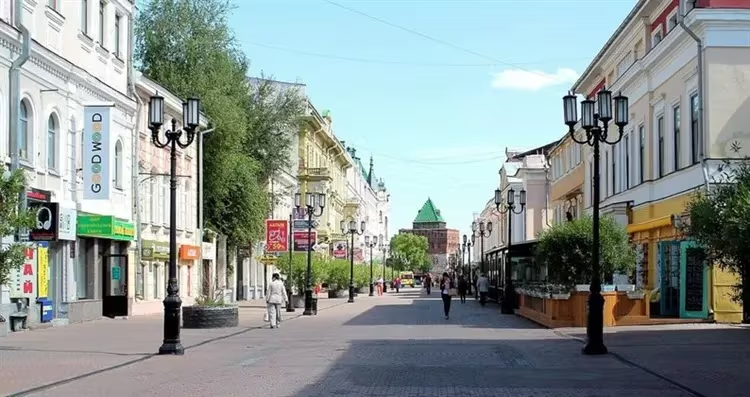
A walk along Bolshaya Pokrovskaya Street should become an obligatory item in the program of acquaintance with the sights of Nizhny Novgorod. This is the central pedestrian boulevard, the length of which is more than two kilometers. It attracts the attention of numerous tourists with its ancient architectural ensemble and a considerable number of sculptural compositions.
Most of the historical buildings were built at the turn of the 18th-19th centuries in the style of classicism and baroque. The facades of majestic buildings are distinguished by a variety of decorative decorations and original colors. They are decorated with stucco, bas-reliefs, columns and various figures.
There are theaters, museums, schools, educational buildings of universities, banks, shops and restaurants on Pokrovskaya Street. Noble estates and tenement houses allow you to feel the era of Tsarist Russia. Numerous sculptures are among the symbols of the popular boulevard. Here you can see bronze figures of people and animals: from a policeman and a postman to a cat hunting pigeons.
National Bank
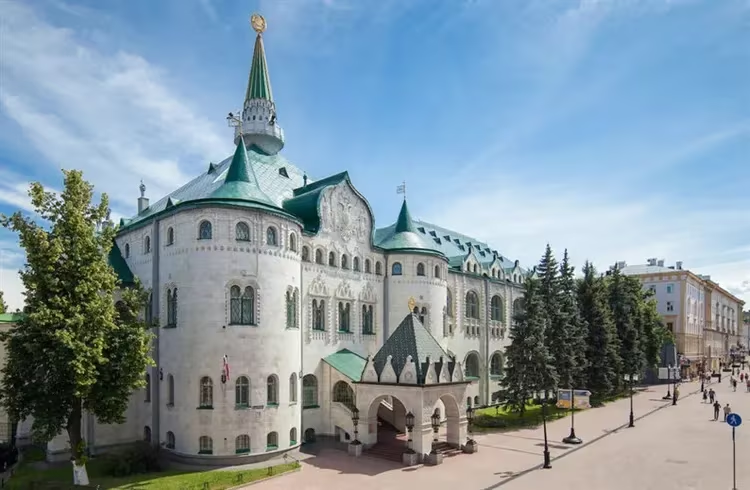
While walking along Bolshaya Pokrovskaya Street, tourists will certainly pay attention to an impressive building resembling a medieval castle. This is the State Bank, built in 1911 in honor of the 300th anniversary of the reign of the Romanov imperial family. The unique architecture of the building has no analogues in the history of Russian architecture.
Of great interest is the facade of a financial institution, lined with white Ural stone. A figured emerald roof, carved window frames and abundant decoration with relief ornaments – all this gives the building a solemn and unique look. The central place is occupied by a pediment in the form of a dome. It depicts a huge coat of arms of the Russian Empire surrounded by angels. The entrance to the bank is a porch with a hipped roof.
Massive wooden doors finished with copper chasing from the side of the street lead to the luxurious halls of the institution. The marvelous wall and ceiling art has gained popularity all over the country. In the picturesque interiors one can see multi-figure compositions, allegorical images, colorful ornaments and symbols of royal power. In the design of the premises, not only artistic paintings were used, but also skillful forging, woodcarving and tiles.
Embankment Fedorovsky
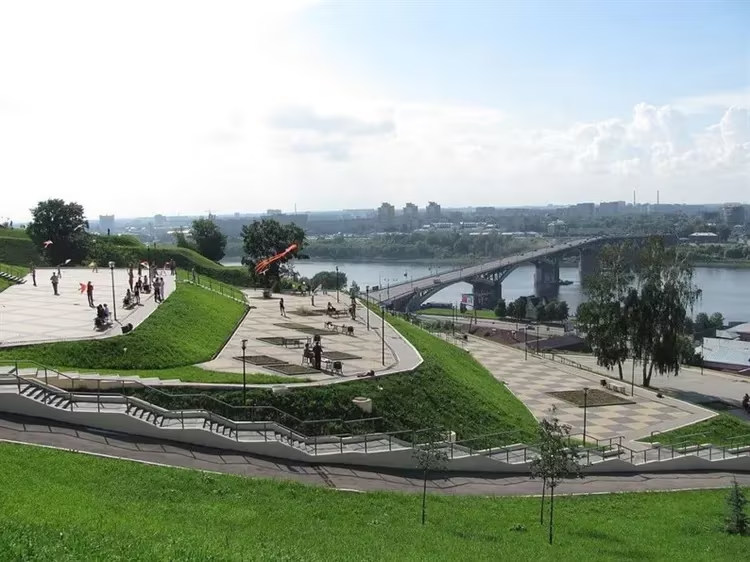
Fedorovsky embankment is located in the immediate vicinity of the confluence of the Oka and Volga rivers. It bears the name of the Soviet doctor of geological and mineralogical sciences. This is one of the best viewing platforms in the city. From here you can enjoy breathtaking panoramic views of the Kremlin towers, domes of cathedrals, ennobled Nizhny Novgorod quarters and architectural ensembles.
Popular among tourists and locals, the walking area is located on the hills, streaked with winding footpaths. Terraces and slopes, alleys and green lawns create a pleasant holistic impression of this picturesque place. Bridges span the steep ravines.
Tourists will meet a bronze statue of the great writer and playwright Maxim Gorky, who sits and thoughtfully surveys the Volga distance. On the embankment there is a monument to the world-famous author of adventure novels – Jules Verne. The French writer stands in a balloon basket, holds a telescope in his hands and contemplates the panorama of the city.
Chambers of A. F. Olisov
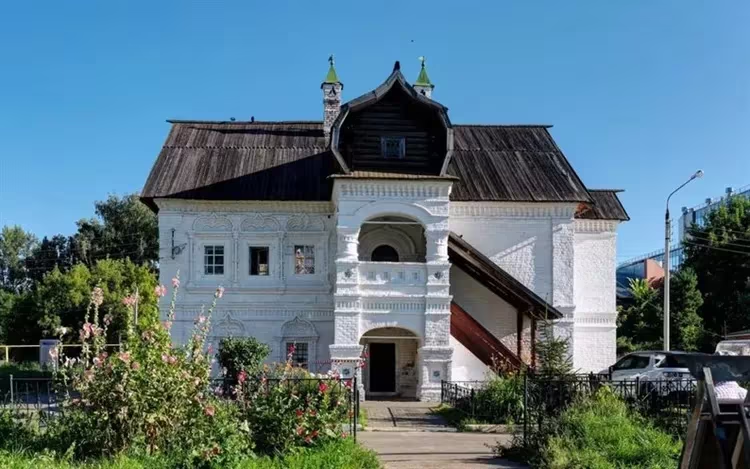
In the historical district of Nizhny Novgorod there is one of the monuments of ancient Russian architecture – the chambers of the merchant A.F. Olisova. Afanasy Firsovich was a noble and influential person in the city. He held the post of customs head, was in charge of the salt and fisheries, and also supplied bread to Moscow.
The two-storey white-stone building is decorated with relief tiles and cornices with elements of stone carving. The house is crowned with a gable wooden roof. Window openings are framed with kokoshniks and patterned architraves. The front porch leads to the second floor, where the living room and bedroom of the owner of the chambers were located. The first floor was intended for utility and storage rooms.
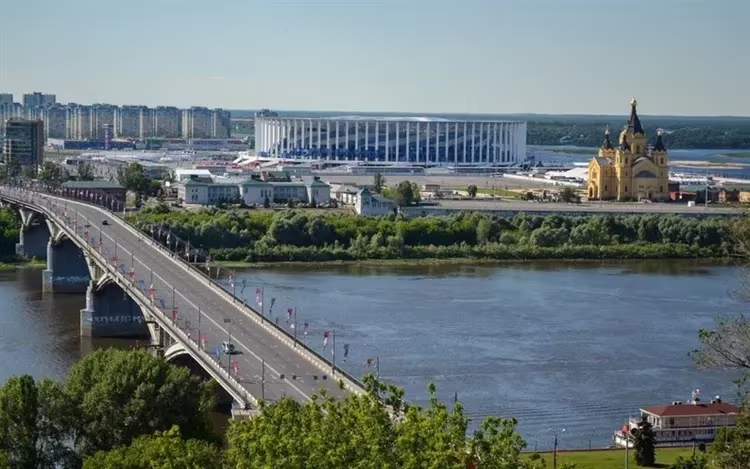
This is the first permanent crossing over the Oka River, connecting the Nagornaya and Zarechnaya parts of the city. The construction of the structure consists of six arched spans 121 meters wide. Above them is laid a roadbed for pedestrian and vehicle traffic. Massive supports are made of metal concrete. The length of the bridge is 795 meters.
Tourists are advised to admire the beautiful views from the Kanavinsky Bridge. Their eyes will see the confluence of the two great Russian rivers Volga and Oka, the vast expanses of the Volga expanses, the majestic Alexander Nevsky Cathedral, the Nizhny Novgorod Fair and other architectural monuments.
Nizhny Novgorod Fair
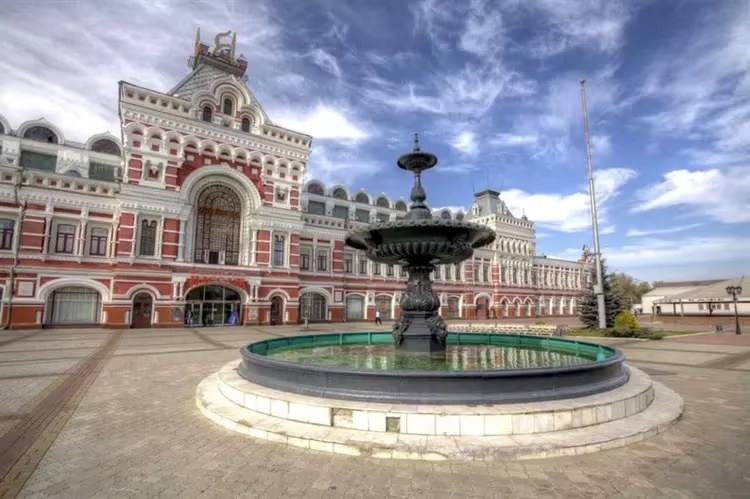
From time immemorial, the capital of the Volga region has been the central place for retail and wholesale trade in the Russian Empire. Foreign merchants and entrepreneurs from all over the country came to Nizhny Novgorod. The city is famous for holding numerous large-scale fairs.
In the 19th century, a majestic building in the style of ancient Russian architecture was erected on the banks of the Oka River. The grandiose building has become the hallmark of the city and has been recognized as an object of cultural heritage. Shops were located on the ground floor. The second tier was intended for trade committees, bank branches, telegraph and post offices.
The elongated facade of the Fair House is replete with decorative details. Massive fortress towers with hipped roofs and snow-white elements of stone carving, columns and arches, cornices and numerous rectangular recesses give a special solemn and colorful look. To date, the Nizhny Novgorod Fair is one of the largest arcades and exhibition centers in Russia.
Arrow of the Oka and Volga
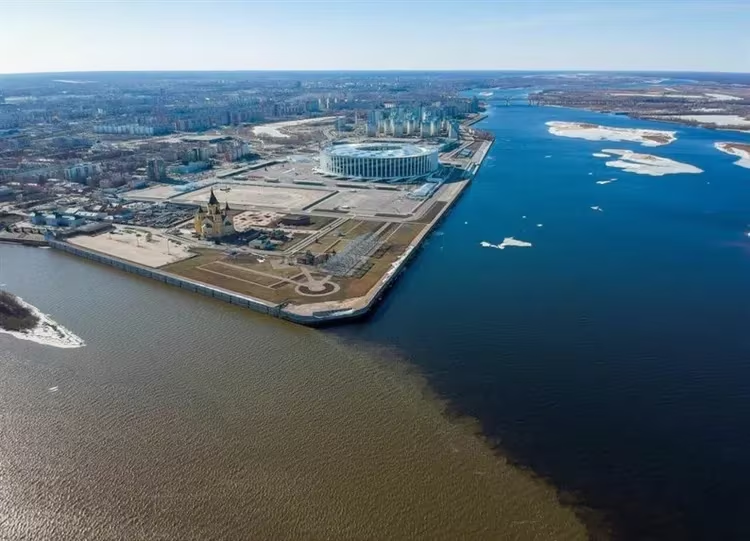
This is a peninsular cape at the confluence of the Oka and Volga. It divides the city into two parts: upper and beyond the river. High banks provide an opportunity to admire a unique natural spectacle, as the multi-colored waters of two rivers first flow parallel to each other, and then merge into a single course. From the expanse of the river, which opens from any hill, is breathtaking.
The famous Strelka can be seen from the Fedorovsky Embankment, Minin Square and the territory of the Nizhny Novgorod Kremlin. In addition to the fascinating panorama of the Volga expanses, tourists will be interested in seeing the majestic Alexander Nevsky Cathedral and the grandiose football stadium.
The developed transport infrastructure of Nizhny Novgorod allows tourists to independently, quickly and comfortably get to the most interesting places in the capital of the Volga region. Strigino International Air Harbor is located 17 kilometers from the center. Buses and fixed-route taxis regularly operate from the airport to the city. The duration of the trip largely depends on traffic congestion.
The average travel time is 40-50 minutes. The first departure is 5:30. It is important to know that public transport does not run at night. Guests can always use a taxi service or book a private transfer in advance.
For those who prefer to travel by train, it will not be difficult to get to anywhere in the city. In the immediate vicinity of the railway station is the metro station “Moskovskaya”. To be in the tourist center, you need to get to the station “Gorkovskaya”. The trip time on the subway reaches 12-15 minutes. Near the railway station there is a considerable number of bus routes and fixed-route taxis. The journey takes about 25 minutes.