
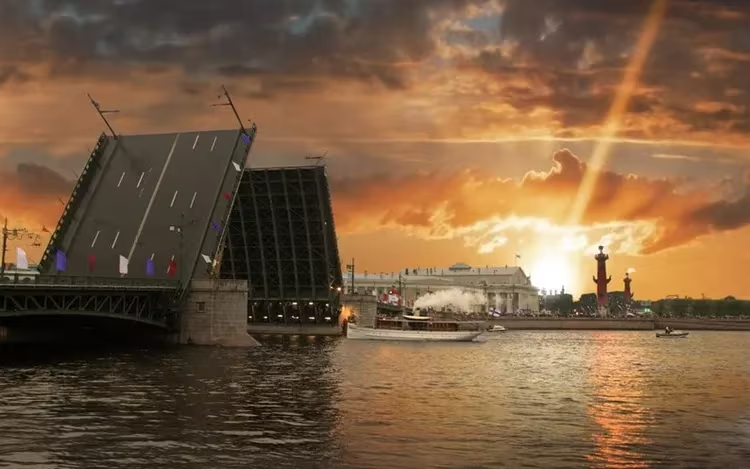
What to see in St. Petersburg in the first place – photo, description, map
Traveling to a city filled with magic, magic and the extraordinary beauty of architectural sights is interesting at any time of the year. In summer – when the realm of white nights comes, in winter – among the snowy charm. Even fog, frequent rains do not reduce interest in the city. And the question always arises of what to see in St. Petersburg in the first place. Various offers are possible, but many of them come down to visiting the following places.
Nevsky Prospect
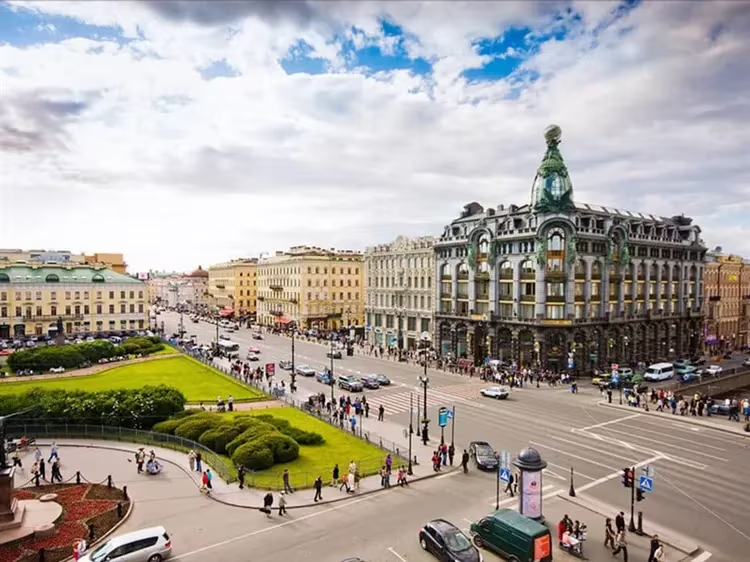
The main street of the city is its hallmark. Once upon a time, the road that connected the Admiralty with the Alexander Nevsky Lavra was called “the road to the Nevsky Monastery”, Big Perspective, Big Nevsky (unofficial names).
The first official name of the old road was Nevskaya Prospektivnaya (1738). Since 1781, the real name of the street was born. The avenue passes through the historical part. There are many architectural monuments, museums, theaters on it.
Among them are the Admiralty, the Stroganov Palace, the Gostiny Dvor, the Kazan Cathedral, the Moika Embankment, the Anichkov Bridge, etc. To come to the places where Pushkin walked, Samuil Marshak wrote wonderful poems. There are several metro stations on Nevsky Prospekt.
It is best to get off at the Nevsky Prospekt / Gostiny Dvor station. Walk the entire avenue from the station “Mayakovskaya” or “Admiralteyskaya”.
Winter Palace
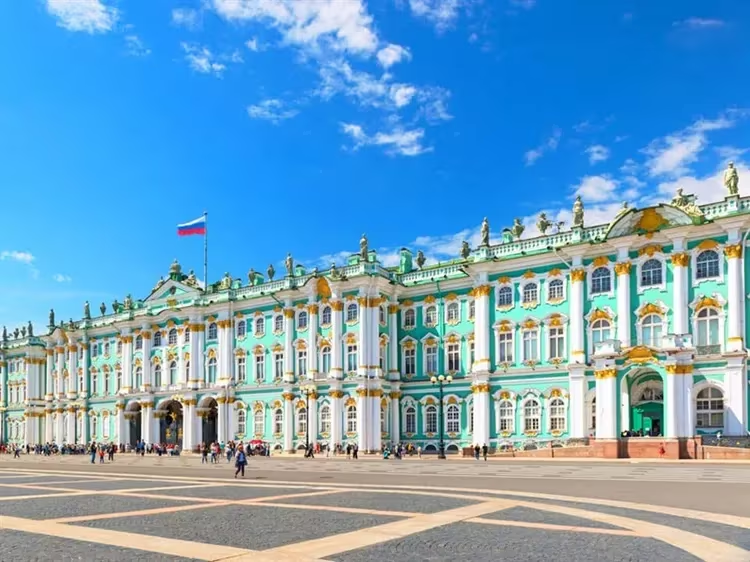
The desire to look at the majestic structure of the city, go around it, learn legends, secrets from the life of royal people appears on any visit. During the walk, it is proposed to discover new moments in architecture, the history of the fifth imperial palace, which adorns Palace Square.
Look at the figures of 10 majestic Atlanteans (they were built by masons in 1844). An architectural masterpiece of the Elizabethan Baroque, stretching along the Neva for 210 m.
Created by the genius Rastrelli, construction was completed in 1762. After repeated alterations and additions, the palace has 1084 rooms, 1476 window openings, 117 stairs. Among them are the famous premises: the Alexander, Armorial, White Halls, the Malachite Living Room, the Jordan Stairs, etc.
The height of the building is 23.5 m. An interesting decree of Nicholas I forbade the construction of adjacent buildings higher than the palace.
The architectural technique made it possible to create an effect called the “Skyline of St. Petersburg“. Almost the entire city is visible from the roof of any building in the historic center. The buildings of the palace were built around the courtyard.
Together with the square, they form a beautiful ensemble of the modern northern capital. A pompous building with a colonnade, statues and original vases on the cornice, stucco served as the residence of Russian tsars for 150 years. Since 1917, it has been part of the museum complex.
Hermitage
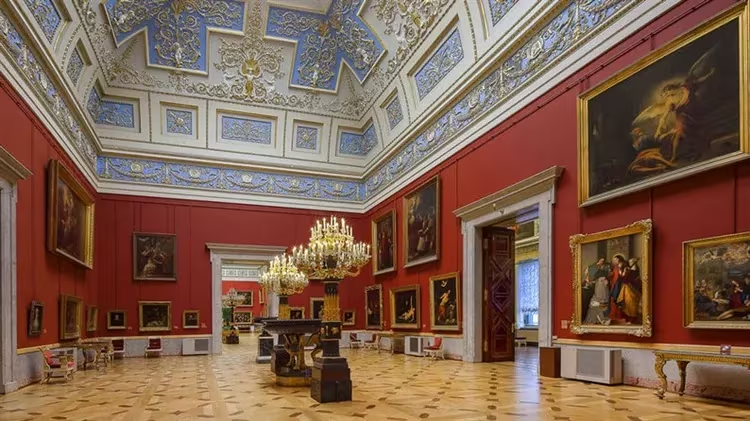
Silent giants guard the entrance to the museum complex filled with millions of art and cultural treasures brought from all over the world. This year the unique museum turned 255 years old.
The oldest treasury of the country's art opened its doors to anyone in 1852 during the reign of Nicholas I. The founder and ideological inspirer of the creation of the museum was Catherine the Great. From her collection began to form the greatest fund of the Hermitage.
The first building of the museum was an extension to the Winter Palace. It served as a corner for seclusion (translated from French, it means the Hermitage). Now the area of the Hermitage is 233,345 km 2. It houses 3 million exhibits.
The expositions are located in 365 thematic halls. The complex includes six buildings: the Big (Old) Hermitage, the Winter Palace, the New, the Small Hermitage, the Theatre. They connect. The museum has the right to use the General Headquarters, the Old Village Restoration Center, the Museum of the Imperial Porcelain Factory, the Menshikov Palace.
The museum's collections contain paintings, sculptures, drawings, archaeological finds, etc. Popular with visitors are the halls: Alexander, Pavilion, White, Concert, Knights. Halls of Ancient Egypt, Titian, Leonardo da Vinci, Antiquity Culture.
To get into the magical world of achievements of different centuries, you need to climb the famous Jordan Stairs. Imagine important foreign ambassadors going to the emperor or hear the steps of the procession going to the hole (Jordan) on the feast of Epiphany.
Alexander Column
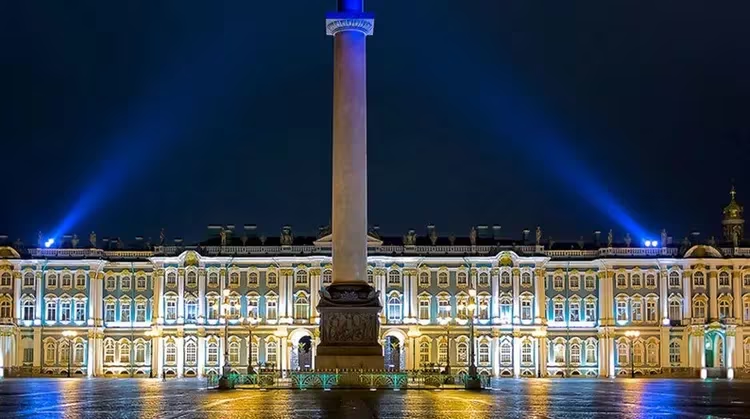
A single ensemble of Palace Square is complemented by a tall column made of granite of a rare shade and held only by its own weight. The monument was built in 1834 and is dedicated to the victory of the Russian people over Napoleon.
The style of the column continues the traditions of the triumphal structures of antiquity (Troyan's Column). The main difference between the Russian masterpiece is the use of a single piece of monolithic stone.
In height, it exceeds the original source (the monument of Rome) by 10 m and is considered one of the highest columns on the planet. The history of creation, transportation from the Pyuterlak quarry (the work was carried out under the guidance of a 20-year-old boy), the installation technology of the column have many interesting moments that have become legends of the city. The height of the column is 47.5 m.
Its main parts: pedestal, monolithic middle, top, fence, bas-reliefs. Elements of the decoration of the column express the glorification of victory with the use of chain mail, helmets, armor, shields, weapons of the Russian army.
They are made in full accordance with the originals stored in the Armory. The bas-reliefs show the exact dates of the most important victories. Figures of double-headed eagles adorn the pedestal. The top of the slender column is completed by the figure of an angel with a cross. He has become a symbol of peace, looks down, protects the city and preserves the peace of the inhabitants.
Admiralty tower
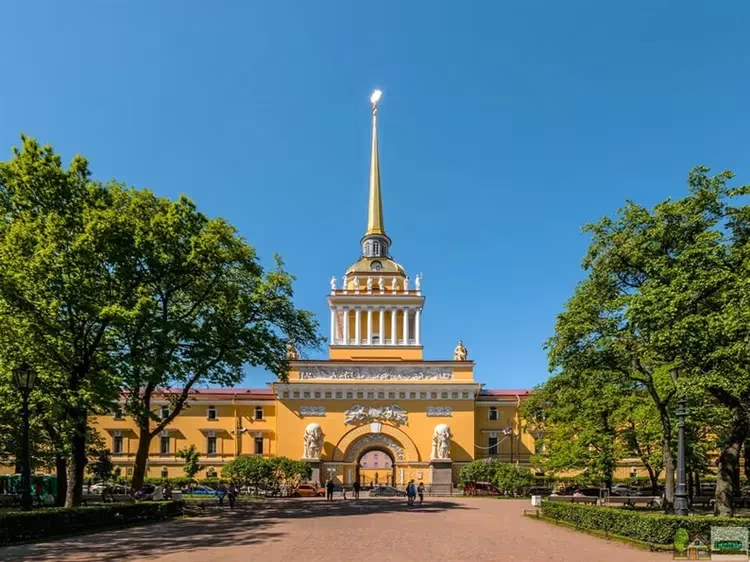
The symbolic boat has been towering over the city since 1711. Sparkling on the tower of the Admiralty, he glorifies the strength of the Russian fleet. The tower is located in the central part of the main facade. It has been rebuilt and restored several times (the last work took place in 2013).
The first tower was wooden, in 1738 the construction of a stone tower was completed under the leadership of Korobov. The last version was created by the architect Zakharov.
The Admiralty building became three-storey, it was decorated with 56 statues, 11 bas-reliefs, 350 stucco elements. A new boat appeared (the first one stood until 1815 and was lost, the second one is in the Maritime Museum). The view of the first ship has a three-masted profile, similar to the frigate of Peter I.
There is a legend that three flags were made of pure gold. A ship made of gilded copper is fixed on a spire (a slender octagonal pyramid with a height of 23 m). Below it is a ball with a golden container, in which there were samples of coins minted in the city, and now the Constitution of the country.
The edges of the pyramid are covered with gilded copper sheets. A special massive cube gives stability to a high structure. Above it are 28 statues, softening the transition to the narrow part of the tower. At the level of the columns is a gallery providing a panoramic view.
The clock face is located in the drum above the colonnade. The tower is often called the “Admiralty Needle”, and a beautiful boat is one of the primary souvenirs of the city.
Bronze Horseman
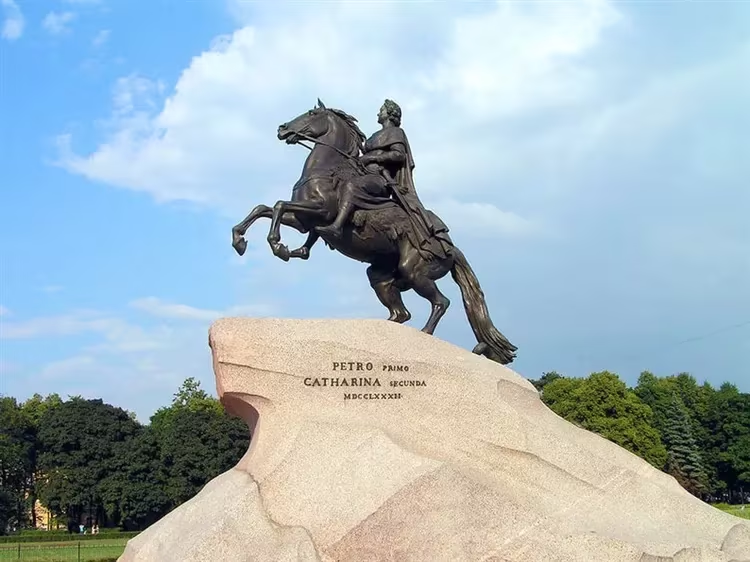
In Russia, monuments to the tsars were not erected until the 18th century. Peter I dreamed of decorating the city, born of his dream, with a monumental sculpture after death. It appeared in the center of the emerging Senate Square in 1782 in honor of the centenary of the tsar's accession to the throne. St. Isaac's Cathedral was located here (it was moved to its current location).
The first bronze equestrian statue was created by Rastrelli, but Catherine II ordered a new one to be created. The project proposed by Maurice Falcone won. A rider with a laurel wreath on his head flies up to the top of a sheer cliff on a mighty horse.
In his figure, clothes, imperious look, it is easy to recognize the pace of Peter I. All elements of the monument have a hidden meaning. Hide legends, real life stories. For example, a bearskin in place of a saddle, a snake at the hooves of a proud horse, a boulder (pedestal).
This Thunder-stone, brought from the swamps near the village of Horse Lakhta (after it was raised, Petrovsky Pond was formed, which still exists today). It is said that the king watched the enemy during the Great Northern War from this monolith.
It took two years to deliver the stone to the place, many difficult moments happened during this time. The monument was opened after 12 years of hard work. In kind for the creation of the horse were horses from the royal stables: Brilliant and Caprice. The image of the king was performed, taking as a model the figure of General P.I. Melissino.
Kazan Cathedral
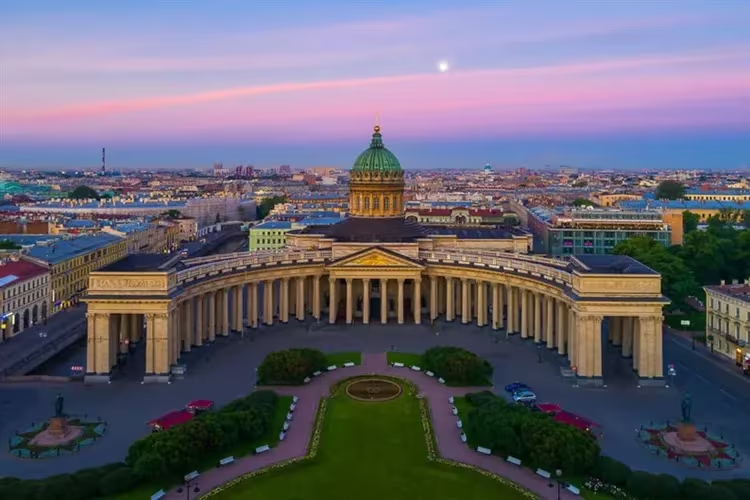
One of the largest churches in the city, which received the status of a Cathedral during the reign of Elizabeth Petrovna, appeared on the site of the Nativity – Mother of God Church. It was erected in honor of the miraculous icon of Our Lady of Kazan. The same icon that was found 25 years after the fire in Kazan. The icon (“zealous intercessor”) is considered the patroness of the city, the Romanov dynasty.
She appeared here in 1708. Members of royal families got married in the church named after her. Pavel I Princess of Darmstadt. At the behest of Paul I, in the middle of the 18th century, the Cathedral acquired its grand appearance, which has survived to this day.
After the war with Napoleon, it acquired the functions of a monument of Russian glory: Kutuzov is buried here, banners, keys to captured cities, war trophies are kept. The architectural features of the temple are a colonnade of 96 columns, a huge dome (it was the first dome made of wrought iron with a diameter of 17.7 m).
Initially, the facades of the cathedral were finished with marble slabs, decorated with statues and reliefs. The northern gates were made of bronze in the style of the famous “paradise doors” of the Baptistery of Florence. Together with the main shrine of the cathedral (the Kazan icon of the Mother of God), the cathedral now houses revered images of St. Nicholas the Wonderworker, the icon of the Savior, the Resurrection of Christ with a particle of the Holy Sepulcher, Golgotha with a particle of the Life-Giving Sepulcher.
In front of the temple from the 30s of the XIX century there are monuments to Kutuzov, Barclay de Tolly.
Saint Isaac's Cathedral
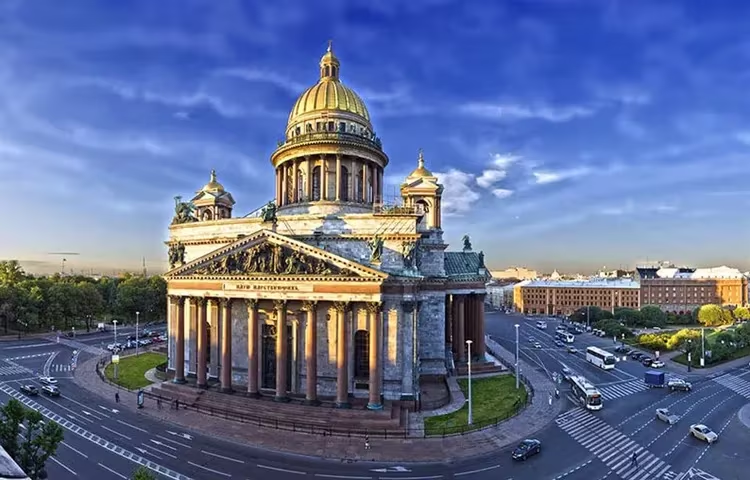
The idea of a monumental structure built to last is expressed by the phrase on the northern portal: “Lord, the king will rejoice in your power.” The five-domed temple with four belfries has a height of 101.5 m, a length of 111.3 m, a width of 97.6 m, a dome of 25.8 m in diameter.
The building impresses with its size, grandeur, originality. 72 columns made of solid granite pieces rise to a height of 40 m (for the first time in the history of architecture). The 30-ton main bell features portraits of Russian sovereigns.
Legally, there is a church and a museum under one roof. There are always a lot of believers and tourists here. Visitors are invited to climb to the observation deck of the colonnade along the spiral staircase and see the most beautiful city in Russia.
Inside the cathedral, products made of colored marble reign: white, pink, green, yellow, red shades. Black slate decorating the floor, panels of jasper, porphyry on the walls. The unusual altar is covered with lapis lazuli and malachite. The Cathedral has over 300 statues, 60 types of mosaics, a large number of paintings by Russian artists.
For the first time in the architecture of an Orthodox church, a stained-glass window was used. The altar window depicts the Resurrection of Christ. The construction of the Cathedral (40 years) gave rise to many interesting legends and predictions. Many of them came true.
Savior on Spilled Blood
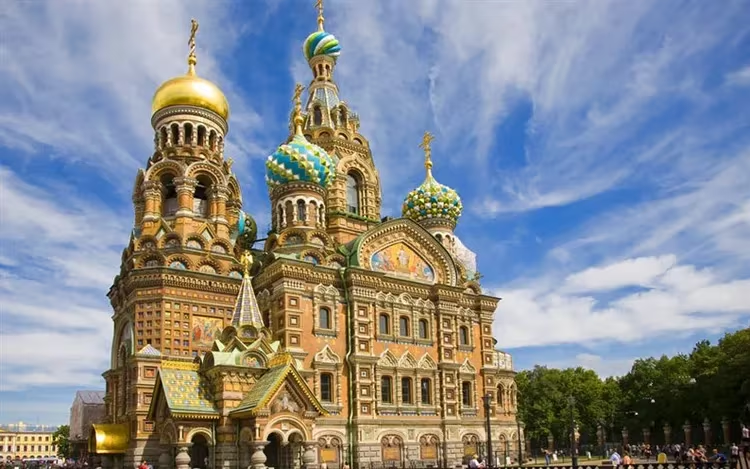
The fate of the Resurrection Cathedral (Savior on Blood) is complex and tragic. Erected as a temple-monument to the murdered king, he was on the verge of closing and destruction more than once. By a happy decision of the authorities, the Cathedral was preserved, restored and received a second birth in 1997.
The initial consecration took place in 1907, repeated in 2004. Now, walking along Nevsky Prospekt, on the banks of the Griboyedov Canal, you can see a real dance of 9 multi-colored domes, carved kokoshniks, pilasters, and original stone carvings. Gilding, enamel, mosaic, granite shimmer in the exterior decoration.
The cathedral is similar to St. Basil's Cathedral in Moscow. The interior of the temple is a realm of magical mosaics (the total area reaches 7000 m2). The floor of the cathedral is covered with 45 mosaic paintings with original patterns.
There are also mosaic icons under the dome of the temple. The iconostasis is made of colored marble. He looks like a tree. The main place in the Cathedral is the canopy over the place where the king was wounded. It is made of precious stones (the cost of the construction is half the amount spent on the construction of the temple).
A section of the embankment and a piece of the enclosing lattice have been preserved. The place is covered with a dome, the lamp is always lit here.
Mikhailovsky Palace
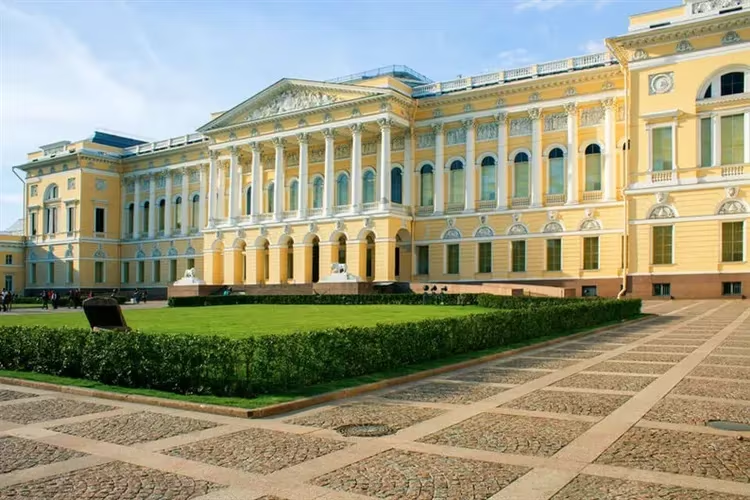
The historical building of the Empire style was erected according to the project of the architect Rossi on the territory where the “Third Summer Garden” was located. The consecration of the Mikhailovsky Palace (it was intended for Prince Mikhail Pavlovich) took place in 1825.
The architectural ensemble included the buildings of the palace, two outbuildings on the sides. Square in front of the building, two new streets: Mikhailovskaya, Inzhenernaya. From the side of the Field of Mars, the estate Mikhailovsky Garden was laid. The facade of the palace is decorated with eight columns (Corinthian colonnade) with a triangular pediment, arches, windows with stone lions' heads, 44 bas-reliefs.
The main staircase is decorated with copies of ancient lions discovered during excavations in ancient Rome. The personal quarters of the Grand Duke, an arsenal with weapons, guest rooms for courtiers were located on the 1st floor. An office, a library, a reception room, a living room, a house church occupied the second floor. The inner halls were located in an enfilade.
They sparkled with finishes, rich decorations, selected with great taste in a single harmonious composition. The parquet floor was made of the most expensive types of wood: sacchardan, black, purple, palm, saffron.
High-society receptions and balls were constantly arranged in the palace. To preserve the building (after the death of the prince) in 1895, the Imperial Museum of Russian Art was opened in it. The entire palace complex was placed at the disposal of the museum.
The opening of the Russian Museum took place in March 1898. Now it houses the richest collection of works by Russian artists.
Mikhailovsky Castle
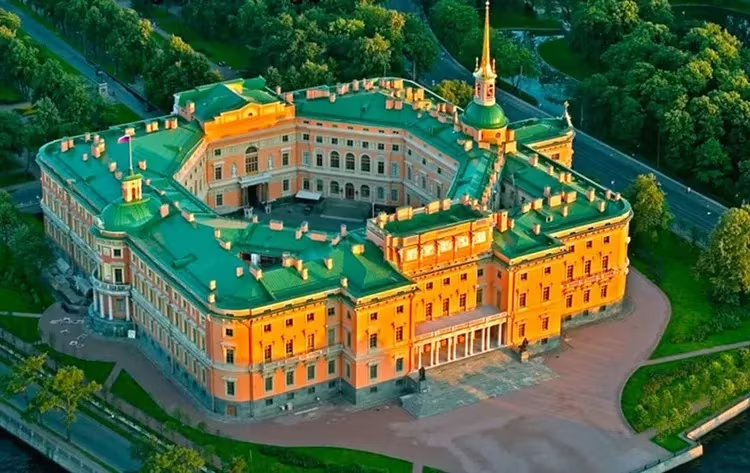
The engineering castle is one of the most unusual, mysterious places in the city. The strict, graceful architectural style of the building differs from grandiose palaces and resembles a medieval fortress. The future Emperor Paul was born in his chambers in 1754. Here, in his own bedroom, he was killed (according to legend, his ghost still roams the castle).
The castle is considered an expressive symbol of the Pavlovsk era, embodying the character and artistic taste of the owner. The great strength, the power of Russia as a maritime power, was expressed in interesting elements of construction.
These are protective ditches, bridges, parapets, iron gratings, channels. The castle was located on an island and gave the impression that it appeared from the water. In subsequent times, many were destroyed. Even the original color of the castle walls is full of legends.
Now it is pink, almost like the original (pinkish-orange-yellow). Although for many years the walls of the castle were brick red. Since 1823, the building housed the Main Engineering School, which gave it the second name Engineering Castle. Since 1990, there has been a branch of the Russian Museum with numerous works by Renaissance artists and craftsmen working in Russia in the 18th and 19th centuries.
Embankment of the Fontanka River
A walk along the old embankment starts from the Neva, goes through the center and ends near Gutuevsky Island, where the Fontanka flows into the Bolshaya Neva. The ancient river was called Golodusha, Nameless Erik, and in 1737 it received its name from the fountains of the Summer Garden (at first the Fountain River, and later the Fontanka).
Granite pipes, forged iron gratings are used in the railings (they were made in the Urals by the craftsmen of the Demidov factories) hold the river for 7 km. For the first time, the embankment was decorated in the 1750s with the help of wooden fences.
By 1789, the river was straightened, deepened, dressed in a granite attire, and slopes were built. The first building on the embankment is considered to be the Summer Palace of Emperor Peter I. In the future, it was allowed to build expensive, monumental architectural structures in the idea of magnificent palaces and luxurious mansions.
Bygone eras have left their mark on the banks of the Fontanka. Beautiful, original bridges became its special decoration. The symbol of the river is the famous monument to Chizhik – fawn, standing next to the Mikhailovsky Castle. The yellow-green uniforms of the students of the Imperial Law School became the reason for the birth of the famous song and the original monument.
Stroganov Palace
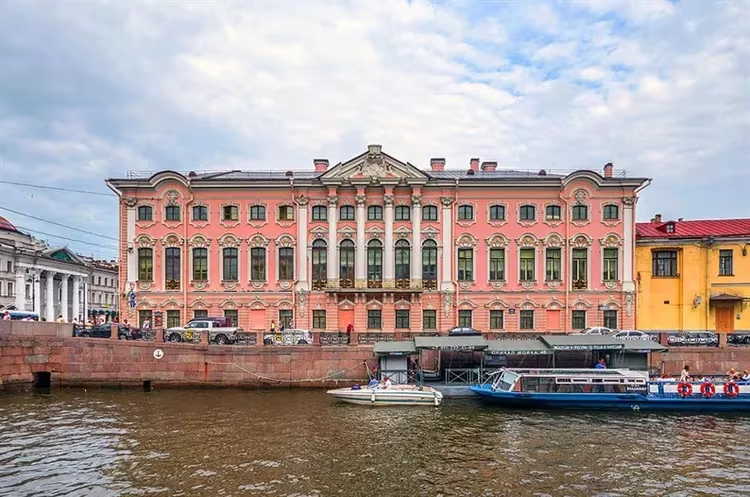
The architectural landmark, built according to the project of Rastrelli, belongs to the oldest (surviving) examples of Russian baroque. Since 1988, it has housed a branch of the Russian Museum. Before the 1917 revolution, the palace belonged to the Stroganov family of industrialists. In the 18th century it was the only residential building on Nevsky Prospekt.
High society balls and dinners were held in the luxurious palace. The creator of the interior of the palace premises were Voronikhin, Demertsov. Separate rooms, rooms of the palace are well preserved, for example: the Count's Study, the Hubert Robert Hall, the Mineral Room, the Physics Rooms, the Library, the Art Gallery.
Representatives of the Stroganov family began to collect art and book collections at the beginning of the 19th century. Many Russian painters, being students of the Academy of Arts, made their first copies of famous works based on the originals of the Stroganovs' art gallery.
The first public exhibition of sculptures and paintings stored in the palace was held in 1897. After the transfer of the palace to the Russian Museum, a large-scale restoration of the facade of the building returned to its original state.
In honor of the 300th anniversary of the city, visitors have access (now it is offered to visit 23 rooms, including the famous Arabesque drawing room). In one part of the building, the Chocolate Museum began to work.
Anichkov Palace
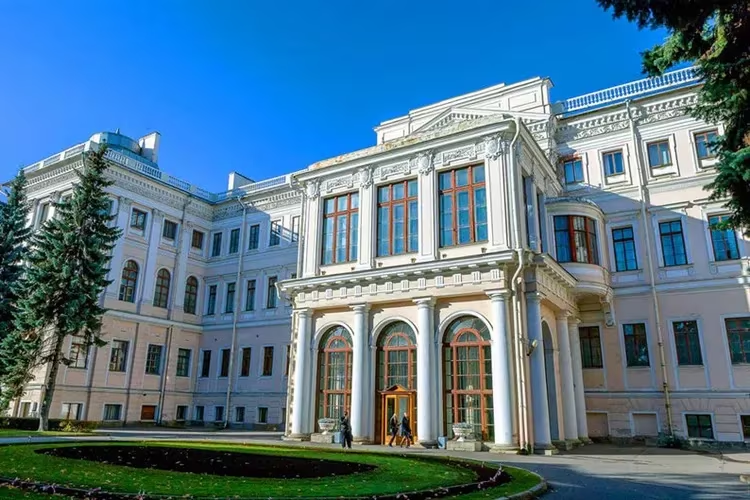
One of the imperial palaces appeared on the Fontanka embankment at a time when the outskirts of the city were located here, and the famous Nevsky Prospekt was an ordinary forest clearing. The arrangement of the surroundings of the palace resembles fountains, flower beds of Peterhof.
The shape of the multi-storey building is made in the form of a stretched letter “H”, and the name comes from the Anichkov Bridge, located nearby. The construction of the palace took place by order of Empress Elizabeth from 1741. The building often served as a gift from the empresses to their favorites (Razumovsky, Potemkin), passed from hand to hand.
Nikolay often came here during fasting, the whole family lived in it for some time. The childhood of the future Alexander II passed in the premises of the palace. Famous people of those times were often present here. Zhukovsky (a friend of the poet) had his own housing in it.
Pushkin was also invited here in 1836 for a conversation with the emperor demanding a refusal to duel. The palace became the residence of Alexander III. For a long time after the revolution, the City Museum was located in the oldest building on Nevsky Prospekt. It has been closed since 1925. In 1937, the Palaces of Pioneers, Young Creativity, Anichkov Lyceum began to work in the building.
House of Peter the Great
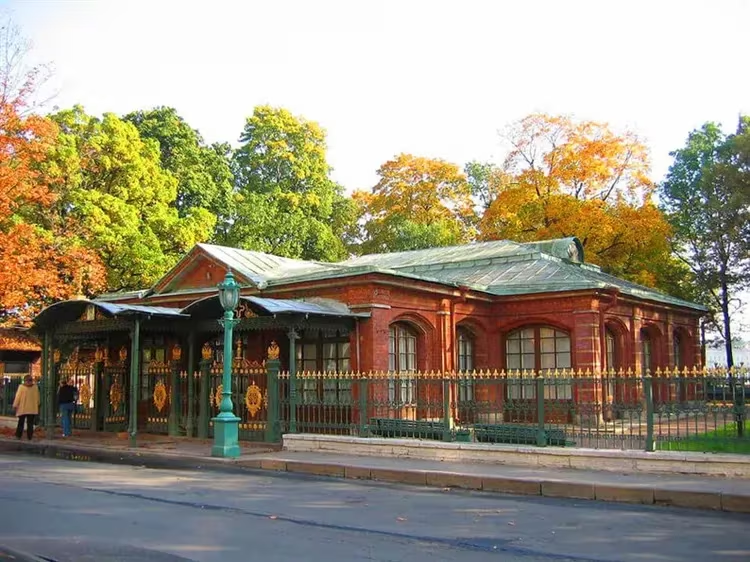
On the occasion of the celebration of the accession of lands and the laying of a new city in May 1703, the first building of the future St. Petersburg, a house for Peter I, was built (in three days). neighborhood. In ancient documents of those times, it was called “old red horomtsy”, “red choir”.
It was built from hewn pine logs like a Russian hut, but with elements of Dutch architecture, which the tsar was fascinated by. For example, the appearance of a stone building was created by hewn logs painted like red bricks, a high roof covered with tile-like shingles. The king lived in it in the summer, so there were no stoves or chimneys in the house.
Along the edges of the roof were installed (they have not been preserved) “bombs with a flaming torch”. The king moved to the Summer and Winter Palaces, and the house was abandoned for a long time. Before the October Revolution, a small chapel functioned here.
The building was given the status of a historical and memorial museum in 1930. It opened to visitors in September 1944. The expositions of the museum present authentic items of Peter I, household items, information about the Northern War, the founding of the city, the stages of restoration of the house. At the entrance to the Museum there is a bronze plaque indicating the height of the Great King: 2 and 4 cm.
Cruiser Aurora”
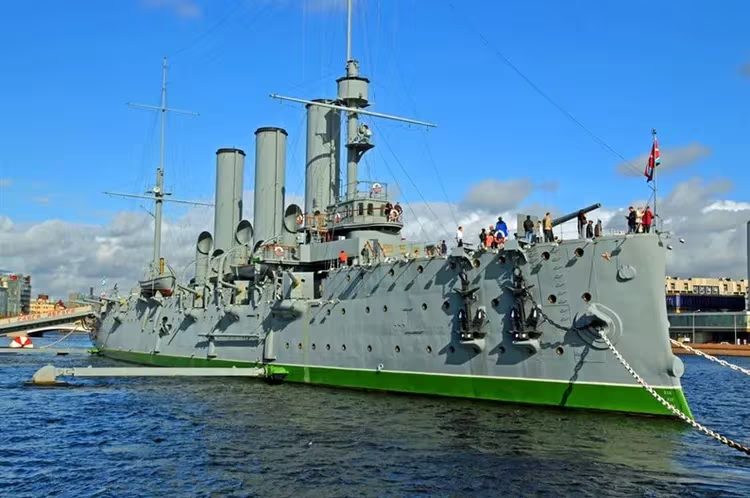
The ship-museum has become a cultural heritage of Russia and has become one of the famous ships of the world, whose fate did not end on the seabed or in a pile of scrap metal. The legendary cruiser changed the course of world history during the 1917 revolution.
In addition to the blank shot, which became the signal for the storming of the Winter Palace, the ship took part in other historical events of the past century. He survived with dignity in the hell of Tsushima, escaped death during the First World War, recovered after the siege of Leningrad and became one of the museums of St. Petersburg.
Having visited it, it is proposed to learn the history of the name, the creation of the ship. Listen to how the Aurora in the role of the famous ship Varyag was filmed in the film of the same name. The cruiser was made at the Baltic Shipyard.
The first launching took place on May 11, 1900 in the presence of Nicholas II and the two Empresses Maria and Alexandra Feodorovna. There is a majestic cruiser (it is considered a branch of the Naval Museum) on Petrovskaya Embankment.
Peter-Pavel's Fortress
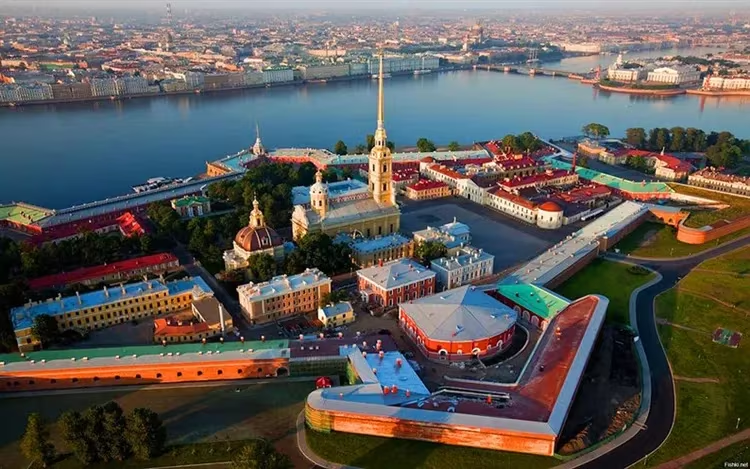
Creating the city, Peter I sought to strengthen the dominant position of the capital with special architectural structures. The deserted Hare Island was chosen for the construction of the bastions of the fortress and other structures.
The Peter and Paul Fortress is considered the first bastion-type fortification in Russia. There are no defensive towers in it, and every meter of the island was used to build fortress walls.
There have never been battles with the enemy. For two centuries, the fortress served as a political prison. In it were Tsarevich Alexei, Princess Tarakanova, the Decembrists, Gorky, Chernyshevsky, etc.
In the entire history of its existence, not a single escape has been made from the prison of the Peter and Paul Fortress. The architectural ensemble of the fortress includes the Mint, the Main Treasury, the Botanical House. Krmendantsky and Engineering house, guardhouse, Artillery storehouse. An important place is occupied by the Church of Peter and Paul.
Its height was supposed to be higher than the Menshikov Tower, the bell tower of Ivan the Great. The spire of the cathedral is decorated with a gilded figure of an angel with a cross (which has an interesting history). At the request of the king, the temple from the first days was the burial place of members of the dynasty. There are 60 graves in the form of concrete crypts.
Peter I is buried on the south side of the temple. During the life of the king, the flag was raised and lowered every day on the Sovereign's bastion, which meant the end of the working day. Now it is constantly developing on the Flag Tower.
The tradition of a midday shot (Admiral's hour, born in the 18th century) from cannons on the Naryshkin bastion has also been preserved. The residents check the time by the shot.
Alexander Park
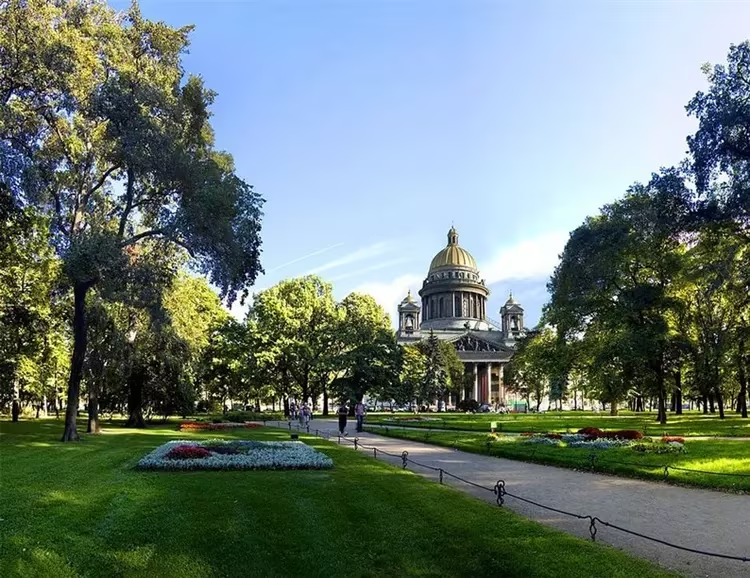
On the vast wasteland of the city of Pushkin (Tsarskoye Selo) there is an architectural monument of the 18th-19th centuries. The idea of u200bu200bcreation belongs to Alexander I, but they were able to realize the idea under the reign of Nicholas I. The park begins right behind the main entrance to the Catherine Palace.
On the territory of about 200 hectares there is a New Garden, a Landscape Park, a complex of architectural buildings in the neo-Russian style. This is the Feodorovsky town, the Cathedral, the Military Chamber. Restored Arsenal building, barracks, stables, Great Chinese Bridge, etc.
In the New Garden there was a curtain (gazebo) “Fungus”, the Chinese Theater. Here you can see Mount Parnassus, the Chinese village (1780), the Ozerka pond. The landscape park took the place of the menagerie. He moved to Gatchina along with the imperial hunt.
In the park there is the building of the Arsenal (earlier there was a hunting pavilion “Monbijou”), the White Tower (after restoration it houses a children's museum center). In 1796, the Alexander Palace was erected on this territory. It was the royal residence.
From this palace, the imperial family of Nicholas II was sent to Yekaterinburg. According to existing legends, the grave of Grigory Rasputin was located in the park. Since 1918, the park has received the status of a museum. During the war, the palace had barracks and a prison for prisoners of war. Since 1946, it has been open to visitors, restoration work is constantly being carried out.
Peterhof
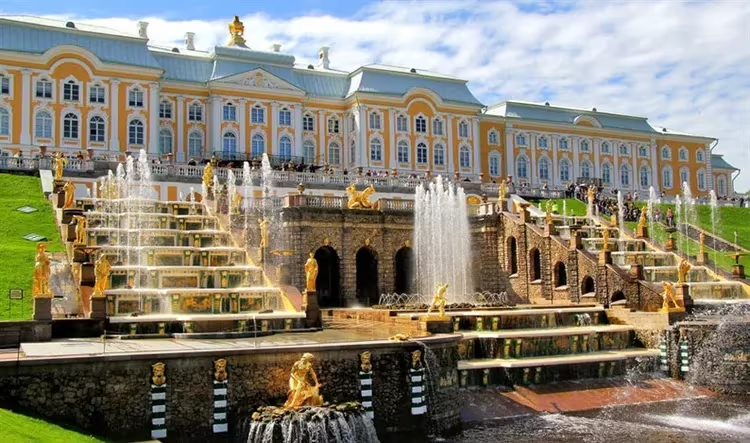
The city was founded by Peter I as a country residence of the imperial family in 1719 (it received city status in 1762). The settlement was created as a symbol of Russia's victory in access to the Baltic Sea.
Spread along the Gulf of Finland, the city plunged into the atmosphere of numerous parks, palaces, and various sights. Among them is a monument of world architecture and palace and park art – the Peterhof Museum Reserve.
The ensemble includes the Great Peterhof Palace, the Upper Garden, the Lower Park. The idea to install original fountains belongs to Peter I. The water flows into them by gravity due to the natural slope of the area. The highest is the fountain “Samson”. The first column of silver spray rose in 1721. The system of canals feeding the structures has been working properly for three centuries.
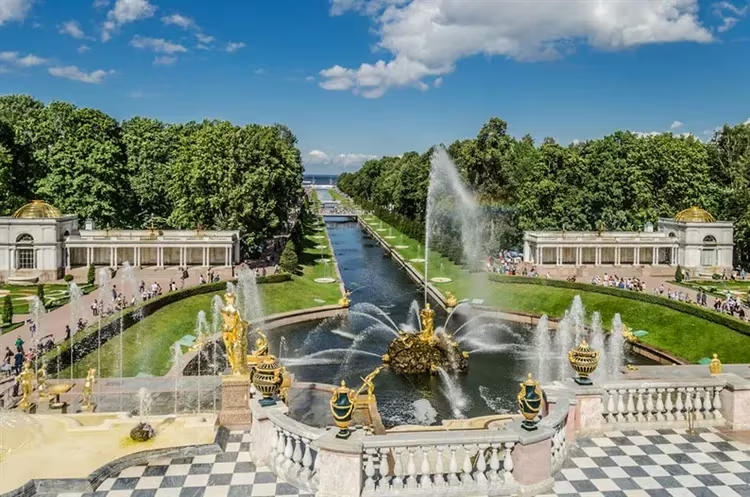
There are 170 fountains and four cascades in the city: Bolshoy, Chess Mountain, Golden Mountain, Lion. The total number of city parks is 10 names (among them are Kolonistsky, Aleksandrovsky, English, Lugovoi, etc.).
Historically, four parts were formed in it (as a settlement for a residence). These are Old, New, Middle Peterhof and Egerskaya Sloboda. All of them are interesting for inspection, acquaintance with the city of kings, where 6 famous princesses, princes, children of Nicholas II, Alexander III, Nicholas I were born and raised.
Tsarskoye Selo
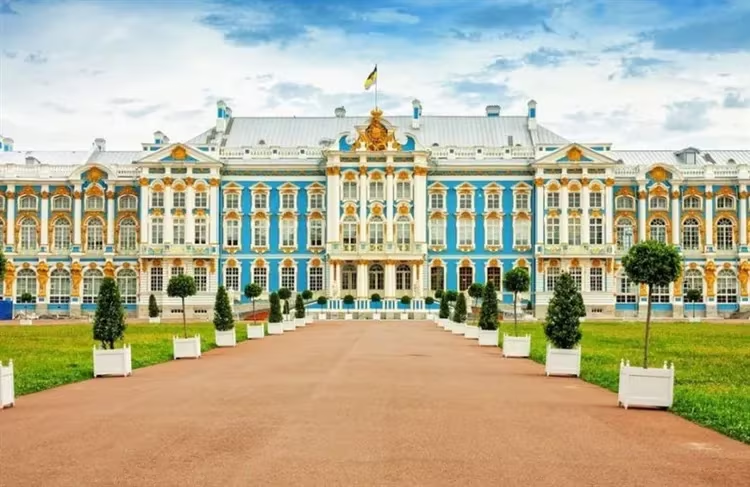
The history of Tsarskoye Selo begins in 1710. Peter I conquered new territory. On it was the estate of a wealthy Swede Sarskaya manor. Peter I presented it to his future wife Catherine. The famous Catherine and Alexander palaces are being erected, the beautiful Alexander Park with strict lines and ancient sculptures is being formed in the Dutch manner.
The Tsarskoye Selo Museum-Reserve, which has become a monument of architecture and landscape art of world importance, reflects the traces of the lives of many Russian tsars. Palaces with luxurious decoration of the halls amaze with wealth, beauty, harmony even today.
In the magnificent Catherine Palace there is a “Golden Enfilade” of ceremonial halls, the revived Amber Room. The sights of Tsarskoye Selo include many historical places. This is the Tsarskoye Selo Lyceum, where Pushkin, Kuchelbecker, the Decembrist Pushchin, and Delvig spent their youth.
Pushkin's dacha, where the first months of the poet's family life passed. The Sovereign's Chamber, which became the only museum of the First World War in Russia. The Arsenal Pavilion, which houses the imperial collection of weapons.
Fedorovsky town in the form of a complex of buildings among the fortress walls, conceived in the style of monastic buildings. Imperial farm, located near the Chamber of Warriors. Well-groomed horses live on it, on which you can ride.