
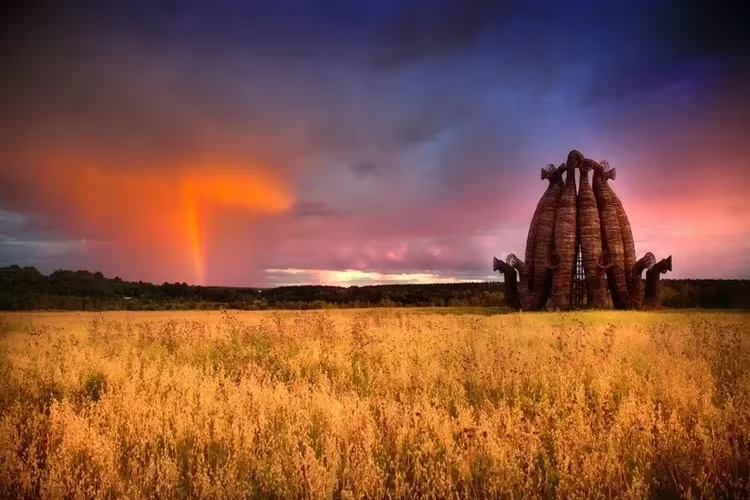
Not the most successful vacation, the metamorphoses of capricious weather, endless annoying restrictions, the bustle of the metropolis with its noise and smog involuntarily push you to saving thoughts: where to go for a weekend from Moscow by car to level all this. The conditions of the task are simple. The distance should not be sky-high. The routes are chosen from those that are well-maintained so that the mini-voyage does not turn into a driver's hard labor.
Art Park “Nikola-Lenivets”
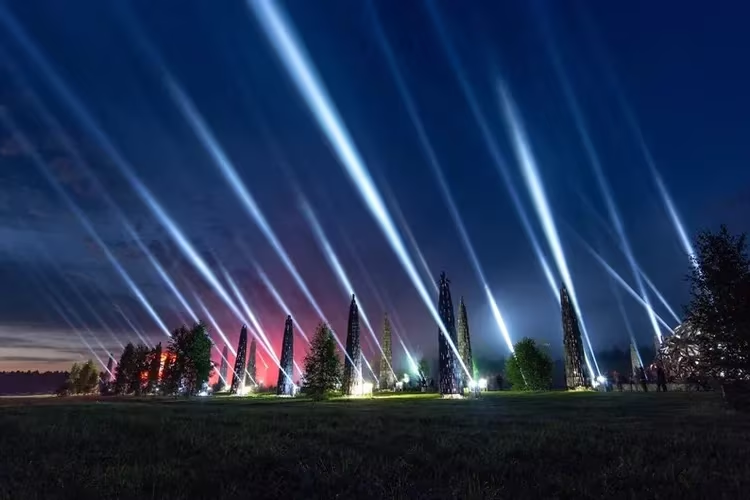
Not far from Moscow, in the Kaluga region, there is a beautiful natural and creative park Nikola-Lenivets. Its history began not so long ago, they started talking about an unusual art zone in 2000. It was then that two Muscovites, Vasily Shchetinin and Nikolai Polissky, managed to realize the dream of creating an ideal creative village, from their point of view, away from civilization and the bustle of the city.
Since then, the park regularly, three times a year, hosts the Archstoyanie festival dedicated to various topics. In winter, it can be, for example, a parade of snowmen, in summer – the grandiose construction of the “Tower of Babel” from hay, and so on. But even on days when the holidays subside, there is still something to do in Nikola-Lenivets.
Firstly, everyone can work on the farm – for many, this becomes an exciting adventure. Secondly, you can admire unusual sculptures. For example, a lion made of rubber tires.
Children especially like them, because this open-air museum is not an exposition, but “alive” – everything can be touched, studied and even “conquered”, climbing to the very top.
Husky land

Just a few dozen kilometers from noisy Moscow, there is a wonderful place where you can get acquainted with the customs and cultural traditions of the inhabitants of Chukotka – the ethnographic complex Husky Land. The main inhabitants of the farm, as you might guess from the name, are wonderful dogs with whom you can take pictures, feed, and even ride in teams in the winter season. There are also friendly deer here.
In addition to communicating with animals, guests are offered a national Chukchi program – you can visit the yaranga and see how everything is tripled there, take part in ancient rituals and even make a wish that will certainly come true. In general, this is a great entertainment for those who want to escape from the gray everyday life, spend the day in an unusual and bright way.
Bird Park “Sparrows”
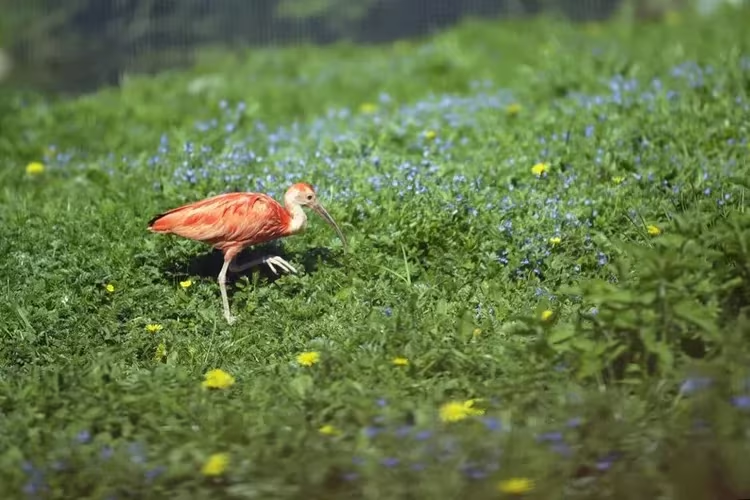
In 2005, a very unusual park appeared in the Kaluga region, something between a village courtyard and a mini-zoo. Since then, the project has steadily developed, and today more than 2,000 species of birds live on the territory.
And, of course, these are not only sparrows, as you might think from the name. There are also owls, and parrots, and many others. At first glance, you might think that the tour is aimed mainly at children. In fact, it will be interesting for adults too.
On the territory of the park there are recreation areas, you can rent a barbecue and even fry a barbecue in a specially designated place, enjoying the beautiful nature. For those who want to take a break from the endless bustle of the city, there is simply no better place to find.
Borovsk and Ethnomir
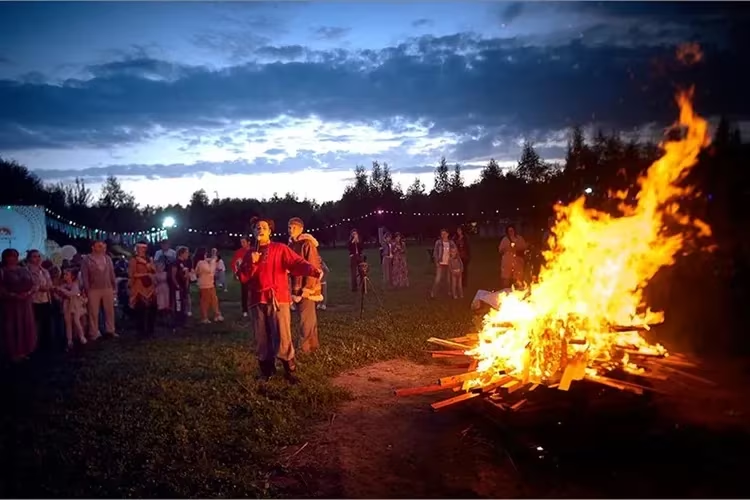
Borovsk is a small town in the Kaluga region, founded before the Tatar-Mongol invasion. For a couple of decades, it was not known in the tourist world and was not much different from many other provincial neighbors.
Of the local attractions, one could only note the Pokrovsky Monastery, founded in the 15th century, and numerous murals on the walls – the administration will encourage creative people in every possible way, and with the support of the leadership they managed to “revive” many boring industrial buildings. In the 2000s, the situation changed dramatically.
The so-called Ethnomir appeared in the city, occupying an area of 40 hectares. In fact, the complex is an interactive open-air museum divided into many zones – each of them is dedicated to the life and life of a particular people. Here you can not only look, but also touch, climb and feel “inside” the exposition.
Senezh lake
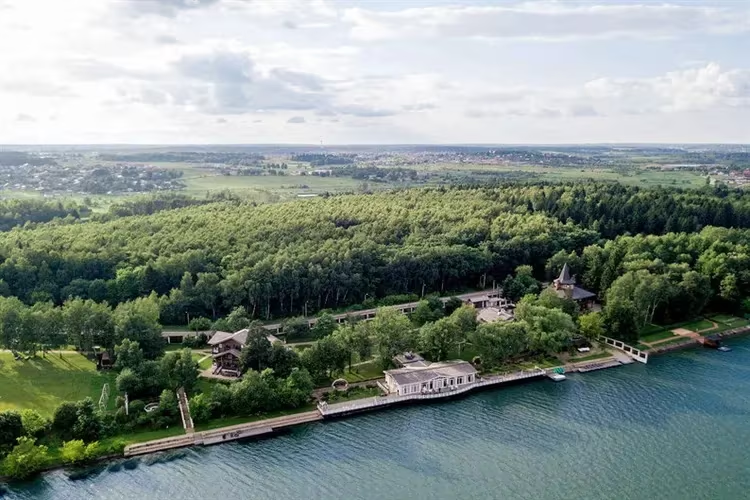
Looking at the photos of Lake Senezh, it's hard to even believe that this place is located in the Moscow region – such beautiful nature, untouched by man, seems to have been preserved only in the distant outback. But the fact remains – you can get to it from the capital without any problems in just an hour.
Senezh is not a natural reservoir, it is a reservoir built in 1826 in order to make it easier to transport materials to the construction site of the Cathedral of Christ the Savior. He did not have any important strategic purpose.
Perhaps that is why the age of industrialization seems to have bypassed these parts. Senezh is just a paradise for fishermen. The catches here are truly royal, competitions are regularly held among amateurs and professionals.
You can fish both from the shore and from a boat. For those who are not interested in “river hunting”, there is a standard set of entertainment – rental stations of the same boats, beaches, cozy cafes on the shore.
Vladimir
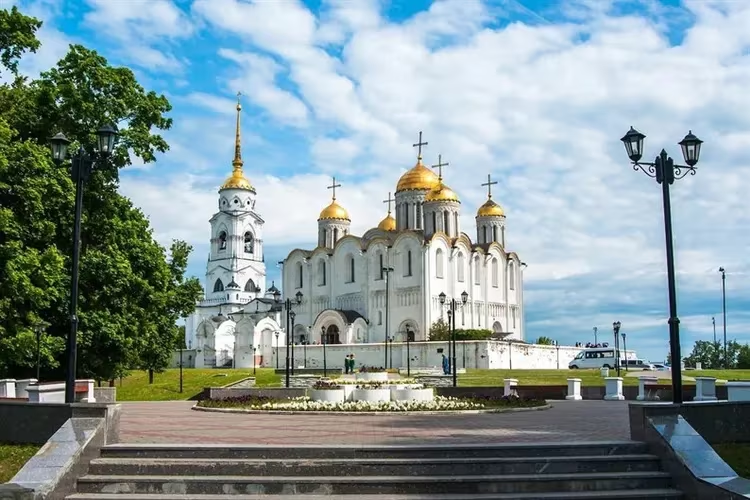
The beautiful city of Vladimir, which celebrated more than one anniversary, including the 1000th anniversary, was founded back in 990. In memory of the affairs of bygone days, magnificent white-stone cathedrals, Uspensky and Dmitrievsky, as well as the residence of Prince Andrei Bogolyubsky, in the village of Bogolyubovo, have been preserved.
All of them are wonderful examples of ancient Russian architecture, which today attract hundreds of thousands of tourists from all over the world. Another highlight among the local attractions is the magnificent Golden Gate, a symbol of the capital's past of Vladimir (the city really had the status of the main one in Ancient Russia for a long time).
Inside, you can look at the exposition dedicated to the Tatar-Mongol invasion. In recent years, Vladimir has noticeably changed. In the center appeared its own “arbat” – pedestrian Georgievskaya street, reminiscent of another page in the history of the city – its provincial past of the XVIII-XIX centuries.
Here you can look at old houses, a pharmacy, and admire the views of the Klyazma from one of the observation platforms. And, of course, try Suzdal mead in an outdoor or indoor cafe.
Kolomna
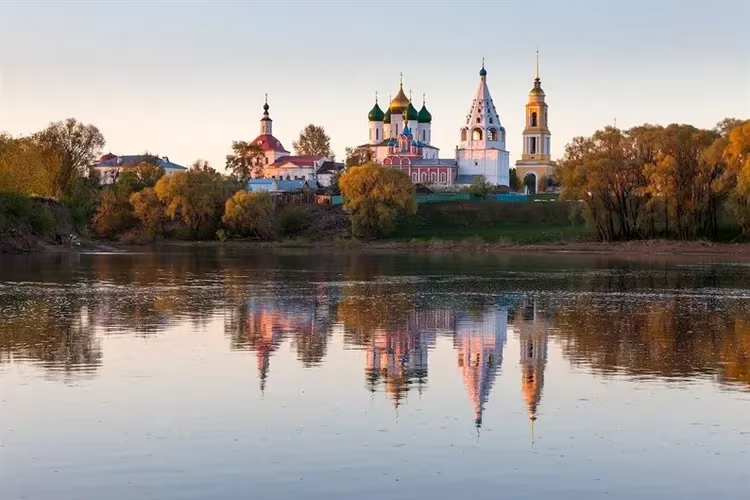
A small town located in the Moscow region is known primarily as a place for the production of excellent marshmallows, which has become its symbol and “visiting card”. But few people think about the fact that this is one of the most ancient cities of the Moscow region. Today, the Kremlin reminds of the distant past, which looks very contrasting against the backdrop of the ultra-modern high-tech Ice Palace.
There are other contradictions here, which coexist peacefully with each other. For example, abandoned courtyards and “God-forgotten” lanes adjoin the “grand” center, a street bearing the name of the famous revolutionary Lazarev leads to the Cathedral of the Assumption. Kolomna is like a colorful patchwork quilt, bright and attracting attention.
Yaroslavl
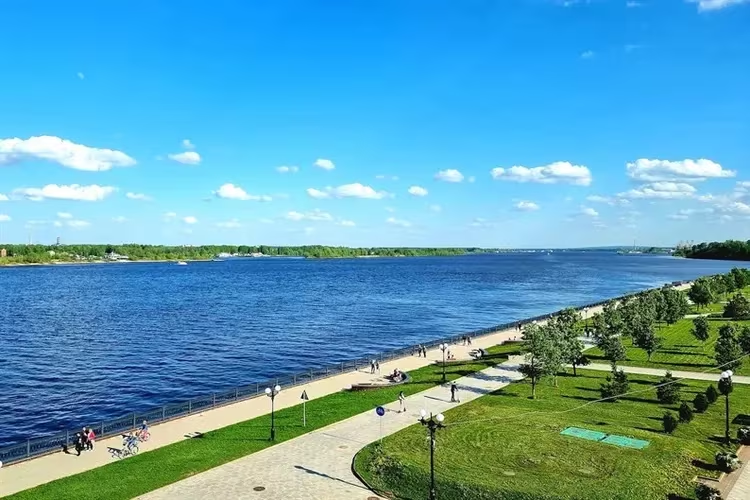
Beautiful Yaroslavl, the pearl of the Golden Ring of Russia, is different from all its neighbors. He is not as monumental as Vladimir. Not as colorful and provincial as Kostroma, not as “golden-domed” as Suzdal. But, nonetheless, beautiful. Initially, it was formed as the capital of the merchant class.
Perhaps this gave him some lightness, carelessness and some unique beauty. A visiting card is the arrow of the Volga and Kotorosl, two rivers that merge right next to the city. Barges passing by perfectly complement the fountain and park ensemble of the embankment.
It makes no sense to list all the sights of Yaroslavl – there are more than eight hundred of them in the city. If there is not too much time, then it is more logical and correct to start acquaintance with the Kremlin. And, of course, be sure to feed the bear living there – it has long become a symbol of the city on the Volga.
Tver
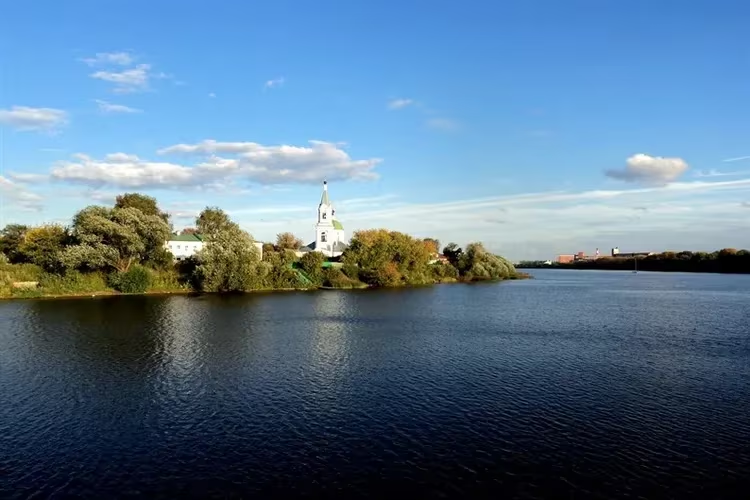
Tver is another ancient city. Once it was one of the influential centers of Russia, not only neighbors, but also the “capital” rulers, Kiev, Vladimir, and then Moscow, were forced to reckon with the princes of the Tver principality. Unfortunately, no ancient monuments have been preserved in the city.
However, there are still architectural sights that deserve attention. First of all, this is the imperial travel palace, built during the reign of Catherine II. She often visited here, spending several days during her trips from St. Petersburg to Moscow.
It is not surprising that the interiors were decorated with the luxury inherent in those times – as the Empress loved. Also, be sure to take a look at the White Trinity – the oldest city church dating back to the 16th century.
Modern Tver also has something to show guests. One of the first associations of the 20th century is associated, of course, with the name of M. Krug – it was here that the famous singer was born and lived. Not so long ago, a museum dedicated to his work was opened.
In addition, fans do not miss the chance to see Lazurny, where the “fraternity walks”, the courtyards of Proletarka, school No. 39, a white cottage on Liberation Street, where Mikhail Vladimirovich lived and, of course, visit his grave at the Dmitrov-Cherkassky cemetery. And one more interesting moment.
Tver is unofficially considered the Russian capital of street art. Street artists are treated with respect here, and special places are allocated in the city for their “works”. And guests and local residents can enjoy one of the modern art forms without any restrictions.
Tula
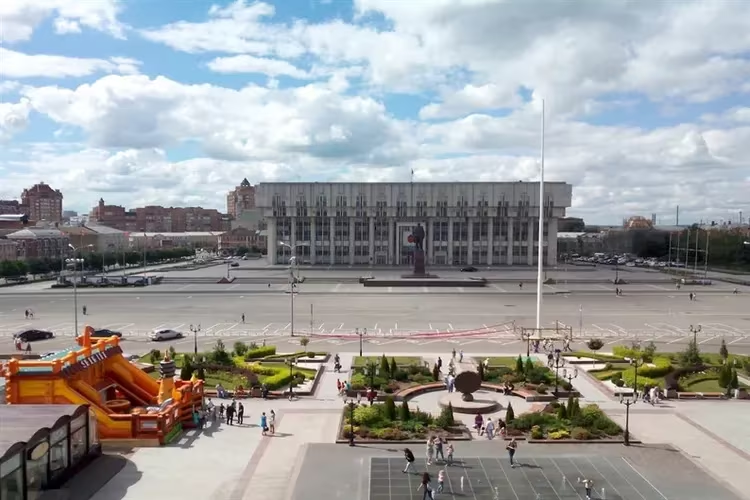
There are cities associated with a particular monument, phenomenon or name. You can’t say the same about Tula – she has too many calling cards. These are weapons, and legendary gingerbread, and samovars, and, of course, the great Russian writer Leo Tolstoy.
It is not surprising that many tourists, coming to this, in general, a small city, are lost from such a variety and do not know where to start. And of course, you need to start your acquaintance with the heart of Tula – the majestic Kremlin. Within its walls there is also one of the symbolic museums – weapons, the expositions of which will surely delight boys of all ages, adult men and simply inquisitive tourists. Not far from the Kremlin is the second symbolic museum – samovars.
Local residents treat them with special trepidation, the collection occupies two floors, and the tour lasts at least 1.5 hours, which fly by unnoticed – any Tula guide spends it in one breath. And, of course, you can not ignore the gingerbread museum.
Here you can not only learn about the history of the sweet industry, but also become a participant in the tasting. After it, you can buy your favorite products made according to old recipes. But in order to get acquainted with the work of Leo Tolstoy, you will have to go out of town – to his estate Yasnaya Polyana.
If this is not possible, you can take a walk along the square bearing the name of the writer, where the brightest quotes from his famous works are carved on granite blocks.
Serpukhov
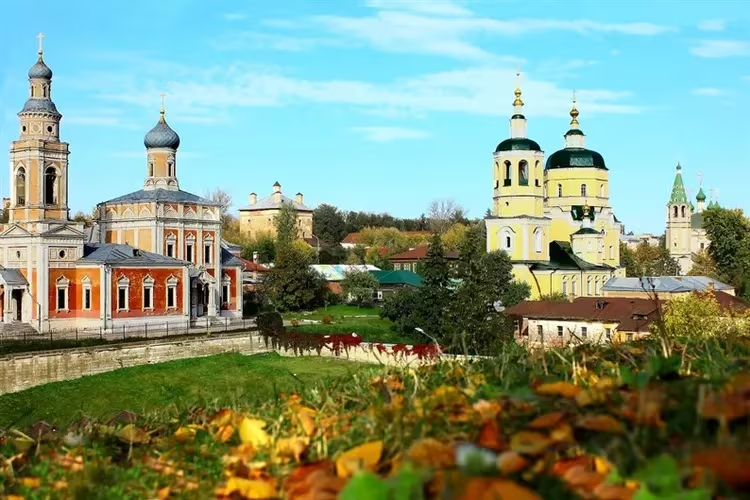
Serpukhov is one of the ancient cities of the Moscow region, founded in 1339. Due to its location, in a strategically important place on the banks of the Nara River, it has repeatedly become the protagonist of important historical events, survived the raids of the Crimean Tatars, the “industrial boom” during the time of Peter I, and much more.
Today, two monasteries are considered to be the main city attractions – Serpukhov Vysotsky, founded in 1374 at the suggestion of Sergius of Radonezh himself, and Vvedensky Vladychensky, which appeared even earlier, in 1360, but completely rebuilt during the time of Boris Godunov.
Today it is one of the most striking architectural monuments of his era in all of Russia. Also of interest is the historical and art museum, in the collection of which there are more than 40 thousand exhibits. The collection is considered the richest in the entire suburbs.
Kaluga
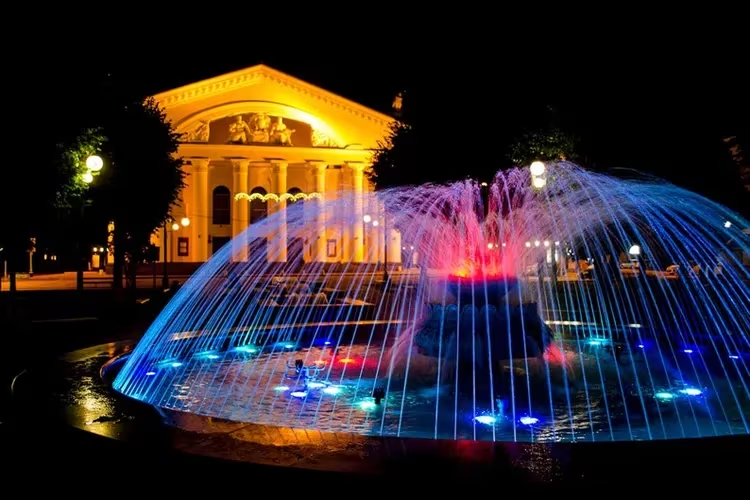
Kaluga is not as popular in the tourist world as, for example, St. Petersburg, Vladimir or Moscow itself. However, there is some special attraction in its streets. Perhaps the whole thing is in a special spirit that has been hovering here for more than one hundred years.
The history of Kaluga began in the distant 1371, when a fortress was built on the banks of the Oka. Gradually, it lost its original meaning, but this did not prevent the city from growing and developing in a different direction – as a major shopping center.
In the XVIII-XIX centuries, mainly merchants lived here, many of them could afford to own mansions in the city center. These buildings have been perfectly preserved to this day; museums, administrative offices are now located within their walls, and some have remained residential, though now apartment buildings.
Walking through the center of Kaluga, sometimes you forget that the 21st century reigns in the yard – it seems to have “lingered” in the past. Another hallmark of the city is the museum of the history of cosmonautics, created back in the days of the Soviet Union with the participation of Yu.A. Gagarin and S.P. Korolev.
The place was not chosen by chance, since it was in Kaluga that the “father” of Russian cosmonautics, K.E. Tsiolkovsky, was born and lived. In his native house, small, wooden, but very comfortable, there is also a memorial museum.
Pereslavl-Zalessky
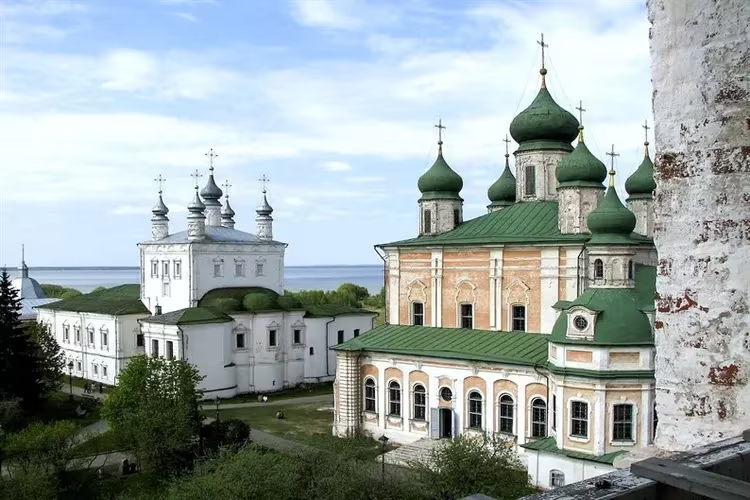
A small town located on the shores of Lake Pleshcheyevo resembles an illustration to a fairy tale. Indeed, the nature here is magical. However, despite such a visible “lightness”, in its history it has played a significant role in the fate of our country more than once.
Firstly, Alexander Nevsky was born here. Secondly, it was in Pereslavl that Peter I built his first legendary small boat, and later the city became the cradle and capital of the Russian navy. Today Pereslavl-Zalessky is a typical old provincial town that has a special charm.
There are many churches and monasteries here, some of which were built in the XII-XIII centuries. The most famous is the Nikitsky male, which had to survive the siege of the Poles, and the invasion of the Lithuanians, and much more.
Of the non-religious monuments, the blue stone, located on the shore of Lake Pleshcheyevo, deserves special mention. A huge number of legends are associated with him, in addition, local residents claim that he grants wishes.
Manor Dubrovitsy
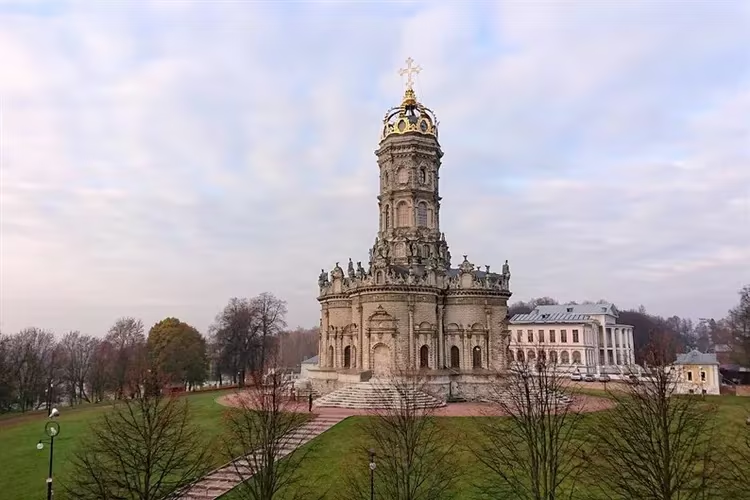
The owners of the estate at one time were the boyars Morozov, Golitsyn, Dmitriev-Mamonov and Potemkin. The mansion in the Dubrovitsy estate was built at the beginning of the 18th century. Unfortunately, the luxurious interiors have not survived to this day, and visitors to the park can only admire the facade of the building.
Also here, tourists can see the Church of the Sign of the Most Holy Theotokos with a huge gilded dome-crown, on the facades of which there are sculptures and ornaments. Walking along the linden alleys of the park, visitors to the estate can see ancient trees – the same age as the time of Peter I.
In 1812, Napoleon's troops quartered here.
Excursions are constantly conducted around the Temple and the entire tourist complex. During these walks, guests of Dubrovitsa will learn a lot of interesting things about the history of the estate and facts from the life of its owners. You can get to the estate not only by car, but also by train from the Kursk railway station in Moscow to Podolsk, then transfer to bus number 65 and get to the village of Dubrovitsy.
Museum-Estate Ostafyevo
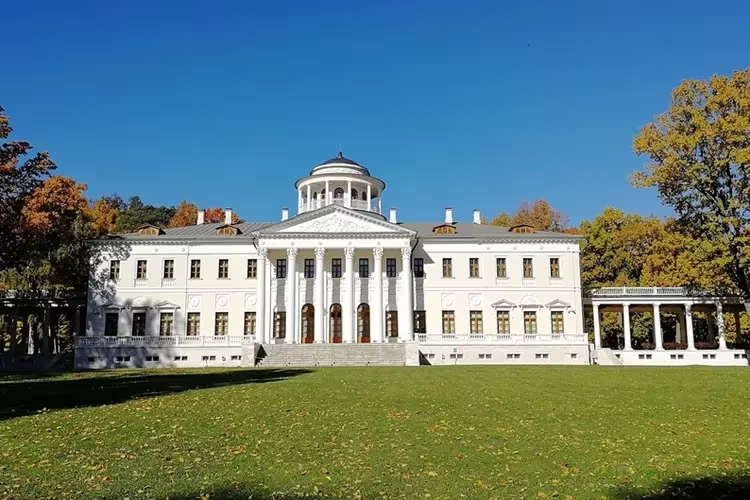
One of the centers of Russia's cultural life is a unique monument of Russian manor education of the 19th century – the Ostafyevo Estate Museum. The old estate, being a museum of federal importance, is located in the village of the same name near Moscow near the city of Podolsk.
During the time of the owner of the estate, Prince P.A. Vyazemsky, a famous poet of that time, Pushkin, Zhukovsky, Boratynsky, Mickiewicz, Griboedov and Gogol visited the estate. Here Karamzin worked on the “History of the Russian State”. The main building in the style of classicism was built in 1806.
The last owner of the Ostafyevo estate before the revolution of 1917 was Count S.D. Sheremetev. On the territory of the estate in 1899, on the occasion of the 100th anniversary of the birth of Pushkin, he opened the first museum dedicated to the great poet of Russia. Before the outbreak of World War I, memorial busts of Pushkin, Karamzin, Zhukovsky, Peter and Pavel Vyazemsky were erected in the Vyazemsky family estate in memory of their stay in Ostafyevo.
During the years of Soviet power, the estate managed to be a monument of garden and park culture of museum and academic significance, a pioneer camp, a military hospital and a recreation center of the Council of Ministers of the USSR. In 1988, the status of a museum was returned to the estate, and in 1995 the estate acquired its final status – the Ostafyevo Estate Museum.
New Jerusalem Monastery
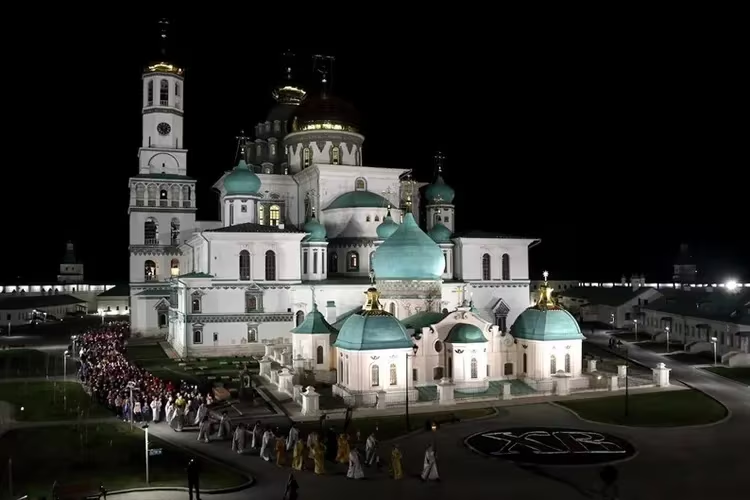
The Resurrection New Jerusalem Monastery is a grandiose brainchild of the great church reformer, Patriarch Nikon. He made a lot of efforts to recreate the image of Jerusalem's holy places on the Istra River. According to the plan of the patriarch, New Jerusalem was to become a new spiritual center not only for Russia, but for the entire Orthodox world. Russian Palestine was conceived as a large-scale architectural and landscape ensemble.
The monastery monastery flourished until 1666, visited by thousands of pilgrims. But this year, Nikon was stripped of the title of patriarch and sent into exile. Since then, the Lavra has been in disrepair. Its significance was restored 15 years later, when the patriarch was acquitted.
After the revolution of 1917, the monastery was closed, and a museum was organized on its territory. Monastic life revived in the 90s of the last century. Today, the Lavra shines with beauty, meeting numerous pilgrims and attracting tourists from the Moscow region and from all over Russia.
Smolensk
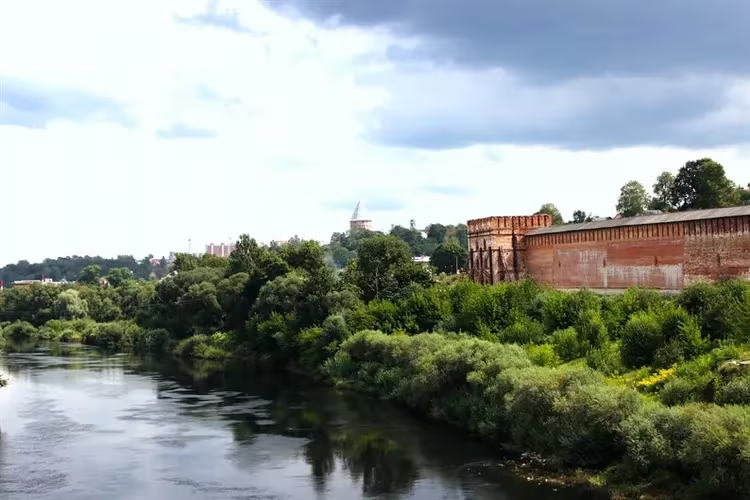
The distance between 2 settlements is 396 km. Theoretically, the estimated travel time is a little more than 5 hours, but you should not deny yourself small halts. A thermos with coffee or tea to go, and a couple of hearty sandwiches will definitely improve the mood of travelers. The city will greet guests with a scattering of picturesque squares, the cutest houses of the former merchants' estates, fortress walls, domes of the Holy Assumption Cathedral shining in the sun.
The date of birth of one of the most ancient cities of Russia is considered to be 863. The settlement for many years remained a key point for transit stops of merchants, wandering “from the Varangians to the Greeks.” In the “key city” that closes the approaches to the heart of Russia, a great many military citadels have been preserved: the Smolensk fortress wall and the fortress, the Eagle, Dolgochevskaya, Gromovaya, and Veselukh towers.
Cognitive hunger can be satisfied in the local historical museum and cultural and exhibition center. Tenishevs, take a walk under the open sky on the embankment, in the Lopatinsky garden or the Blonye garden. Little tourists will enjoy a visit to the museum “In the world of fairy tales”. After the fireworks of experience accommodation facilities offer accommodation in small hotels with 3 and 4 stars on the sign.
The settlement is marked by a hilly terrain, so it is better to give preference to hotels in the center, from them it is closer to get to local historical relics. Local cafes and restaurants will please you with taste curiosities. The label “fashionable establishment” deservedly acquired: the chain of restaurants “Domino”, the cafe “Tangerine Goose” and “Russian Courtyard”, the bar “Faces”, the culinary studio “Gastrogarazh67”.
Nizhny Novgorod
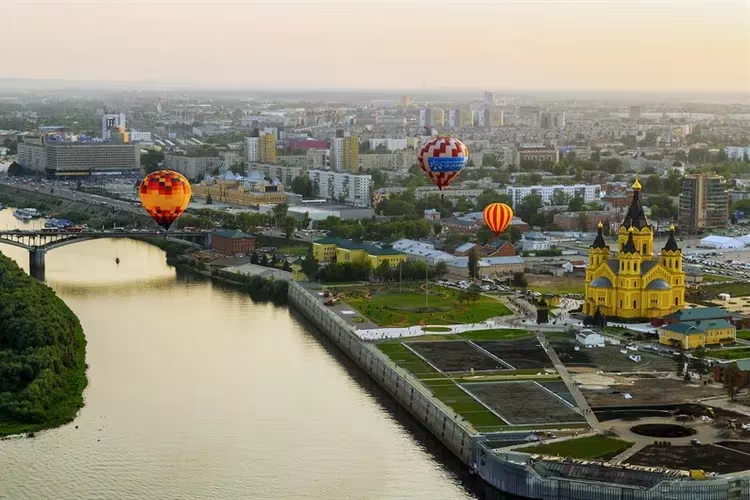
The charms of this city, filled with historical rarities, are best experienced personally. You will have to drive 430 km along the M7 Volga federal highway. Landmark – Gorky highway. On the way there will be an opportunity to look into such famous settlements as Vladimir, Gorokhovets, Bogolyubovo. At the site of tourists waiting for a string of bright sights.
The champions in this team of travelers have long been recognized as the Nizhny Novgorod Kremlin with strong ocher-colored walls, Bolshaya Pokrovskaya and Rozhdestvenskaya streets, the Rukavishnikov estate, the green plantations of the Alexander Garden, the enchanting Chkalov Stairs with its picturesque landscapes, Minin and Pozharsky Square, the houses of Kashirin and Peter, the Volga embankments and Okie.
The younger generation will be delighted with the Crystal Dreams doll gallery, the cable car with views of the river coast, and the Murrrchim cat cafe. A separate miracle is the holy monasteries of Nizhny Novgorod: Annunciation on the banks of the Oka River, Pechersky, Holy Cross Exaltation, as well as the Mikhailo-Arkhangelsky Cathedral and the cathedral mosque. Fans of exotic flora will like the Botanical Garden, shopping fans – the Nizhny Novgorod Fair.
The Nikitin Hotel on the Spit of the Volga and the Oka will surprise you with its vintage color. From the windows of which you can enjoy breathtaking views of the Alexander Nevsky Cathedral, and parking for cars is very convenient here. The favorites of local residents will help satisfy your appetite: the Lepi Dough network with dumplings and dumplings of inimitable quality, the Mitrich steakhouse restaurant with “hot” steaks, the kingdom of seafood “Fish and Crabs”. Discerning gourmets should go to the Pyatkin restaurant with dishes of ancient, primordially merchant cuisine, distinguished by a special, refined taste.
Velikiy Novgorod
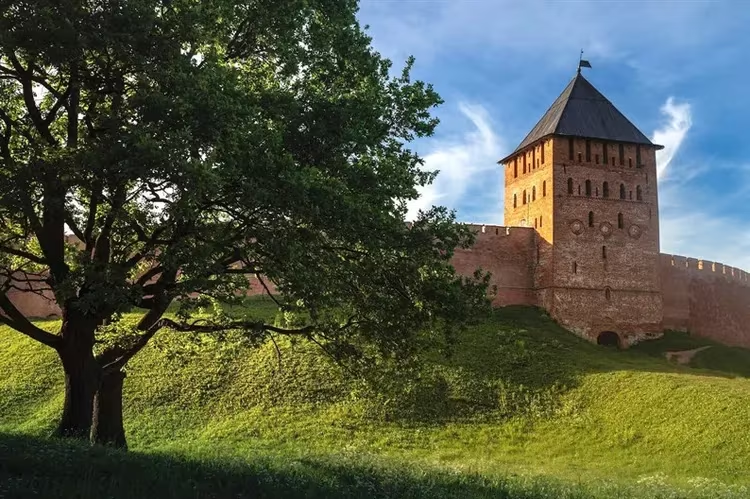
To visit this amazingly beautiful old city is an undoubted success for any traveler. The 540 km long route along the E105 / M10 highway is not close, but it's definitely worth it. Expensive time – 7 hours, if traffic jams do not interfere. Paid “islands” on the highway can be left aside if you choose the path vector along another track – E22 / M9, saving material resources will “eat up” time, as it will run another extra 120 km.
Indemnification for possible inconvenience in the city itself will be an abundance of attractions, which can be explored for months, it will still be interesting. For a short excursion of the “weekend”, you can limit yourself to acquaintance with the Vitoslavitsy reserve, the Faceted Chamber, the Novgorod Kremlin, the monument to the Millennium of Russia. The guests of Veliky Novgorod definitely never bypass them.
Separate emphasis, if desired, to holy relics: St. Sophia Cathedral, St. George's Monastery. If time is not pressed, Yaroslav's Courtyard and Ancient Bargaining will leave an indelible impression. Fans of outdoor walks can choose the promenade along the Kremlin Park.
They joke about the catering sector here: we have more cafes and restaurants than historical monuments, which is the absolute truth. Coffee houses with amazing confectionery, authentic zucchini with Russian cuisine, network masters of dumplings “Familia”, tea and national sweets cafe “Varenye”, fast food “Big Spoon” and “Tea Spoon”. Fashionable institutions from the kind of “expensive-exquisite” complex “Frigate Flagman”, restaurant “Good people”.
Creative estate “Guslitsa”
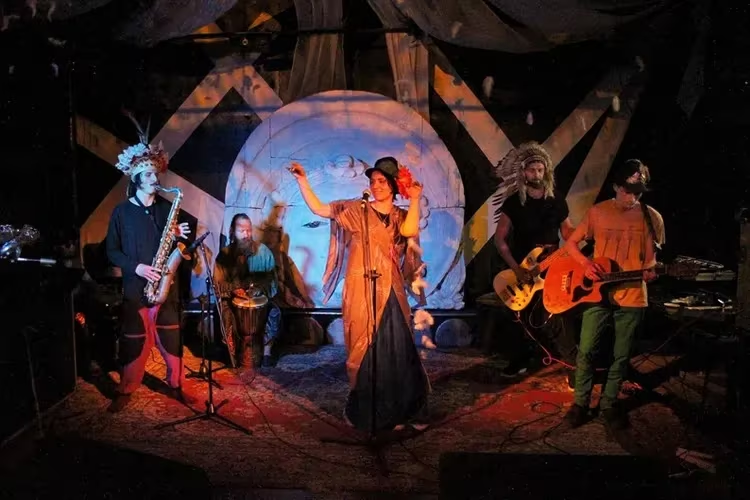
Landmark in the list of routes – Ryazanskoye and Guryevskoye highways. Distance – 80 km. On the road without traffic jams one way takes about 2.5 hours. You can find the art possessions of the Guslitsa residence in the village of Ilyinsky churchyard at the address: st. Mitrokhinskaya, 8. However, the former building of textile production in the coniferous thickets of the forest with an area of 14 thousand sq.m. on the spot you can’t confuse it with anything even without a tourist compass.
The schedule of events for the coming weekend, and here the fountain of creative ideas from artists, sculptors, photographers, musicians, actors, architects does not dry up, it is better to find out up-to-date on the site art-guslitsa.ru. The work schedule is every day from 9-00 to 21-00 without a break for holidays. The guests of the complex will not have any problems with spending the night in a campsite or hostel, there is a kitchen for self-cooking and a dining room.
Kids can visit the children's room, adults can take a steam bath in a Russian bath. An extensive creative workshop teaches the basics of massage, yoga, making handicrafts, designing themed rooms, and the basics of creating cartoons on your own. For those who do not intend to learn anything, there is also something to do.
Some walks in the epicenter of intricate art constructions, strings of colored graffiti creations are worth something, and you can also watch how seamstresses, bakers, stone and metal carvers work, learn the secrets of the art of making fancy furniture and ceramic products. On the way to the unusual world of masterpieces, you can stop by the equally interesting villages of Gzhel and Yegorievsk.
Plyos
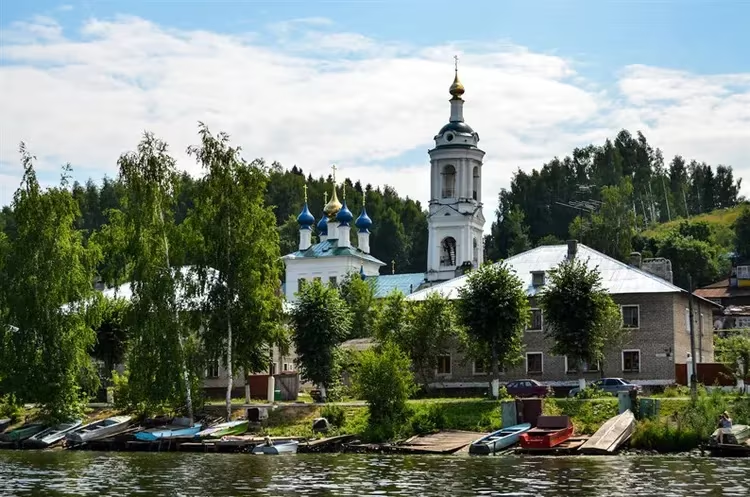
The road to the charmingly picturesque area is a little intricate. The destination is so popular that traffic jams cannot be avoided at any time of the year, but the result will exceed all expectations. The first section is the M7 Volga highway, the target is the city of Vladimir. Next, we change the vector to Suzdal and Ivanovo. With favorable conditions on the highway, the whole journey will take 6-7 hours, the distance is 370 km. Along the way, a lot of opportunities open up to visit the cities of the Golden Ring and admire them at least briefly.
In Plyos itself, the absolute favorites of tourist attention are the Levitan House Museum and the Landscape Museum. The artists simply could not help but draw magnificent landscapes in the vicinity of Plyos, because everything around is enchantingly wonderful. It is impossible to resist the delight when you see the Church of the Resurrection, known as “Above Eternal Peace”, thanks to the artistic creation of the same name by Levitan. The masterpiece of wooden architecture seems to rest against the sky with its gabled roof and invites you to think about the eternal mystery of the bottomless sky.
The Varvara holy monastery, built in the 19th century with its snow-white walls and laconic classical architectural appearance, looks no less pretty. The authentic spirit of the city does not spoil the famous splashing cat on the embankment, which you just want to stroke. Star epaulettes are not typical for local hotels, but almost all of them are nice and comfortable for living.
As for delicious delicacies, tourists should definitely taste the Volga pie with cottage cheese “Kuleika”, especially if the meal will be held in the legendary establishment named after the lady of the heart of Isaac Levitan “Coffee House of Sofia Mikhailovna Kuvshinnikova”. Gourmets will be delighted with dishes from local fish: kulebyaki with a screech, fried carps, luxurious baked sturgeon. The wine cellars of the Myasoedov restaurant are also famous throughout the area.
Sergiev Posad
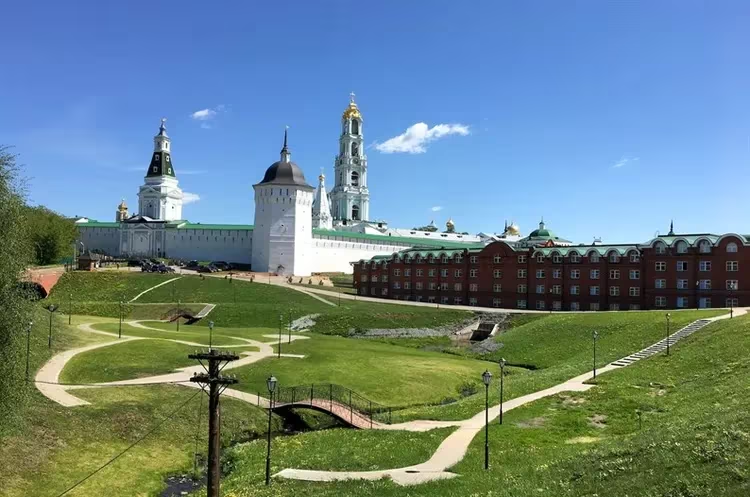
The road to the undoubted diamond of the constellation Golden Ring of Russian cities is easy and unpretentious. The distance is approximately 55 km from the Moscow ring. The fork will help you turn left onto the Moskovskoye highway, and there you won’t go astray until Sergiev Posad itself. The total segment of the capital – the destination has a size of 73.5 km.
With good weather and a free road, it will take 1.5 hours to get to the place, so many plan a trip to the city, which is chic in terms of sights, for just 1 day. During daylight hours in the well-known throughout Russia settlement, you can have time to see a place that is soothing in terms of energy – Gremyachiy Klyuch waterfall, take a walk along Krasnogorskaya Square, marvel at the expositions of the Konny Dvor museum complex and the Sergiev Posad Museum-Reserve.
Believing travelers, of course, prefer a visit to the Trinity-Sergius Lavra, which is recognized as one of the key symbols of Russian Orthodoxy. If it is difficult to cover the whole city in 1 day, you can admire it from the observation deck “Pancake Mountain”.
The lucky ones who can afford a longer trip to these places will be able to stop on the way to the bohemian Abramtsevo estate – a Mecca for Russian artists and sculptors. The acquaintance with the majestic Gethsemane Chernigov Skete deeply touches the soul of travelers.
The culinary emphasis is given to flour products from among the masterpieces of primordially Russian cuisine, and such drinks as mead and sbiten are held in high esteem.
Tarusa
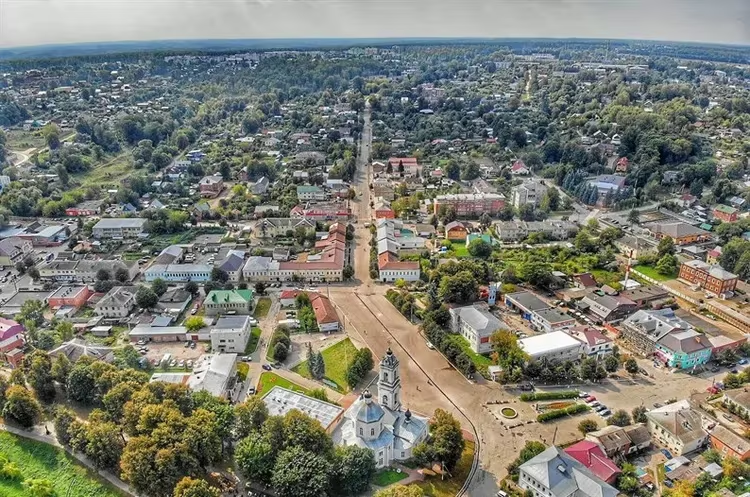
It has 2 status marks: “an open-air reserve of urban culture”, “a typical representative of the Russian province, little subjected to innovative changes”. From the capital, it is better to go here along the Simferopol highway. In fact, it will look like this: we move 77 km from the Moscow Ring Road to the pointer-plate to the city of Serpukhov. The next landmark is the road to the village of Protvino, and there it is only 5 km to the Tank monument, where the Tarus sign is already waiting for travelers.
In the criminal world, the city is known for the reason that it was possible to return here for the “101st km” after the conclusion, which many characters did. The town has the most direct relation to the writing environment, in the list of attractions the undoubted “stars” were and remain: the Paustovsky house-museum, the Tsvetaev house-museum, the House of Writers. The musical world was marked in a galaxy of curiosities by the dacha of Svyatoslav Richter, the artistic area of the arts – by the home of the famous animal painter Vatagin.
Of the religious buildings outside Tarusa, the Peter and Paul Cathedral and the Church of the Resurrection of Christ are famous. As a place for pleasant walks, tourists use the Istomino estate and the Buryatino estate. The most popular establishments in the hotel range are the Wellna Eco Resort (4 stars) and the Silver Age Hotel (3 stars). The culinary world is not rich in some frills, but guests of the city will certainly be able to eat a hearty and hearty meal in a local cafe without any problems.
Parks “Wild squirrels”
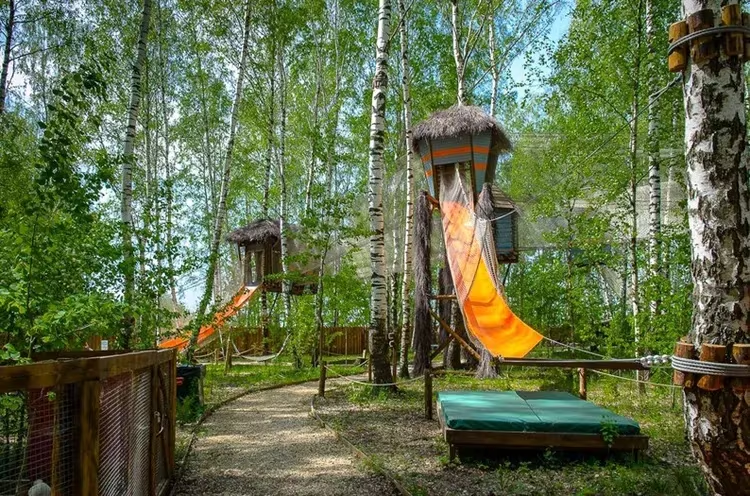
The country complex is focused on families with children. It was equipped as an educational agro-tourist institution. The territory is conditionally divided into several residences of different themes: 2 summer “farms” Adventure Park and Labyrinth Park, winter tourist base “Winter Fun”, a goat farm with cute inhabitants that give both milk and wool, which can be purchased right there on the spot.
Recently, a new participant for entertainment has appeared in the suburban estates – the Forest Stadium Museum. It is dedicated to the stories of victories, the development of world athletics and its Russian part. You can find an entertaining town for flying adventures in the Moscow region near the village of Chekhov. To travel here by car, GPS coordinates are useful: latitude 55.1568, longitude 37.6327.
The distance along the highway between Moscow and the destination is approximately 75 km. You can get here in a couple of hours, and the impressions will last for many days ahead. The owners of the park area advise users to always follow the information on the official website of the company dikie-belki.ru, they have many more surprises and new products prepared for the public. The mode of operation is year-round, it is better to check the opening hours for the seasons before the trip.
Zvenigorod
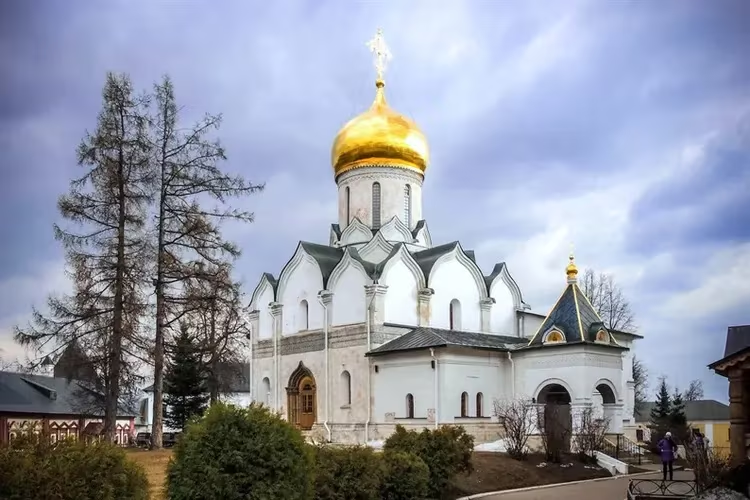
Location – Novorizhskoe highway, highway M9. Depending on the residence in the capital itself, alternative routes are possible: Rublyovo-Uspenskoe and Mozhayskoye highways, but the path along them is florid, you can hardly get by without the help of a navigator. The standard distance between Moscow and the desired city is 65 km, with a successful scenario on the highway, the road will take no more than 1 hour.
For those who decide to go to these places for a few weekends or holidays, you should take care of booking a hotel in advance, there are not so many of them in the village, the service is at a decent level everywhere. A separate path of the city is a network of health resorts and clinics, it has long been proven that here the air is magical for health, silence and a peaceful atmosphere.
Informatively interesting for travelers may be such sights as the Prishvin House-Museum, the Handsome Museum “Back to the USSR”, and the delicious Museum of Russian Desserts. You can wander around surrounded by nature in the Ershovo estate and near the Savvinsky Skete. Tourists often also stop by to put candles at the altar and icons in the Ascension Church, the Alexander Nevsky Church and the Savvino-Storozhevsky Monastery.
All these holy cloisters are distinguished by very elegant and intricate architecture. Guests of Zvenigorod most often prefer to satisfy their appetite in establishments of the “quick and tasty” category a la fast food, there are a myriad of them here. A more substantial meal with dishes of Russian cuisine awaits tourists in restaurants and cafes in the city center.