
What to see in Tula in 1 day on your own – route, photo, description, map
What associations do people have when they mention Tula? Of course, “Tula gingerbread”, “Tula gunsmiths”, and even the saying “go to Tula with your samovar”. That is what the city is famous for. More, as a rule, no one will say anything about this glorious place. But if you discover it for yourself, you will be surprised how many historical and cultural treasures there are. Even if you get here for a short time, you will have time to see the main sights. So, what to see in Tula in 1 day on your own?
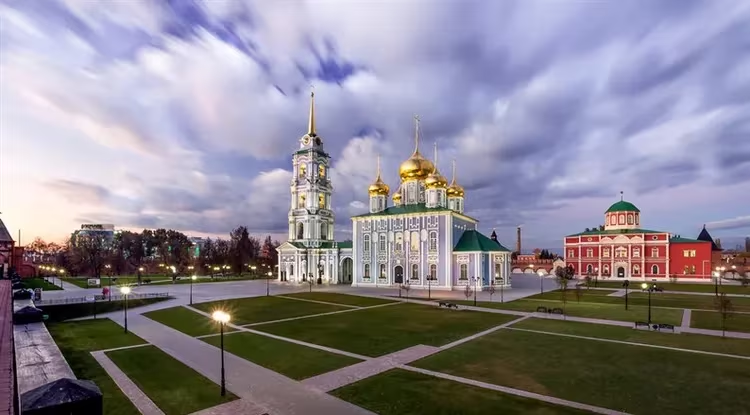
Tula Kremlin
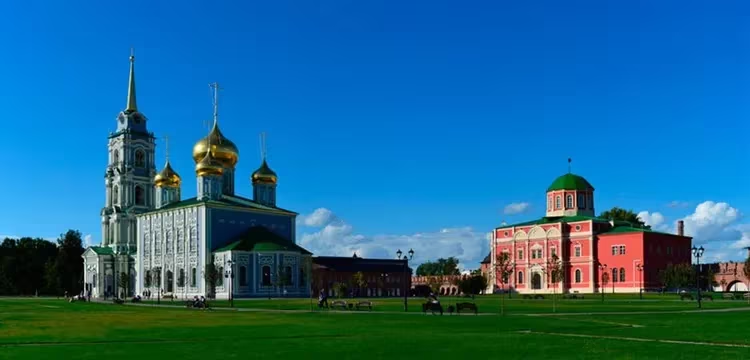
It can be called one of the main attractions of the city. The Kremlin dates back to the 16th century and was built for defensive purposes in order to protect the road to Moscow from the Crimean Tatars. At the beginning of the 17th century. False Dmitry the First conducted a reception precisely on the territory of the Kremlin in Tula. In the same 17th century, when Russia's borders were expanding, the Kremlin was losing its military role. Today it is a monument of history and architecture. In addition to walking around the territory of the Kremlin, visiting cathedrals, and the first city power plant, tourists can see expositions telling about medieval torture, admire the weapons of Russian soldiers. The Kremlin is located at the address: Mendeleevskaya street 2.
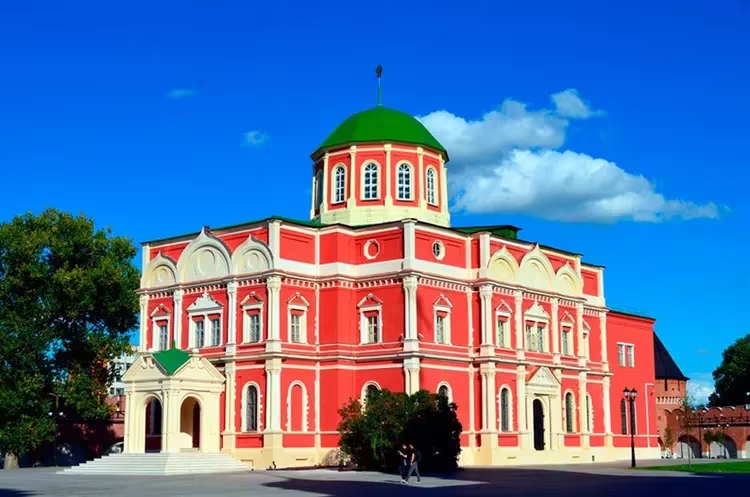
Assumption and Epiphany Cathedrals in the Tula Kremlin
The Holy Assumption Cathedral stands in the center of the Kremlin. The first temple on this site appeared in the 16th century, then it was replaced by a stone one, but it also did not survive – it was simply dismantled. The current cathedral dates back to the 18th century; funds for its construction were allocated by local merchants. After the death of Emperor Alexander the First, in this cathedral for some time there was a hearse with the body of the deceased ruler of Russia.
In the Assumption Cathedral, the militia soldiers who went to battle with Napoleon were also blessed. The rich historical past, the unusual design of the cathedral, unique icons – attract many tourists here. Another cathedral, located on the territory of the Kremlin – Bogoyavlensky – now does not belong to the church. It houses the Museum of Weapons. The cathedral was built in the middle of the 19th century. in memory of those who died in the war of 1812. In Soviet times, it underwent a significant restructuring.
City Kremlin Garden
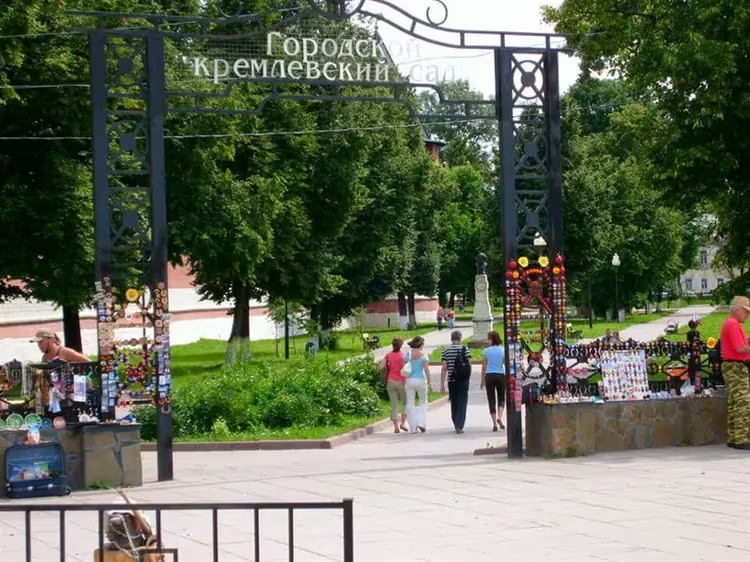
Old beautiful old garden in the city center. It stretched out where there used to be a protective moat near the walls of the Kremlin. It was opened in the first half of the 19th century. The heir to the throne, the future Alexander II, also visited the garden. The garden was divided into “Upper” and “Lower”. In previous years, the latter housed a covered pavilion where music played and couples danced. In the “Upper” garden, a summer theater worked, there was a buffet and an entertainment area for children. And there were also graceful gazebos and benches. The park is still a favorite place for recreation of the townspeople.
All Saints Cathedral
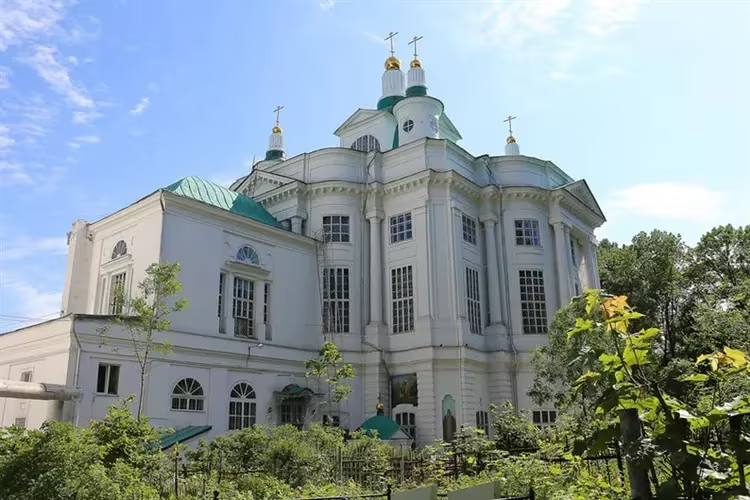
When in the 18th century a new cemetery was laid in the city, it was decided to build a stone temple here. As always, local merchants played an important role here: they allocated funds and supervised the construction. The temple came out one-story, later another floor was built on. In the 20th century here was the church of the “renovationists”, Moscow artists painted the temple.
In 1960, the cathedral was recognized as a monument of history and culture; in the late 70s, the high bell tower was reconstructed. It was in this cathedral that in 1988 the 1000th anniversary of the baptism of Russia was solemnly celebrated. The main shrine of the temple is the icon of the Kazan Mother of God, dating back to the 17th century. The cemetery and the cathedral are located next to Lenin Avenue.
Exotarium
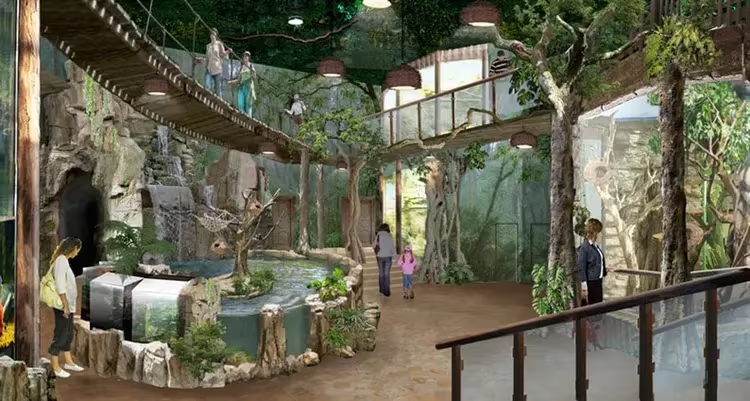
The zoo (exotarium) was opened in 1987. Initially, a little over 100 species of animals could be seen in it. But the exotarium has its own specialization – the advantage here is given to reptiles. To make it clear to everyone and everyone, the dinosaur became the symbol of the zoo – the brightest and most memorable of the reptiles. Today, nowhere else can you see such a huge collection of snakes kept in captivity.
About 100 thousand people visit the exotarium every year. A ticket for adults costs 200 rubles, for children 150. You can walk around the zoo and see its inhabitants both independently and as part of an excursion. There are also various exhibitions, holidays, thematic events. The address of the zoo is Oktyabrskaya street 26.
Museum “Necropolis of the Demidovs”
At one time, the Demidov dynasty of entrepreneurs was known to the whole world. Among these people were miners, travelers, writers, industrialists. The Demidovs were distinguished by their generous donations for good deeds. The memorial complex “Necropolis of the Demidovs” was opened in 1996, on the occasion of the 340th anniversary of the brilliant Nikita Demidov.
Guests can bow to the glorious representatives of the family in the tomb of the Demidovs. The guide will also tell you about the places associated with the memory of the representatives of the dynasty. The address of the museum is Demidovskaya street 9. It works every day except Monday. Ticket price for adults is 100 rubles.
Tula State Museum of Weapons
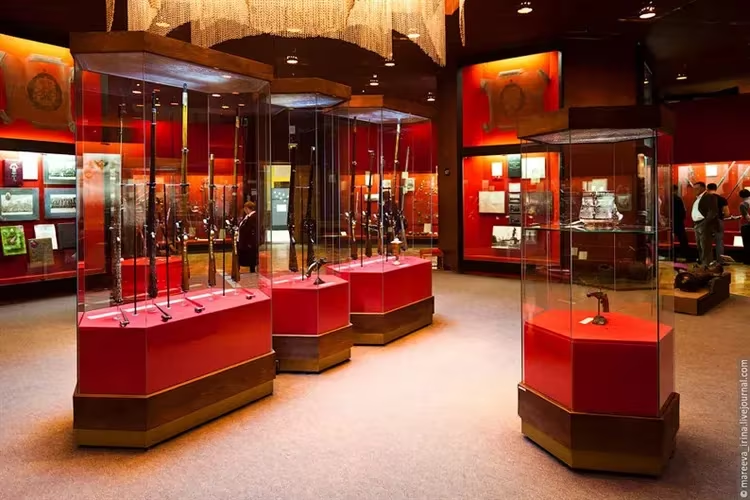
Since Tula in the 16th century. served as a defensive line, there was a great need for weapons. The metal was obtained from brown iron ore – the deposit was nearby. Moscow and Tula gunsmiths exchanged their secrets. Since 1712, an arms factory founded by Peter the Great began to work. He supplied a large number of necessary weapons. But the masters left the most beautiful weapons at the factory. By order of Empress Catherine II at the end of the 18th century. Here the “Chamber of Rare Weapons” was created.
Later, the collection replenished the exhibits of the Moscow Armory, but at the end of the 19th century. returned to Tula. In the first years of Soviet power, the museum was located in the factory shop. Later, during the Great Patriotic War, he was evacuated, and returned back in 1945. In the late 80s, the museum moved to the Cathedral of the Epiphany. The new museum building opened in 2012. In it you can see a collection of weapons, starting from the 16th century. and up to our days. So, one museum building is located in the Kremlin, the other at the address. October 2.
Gingerbread Museum
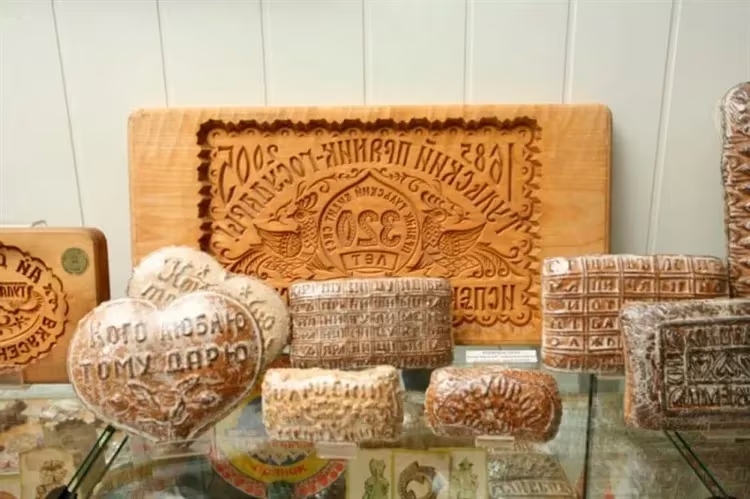
It is impossible to visit Tula and not taste the famous Tula gingerbread. Better yet, visit a special museum dedicated to them. Here you will be told the history of gingerbread, how they were “printed” back in the 17th century. “Gingerbread business” was and remains a real art. Special gingerbreads were made for weddings, for commemorations, there were gift and honorary gingerbreads and many, many other types of them.
In the museum you will see gingerbread dedicated to important dates – for example, the Battle of Kulikovo, look at the molds that famous confectioners used to make delicacies. And, of course, in the shop at the museum you can buy different types of souvenir gingerbread. The museum is located at the address: Oktyabrskaya street, 45 a. Tours are held from 10:00 to 16:00, during master classes you will be given the opportunity to make a gingerbread on your own.
Museum “Tula Samovars”
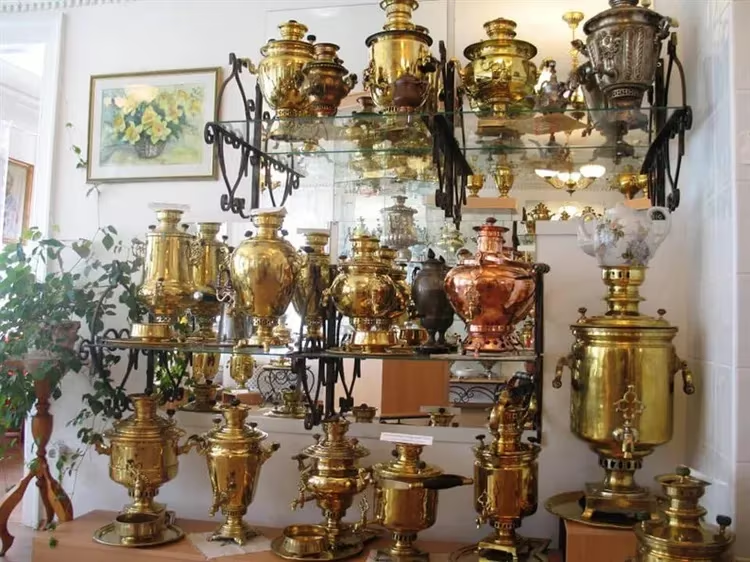
This relatively new museum opened in 1990. But Tula samovars were famous several centuries before. Initially, interesting samples of samovars began to be collected by employees of the Tula Historical, Architectural and Literary Museum. Their collection formed the basis of the Tula Samovars Museum. Today, the exhibits are located in two of its halls.
In addition to the samovars themselves, there are also medals that the craftsmen who made them received at exhibitions. There are also 5 small samovars, which were presented as a gift to the children of the last Russian emperor. By the way, beautiful souvenir samovars were also made in Tula for prominent Soviet figures. The museum is located at Mendeleevskaya street 8.
Monument “Tula Gingerbread” on Lenin Square
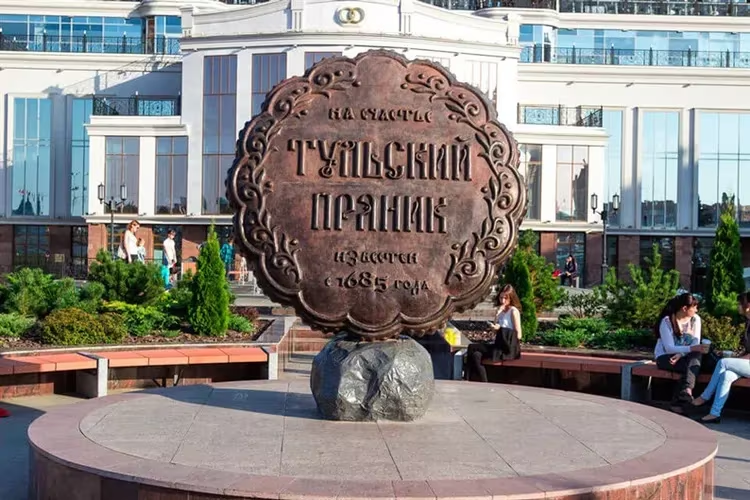
Tula is a city with many unusual and very soulful monuments. So, there is, for example, a bronze “Tula Gingerbread”. The monument was solemnly opened in 2014, on Left-Handed Day. It is located near the Wedding Palace. The monument is quite large – more than 2 m, has a round shape and considerable weight – about 1300 kg. It glorifies Tula craftsmen and the most famous delicacy: after all, gingerbread in the city began to be made as early as the 17th century.
Monument to Nikita Demidov
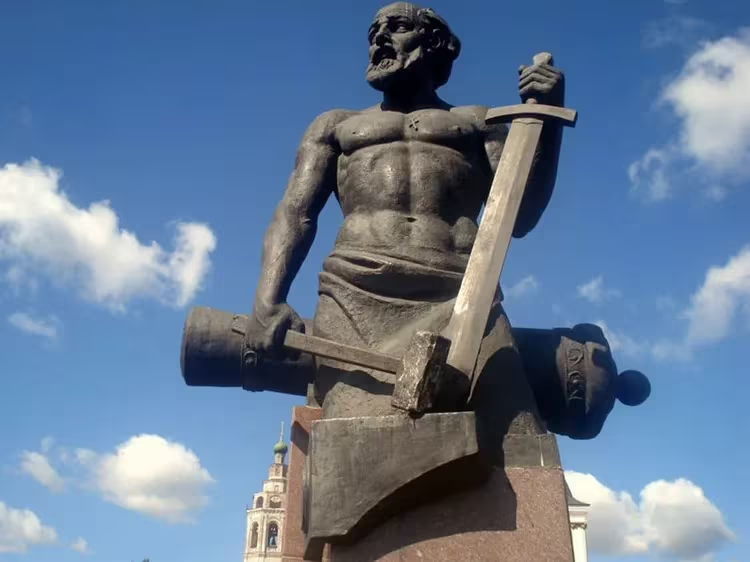
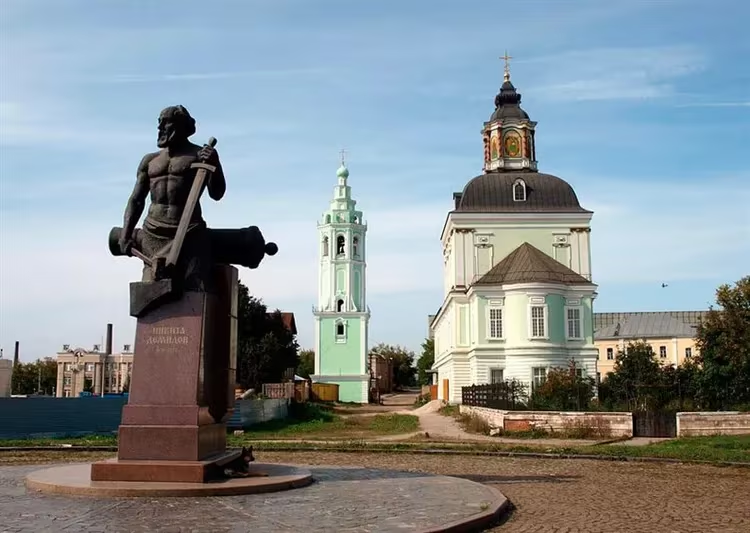
To see this monument, you need to come to the square, which is located near the Nikolo-Zaretskaya Church. It is Nikita Demidov who is the founder of the famous dynasty. The monument was made by the sculptor A.I. Chernopyatov, and it was opened in 1996. The Demidov Metallurgical Plant turned 300 this year.
Sculpture “Tula Tea Party”
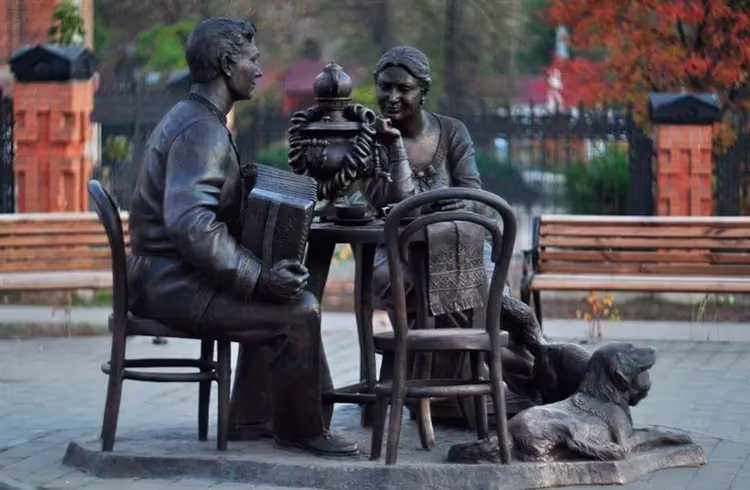
This sculpture can be seen if you enter Tula from the north side. It is located on Puzakova Street, near the church of St. Sergius of Radonezh. The monument depicts a tea party. At the table is a man with an accordion in his hands, and next to him is a woman who listened to his playing. There is a samovar on the table, and, of course, there is also a gingerbread. A cat and a dog gathered near the owners. In a word, the main souvenirs of Tula – gingerbread and samovar – are reflected here. Everyone who sees the sculpture understands that he has come to a city where guests are welcome. And they will sit at the table and drink tea.
Pollenovo
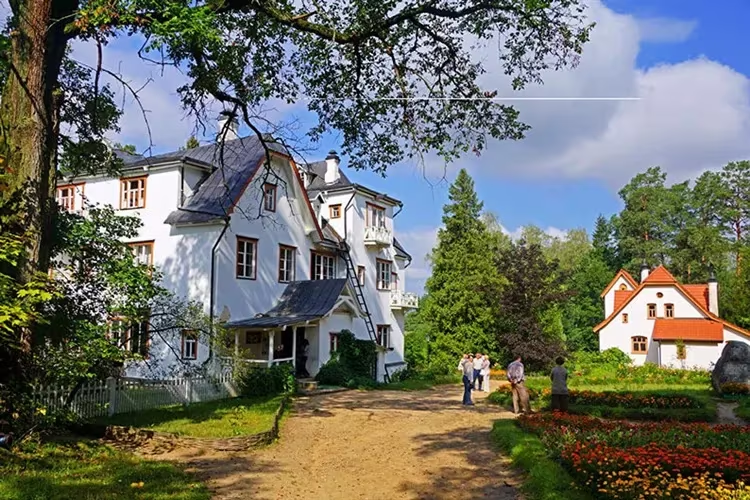
The estate of the famous Russian artist Vasily Polenov is also located in these parts. It has been perfectly preserved, even the park and flower beds, which the artist himself laid out, have survived. Starting from the end of the 19th century. artists and students regularly came here to visit the painter. Today the estate includes a number of buildings. Among them are the Big House, where collections and personal belongings of the artist are collected, the Abbey – Polenov's workshop, the Admiralty – the place where the boats were stored, the City of Masters – an exhibition hall.
You can get to the estate both by car and by train. The museum is open from 11 am to 6 pm, except Mondays and Tuesdays. Tickets must be purchased separately to visit each house. So, an adult tourist can visit the Big House for 200 rubles, and the exhibition hall – for 100. There are discounts for pensioners and schoolchildren.
Bogoroditsky Palace-Museum and Park
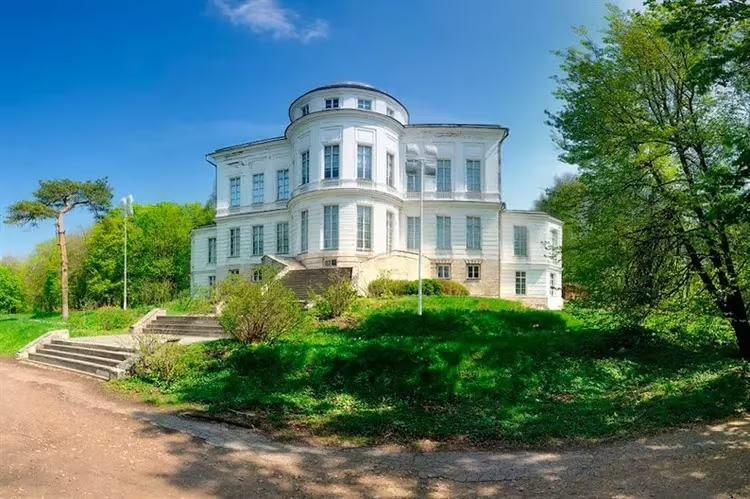
Back in 1918, after the establishment of Soviet power, a museum was opened in the palace of the counts of Bobrinsky. He worked until 1925. In 1975, when the palace was restored after the war, a branch of the Tula Art Museum was opened here. In 1980, the museum became a historical and artistic museum, and in 1988 a whole complex was formed – the Palace Museum and the park. Open daily, except Monday, ticket price 200 rubles.
Kulikovo field
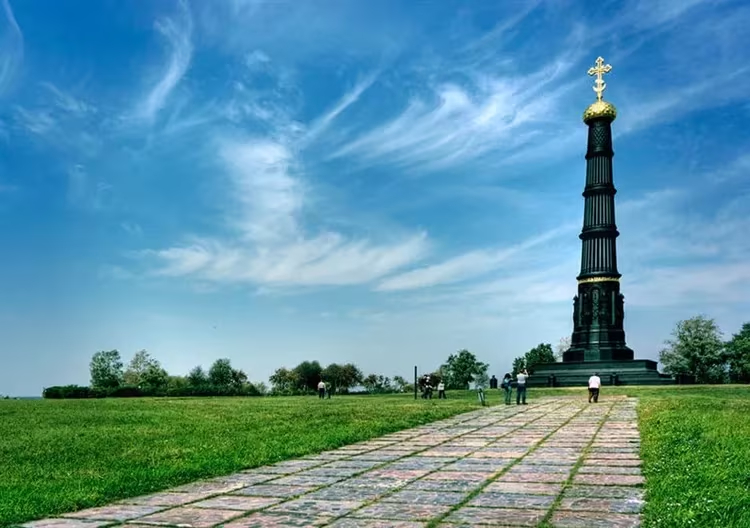
Kulikovo field can rightly be called the first field of military glory of our country. Until now, crosses, parts of armor and weapons are found here. In the 17th century the village of Monastyrshchino was founded here, and in the 19th century. It was decided to perpetuate the memory of Russian soldiers. The monument to Dmitry Donskoy was the first to appear. Then the Church of the Nativity of the Virgin and the monument to Sergius of Radonezh. Then there was a big break until the 1960s. Then a branch of the local history museum of Tula was opened here. On the occasion of the 600th anniversary of the Battle of Kulikovo, an exposition opens in the church of St. Sergius of Radonezh. Today in the village of Monastyrshchino there is a museum and memorial complex.
Yasnaya Polyana
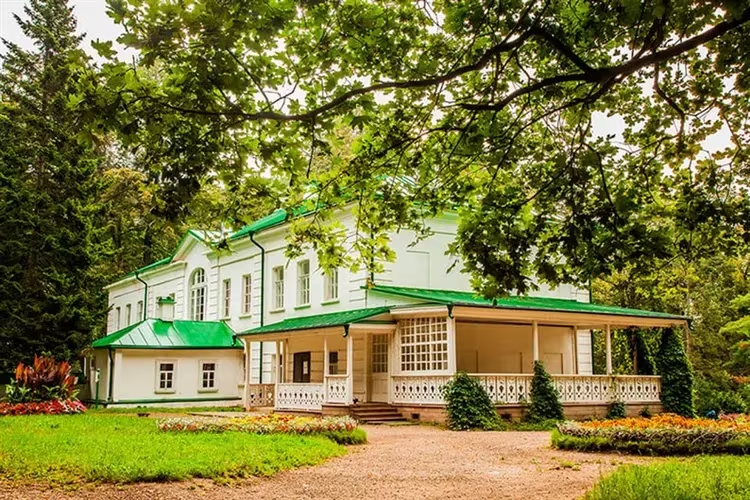
If you are in Tula, you need to take the opportunity to visit Yasnaya Polyana, where one of the most famous literary museums in Russia is located – the house where L.N. Tolstoy. The museum here was established in 1921. The Tolstoy family began to own these lands in 1763, when the great-grandfather of the writer S.F. bought them. Volkonsky. His son Nikolai Sergeevich expanded his holdings and was actively engaged in building.
Among other things, an architectural ensemble with a manor house was created. Tolstoy's childhood passed in the estate. In 1847 he came here from Kazan already as a host. His wife and children will also live here. In Yasnaya Polyana, Leo Tolstoy would write his best works, and here he would be buried. You can visit the museum buildings daily from 10 to 15.30, closed on Mondays.
Here is such a “bouquet of sights” gives tourists Tula. Of course, in 1 day you will not visit all its corners. Travel outside the city also requires considerable time – for example, to Yasnaya Polyana or Polenovo. You just need to choose what is of most interest to you. But if you discover Tula, you will never forget this city.