

🌿 Ecotourism: a guide to responsible travel
The fashion for environmental friendliness has not bypassed the world of travel. Countries and tourists are striving to make travel increasingly safer and preserve the planet's natural heritage. This desire led to the emergence of ecotourism. We have collected up-to-date information on what ecotourism is, what it is like and where to look for the best trips for lovers of an eco-friendly lifestyle.
What is ecotourism and when did it appear?
The concept of “ecotourism” arose only in the second half of the 20th century, and in the 21st it reached the peak of popularity. Mexican ecologist Hector Ceballos-Lascurain developed the concept of wilderness travel at an international conference in the 1980s.
Ecotourism is a special travel format in which tourists choose trips to untouched places of nature and its attractions. Such tourism should contribute to environmental protection, help the local population and improve their well-being.
Today, this phenomenon has become an important part of the world community’s struggle for the sustainable development of the planet. Tourists explore the most remote corners of nature with great interest, harm nature less and strive to preserve its diversity.
Eco-travel is common in regions with rich plant, animal and cultural heritage. There is always an educational element to such trips, as tourists bring new knowledge from the local population and strive to disseminate it in their area.
This is an excellent option for responsible tourism for followers of an eco-friendly lifestyle. Travelers strive not to harm nature in order to pass on its heritage to future generations.
- Eco-friendly holiday: One & Only Reethi Rah
- Tips: how to save money on travel without sacrificing pleasure
- Brazilian Joinville – city of dance and flowers
- How to get a digital nomad visa in 2023?
What forms of ecotourism are there?
Many experts put forward their own theories about forms of ecotourism. We talk about the most popular methods of eco-recreation. We are sure that you have already tried some options, but you didn’t know that you had taken the first step towards joining the ecotourist community.
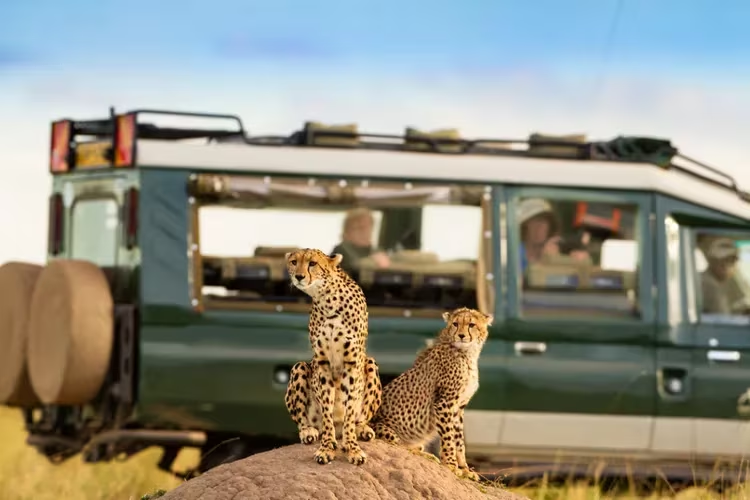
Safari
Safari is not only about hunting and killing wild animals. Today, travelers book entire safari tours to watch animals in their natural habitat, go through large-scale ecological trails and routes, and take a few photographs as souvenirs. There are even special photo safaris if the desire to capture wildlife is a priority. Research information about which nature reserves or national parks you can try a safari in and book a tour. For example, this opportunity exists in many national parks and reserves around the world.
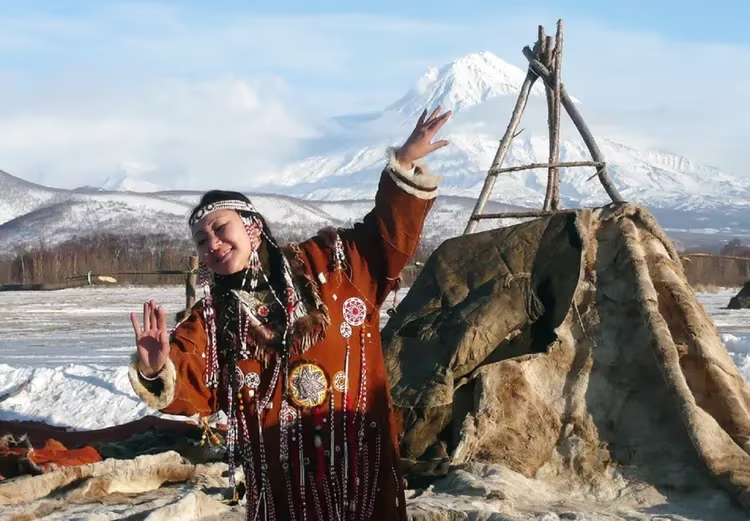
Ethnographic tours
Are there any of you who like to try the experience of previous generations and learn all the secrets of life of the indigenous population? The option with ethnotours is for you. Travelers can immerse themselves in the way of life of a certain region, get acquainted with centuries-old customs and traditions, and discover a new place on the map.
Agritourism
If you have been wondering for many years how farmers live and their favorite fruits and vegetables grow, pay attention to agritourism. Plan a trip to a farm, a local farm, or an entire agricultural region. During this time, you can become an active participant in the life of the local population, learn how to cultivate the land and plant plants in the soil, harvest crops and care for animals. This contribution to the life of the area helps rural regions maintain a decent standard of living.

Eco-volunteering
Environmental volunteers travel to developing countries and poor regions to learn more about their lives and through their actions improve the well-being of local people. Such trips increase the level of economic development of the region, and project participants study new culture, way of life and traditions.

Observation of animals and plants in their natural habitat
Do you like bird watching? You can safely call yourself a birdwatcher. There are entire communities of birdwatchers, and for a good result you need to study a lot of information. You can watch not only birds, but also butterflies, flowers and even trees.

Eco trekking
This group includes all ways of spending leisure time with physical activity in nature. If you have already gone hiking, rock climbing, climbed mountains, kayaked, congratulations! There is every reason to consider yourself a member of the ecotourism community.
We advise you to pay attention to travel companies that additionally offer excursions with an emphasis on the history and life of the region. By the way, sometimes they donate part of the profits to the development of the local population.
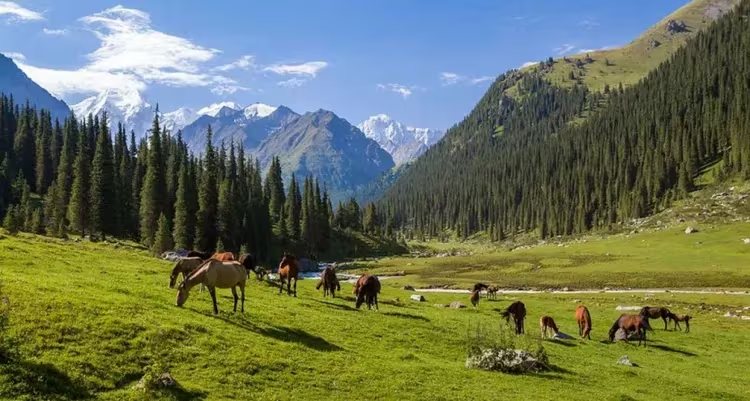
Principles of ecotourism
Any trip with the prefix “eco” must comply with a few simple rules. Check which principles you can tick in this checklist now:
- minimal negative physical and social impact of tourism on natural objects;
- environmental awareness and respect for the culture of the region;
- obtaining vivid emotions and impressions by tourists themselves;
- assistance to the indigenous population and study of their rights, traditions and beliefs;
- local residents should receive benefits and advantages from travelers and companies that organize tours;
- economic efficiency and sustainable development of a specific region.
Most popular destinations
There are many countries and regions on the world map that will be a real discovery for ecotourism enthusiasts. We tell you where it is best to plan such a trip and what to expect from the nature of each country.
Costa Rica
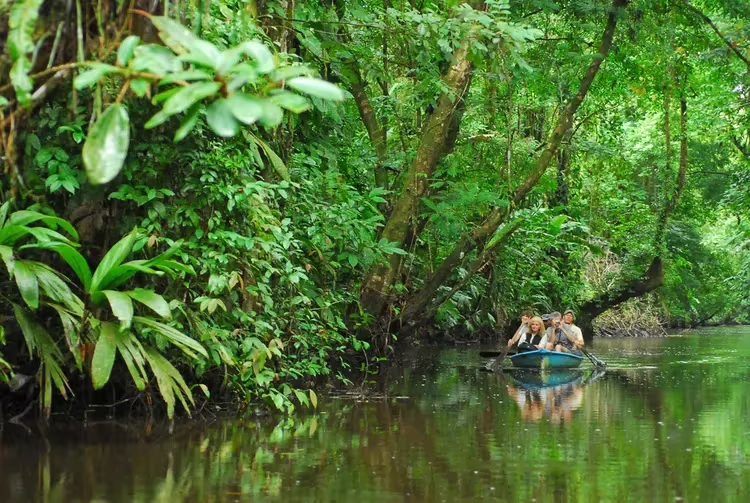
The territory of this state is very small. But this does not in the least prevent it from preserving about 4% of all animals and plants in the world. About ⅔ of the country's area is covered by intact tropical forests. Ready for another statistical fact? 25% of Costa Rica is occupied by national parks and reserves.
Costa Rica is perfect for both kayaking enthusiasts and fans of trekking through tropical bushes. We recommend planning a trip to Corcovado National Park. But remember that the number of visitors per day is limited, and you won’t be able to come there without a guide.
Iceland
Little Iceland has become a popular tourist destination in recent years. The country's authorities are seriously thinking about how to make travel responsible and useful.
What is Iceland famous for? Of course, geysers! The local population even uses them to heat their houses and heat water. Be sure to go to the Blue Lagoon resort to experience the healing power of the northern springs.

Brazil
Brazil's natural heritage is one of the richest and most diverse in the world. Look at the incredible rainforests of the Amazon! Until now, numerous scientists and researchers have not revealed all the secrets of these forests. By the way, did you know that these are the green lungs of our planet? Be sure to take a trip to these pristine wilderness areas and discover your Amazon.
Peru
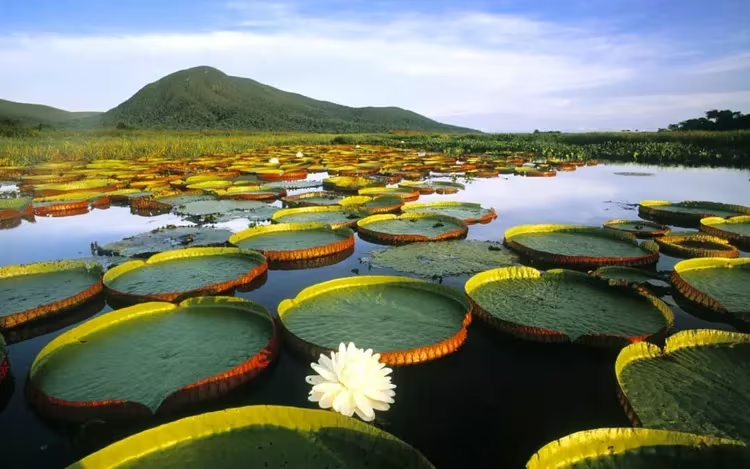
If you think that Peru is worth going just for Machu Picchu, prepare to be surprised and admired. Yes, many architectural sights and heritage of the Inca civilization have been preserved here. Few people know that Peru is one of the most popular ecotourism destinations in the world. The local mountain landscapes and jungles surprise even the most experienced tourists.
By the way, the Amazon rainforests have been preserved in the country, so you can see some of them here too. For lovers of ethno-tours, the traditions of the Indians and the life of the Incas are of particular interest. We recommend checking out Huascaran National Park if you want to see the spectacled bear and the Andean condor, which are on the verge of extinction.
Chile
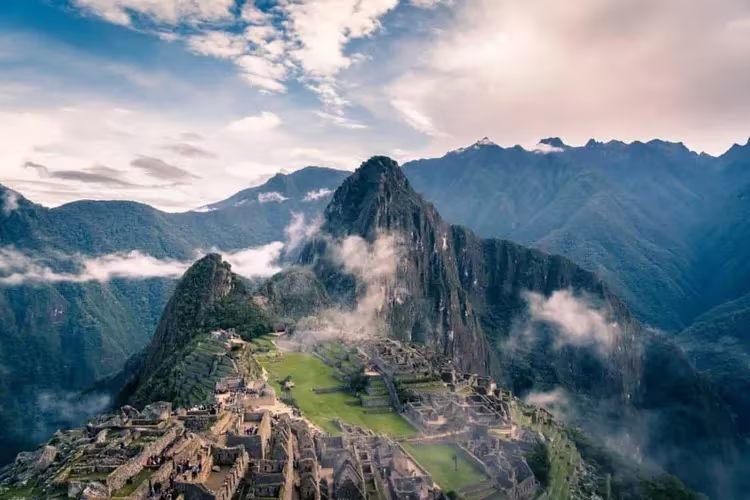
In 2020, Chile became the world's top ecotourism destination. Surprised? Still would! Just imagine that this South American country has 41 national parks, 45 nature reserves and 17 natural monuments.
It is impossible to make a mistake in choosing the best park or reserve for travel. But we advise you to pay attention to the Huilo Huilo waterfall and the Torres del Paine National Park. By the way, Chile offers excellent opportunities for environmental volunteers. Look for a suitable program, besides, this is another chance to improve your spoken Spanish.
Slovenia
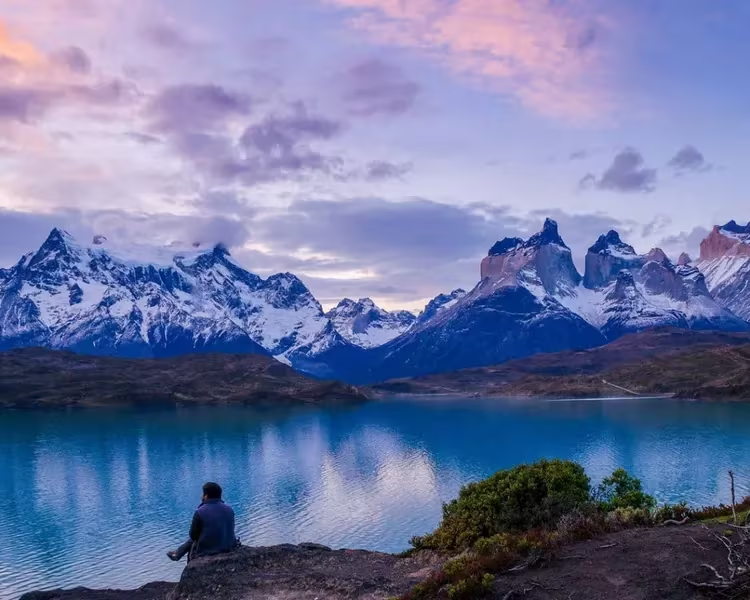
We are sure that many of you have heard about the famous Slovenian Lake Bled. 60% of the country's territory is occupied by forests, and more than half of the land is under the protection of the authorities. Tourists strive to go hiking in these places to see the pristine beauty of nature.
Fans of camping and its modern analogue – glamping – will find all the conditions for these activities in Slovenia. We recommend paying attention to the environmental labeling of housing and products. By choosing them, you will be sure that you are supporting the country’s efforts to develop ecotourism.
Palau
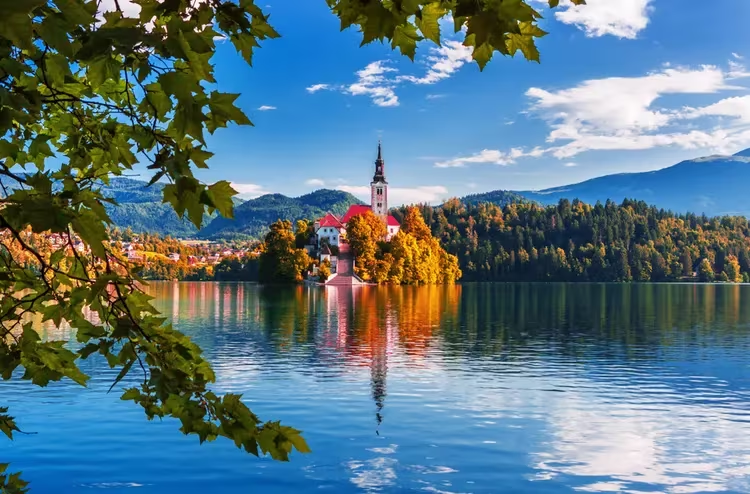
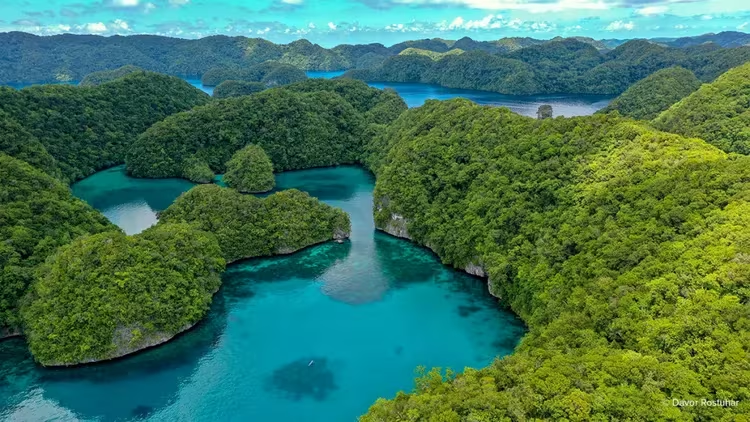
This island nation is a true paradise for those who like to dive deeper. Local forests and beaches will make divers and other travelers forget their words with delight.
The authorities are so concerned about preserving natural diversity that they have developed a special reward system. Every time you perform an action from the mobile application, you receive points in your piggy bank. This could be as simple as using sunblock or buying locally grown products. The main result is assistance and preservation of the culture of this amazing region.
Kenya
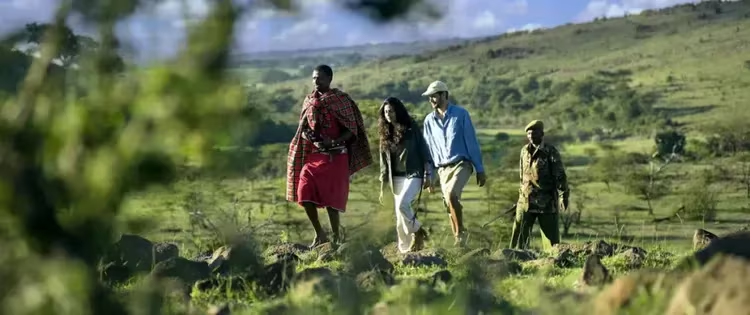
This is one of the best ecotourism options in Africa. The state takes special care of biodiversity and natural sites. For this purpose, the government even created a special organization “Ecotourism Kenya”.
Tourists are eager to see Kenya's national parks at any cost. Authorities are being forced to introduce bans on poaching, single-use plastic and plastic bags to encourage sustainable tourism. By the way, pay attention to the opportunity for eco-volunteering in Kenya. There are always vacancies in this country!
Tips for ecotourists
We leave a few recommendations on how to make any trip environmentally friendly, even if you are not going on a special safari tour or cruise through the Amazon rainforest.
- Study everything in advance. If you are going on a tour from a company, ask what kind of transport you will be using. Remember that helicopters and boats with gasoline engines frighten animals and pollute the atmosphere.
- Take care of the wild environment. Remember that your goal is to observe animals and plants in their natural habitat. If you want to see dolphins, choose a special reserve, not a dolphinarium, where the animals often act as forced performers.
- Clean up the trash. If there is no place nearby for garbage disposal, collect everything in a separate bag and leave it at the nearest specialized waste collection point.
- Choose modes of transport that do not cause much damage to the environment: bicycles, trains and buses.
- Shop for souvenirs from local artisans and thrift stores and vintage markets.