
Peterhof in St. Petersburg – history, photos, descriptions, prices 2021, opening hours, map
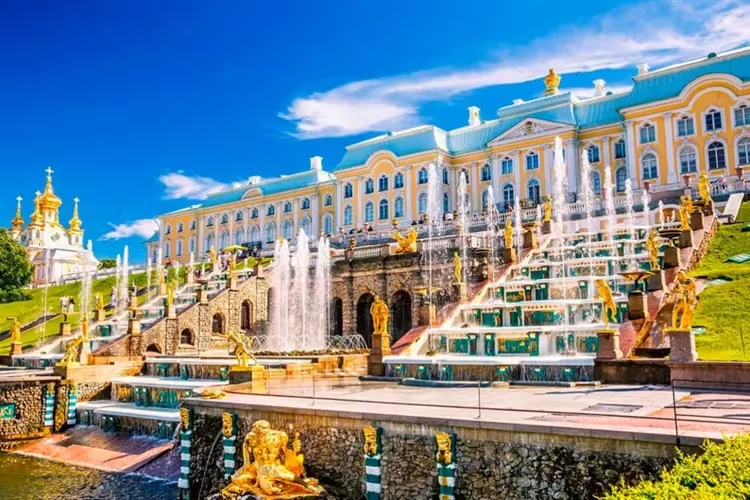
The palace ensemble of Peterhof delights and surprises – it is not for nothing that it is called the world capital of fountains. This is one of the most beautiful summer residences of monarchs, which annually attracts more than four million tourists to admire the beauty.
History of creation
After a trip to Europe, Peter I decided to build an imperial residence so that it would surpass Versailles in beauty and grandeur. Thus began the formation of the palace complex, which became a favorite vacation spot for the royal family in the summer. Peterhof was not chosen by chance – the proximity of the bay made it possible to uninterruptedly supply water for hydraulic structures.
In 1714, the Grand Palace was built, by the summer of 1723, when the grand opening of the ensemble took place, there were already Monplaisir, Marly, the Marly cascade. In the following centuries, construction continued. After the October Revolution, all buildings were transferred to state ownership and are open to everyone. During the war, the GMZ was badly damaged; only 50 statues and about 9,000 interior units were saved.
Restoration began even before the end of the war – in 1945 the Lower Park was opened, a year later fountains began to work, including “Samson”, which was lost during the occupation. Famous buildings are being restored – Bolshoi, Monplaisir, Marley and others.
Grand Peterhof Palace
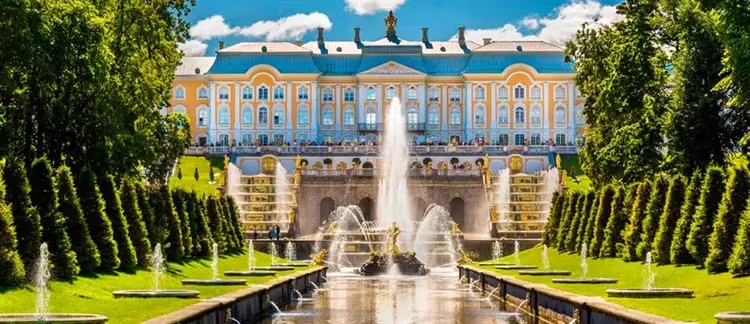
Under Pyotr Alekseevich, it was a simple two-story building, which was called the Upper Chambers, where guests were received and holidays were held. In 1732, a gallery was added, but anyway the building was too modest compared to the luxury and splendor of the Russian court, so they decided to completely rebuild it. The work was entrusted to F. B. Rastrelli, the task was not easy – to preserve the walls erected in the time of Peter the Great and create a magnificent baroque palazzo.
The talent of the architect made it possible to fulfill the order brilliantly. Rastrelli added another floor. The space in the center has increased, to which one-story galleries adjoined, ending with side (Church and Building under the coat of arms) buildings. The interior was striking in its luxury with carved gilded ceilings and huge mirrors, multiplying the space many times over. As a relic, the office of Peter the Great made of oak was preserved.
The new classicist style, which has come into fashion, makes its own adjustments – by order of Catherine II, the interior of the premises is being redone. During the reign of Nicholas I, a third floor was built in the eastern wing, equipping premises for Olga, the daughter of the emperor. During the occupation, everything was completely destroyed, but by the spring of 1964, visitors were already able to see the splendor of the first revived halls filled with furniture, sculptures, paintings and other masterpieces of arts and crafts. The appearance was formed for a century and a half, now it dominates the ensemble, linking parts of the park.
Grand Cascade
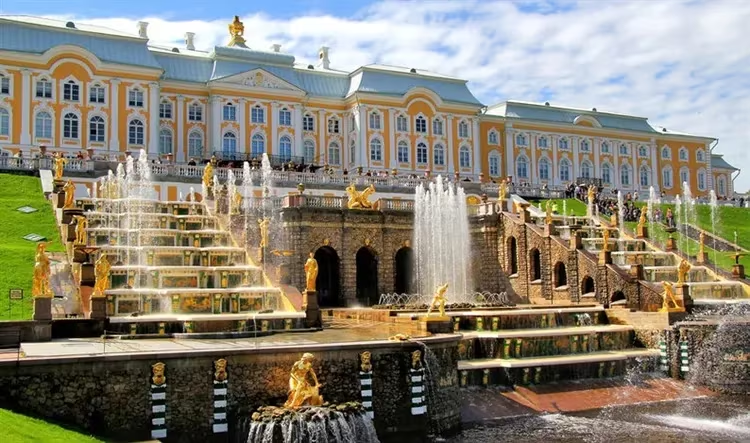
It is a dominant hydraulic structure, which is difficult to find equal in luxury, expressiveness and technical characteristics, one of the largest in the world. The complex of the Big (Upper) cascade has a beautiful outer 42-meter part and an underground part located below, where grottoes are equipped.
It consists of more than 250 bronze sculptures, two grottoes, three waterfall stairs and many decorative details. On the terrace of the grotto, fenced with a white marble balustrade, you can see images of tritons, Bacchus and Neptune, in niches there are busts, an allegorical embodiment of the seasons.
upper garden
The garden, whose area is 15 hectares, is considered the main entrance to the residence. The layout, made according to the sketch of Peter I, almost did not change over time. Even during the life of the monarch, there were vegetable gardens where vegetables and herbs were grown. Under Elizaveta Petrovna, the territory acquires a grand appearance – vegetable gardens are replaced with gazebos, benches and sculptures. Later, the territory was expanded, surrounded by a fence, and gates with wrought iron doors were installed at the entrance.
Now there are three pools, on the sides of the parterre – Square ponds and six bosquets (an element of landscape design – trees or bushes that create compositions thanks to decorative haircuts). A clear geometry and perfect symmetry are created by straight linden alleys, lawns, trees trimmed in the form of cones or balls. Along the alleys and in the pool, statues are an indispensable element of regular gardens. A comprehensive restoration was carried out in the 1960s.
lower park
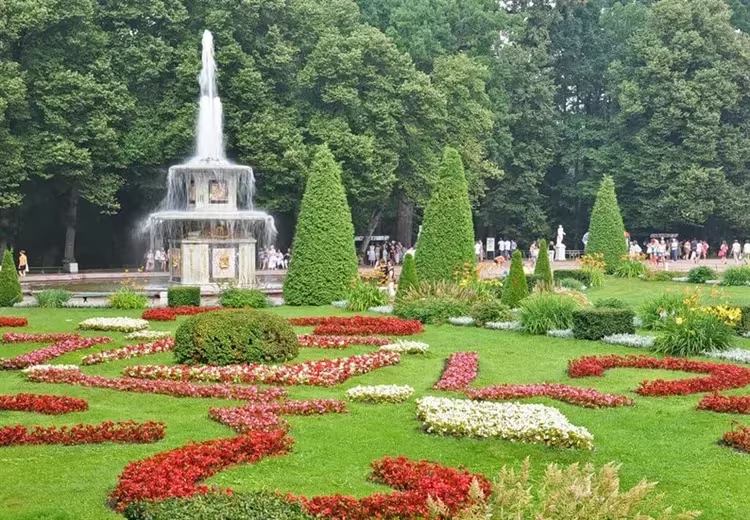
It was created as a regular park in the image of the French, divided into Front, Marlin and Monplaisir parts. It stretches for 2.5 km along the coast of the bay, from south to north – for 0.5 km. It is an elongated triangle with an area of more than 100 hectares, the layout is based on a system of alleys fan-shaped from the palaces of the Bolshoi and Marly. Each hill is equipped with cascades – “Big”, “Chess”, “Golden Mountain” and “Lion”, more than 150 fountains.
Voronikhinsky colonnades
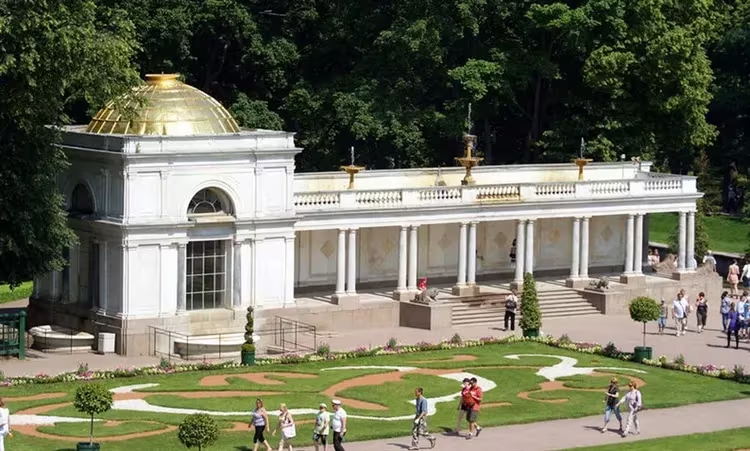
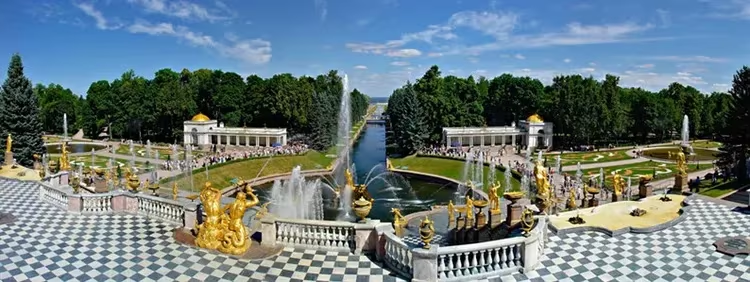
The Voronikhinsky Colonnades are of great importance in planning. They close the parterres located in front of the Grand Palace, transferring the attention of visitors to the entrance to the Sea Canal. Even during the life of Peter I there were galleries with pavilions, by 1803 the buildings were dilapidated, fell into disrepair and were dismantled. In place of the pavilions, colonnades of granite, stone and brick were erected. Granite lions at the entrance, flowerpots on gilded domes and flat roofs. The colonnade is named after A.N. Voronikhin. This man was a serf, but for this project he received the title of architect. General reconstruction was carried out in 1960
Museums
On the territory of the park ensemble there are a large number of interesting and informative compositions that you should familiarize yourself with.
“Church Corps”
Built in 1745, consecrated – in 1751. Here the monarchs got married, baptized children, held church services. The interior of the church is magnificent – the iconostasis of six tiers is decorated with twisted columns, the emperor's crown and the monogram of Empress Elizabeth. The wall carving is covered with gold leaf. The walls, ceiling and dome are decorated with biblical paintings.
The grand opening, which took place in 2011, marked the end of many years of painstaking work to restore the temple. The exposition presents items of church utensils, vestments of clergy and other unique items.
“Special Storeroom”
Located in the western wing of the Grand Palace. Here are items that belonged to members of the imperial family. Of particular interest are the jewelry that the members of the royal family ordered as gifts – snuffboxes, eggs, goblets, rings with the imperial monogram, and other iconic exhibits related to Russian history.
Historical and cultural project “Tsar's Fun”
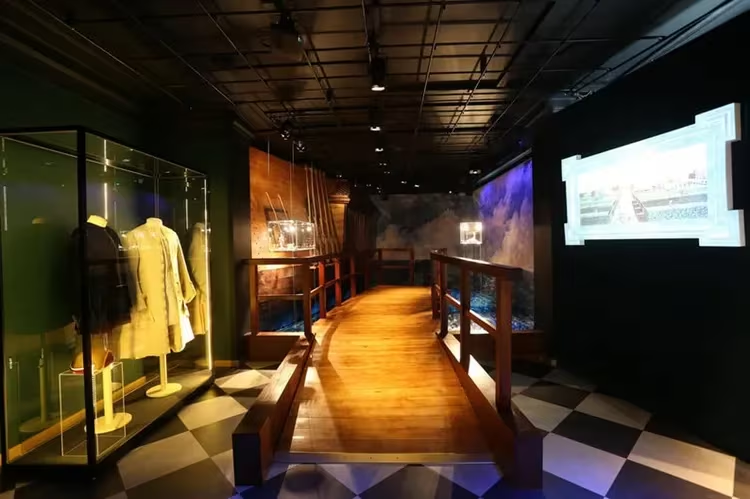
The project “Tsar's Fun” was presented in 2003. Each of the nine halls is dedicated to various imperial leisure activities. Among the exhibits, things that Peter the Great used are of great interest – these are navigational instruments, measuring equipment, theatrical costumes of the 18th century, a collection of ancient imperial bicycles. The project uses modern multimedia technologies, which helps visitors to more clearly and easily reveal the uniqueness and historical significance of the exhibits.
Museum “Catherine Corps”
“Catherine Corps” (1746-1759) – built by order of Elizabeth Petrovna. It was assumed that this would be a grand palace for receiving the highest persons, holding masquerades, balls and festive dinners. The future tsarina Catherine the Great secretly arrived here from St. Petersburg to carry out a palace coup, which, as you know, ended in the overthrow of the legitimate tsar Pavel Petrovich. Therefore, the building is called “Ekaterininsky”.
The halls exhibit personal belongings of the Russian imperial dynasty of the Romanovs – rarities made of bronze, porcelain, wood and gold: clocks and candelabra, furniture and chandeliers, figurines and vases. Among them is a unique Russian service of 4,500 items.
Museum “Bath building”
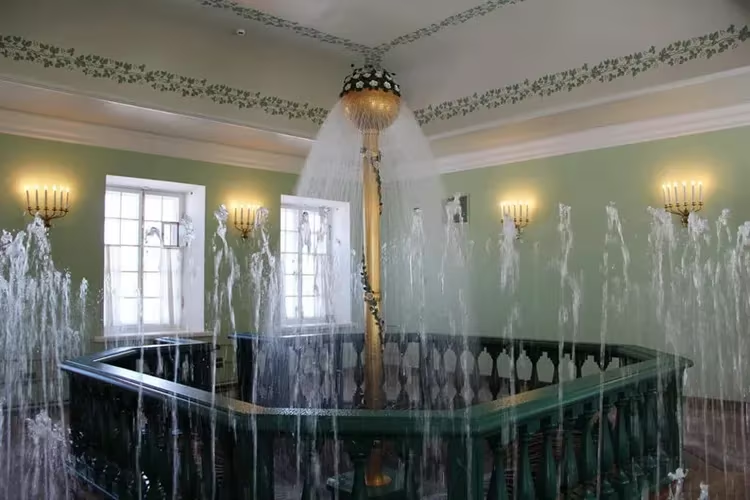
“Bath building” (1866) – built for the wife of Alexander II, who was often sick and the doctor advised her to take a contrast shower. All baths, showers and pools are adorned with floral designs that harmonize perfectly with the classic furniture, creating an atmosphere of relaxation.
In addition, special rooms for rest were provided.
Collectors Museum
The museum composition “Collectors” was opened in 2002. Located in a historic three-story building, designed by Rastrelli. The basis is a gift presented by St. Petersburg collectors – paintings by famous artists, both Russian and French, Italian masters, as well as masterpieces of applied art.
In addition, several small collections from Moscow collectors are presented. The upper floor is occupied by the GMZ funds and restoration workshops, and a restaurant is open in the basement. It was created in a short time – in just two years.
Museum of the Benois family
The “Museum of the Benois Family” was opened on September 27, 1988 in the building of the maid of honor. Created at the suggestion of N. Benois, the artist of the La Scala theater in Italy, who provided paintings and graphic works, sculptures and architectural models, rare photographs and authentic items belonging to the family for the show. Benois is a dynasty of creative talented people who have made a worthy contribution to the development of art. In total, the fund has more than 700 works.
Monplaisir Palace
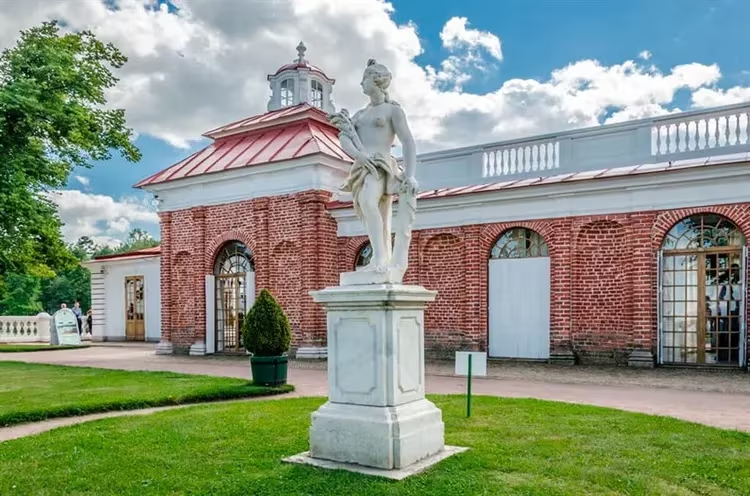
Monplaisir – (1714-1723) is located near the bay, from here it was possible to see all the passing ships. In order for the architects to understand the task more clearly, the emperor himself made several drawings and drawings. “Monplaisir” is French for “my pleasure”. The emperor was very fond of this small building, investing a lot of time and soul in construction, giving clear instructions about the layout of the halls and the design of the surrounding area. Construction ended in 1723, after the end of the war with the Swedes. It is considered a masterpiece of architectural construction of the early 18th century.
Pavilion “Hermitage”
“Hermitage” (1721 – 1725) – means “hermit's hut”. The pavilion includes a vestibule decorated with pilasters, a kitchen with a hearth, a dining room with a table with a lifting mechanism. On the second floor was the State Hall for receiving guests, decorated with oak panels and paintings. Dinners and negotiations of emperors with guests were held in the hall. The Hermitage was actually a secluded place – a moat was dug around the perimeter of the pavilion, filled with water from the Marly Pond. In 1724, a drawbridge and wrought iron bars were installed on the windows.
Palace of Marly
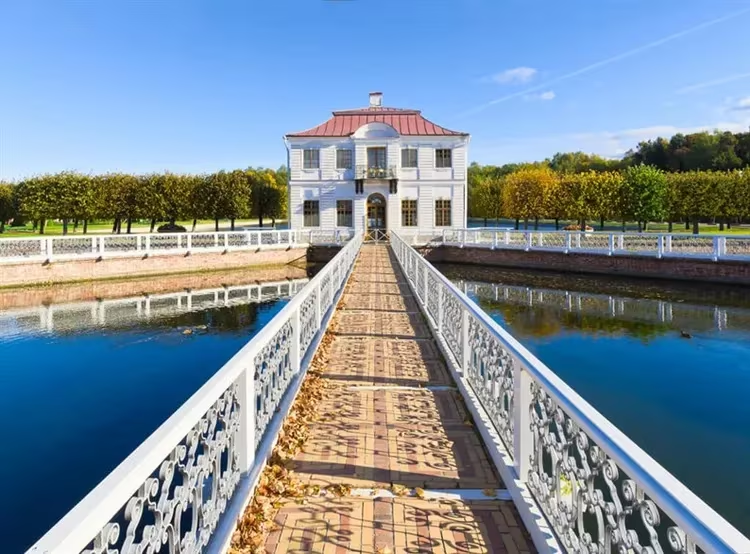
Marly was erected in 1720-1723, it is an elegant and light structure. In the modern exposition there is a naval overcoat and caftan of Peter I, personal books, a table made by the hands of the monarch with a “slate board”, dishes that he used, brown glass flasks. You can also view the art collection. There are authentic pieces of furniture, others are carefully selected in style.
Museum “Grottoes of the Grand Cascade”
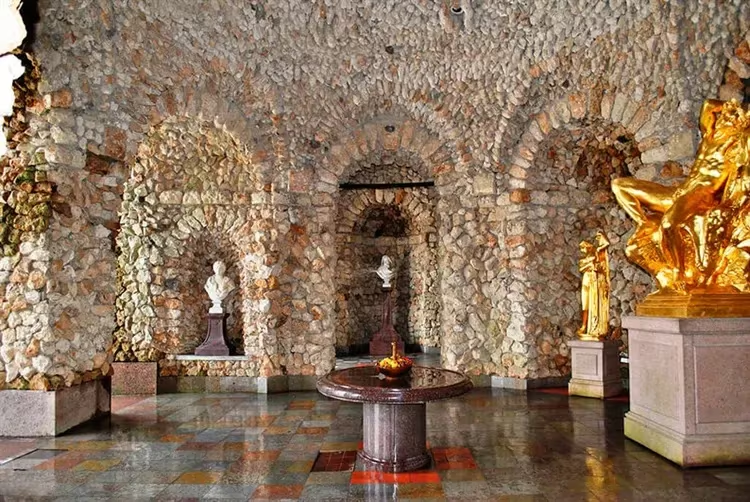
“Grottoes of the Grand Cascade” (1716-1720). The cladding used mainly tuff. The facade of the Upper Grotto is equipped with five arches with mascarons, a terrace is located on top. The grottoes are separated by a marble balustrade, on which are two bronze sculptures of Triton. The Small Grotto is a huge room with a high ceiling, where copies of antique statues and original works by Pietro Baratta, an Italian master, are placed. At the crossing, guests can see the brickwork, preserved from the time of Peter Alekseevich, the scheme of the water conduit and the pipes of the cascade.
Fountain Museum
The Fountain Business exposition began in 2013 and is dedicated to the creation and development of the Peterhof water supply system. The display of exhibits takes place together with the use of modern multimedia tools. An interactive waterway diagram allows viewers to learn about all the stages of creating fountain equipment from the day the ensemble was built. You can also see images of buildings, details of the first water equipment, tools and other interesting exhibits that have not survived to this day.
Museum “Imperial Yachts”
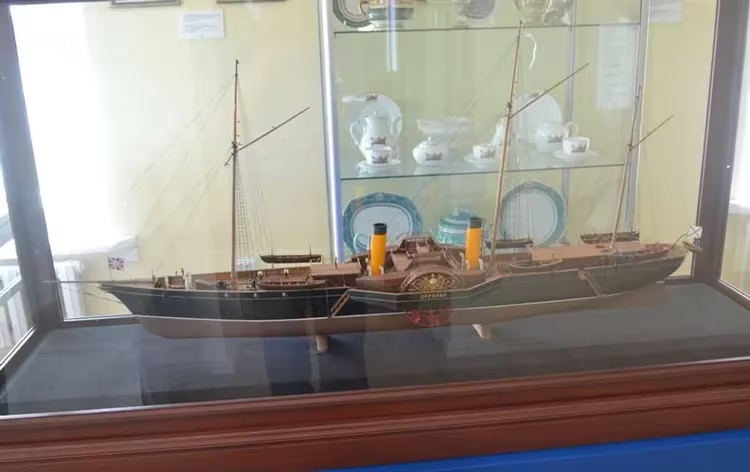
“Imperial Yachts” (2004) – the exhibition tells about the history of the yacht fleet of Russian monarchs. The collection exhibits unique photographs of sailors and yachts, dishes used during the voyage, appliances and interior details. Here are models of yachts, starting from the time of Peter the Great. Much is connected with Peter the Great here, it is known how much he loved the sea and maritime affairs, for example, you can see the model of the famous boat made by the emperor. The attention of visitors is traditionally riveted by the Shtandart yacht owned by Nicholas II. An ultra-modern vessel for that time, capable of sailing into the open ocean.
Playing Card Museum
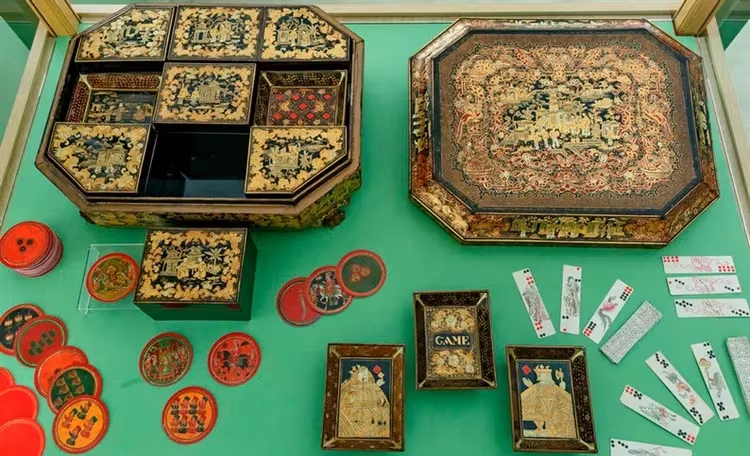
The only collection of playing cards in Russia can be viewed in the Cavalier's House at the end of the 18th century. In addition to cards, there are art objects that tell about the game of cards, and a unique library with a corresponding theme. Today, visitors are presented with various cards produced in all parts of the world – for divination, in gift form, educational. There are more than 8 thousand exhibits in total.
Fountains of the Upper Garden
- Not far from the Armorial and Church wings, there are Square (western and eastern) ponds. Contrary to the name, they have a rectangular shape – 54 by 45 meters. Built in 1721 as water reservoirs by order of Peter Alekseevich.
The group “Diana under a tree” was placed in the western pond, the statues of Alpheus and Proserpina are located in the eastern one. Around them are small statues of dolphins. In 1773, the central figures were replaced with simple fountain jets of water. At the beginning of the 20th century, compositions appeared – Spring and Summer.
- “Inter-wise” means “indefinite”. So ironically named because of the frequently changing decor.
Initially, in 1738, the sculptural group “Andromeda” was installed in the round pool, soon only the figure of the snake remained, and after a while the image of the “Starlet” appeared. The decoration has changed several times. Now it is a composition with a winged dragon surrounded by four dolphins.
- “Oak” built in 1734, the first in the Upper Garden. Initially included images of an oak tree, six dolphins and three newts cast in lead.
In 1946, it was moved to the lower part of the park, where it is still located. The sculpture “Cupid” is installed in the center. Around the central figure, on the stone rays, fan-shaped from the middle, are bronze dolphins.
The scenery has changed several times, but the original name traditionally remains the same.
- “Neptune” is the main and most majestic building of this part of the territory.
On a granite pedestal in the middle of a rectangular pond, there is a sculpture of Neptune with a trident. It is surrounded by dolphins, newts, fantastic sea horses carrying riders, and other monsters of the ocean. River nymphs sit on both sides with oars in their hands. The pedestal is decorated with corals, bas-reliefs and bronze figures of a boy and a girl.
The Neptune was built in 1736. The first option is the “Neptunian Cart” standing in the center of the pool, cast from lead, subsequently replaced by a modern composition.
Fountains of the Lower Garden
- “Samson tearing the mouth of a lion” is a sculptural group symbolizing the power of Russia.
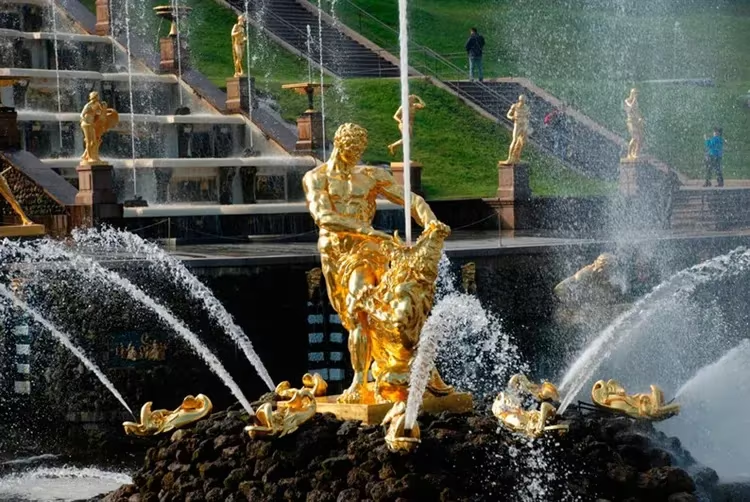
In 1734, Empress Anna Ivanovna proposed to build it in honor of the anniversary of Russia's victory in the Battle of Poltava. Samson the Hospitable, the patron of the poor and a skilled healer, was taken as the central image. Probably because the battle, significant for the Russian state, took place on the day of the memory of the saint. Samson defeats the lion, which was the symbol of Sweden. The original sculpture was cast in lead in 1735. By the beginning of the XIX century. it fell into disrepair, in 1801 a new one was made of bronze.
- A mechanical fountain with an interesting shape “Sun” was built in 1721-1724. It is located in a large rectangular pond. A water wheel is hidden in the pedestal, as a result, the disk of the “sun” slowly rotates.
- “Roman” – the fountains are so named because they look like stone water cannons installed in one of the squares of Rome. They belong to the two-tier type, common in the 18th century.
- The multi-water “Pyramid” is located in the middle of the pool measuring 11 by 11 meters. It is a four-sided water figure. Fires 505 fountain jets that create a cascading water cloud.
- Crackers – their difference in the original design and the unexpected appearance and direction of fountain jets, especially loved by children. Among them are “Dubok”, “Fir-trees”, “Water Road” and others.
Opening and closing fountains
In 2018, the launch of the fountains is April 29. Holiday on the occasion of the opening of the summer season – May 19, 2018. The celebration includes a costume performance, an orchestra performance, a light show with unique special effects. Closing for the winter period at the GMZ is scheduled for September 9 and 10. It will be a beautiful performance, including 3D scenery on the front wall of the Grand Palace, a light show, original audio effects and much more!
Opening hours and ticket prices
- Entrance to the Lower Park:
Adults must pay 450 rubles; preferential group of the population – 250 rubles. Open from 9:00 to 20:00 seven days a week. Saturday until 21:00. Fountains are mainly open from 10:00 to 18:00., “Samson” and the Grand Cascade – from 11:00.
- Upper Garden:
Entrance is free for all visitors. Open from 09:00 to 20:00, weekends until 21:30.
- Grand Palace
Days off on Mondays and last Tuesday. Ticket price – 450 rubles, pensioners and students over 16 years old – 300 rubles. For individual visits, it is open from 12:00 to 17:00 with a two-hour break. The rest of the time – serving tourist groups.
Excursions
Visiting the park complex on a ticket has many more advantages over an independent inspection:
Much safer – if a person fell behind the group, felt unwell or lost documents – the group leader will definitely come to the rescue.
What is the most convenient way to get there
There are three ways to get to the Palace Ensemble by public transport:
- By train:
From the Baltic railway station, get to the station “New Peterhof”.
From the station square of Peterhof there are fixed-route taxis, they will deliver to the Upper Garden.
- By shuttle bus from metro:
“Baltic” No. 4044;
“Avtovo” – No. 224, 300, No. 424, 424-A.
- On a meteor.
From the Descent with Lions pier (Admiralteiskaya Embankment, 2) to the pier in the Lower Park.
The beauty of Peterhof cannot be expressed in words – it must be seen. Whoever has never been to this fantastic place – be sure to visit it, the impressions will last for many years.