
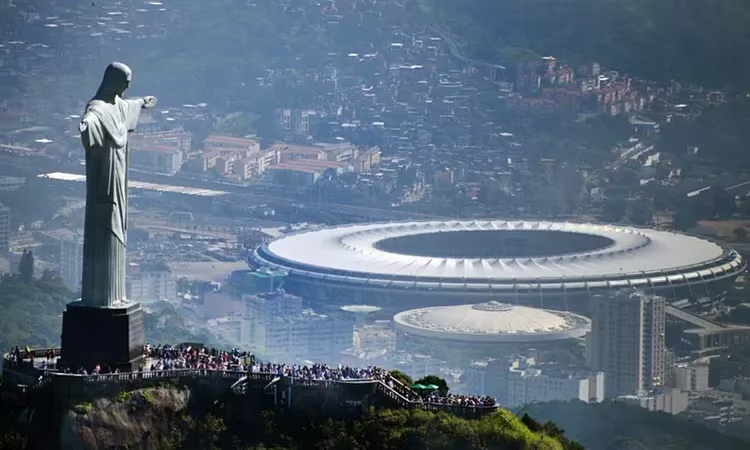
Statue of Christ the Redeemer in Rio de Janeiro
The beautiful Brazilian city – the dream of the legendary adventurer Ostap Bender, which was the capital of Brazil until 1960, was founded by the Portuguese in 1502. Located in a cozy hollow, it is surrounded on one side by a ridge of mountains rising above the bay, and on the other by a golden strip of sandy beaches. The Portuguese knew where to choose a good place for the future fairy tale capital. It is considered the most beautiful city not only in Brazil, but throughout South America, adequately justifying its unique geographical location. Cheerful Brazilians adore their city, believing that God himself created this heavenly place.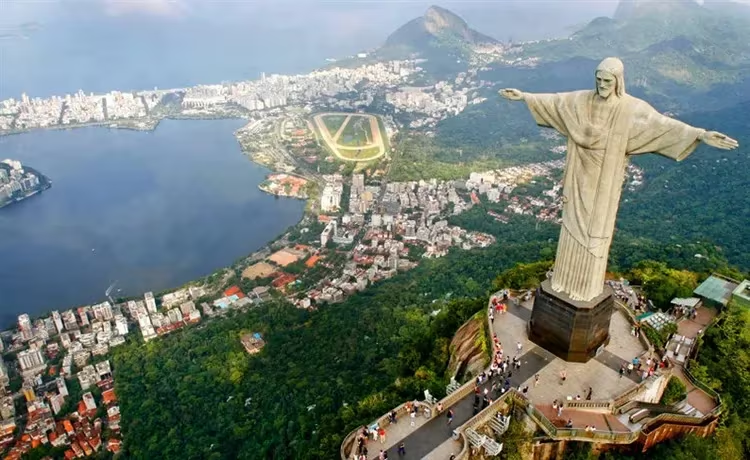
As a token of love for the son of God, in 1922, on the centenary of Brazil's independence, it was decided to erect a statue of the Savior, which was destined to become the main attraction of the state, the national symbol of the Brazilian people. The winner of the announced competition was the project of Silva Costa, supported by the church and society. For 9 years, work has been going on to implement the fateful project. For installation, they chose the highest peak of Mount Corcovado, so that Christ, if possible, was visible from all points of the city.
The super-strong frame was made by Brazilian engineers, and the individual parts of the statue itself were made by the French sculptor Paul Landowsky in Paris, from where they were delivered to Brazil. Here, the electrified railway leading to the summit came in very handy, which was built at the end of the 19th century by two innovative engineers Passos and Soares. Huge details of the future sculptural masterpiece were raised along it. After the installation of the sculpture from the end of the rail track to the foot of the statue, 220 stairs were laid out, the windings of which led to the foot of the monument, and a tiny chapel was made in the marble basement.
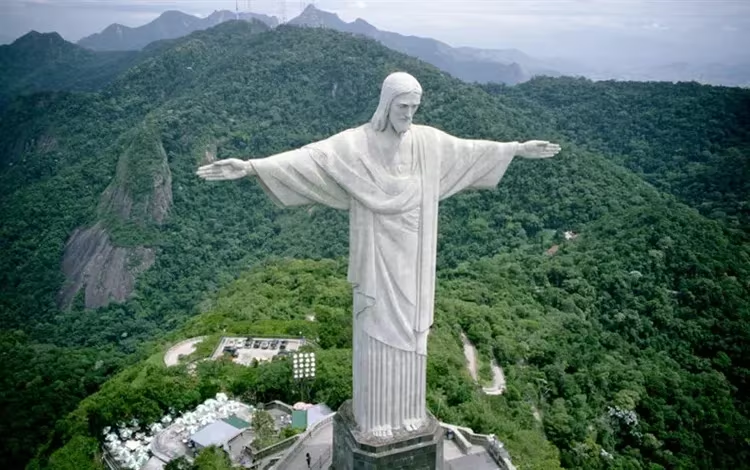
On October 2, 1931, the world‘s second largest monument to Christ the Redeemer was opened and consecrated by Pope Paul VI in a solemn atmosphere, in the presence of important government officials, political and public figures, with a huge number of Brazilians.
The appearance and parameters of the monument
The sculpture is a majestic figure of the Savior, dressed in a white robe, with a slightly inclined head and arms wide open, as if for an embrace, overshadowing the city. She stands as a symbol of the protection of the Brazilians, Christian spirituality and moral purity.
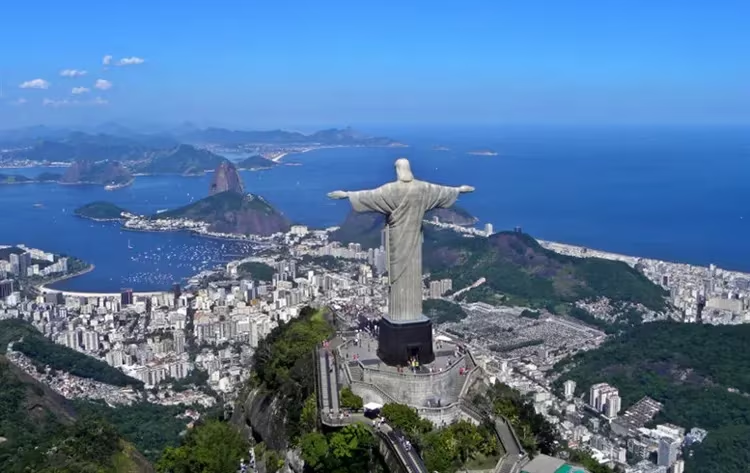
Although from afar the statue seems quite small, its dimensions are impressive: together with an eight-meter pedestal, the total height is 38 m; heads – 3.75 m., arm span – 27 m., the weight of the entire monument with the base – 1145 tons; the head weighs over 35 tons; hands – 18. Made of reinforced concrete with an admixture of soapstone, the statue should stand for centuries, as long as the rock on which it was erected stands. Her appearance is regularly monitored, cleaned, washed. The divine monument has already been overhauled twice. Night illumination is installed, highlighting the statue with multi-colored highlights.
Thousands of people daily climb to the shrine, climbing in mini-cars by rail, then go up the stairs or ride the escalator. The pedestal is always surrounded by tourists during the day, whose figures seem tiny next to the gigantic figure of Christ. His face is thoughtfully calm, the wisdom of a philanthropist, lovingly looking at his children crowding below, froze in his eyes. Everything is provided here for a safe pilgrimage: the observation deck is surrounded on all sides by a reliable fence, a system of bright lighting has been created.
Statue on the background of the city panorama
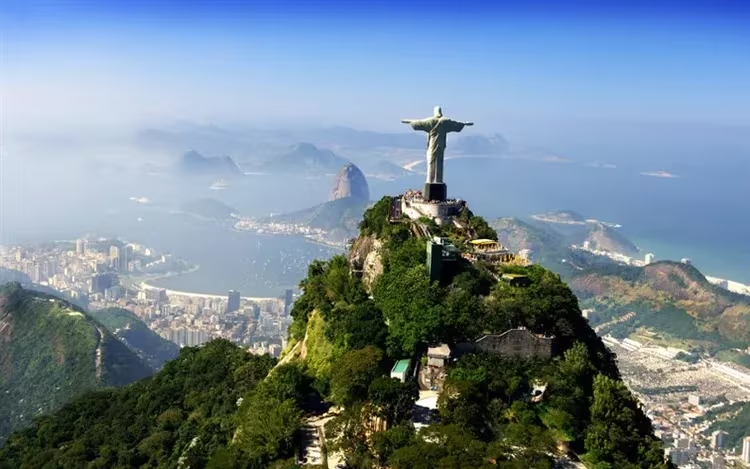
In different weather, at different times of the day, the magnificent sculptural creation looks in a new way. When the clouds descend low, literally enveloping the peak, hiding it completely, then it seems that Christ is hovering among the clouds – a unique sight! Against the backdrop of the sunset sky above the dark massif of the surrounding mountains, the seemingly small figure of Christ resembles the outlines of a saving cross.
In the midst of the dusk of the night, the white statue, illuminated from below by searchlights, looks like a silver figurine standing on the black velvet of the top. In the predawn haze, it seems that Jesus changed his white robe to greenish-gray, and when the sun's rays flood the monument with bright light, the sculpture acquires a snow-white radiance and seems like a white bird against the background of the dark green of the forest. Unforgettable is the picture when a school of cranes flies over the statue, which, with a flap of their wings, salute the Savior and Defender of mankind.
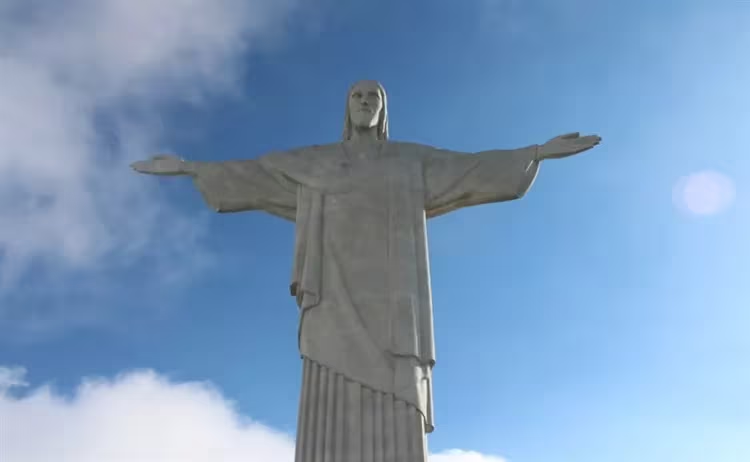
The unique sculptural statue has been depicted many times in Hollywood films and TV series, science fiction action films and westerns, documentaries have been made about it, philatelic and postage stamps have been issued. The statue of Christ is included in the list of the New 7 Wonders of the World, and rightfully so.
Recommended for viewing The Enchanted Well in Brazil.