
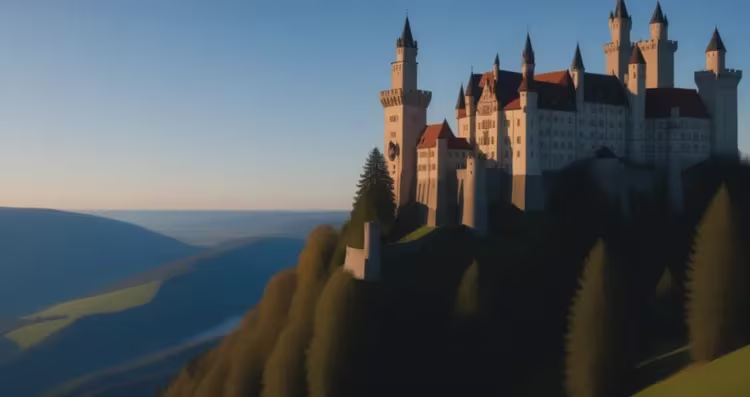
🏰 Top 10 most beautiful castles in Germany
Germany gives millions of tourists hundreds of reasons to visit. Some people are attracted by the beer fumes of Oktoberfest. Some people love the masterpieces of the Dresden Gallery. And some people prefer to consider know-how instead of antiques. But Germany's castles are definitely among the top reasons to visit this country.
On the way to the heart of a tourist, powerful and high walls cannot stop their unique spirit . Each castle reflects the genius of the architect, but we still dare to compile a list of objects that are a must-visit out of the great variety. However, before that, let’s clarify that you will need a visa – and the best option is a guest visa to Germany.
Neuschwanstein Castle
And, of course, we will start the list with the most famous and most magical representative of German architecture. Not knowing about this castle is a mortal sin for a tourist. This is one of the most romantic locations in Germany. A hint for those who are looking for a place to propose marriage.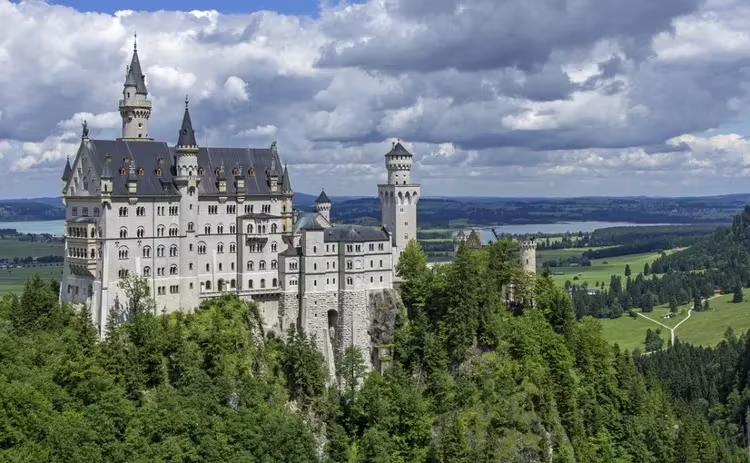
Neuschwanstein is located in the extreme south of Bavaria. The castle was built by order of the Bavarian ruler Ludwig II at the end of the 19th century. Interestingly, the enterprising king almost immediately turned it into a tourist attraction. In order to raise the missing funds to complete the construction, the castle was opened to tourists in 1880, and it brought in a stable income.
Neuschwanstein includes a knight's hall, a 90-meter tower with a church, a walking park with terraces and a fountain. Illustrations to Wagner’s operas and ancient German legends play a key role in the interior of the castle. And, of course, swans (from German Neuschwanstein translates as “new swan stone”). By the way, this particular castle is the prototype of the “Sleeping Beauty Castle” and appears on the Disney logo.
An adult ticket to the castle costs 17.5 euros. Tickets should be purchased at least a week in advance. Information about opening hours is here.
Hohenzollern Castle
Above the Swabian Alps, 50 kilometers from Stuttgart, rises the ancestral nest of the imperial Hohenzollern family. The castle has a lot in common with Neuschwanstein. Both castles are almost the same age; Hohenzollern was completed in 1867, and two years later construction began on its Bavarian twin. Just like Neuschwanstein, Hohenzollern is the embodiment of the idea of a utopian knight's castle. Because of its mountainous location, Hohenzollern was nicknamed “the castle in the clouds.” For those who lack romance in the decor, it’s right there in the name.
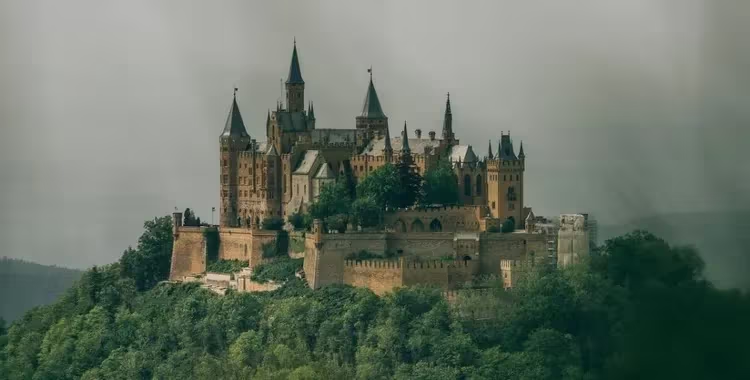
In total, the castle complex includes 140 halls. Their main relics are considered to be the crown of the German emperors, the belongings of King Frederick the Great of Prussia and a huge collection of weapons.
When visiting the castle, read the posters on the official website in advance. There is a chance to get to unusual events in the complex: falconry days, live music concerts and even entire shows, such as “The Royal Winter's Tale”. A ticket to the castle for an adult will cost 22 euros.
Heidelberg Castle
Heidelberg has long been known as the German equivalent of Oxford, a university city with the best educational institutions in the country. A treasure trove of intelligence took refuge under the wing of royalty – for a long time the Palatinate region was the residence of German kings. While students were huddled in dormitories, the royals were building one of the largest castles in Europe at that time – Heidelberg.
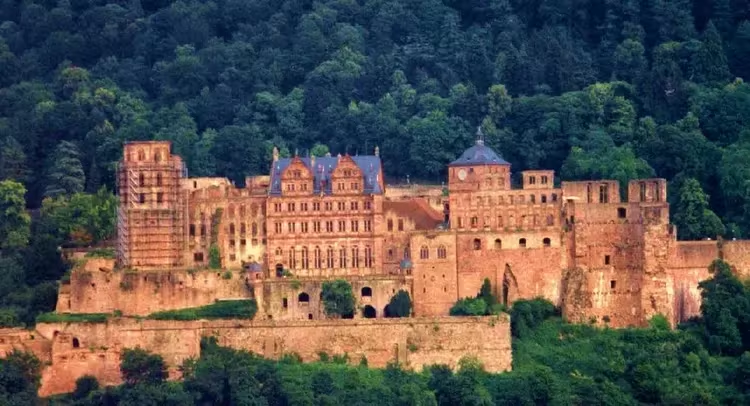
Unlike the two castles above, Heidelberg is a gray-haired grandfather. Its first mention dates back to the 13th century. Eight centuries of wars and disasters (at least twice the castle was destroyed due to lightning strikes) did not spare the building, so it has come to us in a less polished form than Neuschwanstein. It is all the more interesting to see the two faces of the castle: the restored Friedrichsbau and the ruins of the remaining part.
Decide which one you like best after visiting. The cost of an adult ticket to the castle is nine euros. Tourists are welcome every day from 9:00 to 18:00. Read more here.
Schwerin Castle
We move from west to north. One look at the following castle is enough to understand why it is called “the Neuschwantein of the north”. The same grace and romance in the image, the same airy forms. True, unlike its Bavarian brother “nesting in the mountains,” Schwerin Castle chose to be located literally on an island. Only a bridge connects it with Schwerin, the capital of Mecklenburg-Vorpommern.
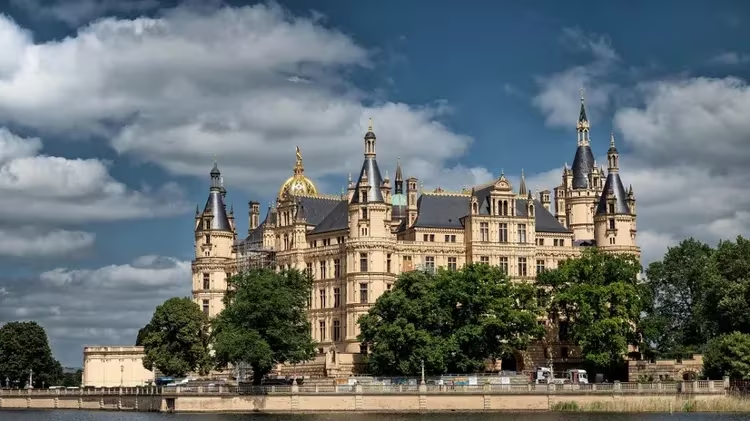
And Schwerin Castle is almost a thousand years older than Neuschwantain Castle. Its first mention dates back to 973. Apparently, then he looked much more squat and powerful, the times and functions were different.
When planning your trip, please note that the castle is closed on Mondays. Full opening hours are on the website. Entrance ticket for adults is 8.5 euros.
- Abandoned places that will surprise even experienced tourists
- The path of the Illuminati in Rome: through the pages of “Angels and Demons” by Dan Brown
- Trakai Castle – history covered in red brick
- Top 10 locations in Dresden: what makes the Saxon Pearl fall in love with it?
- Oktoberfest 2023 in Munich – everything you need to know about it
Wartburg Castle
For almost a year, this castle, located in the state of Thuringia in eastern Germany, was the refuge of the German reformer Martin Luther. It was here that he translated the Bible into German.
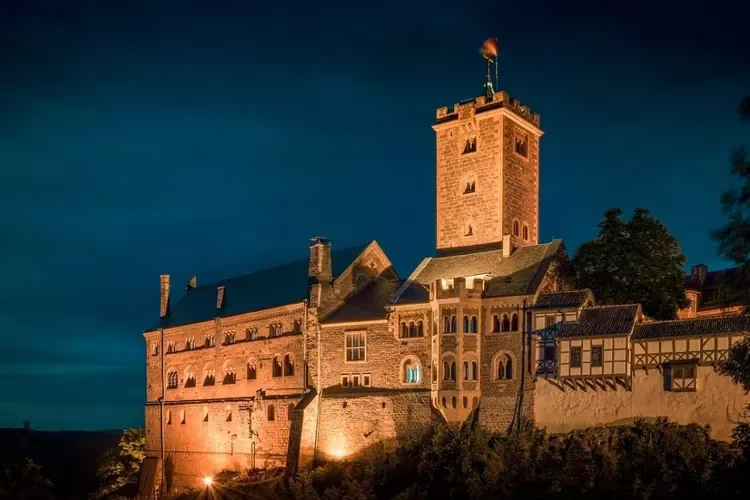
Germany's national pride, the country's first UNESCO World Heritage Site, dates back to 1067. Some parts of the castle have preserved traces of that distant era. Powerful fortifications in the Romanesque style, coupled with their location at a 400-meter altitude, did not give the enemies much hope of capturing them.
In addition to standard excursions, you can go to the traditional Christmas market in the castle or listen to Wagner ’s “Tannhäuser” in the most suitable setting. You can get acquainted with the period of operation of the castle and interesting milestones in its history here. The ticket price is nine euros.
Cochem Castle (Reichsburg)
Another handsome man comes from the Imperial Palatinate. Like many of his “colleagues”, it appeared in the Middle Ages, in the 12th century, went through periods of destruction and oblivion and was rebuilt in the 19th century.
The castle fits perfectly into the surrounding space. After all, there are practically no new buildings in the town of Cochem. And such a combination of old residential buildings with a castle towering above it recreates feudal pictures of the past.
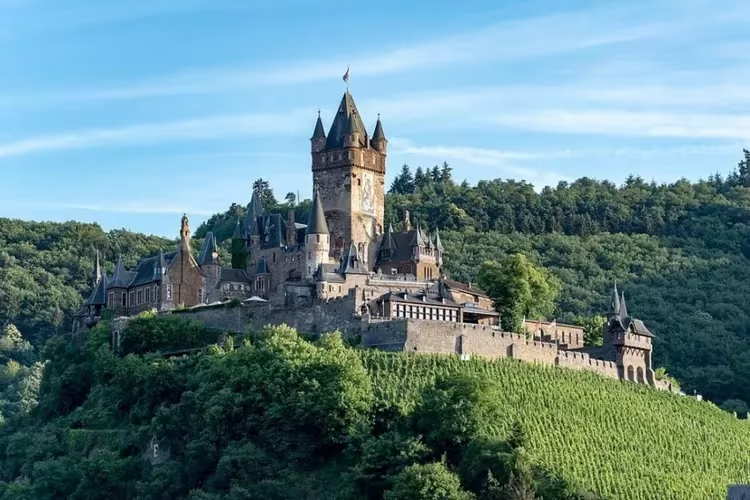
If you’ve already made your way to Cochem, don’t disdain a tour of the interior for only 8.5 euros. The best time to visit Reichsburg is early August. The castle hosts a medieval festival with a craft and food market, performances by poets and musicians.
But the most unique offer is participation in a medieval feast, which takes place every Friday and Saturday. Feel welcome and try dishes based on ancient recipes for 59 euros.
Eltz Castle
Another Palatinate castle, Eltz, never saw the foot of an invader on its land. The tricky location in the foothills hindered the conquerors, but now the views are pleasing to the eyes of tourists.
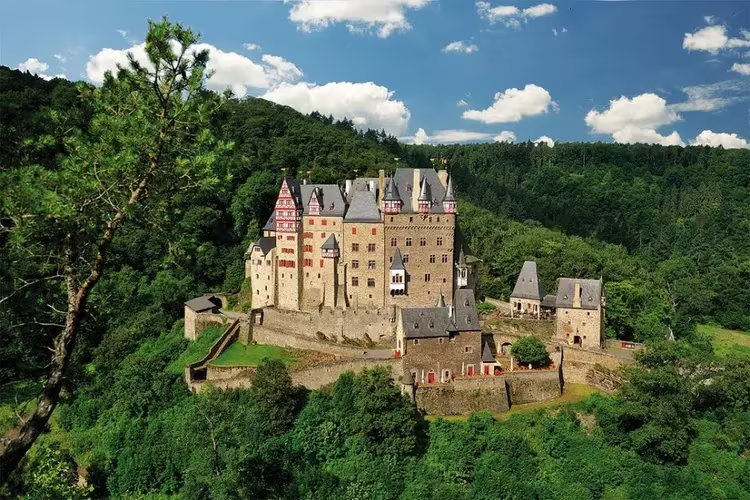
The interesting thing is that the castle is private property. It has not changed its owners for about 800 years. Aristocrats graciously allow mere mortals into the territory of the family estate. And we can enjoy the beautiful interiors of the castle: the knights' hall, the armory, the original 15th century kitchen and the treasury with more than 500 exhibits.
The entrance ticket includes a tour of the castle and costs 14 euros. The castle does not accept guests from November 1st to April 1st.
Marburg Castle
For prose writers, this castle is interesting because it is one of the oldest in Germany. It was founded in Hesse, probably already in the 10th century. And for lyricists, the castle is important for the inspiration that it inspired on famous German storytellers – the brothers Grimm . Jacob and Wilhelm studied jurisprudence at the University of Marburg. Some of the lecture halls of the educational institution are still located on the territory of the castle. And who knows, maybe while dreaming in one of them, the brothers created Snow White. Some companies offer interesting tours to Germany.
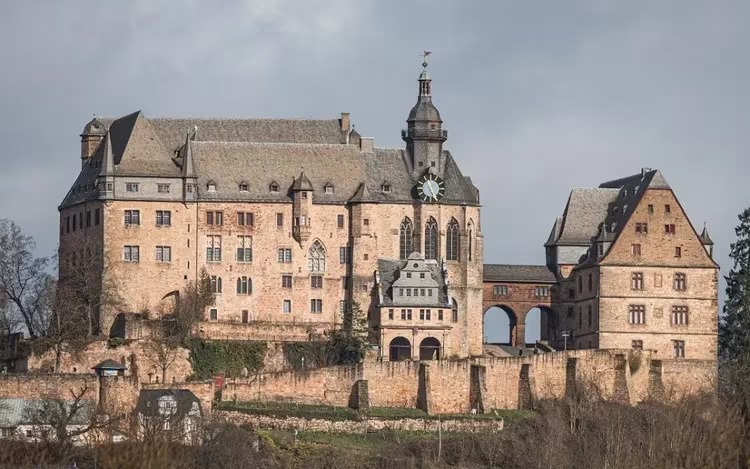
Marburg is part of the “German Fairytale Trail”. The 600-kilometer route connects the places where the brother writers lived and worked, as well as the locations mentioned in their works. Letting a fairy tale into your heart and visiting the castle costs only four euros. Read more about the operating mode here.
Marienburg Castle
20 kilometers from Hanover is the ancestral castle of the rulers of this German land. The castle still belongs to the royal house of Hanover, but keeps its doors open to tourists.
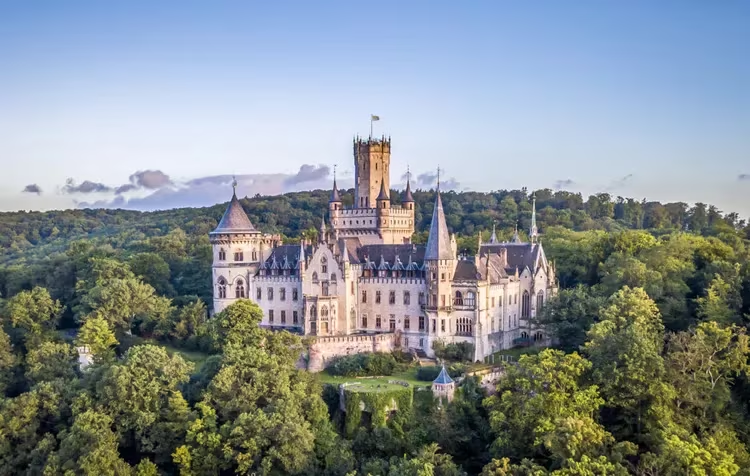
The castle owes its birth in 1867 to the spiritual impulse of King George V, who decided to give such a magnificent gift to his wife, Queen Mary. She liked the property and Maria turned the castle into her main summer residence.
Do not confuse the German Marienburg with the Polish one, otherwise the navigator will take you far to the east. A ticket to the castle costs 12.5 euros, and the opening hours are posted on the website.
Lichtenstein Castle
No, no, despite the misleading name, it is not located in a small principality, but in Germany. Its name translates as “light stone” and fully reflects the essence of the structure.
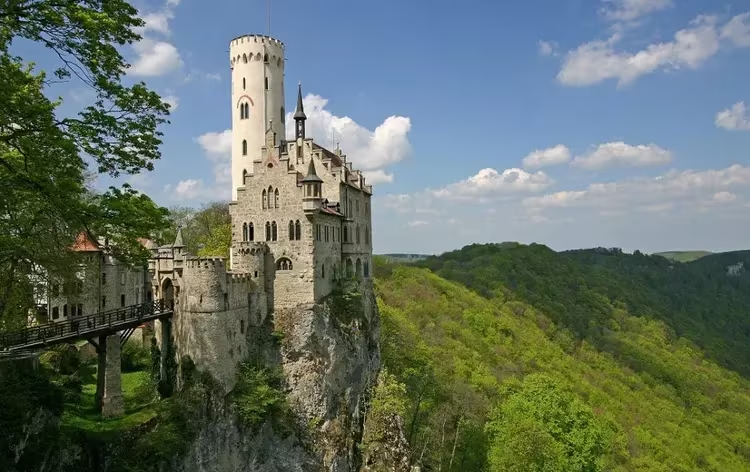
The castle is located in Baden-Württemberg, an hour's drive from Stuttgart. Lichtenstein was born during the German construction boom in the mid-19th century. Like everything that German aristocrats invested in in those years, it was built in a neo-Gothic style, related to a fairy tale. The tall, lonely tower of the castle evokes memories of Rapunzel, who seems about to let down her braids. If you still couldn’t get inside this way, then please buy a ticket costing four euros. Opening hours are here.