🏖️ Alentejo: from golden beaches to historical Evora
The Tagus River originates in the mountains outside Madrid and flows into the ocean at Lisbon, dividing Portugal almost in half. Below and south of the river is the largest region in the country – Alentejo.
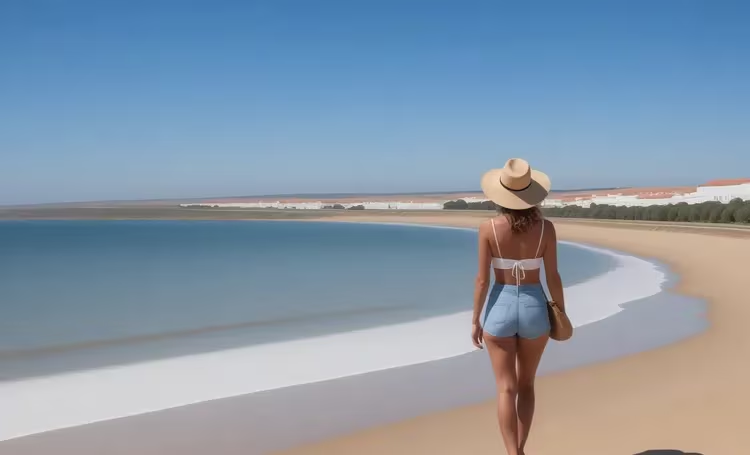
You can talk endlessly about the beauty of these lands: here you will find mountain landscapes, fields with olives and vineyards, and a rocky ocean coast. I’ll probably focus on the latter during the swimming season.
Weather in Alentejo
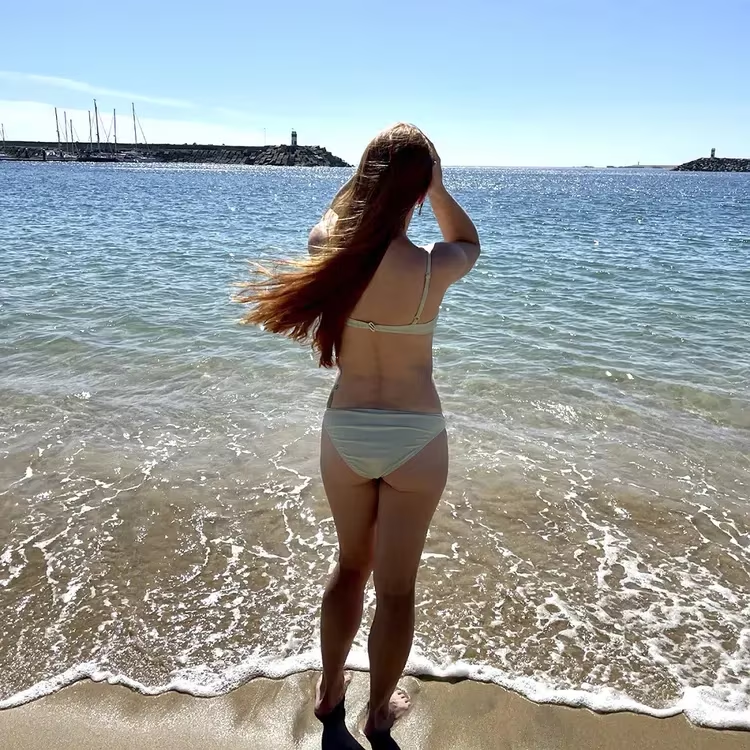
In July-August there is no rain here, it is usually sunny and hot – the air temperature during the day is 30-35℃. The Atlantic breeze and cool water – 20-22℃ – save you from the heat.
Where to go and where to stay?
I'll tell you about three small coastal towns. There are few attractions in them, but they have everything you need for a vacation – restaurants, shops, hotels and, of course, beaches. Please note that on the port of Gali beaches there are not always sun loungers with umbrellas, bathrooms and cafes.
I saved all the locations on one map. If possible, visit different beaches – in this region they are very beautiful and different from one another.
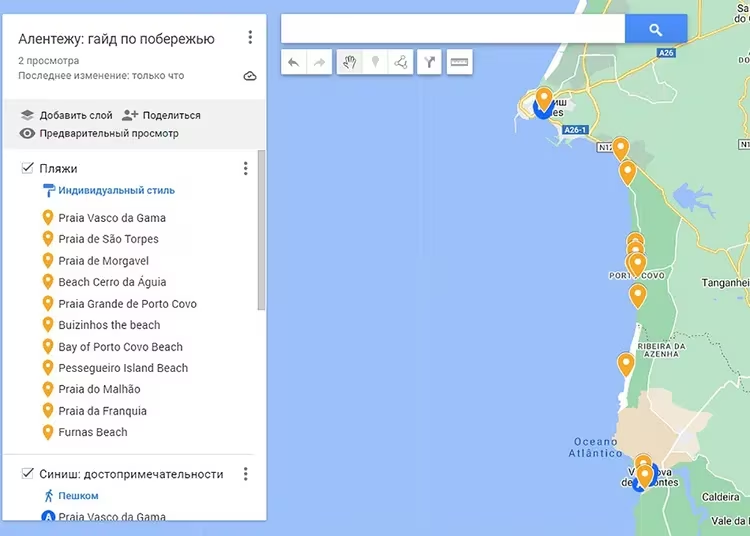
Sines
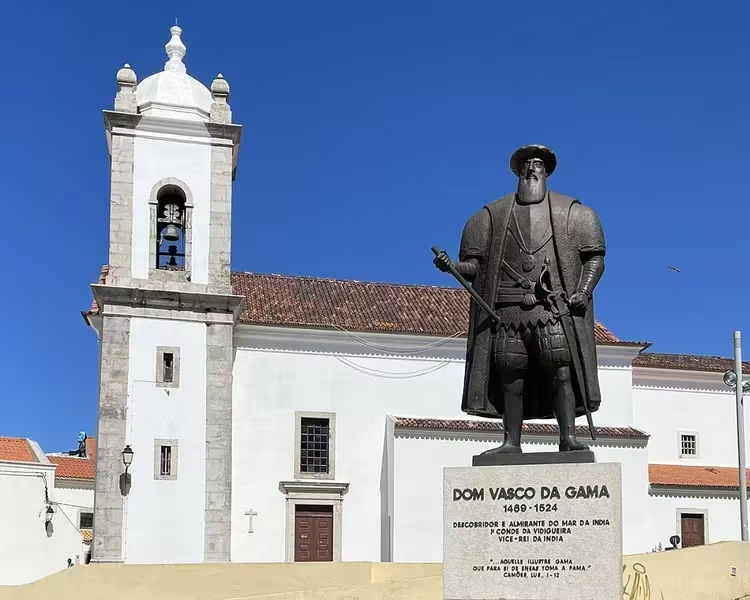
This port town is the birthplace of Vasco Da Gama. In Siniš there is an avenue named after the navigator who opened the route to India. It has the main beach of the city (point A. Praia Vasco da Gama). A cozy cove with calm water and a sandy shore invites you to soak up the southern sun. The Vasco Da Gama monument looks down onto the beach from the hill (point B. Estátua de Vasco Da Gama). It stands next to the temple where the famous native of Sines was baptized.
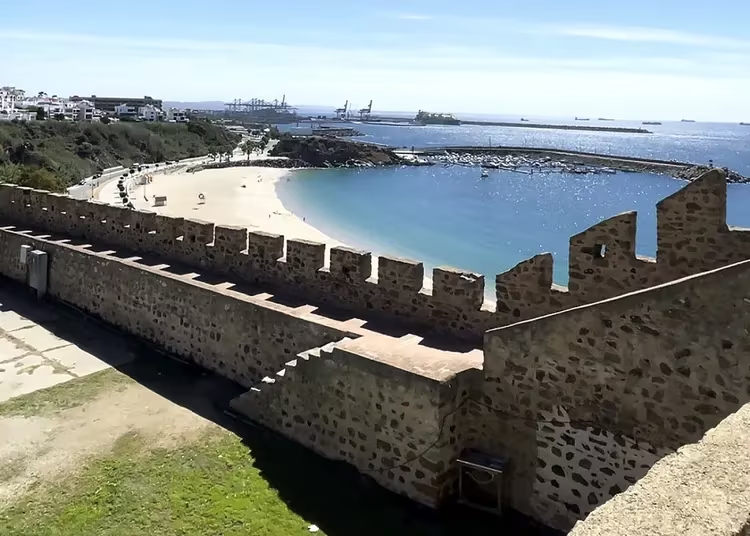
Climb the wall of the Sines fortress (point C. Castelo de Sines) to get a better view of the bay with the port and see the roofs of the city houses.
Sines is small – only 12.5 thousand people live here. Therefore, a walk through the heart of the city will not take much time (point D. Centro Histórico de Sines). Cobbled streets, white houses with blue or yellow edging are the traditional flavor of this region.
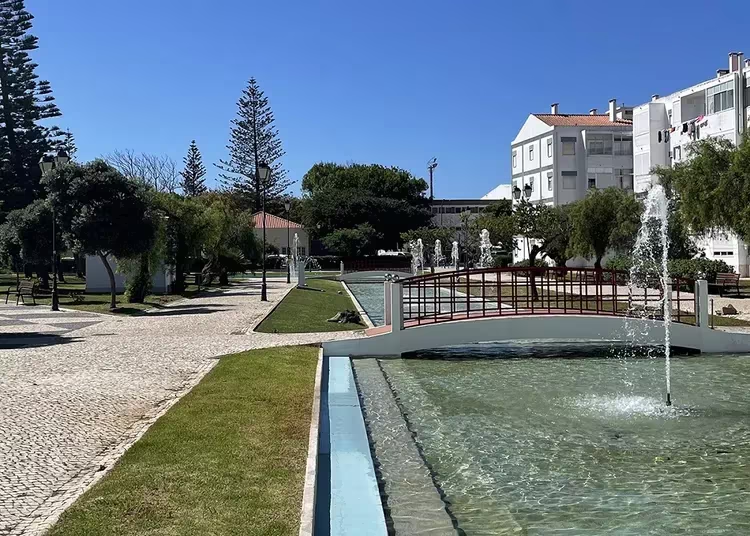
Visit the Garden of Discovery (point E. Jardim das Descobertas). How many of our tiny towns have such charm?
Go to the old railway station (point F. Cais da Estação). His warehouse was turned into a restaurant. This place has been included in the Michelin Guides twice. The food is regional and delicious. Prices are affordable – just like in any other resort establishment. Industrial interior and service at a good European level – I recommend it.
Porto Covo
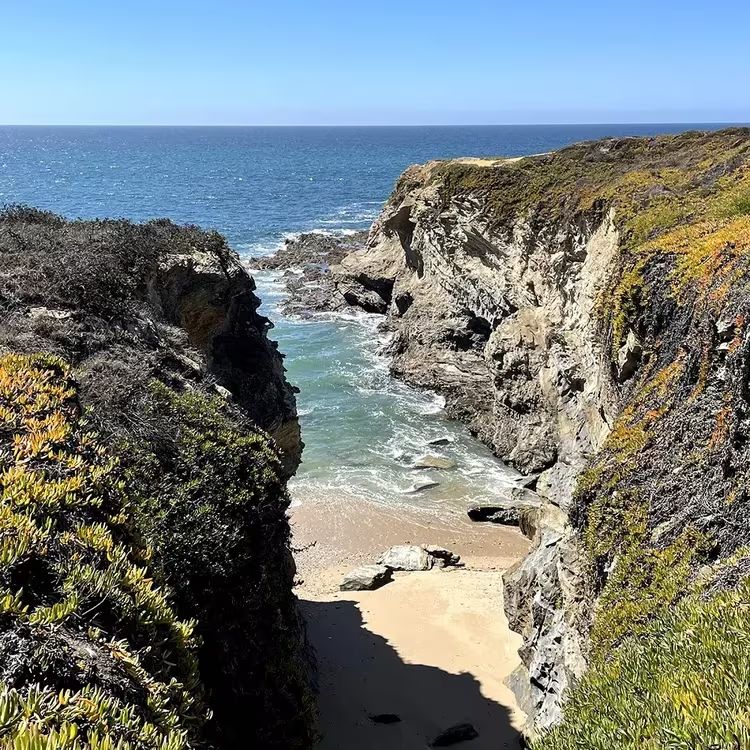
The beaches in Porto Covo are works of art! Small sandy shores are hidden behind rocky cliffs – secluded and breathtakingly beautiful!
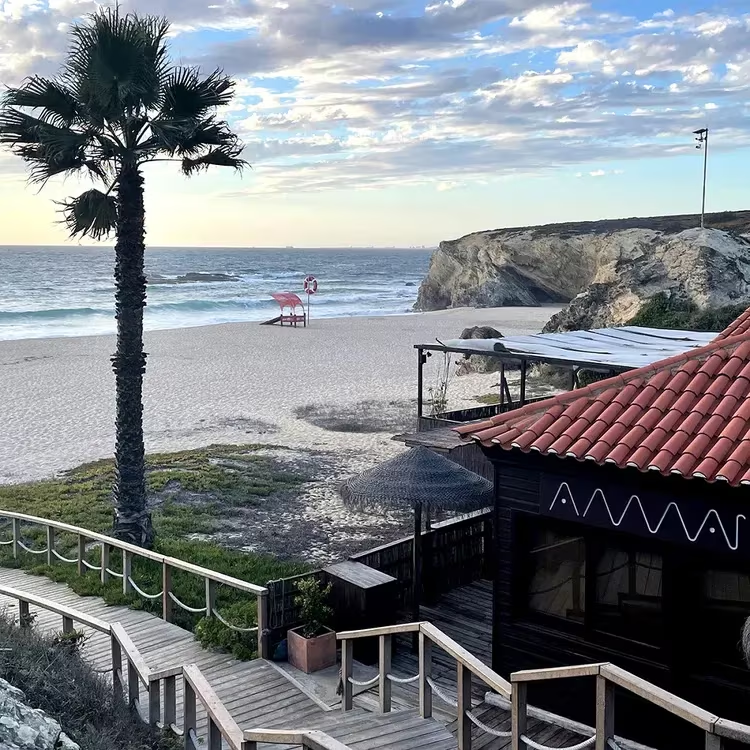
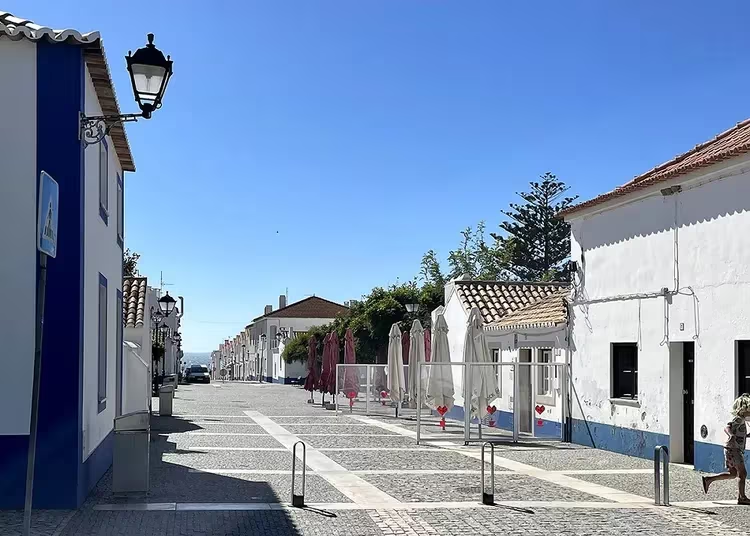
Porto Covo itself is a fishing village of a thousand inhabitants. Personally, I love small Portuguese places – they are cozy and cute. In addition, this is a tourist location, so here you will find not only ancient churches, well-kept houses and cobblestone streets, but also a bunch of restaurants and shops.
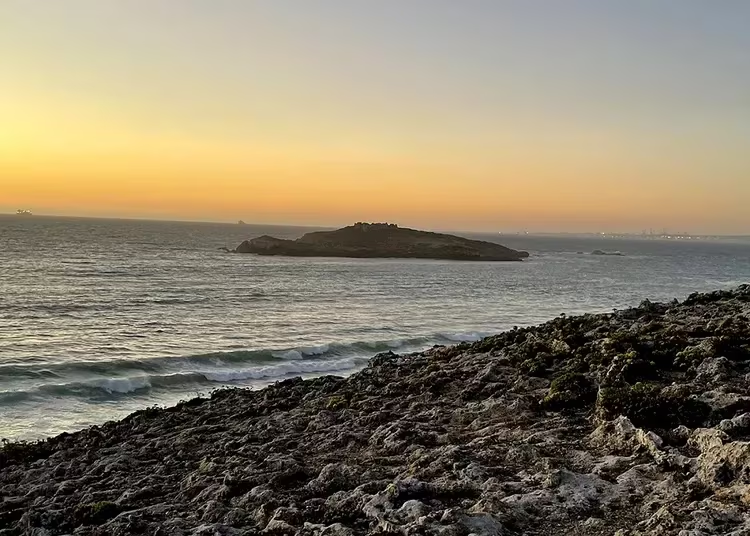
Three kilometers from Porto Covo there is a peach island – Ilha do Pessegueiro. The peach trees are no longer there, but the ruins of a medieval fort remain. They say the island was once a haven for pirates. Now only the bravest can get there – by swimming. I couldn't find any organized tours.
On the shore stands an abandoned 16th-century twin fort – Nossa Senhora da Queimada (Forte de Nossa Senhora da Queimada). There is a cozy restaurant next to it.
Vila Nova de Milfontes
This town is firmly embedded in my memory. I felt some special vibe when I walked through the streets of Vila Nova de Milfontes. Cafes full of people. Charming houses with Azulejo numbers. Usually about 4 thousand people live here, but during the holiday season there are many more.
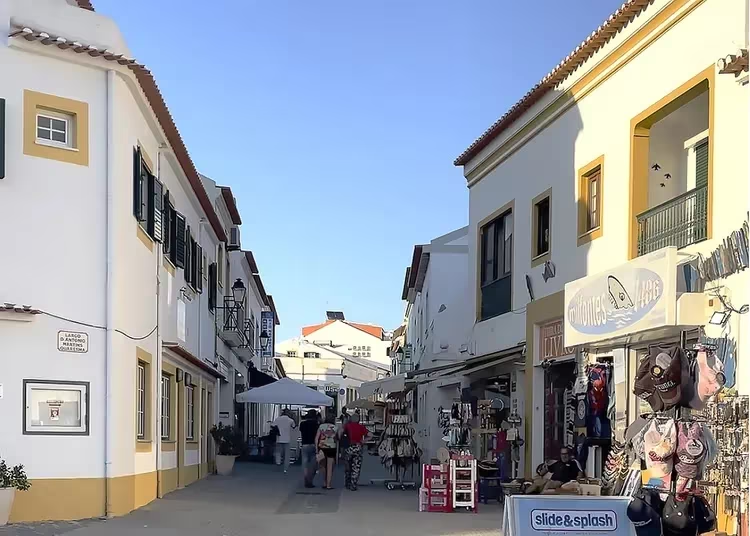
The Church of Nossa Senhora de Fátima (point A. Igreja de Nossa Senhora de Fátima) is the new temple of the city.
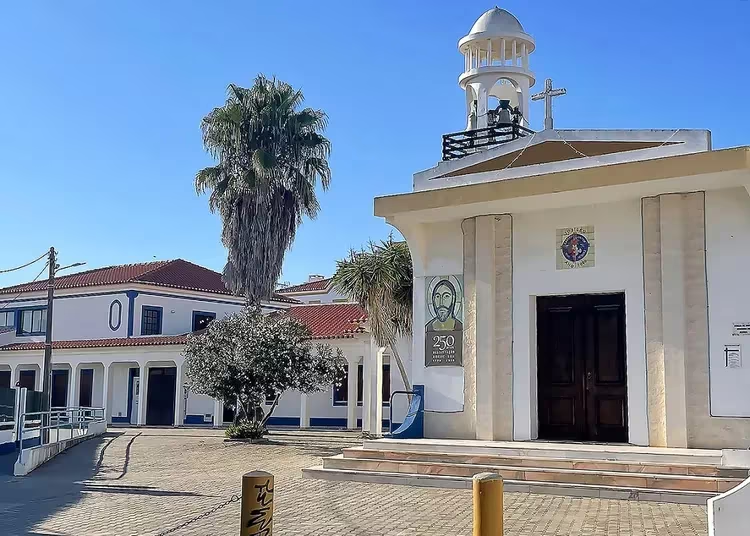
The old church from the 15th century bears the name of Our Lady of Grace (point B. Igreja de Nossa Senhora da Graça). From here in August the river procession starts.
On the banks of the Mira River stands the 16th-century Fort de São Clemente (Point D. Forte de São Clemente). And next to it there is a monument to the aviators (point C. Aos Aviadores), who went from here to Macau.
- Festivals, concerts, fairs – the most exciting events in Portugal
- Personal experience: what is the best time to go to Portugal
- 10 Portuguese dishes every tourist should try
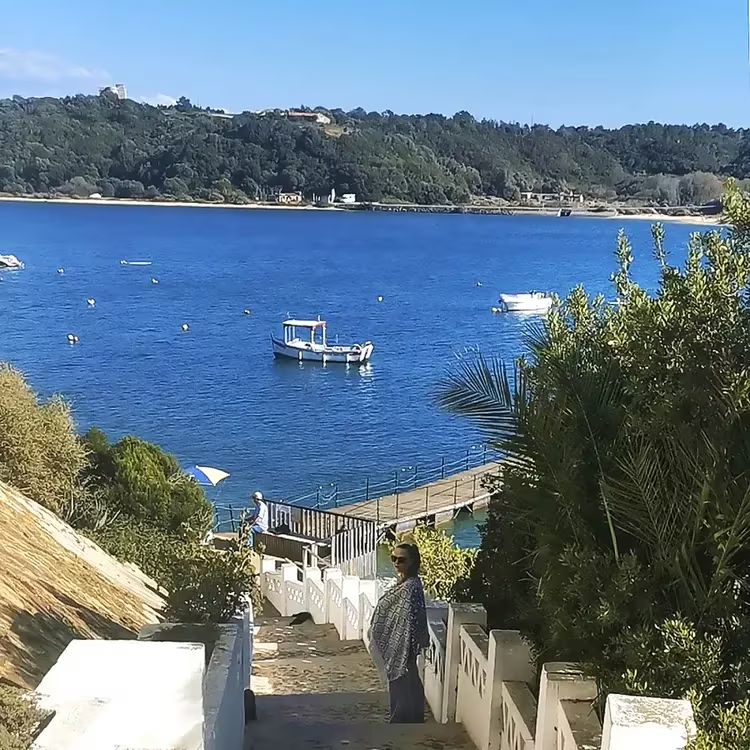
The main beaches of Vila Nova de Milfontes are located on the river bank. The waves here are much smaller than in the ocean, and the water, although just as salty, is 2-3 degrees warmer.
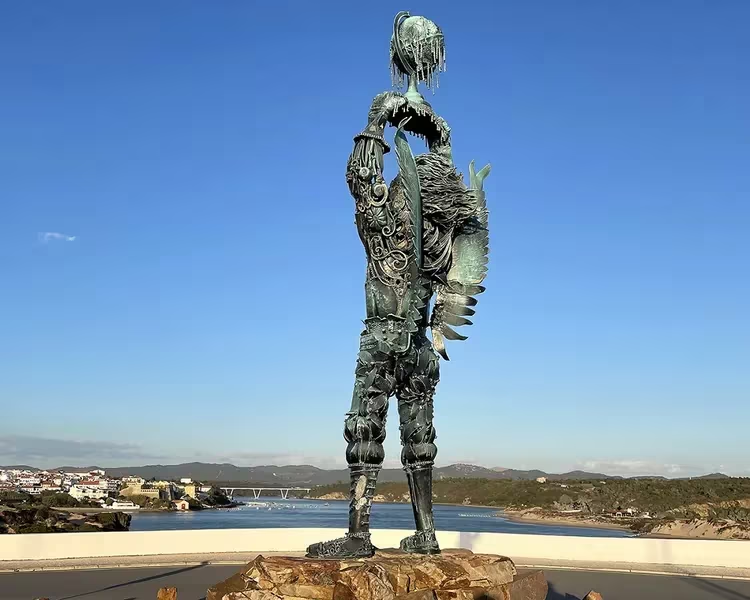
The beautiful landscape at the mouth of the Mira can be seen from the observation deck near the statue of the Archangel (point E. Arcanjo). This sculpture conveys “pain or anger, as well as the desire to save the planet, mutilated by the hand of people,” as its author says.
Evora
Take a day to see the capital of Alentejo – it is magnificent! I even thought about moving to Evora. But in the summer it is very hot there – sometimes up to 45°C – this stopped it. But don’t let that stop you: wear a cap, sun cream, and go for a walk!
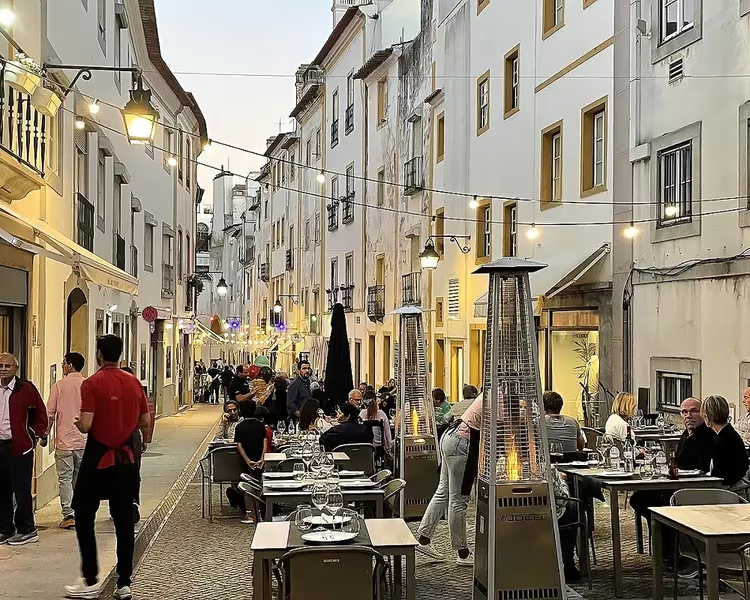
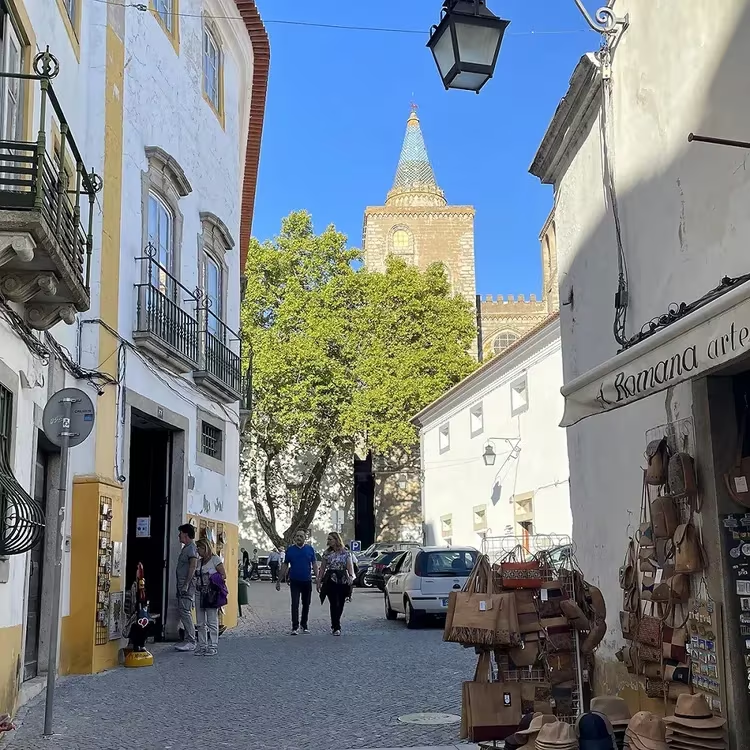
Evora is called a museum city. Roman buildings from the turn of our era have been preserved here. The capital of Alentejo is home to a dozen ancient temples, one of which has a chapel made of human bones. White houses with yellow portals create a cheerful, sunny atmosphere. This city is also about food – Alentejo is famous for its cuisine and wine.
I have prepared a three-kilometer route through the main attractions of Evora. Enjoy exploring the city!
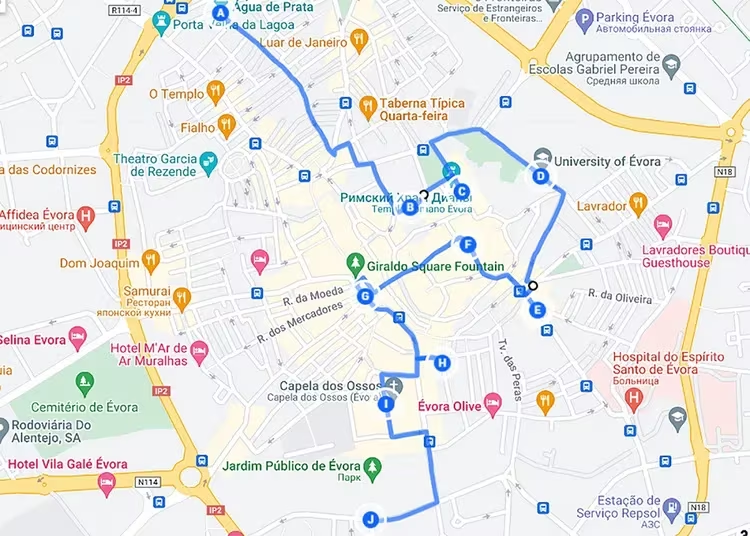
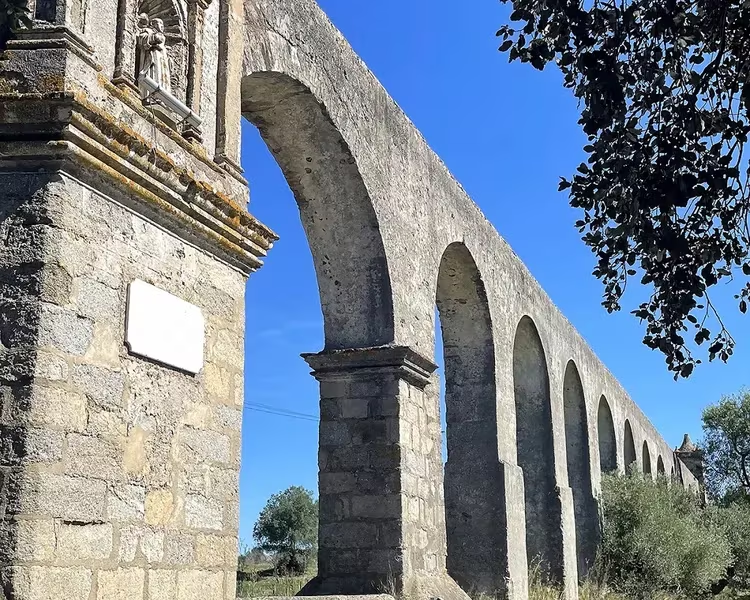
A. Aqueduct of Agua de Prata (Aqueduto de Água de Prata)
This is the oldest surviving structure in Évora. The 18 km long aqueduct was built by the Romans in the 1st century BC. In the 16th century, a large-scale reconstruction took place, thanks to which as many as 9 km of the ancient water supply system have survived to this day. At its highest point, the aqueduct reaches 26 meters.
B. Street of Painted Houses (Travessa das Casas Pintadas)
On the Street of Painted Houses you will see huge panels depicting animals and mystical characters. These frescoes appeared at the beginning of the 16th century.
C. Roman Temple (Templo romano de Évora)
Another antiquity! It is considered the crown jewel of Évora and is one of the best preserved Roman buildings on the Iberian Peninsula. The structure is called the Temple of Diana, but there is a version that the sanctuary was erected in honor of Jupiter. This monument was built in the 1st century AD.
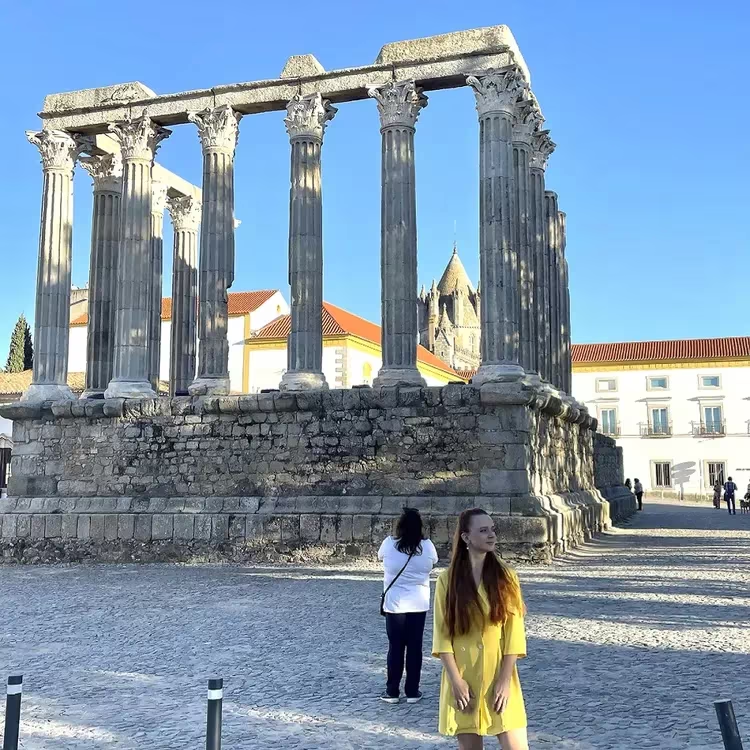
In the 5th century, the Roman temple was badly damaged by the war with the Germanic peoples. In the 14th century, the ruins of the church became part of the castle, which helped preserve them until the 19th century. Then they decided to dismantle the medieval building, restoring, as far as possible, the primitive appearance of the Roman sanctuary
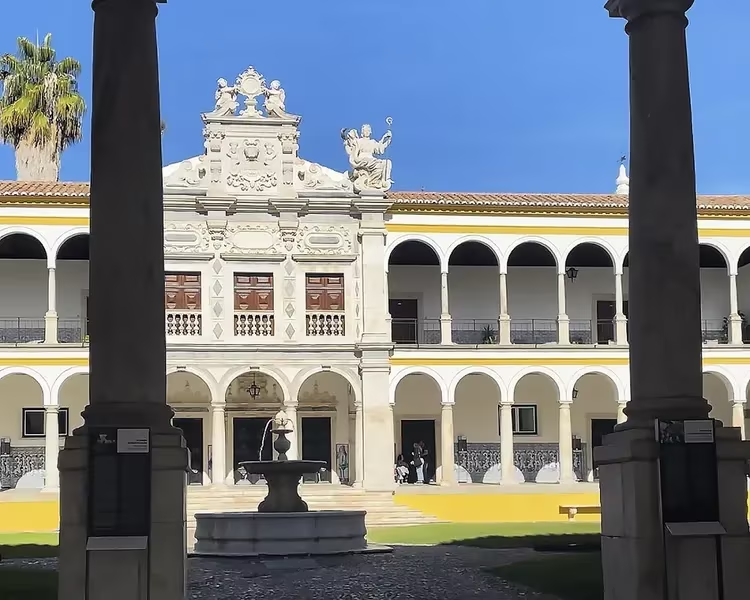
D. University of Évora
It is the second oldest university in Portugal after Coimbra. It was built in the 16th century. Not only the facade with a beautiful courtyard has survived to this day, but also the interior with panels of azulejo tiles. Entrance to the most famous part of the university, the College of the Holy Spirit (Colégio do Espírito Santo), costs 3 euros.
E. Largo da Porta de Moura Square
This square dates back to Roman times. For a long time it was an exit towards Bezhi and was located outside the city limits. In the 14th century, titled nobles began to settle here, leading to the expansion of Évora.
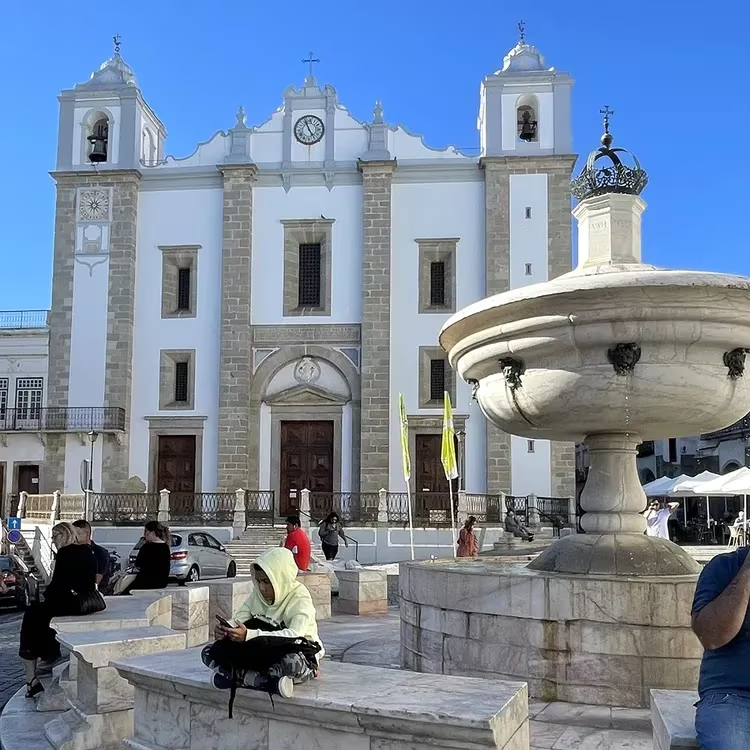
The fountain was installed on the square by order of the king. This was his broad gesture for the local residents. Water entered the marble sphere through the Agua de Prata aqueduct.
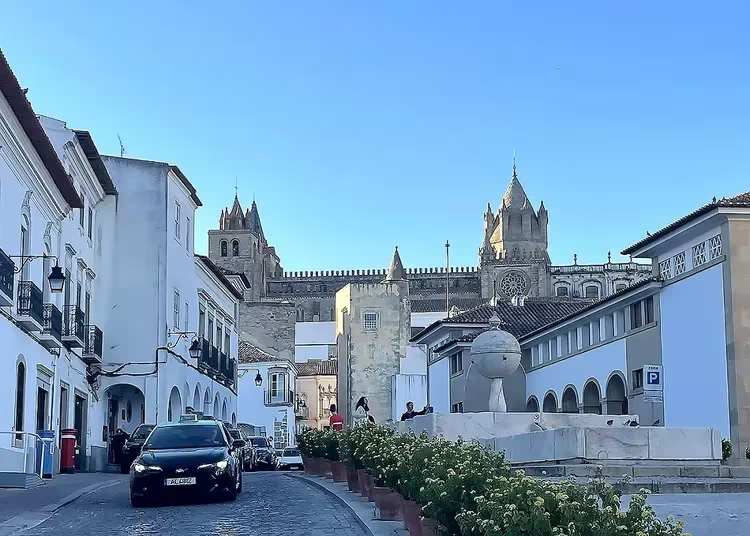
F. Évora Cathedral (Sé Catedral de Évora)
The square offers an impressive view of the fortress at the highest point of the city. Head towards her. But I’ll say right away: this is not a castle at all, but the main cathedral of Evora. The temple is the largest in Portugal. It was built in the 12th-13th centuries. It was here that the navigator Vasco Da Gama received the blessing to travel to India.
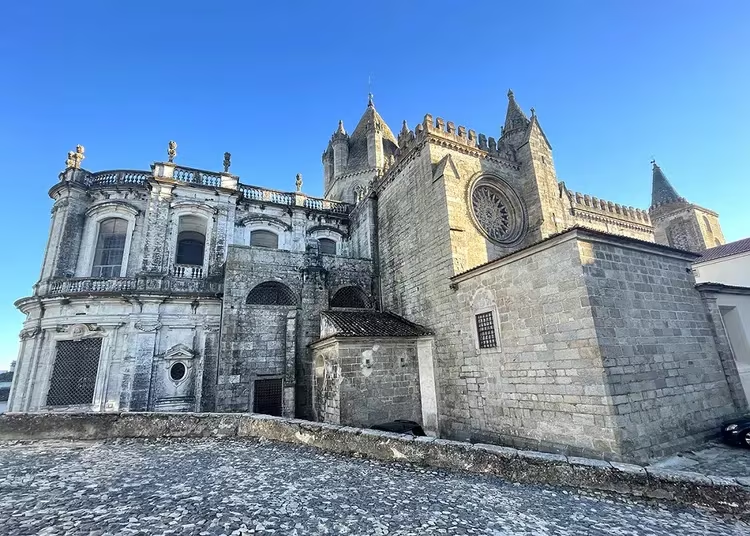
Inside the church there is a sculpture of the pregnant Virgin Mary – it is unlikely that you will see a second one anywhere, because the Pope forbade depicting the Virgin Mary as pregnant or nursing.
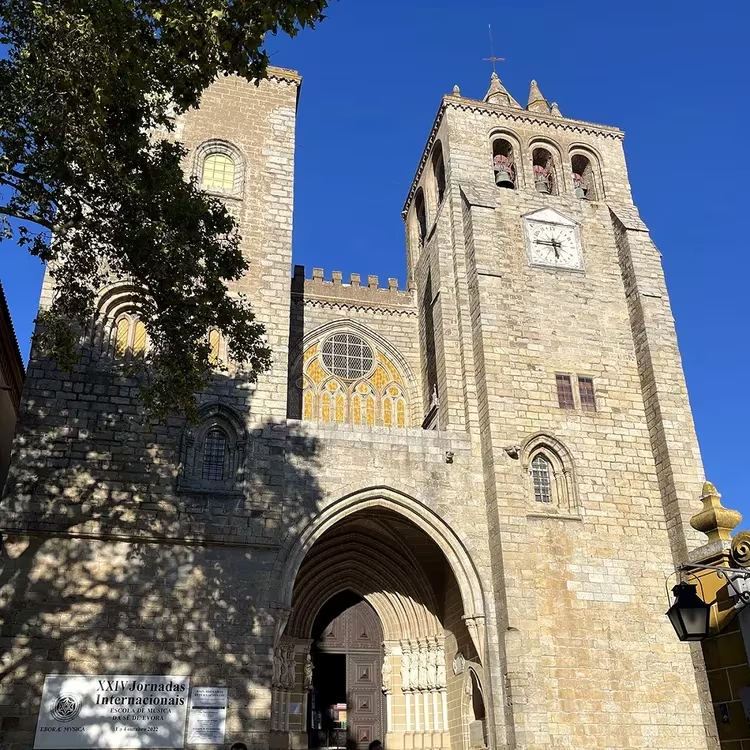
You can climb the spiral staircase to the roof of the temple and see a panorama of the city and its surroundings from there. Entrance to the temple with a visit to the observation deck costs 3.5 euros. If you want to look into the museum of religious treasures, you need to pay an extra 1 euro.
G. Giraldo Square
Now we go to the central square of Evora. This is a typical Portuguese location, full of city life. As is tradition, the perimeter of the square is lined with restaurants and pastry shops that set up tables on the cobblestone sidewalk.
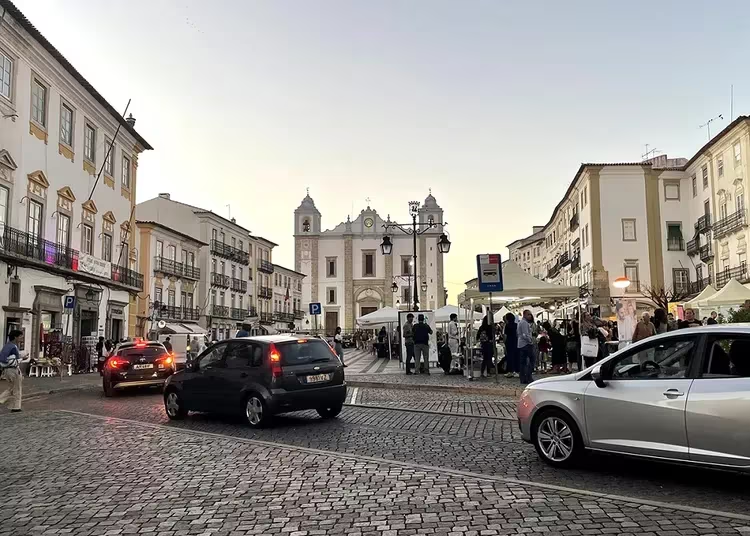
The parade ground overlooks the city hall building, as well as the 16th-century Church of St. Anthony (Igreja de Santo Antão). You will see the Giralda fountain from the same century. The eight jets of the fountain symbolize the eight streets adjacent to the square.
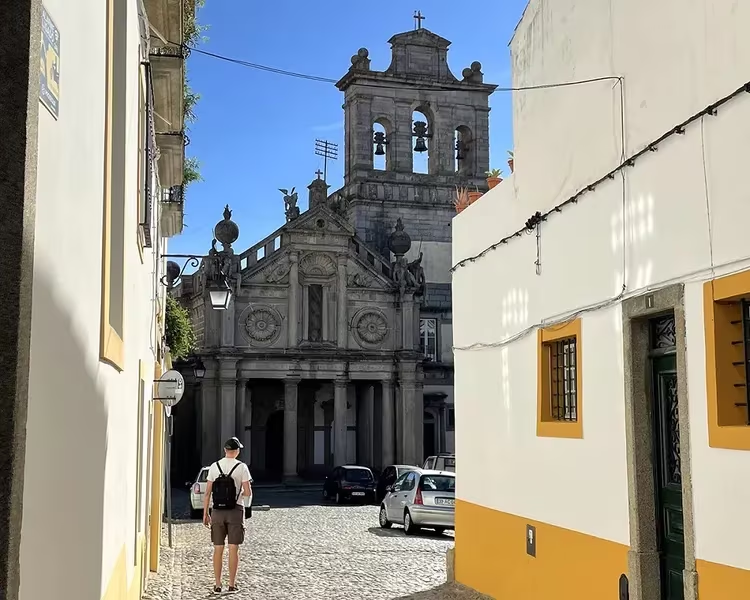
H. Church of Nossa Senhora da Graça
Previously it was a monastery. It was built in the 16th century. In 1919, the monastery buildings were nationalized and rebuilt into a residential area. Fortunately, they decided to preserve the church itself.
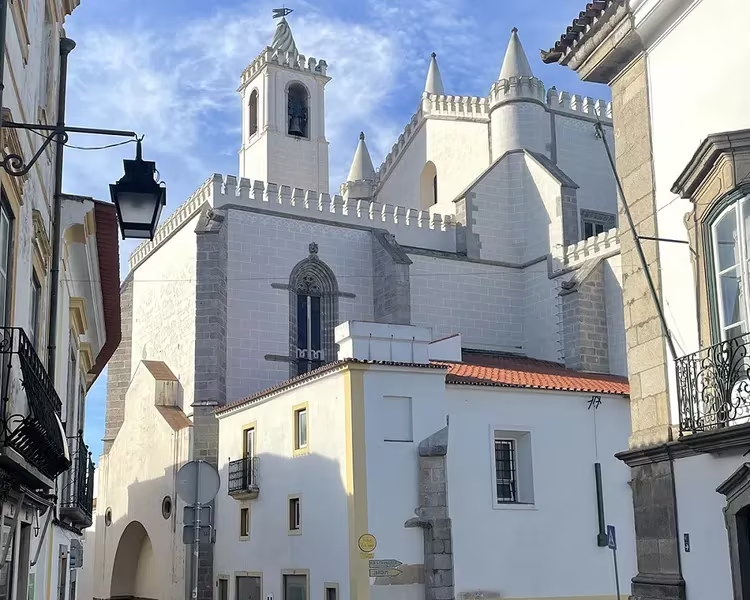
I. Chapel of Bones (Capela dos Ossos)
The chapel with such a gloomy name belongs to the Church of St. Francis (Igreja de São Francisco). If you can enter the main temple for free, then you need to pay 6 euros for a ticket to the chapel.
The place gives you goosebumps! At the entrance you will see the inscription “Nos ossos que aqui estamos, pelos vossos esperamos”. It translates as “Our bones, lying here, are waiting for your bones.” We are, of course, talking about the temporality of bodies. More than 5 thousand human skeletons are woven into the walls of the temple. Bones and skulls are arranged in patterns – terribly beautiful.
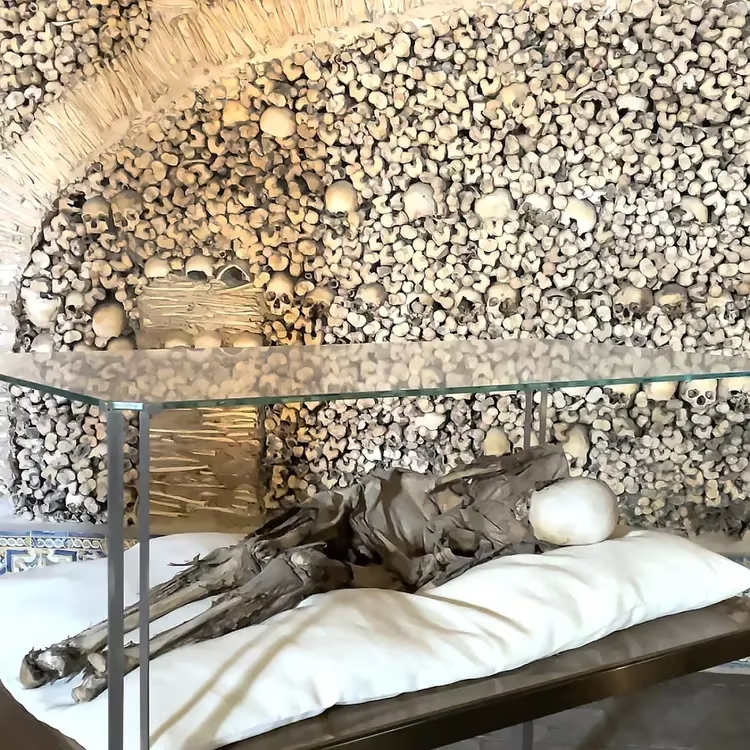
These remains belonged to Franciscan monks. In the 16th century, they were collected in the cemeteries of churches and monasteries of Evora, solving, among other things, the problem of lack of burial places.
By the way, the Church of St. Francis has a terrace from where you can admire the white and yellow city.
J. City Park of Évora (Jardim Público de Évora)
After such impressions, it won’t hurt to spend a little time in the lap of nature. I suggest you take a look at the city park. Well-groomed paths and flower beds, ponds and benches in the shade of trees, as well as peacocks walking freely against the backdrop of the destroyed part of the palace complex – a delight!
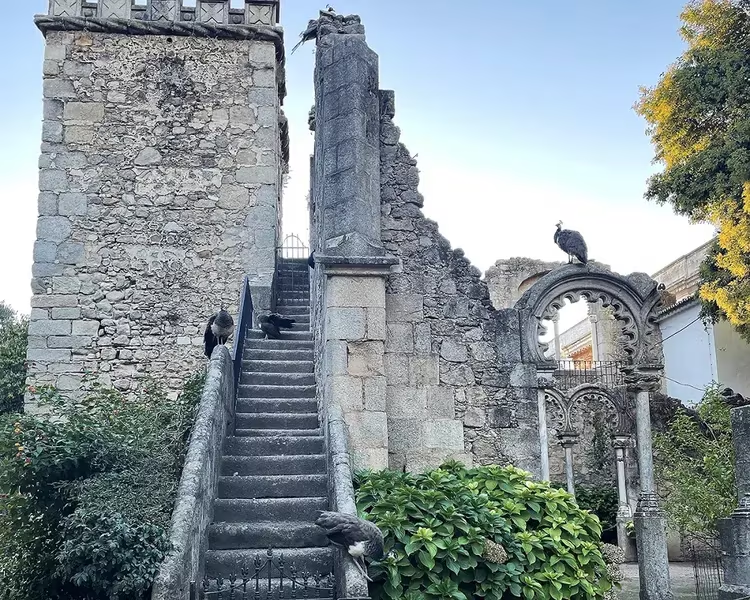
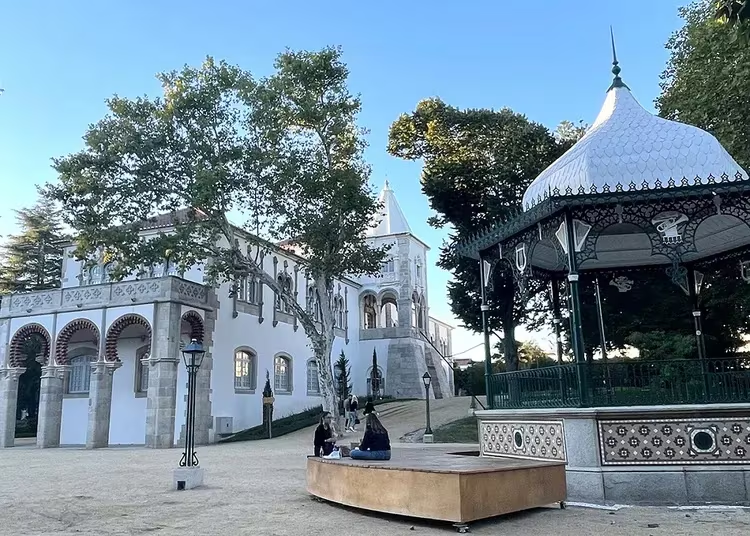
In the garden you will also see the restored part of the royal residence. The palace was built in the 15th century in the Manueline style – in those years it was just in its infancy. Within the walls of this mansion, King Manuel I appointed Vasco Da Gama to command the Indian fleet.
What to bring from Evora?
Portugal is the most important exporter of cork. In Évora there is a large plant for the production of this raw material, and not far from the city there are forests with cork oaks. There is so much of this material that you can’t find in local stores: from keychains and bookmarks to bags and shoes. Choose according to your taste and wallet, as they say.