
11 best museums in Pskov – list, photo, description, prices 2021, map
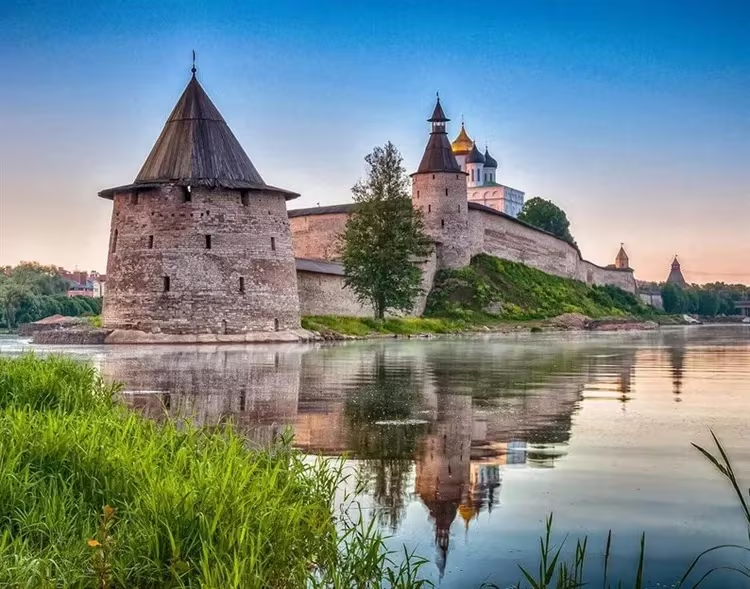
The northwestern outpost of Russia, the oldest city of the Silver Ring, located along the banks of 2 rivers, embodies a great history. Founded in the 9th century, Pskov considers its patroness Princess Olga, whose name is mentioned in the Tale of Bygone Years. Pskov, like St. Petersburg, is a city of contrasts. Outskirts with broken roads, old wooden houses do not create the best impression. But as you move towards the city center, a stunningly beautiful panorama opens up.
Pskov Museum-Reserve
The oldest cultural and historical object was opened in 1876 on the initiative of local historians. Initially, its exhibits were placed in 2 small rooms of the building of the Nobility Assembly. Over the past time, a solid state-scale museum reserve has “grown” from a tiny institution. Private collections, including the famous collection (more than 1 million exhibits) of the merchant F. M. Plyushkin, became the basis of the future cultural institution.
The boundaries of the institution gradually expanded, and in 1979 it acquired the status of a State Reserve. Today it unites 8 branches, including the Church of the Nativity of Our Lady, the House of Van der Fleet, the estates of great composers, architectural monuments – a total of 46 objects.
The reserves of the reserve contain a huge number of various exhibits. Among them are objects of graphics, painting, sculpture, applied arts, everyday life, weapons, documents, precious metals and stones. The richest fund of the reserve is archaeological finds from the Meosolithic to the 18th century. A solid art gallery presents masterpieces by Russian and Western European artists.
Pskov Krom
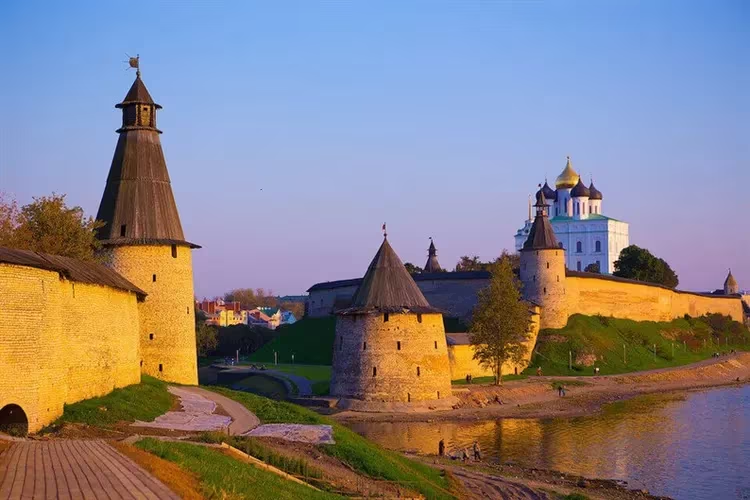
The Pskov fortress in terms of architectural style is the most Russian of all existing in Russia today. Unlike the Moscow, Tula and Novgorod Kremlins, the Pskov Kremlin is devoid of decorative teeth in the form of a dovetail.
It looks brutally severe, as befits a real defensive fortress, hardened in sieges. In its current form, the Pskov Kremlin was built in the 14th-15th century, when the rule of the Golden Horde ended. But the threats from the Livonian knights and the Grand Duchy of Lithuania were palpable, and the need for a fortified object did not disappear.
Simplicity and reliability of architecture became the main priorities in the construction of Krom (as the builders called it). This name, derived from the word “secluded” personifies the impregnability of the fortress. The central entrance to the fortress is overshadowed by the icon of the Trinity – a symbol of the sacred amulet.
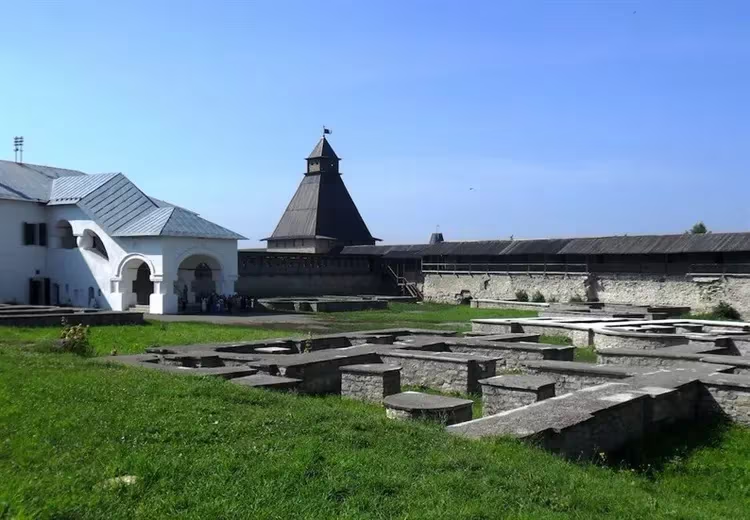
Krom, located between the Pskova and Velikaya rivers, is surrounded by the Roundabout City – high stone walls. To get to the Pskov Kremlin, you need to go through the city of Dovmont. The territory built up with temples is named after the Lithuanian prince, who was baptized in Pskov.
Today, only the foundations remain of many of them. Interesting to see are the Command Chambers (17th century), in which authentic interiors of that era have been restored. In the Spiritual Consistory (19th century) you can buy souvenirs depicting views of the city.
Noteworthy is the reconstructed Rybnitsa tower of a square shape, erected near the fish market stalls. It is impossible not to see the Flat Bastion Tower at the confluence of the rivers, which is most often depicted in the photo of the fortress. The apogee of the excursion is a visit to the snow-white Trinity Cathedral, built on the site of the first Christian church in Russia.
Order Chambers
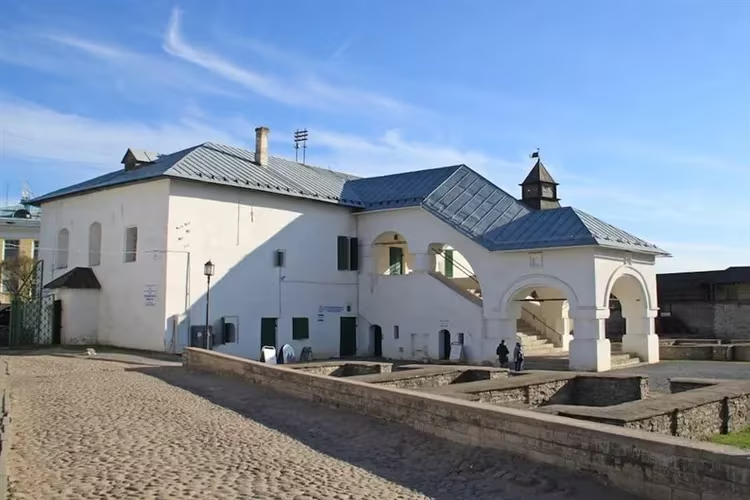
On the territory of the city of Dovmont (the Pskov Kremlin) there is the only surviving administrative building of the 17th century in the city – the Order Chambers. Initially, the building was wooden, but after the fires it was made of stone, retaining the old architecture.
City officials of various ranks and status worked in it, from clerks to governors. There were 5 departments – “tables”: bit, money, embassy, court, local. They dealt with a certain range of administrative and legal issues.
In the basement floor of the Command Chambers there was a casemate, where criminals were kept, chained in shackles – convicts. On the top floor, officials worked, deciding the fate of ordinary citizens. Tourists visiting the chambers see the authentic atmosphere of that era and historical rarities, which is very impressive. The faces of Gogol's heroes immediately pop up in the imagination. The thickness of the walls of the administrative building is amazing – up to 2 m. The governor and deacons took care of their safety, hoping to sit out during the siege.
Museum-apartment of V. I. Lenin
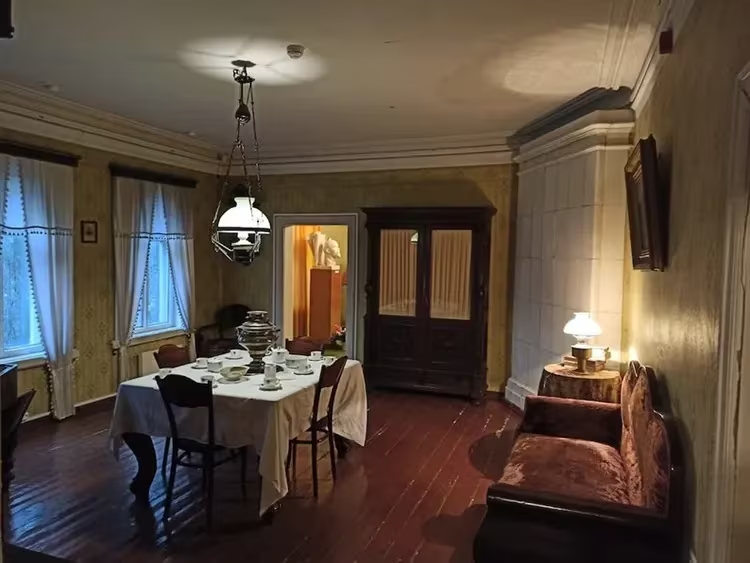
Located in a beautiful house, memorial rooms dedicated to the memory of the world-class politician V.I. Lenin are a symbol of the respectful attitude of the inhabitants of Pskov towards him. The memorial institution was opened in 1930 on the 3rd floor of a former apartment building. Upon arrival in Pskov in 1900, V. I. lived in one of the rooms of the pharmacist Lurie. After the destruction of wartime, everything was restored in 1970, on the 100th anniversary of the leader of the proletariat. Actively collected new exhibits related to the Ulyanov family.
The 1st hall reflects the economic and social situation of the Pskov land on the eve of Lenin's arrival. Here is a picture of the production of the main agricultural crop – flax: processing mechanisms, fiber, ready-made linen items, etc. The exhibits of the 2nd hall illustrate Ilyich's stay in Shushenskaya exile. The 3rd hall is a kind of photo gallery, where a photo portrait of Lenin (1900) takes pride of place. Photographs of Pskov, drawings, documents reflect that time.
In the 4th room there are items of the epistolary genre, sent by Ilyich to his relatives. A separate exposition “Women of the Leader” is dedicated to N.K. Krupskaya, M. A. Ulyanova and the sisters V. I. Women's robes of Pskovites (19-20 c.) are presented. It contains shelves with Lenin's books, a travel basket for their transportation.
In the Entrance Hall there are rarities – a chair from the Kremlin, a hat box, a travel chest. The memorial room, rented by the leader, is furnished with typical furniture from the early 20th century. Appropriate accessories are displayed on the desk.
House-Museum of V. I. Lenin
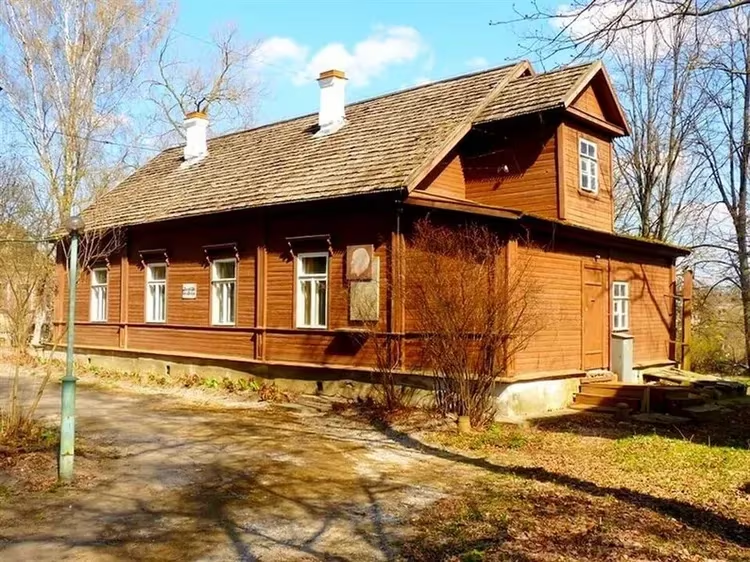
In the old wooden house, which belonged to the townsman Bochkarev I. N. (1900), the house-museum of V. I. Lenin is located. Secret meetings of local Social Democrats took place in its rooms. At one of them, in April 1900, a fateful meeting was held at which the project of publishing revolutionary journalism (the Iskra newspaper and the Zarya magazine) was decided. The personal participation of Lenin, who gave recommendations to his comrades-in-arms, played an important role.
Later in the same house there was a secret headquarters of the Iskra distributors. In honor of these significant events and in memory of the leader, a house-museum was opened in 1938. Despite the thorough destruction during the Second World War, the building and rooms were completely restored. Acquaintance with the history of the institution takes place in the Hall and the Memorial Room, where social democratic meetings were organized. It also hosted an important meeting on the organization of the Iskra publishing house.
The authentic atmosphere of that time is recreated here, among the pieces of furniture there are genuine rarities. The remaining 4 rooms are occupied by expositions reflecting the history of the revolutionary newspaper. A lot of attention is paid to the publication and distribution of Iskra, attributes that help to do this are presented. There are many documents here about the life and work of the “Iskrists”, about their cooperation with members of the RSDLP.
Museum of Yu. P. Spegalsky
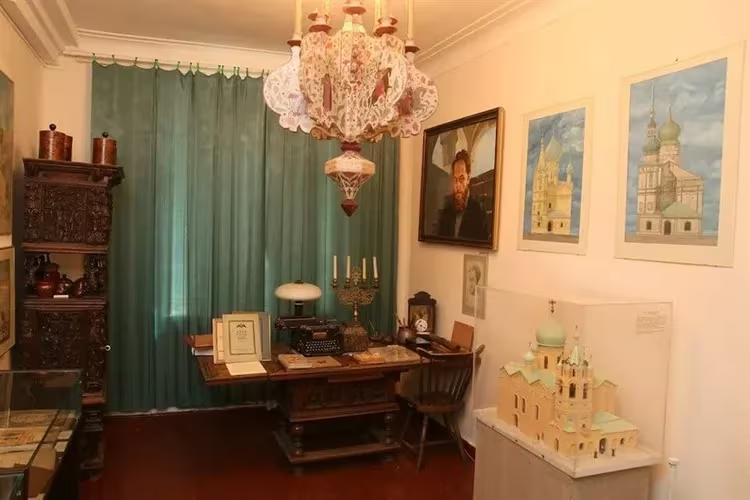
This is the only institution of its kind in Russia opened in honor of the native of Pskov, the architect Yuri Pavlovich Spegalsky. His merits in the restoration of numerous architectural objects of the city of the 13th-17th centuries are invaluable. Since his activities are still connected with St. Petersburg, a memorial plaque was installed here on Malaya Konyushennaya Street N 2. Spegalsky made a huge contribution to the restoration of Pskov churches, to the restoration of St. Petersburg cathedrals.
He left many unique drawings depicting architectural monuments of the 12th-17th centuries, which no longer exist. The memorial apartment was opened in 1986 thanks to the efforts of the widow Yu. P. Arshakuni OK. Here is stored the issue of the journal “Know your land”, in which the article by the boy Yura Spegalsky “The Significance of Monuments of Ancient Pskov Architecture” was published.
All expositions of museum premises are unusually interesting in artistic terms. They contain many expressive objects created by the hands of a talented artist. Delight is caused by a fragment of a tiled Pskov stove, recreated by Yu. P., carved wooden chandeliers, graphic drawings by the author, etc.
Pogankin Chambers
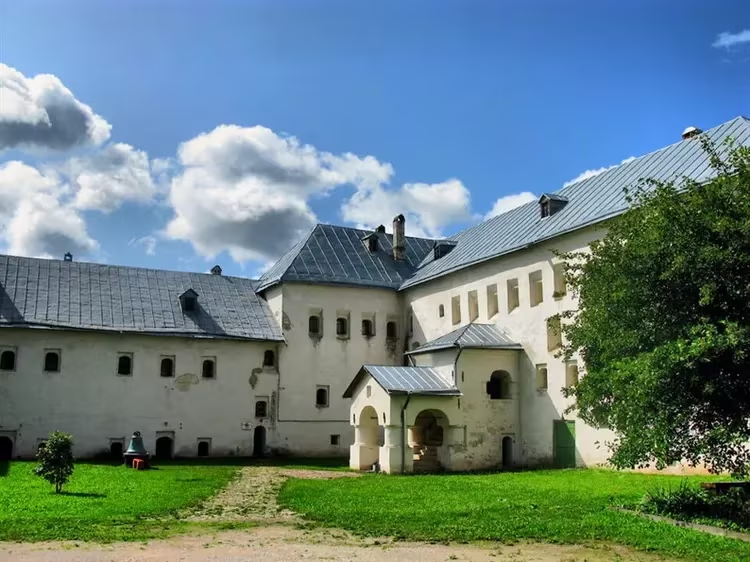
The museum complex with the not-so-pretty name Pogankin's Chambers is named after a wealthy and influential merchant. The complex of buildings for his family was built in 1671-79. To date, this is the only stone building of ancient Pskov that has retained its former volume. A symbol of society's careful attitude to architectural monuments, Pogankin's Chambers also retained their authenticity through the efforts of restorers.
After the death of the last heir of the merchant, the authorities bought the building. In 1900, the buildings were partially restored. On the initiative of the Pskov Archaeological Society, in 1902 the Pogankin Chambers Museum was solemnly opened in the city. Every year, donations from wealthy Pskov residents were used to carry out restoration work aimed at strengthening the building.
After the destruction of the war in 41-45, the institution was restored until the 80s of the last century. Today it is a monument of typical Russian architecture of the 17th century with thick walls, loophole windows, and a lavishly decorated porch. Inside, a luxurious collection of Pskov icons of the 14th-17th centuries is exhibited, as well as a rich collection of artistic silverware. Since 2018, the institution has been under restoration.
blacksmith yard
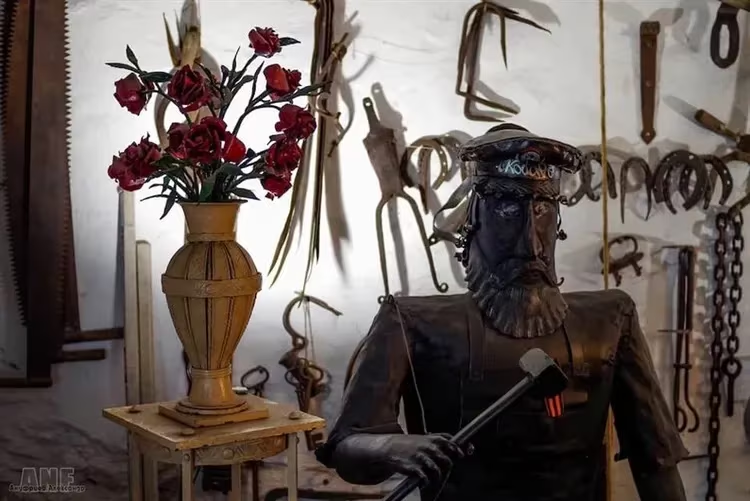
In a city where the inhabitants were called in the old days “staples”, there must certainly be a Blacksmith's Yard. It is located in the former manor and the chambers of the priest of the Polish church. In the building 16 in, repeatedly rebuilt, the blacksmithing museum was opened in 2008 at the initiative of the blacksmith-restorer E. Vagin. The blacksmith's yard combines a residential building, a blacksmith shop and an open area. The former house of a priest was given over to a master of artistic forging. There is a souvenir shop in the annex.
2 forges are equipped: one is a demonstration and exhibition, the second is a working one. The interiors of the smithy, open to tourists, are stylized as the 19th century and are equipped with authentic exhibits. Huge furs of that era and other mechanisms are presented. It organizes master classes in artistic forging for those who wish. Most of the exhibits are located in the courtyard. Among them there are truly exotic specimens that are of great interest.
Art Gallery
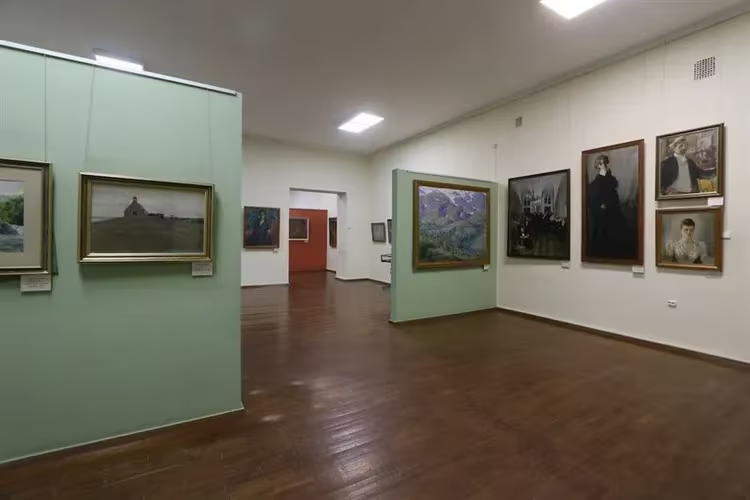
In the former Art and Industrial School. Vander-Fleet in the 50s of the 20th century. The Art Gallery was set up. The building itself, built in 1912, is a monument of architectural neoclassicism. Unfortunately, the authentic central façade was destroyed during the war. The Pskov Archaeological Society has formed an extensive collection of art paintings. Among them was a private collection of the Pskov merchant F. Plyushkin.
During the German occupation, the collection was thoroughly looted. After the liberation of the city, active work began on the inventory of the art fund and its replenishment. Today, the Art Gallery has something to see for art lovers. Among the paintings there are real masterpieces. For example, “Madonna and Child” by Andreas del Sarto (1520), representing the Italian Renaissance. Russian paintings of the 18th and 19th centuries are displayed in the assembly hall.
Wonderful canvases by Shishkin, Aivazovsky, Rokotov, Levitan, Repin, Bryullov and others are placed here. Artistic art of the 20th century is represented by the works of Petrov-Vodkin, Marc Chagall, Falk. The gallery is open every day except Monday.
Railway Museum
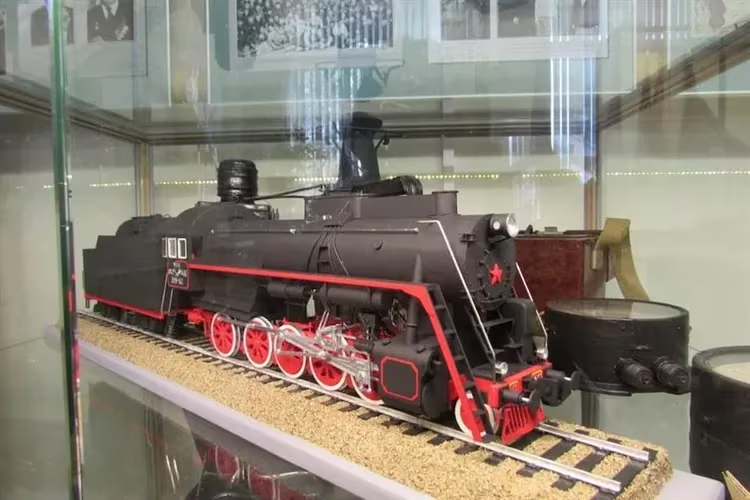
It is difficult to overestimate the role of the Pskov railroad in the delivery of strategic cargo during the Second World War. The museum institution dedicated to the history of the Pskov railway and its employees was established in 1967. A great merit in this belongs to the war veteran, railroad worker A. Valenitik. Until 1984, the exhibits were housed in the building of the railway station, and in 1984 the museum was given the 1st floor of the former clinic.
Three thematic halls give a complete picture of the development of the railway business during its existence. The exhibits of the 1st hall illustrate the beginning of the Russian steam locomotive building and the peculiarities of this period in other countries. Here you can see a candle lantern, various tools of the railroad workers, samples of tickets for the first (Tsarskoye Selo) railway in Russia. The expositions of the 2nd hall illustrate the revolutions of 1905, 1917. and the Soviet period in the history of the railway.
Numerous archival documents reflect all the historical events of the era associated with the railway of Pskov and the region. The 3rd hall is dedicated to the participation and role of the Pskov railway workers in the war, in the liberation of the city and the restoration of the destroyed economy. After the reconstruction in 2014, the institution welcomes guests with updated interiors, modern sensory equipment and interesting exhibits.
Mason's House
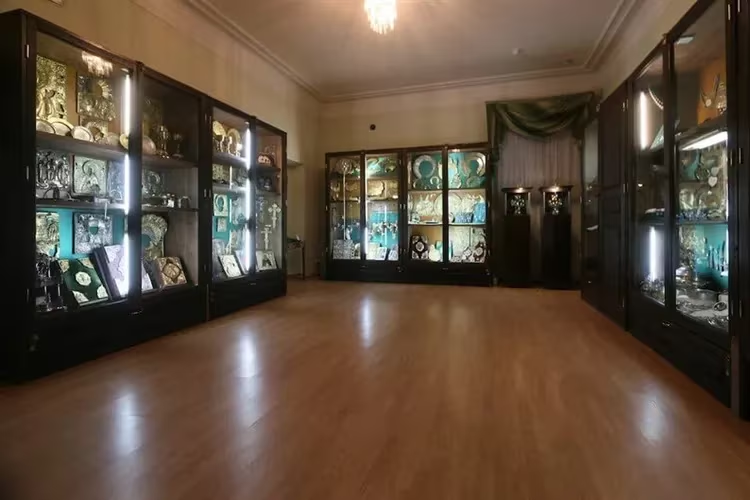
Although the name of the building is the same as the name of the Freemasons society, it has nothing to do with them. This is the name of the former owner of an old house with unique architecture. A descendant of the Scots, Ludwig Mason, built a house for himself in 1909. After the establishment of Soviet power, the building was turned into communal apartments, the residents of which were resettled in 1998. The house was restored, turning it into a repository of museum rarities.
During the reconstruction in the basement of the house, many human remains were found buried here in the 16-17th century. All of them were interred. Today, the House houses the depository of the Pskov Museum-Reserve. Collections of ancient jewelry, coins made of precious metals, various types of weapons, etc. are offered to the attention of visitors. It is planned to build a storage building nearby, where old manuscripts and archaeological finds will be placed.