
Barcelona Cathedral – history, photo, description, opening hours, prices 2021, how to get there, map
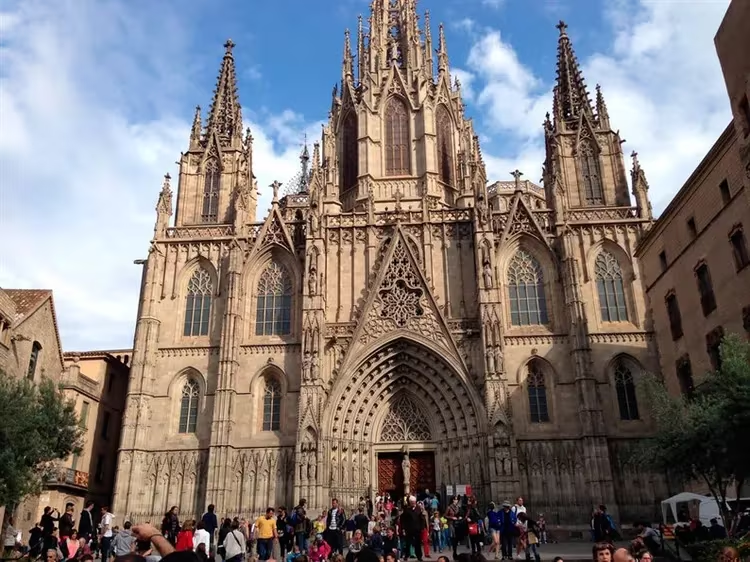
On the territory of the ancient Gothic quarter of the Catalan capital is the main temple of the city – the Cathedral of the Holy Cross and Saint Eulalia. The name “cathedral” indicates the presence of an episcopal see in it. Thus, the service in the basilica on holidays is conducted by the supreme clergyman of Catalonia.
The main attraction of the Gothic quarter
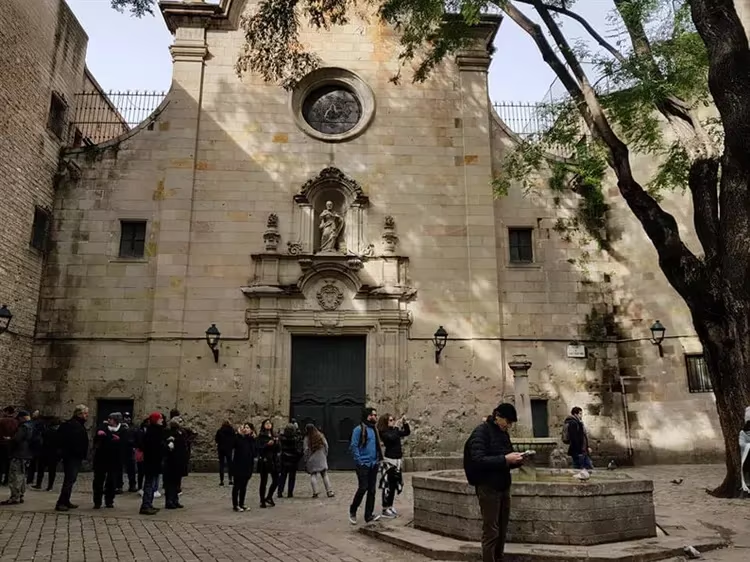
The temple is dedicated to the memory of Saint Eulalia, who was martyred for her faith in Christ in the 4th century. AD Under the emperor Diocletian, Christians were severely persecuted. Young Eulalia tried to persuade the Roman governor not to harm her co-religionists. However, she was thrown into prison and subjected to all kinds of torture. They wanted to force the girl to renounce her faith in the Mission. Eulalia did not succumb and died in prison.
The main cathedral of Barcelona was erected in memory of the martyr. Her relics are one of the main shrines of the church. The second shrine, which gave the temple its name, is a cross with the image of the crucified Jesus. During the decisive naval battle between the fleets of Christians and Muslim Turks in 1571, the cross adorned the bow of the flagship. The sacred relic is kept in the Chapter Hall.
The capitular hall serves as a venue for important meetings, and it also has a mini-museum with valuable works of art. According to the decree of Pope Pius IX (1867), the cathedral bears the honorary title of Minor Papal Basilica. At the end of the 20s. of the last century, the object received the status of “a monument of history and art of national importance.”
Cathedral of Saint Eulalia
The first buildings on the territory of the current temple complex appeared at the end of the 13th century. The oldest surviving building is the chapel of St. Lucia. It dates back to 1268. The construction of the basilica began in 1298. A site with the foundation of a temple of the ancient Roman era (4th century) was chosen as a site for construction.
Engineering, construction and finishing work stretched for 150 years. The building was completed by 1460. However, in the following centuries, the complex was supplemented with new elements. The main entrance to the basilica was installed in 1870. The central spire crowning the dome appeared in 1913. The size of the sanctuary is impressive.
| Cathedral and its parts | Length, m | Width, m | Height, m |
| Outside | 93 | 40 | Dome-70 |
| Inside | 79 | 25 | Dome-41 |
| central nave | 28 | thirteen | 26 |
| Side aisles | 28 | 6 | 21 |
| chapels | 6 | 5 | 9 |
The bell tower rises to a height of approximately 54 meters, and the total height of the tower with the spire is 70 m. The belfries that limit the facade of the building are shaped like an octagon. Their height is 53 m. Bells are placed on the upper platform of each tower. On the left – a giant bell weighing 3 tons. On the right – 10 small bells bearing female names.
Architectural Features
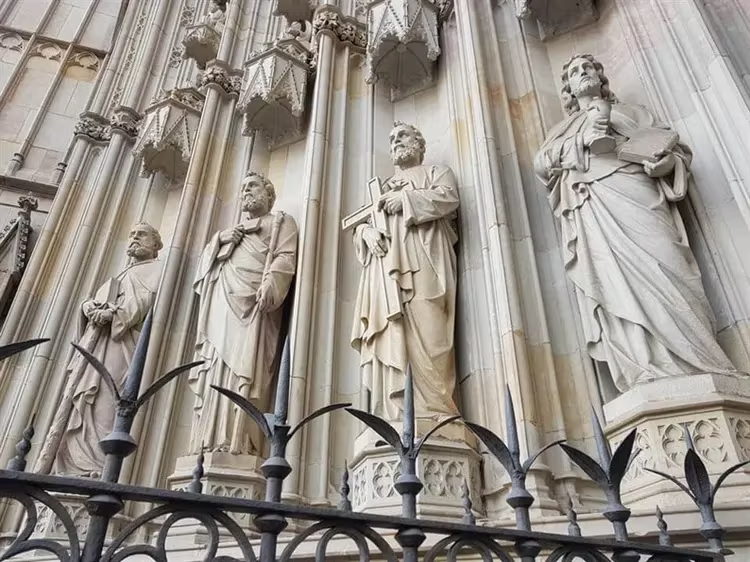
Neo-Gothic was chosen as the main architectural style of the building. Externally, the building is made strictly, without excessive decor. Supports, sculptures, glass stained-glass windows are intended for decoration. The building material was marble, which was mined in Montjuy. To enter the territory of the temple, the gates of St. Yves of Brittany (the patron saint of lawyers) were used. They are located at the bottom of one of the towers and face towards Saint Eulalia Square, where the city court building was located in the past.
The surface of the side walls near the gate is decorated with carved bas-reliefs – the figure of a man fighting with animals and the inscription “1298”. The well-known Catalan architect Josep Oriol y Mestres was directly involved in the design of the entrance. In total there are 6 gates leading to the cathedral.
The most famous of them:
Following the example of many Gothic buildings, drains decorated with images of sinister gargoyles were used to drain rainwater from the roof. It was believed that their intimidating appearance would scare away evil forces from the sacred place.
Interior decoration
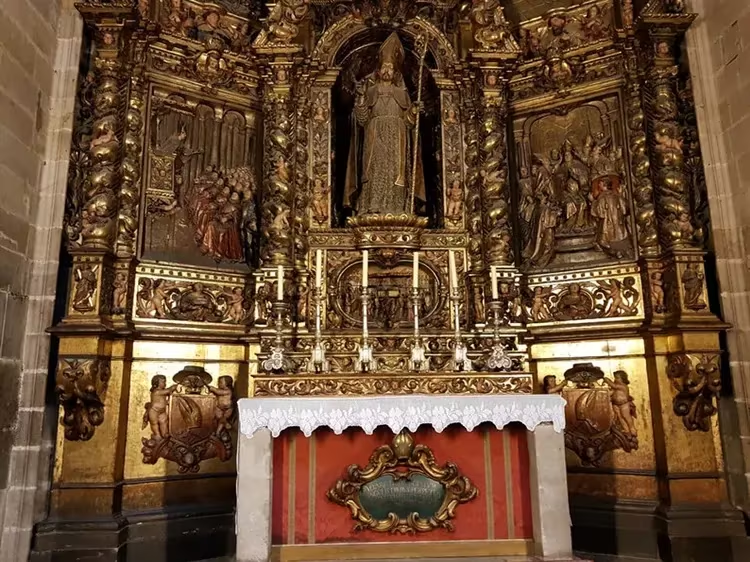
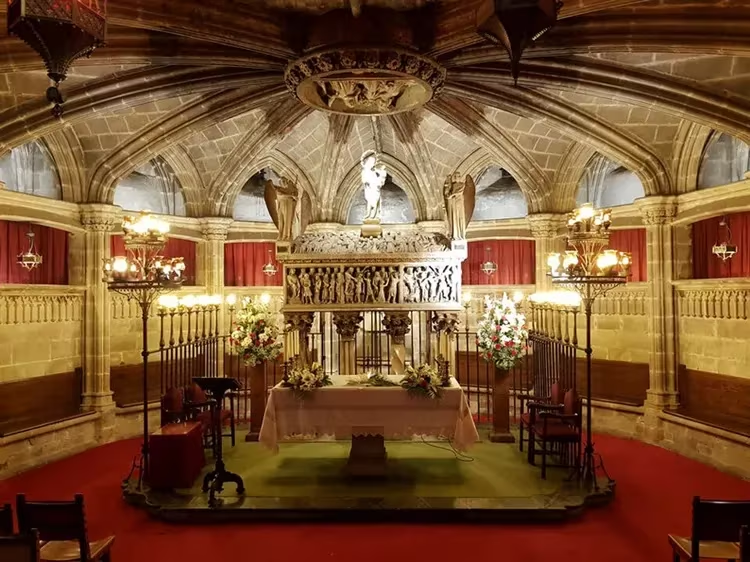
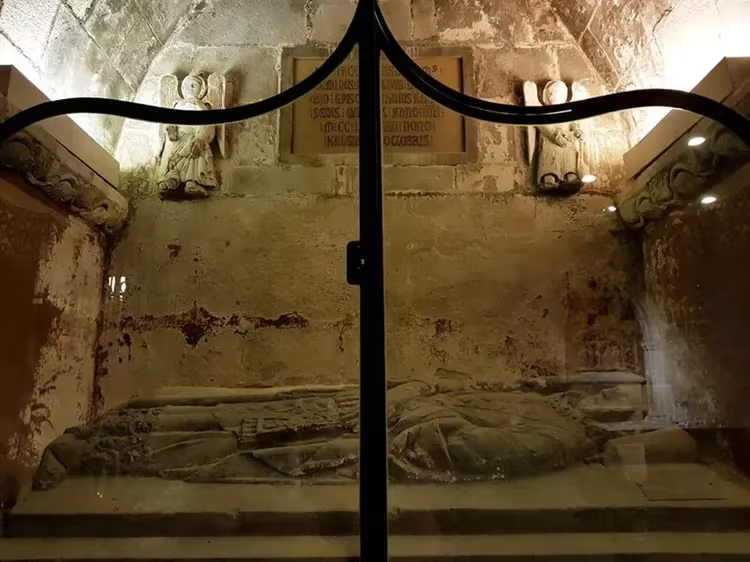
The interior space has a majestic appearance, thanks to the same height of the nave. There are 25 chapels around the perimeter. Visually, the temple looks wider and taller. The effect of increasing the internal area is provided by the upper galleries in the side aisles. The grandiose altar that decorates the cathedral was created in the 14th century. Right below it, in the underground crypt, the remains of the holy martyr Eulalia are preserved. They are enclosed in an alabaster sarcophagus. If you throw a coin into the slot, the backlight is lit, which provides a solemn look to the opening picture.
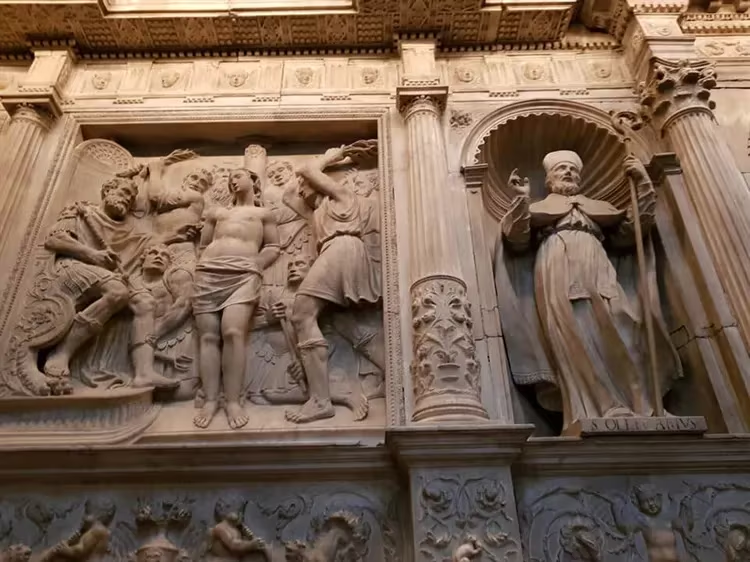
Next to the main shrine, tombstones were erected over the graves of Count Ramon Berenguer I and his wife Almodis. Opposite them is the church treasury. It contains many valuable artifacts. The most ancient date back to the 15th century. In the choirs of the building, a meeting of the knights of the Order of the Golden Fleece, established by Emperor Charles V, was held. Armchairs equipped with drawings of knightly coats of arms remained in memory of the significant event. The choirs are decorated with bas-reliefs carved from marble. They show episodes from the life of the patron saint of Barcelona.
Chapels were built next to the choirs, where in the 19th century. separate altars were erected. An elevator takes visitors directly from the chapels to the roof of the basilica. Equipped with an observation deck gives you the opportunity to enjoy the panorama of the city. The beauty and majesty of the structure is emphasized by stained-glass windows in the windows. They appeared gradually, starting from the 14th to the 20th centuries. All compositions are created according to a single plan: in the center – the image of a saint, in two side parts – shields with images of angels, cities, geometric figures and other things.
Samples of Catalan art and ancient artifacts can be seen in the rooms of the chapels. Each of them has its own gothic style altar. Altar painting was created by recognized masters of medieval painting: Gabriel Alemany, Luis Borrassa, Bernat Martorell and others. The treasury of the cathedral contains paintings by Bartolome Bermejo, Jaume Gugueta, Pere Desorrenta. An important relic revered by the inhabitants of Barcelona and Catalonia is the throne of King Martin (mid-15th century). It is made of an alloy of precious metals – gold and silver, and decorated with gems.
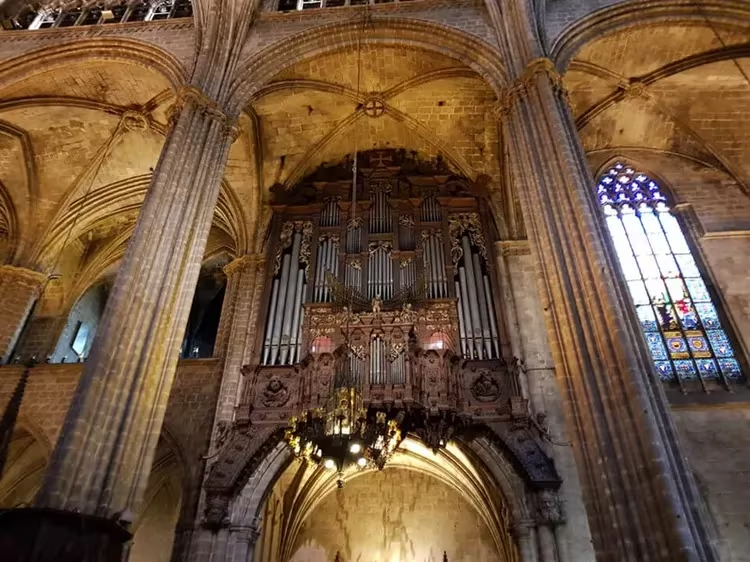
The pride of the Church of St. Eulalia is an old organ. It is located in the room of the left belfry. You can hear the sound of a musical instrument during special programs dedicated to organ music. The schedule of events is constantly updated on the official website of the cathedral.
Patio
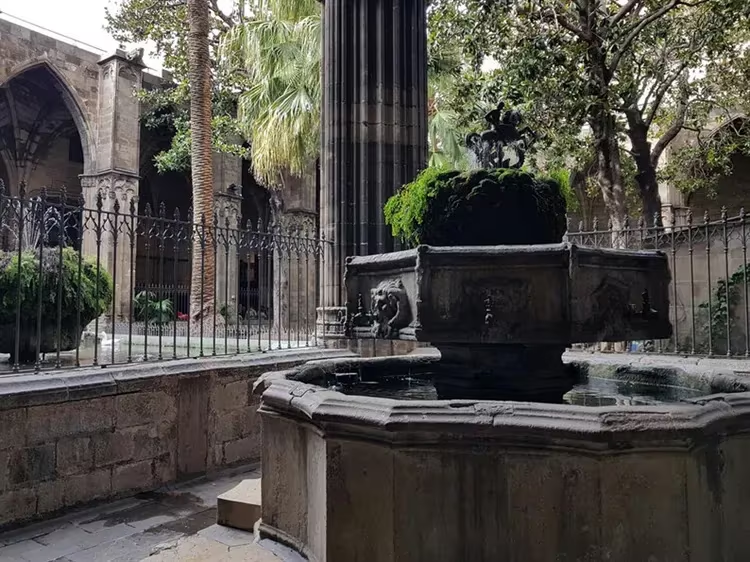
An important part of the architectural ensemble of the Cathedral is the courtyard, otherwise called the cloister. Passages lead to it from the gates of Mercy and St. Eulalia, as well as the entrance from the side of the basilica. The layout of the courtyard and its decoration was carried out by the architect Andres Eskuder. Sculptural images were created with the participation of Juan Claperos.
The central place in the cloister is given to a small pond, where, according to a centuries-old tradition, 13 snow-white geese live. Birds symbolize the innocence and purity of the patron saint of the temple, and their number corresponds to the number of years the girl has lived. Magnolias and palm trees are planted around the pond, giving the corner a natural look. To decorate the cloister, a fountain was created depicting the figure of St. George on horseback.
The architectural structures included in the general temple complex include:
Working hours
Access to the Cathedral is open daily. The exact time of visits for religious and educational purposes is indicated in the table:
Time Mon.-Fri. Sat. Sun.
| Time | Mon.-Fri. | Sat. | Sun. |
| prayer hours | 8:30 -12:30 and 17:45 -19:30 | 8:30 12:30 and 17:15-20:00 | 8:30 -13:45 and 17:15-20:00 |
| excursion hours | 12:30 -19:45 | 12:30 -17:30 | 14:00 -17:30 |
The terrace can be accessed during a guided tour from Monday to Saturday (10:00 – 12:00).
During the service, the entrance to the cathedral and the monastery is free. A visit by tourists is provided in the 2nd half of the day. There is a fee of 7 € for the inspection.
Where is it located and how to get there
The Cathedral is located on Saint Eulalia Square (de la Seu). Tourists can get into it using above-ground or underground transport: