
Mount Tibidabo and the Temple of the Sacred Heart in Barcelona – history, photos, descriptions, prices 2021, how to get there, map
Mount Tibidabo and the Temple of the Sacred Heart in Barcelona (Temple del Sagrat Cor de Jesús), crowned with the figure of Christ, is one of the most visited attractions in the capital of Catalonia. The top of the mountain is the highest point of the city (512 m), offering a stunning panorama. And although it is located far from tourist routes, the flow of tourists does not weaken at any time of the year.
Construction history
The place chosen for construction is beautiful and symbolic. The very name “Tibidabo” contains the gospel story about the temptation of the God-man by the devil, who placed him on a certain high mountain and, showing the beauty lying below, offered to give all the kingdoms of the world for worship (Matt. 4: 8). Literally in the Gospel there are the words: “I will give you”, which in translation into Latin sounds like “tibi dabo”.
It is possible that the splendor of the view from above led the people of Barcelona to think about this episode and they decided to give the mountain such an unusual name. Therefore, it became quite natural to build a temple on its top, dedicated to Jesus Christ, who conquered temptation.
The forerunner of the cathedral was a small chapel built in 1886 at the expense of a pious old woman: the widow Dorothea de Chopitea. After some time, the Council of Catholic Knights, consisting of 12 wealthy noble citizens, bought the mountain. They decided to build a majestic temple on the highest point of the city. The project was commissioned to the talented architect Enrico Sanier.
Construction began in 1902 and lasted 59 years. The architect did not manage to see his creation; after his death, the construction of the cathedral was completed by his son Josep-Maria Sanier. In October 1961, the church was consecrated and given the status of a minor basilica. And the small chapel from which it began has been preserved and still stands to the right of the entrance to the crypt.
origin of name
The cult of veneration of the Heart of Christ began to spread in Catholicism from the 17th century. The reason was the vision of one French nun – Marguerite Alakok, in which Jesus appeared to her and wished that his heart be revered. At first, the official church was distrustful of the revelations of the nun, but in 1856 the Feast of the Sacred Heart of Jesus was nevertheless introduced into the liturgical calendar by Pope Pius IX and its celebration was scheduled for the 12th day after the Trinity.
The heart of Christ is a symbol of his boundless love for people. Temples and celebrations dedicated to him signify the gratitude of believers for this love, help, and protection. The Barcelona Temple is not the only building dedicated to the Sacred Heart. They are distributed all over the world, the most famous being the Sacré-Coeur Basilica in Paris. There are also two Catholic churches dedicated to this in Russia: in Samara and St. Petersburg.
Outdoor decoration
In addition to the main name, the cathedral has another one: “The Expiatory Temple of the Heart of Christ.” It was the idea of atonement for sins that formed the basis of the architectural solution.
The building consists of three parts:
All three parts are an indivisible whole, and at the same time, each of them has its own meaning and its corresponding incarnation.
Crypt
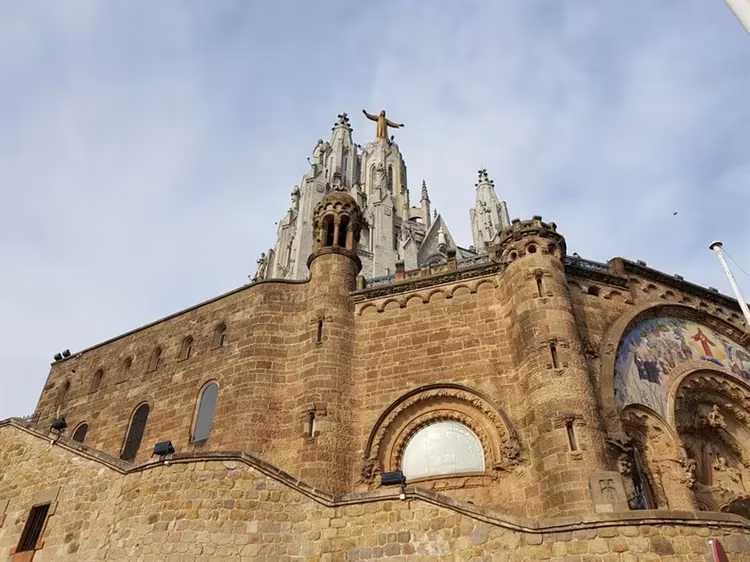
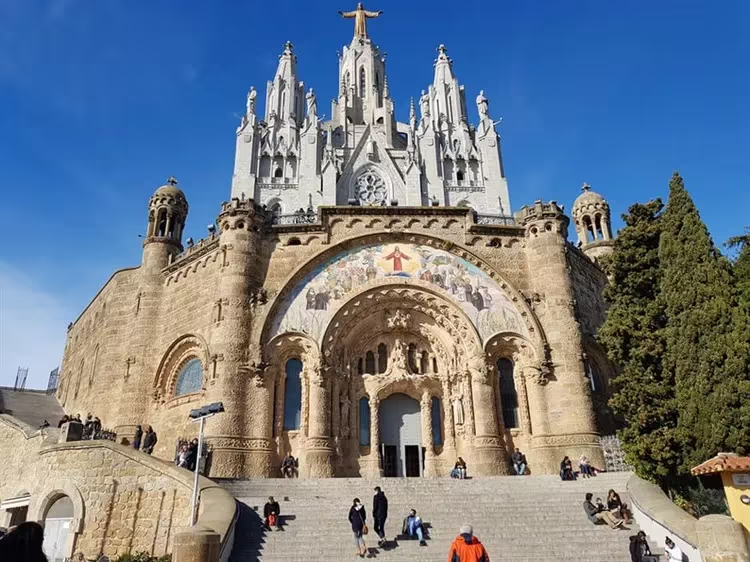
The crypt – the ground part of the temple, personifying the fall, is made of dark brown stone. It was built in 1911 in the Neo-Byzantine style with elements of Gothic, Classicism and Art Nouveau. It is a powerful squat structure with a horizontal arrangement and a flat roof.
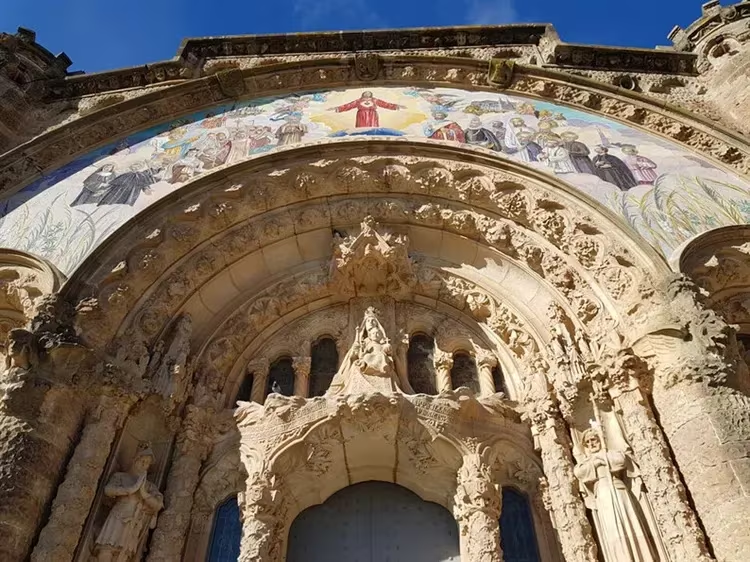
Above the entrance is the figure of the Mother of God sitting on the throne with the baby, the patroness of Barcelona. On both sides of the entrance there are statues of two other patrons: Catalonia – St. George, Spain – St. Santiago (Jacob). The entrance arch is richly decorated with stucco, on top of which is a semicircular fresco depicting the glorification of Jesus.
main temple
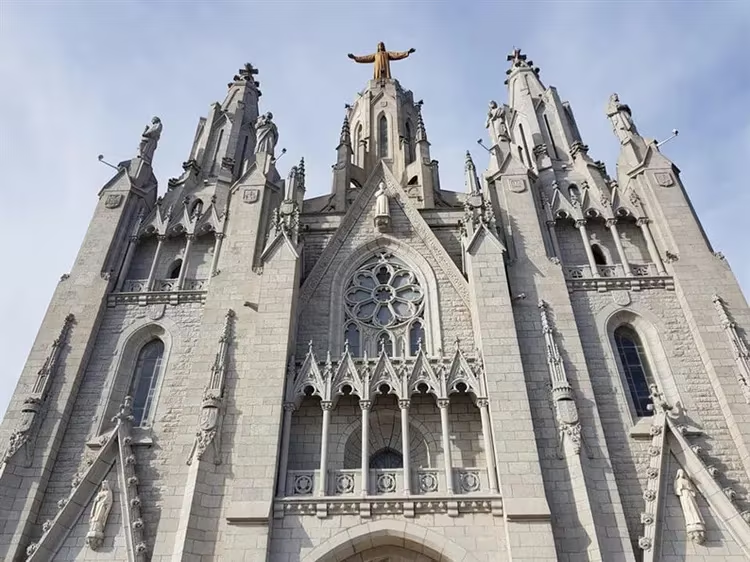
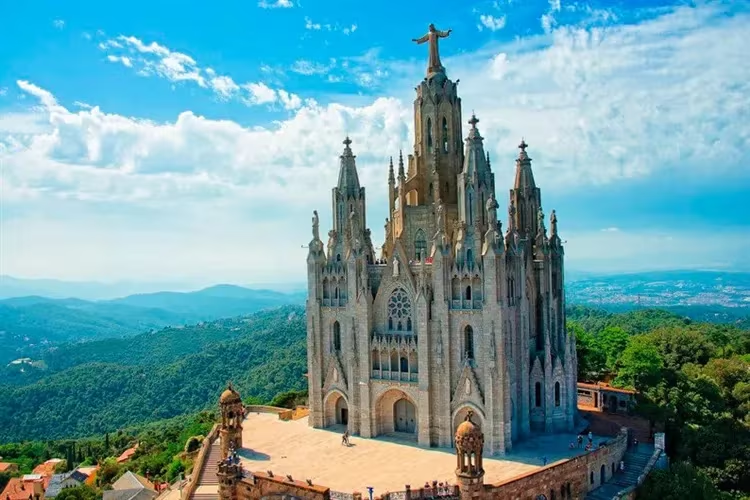
On the roof of the crypt rises the main temple of light stone, symbolizing the spiritual growth of a person: awareness of one's sins and repentance. Two wide circular staircases lead to it. It was built in the Gothic style between 1915 and 1952.
The symbols of the evangelists are depicted on the columns above the entrance: calf, lion, eagle, angel. The central soaring tower is surrounded by four smaller ones. They have sculptures of 12 apostles. Grace and lightness of the building are given by Gothic elements: lancet arches, spiers, stucco molding, narrow stained-glass windows and rosettes.
Jesus statue
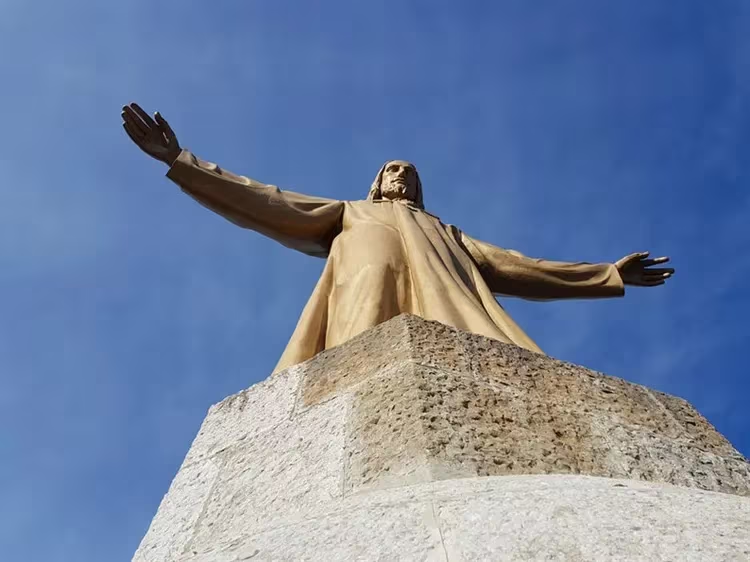
On the central tower of the main temple stands a seven-meter statue of Jesus Christ with outstretched arms, as if hovering under the clouds. By design, he personifies the all-encompassing love of God for people, with their vices, passions, giving forgiveness and blessing. He is the link between earthly and heavenly.
Interior decoration
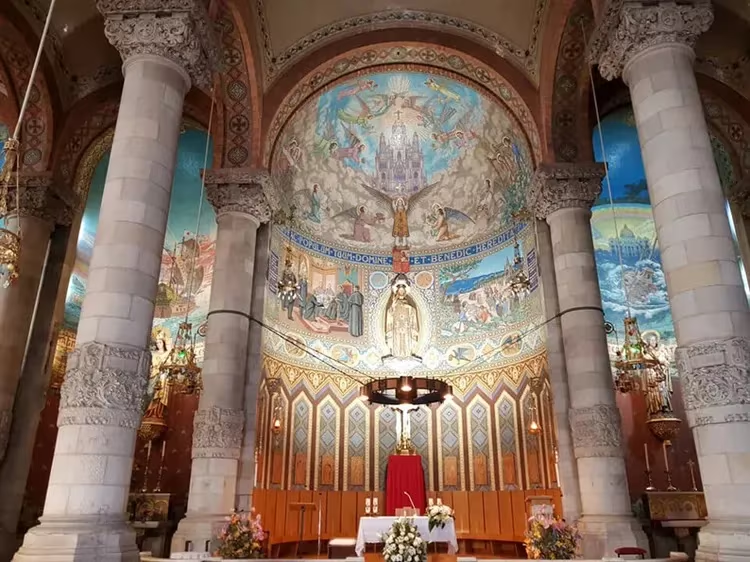
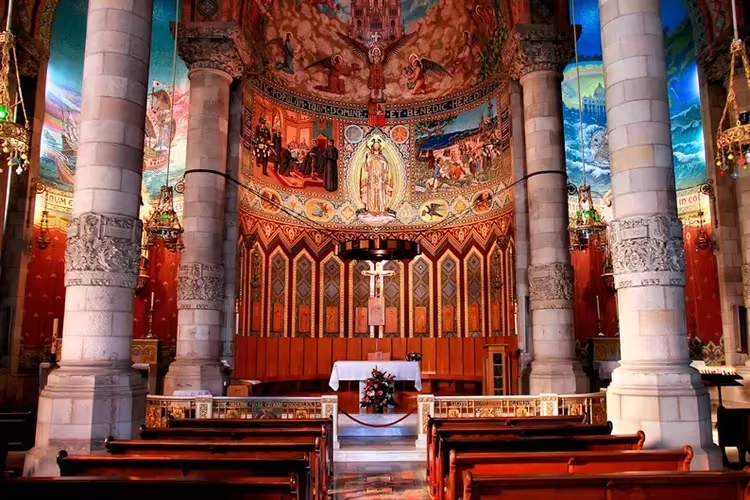
The interior decoration is solemn and simple. The crypt consists of five naves, separated by powerful columns. Each nave has its own altar dedicated to different saints. The walls and vaults are decorated with alabaster bas-reliefs, painted with frescoes, lined with colored mosaics with scenes on Christian and historical themes. Light breaks through the windows and stained-glass windows, filling the crypt with multi-colored highlights.
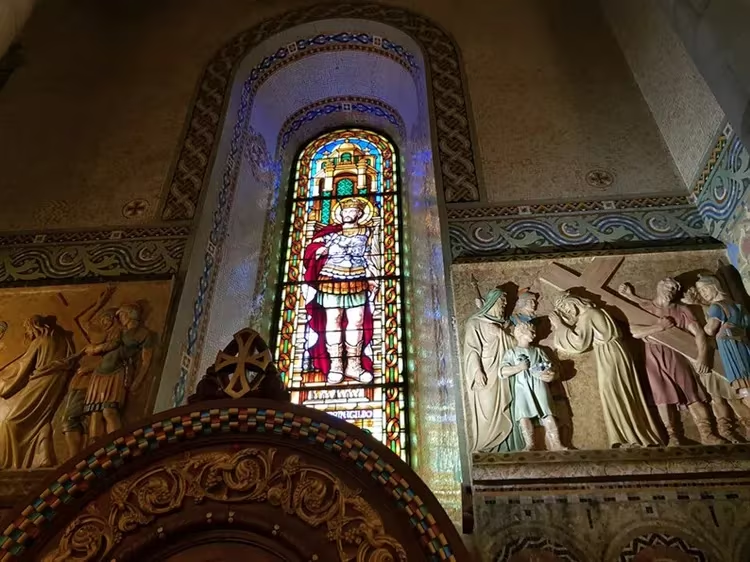
The spacious and bright main temple with a high vault is divided into three naves. The wide central nave has an altar with a wooden crucifix. The stained-glass windows above the altar depict the Virgin Mary in the representation of different nations of the Catholic faith: the Virgin of Guadalupe (Mexico), the Virgin of Anipolo (Philippines), the Virgin of Lujan (Argentina), etc. Eight domed stained-glass windows and stained-glass windows of the side aisles are dedicated to episodes from the life of Jesus Christ, as well Saints: John the Baptist, Anthony, Javier, Pope Leo XIII, Pius XI. There is a stained glass window with the words “I will give you”.
Observation deck
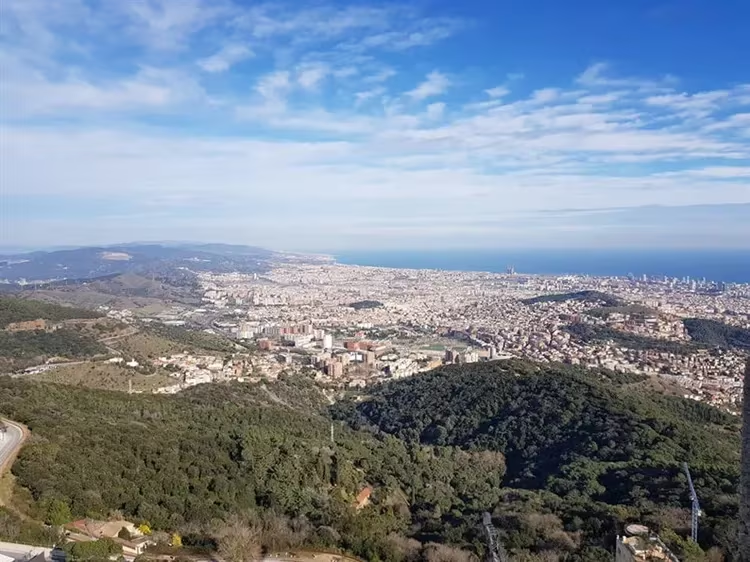
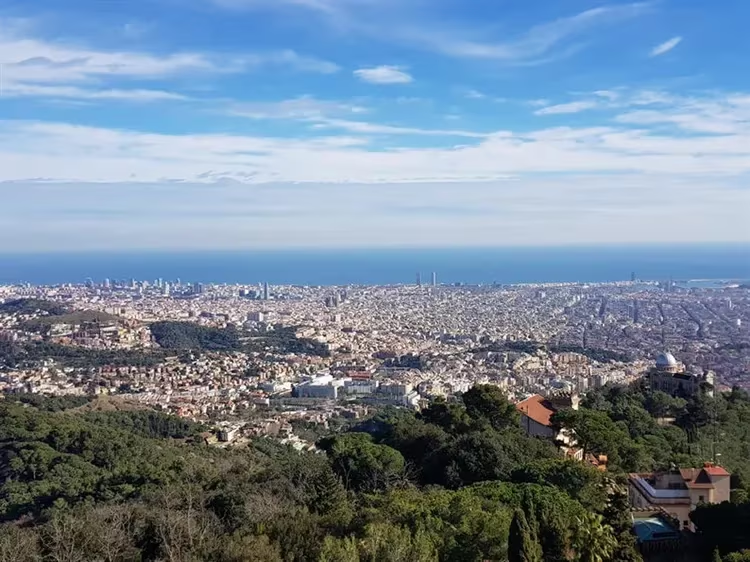
The panorama from Mount Tibidabo is one of the most picturesque in the capital of Catalonia. Viewing platforms are located at different levels of the Temple of the Sacred Heart. There are three in total. To the bottom, widest platform, raises the elevator. On it you can freely take pictures, move around, viewing the city and its surroundings in all directions at 360º. Among the barely distinguishable quarters and streets, monumental buildings loom: the Sagrada Familia temple, the 144-meter Agbar skyscraper, the Fabra observatory, the 288-meter Torre de Collserola TV tower.
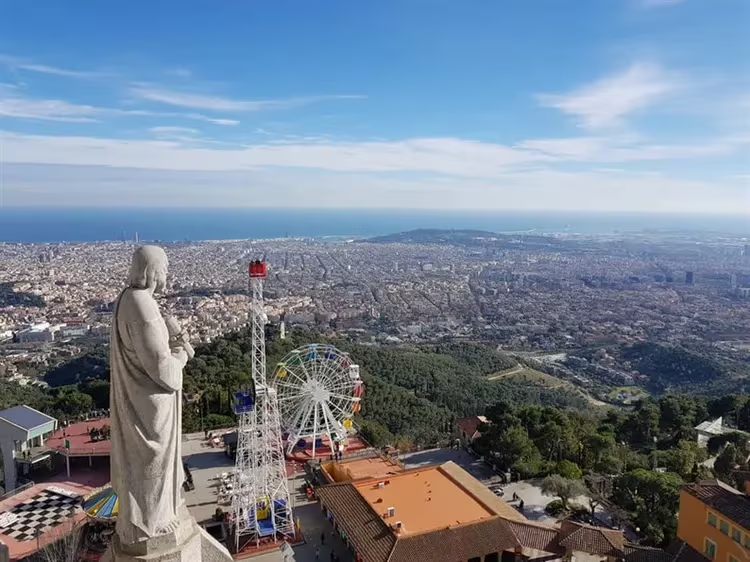
Above, to the middle level, climb the stairs. This is a platform at an altitude of 539 m, where there are sculptures of 12 apostles. If the weather is clear, then from here the view extends to the surrounding area up to 70 km. The highest platform – 568 m above sea level – is located at the feet of the statue of Christ. They climb up a narrow steep staircase and admire the panorama in its entirety.
In addition to the view of the surroundings on the observation platforms, you can see many elements of the temple in great detail: bas-reliefs, statues, spiers, stucco.
Amusement park
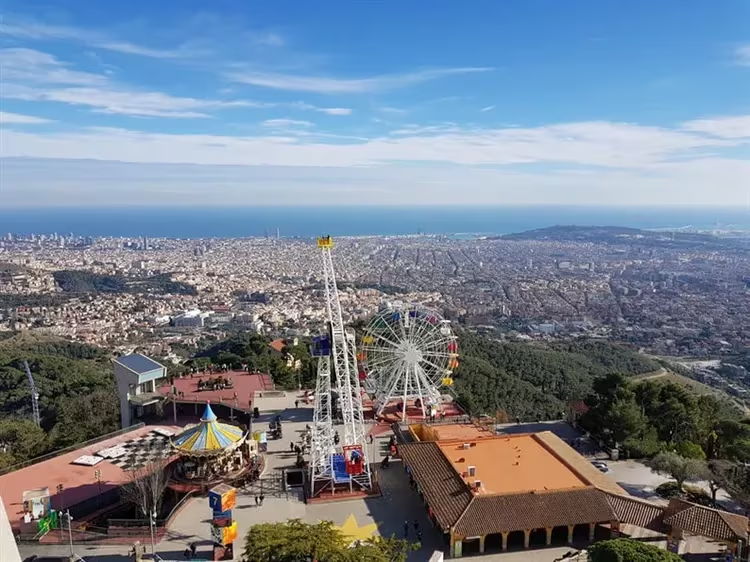
A visit to an amusement park is a touch of history. It has been 116 years since he started working. Its opening took place on October 29, 1901. Many attractions, despite the prescription of years, have been preserved, work perfectly and are completely safe.
The park is located a little lower than the cathedral, at an altitude of 500 m above sea level. Rising to it by funicular, it is interesting to observe the mountain slopes covered with greenery and panoramas opening from a height. In front of the entrance to the park is a Ferris wheel and an iconic attraction – an attraction that has been operating since 1928: the red plane Tibidabo.
At the entrance to the park, guests are greeted by cheerful, brightly dressed clowns who will not only entertain, but also help them navigate the park. The entertainment offered is varied. The attraction “Beautiful Lever”, which has been operating since 1921, is popular. It is an impressive metal structure with two cabins that rise in turn to a dizzying height of 50 meters.
An interesting museum of automata with a collection of the world's oldest mechanical dolls of the XIX century. Here you can see a clown playing the mandolin, an amazing orchestra, etc. Since 1905, a room of crooked mirrors has been opened, since 1915 – a children‘s railway.
Working hours
The cathedral is open daily from 7 am to 10 pm. The elevator to the observation deck is open from 11 am to 6 pm. Amusement park – from 12 to 21 hours.
Where is it located and how to get there
The temple is located on top of Mount Tibidabo, 7 km from the center of Barcelona, away from tourist routes. You can get to it yourself in several ways:
- From Plaza Catalunya to the temple every 20 minutes there is a special bus called “Tibibus” (a fusion of the words tibidabo and bus), the journey time is 40 minutes. They are open only on weekdays from April to December from 10:15 to 21 hours. One way fare is €2.95. This method is the easiest, because transplants are not needed.
- On buses No. 15, 22, 58, 73, 75, 126, 131 or metro (L 6, L 7, L 8) get to the Avinguda dei Tibidabo station. Next to the metro station is a blue retro tram stop (“Tramvia Blau”). This cute mode of transport was introduced in 1911 and its appearance has not changed since then. The fare is € 5.5. On it to go to the square. Doctor Andreu, where the funicular stops, then on the old funicular – to the temple. Cost – € 7.7
- By train S1, S2 get to the stop “Peu del Funicular”. From there, take the new funicular to “Valvidrera Superior”, then number 111 to the temple.
In Barcelona we recommend the following hotels: