
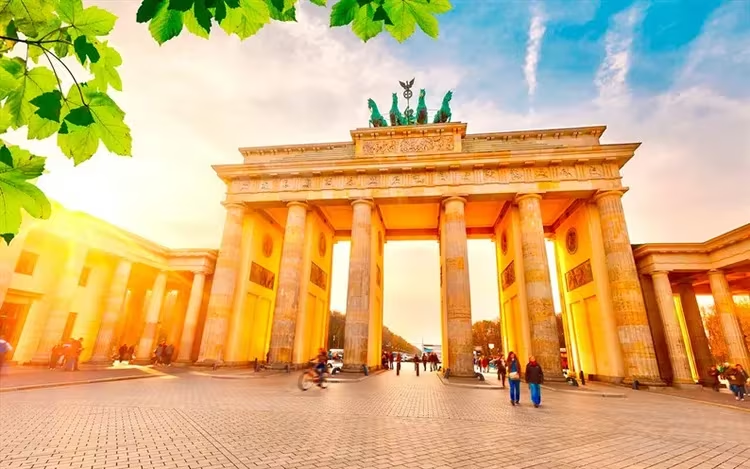
Among the many attractions of the capital of Germany, this architectural monument occupies a special place. Built over 225 years ago, the Brandenburg Gate in Berlin is not only famous for being the only remaining part of the customs fence. The world-famous building, decorated with a quadriga, has become a symbol of the unification of Germany and the fall of the Berlin Wall. No visit to the main German city is complete without a visit to the grandiose arch, the image of which is engraved on coins in denominations of 20 and 50 euro cents.
Construction history
In the 18th century, parts of a protective structure, the customs wall, were still preserved in Berlin. She ringed the city and consisted of 14 passages. Only the Brandenburg Gate (originally called the Peace Gate), built between 1788 and 1791 during the reign of Kaiser Wilhelm Friedrich II, has survived to this day. By his decree, the architect Karl Gotthard Langgans erected a structure – an arch copied from the main memorial entrance of the Athenian Acropolis. The road through it led to Brandenburg – the city that gave its name to the western entrance to the capital.
In 1793, a quadriga designed by the German artist and sculptor Johann Gottfried Schadow was placed on top of the structure. The chariot, driven by the goddess of peace, Eirena, has its own history: in 1806, Napoleon, having conquered Berlin and received the keys to the city, dismantled the quadriga as a sign of his triumph and brought it to France as a trophy.
8 years later, after the defeat of the army of the great Corsican, the chariot solemnly returned to its rightful place, and the goddess, now called Victoria, received an iron cross crowned with a laurel wreath and the sign of Prussian power – an eagle.
Between 1814 and 1919, only the royal dynasty, ambassadors of other states and representatives of the family of General Karl Pfuel were allowed to pass through the central arch. In 1933, at the majestic building, Hitler's supporters greeted their leader with torches, marking the beginning of a dark period in the country's history.
The split of Germany
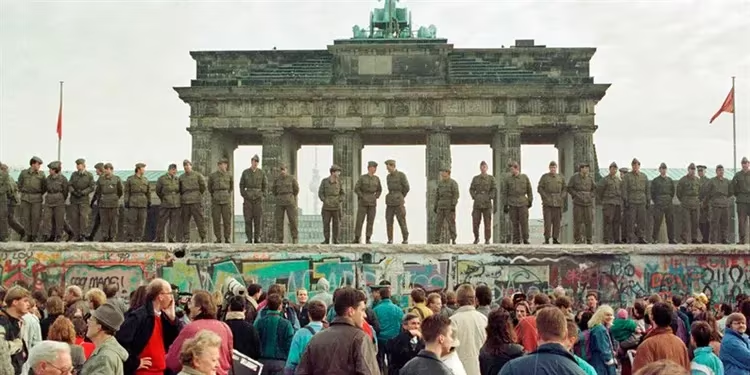
In 1945, the victory banner of the USSR fluttered over the triumphal arch, and in 1957 the flag of the GDR was raised. 4 years later, as a result of negotiations between the Warsaw Pact countries, the construction of the Berlin Wall began – a 44.75 km long defensive structure fortified with earthen ditches, which divided the city into two parts.
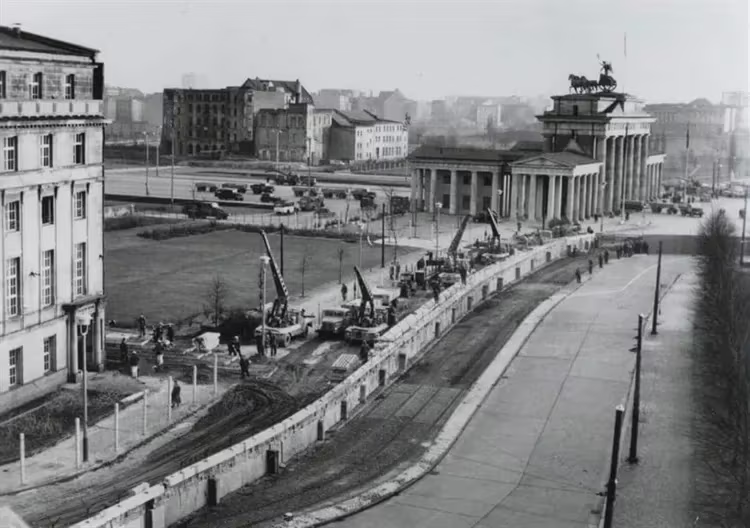
During this tragic time, the Brandenburg Gate was located in a forbidden area. Access to it was allowed only to East German border guards. The stone structure personified the split of the once united country into two states and the separation of families whose members ended up on opposite sides of the border. Its crossing threatened with immediate death. The fall of the wall in December 1989 reopened access to a historical monument that has become a symbol of peace and free Germany.
Description
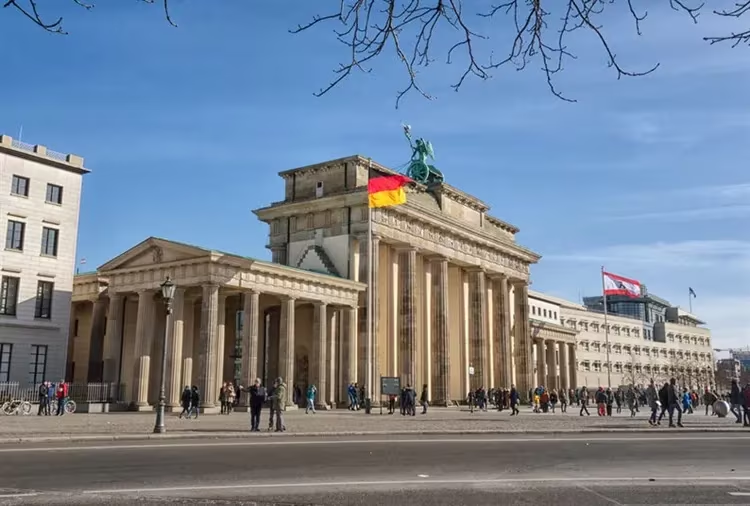
The most famous Berlin landmark is the triumphal arch, located at the intersection of two central districts – Tiergarten and Mitte. On the west side, the Gate is adjacent to the March 18 Square (Platz des 18. Maerz), on the east – Paris Square (Pariser Platz).
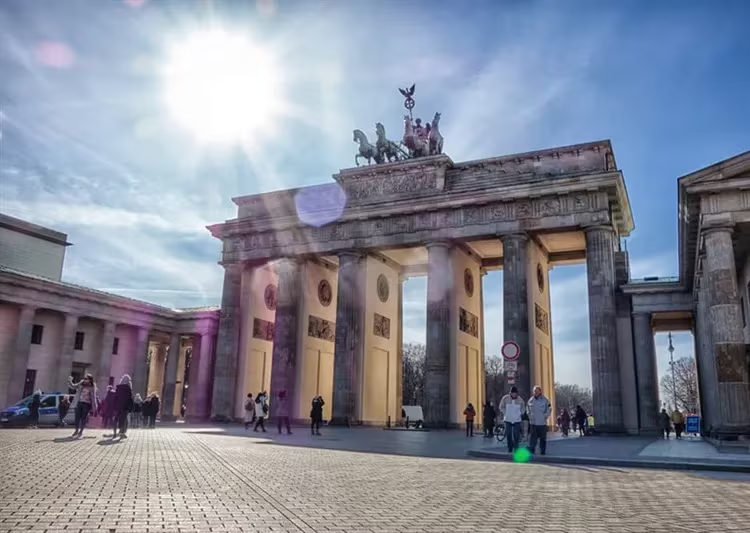
The material for the construction was stone blocks lined with Saxon sandstone. The height of the structure is 26 m, the width is 65.5 m. The structure consists of two rows of columns 11 m thick, placed on six supports, forming five through passages. Initially, buildings for customs and military needs were installed on both sides of the Brandenburg Gate. In 1867/68 they were replaced with open porticos and aligned with the arch.
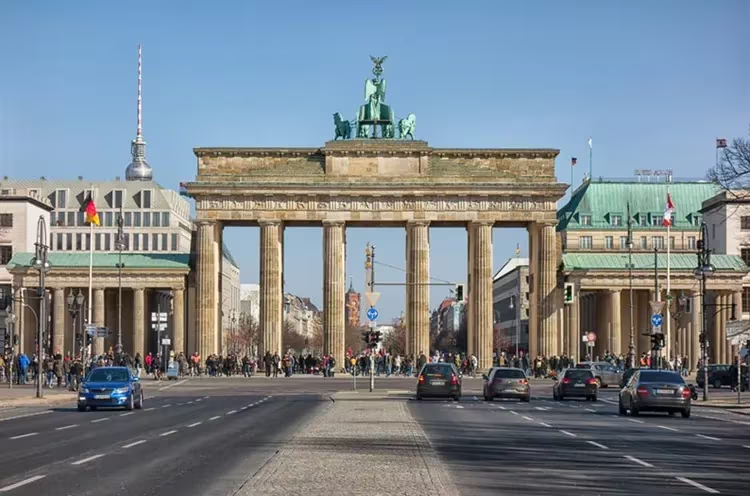
The whole structure is crowned by a six-meter copper quadriga – four horses, controlled by the winged goddess Victoria. In her hands is a staff with the image of a cross, an eagle and laurel leaves. The gaze of the winner is directed to the east. In the northern wing, in the former guardroom, there is the “Hall of Silence”. The purpose of its creation is to remind people of the tragic pages of German history.
The tourist office is located in the southern part, where you will be informed about the fastest and most convenient routes, the repertoire of theaters, concert venues, current events and hotel availability. Opening hours: daily from 9:30 to 18:00.
Artistic value
The construction of the arch marked the beginning of a new era, reflecting the change in the architectural appearance of the city, which until the 18th century was dominated by the baroque. The gate was the first building in the style of German classicism. As a model for it, samples of the architecture of Greek and Roman antiquity were taken.
The imitation of antiquity is visible in the design of the central part of the composition, characterized by six 15-meter Doric relief columns. The diameter of their base is 1.75 m. Structurally, the columns differ from the classical Athenian prototypes in that they are reinforced inside with massive load-bearing masonry.
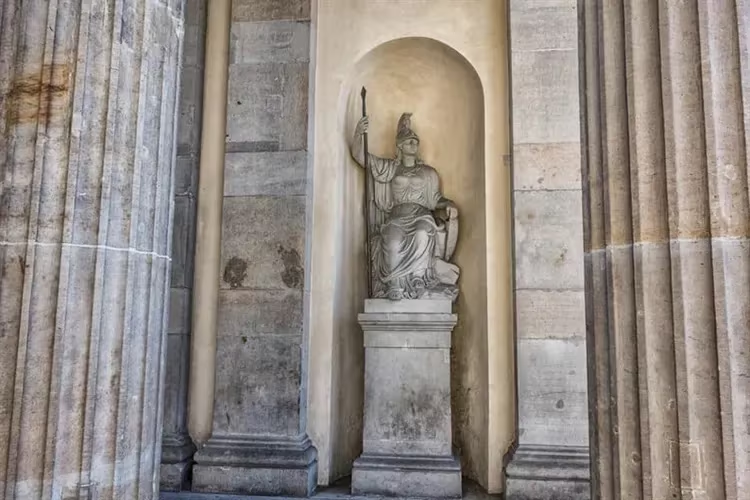
In the niches of the openings there are statues of the militant Mars and Minerva sitting on the throne with a spear. Ceilings, attic and internal walls are decorated with allegorical engravings, illustrated with images of mythical scenes of the exploits of Hercules and wars of the Thessalian Lapith tribe with centaurs. As conceived by the author, Johann Schadov, heroic themes should evoke associations with the reign of the monarch Frederick William II, who turned Prussia into a powerful state.
Monument restoration
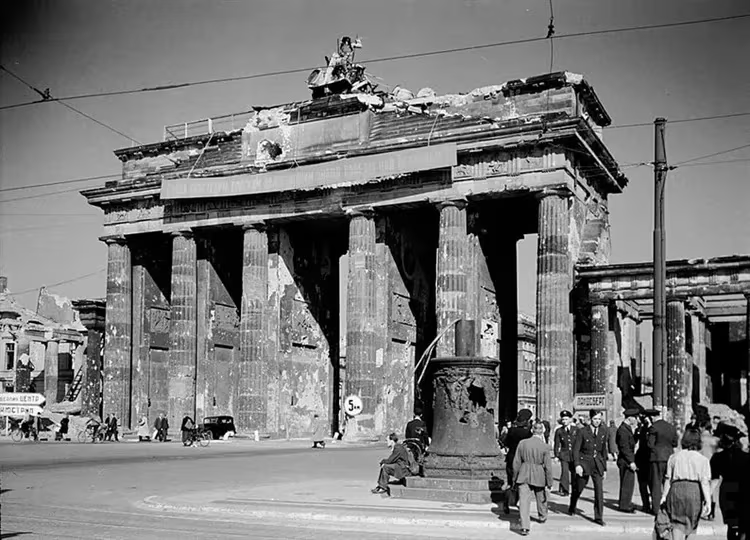
The bombs of the Second World War caused significant damage to the architectural masterpiece. The quadriga suffered the most. Its remains were sent to the warehouse of the West Berlin firm Noack. In 1950, the governments of East and West Germany – although not without friction – agreed on a joint restoration, which was completed only six years later.
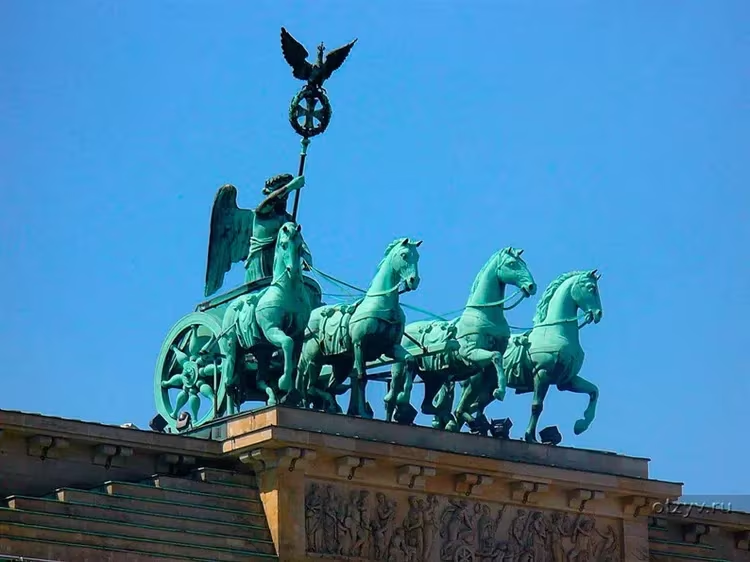
In 1958, the arch was again decorated with a chariot cast from the original casts. The updated quadriga lost an important detail – an iron cross with the image of the enthroned Prussian eagle. The initiators of the removal of these regalia were the authorities of the eastern part of Germany. In their eyes, the cross symbolized the Nazi regime.
The victorious Victoria returned her trophy only after the unification of the country, which took place in 1989. However, the joy of the reunited Germans was so great that on New Year‘s Eve 1989/90 it contributed to the fall of the long-suffering quadriga. And a year later, the historical gates were again closed for restoration. It was carried out by a private fund for the protection of monuments and monuments, spending 4.3 million euros.
The main attention of the restorers focused on strengthening the rigid structures. In addition, with the help of a new laser installation, the blackouts that formed on the western side of the structure were eliminated. On Unity Day, October 3, 2002, the grand opening of the monument took place. The site is now under threat again. The construction of a new subway line passing under the structure caused a crack in one of the columns.
Modern Ensemble
In order to protect the sandstone facade from exhaust gases, in 2002 the Senate of Berlin closed the area adjacent to the Brandenburg Gate to traffic. The Paris Square, which has the shape of a square, has also been turned into a pedestrian zone. At present, the triumphal arch and the newly built nearby buildings form a single ensemble.
To the right and left of the Gate are the symmetrical houses of Liebermann and Sommer, built on the model of completely destroyed buildings created by the Prussian architect Friedrich Stüler. The classic style of the lost buildings is also copied by one of the most luxurious hotels in Germany – Adlon.
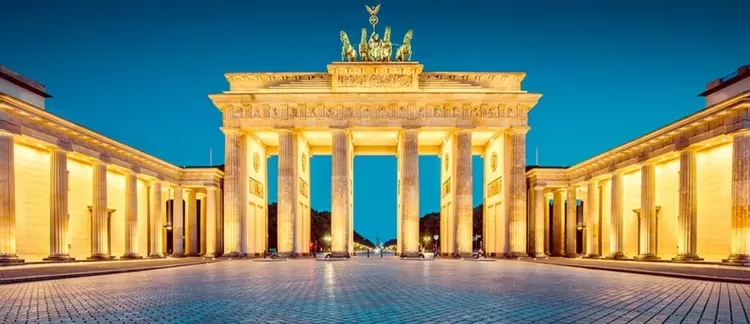
On the south side, next to the hotel, you can see the glass facade of the Academy of Arts and the branch of the Dresdner Bank, the author of the building of which is the outstanding architect of our time, the American Frank Gehry. The ensemble closes the US Embassy built in 2008. In the north, the Kennedy Museum and the French Embassy are adjacent to the arch. Two twin fountains adorn Paris Square.
Brandenburg Gate today
Now the famous landmark is not only an obligatory item in the travel program of travelers. Hundreds of thousands of residents and guests of the German capital gather here several times a year. Their goal is to participate in major events such as public holidays, sporting events, New Year's Eve and free galas.
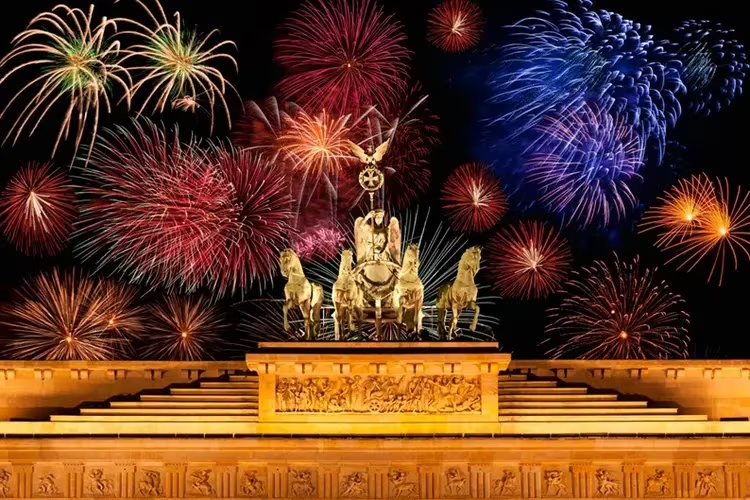
The New Year's Eve Party is an annual grand performance starting on the morning of December 31st. Famous musical groups perform on the stage in front of the historical monument. After 9 pm, there is nowhere for an apple to fall – the street from the Victory Column to the Russian Embassy, 2.3 km long, is filled with people. Exactly at midnight, the sky over Berlin is illuminated by millions of multi-colored lights of the world-famous fireworks.
Berlin marathon. Traditionally, a marathon is held in the capital of Germany on the last weekend of September. More than 40,000 people take part in it, including not only eminent athletes from 120 countries, but also all runners. The finish line of the distance, which is 42 km, is located at the Brandenburg Gate.
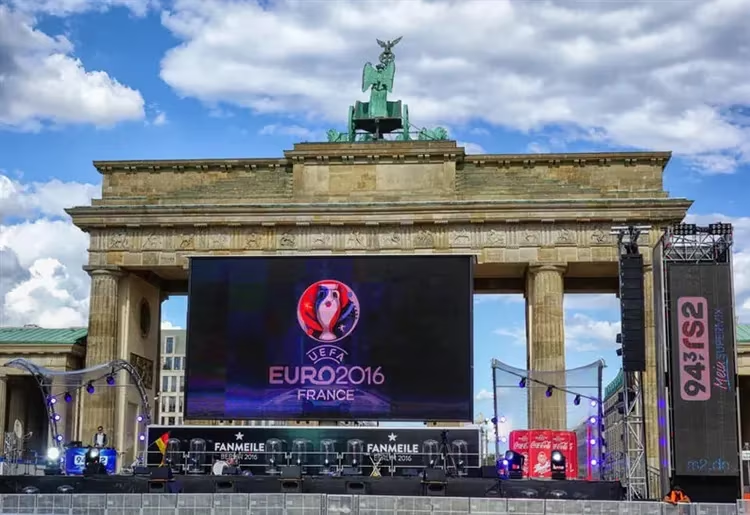
The Fan Mile is Germany's largest gathering place for football fans. During the World and European Championships, the area in front of the stone arch is transformed. A screen of 80 m2 is installed on March 18 Square. Thanks to six more huge monitors, exposed for two kilometers along 17 June Street, everyone can watch the matches and cheer for the national team.
Where is the Brandenburg Gate and how to get to it
The famous attraction is located in the city center near the embankment of the river Spree.
Getting to it using public transport will not be difficult:
Exact address: Pariser Platz, 10117 Berlin. Navigator coordinates: 52°30'57.0″N 13°22'40.8″E.
In Berlin, we recommend the following hotels: