

🏝️ Bora Bora for digital nomads: work in paradise
Behind the simple and memorable name of Bora Bora lies an interesting history and amazing nature. A small territory, beautiful landscapes and excellent infrastructure – here you can not only have a pleasant vacation, but also stay longer. The island is a great haven for any digital nomad looking for a place with comfortable climate and a tranquil environment.
Bora Bora is one of the Leeward Islands of the Society Islands archipelago in French Polynesia in the Pacific Ocean. Such a complex and unusual system of statehood can be explained very simply. Back in the 18th century, French navigators reached the group of islands that includes Bora Bora and declared them the property of France.
Bora Bora is an atoll, that is, an island surrounded by a coral reef. Its central landmass is quite small – 9 by 5 kilometers at its widest point. The local population (about 9 thousand people) lives only on the coast, almost half of them in Vaitape.
Climate in Bora Bora
The average air temperature is 27 °C, the water is only a couple of degrees cooler. The island is sunny almost all year round, but the heat is less felt thanks to the ocean breeze. From March to November there is a dry season – there is practically no precipitation. From December to February it is humid. The abundance of rain is compensated by the flowering of plants, which turn the island into a real Garden of Eden.
Safety in Bora Bora
The basis of the economy of Bora Bora is tourism; all conditions have been created here for foreigners and the local authorities are especially careful about security .
There are no aggressive sellers or beggars on the island. The shops operate legally. Price tags with final amounts are immediately indicated everywhere, and tipping is completely prohibited. Of course, thefts or assaults do occur in local communities, but not more often than in other small towns.
Follow the simplest safety rules – carry a bag with a wallet in front, do not show large amounts of cash, keep passports and documents with you. You need to be most careful at the free ferry disembarkation point, at restaurants on the beach and while shopping.
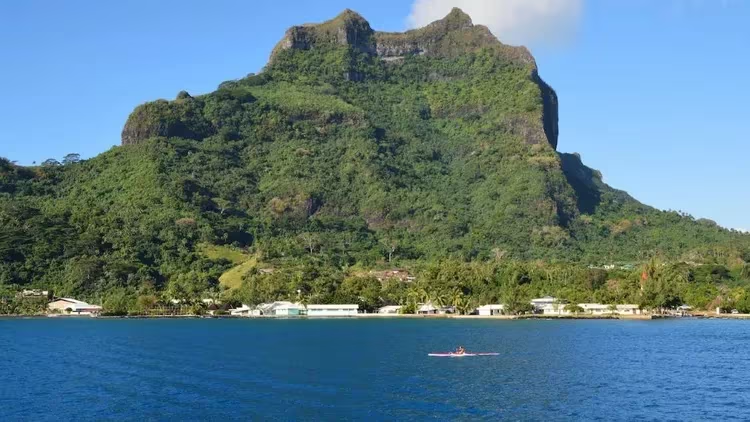
But the risk of suffering from natural disasters is quite high, but not everything is so bad. Hurricanes and cyclones occur seasonally, and tsunamis occur when earthquakes occur in Chile or Samoa. Tourists first need to study the warning system and learn how to respond to alerts from local authorities. The main thing is to immediately go to higher ground after receiving information about a tsunami.
Another surprise is the high probability of being harmed by a falling coconut. One such fruit weighs about 2.5 kg. A blow from the height of a tree can cause serious brain injury, so it is better not to stand under coconut trees during the ripening period.
Visa to Bora Bora
Obtaining a visa to live in Bora Bora is not the easiest thing and involves numerous bureaucratic delays. The island is designated as an “overseas territory of France” and a French Polynesia visa is required to legally stay there. For this you need to contact the Department at the French Embassy. Or you can enter with a valid multiple-entry Schengen visa issued by the French consulates for a period of more than 1 year.
Accommodation in Bora Bora
Resorts located on the island are considered very expensive and luxurious. Jennifer Aniston, Nicole Kidman, Justin Bieber, Kim Kardashian have been here. A separate villa in such a hotel will cost from $400 to $2000 per night, but you can find cheaper ones. In addition, there are several good guesthouses on the island. One night there will cost about $100.
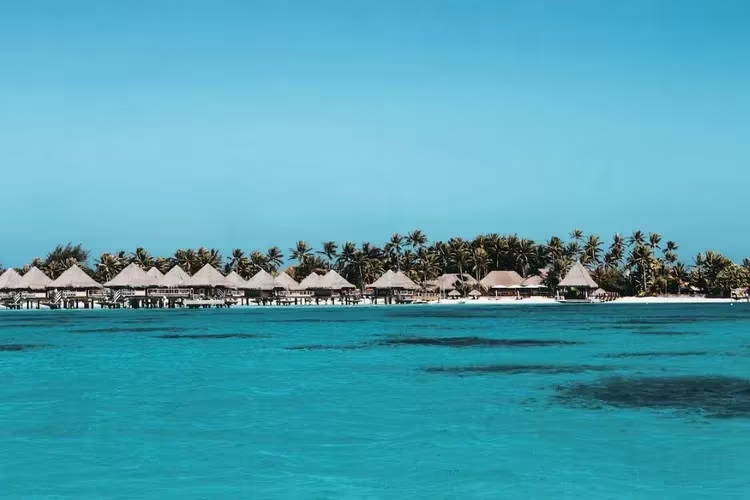
You can find long-term housing on AirBnb, but there are not many good options. Most often they offer small studio houses that combine bedroom, living room and kitchen areas. Sometimes the first floor is completely rented out to one guest, and tourists are accommodated in separate rooms on the second. The cost of such a studio per month on average ranges from $3,000 to $5,000.
Staying in a separate villa will provide greater comfort. Most are designed for a family of up to 6 people – 2 bedrooms, 2 bathrooms, living room and kitchen. There is often a swimming pool on site. The cost of renting a separate villa per month is from $20,000 to $50,000. The amount depends on the location of the house, its size and renovation.
Transport
Let's start with the fact that Bora Bora itself is quite difficult to get to. There are direct flights to the islands of French Polynesia from France, the USA and Japan. They fly to Tahiti. From there it is an hour to the island by boat or plane on local airlines.
There is practically no public transport on the island. There is one regular bus on the ring road around Bora Bora. Locals get around on bicycles, mopeds or electric cars – you can rent them. There are taxis on the island, but they are very expensive.
Internet and communications
Mobile communications and Internet in French Polynesia are provided by VINI – there are no quality problems. In their official stores on the island you can purchase SIM cards with a mobile Internet package. 20 GB per month costs $13, 50 GB – $30, 90 GB – $45. If the selected quantity is not enough, increases of 8 GB, 20 GB and 50 GB are available. It will cost $9, $18 and $45 respectively.
Nutrition
Bora Bora has a unique cuisine. Tourists should definitely try seafood dishes, which are prepared in a very varied way. Desserts are made mainly from coconuts and fruits. Locals often buy food prepared in food trucks. They are installed in the most crowded places.
Restaurants
More refined options are offered by restaurants located within the resorts. The Lagoon at the Regis Bora Bora hotel stands out for its quality and luxurious furnishings. The menu includes French and Polynesian cuisine. Another famous restaurant, Bora Bora Yacht Club, operates at the yacht club and serves local dishes.
But the center of attraction for all travelers was the Bloody Mary fish restaurant, which has been operating for 44 years. Celebrities are often seen here, and Marlon Brando, Jane Fonda and Diana Ross have all visited in the past. Numerous plaques with photos on the walls testify to famous guests.
In the most prestigious places it is easy to leave $1000 for dinner, and in local establishments, a simpler dinner for one person will cost on average from $100 to $200.
Products
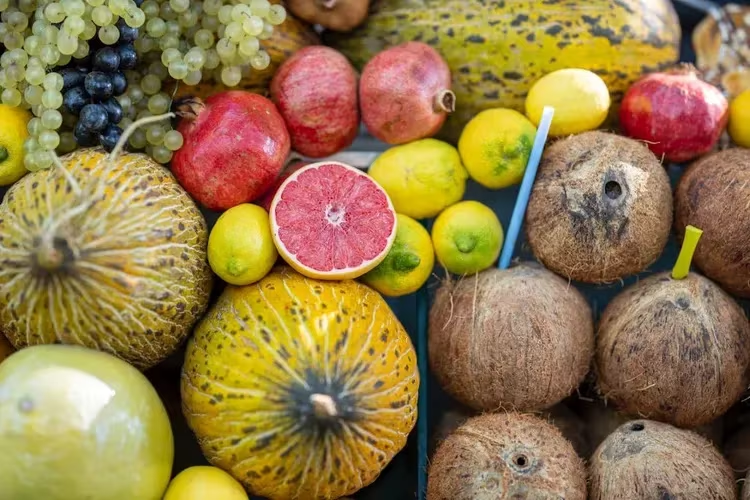
If you like to cook at home, there are supermarkets and small shops run by local residents at your service. Prices for some products that are considered necessary for the population are regulated by the state. The approximate cost of some: 1 kg of flour – $1.5, canned fish – $1, sunflower oil – $2, sugar – $1.2, a package of tea – $1.5, a can of coffee – $4, crackers – $1. 1 kg of the most common cereals costs $2 on average.
Fresh vegetables are a little more expensive – for example, for 1 kg of eggplants, turnips, carrots, cucumbers, cabbage, potatoes you need to pay from $3 to $5. The high cost of fruit is surprising: 1 kg of bananas, lemons, watermelons, apples with tart starts from $3. Prices for local dairy products are also quite high: 1 liter of milk – from $3, 1 kg of cheese – $10, yoghurts – from $2 per package. For 1 kg of chicken they ask from $3 to $5, beef is more expensive – from $13, the simplest sausage – from $8. A bottle of spirits starts at $40, wine starts at $20, and a can of beer costs about $3.
Medicine
The islands of French Polynesia have a high level of medical services and quality of services. The largest hospital is located in Tahiti. It provides almost every possible type of healthcare. In emergency cases, patients are transported to it using local airline flights or military helicopters.
It is best to take out international medical insurance in advance – it will come in handy when you get to the clinic. In Bora Bora itself there are several medical centers that both locals and tourists visit. In addition, many hotels have English-speaking doctors.
Holidays in Bora Bora
The most popular public beach in the center of the island is Matira Point. But most of the coastline belongs to individual resorts. Besides enjoying the sun on the shore, don't miss the opportunity to explore the ocean.
The atoll lagoon offers amazing diving and snorkeling opportunities. In addition, holidays on yachts are very common. There are interesting options on the island itself. You can explore the historical buildings in Vaitape, and in the town of Outuorahu it is worth visiting the Maritime Museum.
Fans of active recreation will enjoy climbing to the peaks of the island: Pahia and Otemanu. It will give you an excellent view of orchards, tropical vegetation, as well as ancient grottoes and sites with examples of rock art.
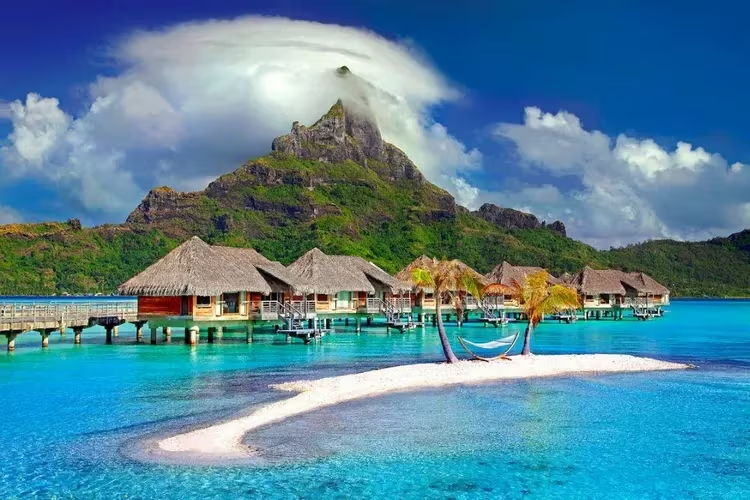
Living in Bora Bora is not for everyone. The downside is expensive housing and food. The advantages are a pleasant climate, unique nature and distance from civilization. Which of these is more important, everyone decides for themselves.