
Ossuary in Kutná Hora – Tips Before You Go
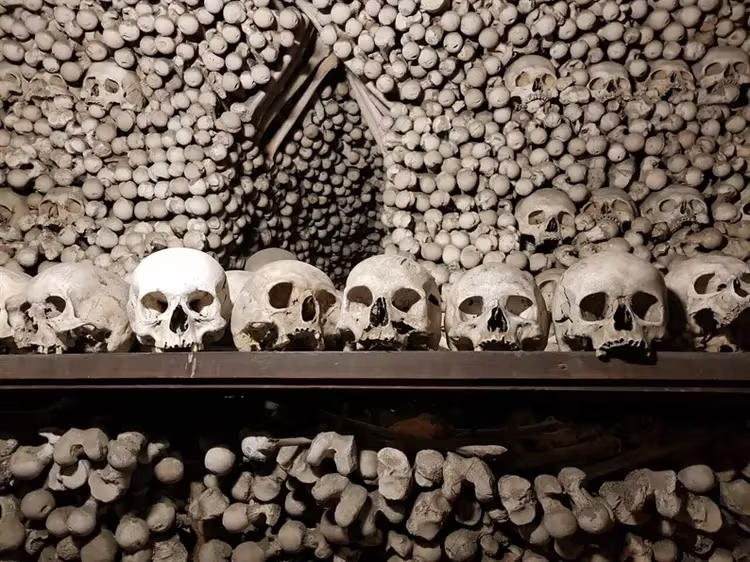
Kutná Hora is located 70 kilometers from the capital of the Czech Republic. It is famous for its medieval Gothic church, which is one of the darkest and most frightening shrines in Central Europe. The basilica is a world-famous crypt, whose unusual interior is decorated with human bones. Kostinets is filled with a chilling atmosphere. The remains of hundreds of thousands of people in a dimly lit room form decorative elements that personify a terrifying work of bone art. A visit to this place makes you think about human values, the transience of life and the inevitability of death.
What is a ossuary
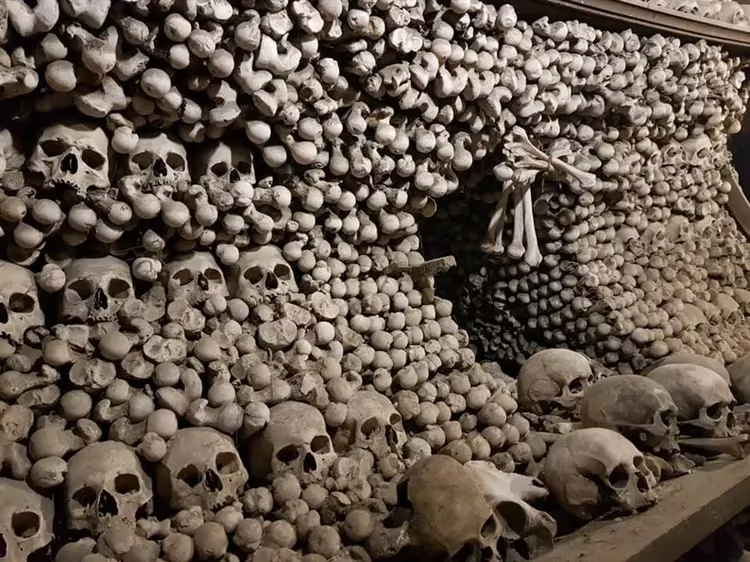
In Kutne Hora there is a small church with an ossuary. This peculiar Gothic tomb is included in the list of UNESCO World Heritage Sites. The honorary status of the church was due to its amazing decoration, for the decoration of which materials of natural origin, which are human remains, were used. The tragic style of decoration attracts millions of tourists. In other countries and cities, you can also find similar sights, but on a smaller scale. Only in the Czech Republic there is the only church in the world where a huge number of objects made of human bones are collected.
Hip, tibia and humerus bones, ribs, vertebrae, and skulls adorn the walls and ceiling of the basilica. Chandeliers, crosses, bowls, vases, candelabra, garlands and other details of church utensils are made from the skeletons of more than 50,000 bodies. Most of the bones date back to 1318, when the plague struck Bohemia.
History of creation
The Roman Catholic church was part of the Sedlec Monastery, founded in 1142. The chapel was erected in the 14th century not far from the cemetery, the territory of which subsequently increased rapidly. This was facilitated by the abbot of the monastery, who made a pilgrimage to Jerusalem. Upon his return, he brought to his native monastery a handful of earth from the hill where Jesus Christ was crucified. The abbot scattered the holy soil over the cemetery, after which the burial place became famous among the aristocrats of Bohemia, who prefer sacred land for their rest.
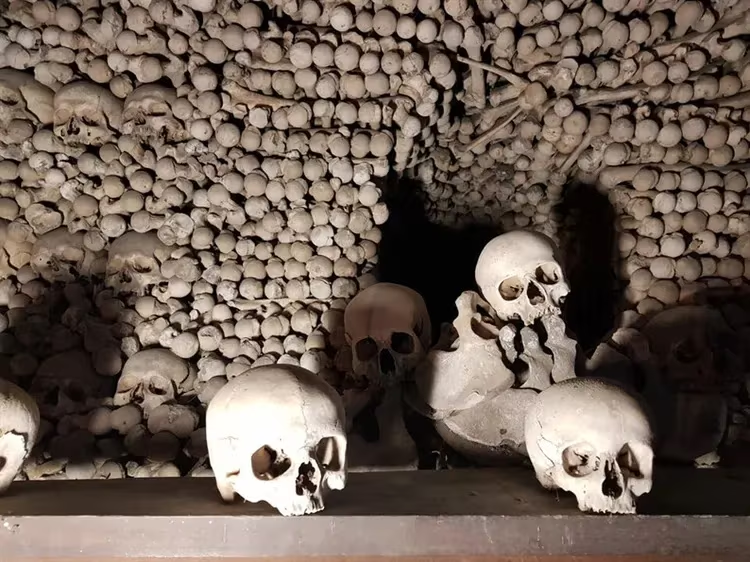
At the turn of the XIV-XV centuries, when the Czech Republic was covered by a plague epidemic and religious strife broke out, the territory of the cemetery grew significantly. Sickness and wars resulted in a large number of deaths. More than 40,000 people were buried here, as a result of which there was not enough space for new burials. The monastery management decided to extract the old bones and move them to the basement of the chapel. The human remains were neatly stacked in a special storage called a crypt. According to legend, a half-blind monk artistically laid out six large pyramids from bones, four of which can still be seen in the church. After that, the sight allegedly returned to the abbot.
In 1784, the ruler of the Holy Roman Empire, Joseph II, ordered the closure of the Sedlec Abbey and cemetery. The church with the adjacent territory of the monastery became the property of the aristocratic family of the princes of Schwarzenberg, who at that time were large landowners of Bohemia. The new owner of the church property in the form of a mountain of skulls and bones was not impressed. He hired local woodcarver František Rint to create decorations for the chapel from a pile of skeletons.
The prince was not worried that the eccentric basilica would be a symbol of blasphemous mockery of the remains of human bodies and an insult to Christian rites. At that time, one of his relatives was an Austro-Hungarian cardinal, so approval from church leaders was ensured. Soon, many residents of the Bohemian kingdom began to consider the ossuary a sacred place. They believed that the people whose bones adorn the interior of the chapel would be the first to be resurrected on Judgment Day. The result of Frantisek Rinat's work exceeded all expectations.
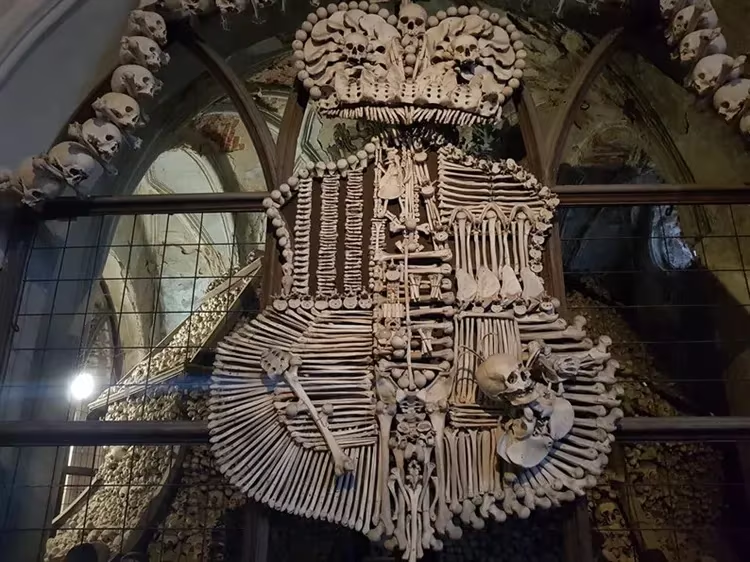
After polishing and disinfecting with bleach, Rint skillfully set about turning the bones into works of art for the interior of the church. The artist made intricate bone figures, including four chandeliers, a huge chalice, a decorative chain of dozens of skulls, and more. As a token of gratitude to his patrons, Frantisek Rint decorated one of the walls of the chapel with the Schwarzenberg family coat of arms. Many small details of the bone composition reproduced elements of the prince's emblem.
Rint's works have been preserved almost in their original form. In the 21st century, the chapel building and bone decorations needed restoration work. The structure sank dangerously, and dampness constantly accumulated in the cellars of the crypt. Restoration activities began in 2014 and continue to this day. However, despite the renovation, the ossuary remains open to tourists.
Description
The church is a typical example of the Baroque-Gothic architectural style. The basilica with a simple form of structure and strict lines is rather inconspicuous outwardly. The modest stone facade of the building with arched windows is crowned with two hexagonal towers. Between them there is a pediment with a statue of the Virgin Mary. A small church is visually lengthened by an extension in front of the entrance.
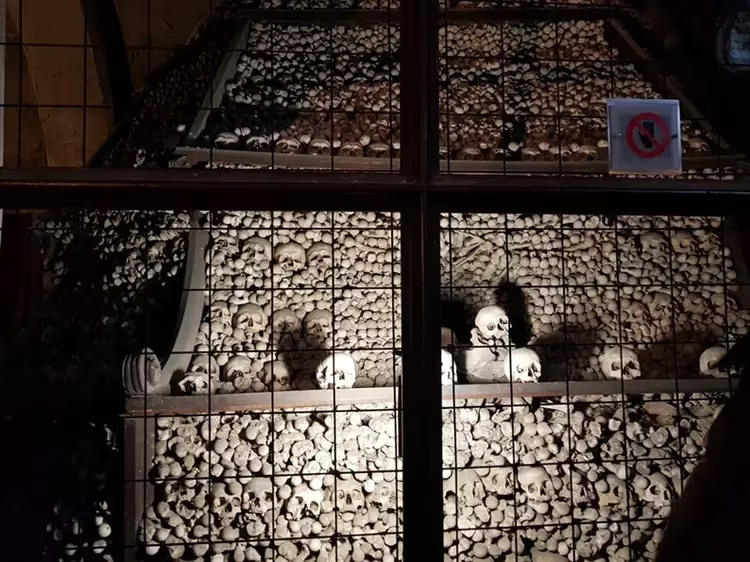
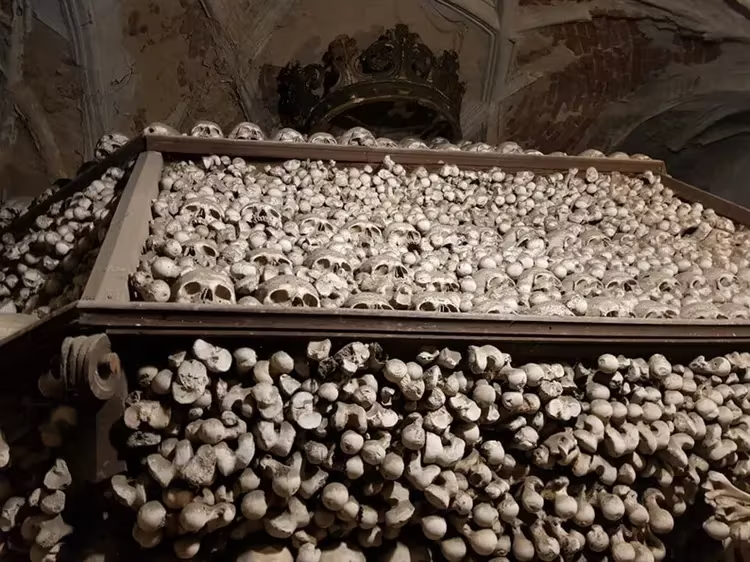
The decoration of the Ossuary is of the greatest interest. The basement of the chapel is located at a depth of three meters. In the reigning coolness and twilight of the lower tier of the church, four giant mounds of bones are stacked in the shape of a bell with a hole for ventilation in the middle. Above each three-meter mounds hang wooden crowns, representing the symbol of victory over death. Close up, these “hills” look especially intimidating.
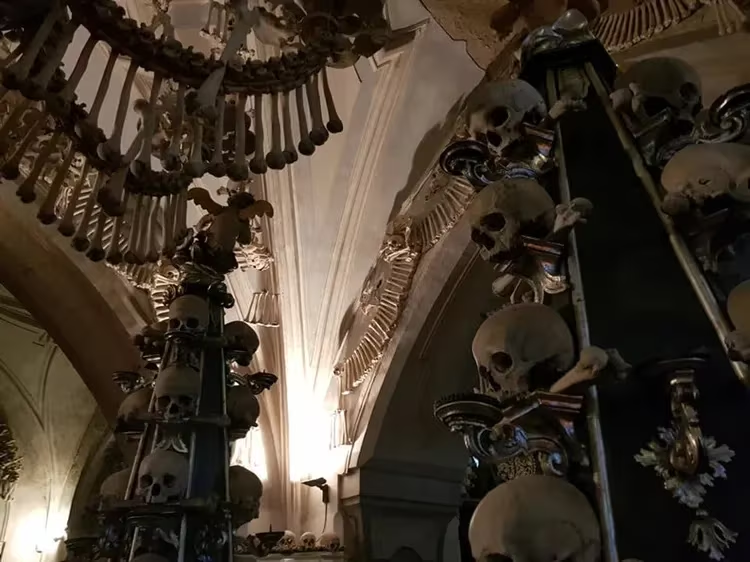
A garland of leg bones and skulls is strung between the vaulted ceiling and the arches of the main hall. In the center of the chapel are four pyramidal columns framed by skulls. On top of them are small plaster cherubs (angels) with golden wings. Thus, a strange contrast of a rather ominous atmosphere is formed. Cups, vases, glasses and candelabra are placed in the niches of the walls of the basilica lined with crossed bones. Thousands of small fragments of the human skeleton were used to create church items.
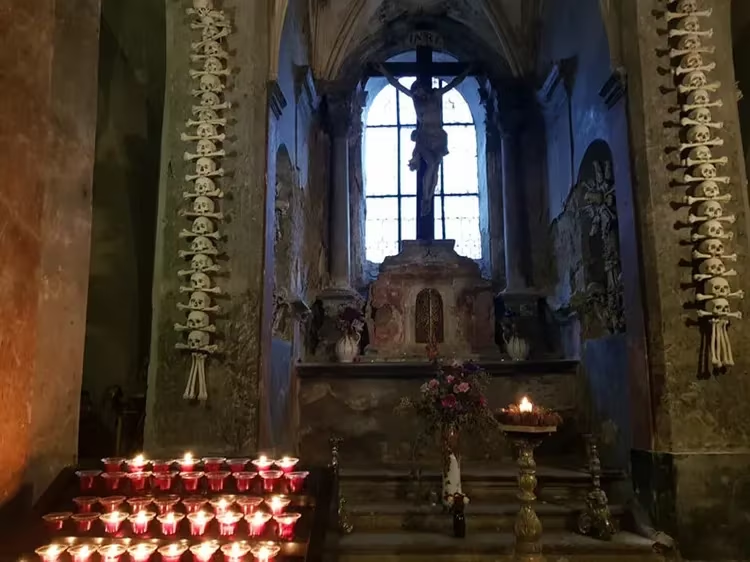
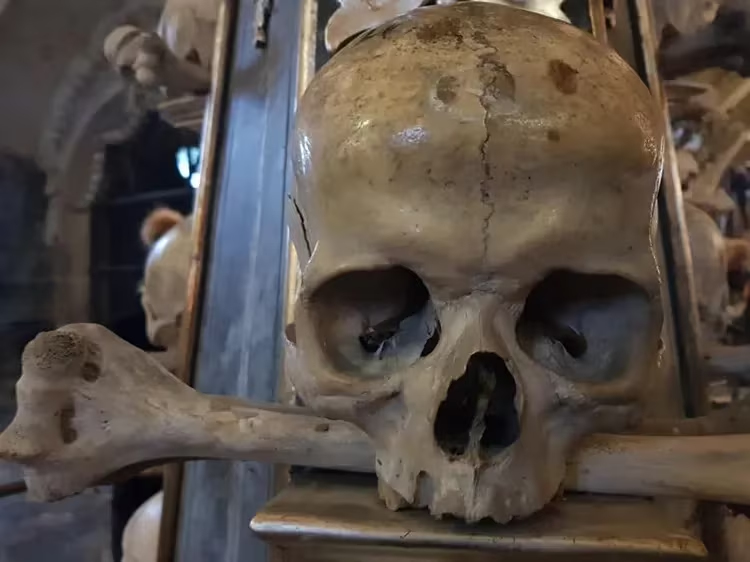
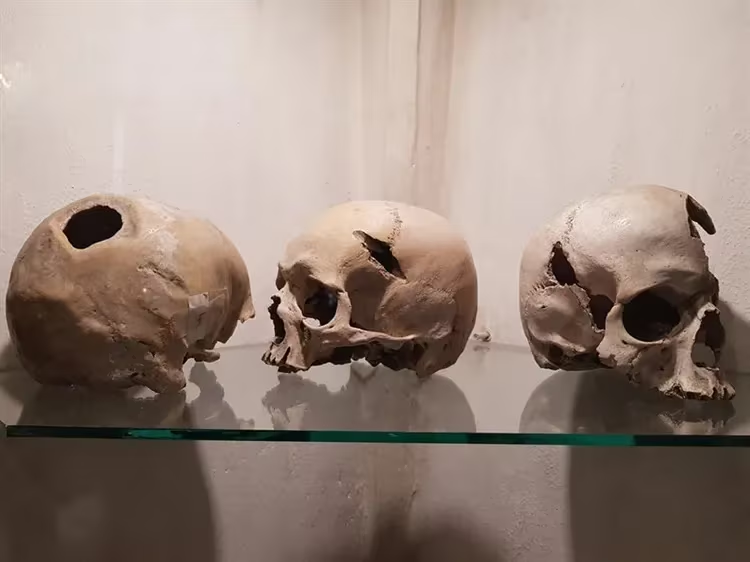
The main altar of the temple consists of a small brick pedestal, on which rises a cross with the crucified Jesus. Cups and crosses placed along the walls are made of hip bones. You can pay attention to glass cabinets with skulls that have cracks. The injuries indicate the violent nature of the death.
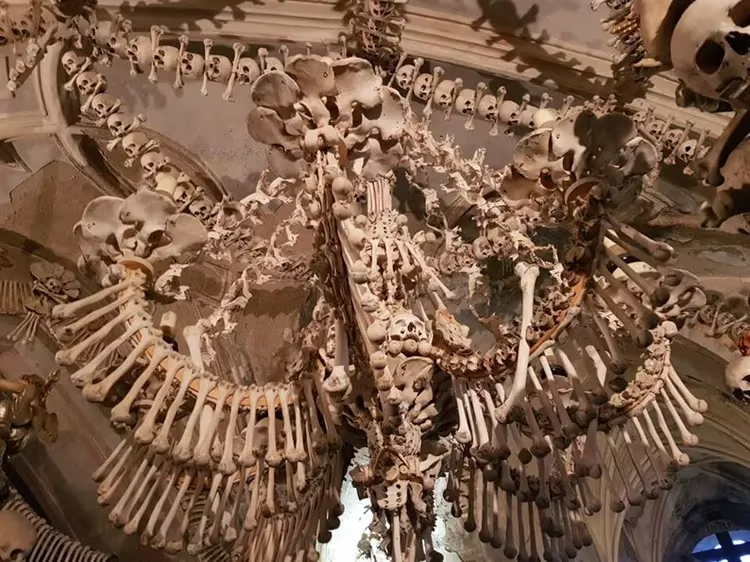
The most outstanding interior item of the church is the grandiose central chandelier, which consists of all the bones of the human body. Its diameter is more than two meters. Candlesticks stand on snow-white skulls, “looking” at the brave visitors to the ossuary. The chandelier is suspended from the ceiling on a chain, the links of which are made of jaws. Under it is a stone slab, which serves as the entrance to the crypt, where 15 nobles rest. On one of the walls of the church, you can see the autograph of the main artist who designed the interior of the temple. As befits the style of this church, the initials are inlaid with bone materials.
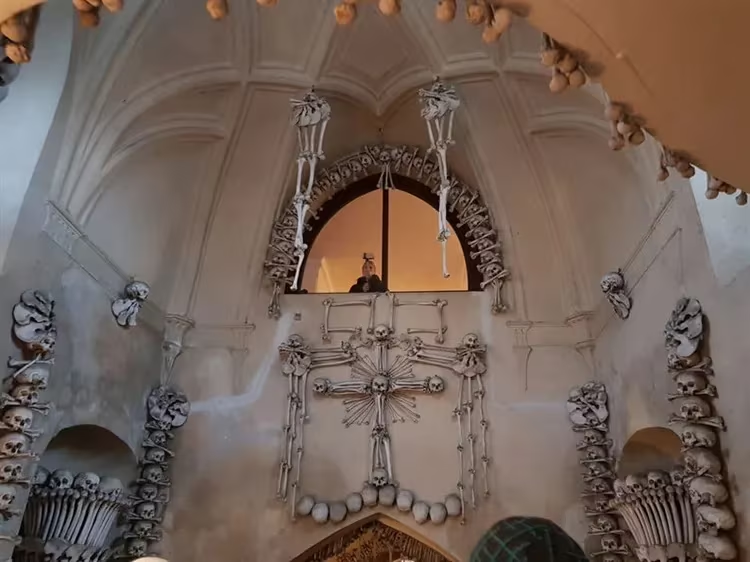
Above the entrance to the chapel, you can see an inscription in Latin from fragments of human bones. It denotes parting words addressed to visitors to the ossuary: “We were you, and soon you will be us.”
Opening hours and ticket prices
The chapel is open to the public every day, except December 24 (the celebration of Catholic Christmas). The ossuary begins to receive its guests from 8:00 to 18:00 (April – September), until 17:00 (October – March), until 16:00 (November – February). The entrance ticket costs 90 CZK.
Where is it located and how to get there
The famous Ossuary is located on the outskirts of the small town of Kutná Hora, about an hour's drive from Prague. It is possible to get to the gloomy sights by rail. A local train runs from the main station of the Czech capital. Upon reaching the Kutná hora station, you can transfer to a local bus (the only one in the area), which will comfortably take you to the chapel, or you can walk there. A walk through the picturesque village will take no more than 30 minutes.