🎨 Top 10 countries for tattoo tourism
What tourists don’t buy to commemorate their travels. Today, you won’t surprise anyone with T-shirts, jewelry, refrigerator magnets and other souvenirs. Another thing is to capture pleasant memories directly on the skin by getting a tattoo. So we set off on a journey to countries where drawings on the body are not only self-expression, but also a tradition, and in some places even a magical ritual.
Philippines
It's no secret that in ancient times tattoos had a much deeper meaning. They were used to ward off evil forces, protect against misfortune, attract love, happiness and health. They were also a symbol of wealth, power or social status. And there are still places in the world where ancient traditions of body painting still flourish. One of them is the island state of the Philippines. The Spaniards who arrived on the island in the 16th century quickly became acquainted with the local art of tattooing. The warriors, covered from head to toe with complex patterns, gave a powerful rebuff to the conquistadors. Because of their unusual, terrifying appearance, Europeans nicknamed them “pintados,” which translates from Spanish as “painted.”
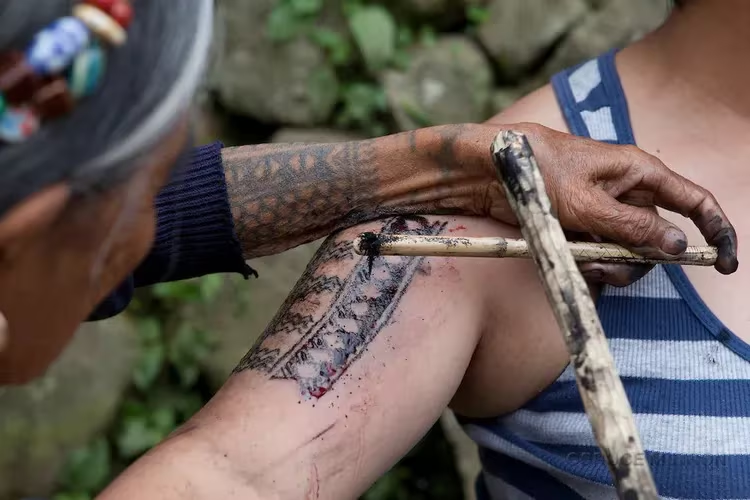
The drawings and symbols on the bodies of the Filipinos had not so much decorative as strategic significance, warning the enemy about the strength of the warriors of a particular tribe. This could well be judged by the tattoos, because applying it to the body was considered a long and painful process, which only the most resilient could withstand. The most extreme method involved cutting the skin and directly rubbing the powder into the wound. Another option is to use a wooden stick with a citrus tree needle to “tap” the design, periodically scooping up charcoal paste with the tool.
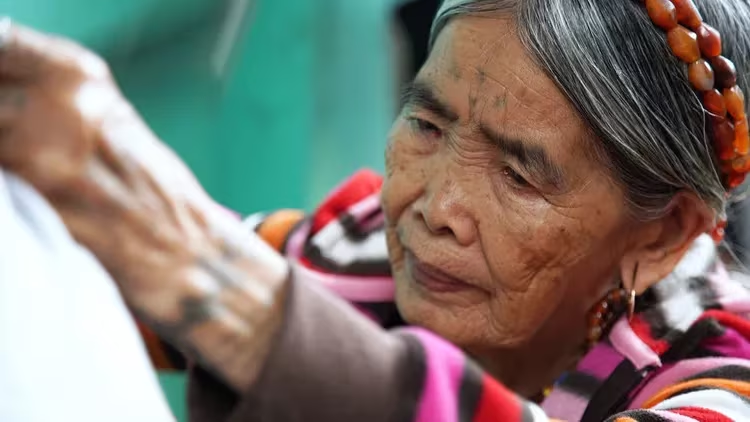
Currently, the only person still practicing the traditional ritual of tattooing is Apo Wang-od. The 106-year-old Filipina lives in the village of Buscalan, in the north of the island. In 2017, it was recognized as a national treasure of the Philippines for preserving the ancient tradition. Shortly before this, crowds of tourists began to arrive in the village. They all have one thing in common: get a tattoo from Apo Wang-od, the last keeper of the ancient art of her tribe. Today, everyone can afford it for a small fee. True, you won’t be able to choose a design – the Filipina prints the same pattern on everyone, consisting of only three dots and symbolizing the continuity of traditions.
Thailand
Thailand has become one of the most popular countries among tattoo tourism lovers. And the main reason for this is the worldwide popularity of Sak Yant, a sacred tattoo with a thousand-year history. Coming to Thailand from China, it carries a very symbolic, sometimes even magical, meaning. Simply put, it is a spell applied to the skin. It protects a person from misfortunes and attracts good luck into the life of its owner.
But these are not all the possibilities of Sak Yant. They say that in the old days, with its help, men returned alive from the battlefield, and women got married successfully. Locals also believe that a tattoo can make some people strong and courageous, while adding softness and sophistication to the character of others. Whether it is true or not is a moot point. But we warn those who are planning to get a Sak Yant: owners of such a tattoo should follow some rules for it to take effect. One of them is not to do bad things.
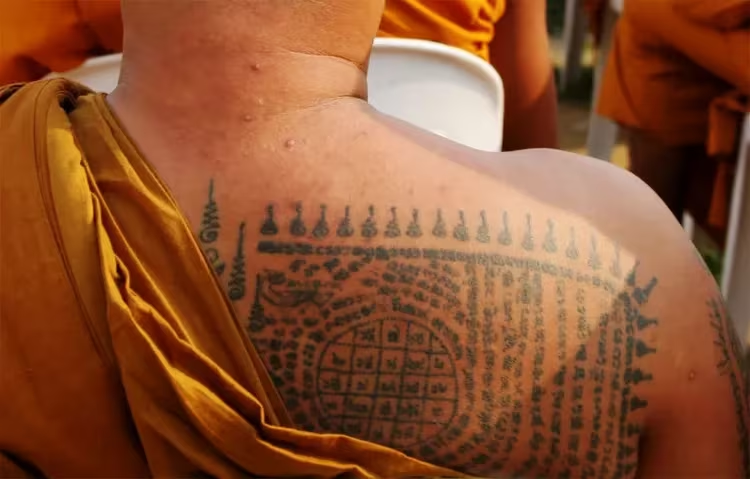
If you don’t want your tattoo to attract the attention of others, you can fill it with special transparent ink. Sometimes they are used to make Sak Yants for children to protect them from evil. By the way, this version of Sak Yant is considered better than the colored one and will cost less, since its existence will not be known to third parties. When the swelling subsides, only you will know about the tattoo and its meaning.
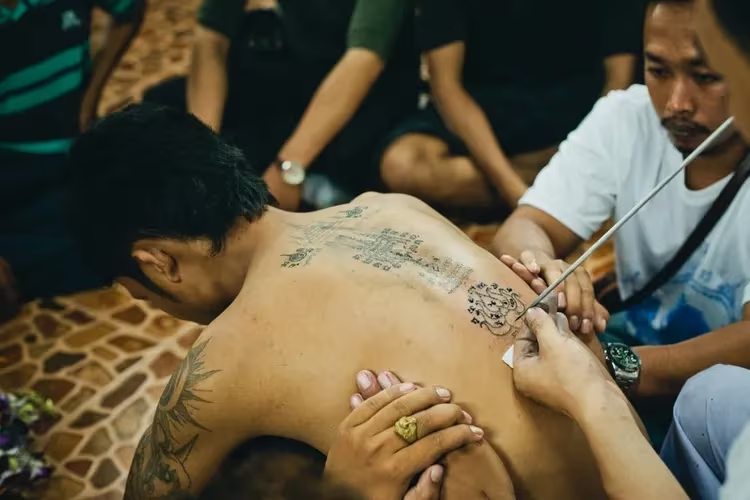
But how is the drawing applied? To understand this, it is enough to turn to etymology. In Thai, “Sak” means “to tap”, and “Yant” comes from a Sans Cretan word meaning “instrument”. The name of the tattoo is fully justified by the process of its application. Sak Yant is stuffed exclusively by monks with a long rod (in ancient times made of wood, now made of steel), similar to a needle. This is not due to the complexity of the process, but to its sacred meaning. Therefore, it is better to get such a tattoo in a Buddhist monastery. So, in the Forest Temple, the master will help you choose the design that best suits your character and horoscope. Among the most popular are the dragon, tiger and 9 spiers.
Samoa
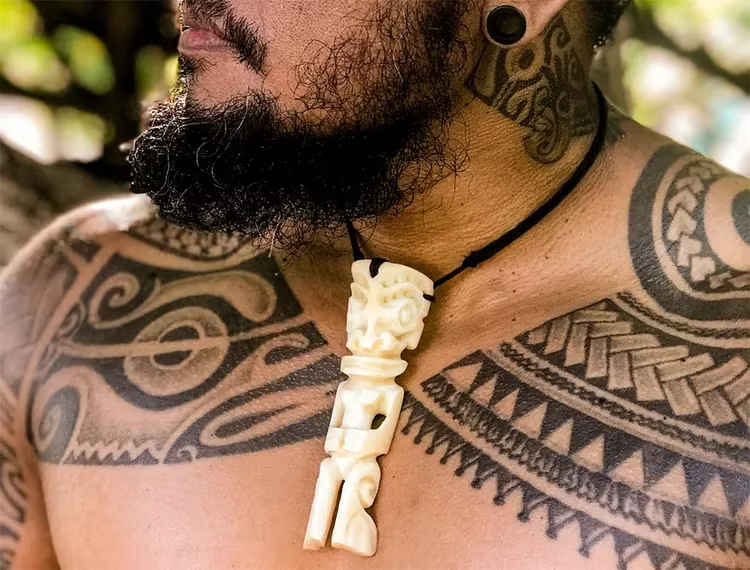
Samoans began decorating leather with intricate patterns about two thousand years ago. It is difficult to say more precisely, because Europeans sailed to the island only in the 18th century, and they began to study the body designs of the locals even later. It is reliably known that the presence of a particular tattoo was an indicator of social status. And its main features are uniqueness and individuality. The patterns reflected the character of a person, told about the main events of his life, achievements and exploits. In addition, such marks were considered an indicator of loyalty to the centuries-old traditions of the tribe. Authoritative and rich people, leaders and warriors considered it an honor to become their owner. But those days are long gone, and now traditional Samoan tattoos are done more for decorative purposes. Most often they decorate the legs, chest, back or forearms.
But the tools and methods of applying them have hardly changed. Using sharpened shark or pig teeth on a wooden handle (“autapulu”), they draw lines, dots, and fill entire areas of skin with soot paint. To “imprint” the pattern, the instrument is hit with a special stick (“sausau”). It sounds simple, but in fact the art of Samoan tattooing is learned over many years, practicing on sand or tree bark. And stuffing it is neither quick nor pleasant. With the traditional method, the pain can be simply unbearable, not to mention the risk of infection. Depending on the amount of work, such a tattoo will take from several days to a month.
- Theaters are record holders: they will surprise, amaze and captivate you into the magical world of art
- Mini-guide: how to spend 24 hours in Edinburgh
- What is worth seeing in the vicinity of Lisbon?
- How to see Paris in two days and not die?
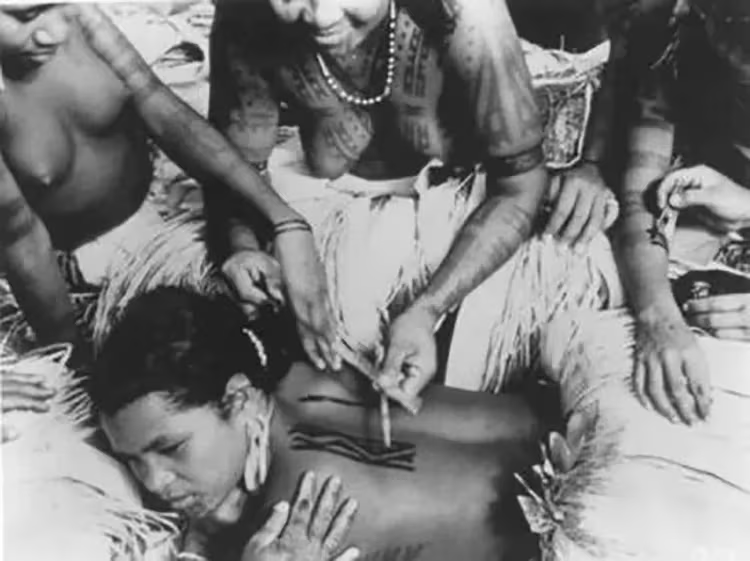
The world fame of Samoan tattooing has led to an increase in the number of salons offering it to their clients. Moreover, it is often practiced outside the island. It is important for a tattoo tourist to get a tattoo in Polynesia, bringing home not only vivid impressions of the trip. If you decide to do this, make sure that your master is familiar not only with the technique, but also with the semantic component of the drawing. He must also have knowledge about its correct location on the body and the sizes of certain parts of the pattern.
The Suluape brothers in Apia, the capital of Samoa, are known locally for their talents. True, in their studio they only do tattoos using a machine. For the traditional method, you will have to go to one of the nearby villages. By the way, in Apia, more than 80% of tattoos are purchased by tourists.
Iceland
Today, Nordic tattoos are popular not only among Vikings fans. While the heroes of the series strive to please the gods and receive their support in battle, in the real world runes and other Candiwan patterns are stuffed rather as a souvenir, as a tribute to the ancient Viking tradition. This is why Iceland is among the top countries most visited by tattoo tourists. They account for about 70% of all tattoos made per year. Perhaps a considerable number of tattoo parlor clients are also among the visitors to the Iceland Airwaves music festival held in Reykjavik.
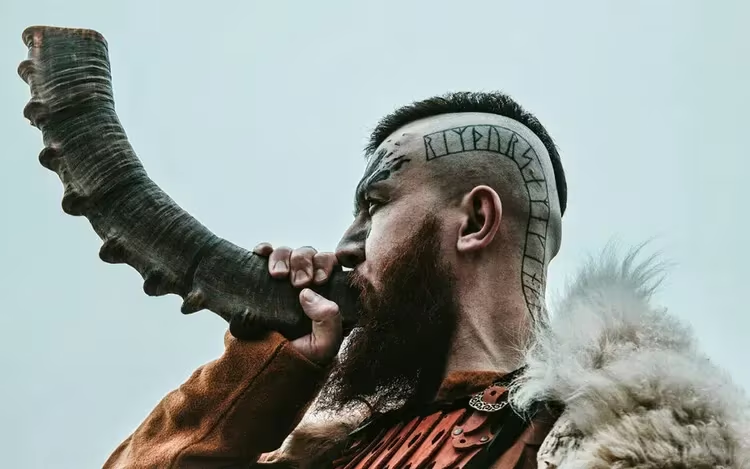
Yes, tourists coming for tattoos are nothing new here. Some people do it spontaneously, while others prefer to first understand the symbolism of the chosen sketch. And in order not to make a mistake, it is better to be among the last. In Iceland, the heir of the Vikings, images of runic symbols have become very popular. Runes, being the ancient writing of local peoples, were also used for magical rituals and spells. Each symbol has its own meaning. For example, the rune of love and creativity is Gebo, and the Uruz rune will give strength and energy.
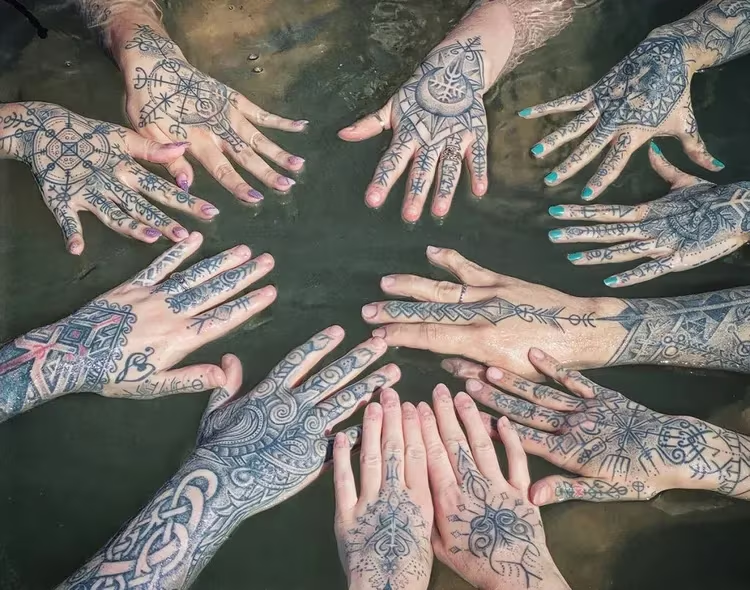
The image of a vegvisir, better known as a runic compass, used to help sailors not go astray, providing divine protection to its owner. True, the Vikings did not get such tattoos, but drew symbols on metal. Today, this is an excellent option for travelers. It is believed that with Vegvisir, trips and flights become much safer. In Reykjavik, a similar tattoo can be done, for example, in the studio of master Hubba Nero.
Tips for tattoo tourists
- Explore the local culture. Before getting a tattoo, learn the techniques used, the symbols traditionally used, and their meanings. Choose wisely so that the tattoo turns out not only beautiful, but also with deep meaning.
- Trust only professionals. It is better not to try to save money on a tattoo, because underground salons often do not provide even the minimum level of quality and sterility of the procedure. An experienced artist will also help with the sketch, making it truly unique.
- Pay attention to hygiene and sterility. Safety is always a priority. Make sure that the technician complies with all sanitary standards and uses sterile equipment and disposable instruments. This will help avoid any possible health problems.
- Take care and protect your tattoo after the procedure. Follow the guidelines for caring for your fresh tattoo. Avoid rubbing, direct sunlight and chemicals. Regularly moisturize and protect your image from damage to maintain its color and vibrancy.
- Enjoy the process. Allow yourself to enjoy every stage – from planning and consultation to the procedure itself. Don't forget to make sure your desire to have a tattoo is permanent. If there is no such confidence, it is better to choose a temporary option.