To Argentina on your own: how to get there, hotels, what to see
Argentina has not yet been spoiled by Russian tourists, and the more it is attractive to them. No joke to say, almost 20-hour flight. Such a journey is far from being affordable for everyone. Perhaps, if not for such remoteness, then the Latin American countries would be among the first in the routes of Russian travelers. Believe me, there is something to see and something to be surprised. Today we will tell you how to plan an independent trip to Argentina.
Of the 12 countries located in South America, Argentina is the second largest after Brazil. It occupied the southeastern part of the continent and the eastern territory of the Tierra del Fuego archipelago. The length of this country from north to south was almost 4000 km. Therefore, when planning a trip to Argentina, you must, first of all, decide on priorities and, then, think over the travel route so that it turns out to be not tiring.
How to get to Argentina
Russians cannot count on a direct flight to Buenos Aires, therefore, when booking tickets for connecting flights, your main task is to find a flight with the least disadvantages. Considering the departure point of Moscow, carriers offer options:

The initial flight is best planned for the weekend. If your plane arrives in Buenos Aires on Friday evening or Saturday morning, then transit acquaintance with the capital will take place without any traffic jams on the streets.
A big plus for our travelers is the visa-free regime established by Argentina for Russian tourists. The stamp in the passport on entry allows the Russian to stay on the territory of the state for up to 90 days.
Internal transport connection
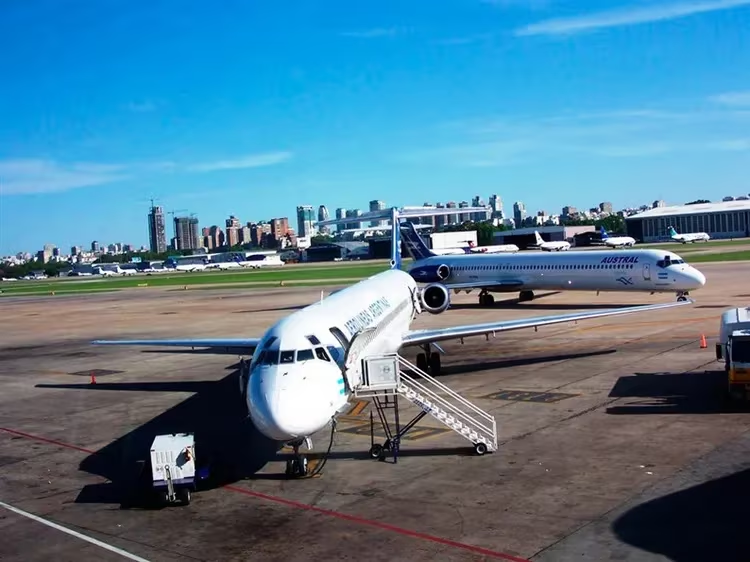
Argentina has a well-organized domestic air service. Local flights are operated by Austral (AU), Aerolineas Argentinas (AR), LAPA (MJ), but it is better to book tickets for these flights in advance. You can take advantage of the offer of Aerolineas Argentinas, which makes a reservation 30 days in advance for 8 directions of domestic flights. The main airports of Argentina: in Buenos Aires – Jorge Newbery, in Cordoba – Pajas Blancas (COR).
The railway network is also well developed, but insufficient funding in recent years has led to the cancellation of some long-distance routes. Argentinean trains run in 6 main directions and provide seats for three passenger classes: vip – seats in air-conditioned cars, 1st and 2nd classes. The most economical, of course, is class 2, but it does not provide for sleeping places.
For the convenience of travelers, there is Argempass – a railway discount card (only for 1st class passengers), which provides for an unlimited number of transfers within one, two or three months. There are other discount offers for train travel, but they already offer reduced prices for groups of 10 people, for a passenger with two children, for young people under 30 and students.
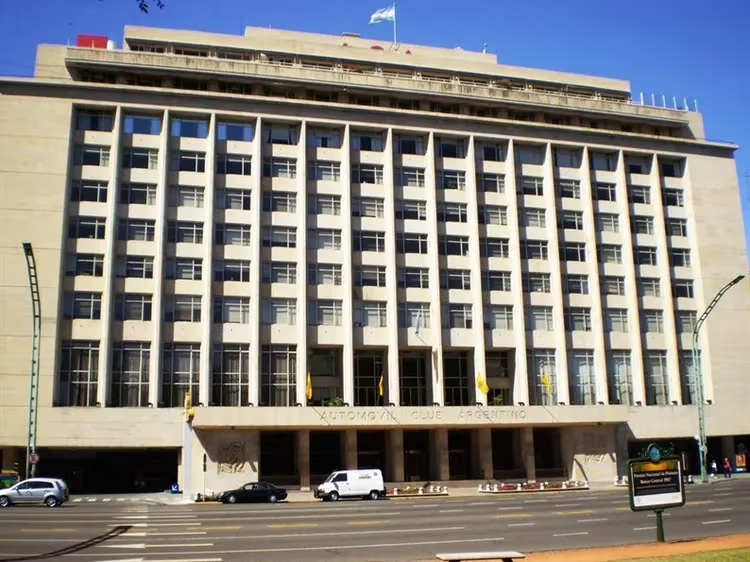
For fans of road trips, as in many countries, in Argentina, a car rental service is offered. To use a rental car and not be tied to a travel schedule, you need to have an international driver's license and a stamp affixed to the Argentine Automobile Club (Automovil Club Argentino).
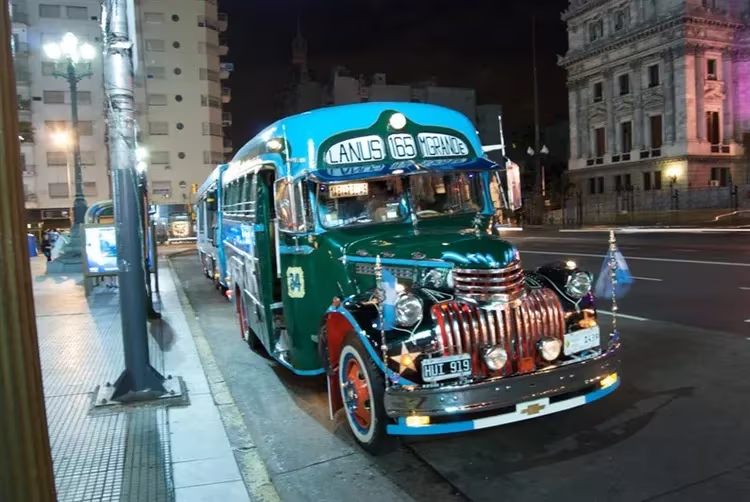
Intercity bus service is decently organized: there are many routes, and prices depend on class and comfort. For example, many of the locals prefer to travel long distances by bus, as trains are often delayed.
Of the urban public transport, the most common in Argentina is the mini-bus (colectivo). They ply the streets of major cities around the clock and have a fixed low rate (about 5 ARS). Its only drawback is overcrowding during peak hours.
Of course, in Buenos Aires, as in any metropolis, the metro is considered the most mobile means of transportation. This is not only a quick, but also an informative way, as the interiors of the metro lobbies tell about the most important historical events in Argentina. Six lines of high-speed trains are stretched to almost all districts of the city, and the fare in the subway is democratic – 3.5 ARS.
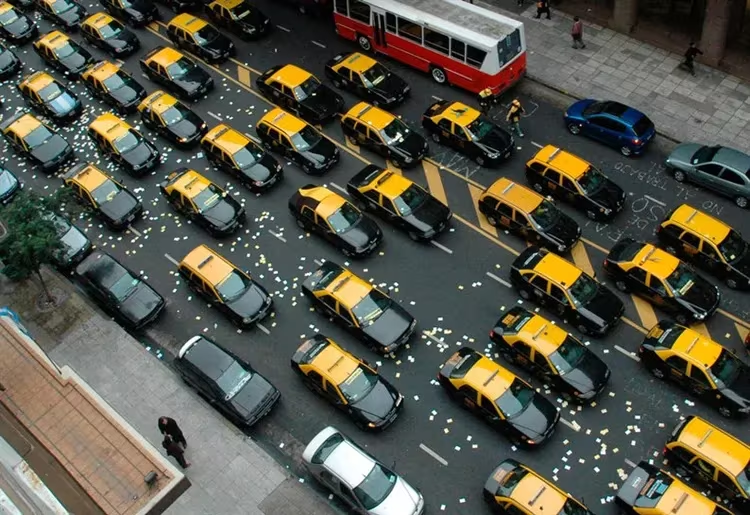
Argentine taxi cars are recognizable in all cities. They have yellow roofs, they can be seen from afar. The taxi service can be used by order, from the parking lot, and simply by voting on the street. An average trip in the capital, for example, will cost you around 20 – 60 ARS.
When to go to Argentina
The first thing we must remember when planning a trip to the South American continent is the seasons of the seasons opposite to ours. When we have snow and biting frost, it's the height of summer. Argentina is a country with a large territory and diverse climatic zones. The north is for lovers of the subtropics, the central part is a humid tropical climate, and the southern part is a temperate climate zone.
If your plans include a trip to the South Andes and the lands of Patagonia, then the best time to travel will be the period from late January to March (summer).
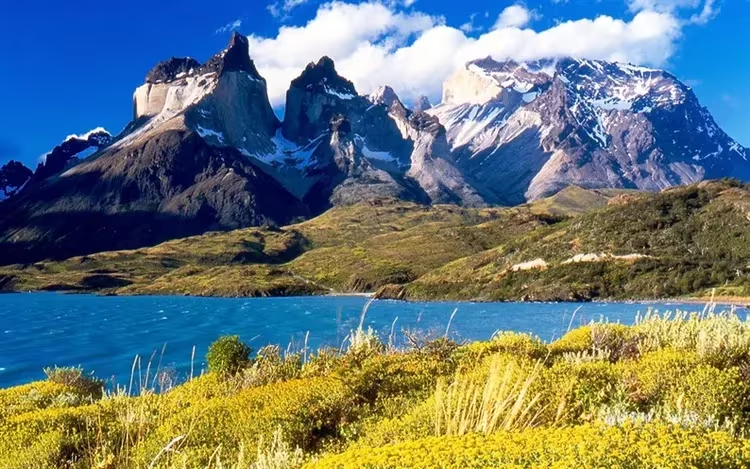
Late April to early September (winter) are good for the northern and northwestern territories of the country.
In central Argentina, the weather will not bring unpleasant surprises from late October until June.
Where to stay in Buenos Aires
There are plenty of services for booking hotels and hostels in Argentina today. The first thing a traveler thinks about when booking accommodation is its cost. Comfort comes second. But these are not all the criteria by which you need to choose an overnight stay in an unfamiliar city. For Buenos Aires, as for other major cities in South America, it is important to think about the area where your future hotel is located.
In the capital of Argentina there are areas unfavorable for tourists. In Buenos Aires, for example, there is the Villa 31 district, which is in no way inferior to the Brazilian favelas in terms of the lifestyle of the local population. About 30 thousand illegal immigrants live in it, and it is located not far from the main attractions of the capital.
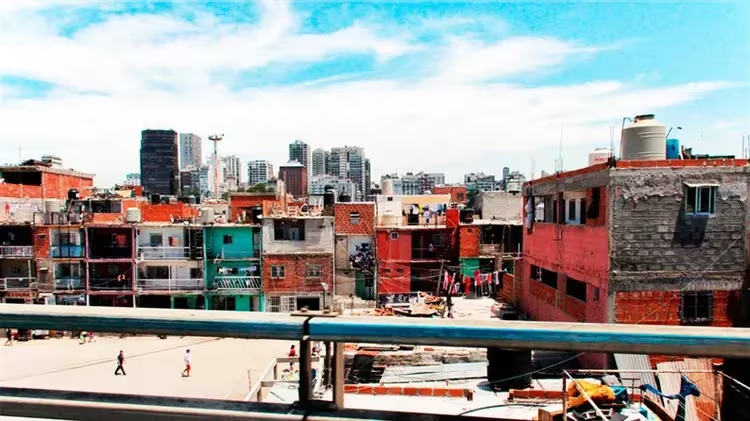
safe areas
Several areas can be attributed to safe places and attractive places for foreigners to live:
Madero Port
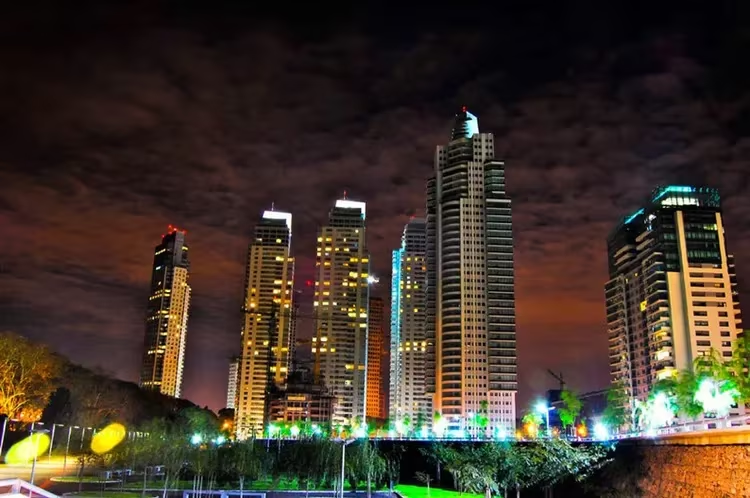
The area is located near the city center, along the coast of La Plata Bay. It is noteworthy that today's fashionable area was organized as a port area about 100 years ago. For a long time, brick warehouses and port cranes were attractive only to a small number of businessmen. But after several decades of decline and abandonment of port buildings, the picture began to change.
The warehouses have been refurbished and converted into offices, restaurants and apartments, while the two harbor cranes have been left as a landmark reminiscent of the area's formation.
San Telmo
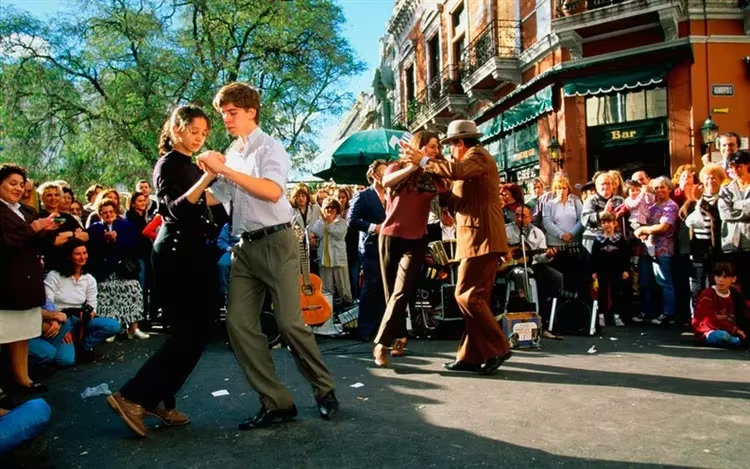
The oldest area, also located not far from the central part of the city, has preserved the buildings of the colonial period better than others. The color of the old architecture attracts any tourist to the streets of San Telmo, paved with paving stones. Living in this area will allow you to immediately plunge into the atmosphere of Argentine tango, freelance artists, authentic cafes and antique shops. The area is completely tourist-oriented – expensive in terms of prices, but comprehensive in color.
Plaza de Mayo, Microcenter
Directly the very center of Buenos Aires with wide avenues, fundamental buildings and shady boulevards. Here are concentrated the main sights of the capital, inherent in the business center. Life on weekends and holidays comes to a standstill here. It is in this area that the zero stop of the Hop-on Hop-off, a sightseeing bus, is located, on which tourists get the opportunity to get an overview of the capital of Argentina.
Double-decker bus routes include all major attractions. They make stops where you can both leave and continue your tour. The ticket costs 80 ARS, is valid for a day, each place is equipped with an audio guide in several languages.
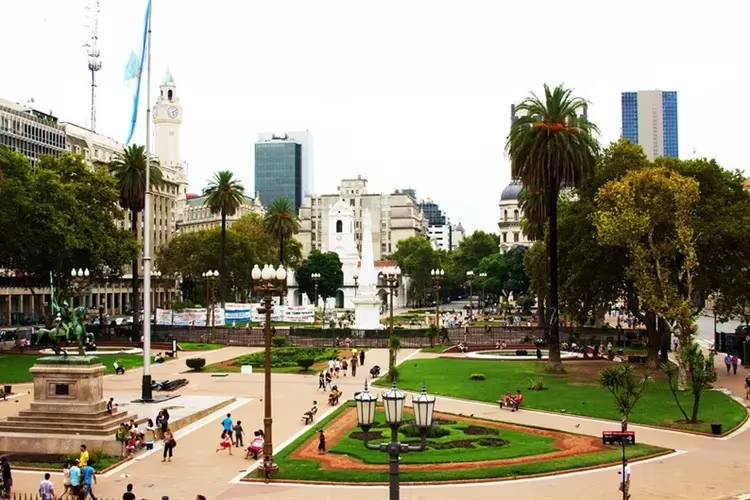
Palermo. This is a modern area of Buenos Aires, located away from the center. The largest and at the same time the greenest district, which includes several microdistricts. Old Palermo is especially popular with foreigners. Cobblestone pavements, low houses, shops and restaurants are attractive not only in the daytime, but also at night. Nightlife lovers will find entertainment for every taste in Old Palermo.
Financial “surprises” – 2 exchange rates
The Argentine peso was established in 1992 as the new national currency. Not so long ago, this country was considered a holiday destination even for the Argentines themselves, who preferred to relax in cheaper Brazil and Uruguay. But after the national currency was tied to the US dollar, the situation changed: inflation was controlled by the state, prices held. However, the latest devaluation of the peso brought changes that affected the tourist's wallet.
Today in Argentina there are two exchange rates (official/unofficial). The difference is very noticeable. Of course, the choice of a currency exchange method falls entirely on the shoulders of the tourist himself. Therefore, this issue needs to be thought about in advance. Those who do not want to take risks follow the official path (more expensive, but calmer). Those who want to receive “bonuses” from the exchange use the services of local currency traders. In Buenos Aires, money changers can be easily found on the shopping and pedestrian street Florida, in the very center of the capital. But remember, no one has canceled the crooks yet.
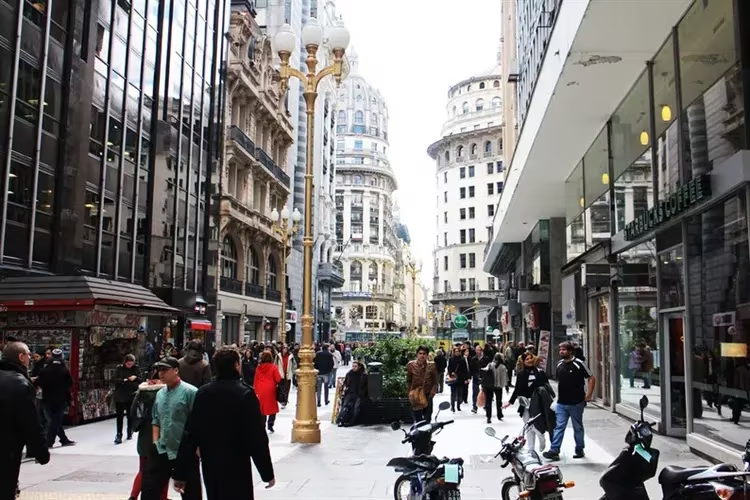
In large cities, payment by payment cards is possible (Eurocard, Master Card, American Express, Visa), but you need to be prepared for the fact that it “does not work”. You can easily avoid unpleasant situations if you always keep the equivalent of the required amount in local currency in your wallet.
What to see in Argentina
The remoteness of this country makes travelers from our region carefully consider the choice and planning of the travel itinerary. Argentina, like any country in the world, has something to be proud of and something to show. The list of natural treasures of this country includes the Patagonian plateau with ice caps, and the rocky Atlantic coast with wild animals, the Lake District, the seven-thousander of Aconcagua, as well as many national natural parks included in the UNESCO World Heritage List.
All these natural wonders are organically combined with the local flavor of large and small Argentine cities. We recommend that you include Lunar Valley in your itinerary.
Routes to the natural attractions of Argentina are always planned as an independent, separate trip that requires calculation of time and budget.
For more information about the most interesting attractions in Buenos Aires, read our article.
Iguazu Falls
Many of the travelers consider this place the main natural attraction of Argentina. It's hard to argue. It is difficult to surprise northern Russians with glaciers and snow of Patagonia, salty lakes and mountains of Salta are not a novelty for connoisseurs, but Iguazu Falls will amaze even experienced ones.
They are located on the border of Brazil and Argentina and can be reached from both sides. A plane ticket from Buenos Aires will cost you around $300-400 round trip. On the bus, you will spend a little less money, but the road will take almost 18 hours. The choice is yours.
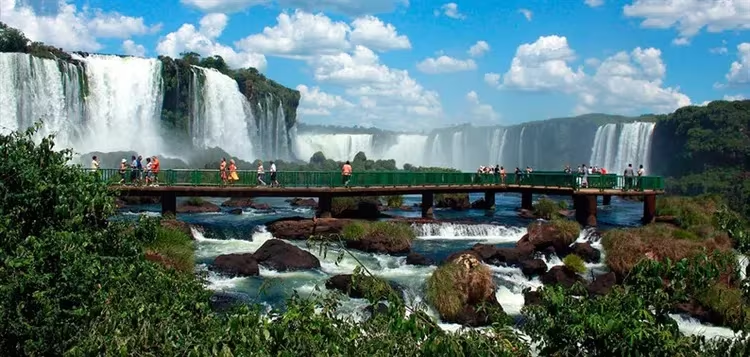
Already when approaching, you will see, or rather, guess that you see the main waterfall “Dragon's Throat”. From the green mass of trees, steam will swirl, rising into the sky. The town of Iguazu itself is the opposite of the prim capital, small, truly Latin American with brick-red earth underfoot.
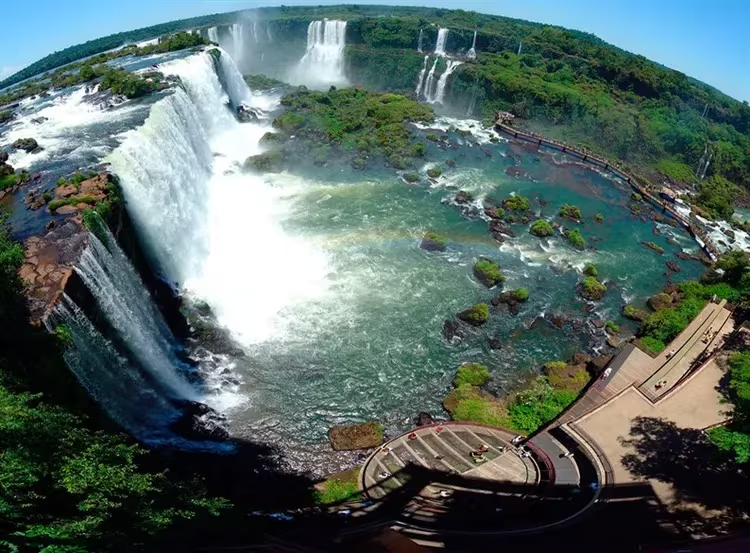
The national park is open to visitors from 8 am to 6 pm. Having bought a ticket, to which the card is attached, you can take a special train to the main waterfall. True, there are several trains in the park, but it is easy to figure out the routes. Signposts are placed on the trails to help tourists, and park employees are always willing to help.
Observation platforms are arranged both on the upper path and along the lower route. From the upper path, a stunning panoramic view of all the cascades opens up, and you feel like a bird, and from the lower path, you can watch the walls of water from below, fully realizing the impotence of a person in front of this power.
El Calafate and El Chalten
In the southern part of Patagonia, in the El Calafate area, about 4 hours of flight from Buenos Aires. An additional baggage inspection is carried out here, as you enter an environmentally friendly area with its own rules. The main goal of all visitors is the Los Glaciares National Park with a unique natural attraction, the Perito Moreno Glacier. Remember: there are restrictions on entrance tickets, and they are sold only upon presentation of a passport. The park is open until 18:00. Buses to the glacier leave 2 times a day (08:15, back at 16:00, and 13:00, back at 19:30).
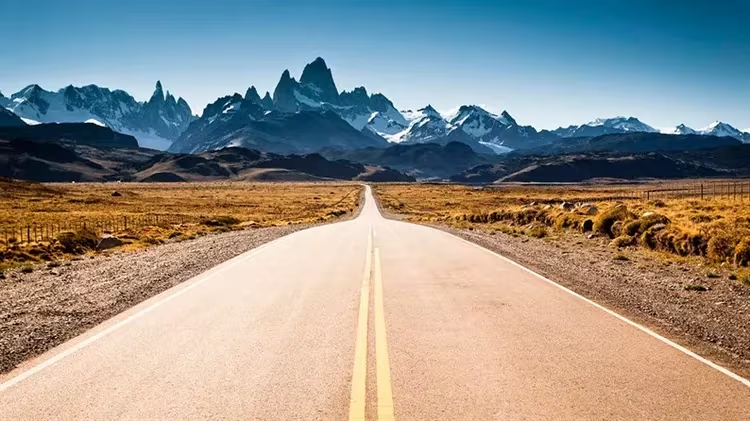
It would seem, what can surprise the icy land? But starting a walk from one observation deck to another, you gradually begin to understand why the pace slows down. Ice power is amazing! Fans of mountaineering and trekking immediately purchase tickets to El Chalten. The town itself is located on the territory of Los Glaciares, in its northern part. Transfers to El Chalten run 3 times a day (08:00, 13:00 and 18:30).
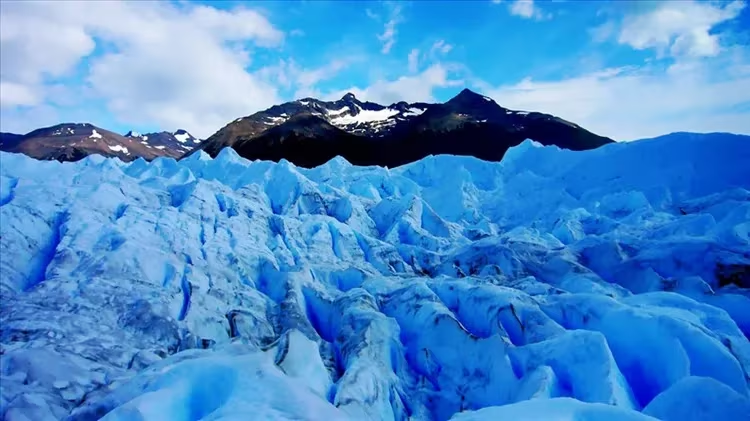
The bus will take you to the administration building, where you will be briefed and familiarized with possible routes. It must be said right away that for the completeness of all sensations, physical endurance and dexterity are very important here. In order to be transported to the pages of the novel “Children of Captain Grant” not mentally, but personally to verify the beauty of the local nature, you should even overcome yourself.
The color and magic of Argentine cities
Salta. A resort, vibrant Argentine city, founded at the end of the 14th century, as a resting place for trade caravans heading to Buenos Aires. The picturesque and fabulous beauty of the place attracts with its history. Pilgrims come here to worship the healing statue of the Virgin Mary, located in one of the halls of the Cathedral of Salta. And for tourists, one of the most popular trips from this town is the “Train in the Clouds” (a trip to a town lost at an altitude of 4000 meters, which takes 14 hours).
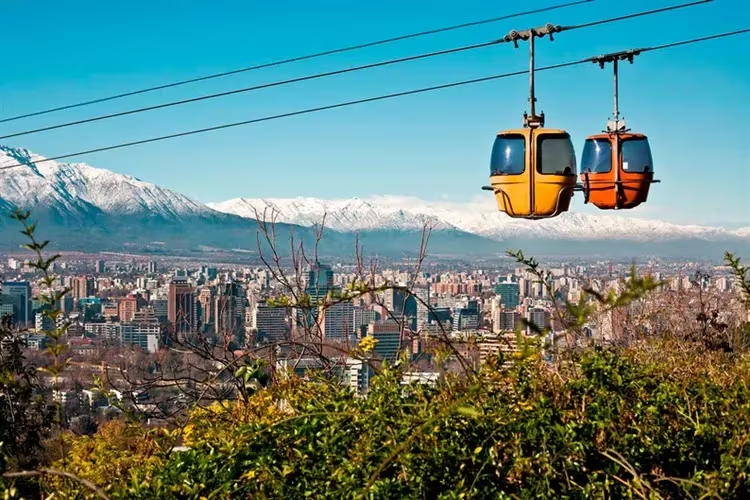
Salta is connected by air to both Buenos Aires and Cordoba, and by bus to many other Argentine cities.
Cordoba. The second largest Argentine city after the capital. For connoisseurs of architecture, it will be more attractive than Buenos Aires, as the flavor of the colonial era is preserved here with greater authenticity.
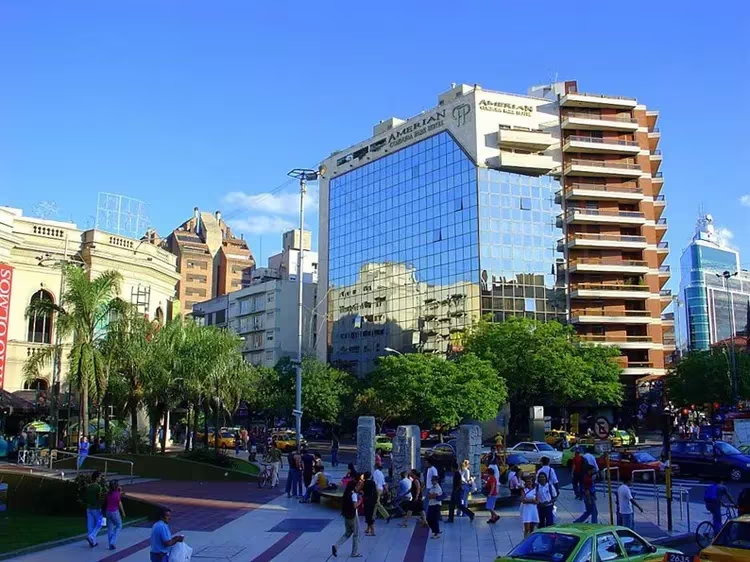
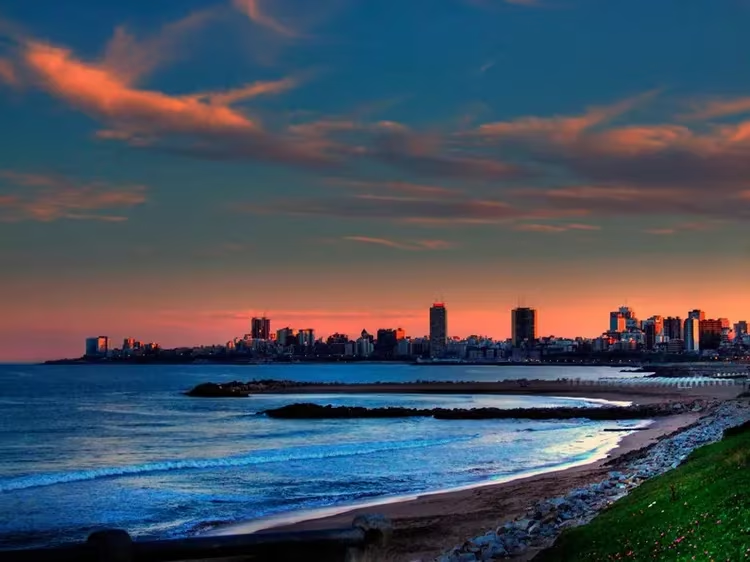
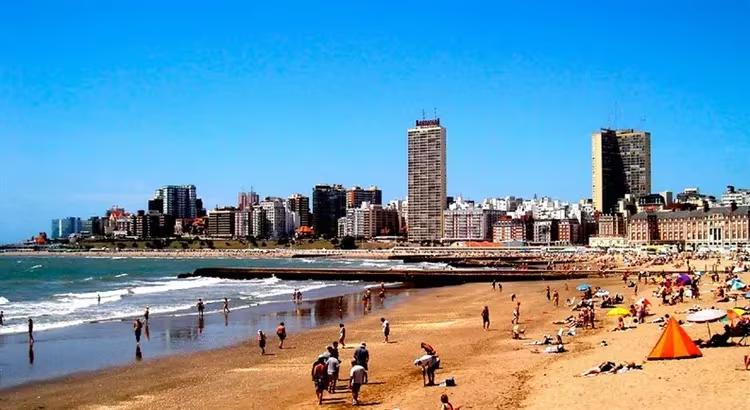
Mar del Plata. Known for beach lovers Argentine resort, located 400 km from the capital. The length and diversity of the coastline attracts both connoisseurs of solitude and party-goers.
Historically, Mar del Plata was the vacation spot of the Argentine nobility, so it still has a reputation as a fashionable and expensive resort. Various festivals and music shows are held here every year.