
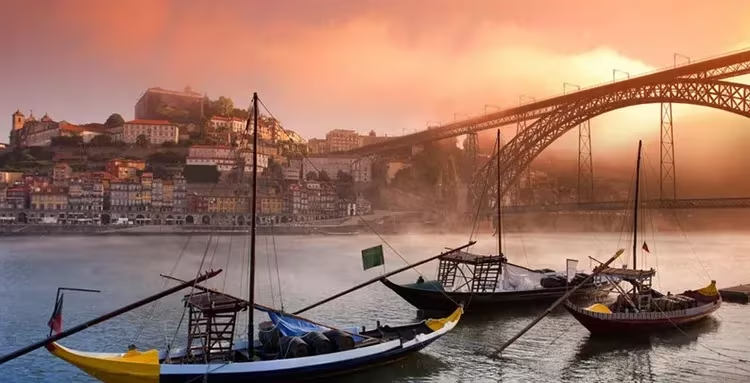
Where to go from Lisbon for 1 day on your own – route, photo, description, map
If you come to the capital of Portugal and have free time, there is no need to spend it here. It would be much better to take advantage of the opportunity and take a little trip. Where to go from Lisbon for 1 day on your own? There are a lot of options. Nearby – at a distance of no more than 1-2 hours drive – there are many small towns that hide real treasures. There are no problems with transport in Portugal. You can use the train service, rent a car or go by bus. You will be able to see beautiful palaces, unique temples, and, of course, you will learn the legends associated with them. Let's hit the road!
Cascais
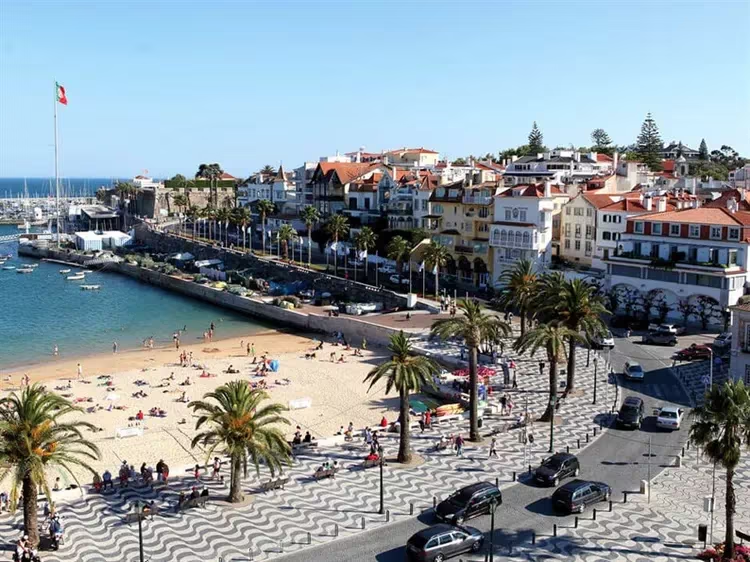
A small old town whose sights will enchant you. You can come here from Lisbon by rail. First of all, pay attention to the beauty of these places. You can lie down on the magnificent beaches, and if you prefer surfing, you should go to the wild Ginshu Beach. Tourists come to look at the “Devil's Mouth” – this is a small grotto, near which ocean waves crash with a roar. An observation deck is provided for guests.
The area of the “Old Town” overlooking the fishing harbor is picturesque. Here you can feel the true spirit of Portugal. It is recommended to visit Guimarães Castle, which was built at the beginning of the 20th century and bears the imprint of the Gothic style. Today there is a museum – a collection of paintings and antiques. There is a magnificent square nearby, where there is a pond and a small zoo. The Maritime Museum is also worthy of your attention – here it will be convenient to follow how the local fishing industry developed.
The exhibition presents different types of boats. The sights of the city include the lighthouse, the height of which is 20 m, and inside there is a museum. As well as the castle of St. Mary, built in the 19th century. Walk along the boardwalk that connects Cascais and Estoril. Here you will see the casino that inspired Ian Fleming to write the James Bond book.
Sintra
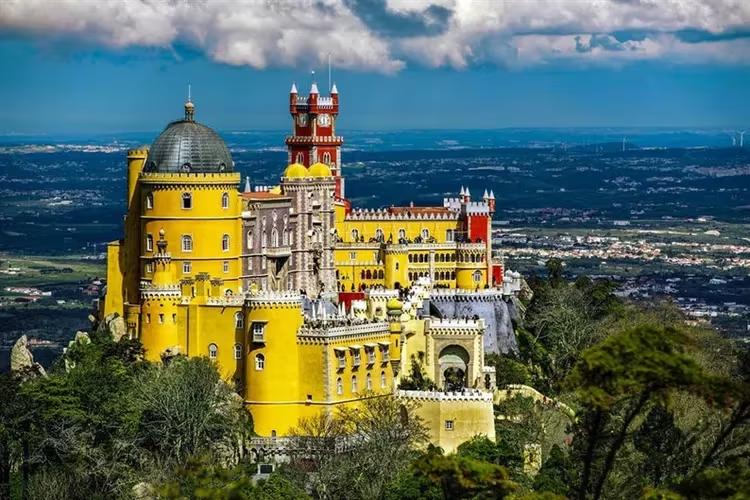
There are so many attractions in this small town that you definitely won't get around them in one day. What is the most interesting thing here? Pena Palace, built in the 19th century in the style of Romanticism combined with Manueline. It is magnificent both outside and inside, where you will see magnificent decoration. The National Palace used to be owned by the royal family.
Now guests can see the official halls intended for receiving eminent guests, the richly decorated chapel and the famous “Swan Room”, where gilded proud birds are placed on the ceiling. The Quinta da Regaleira complex includes a mystical mansion, a small chapel and a park. The ancient frescoes and sculptures are, of course, very beautiful, but the underground passages used by the Masons and famous alchemists make an even greater impression.
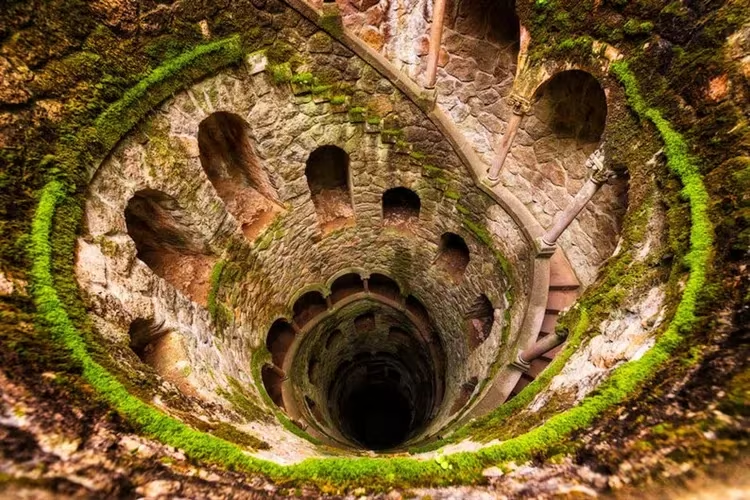
The “well of initiation” is indeed full of deep meaning. A staircase leads down, and the well itself seems to connect the sky and the bowels of the earth. Darkness reigns below, but “in the sky”, that is, at the upper edge of the well, light is given to man. You can also visit Montserrat Palace, built in the 18th century, visit the castle of the Moors and the Capuchin monastery, look into the chalet of the Countess of Edla and admire the puppets from the Puppet Museum.
Cape Roca
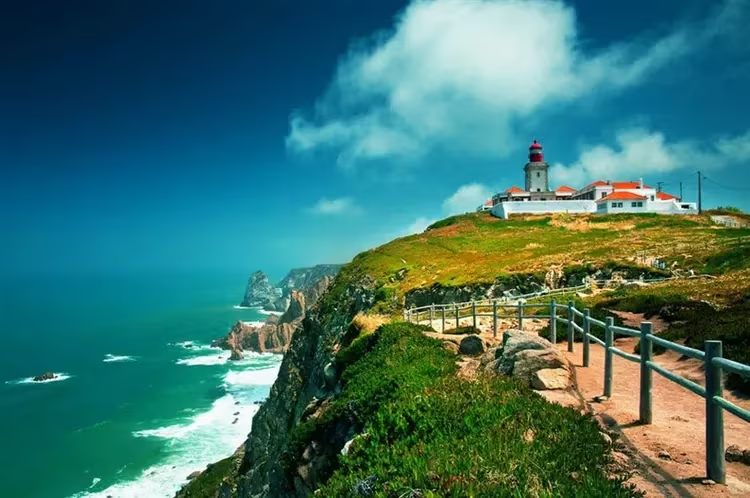
You can get to this cape both through Cascais and through Sintra. Cape Roca is the westernmost point in Europe. Only the Atlantic Ocean lies ahead. You can stand on the observation deck, located at the top of a high cliff, admire the ocean, and think about the Portuguese sailors who lived many centuries ago. They dared to embark on a long journey to discover new lands. And none of them knew if he could go back. This cape is one of the main attractions of Portugal – there are always a lot of tourists here. Agree, an unusual feeling – to know that you are standing on the very edge of the mainland?
Offend
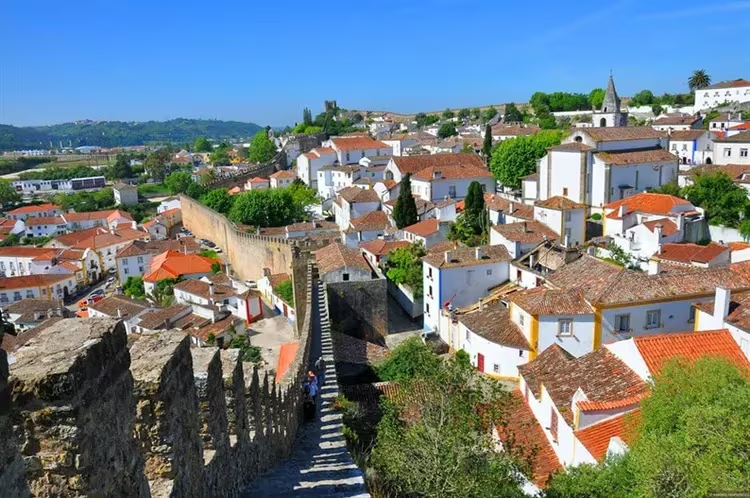
This small town, with a population of only about three thousand people, is located 100 km from Lisbon. Obidos gives the impression of a revived fairy tale. Little has changed here since the 13th century, and residents do not at all seek to “modernize” their city. You can walk along the narrow streets, buy souvenirs, taste cherry liqueur in a chocolate cup.
(the name probably comes from the word “fortress”), is located on the site of an ancient Celtic settlement. During the reign of Ancient Rome, this place turned into a port of great importance. In the 13th century, the city became a wedding gift from King Denish the First to his young wife. The main attraction is the castle, which was built in the period – the end of the 12th – the beginning of the 13th century in the characteristic Manueline style. Until the 18th century, members of the royal family often came here.
Then this place fell into decay, and the castle began to be restored only in the 20th century. Tourists can see it, and even stay at the hotel, which occupies part of the premises. Another place to visit is the Church of St. Mary, which was built over several centuries – from the 13th to the 16th.
Nazareth
Of course, at the mention of the name of this city, the legendary Nazareth pops up in our memory. And it's justified. The main attraction of this place is the temple in honor of the Virgin, where the sacred image of Our Lady of Nazareth is kept. The Virgin Mary sits holding the baby Jesus in her arms. The original was made by Saint Joseph. During the persecution of Christians by the Moors, King Rodrigo and the monk who helped him, along with the image, hid in the local cave.
In the 12th century, Don Fuas Roupiño nearly fell off a precipice while hunting. A prayer addressed to the Virgin Mary helped him to be saved. In gratitude, he decided to build a chapel, the stones for which were supposed to be taken just from the cave. Thus the image was obtained. He was placed in the chapel, and pilgrims began to flock here. There were so many of them that in the 14th century they had to build a church and transfer the image there.
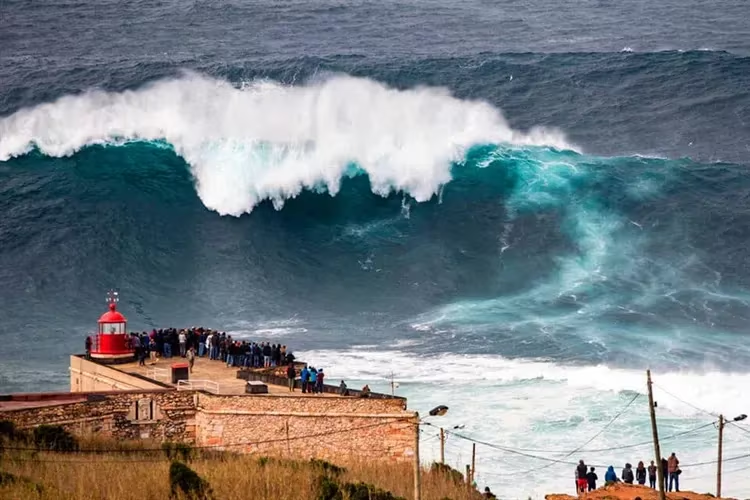
In addition to the famous temple, in Nazar you can admire the huge waves, the highest in Europe – however, only in autumn. At this time, surfers come here. You can watch their competitions from the site of the Fort of the Archangel Michael (once the military defended the inhabitants from pirates). Also visit the Joaquim Manso Museum, where you will learn a lot about the development of the city.
Alcoba
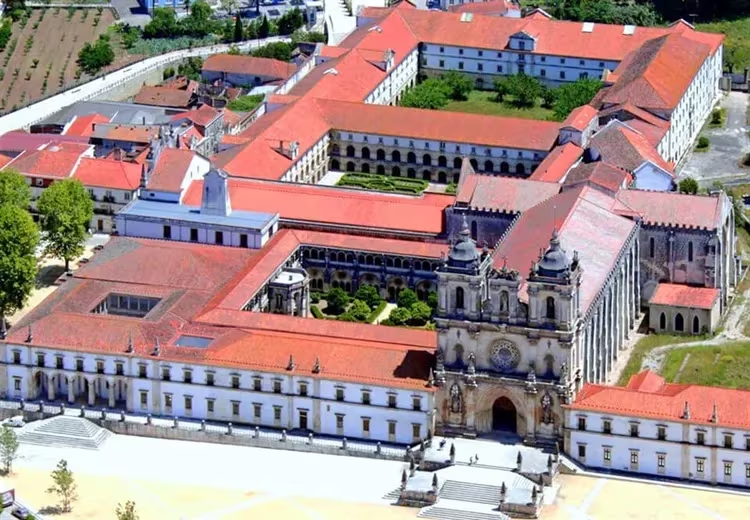
In this small town, where no more than 10 thousand people live, the main attraction is a beautiful monastery. Santa Maria de Alcobaza. It was founded in the 12th century, and for a long time played the role of a royal tomb. The significance of the monastery was especially great in the 14th-16th centuries, when it became the center for the development of numerous crafts, and many cities were subordinate to it at that time. And the local cathedral is the first building in the Gothic style, which was built in Portugal.
In the 19th century, the lands of the monastery were transferred to the state, monastic life here ceased. Tourists visiting the cathedral and the tombstones of the kings. The love story of Pedro the First and Ines de Castro, who are buried here, is significant. Portugal and Castile from time to time sought to end internecine wars, including through marriages. Prince Pedro fell in love with his wife's court lady, who was a native of Castile.
For a long time he met with Ines secretly, and after the death of his wife he settled her in the palace. The prince's father was in a terrible rage. It was impossible to allow the son of Ines – a woman not from the royal family – to inherit the throne. As a result of the conspiracy, Ines was killed. Having ascended the throne, Pedro the First ordered to remove the embalmed body of his beloved and crown him. This is the story of eternal love.
Tomar
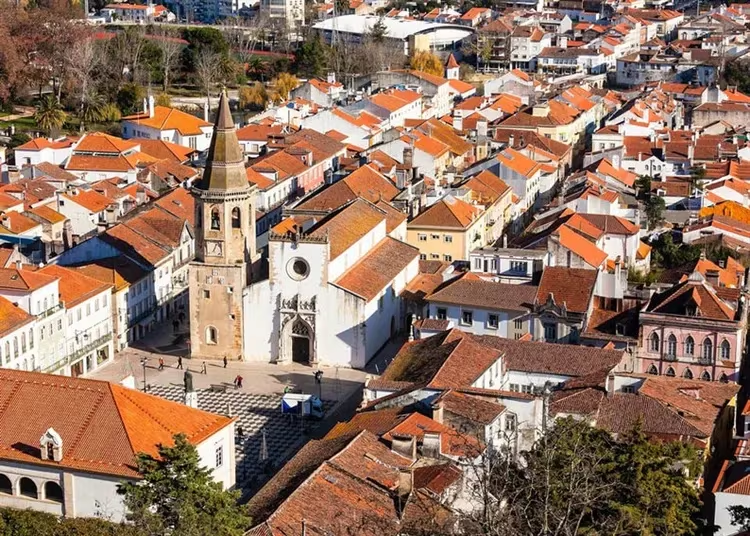
A pleasant old town, with a beautiful cathedral. Tomar is inextricably linked with the history of the Knights Templar. This order was founded in the 12th century, and the knights were supposed to protect pilgrims heading to the Holy Land. The Templars soon became the richest men in Europe, and many nobles found themselves in debt to them. This predetermined the fate of the order – it was defeated on the orders of Philip the Fourth, the king of France, who also had a large debt.
Those who stood at the head of the order were first tortured and then burned at the stake. The castle that stands in Tomar was built by the Templars in the 12th century, and later, after the defeat of the order, King Dinis the First founded the Order of Christ, which received the lands of the Templars. The symbolism and charter of both spiritual organizations were very similar. So the castle, where the Convento de Cristo monastery is located today, is a must-see. Inside you will see a beautiful setting – paintings, sculptures, frescoes.
Batalha
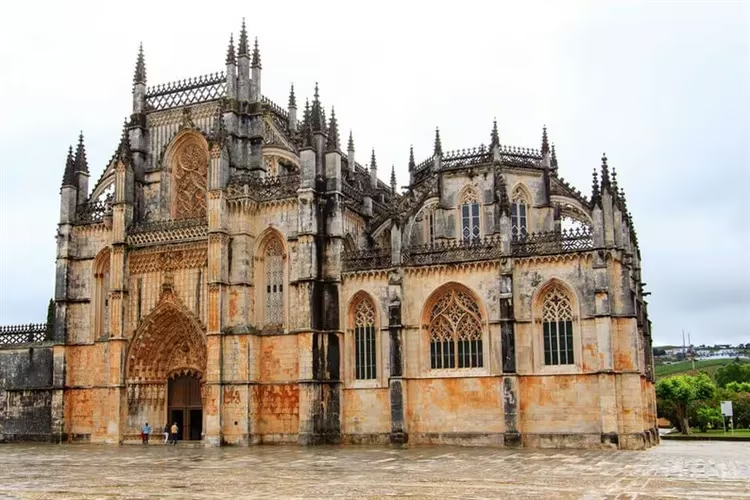
In Batalha you can get acquainted with the next pages of the history of Portugal. Visit Batalha Monastery, one of the oldest temples. Its facades, decorated with patterns, are a real work of art. Another old church built in the 16th century is Santa Cruz. Its decoration is extremely modest, but here you can see the figure of the Virgin with the baby Jesus in her arms. In memory of the battle between the troops of Juan the First and Juan of Castile, a chapel was built, which will be of interest to all history buffs.
The Historical Museum deserves attention, here you can see many finds from the Paleolithic times. And in the Specialized Museum, children can dress up in knightly armor. Near Batalha there is an ecological park in which the ruins of medieval buildings have been preserved. And finally, tourists like to visit the Moeda caves, which, as a result of the original illumination, seem to be made of gold.
Fatima
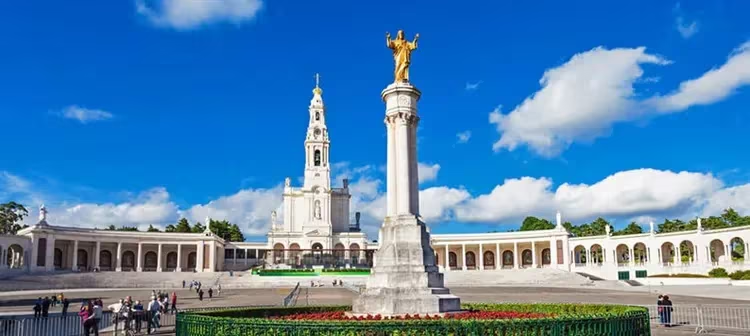
It will be interesting to visit this small town, first of all, for believers. Here in 1917 the Mother of God appeared to her children six times – little Lucia and her relatives Francisco and Jacinta. At first, the children were not believed, but later a crowd of thousands gathered to look at the miracle. People saw how the Virgin Mary stopped the rain – the sky cleared. Soon, of the children, only Lucia survived, the other two died, as the Mother of God predicted. Lucia lived a long life, became a nun. She also wrote down three revelations of the Virgin Mary, they all came true. In particular, this applies to the terrible wars that Europe has experienced.
Since then, pilgrims from all over the world have flocked to Fatima – there are millions of them. This led to the construction of an architectural complex, which includes a basilica, a temple and a chapel. Since there are a lot of people coming, a square appeared in Fatima, which can simultaneously accommodate about 200 thousand people. The priest's speech is broadcast through speakers. Once in Lisbon, do not miss the opportunity to go and bow to Our Lady of Fatima.
Evora and Cromlech Almendres
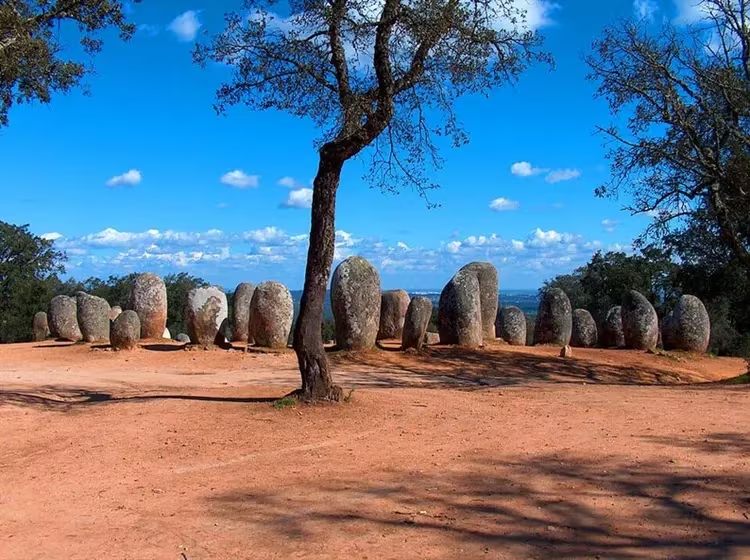
This place will make guests remember Stonehenge. There is beautiful nature here, and a certain mystery is in the air. Attention is drawn to two large stone circles: one larger, the other smaller in diameter. In total, there are a little less than 100 megaliths here, it is assumed that their number exceeded a hundred, but people used the stones for some purpose. Why did the ancients lay out these circles? It happened 4-5 thousand years before our era. Probably for astronomical observations. Some megaliths are covered with symbolic patterns. This place was discovered relatively recently – in 1964.
Mafra
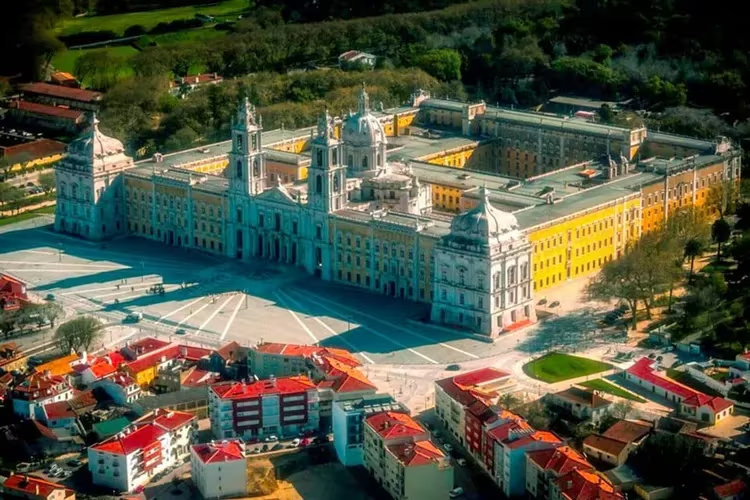
The main attraction in Mafra is the royal residence. It is not difficult to go and see it, because the town is located 30 km from the capital of Portugal. The construction of the residence dates back to the first half of the 18th century. Initially it was supposed that there would be a small monastery, but then the royal family had additional funds, and the plan changed. It was decided to build a magnificent palace. And it succeeded quite well. For a long time, diplomatic receptions were held here. And when the power of the monarchs fell – it happened at the beginning of the 20th century – the residence became a museum.
The palace has more than a thousand rooms, one and a half hundred stairs, dozens of beautiful courtyards. The palace complex includes a monastery where about 300 monks lived. The needs of the monastery were paid by the king. Very beautiful baroque basilica, decorated with marble. 6 organs are known all over the world – they were intended for playing together. 98 bells made the local belfry the largest in the world. Numerous halls of the palaces also deserve attention, a huge library is of particular admiration.
Jose Franco
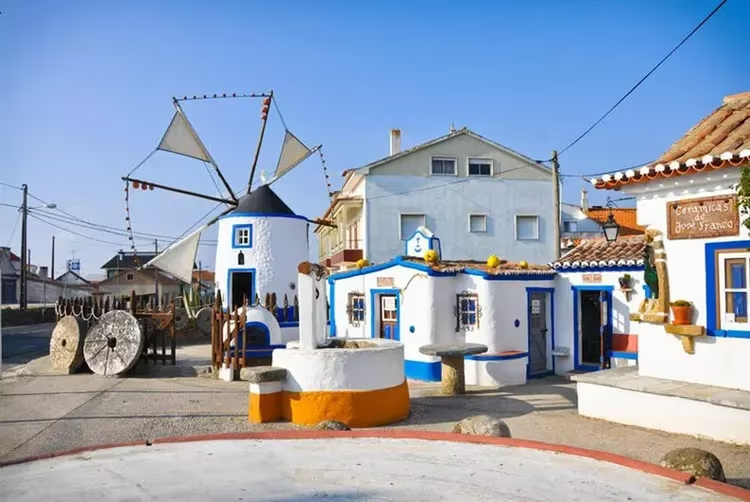
This excursion will be interesting for both adults and children, but especially for those who are engaged in applied art. In the middle of the last century, the potter José Fraco created a real Portuguese village. He has been working with clay since childhood, learning from his father and grandfather. He made wonderful dishes. Moreover, he knew how to win over people at first sight – he had a sense of humor, was very hardworking and good-natured. He was called “the potter's wheel artist”.
He dreamed that someday all people would live in peace, and believers of different faiths would not turn against each other. Once in a dream, the master dreamed of a village – everything in it was so harmonious that it was pleasing to the eye. And young Jose decided to make what he saw in a dream come true. Things went so well that he was blessed by the Pope. Today you can visit this village, see how the peasants lived at the beginning of the last century, admire the exhibition of sculptures. And also – sit in a small tavern, taste local food, and buy something from pottery in a souvenir shop – as a keepsake.
Ericeira
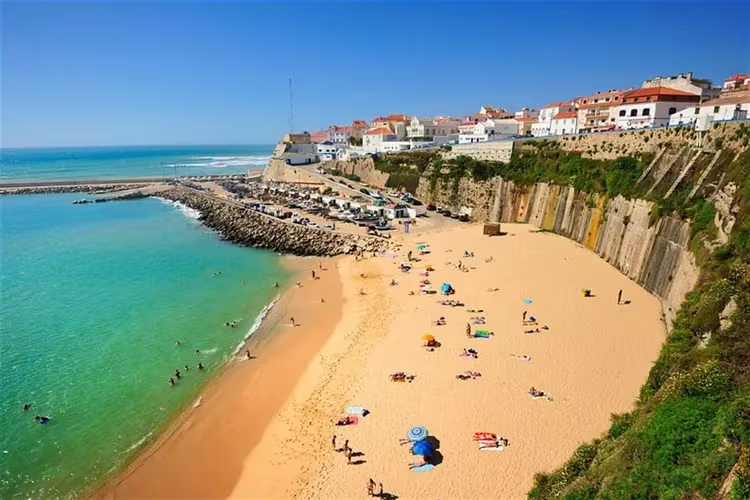
A very colorful fishing village where time seems to have stopped. It is located near Lisbon. Here you can see houses typical for Portugal, a fish market, churches. And from the many cafes and bars just run your eyes. It is worth coming here and tasting delicious dishes prepared from seafood. You can buy local wine, and, of course, go to the market for souvenirs. Ericeira is also known throughout the world as a center for surfing. World celebrities, the best athletes come here to catch the drive by riding the local waves. There are also major world-class surfing competitions.
Paradise Gardens of the Buddha
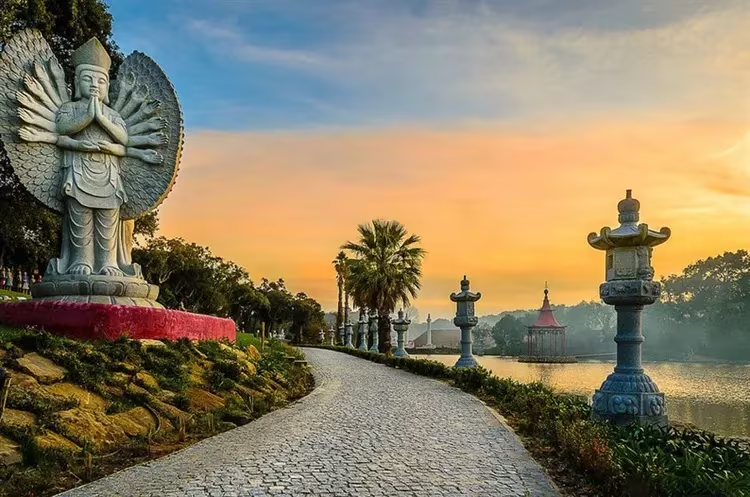
To visit these gardens, you need to overcome about 80 km. They are located away from the traditional tourist roads, surrounded by vineyards. Juse Berardo decided to arrange such a place in his native Portugal – and he did it at the beginning of the 21st century, taking two decades to work. As a result, the gardens should occupy a huge area of 45 hectares. The philanthropist was shocked by the barbarity committed by the Taliban – in Afghanistan they destroyed unique Buddha statues. In his gardens, he decided to acquaint guests with the art of the countries of the East. Therefore, the most significant part of the territory is reserved for this topic.
Here you can see various sculptures – from Buddha to Fu dogs, as well as decorations adopted in Japanese garden design. The “Terracotta Army” with painted sculptures of warriors also makes a great impression on the guests. Another part of the gardens represents the art of the African Shona people (Zimbabwe). Here you can see sculptures made of stone and metal. The third part exhibits works of contemporary art.
Setubal
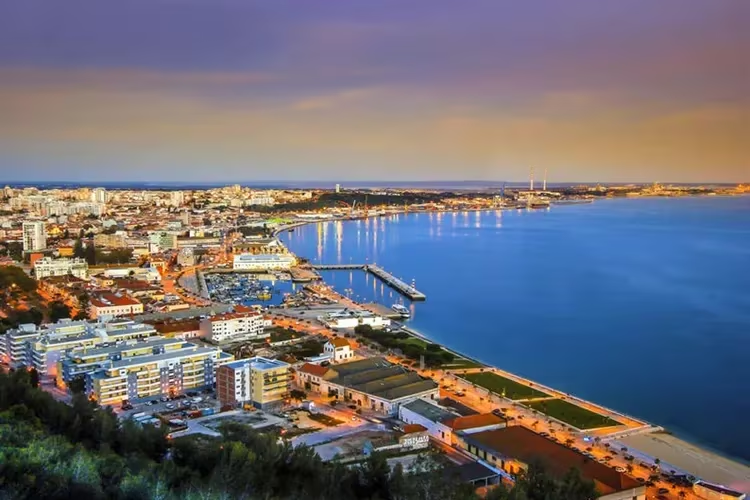
This place has been known since ancient Rome. The remains of the Roman military camp have been preserved, and the place where at that time salt was mined and processed – the “white currency”, salted fish. After the influence of Rome ended, the town began to belong to Portugal. Navigation developed here, a fortress was built to protect the local population from pirates. Today, there is a national park near Setubal, and tourists can combine sightseeing of the city and amazing natural landscapes.
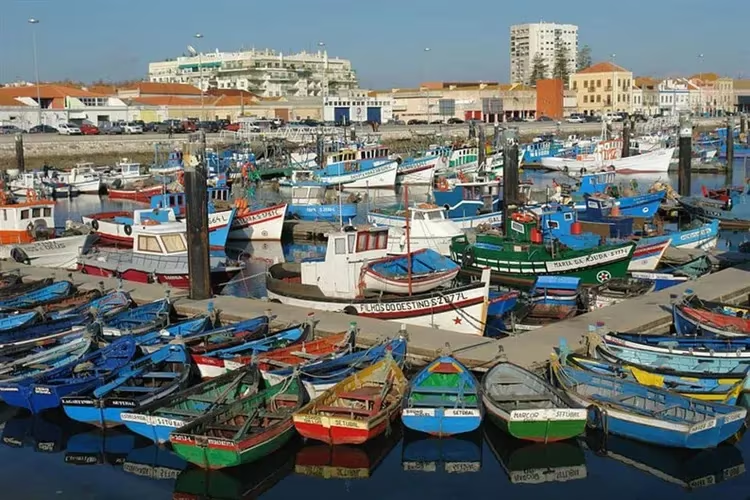
Of the sights, one can note the Cathedral of Santa Maria de Graza, built in the 13th century, the monastery of Jesus, which is already about 500 years old, the ancient square of Jesus. The Museum of Oceanography is located on the territory of the national park. You can rent a boat and ride along the coast, or go to the local market, where everything is sold in the world – from fresh vegetables to fish. It is also recommended to visit the fortress in the upper part of the city, built in the 16th century. It has the shape of a star. Today there is a hotel in the premises of the fortress.
Thus, having arrived in Portugal, you should not limit yourself to Lisbon alone. While in the capital, you can make short trips that take only one day. But you will have the opportunity to see a lot of unusual things. Further – to your taste. Will it be ancient sights – palaces, churches, castles and fortresses? Or would you rather visit museums or maybe national parks? A small country carefully preserves so many architectural masterpieces, works of art, its nature is so good that any of these trips will remain in your memory as one of the best memories.