
9 best sights of the Costa Dorada – photo and description, what to see in the Costa Dorada
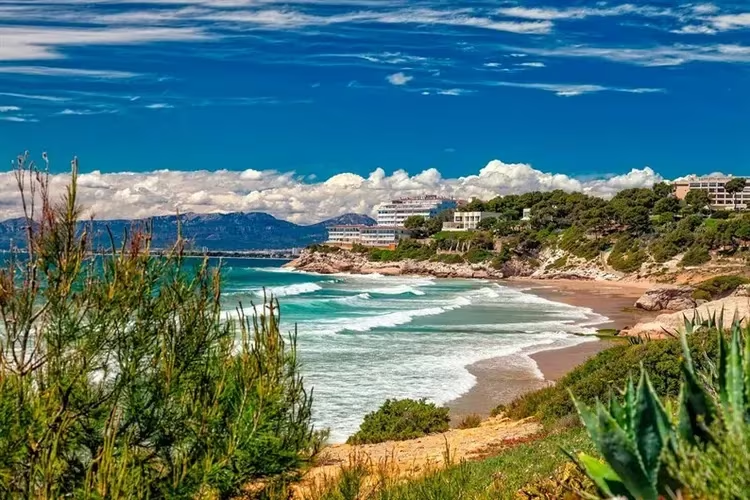
Costa Dorada is a territory of the Mediterranean coast of Spain, stretching for 200 km along the sea. The beaches of the resort are completely covered with golden sand, which is why the area got its name, which translates from Spanish as “Gold Coast”. Magnificent beaches and clear sea annually attract tourists from all over the world, although only three decades ago this resort area was visited only by artists in search of inspiration, and only residents of Spain rested here. Let's talk about the most interesting sights of the Costa Dorada.
Port Aventura
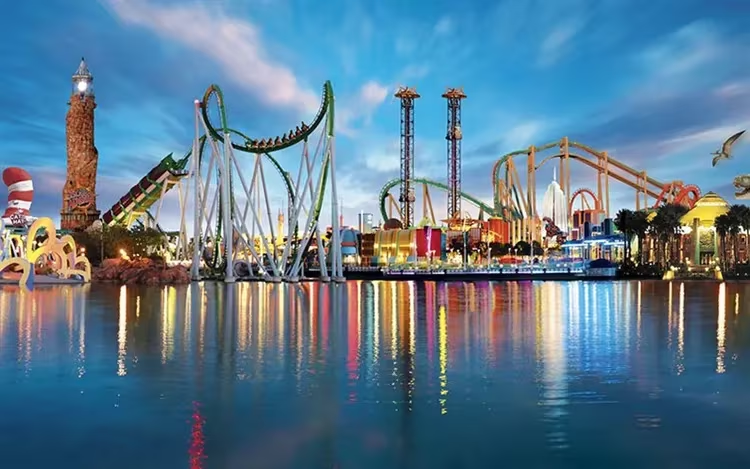
Gradually, the resorts of the Costa Dorada gained popularity not only due to beach holidays, but also due to numerous local attractions, among which the PortAventura amusement park is one of the first places in terms of attendance. On its vast area of about 117 hectares, there is a huge lake, and among beach clubs, high-class hotels, a water park and excellent golf courses, more than 40 different attractions attract adults and children most of all. The most popular entertainment complex in Spain includes six themed sections introducing visitors to certain exotic countries from different parts of the world.
One of the six themed areas of the park belongs to the fabulous land of Sesame. Walking through the territory of the entertainment center, visitors at the same time make an exciting journey “around the world”. In a short time, they have the opportunity to visit North America in the Wild West and Mexico, in the south of Europe in the Mediterranean, as well as visit China in Asia and get acquainted with Polynesia in distant Oceania.
mediterranean
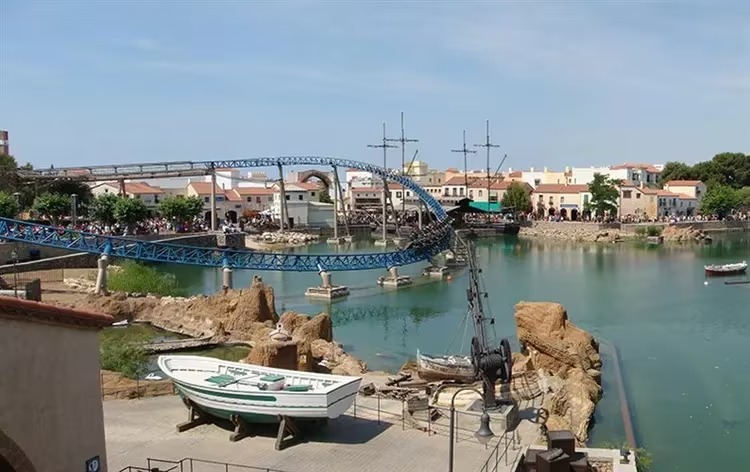
In the park area of the “Mediterranean”, the high-speed roller coaster of the Furious Beiko attraction is especially popular with visitors, on which the speed increases to 135 km / h in just 3.5 seconds. On the lake within the “Mediterranean” often arrange extreme swims in boats accompanied by colorful fireworks. Most tourists prefer to travel around the amusement park on a ship designed for this purpose from a specially equipped pier “Mediterranean”.
China
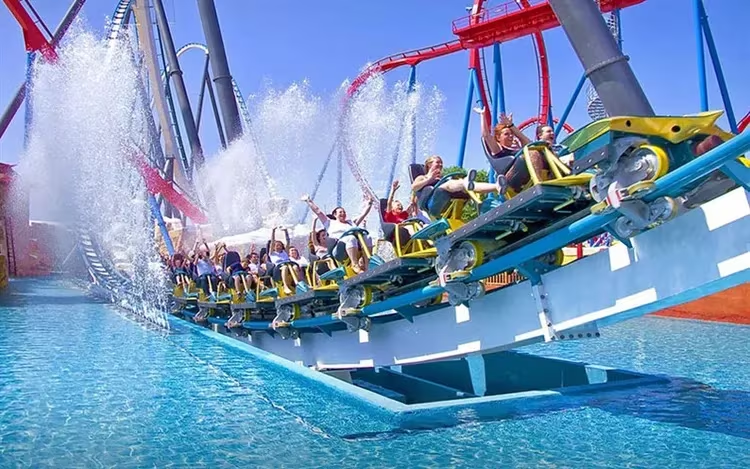
In the “China” zone, visitors are interested in the “Shambhala” attraction, which gives the opportunity to ride the highest roller coaster, up to 76 meters, existing in Europe.
Wild West
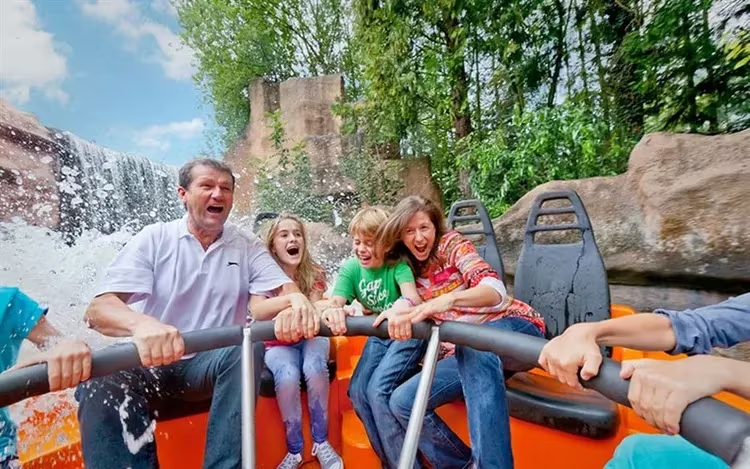
Tourists who want to fully experience the cowboy spirit should visit the territory of the park, called the “Wild West”. In addition to shooting from a pistol in a shooting gallery stylized as a cowboy saloon, here you can ride a unique train, the Crazy Worm, which moves along unusual wooden rails, making sharp turns, then descending, then rising. In addition to a portion of adrenaline received while riding this attraction, here you can make a high-speed descent along the water stream of the Silver River, using improvised tree trunks instead of boats.
Polynesia
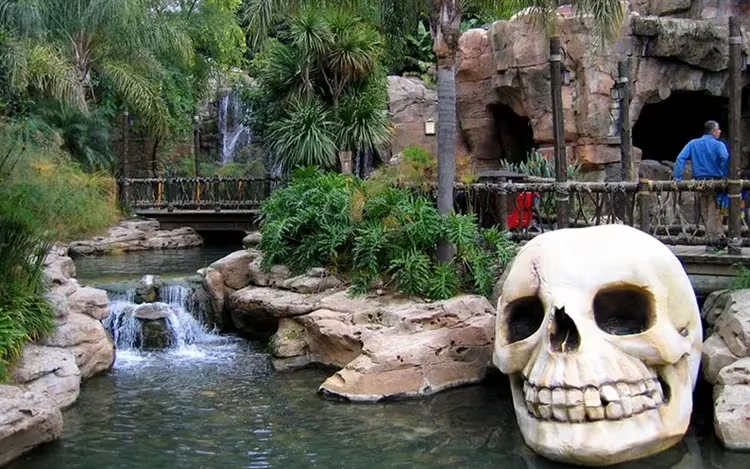
Visitors to the attraction “Sea Odyssey” in the “Polynesia” zone will be able to visit the underwater marine laboratory and get acquainted in detail with the underwater world of the ocean. During the water entertainment show, called Tutuki Flash, its participants feel like they are in the mouth of a volcano, from which they rush down into the lake at a speed of about 50 km / h.
Mexico
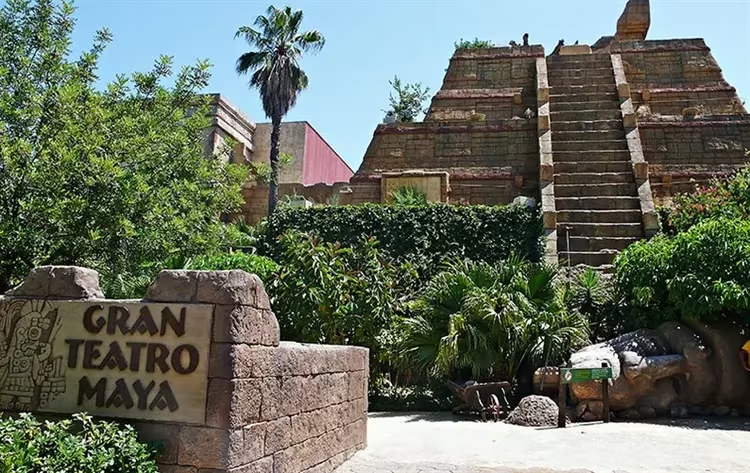
For thrill-seekers in the Mexico zone, there is the Flight of the Condor attraction, whose visitors have the opportunity to experience the effect of free fall from a height of 100 meters. At these minutes, a person's stomach is reduced to the minimum limits and breathing is literally interrupted. In “Mexico” there is a labyrinth of various attractions in the “Temple of Fire”, where its visitors become participants in an exciting and frightening fire show.
Sesame
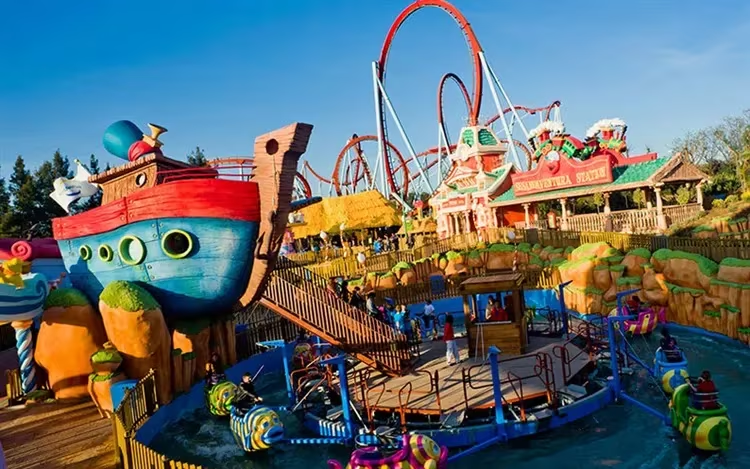
The Sesame zone is for kids. Here they can chat with their favorite cartoon characters and take pictures with them near the huge Magic Tree, as well as ride various slides and carousels.
Maritime Boulevard Jaime
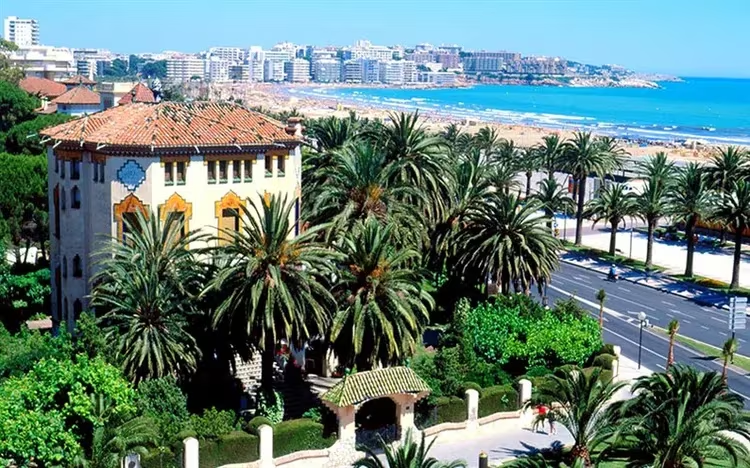
Not every seaside town has a waterfront boulevard as its attraction. However, this statement does not apply to the sea boulevard Jaime stretching along the famous Levant beach in Salou. Jaime I is the king of Spain, who ruled the country in the 13th century and became famous as a conquering king.
It is no coincidence that the pedestrian part of the boulevard is lined with mosaics depicting the coats of arms of aristocrats who personally supported Jaime I in campaigns against the islands that later became Spanish territories. Grateful Spaniards erected a monument to their king in the center of the boulevard in 1965 as a sign of gratitude for his services to his people. The boulevard is famous not only for the fact that it bears the royal name, but also for its grandiose dimensions, which have no equal on the entire Mediterranean coast. Jaime Boulevard stretches along the seashore for more than 1 km.
Gaudí Center in Reus
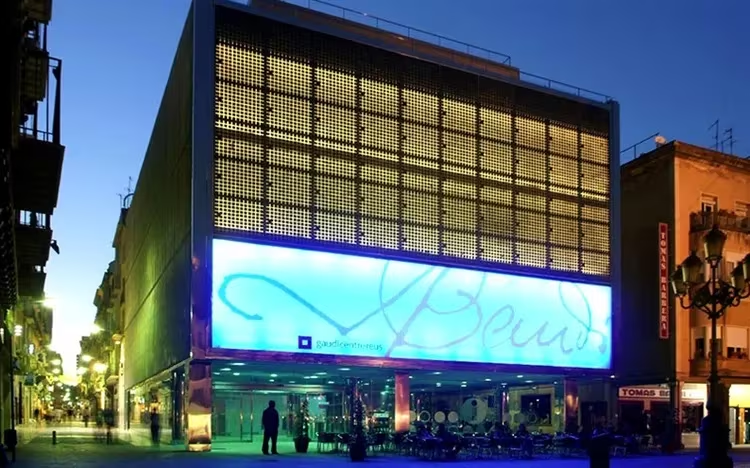
Another attraction on the Spanish Gold Coast is the Gaudí Center in Reus. Located on the market square of this ancient town, the building was created by modern architects who inherited Art Nouveau and Art Nouveau styles in architectural art from the Catalan architect Antonio Gaudí. There are no usual exhibits in this multimedia museum. Everything here is created with the latest audio and video technologies.
On the second floor, the glass floor plays the role of a computer monitor showing a map of Barcelona. Buildings designed by the famous Spanish architect are marked on the map with special signs. As soon as the visitor swipes his foot on the floor near the object he is interested in, the corresponding film appears on the wall screen. Tourists are also interested in the mirror cinema, where a film about Gaudí is constantly broadcast. Sitting on swivel chairs, visitors can follow the frames of the film, which “roam” around the cinema hall, appearing suddenly on the floor, then on the wall, then on the ceiling.
Roman aqueduct
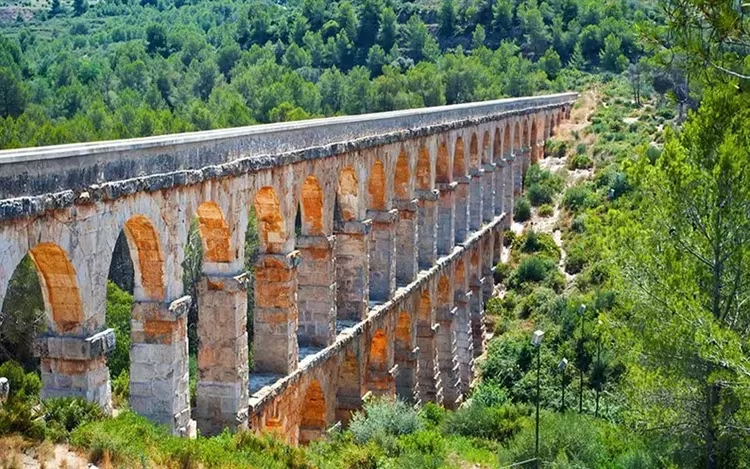
Antique lovers will be delighted to visit the ancient Roman aqueduct located near Taragona. With the help of this ancient aqueduct, water in ancient times entered the city from the Francoli River. The length of the aqueduct is 220 m, and the narrow chute, through which water once flowed, is at a height of 27 m.
In the Middle Ages, this kind of water supply fell into disrepair and soon the inhabitants of the surroundings forgot about its purpose, and because of the location of the aqueduct over the abyss, they called it the Devil's Bridge. Built back in the days of Roman rule, this aqueduct is on the UNESCO heritage list.
Amphitheater of Taragona
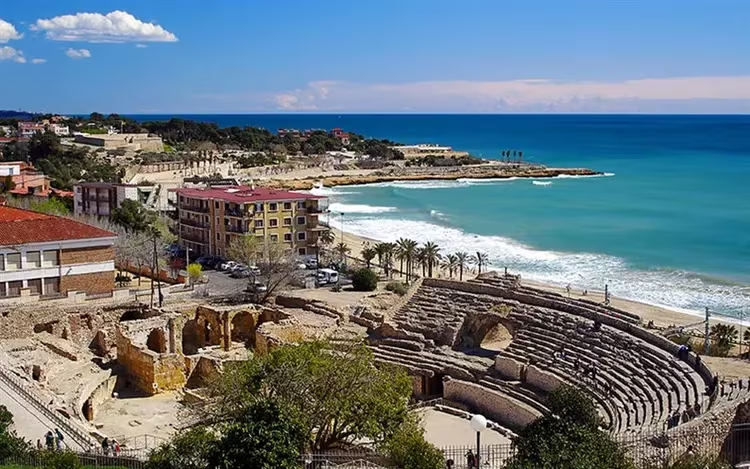
The amphitheater recently discovered by archaeologists also belongs to the Roman heritage of Taragona. In those distant times, the residences of the Roman emperors Augustus and Hadrian were located in Taragona. Naturally, the patricians in those days entertained themselves with terrible spectacles of bloody skirmishes of gladiators both among themselves and with wild predators. Naturally, these “fun” took place in the open air on the territory of the amphitheaters built for this purpose.
The amphitheater of Taragona was built in the 2nd century and accommodated about thirteen thousand people. Despite the fact that the amphitheater was built in such ancient times, the stands, the arena and the main gate are well preserved on its territory. During the persecution of Christianity, the arena of the amphitheater became the place of execution of priests. In 259, Bishop Fructuosa was burned at the stake here. Since then, every year on January 21, Tarragona residents light candles in all churches in memory of his martyrdom.
Cathedral of Santa Maria
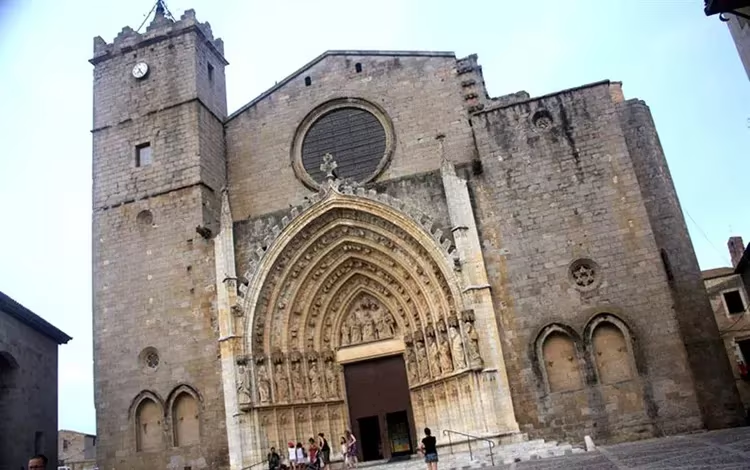
In the historical center at the highest point of Taragona is the main temple of the city and the largest cathedral in Catalonia, the Cathedral of Santa Maria. This cathedral was built from the 12th to the 14th centuries. Perhaps that is why its architecture shows a mixture of Gothic and Romanesque styles. Interestingly, the construction was originally conceived as the construction of a fortress. However, the protracted construction and high financial costs eventually led to the construction of the cathedral. There are 15 bells on the high bell tower of the cathedral. Among them there are those that were made by ancient masters back in 1313-1314. These bells are among the most ancient bells among all European churches.
Monastery of Santes Creus
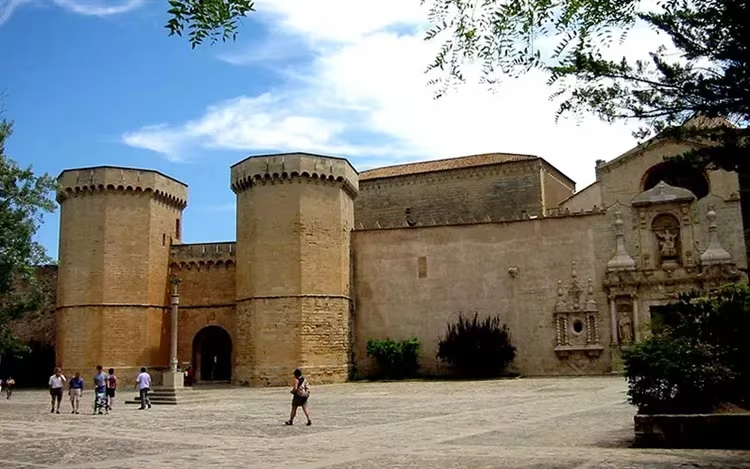
Since the 12th century, the Santes Creus Monastery has been considered the cultural center of Spain, since its patrons were the reigning persons of Catalonia. Until the 19th century, monks lived here, but their lands were taken away from them and soon the monks left the monastery. In the hall of the monastery, intended for monks, there are no decorations. The monks in it once slept right on the floor. Today, thanks to excellent acoustics, the monastery hall is used for chamber concerts. This monastery is also famous for the fact that King James II of Spain is buried here.
Ebro Delta
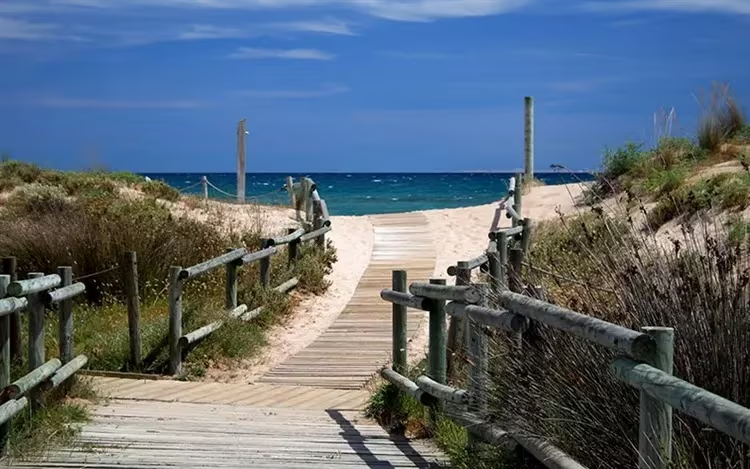
Anyone who is interested in wildlife should visit the Ebro Delta, where the river flows into the Mediterranean Sea. Migratory birds live here on an area of 7 thousand hectares, many of which are rare and endangered species. In the delta expanse for 400 species of fish, which, if desired, can be caught even with your hands. Since 1983, the territory of the delta has acquired the status of a protected area, which is famous not only for its species diversity of fauna, but also for sand dunes, tropical vegetation and wonderful beaches, which annually receive the “blue flag”. Therefore, the Catalans and many tourists prefer to relax in the picturesque Ebro Delta, the most beautiful place on the Costa Dorada.