
















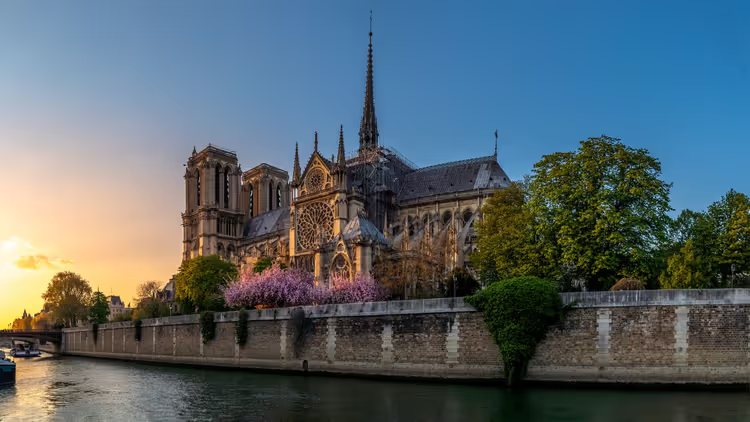
Ile de la Cite in Paris: 12 places, tickets and one day itinerary
Île de la Cité sits in the very middle of Paris. The city was born here, and its main monuments still stand here today. You can walk around the island in a couple of hours.
Entry to Notre-Dame Cathedral is free (according to the cathedral's official website, 09/2026). You pay separately for the stained glass of Sainte-Chapelle and the royal prison of the Conciergerie. Below are 12 places on the island and current prices, so you can plan your day without unnecessary queues.
Ad: this article contains affiliate links, we earn a commission if you book through them, at no extra cost to you.
Île de la Cité: why Paris began right here
💡 In short:
- Start with Notre-Dame and head west, toward Sainte-Chapelle and the Conciergerie.
- Book Sainte-Chapelle tickets in advance; in summer, available slots are scarce.
- Tickets and opening hours: 09/2026, verified on the official Sainte-Chapelle website.
Paris grew out of a Celtic village on this island. More than two thousand years ago, the Parisii tribe lived here, and the future capital took their name. In 52 BC, Julius Caesar set up camp near their settlement, and soon the Roman city of Lutetia appeared on the island, with a governor's palace and a temple to Jupiter.
In the Middle Ages, the Cité became the center of state and church power in France. A royal residence, a bishop's palace, and a cathedral were built here. The island's name comes from the French word cité, meaning "city." You'll start your first walking tour right here, at the cathedral walls.
Sights of Île de la Cité
The island is surrounded by the Seine and connected to the banks by several bridges. On this small area you'll find a cathedral, a chapel with stained glass, a prison museum, and the oldest hospital in Paris. Below are 12 sites on the island.
Notre-Dame Cathedral
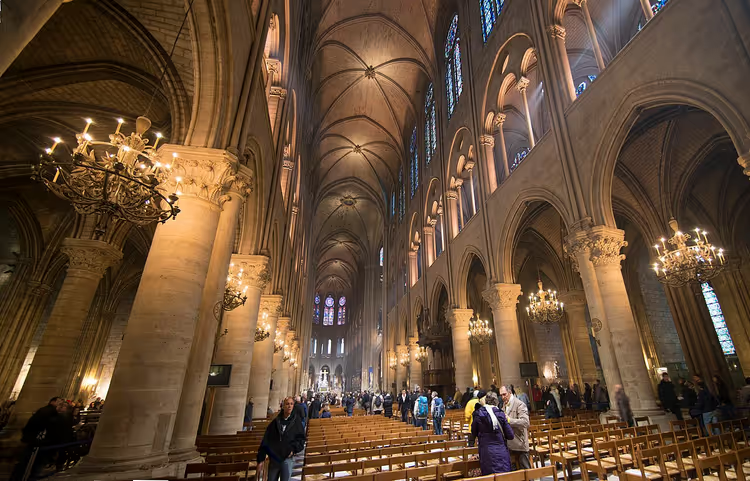 © Jorge Láscar from Melbourne, Australia · CC BYPhoto: Jorge Láscar from Melbourne, Australia, CC BY (https://creativecommons.org/licenses/by/2.0), Wikimedia Commons
The main symbol of the island and of all of France. The first stone of the Gothic cathedral was laid in 1163, and construction stretched over more than 180 years. The fire of April 15, 2019 nearly destroyed the building. After a five-year restoration, the cathedral reopened in December 2024.
Entry is free, but it's better to reserve an entry slot on the official website: it's free and saves you an hour in line. The facade is divided into three tiers: portals with bas-reliefs, a huge rose window, and a gallery of chimeras. Two towers rise to about 70 meters. The nave is about 130 meters long, and the vaults reach up 35 meters. A separate paid climb leads up to the towers.
- Getting there: Cité metro, exit toward the square in front of the cathedral, 2 minutes on foot.
- The catch: in summer the line to the facade stretches for hundreds of meters, come at opening time.
Sainte-Chapelle
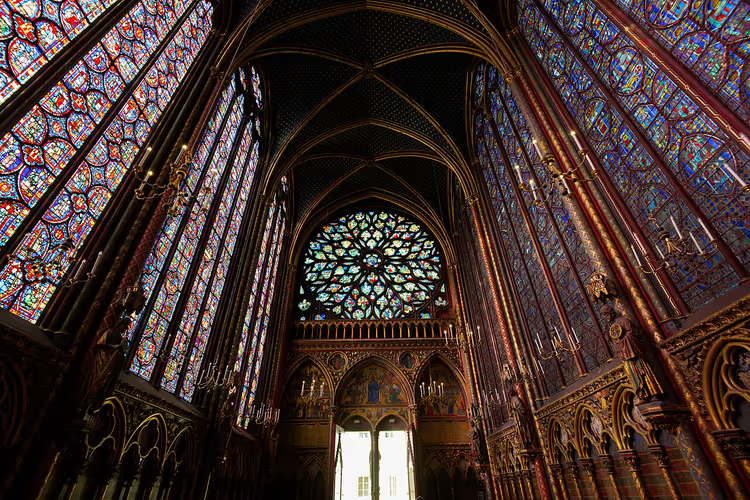 © Maarten Heerlien from Voorschoten, The Netherlands · CC BYPhoto: Maarten Heerlien from Voorschoten, The Netherlands, CC BY (https://creativecommons.org/licenses/by/2.0), Wikimedia Commons
A chapel in the courtyard of the Palais de Justice and one of the finest examples of Gothic architecture in the world. King Louis IX built it in the 13th century to house relics of the Passion of Christ brought from Constantinople. The basilica was consecrated in 1248.
The upper chapel is ringed by 15-meter stained glass windows with more than a thousand scenes. Sunlight passes through them and colors the walls blue, red, and gold. In the lower chapel, the vault is painted like a starry sky.
- Cost: €16 for EEA residents and €22 for others (as of 09/2026, Sainte-Chapelle website).
- Hours: April-September 9:00-19:00, October-March 9:00-17:00, closed January 1, May 1, and December 25.
- The catch: the chapel is small and can't hold a crowd, so keep your entry slot ready in advance.
Conciergerie
The castle on the western side of the island was built in the 13th century. At first it was the royal family's residence, and after the court moved to the Louvre it became a state prison. During the French Revolution, thousands of prisoners were held here before the guillotine, and Queen Marie Antoinette spent her last days in these cells.
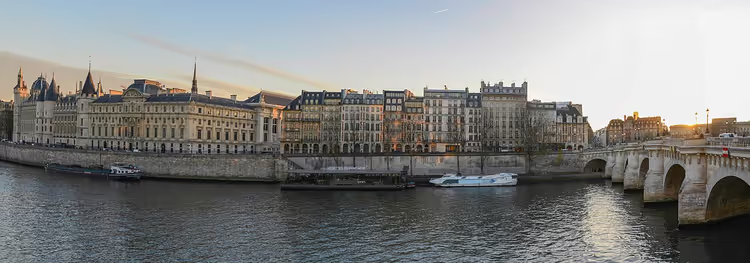 © Jorge Láscar from Melbourne, Australia · CC BYPhoto: Jorge Láscar from Melbourne, Australia, CC BY (https://creativecommons.org/licenses/by/2.0), Wikimedia Commons
Today it's a museum. You'll see recreated cells for prisoners of different social classes, the spacious Hall of the Guards with three rows of columns, and the room where the Revolutionary Tribunal sat. From the embankment, the castle is easy to recognize by three rounded towers and one square tower with a clock.
- Cost: it's better value to take a combined ticket with Sainte-Chapelle, €23 for EEA residents and €30 for others (as of 09/2026, visitor information).
- The catch: some halls are closed for restoration, and the set of rooms changes.
Palais de Justice
The palace occupies most of the western half of the island. Until the 14th century it was France's main administrative center and royal residence, until Charles V moved to the Louvre. The building was then given to the parliament and the kingdom's supreme court. The palace got its modern neoclassical look, with a monumental western facade and a tall colonnade, in the 19th century.
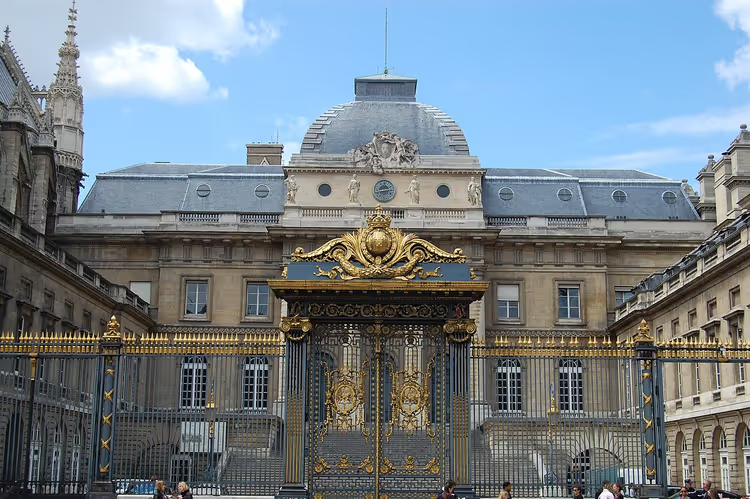 © King of Hearts · CC BY-SAPhoto: King of Hearts, CC BY-SA (https://creativecommons.org/licenses/by-sa/3.0), Wikimedia Commons
Today courts operate here, so tourists are not allowed inside. Take a look at the facade from Boulevard du Palais and step into Sainte-Chapelle, which stands in the inner courtyard.
- Who it's for: for those who want to see the working center of French justice from the outside.
Place Dauphine
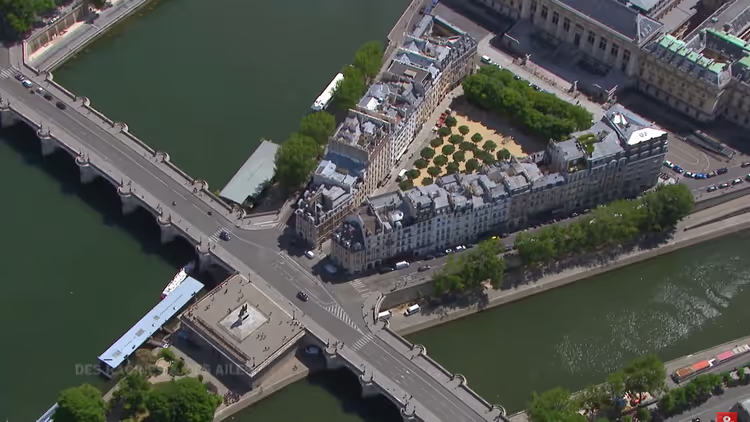 © Des Racines et des Ailes · CC BYPhoto: Des Racines et des Ailes, CC BY (https://creativecommons.org/licenses/by/3.0), Wikimedia Commons
A small triangular square a few steps from the cathedral, founded by order of Henry IV in 1607. It was named after the Dauphin of France, the future Louis XIII. The square is framed by three-story houses with arcades, and chestnut trees and benches stand in the center.
The spot is quieter than the neighboring embankments. People play pétanque on a sandy court and have lunch on the terraces of several restaurants. It's a good place to take a break mid-walk and have a coffee.
- Who it's for: for a quiet pause in the shade, away from the crowd at the cathedral.
Pont Neuf
The oldest surviving bridge in Paris, although its name translates as "new." The stone bridge was built in 1606. For the first time in the city, a bridge had no houses or shops blocking the view of the Seine, so passersby could admire the river.
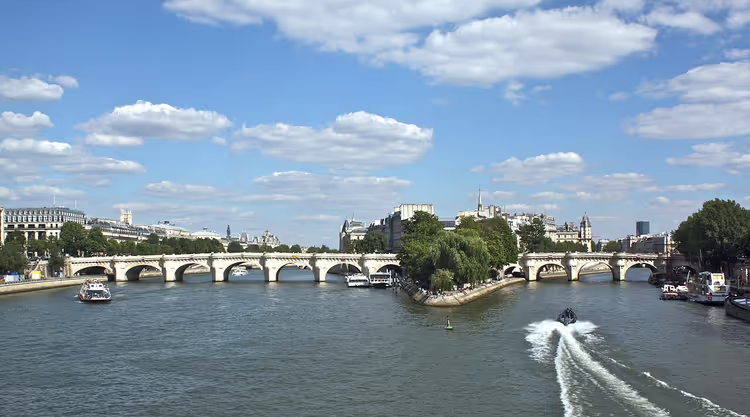 © Rmrfstar · CC BY-SAPhoto: Rmrfstar, CC BY-SA (https://creativecommons.org/licenses/by-sa/3.0), Wikimedia Commons
The bridge is over 200 meters long, rests on twelve arches, and is lined with a pedestrian walkway and balustrade. Cross it at the western edge of the island to see the Seine from an open spot.
Statue of Henry IV
On Pont Neuf stands an equestrian statue of King Henry IV. It was erected a few years after the monarch's death in 1610. During the revolution, the monument was torn down and sent to be melted, then recast in 1818 and returned to its original place.
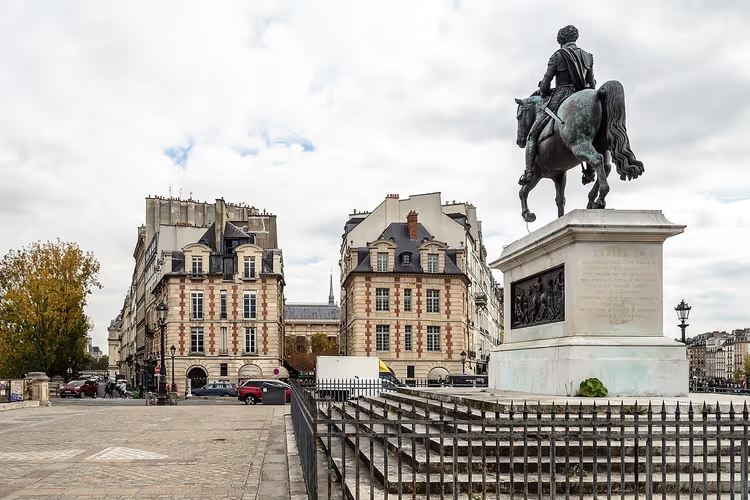 © Domenico Convertini from Zurich, Schweiz · CC BY-SAPhoto: Domenico Convertini from Zurich, Schweiz, CC BY-SA (https://creativecommons.org/licenses/by-sa/2.0), Wikimedia Commons
Today it's a handy landmark. If you're standing by the statue, you're on Pont Neuf at the western tip of the island.
Hôtel-Dieu
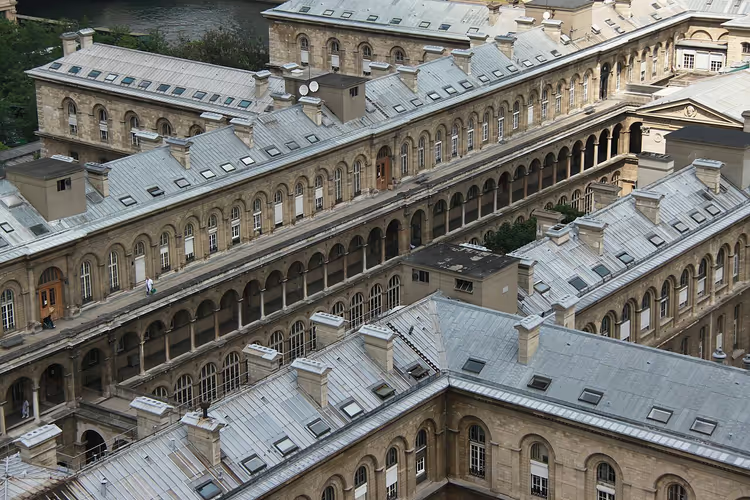
Paris's oldest hospital stands next to Notre-Dame. The institution was founded back in 651 as a shelter and treatment center for the poor and the sick. For centuries, Hôtel-Dieu remained the only place in the city where the poor could get help, and over time it came to occupy almost the entire width of the island.
 © Cristian Bortes from Cluj-Napoca, Romania · CC BYPhoto: Cristian Bortes from Cluj-Napoca, Romania, CC BY (https://creativecommons.org/licenses/by/2.0), Wikimedia Commons
The current buildings were rebuilt in the 19th century. Two parallel structures are connected by galleries, and today they house part of the hospital complex and a medical school. Tourists aren't allowed inside, but the facade facing the square is easy to see on a walk.
Archaeological Crypt of Notre-Dame
Beneath the square in front of the cathedral lies an archaeological museum that opened in 1980. You descend underground and see the actual foundations of buildings and streets that sank below the surface. The exhibition shows how Paris developed from Roman Lutetia to the Middle Ages.
 © Kurt Raschke · CC BYPhoto: Kurt Raschke, CC BY (https://creativecommons.org/licenses/by/2.0), Wikimedia Commons
- Cost: €11 full price and €9 reduced (as of 09/2026, official website).
- Hours: Tuesday through Sunday, closed on Mondays.
- The catch: the entrance from the square is easy to miss, look for the stairs down at the northern edge of the parvis.
Point Zéro
 © Serge Melki · CC BYPhoto: Serge Melki, CC BY (https://creativecommons.org/licenses/by/2.0), Wikimedia Commons
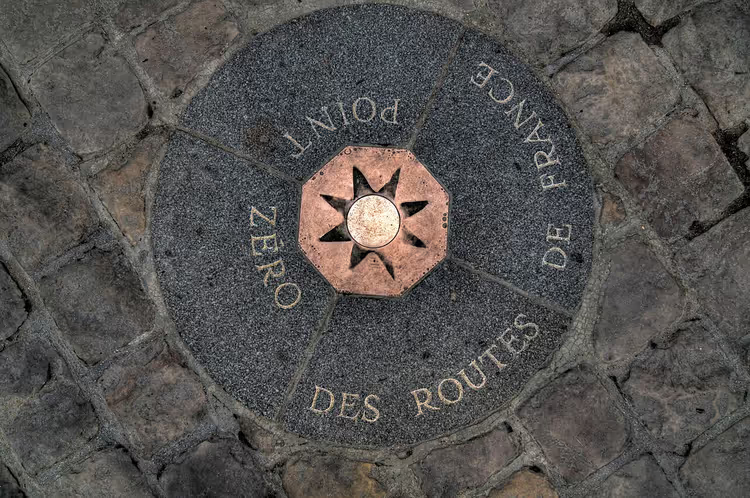
Fifty meters from the western facade of the cathedral, a bronze star is set into the stones (see map). This is Point Zéro of France, the point from which distances to all cities in the country are measured. According to legend, if you stand on the star and make a wish, it will come true.
- Who it's for: a quick stop on the way from the cathedral to Pont Neuf.
Memorial to the Victims of Deportation
At the eastern tip of the island is a memorial to all those deported and killed in concentration camps. It takes the form of a narrow underground gallery whose walls shimmer with crystal droplets. Each droplet represents one of roughly 200,000 names.
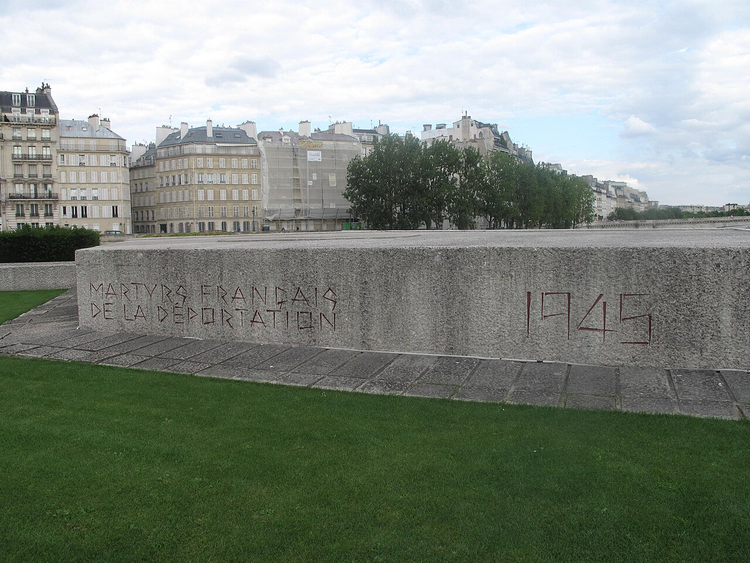
The memorial was opened by General Charles de Gaulle in 1962. Admission is free, and it's a quiet place to pause at the end of a walk.
Flower Market
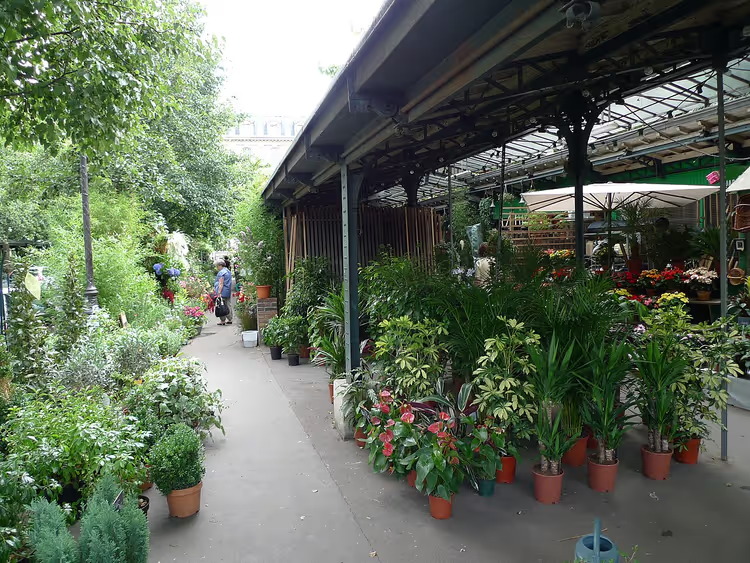
In the very heart of the island, on Place Louis-Lépine, one of Paris's largest flower markets is in full swing. It smells of exotic flowers, shrubs, and herbs, and nearby vendors sell seeds, vases, and home goods.
 © zoetnet · CC BYPhoto: zoetnet, CC BY (https://creativecommons.org/licenses/by/2.0), Wikimedia Commons
- Hours: daily 8:00-19:30, open every day (as of 09/2026, city website).
- Who it's for: anyone who wants to buy a bouquet or take a break from stone and stained glass.
Tickets and opening hours
The cathedral remains free, but tickets to the other monuments are best secured in advance. In summer, Sainte-Chapelle time slots sell out several days ahead.
Place | Entry (09/2026) | Hours | Closed |
|---|---|---|---|
free | daily | none | |
16 € (EEA) or 22 € | Apr-Sep 9:00-19:00, Oct-Mar 9:00-17:00 | January 1, May 1, December 25 | |
Sainte-Chapelle and Conciergerie | 23 € (EEA) or 30 € | per monument hours | per monument |
11 € or 9 € | Tue-Sun | Monday | |
free | 8:00-19:30 | none |
Sainte-Chapelle and Conciergerie tickets on Tiqets
Tours and tickets in Paris
Guided tours, skip-the-line tickets and activities — most offers can be cancelled free of charge.
See offers on TiqetsThe widget loads once you give your consent.
The combined ticket pays off if you visit both monuments on the same day. It is cheaper than two separate tickets and is valid according to each monument's schedule.
Where it is and how to get there
Île de la Cité lies in the middle of the Seine and belongs to both the 1st and 4th arrondissements of Paris. It is the geographic center of the city. The easiest way to get there is by metro: the Cité station on line 4 is right on the island.
The Saint-Michel and Châtelet stations are nearby, a 5-10 minute walk from the cathedral. Several bridges cross to the island, so you can easily walk here from either bank. A walking tour of the entire island takes about two hours without going into museums.
Île de la Cité on the map
The island stretches from west to east. The western part is occupied by the Palais de Justice, the cathedral stands in the center, and a green point with a memorial spreads across the eastern tip.
⁉️🤔 Frequently asked questions
How much time do you need for Île de la Cité?
Two hours is enough for a walking tour without museums. If you go into Sainte-Chapelle, the Conciergerie, and the crypt, allow half a day. In summer, add extra time for lines and security checks at monument entrances.
Do you need to book entry to Notre-Dame?
Entry to the cathedral is free, and a timed slot is not required. Booking on the official website is also free and significantly cuts the wait. Paid access to the towers is booked separately.
How much do tickets to Sainte-Chapelle and the Conciergerie cost?
A separate ticket to Sainte-Chapelle costs €16 for EEA residents and €22 for everyone else. A combined ticket for both monuments costs €23 and €30 respectively (as of 09/2026, official website).
What is closed on Mondays?
The archaeological crypt under the square in front of the cathedral is closed on Mondays. The cathedral, Sainte-Chapelle, and the Conciergerie are open on Monday, but hours are worth checking on official websites before your visit.
Is the flower market open every day?
Yes, the market on Place Louis-Lépine is open daily from 8:00 AM to 7:30 PM.
In short: what to book
If you have one day, start with Notre-Dame, then get Sainte-Chapelle and the Conciergerie with a combined ticket, and finish at the flower market. If you have half a day, stick to the cathedral, Place Dauphine, and the Pont Neuf embankment. With kids and no museums, a walk around the island, the crypt, and the market will keep you busy.
Book your Sainte-Chapelle and Conciergerie slots in advance on Tiqets, so you don't lose half a day in line.

A small editorial team writing guides for independent travel. We travel ourselves, but we haven’t been everywhere, so we check prices, opening hours and how to get there against official sources.