
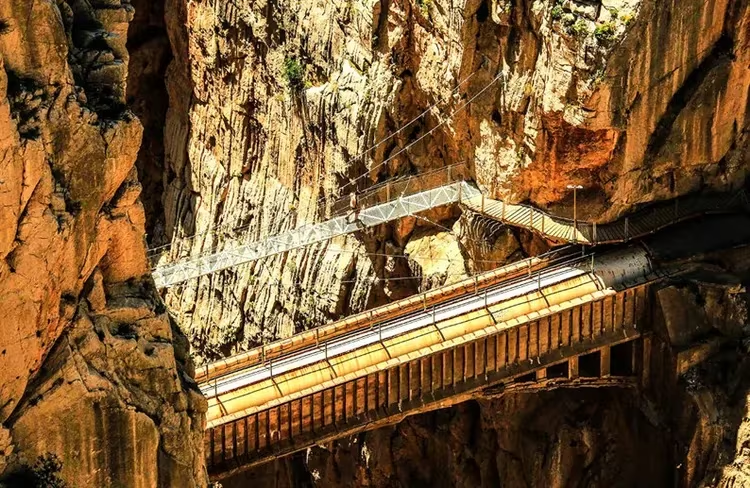
All over the world you can find unique attractions that cause unhealthy interest among fans of extreme sports. Many of them are the result of the centuries-old history of our planet and were created by the most skillful architect – Nature. But there are also such unusual creations, in the creation of which different generations of people are involved. And one of such magnificent creations, the honor of which we also had the honor to see, is a system of unusual auxiliary rails and scaffolding that was used by builders in the construction of a dam in the Spanish province of Malaga. The outwardly unremarkable steep rock with iron piles rusted over the years is known in Spain and far beyond its borders under the unusual name of the Royal Path.
Origin and name
So, how did the unique creation of the hands of mankind appear, and even be able to get such an unusual name? If we turn to history, it turns out that piles and other auxiliary structures were created exclusively for construction. In particular, when the need arose at the end of the 18th century to erect the Conde del Guadalorce dam, the issue of workers' access to the construction site had to be resolved. Due to the fact that the bulk of the work was carried out at a height of more than 100 meters, and it was necessary to go along the gorge to the dam, we had to approach the solution of the issue creatively. And so, one after another, railway rails and piles appeared, along which the workers had to move.
If it was possible to figure out the origin of the road, then its name would have to be thoroughly puzzled. After all, apparently, it should be associated with the Spanish monarch. But what did the king have to do with awkward platforms? Maybe it was he who came up with the idea to create a path of rails and piles? Or did he himself take part in the construction of the dam? No. As the primary sources say, the path really owes its name to the king of Spain, but it was fixed after the monarch took part in the opening of the erected dam. Since there was no other way to the dam, even a high-ranking person had to repeat the peculiar feat of dozens of workers and go to it along narrow bridges, which were located at a bewitching height in the middle of the gorge.
Structural features
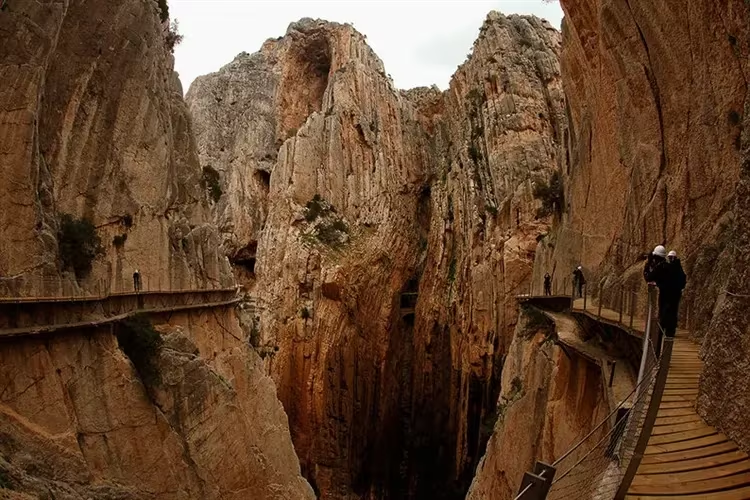
Today, the trail is unusually popular with hikers who love to tickle their nerves and test their courage. Thrill-seekers come to Malaga from all over the world and are eager to follow the path that for several years the workers delivered materials and equipment for the construction of the dam. Every day they risked their lives, step by step stepping on unstable concrete floors, which are located at great heights.
El Caminito del Rey (the second name of the unique structure) has not been officially used since 1920. The network of iron supports and piles has a total length of more than three kilometers, and in some places the width does not exceed one meter. The path circles the rocky ledges of El Chorro and is considered one of the most dangerous places in the world. Despite the frightening reviews and notoriety, thousands of tourists come to see the amazing creation of the Spaniards every year. Although not everyone dares to embark on a path that excites the imagination, for many, the interest and inspiring example of the Spanish monarch Alfonso XIII outweighs the fear and real risk to life.
Modern look
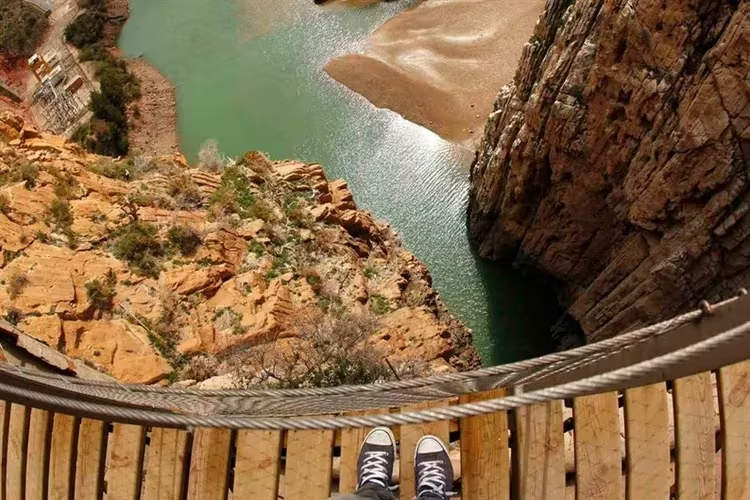
Over the years, part of the structure collapsed. Therefore, the path became even more difficult and dangerous. And after the death of four visitors in 1999 and 2000, the country's government decided to limit the access of tourists to the King's Trail. Access to the road was closed, and huge posters appeared in its vicinity, talking about its potential danger and threatening with huge fines for all those who dare to violate the ban. But the daredevils, thirsty for new sensations, continued to find a way to get to the forbidden object. And as a reward for courage and zeal, each visitor of the attraction gets the opportunity to appreciate the amazing views that open up on the canyon.
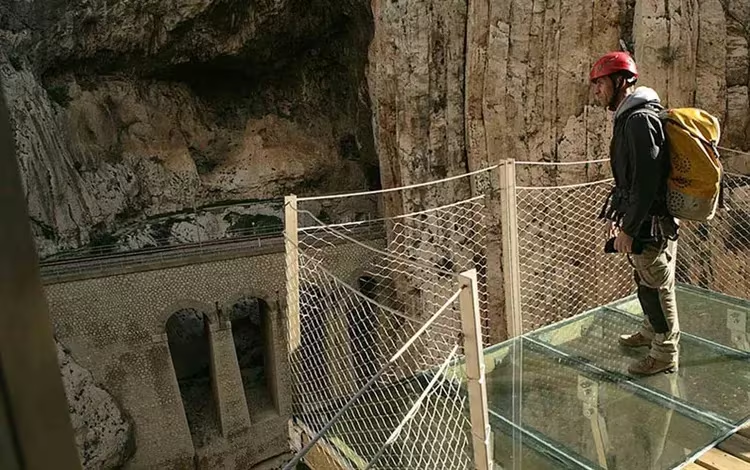
Seeing such a serious desire of visitors to get into an intriguing and dangerous place, saluting their brave ancestors, the leaders of the country nevertheless decided to restore El Caminito del Rey, which happened in 2011. To this end, a number of spans, where concrete slabs collapsed and supports rusted, were completely replaced. It is planned that the path will reopen to visitors in 2015. From now on, every extreme enthusiast will have the opportunity to legally get on a unique trail. But you need to be prepared for the fact that without a helmet and safety ropes you will not be allowed further than the signs.
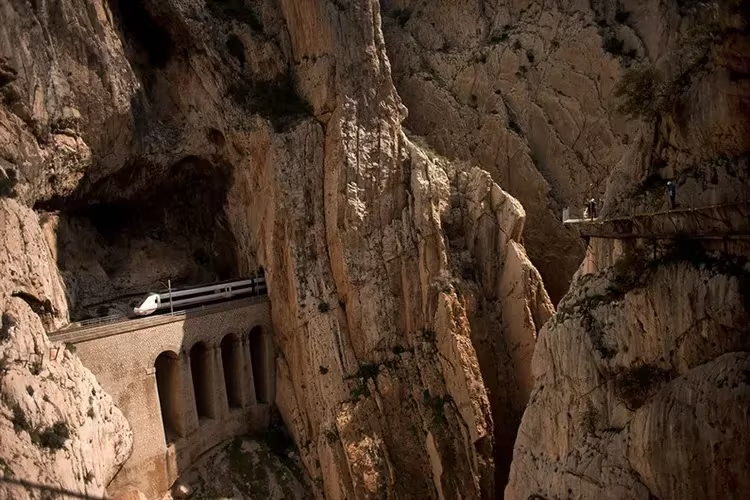
In addition, in order to attract additional tourists and make the solemn event widely publicized, it was decided to allow everyone to appreciate the beauty of the picturesque canyon and make a risky journey at a dizzying height above the gorge absolutely free of charge. But you should hurry, because such generosity of the country's leaders will last only a few months.
How to get there
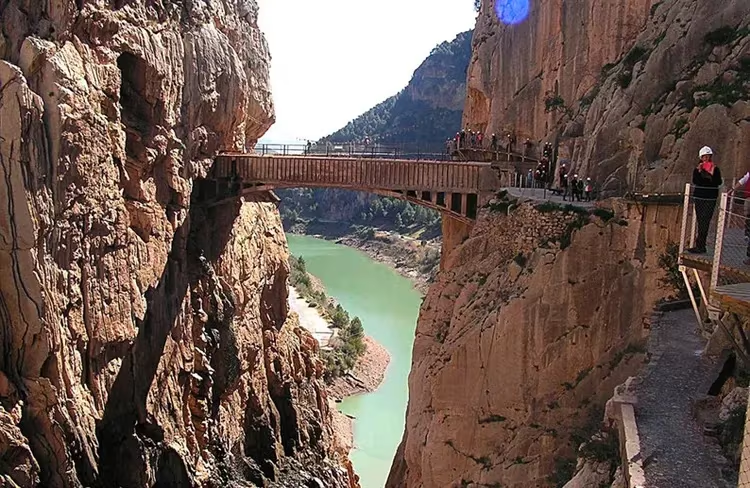
There are several popular routes. Travel by train to the town of Alora is in particular demand, after which there are only 12 km left to the trail, which is easiest to overcome by taxi. You will have to walk about 20 minutes and walk.
Interesting articles:
It would be more practical to travel by car. First you have to get to the town of Alora mentioned above, after which you turn left and drive through two small villages.
Please note that it is best to look into one of the local shops and purchase the necessary set of cables and safety carabiners. Such a set will cost about 65 euros. It is worth taking care of the right choice of shoes, giving preference to trekking boots. Going for a walk, do not forget to stock up on water and food, because the path is quite difficult and will take several hours.
Be careful, because you have to get acquainted with one of the most dangerous places on the planet!