
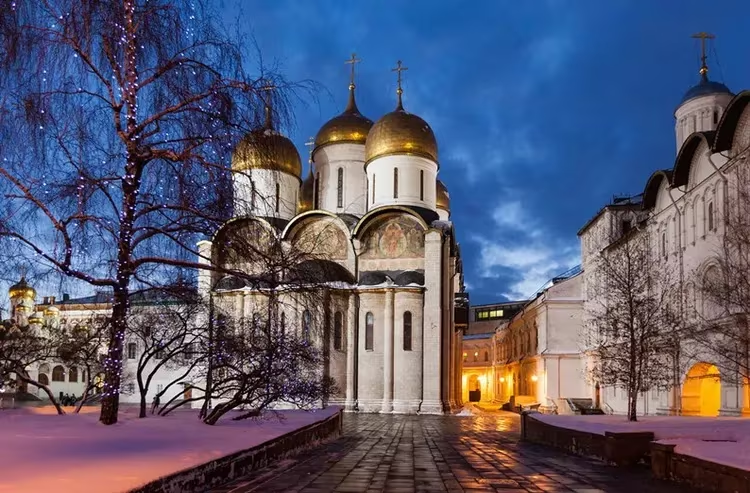
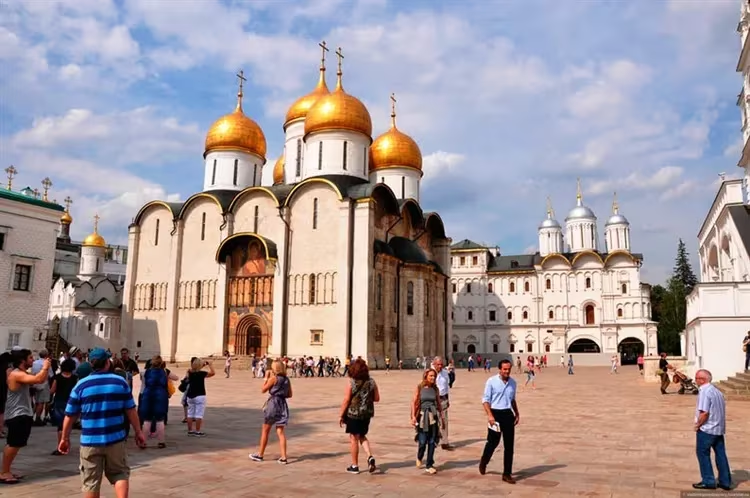
For more than 600 years, the Assumption Cathedral in Moscow served as the main Orthodox church in Russia. Within its walls, the most important state and church ceremonies were carried out – the coronation and wedding of monarchs, the enthronement of the heads of the Russian Orthodox Church. At the beginning of the last century, the Assumption Cathedral lost its religious significance and turned into a tourist attraction.
Construction history
Archaeological excavations show that as early as the 12th century. A church stood on the site of the current cathedral. In the 13th century at the behest of Prince Daniel of Moscow, the wooden structure was replaced with a stone one. The temple was the first building in the city, completely built of stone. The idea of creating a cathedral belonged to Metropolitan Peter. Construction work began on August 4, 1326. Initially, with its arrangement, it resembled the St. George's Church in the city of Yuryev-Polsky. Roughly hewn stones and smooth-hewn decorative fragments alternated in the masonry. The upper part was crowned with kokoshniks.
During the reign of Ivan III, the cathedral fell into disrepair, and it became necessary to renovate it. Metropolitan Philip especially stood up for the construction of the new church. However, the erected building was destroyed by an earthquake in 1472. Prince Ivan III ordered that an experienced architect be invited in order to avoid repeating failures. The famous Italian master Aristotle Fioravanti was called to Moscow as the chief architect. He brought to life the idea of creating the largest Orthodox church in Russia. As a prototype, it was decided to use an already existing similar cathedral in Vladimir:
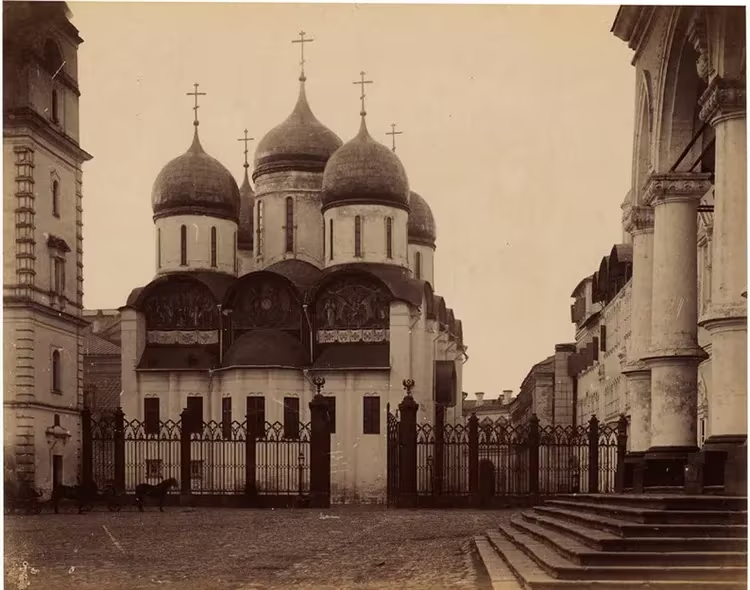
The material was white stone and red brick. Construction lasted 4 years (1475-1479). The painting of the walls inside the building was carried out under the guidance of the famous icon painter Dionysius. Until now, only small fragments of ancient frescoes have been preserved. The church repeatedly suffered from fires, therefore it was often restored and subjected to modifications. In the middle of the 16th century, the domes were covered with gilded copper sheets. At the beginning of the 17th century. completely dismantled and re-folded the stone vault. At the same time, it was additionally reinforced with reinforced iron.
In 1812, the Napoleonic army looted and desecrated the cathedral. Most of his treasures were taken to France. The building was re-consecrated in 1813. At the end of the 19th and beginning of the 20th century, a multi-stage restoration of the building took place. It was carried out by architects:
In 1918, the Soviet government decided to close the Assumption Cathedral. A new stage of history began in 1955, when the building was given to accommodate the museum exposition. Since the end of the last century in the 1990s, the cathedral has been part of the historical and cultural museum-reserve “Moscow Kremlin”. On certain holidays, the Patriarch of Moscow holds a liturgy.
Place for the wedding of kings
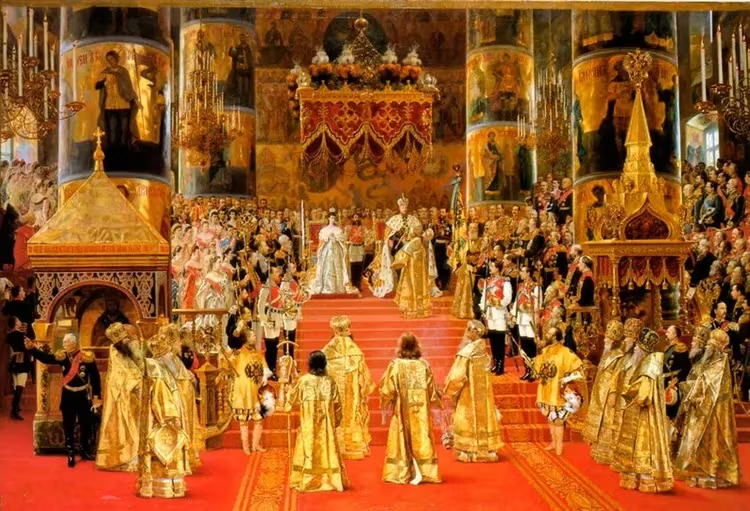
The first Russian monarch to receive a crown within the walls of the cathedral was Ivan IV, nicknamed the Terrible (1547). After the transfer of the capital from Moscow to St. Petersburg, the temple retained its status. It continued to carry out the coronation ceremonies of the emperors of Russia. The specially made royal prayer place (1551) testifies to the high role of the temple in the state life of the country. It was called the Throne of Monomakh. The walls forming the base of the seat have a painting about the donation of royal regalia by the Byzantine Emperor Constantine to Vladimir Monomakh, Prince of Kiev.
Figures of fantastic animals are skillfully carved at the foot of the throne. The pommel, in the form of a tent, is held on 4 pillars decorated with floral ornaments. The wooden dome above the throne is decorated with bas-reliefs of outlandish birds. The armchair was carved from walnut wood and painted by Novgorod craftsmen.
Architecture
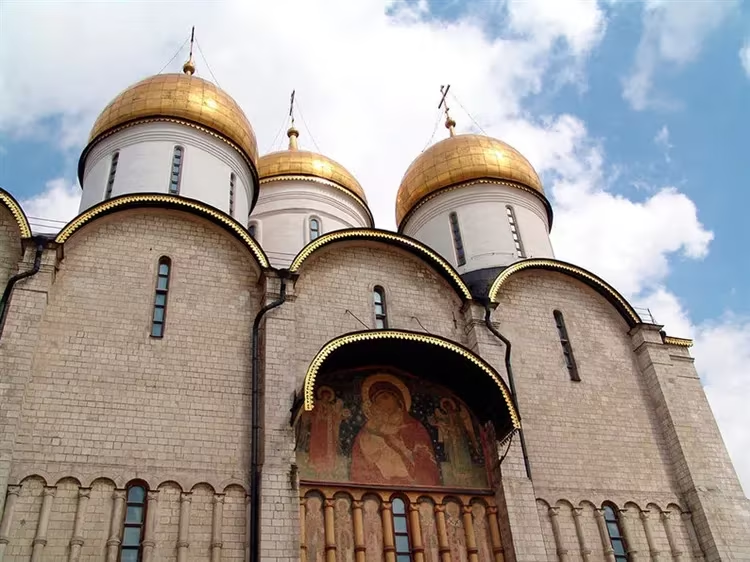
The creation of Aristotle Fioravanti harmoniously combines different architectural styles:
For the construction, small-sized stone blocks were used. Due to this, the building has the appearance of a monolithic structure. The facade is divided into equal parts. Narrow loopholes of windows stand out on the surface of the walls. Along the entire perimeter of the building stretches an arcade-columnar belt, consisting of decorative small arches resting on columns. The interior space is spacious and well lit. The effect of openness is achieved through the use of round pillars supporting the dome and the creation of additional arches behind the iconostasis. In addition, during the construction of the building, innovations were tested:
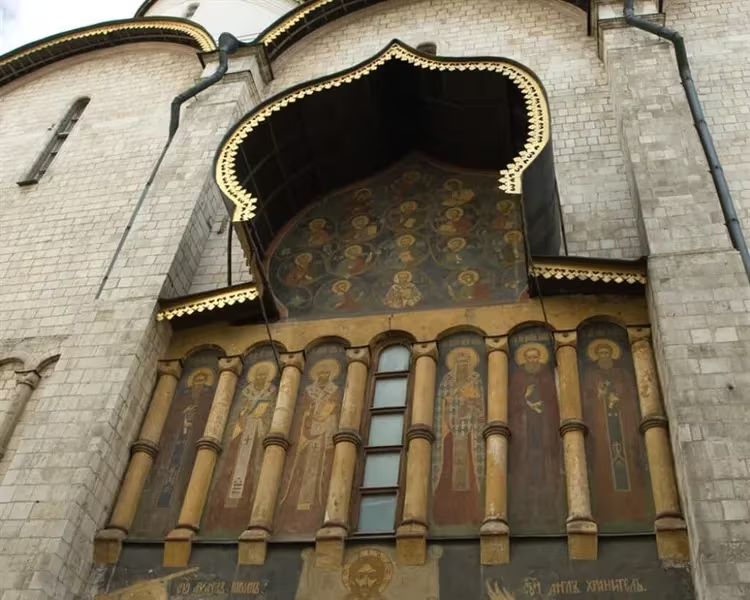
The top of the church is covered with domes. Their layout is somewhat shifted to the east. According to legend, the domes of the temple were first crowned with 8 terminal crosses.
Who built
The first builders of the main temple of Moscow were Russian masters Krivtsov and Myshkin. However, they failed to complete the task. Due to tremors, the walls of the church collapsed. It is believed that the reason was too weak fastening. Tsar Ivan III decided to seek help from recognized foreign architects. On his instructions, the embassy of Semyon Tolbuzin invited the hereditary Italian architect Ridolfo Fioravanti to Moscow. He was engaged in the creation of places of worship throughout Italy, and also worked in Hungary.
Before starting work on the church, the architect ordered the construction of a brick factory in the Moscow region. Thanks to the new building material, the walls were noticeably strengthened. After the completion of the Assumption Cathedral, the architect remained in Russia and was engaged in fortification. According to legend, he was entrusted with the arrangement of a repository for the legendary Liberian (library) of Ivan the Terrible.
Interior
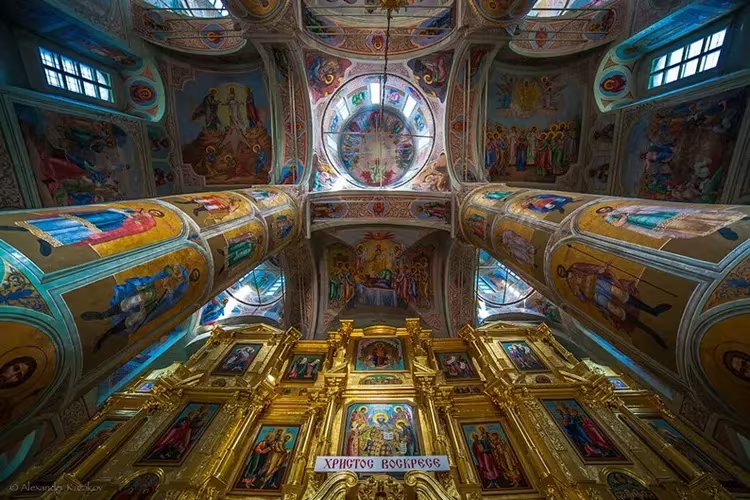
The first painting of the temple was created by an artel of painters, headed by Dionysius. However, during the great fire, the frescoes were badly damaged. Artists from all over the country were invited to re-decorate the interior. 150 craftsmen worked on painting the walls. They were led by Sidor Pospeev, Boris and Ivan Paiseins. The work was carried out in 1642-1644.
Picturesque compositions consist of interrelated subjects:
There are 249 songs in total. The cathedral houses a huge collection of Orthodox icons. Among the glorified are – the Mother of God of Vladimir, the Mother of God Hodegetria, the Assumption, the Savior of the Bright Eye, St. George, the Trinity. The total height of the iconostasis is over 16 m. It has 5 tiers.
Before the iconostasis:
Another decoration of the temple is a chandelier cast in silver to commemorate the victory over the Napoleonic army. The huge chandelier weighs 328 kg.
shrines
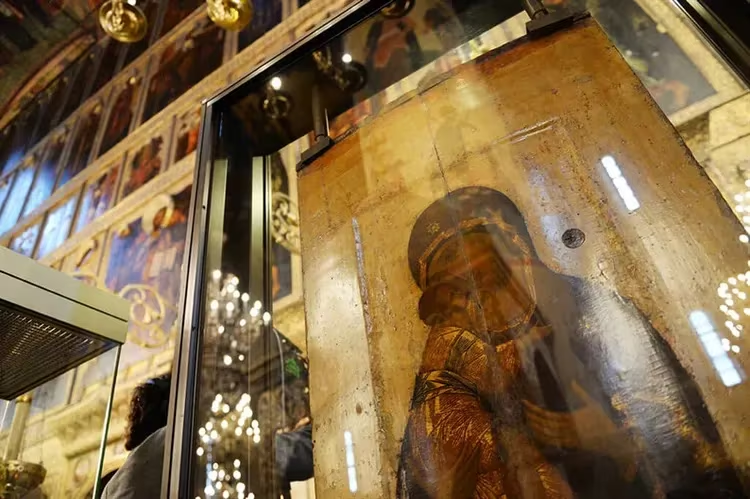
During its existence, the temple has become a place of storage of revered Christian shrines:
The Robe of the Lord came to the Russian land in 1625 as a gift from the Shah of Persia to Tsar Mikhail Fedorovich. To commemorate this, the Russian Orthodox Church established a celebration – the Position of the Robe of the Lord. To save the relic, a special tent or canopy was created. It is a roof similar to the cover over the Holy Sepulcher. The canopy consists of copper plates with gilding and silvering. In addition, the openwork part is decorated with mica of different colors. The tent was erected in the southwestern part of the building.
Necropolis
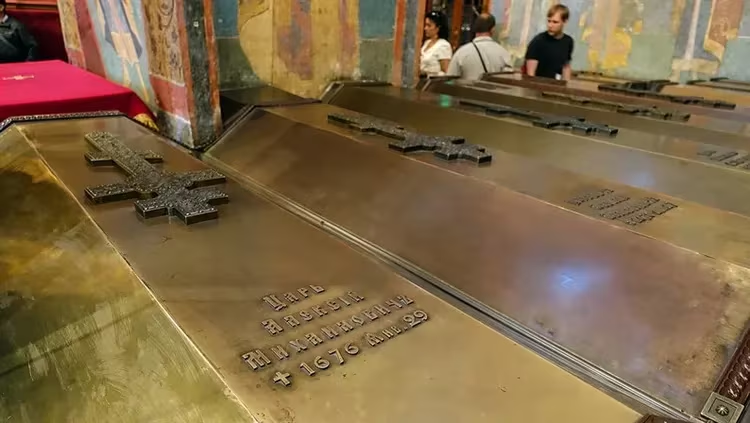
Initially, it was planned to turn the church into a tomb for princes and Moscow metropolitans. The first burials date back to 1326. Subsequently, the role of the last refuge of princes and monarchs began to be played by another Kremlin cathedral – the Archangel Cathedral. And in the Church of the Assumption, they continued to bury the main clergy of the country.
Within the walls of the cathedral there are 20 graves of metropolitans and patriarchs (14-17 centuries). They are located along the northern, western and southern walls of the building. Places of ancient burials are marked with small rectangular tombstones covered with metal sarcophagi. Patriarchal graves are covered with stone slabs on which epitaphs are carved. The miraculous relics are placed in wooden shrines, decorated with metal plates.
Opening hours and visiting rules
The museum receives visitors daily (except Thursday):
During mass events on Red Square, the Kremlin museums are closed. The special location of the cathedral on the territory of the Kremlin dictates the strict observance of the rules for visitors. They regulate the requirements for tourists:
- A ticket to the museum is required.
- The Borovitsky and Trinity gates are open for people to pass through.
- Photography inside the museum is prohibited.
Where is it located and how to get there
The Church of the Assumption is located on the territory of the Kremlin. Its exact address is Moscow, the Kremlin, Cathedral Square.
The easiest way to get there is by subway. Nearest metro stations: