
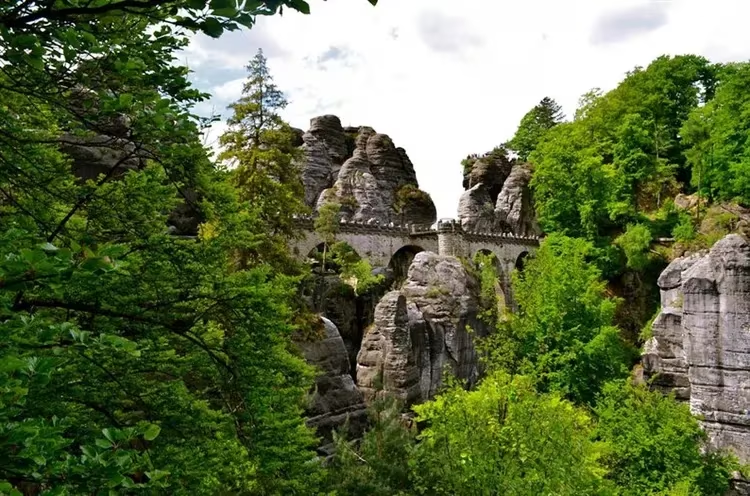
Bastei fortress and bridge in Saxon Switzerland: history, photo, how to get there, map
Between the two small classical German cities of Rathen and Velen, where both locals and tourists come to relax, there is a large rocky massif of Bastei, towering over the seething Elbe to a height of almost two hundred meters. High cliffs amaze with their impregnability, and once they were considered as such. But today, modern technology has turned them into an ideal viewing platform, climbing onto which, you can take a look at the entire region, called Saxon Switzerland by some visiting artists.
Story
In the thirteenth century, the locals used the Bastei as a defensive system, for which a castle-fortress was built. Looking at Bastei, it is easy to imagine how sentries marched along its perimeter, along the most gentle rocks, looking out for enemies from other sides, how they guarded the peaceful sleep of German citizens day and night.
So the fortress stood for almost three hundred years. One sentry was replaced by others, and the country could sleep peacefully. However, in the 16th century it was decided to leave the stone bastion. No serious attacks were foreseen from this side, and experience showed that the rocks do an excellent job of their function even without sentries. So, at the beginning of the sixteenth century, the military left the Bastei fortress. Forgotten and abandoned, the structure gradually began to collapse. And only in the twentieth century began its restoration work.
Tourism development
Tourists began to take an interest in the stone bastion in Saxony in the early nineteenth century. They gathered in small groups to enjoy the beauty of the high cliffs. Noticing even a small influx of tourists, local residents began to open the first trading shops.
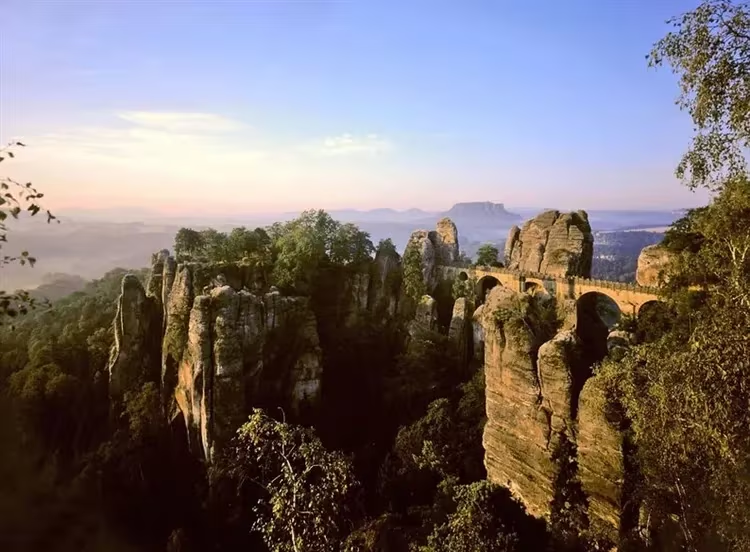
Talk about Bastei gradually reached the ears of artists who, armed with easels and paints, set off to paint rocks of incredible beauty. Thus, the “path of artists” gradually took shape. The paintings of Caspar David Friedrich, who often walked around the Bastei, looking for inspiration, did not bypass the rocks. He depicted the local landscape on several canvases, in addition to this, the stone bastion became the scene of several of his works in the future.
Suspension bridge
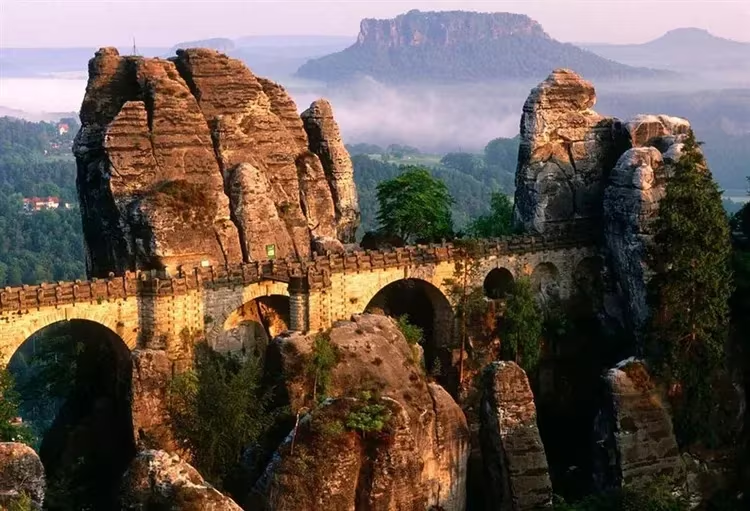
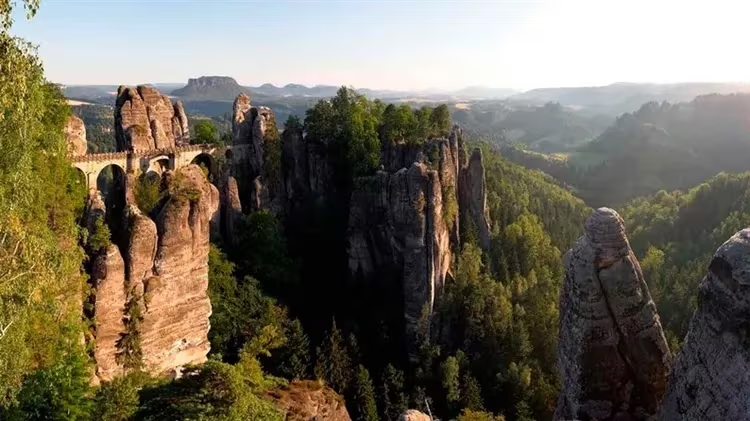
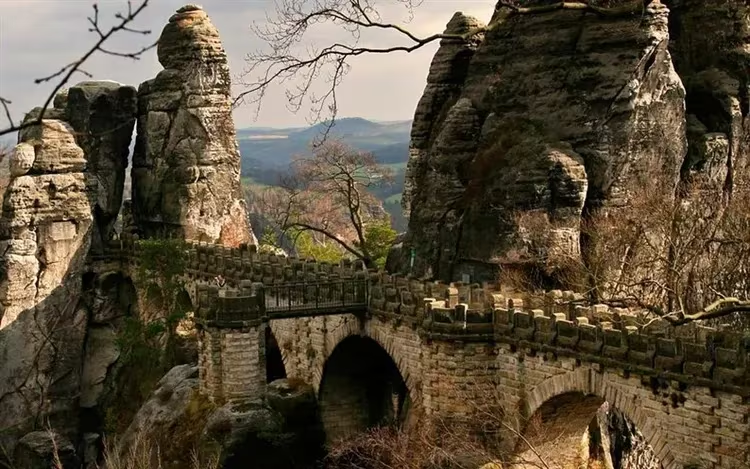
One of the main attractions of Bastai was considered a suspension bridge, which was thrown over a deep gorge. It was made in 1824. It was made of wood, but the evil winds blowing around the Bastei and the endless rains and snow did their job: the wooden boards had to be replaced almost every year, and after thirty years of torment, it was decided to replace the wood with sandstone. This is how the famous Bastei Bridge was erected, which today is included in the list of architectural and historical monuments of Germany.
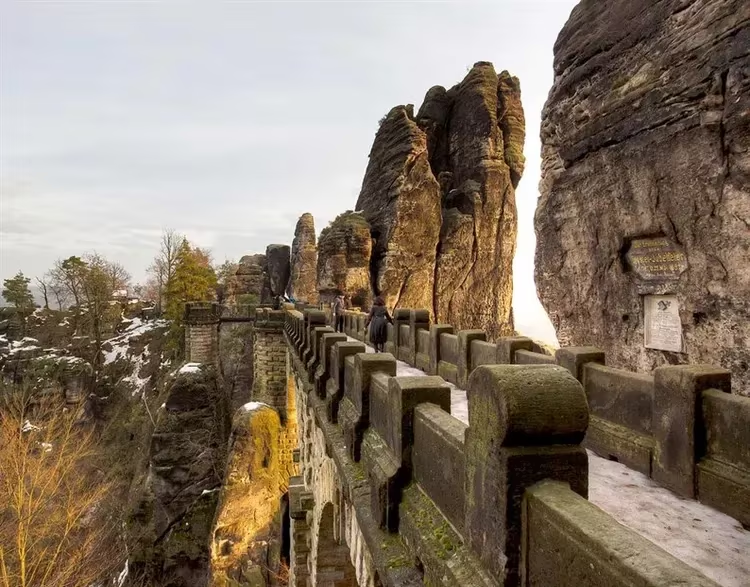
However, many tourists visited Bastei even before the construction of the bridge. They climbed sheer cliffs, climbed steep slopes, traveled long distances – all this in order to enjoy the view from the height of the stone bastion.
The construction of the bridge greatly facilitated the path of tourists to the old fortress. Walking over a gorge with a depth of almost 200 meters along a stone bridge is an incredible sensation and a feeling of flight. And the picturesque views from the observation platforms will make even the heart of stone tremble.
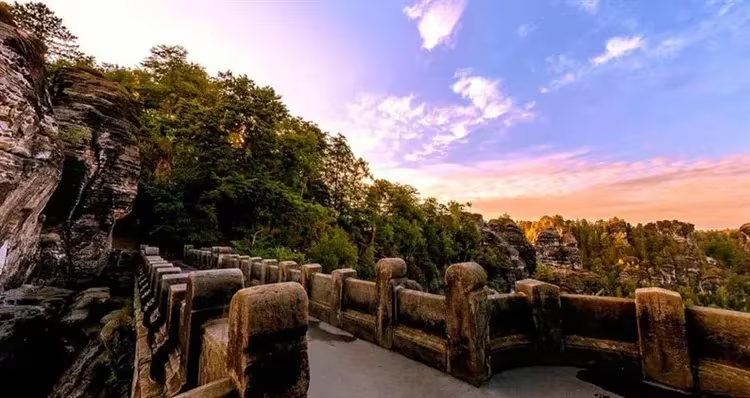
Incredibly beautiful fields and forests, spread out near the stone bastion, enchant with their freshness and virgin inviolability. In sunny weather, nature paints the world around us with bright colors, and in rainy and foggy weather, it allows travelers to feel like they are running through the clouds.
Saxon Switzerland
Bastei is located in the park area of Saxon Switzerland. Why is the German region named after another country? The explanation is very romantic. At the end of the eighteenth century, there was an Academy of Arts in Dresden, where artists from all over Europe came to study and teach. Languishing far from home, young students often walked around the area, studying the landscapes.
So, a couple of Swiss students once went out to Bastei, and the high rocks reminded them of a house. Now, when young people wrote letters home, they invariably called this place Saxon Switzerland. A few years later, these letters came to Wilhelm Lebrecht Goetzinger, a popular German writer. The new name of the area touched and surprised him so much that he began to use it in his own works. So, gradually, the name changed.
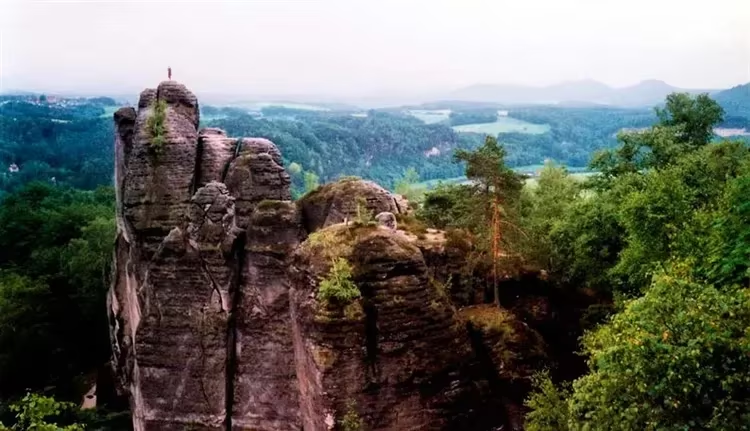
Bastei is the greatest natural structure, which is the main feature of Saxon Switzerland and today it is one of the most visited places in the world. Both tourists and locals come to see it. It is especially popular with rock climbers who climb the peaks of Bastai in small groups.
How to get on your own
Most visitors today stay in Dresden and later hire a boat. On the water, they easily got to Bastei Rathen, a small but very cozy town, spread out in the shade. Having reached Rathen, the only thing left to do is to climb the rocks.
Previously, travelers and the military had to look for all sorts of ways to climb the stone bastion. But in 1814, for greater comfort, a staircase consisting of 487 steps was pierced in the slopes. It leads to the top straight from the bottom of the valley. Of course, the stairs are rather steep, so you need to climb carefully. However, it is still many times better and more convenient than making your way through the thickets and crawling up the rock.
Many of the rocks that make up Bastai resemble the outlines of animals, people, and figures. One of them was especially singled out by climbers. It resembles two hands folded in prayer, for which it got its name – Monk. One day a group of climbers climbed onto it and placed their banner, which still sways on a high pillar. They don't try to take it off – no one knows how exactly you can climb onto the Monk.
Start on the map
Bastei is a beautiful place, visiting which you will experience a range of emotions, but not disappointment. Rural well-groomed houses, fields, dense forests – all this could be a landscape from a fairy tale, but it became a reality in Saxon Switzerland.
Another interesting place is Burg Eltz Castle in Germany.