
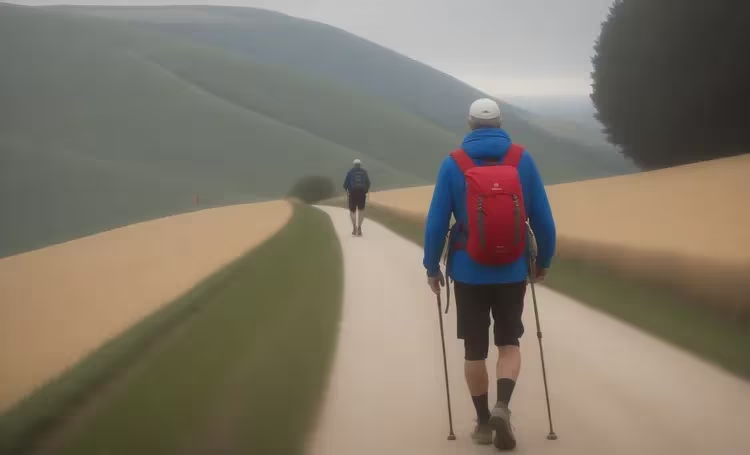
🚶♂️ Camino de Santiago: a journey in the footsteps of the pilgrims
Have you ever heard of the Roman passport? Maybe something is known about the Way of St. James? Perhaps you read these names on the pages of Paulo Coelho’s novel “The Diary of a Magician.” This route actually exists and is considered one of the oldest and pilgrimage routes in Europe.
It runs through Spain, France, Portugal and ends in a single place – the Spanish town in the north of Galicia, Santiago de Compostela. Currently, the Way of Santiago, as it is also called, has almost lost its religious character and has turned into a popular and picturesque tourist route. Therefore, you can safely choose tours to Spain.
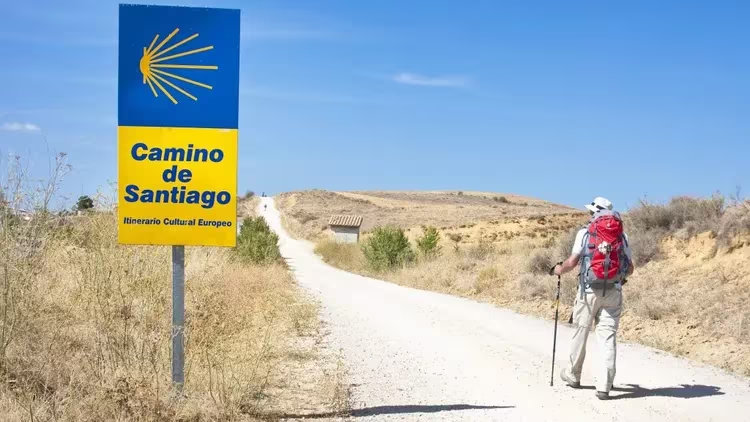
Where to start the route
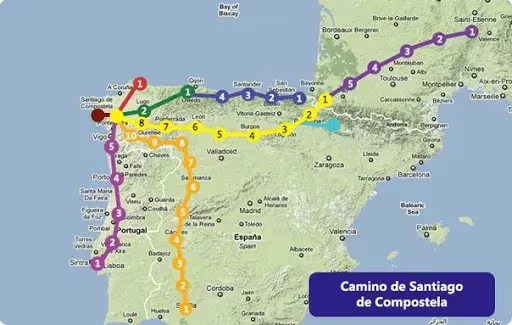
There is no specific starting point, but there are four main places to start. Accordingly, there are four routes: the French, northern, primitive and Portuguese route.
The French route Pilgrim Rome is considered the most popular and very crowded starting point, but also the longest of all – you have to cover 800 km. The route begins in the west of France, in the small town of Saint-John. Most tourists prefer to head from there, but you can go from anywhere. Some take Pamplona, Burgos, Leon or even Sarria, which is located just 100 km from Santiago, as a reference point.
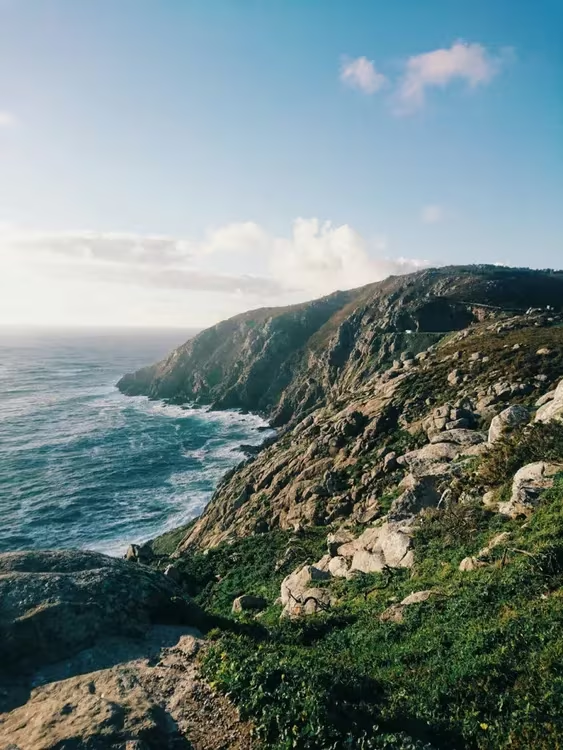
The northern route is considered the most picturesque, because its main part runs along the Atlantic coast in northern Spain and will be 860 km.
The primitive path is the easiest. It originates in the small town of Urquera, but many travelers from Tartu come from Oviedo, which is the easiest place to get to. The total duration of the journey will be 400 km, depending on the starting point.
And the Portuguese is the only pilgrim route laid across the territory of Portugal and mastering it will take two weeks of your time if you go from Porto. In any case, no matter which route you take, you can rest assured that there will be enough impressions for years to come.
How to get on the Camino de Santiago
If you decide to take one of the Spanish routes, you can get to Madrid by plane from any major airport in Europe. Many airlines, such as Wizzair and Ryanair, fly for 150-200 €. And if you plan your trip in advance, you can buy a ticket for much less money.
From Madrid it is not difficult to get to any city by bus or train. Leaving Santiago will also not be a problem: the city has an airport from which planes fly to almost any major city in Spain. For budget options, you can take the bus to Madrid, which departs from Santiago Central Station several times a day.
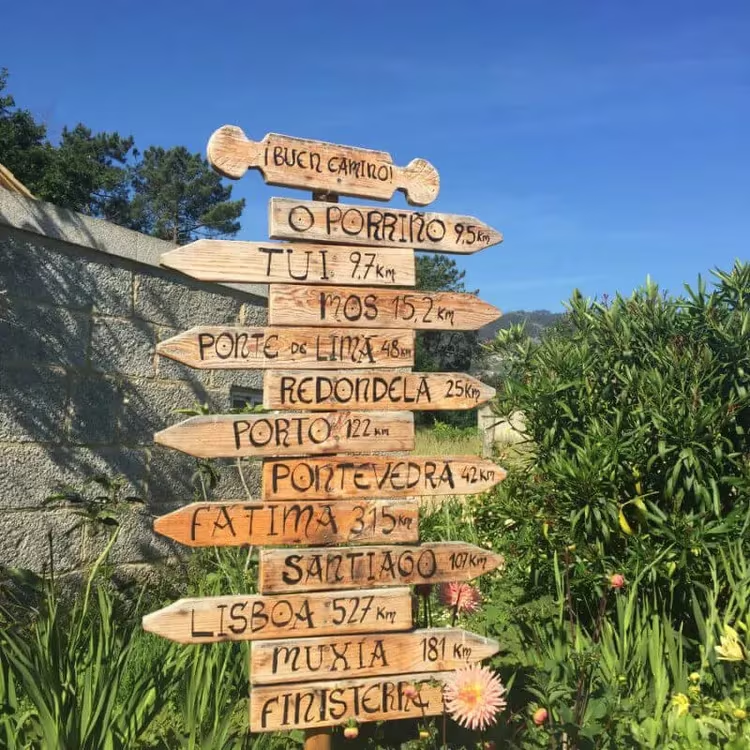
How it all works
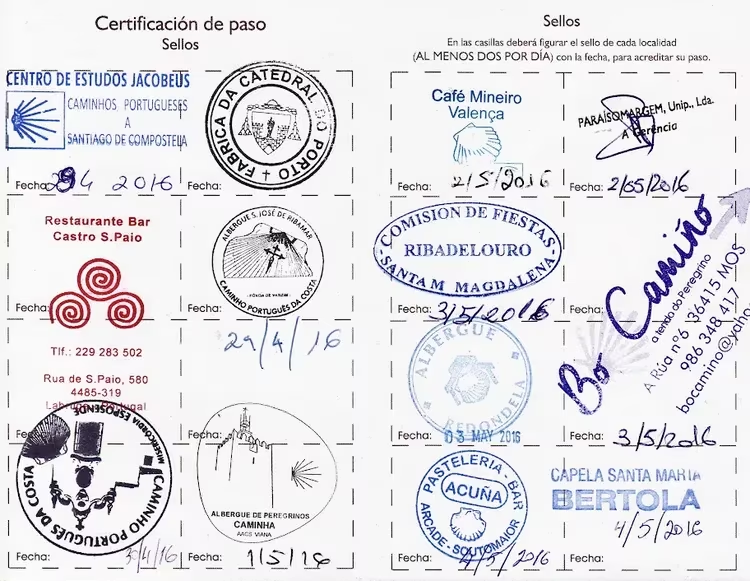
No matter where you start your journey to Santiago, you need to acquire a “pilgrim’s passport” – this is a small document. You will also have to obtain a visa, for example, apply for an Italian visa.
In each city, they put marks on the passage of a certain part of the route. You can buy it for a couple of euros in any albergue (hostel) where you will stay for the night. They are also sold in information bureaus, which are found only in large cities. And a stamp about the passage of the path will be placed in any bar, church or albergue.
Almost all major cities have municipal albergues; one night there will cost 5-6 €. For this price you will get a bed in a common room. But know that you will have to share it with 15 more like-minded people. There is access to a shared kitchen, shower, and breakfast with Wi-Fi is provided somewhere.
The cost of private albergues is from 10 to 15 €, where you can count on a secluded room. Municipal hostels are often opened at churches, so they have a strict daily routine: you need to vacate your bed before 8:00 in the morning, and if you want to have breakfast, you will have to get up before 6:00.
When is the best time to start the Camino de Santiago?
Late spring or early autumn is the best time of year to hike the Camino de Santiago route. The weather will be warm and there will be plenty of space in the albergue. And along the way you won’t encounter a large flow of people.
When is the best time to follow the Way of St. James? It will be relevant at any time of the year, but in late autumn, winter and early spring, many hostels, shops and cafes will be closed in small towns and villages. If you decide to hit the road during one of these seasons, be prepared for the fact that you will have to make stops in larger cities. This means that every day it is necessary to cover a much greater distance, passing by small towns.
- The most beautiful caves in the world
- Places of power: where to go to “recharge”
- Top 10 inclusive cities for tourists with disabilities
In addition, the winter weather in Spain is accompanied by rain, and in the mountains it can even rain. Not the best time for hiking, isn't it? On the other hand, if harsh weather conditions do not frighten you, then this time has its advantages. There are no crowds of tourists on the route, which are often found in the summer. Their presence can easily be felt in queues at an albergue or when trying to order food at a local pub. When traveling in summer, be prepared for high temperatures and scorching sun.
What to take with you on a hike
The main attribute on a hike is a backpack. You don't need a tent or a warm sleeping bag, especially in summer. Everything you need to take on the road can fit into a 10-liter backpack, which should be comfortable and tailored to your parameters. After all, you will not be parted with it throughout the entire route. Although there is a service for delivering things from one point to another for a few euros.
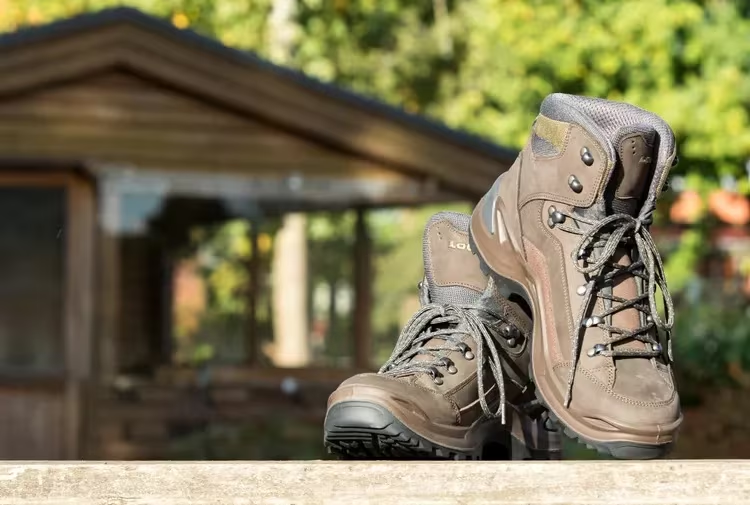
In addition to a suitable bag, be sure to purchase good trekking boots that fit your feet tightly at the ankles. The average distance traveled per day will take you 25-30 km. And believe me, the appearance of calluses is guaranteed. Therefore, it is important to have light, replaceable shoes with you to wear in the evenings. Take Vaseline or similar ointments to lubricate your feet before going out, and good gel patches if calluses do appear.
If you plan to cook on your own along the route, then you should think about cooking utensils – most albergues have a kitchen, but no cooking utensils. The same applies to those who decide to go the entire route with a tent.
Another very valuable item for summer hikes is sun cream and a hat. You should definitely take them so as not to get sunburned or get sunstroke. Also, don’t forget to take offline maps just in case or download them to your phone in advance.
Sensitive people should get earplugs. When you have to sleep in the same room with a huge number of strangers every night for a month, you may begin to get used to snoring, but many never manage to come to terms with it. And sound and healthy sleep is the key to a wonderful and vigorous journey.
Without a doubt, the whole journey to Santiago de Compostela is worth seeing. If you want to get to know the country in general first, then look for last-minute tours. For people embarking on such an adventure for the first time, I would advise choosing the shorter and easier route of the Camino de Santiago, especially if there is no experience of walking long distances. But I still recommend gaining strength, and after a while, return and walk the Way of Santiago again, along a longer and more thorny path.