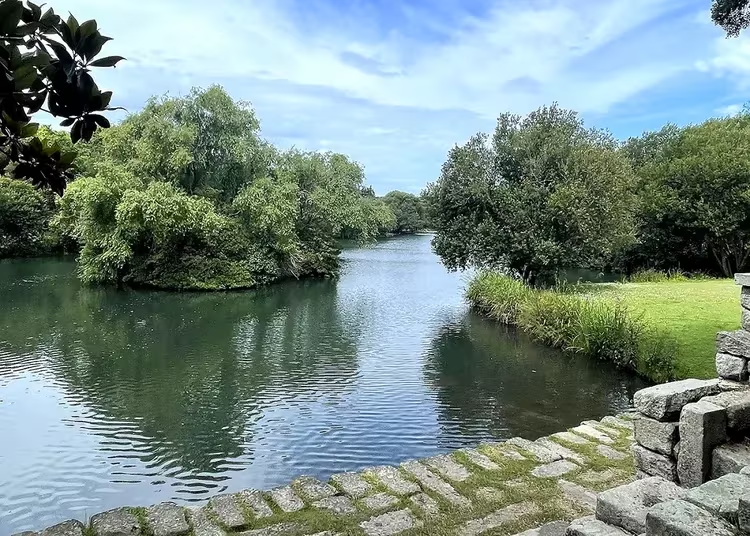

🇵🇹 48 hours in Porto: the perfect weekend itinerary
At the beginning of our era, the town on the Atlantic coast was conquered by the Romans. They called it Porto with Cale (Portus Cale). Later, this settlement gave the name to the county – Portucalense, and eventually to the new country – Portugal.
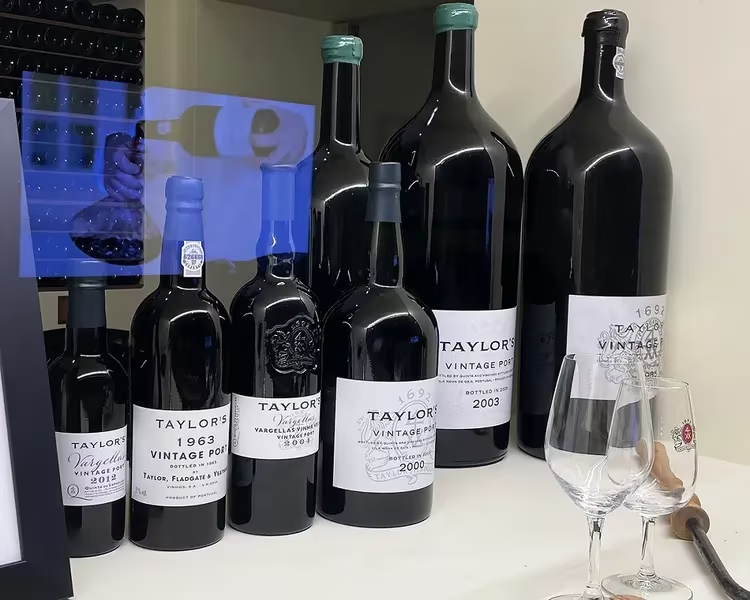
In addition, the name of the city appears in the name of the fortified wine produced in the Douro region – port. Until the 18th century, local residents traded in a tart red alcoholic drink, which turned out to be difficult to transport over long distances – the wine spoiled. To make it more durable, they decided to add brandy to the product. This is how port wine came into being. Now fortified wine is made in a different way. Which one? You'll find out when you look at the warehouses of Vinho do Porto – that's what port wine is called here.
Porto has always been a significant city for the country. He constantly fought for leadership with Lisbon. Now Porto is considered the northern capital of Portugal. About 250 thousand residents live in the municipal center, and over 2 million people live in the agglomeration.
There are countless attractions and entertainment options in the city. And a week is not enough to see everything. To explore the most important things over the weekend, I have created a convenient itinerary for you.
The first day
To begin with, I suggest you take a walk through the historical center of Porto, and in the evening look into the port wine warehouses. Let's go!
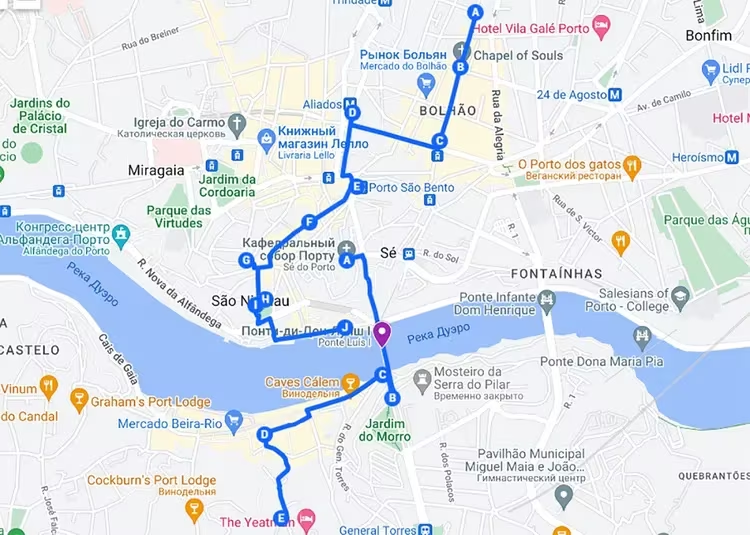
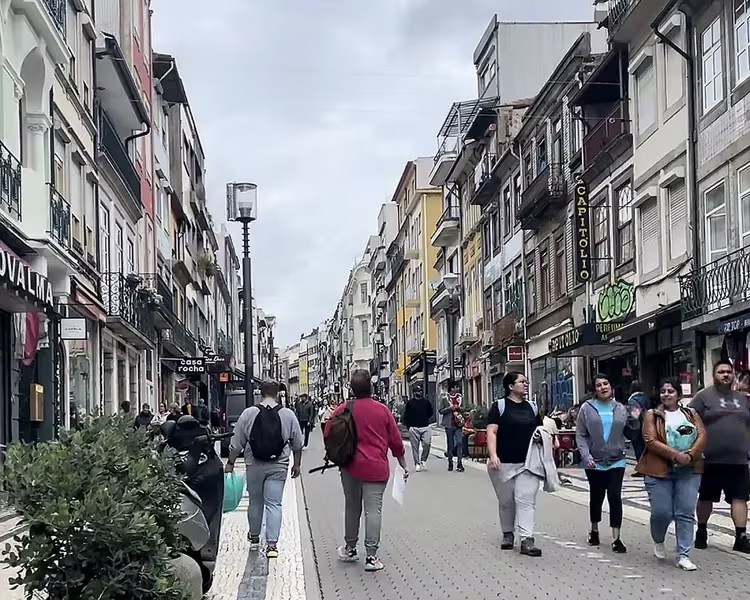
A. Rua de Santa Catarina
Let's start our tour from one of the main pedestrian streets of Porto. Santa Catarina is the commercial heart of the city. Along one and a half kilometers of this commercial artery there are many fashion brand stores and souvenir shops. Here you can eat in a traditional pastry shop or restaurant, and also listen to street musicians.
B. Chapel of Souls
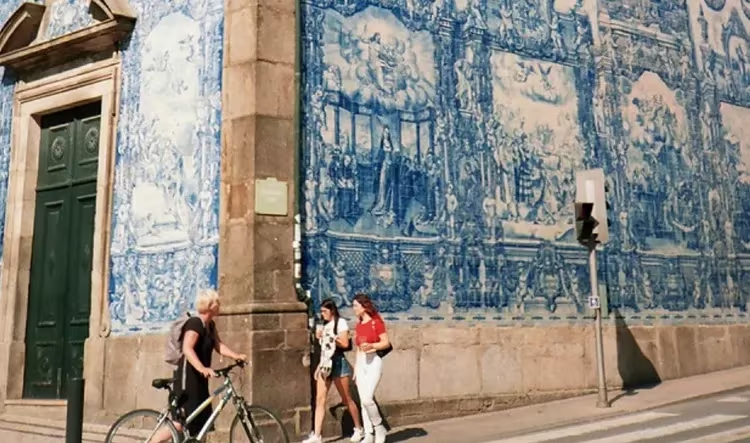
This chapel is also located on Santa Catarina Street. The facade of the chapel is covered with 16 thousand blue and white glazed tiles – they say this is the most lavishly decorated Azulejo building. The values from the lives of Saints Francis and Catherine, in whose honor the chapel was erected, flow into the interior of the chapel. Until the 18th century there was no such decor. The temple was a simple wooden church.
C. Majestic Café
Down the street is a cult spot for coffee lovers. But even if you are indifferent to coffee, do not pass by the Majestic cafe. The exterior and interior of the establishment is decorated in Art Nouveau style. The elaborate marble façade, carved wood decor and furniture are a masterpiece with a century-old history. There is always a queue at the entrance. But if you want to look at the interior decoration in detail, you should wait until a table is free.
D. Boulevard Aliados (Av. dos Aliados)
Pathetic, pompous, pretentious – that’s what they say about this avenue. A wide boulevard with monumental buildings on which you can see sculptures , arches and columns is indeed not traditional for Portugal.
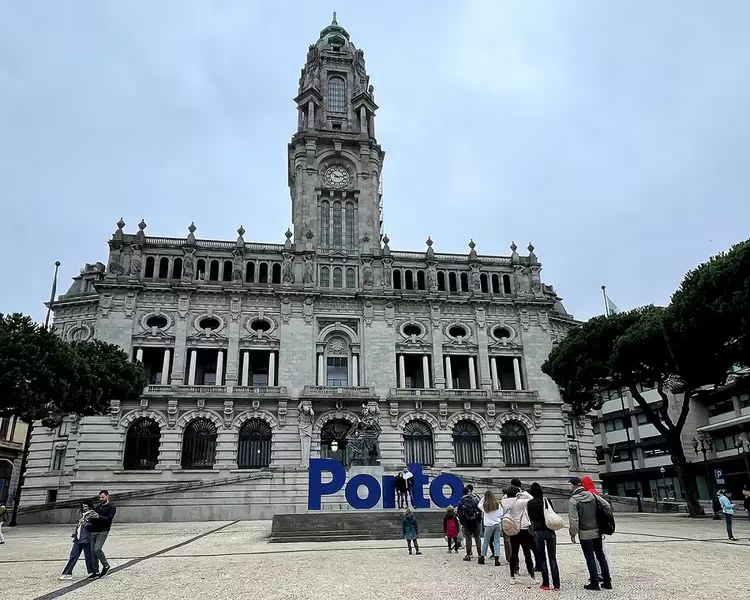
The boulevard ends at the city hall (Câmara Municipal do Porto). Although it looks like the neighboring buildings, it appeared here much later – only in the last century. The height of the tower with chimes is 70 meters. To get to the top you need to climb 180 steps.
At the entrance to the administration there is an installation with the name of the city.
E. São Bento Station (Estação de Porto São Bento)
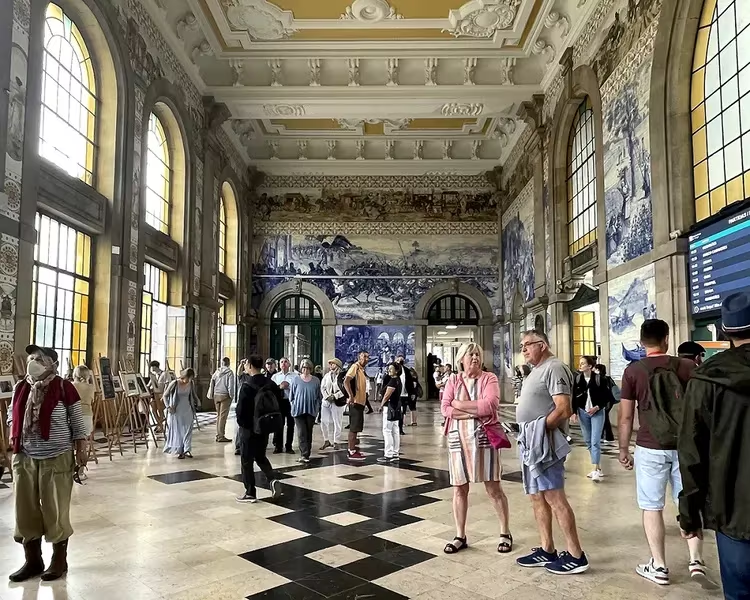
To understand how beautiful the city's main train station is, go inside. The walls of the hall are lined with 20 thousand azulejos, hand-painted. The tiles depict the brightest moments from the history of the country. This building was built at the end of the 19th century, but the station opened a little later – at the beginning of the 20th.
F. Rua das Flores
Until the 16th century, the bishop’s gardens were located on the site of this street, so they decided to name the new city artery Tsvetochnaya. The construction of the former clergyman's garden was carried out to hitherto unprecedented standards. They were supposed to provide future residents, members of the city aristocracy, with good visibility of the facades, so that they could then decorate them in a rich way.
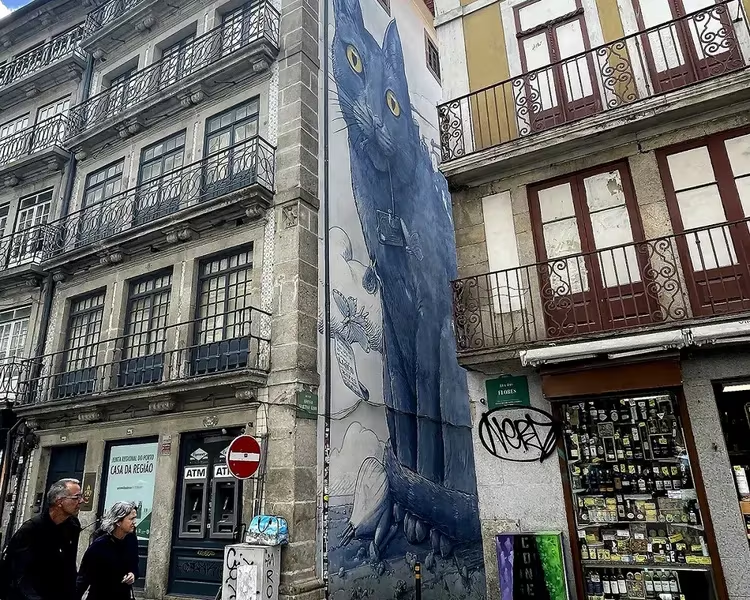
Now Rua das Flores is a pedestrian tourist area. The lower floors of the houses are filled with shops and cafes, and cheerful murals peek out from the end facades of the buildings.
G. Miradouro da Vitória
Everyone who finds themselves on this observation deck always says “wow!” From here you have stunning views of the rooftops, the cathedral, the Luís I Bridge and the Douro River.
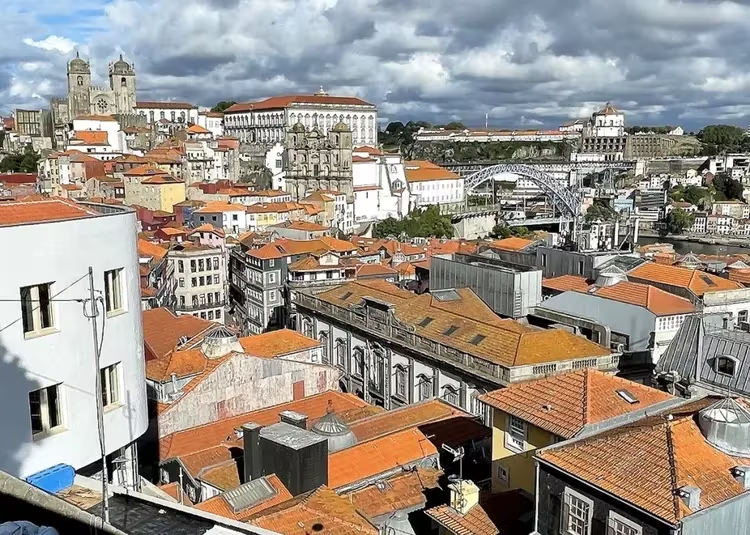
H. Ferreira Borges Market
Although this place is called a market, it has never fulfilled its function. The building was built at the end of the 19th century so that traders from the old market on the embankment would move into it, but they refused. As a result, Ferreira Borges began to be used for fairs and exhibitions. Now there is a nightclub with a concert hall and a restaurant.
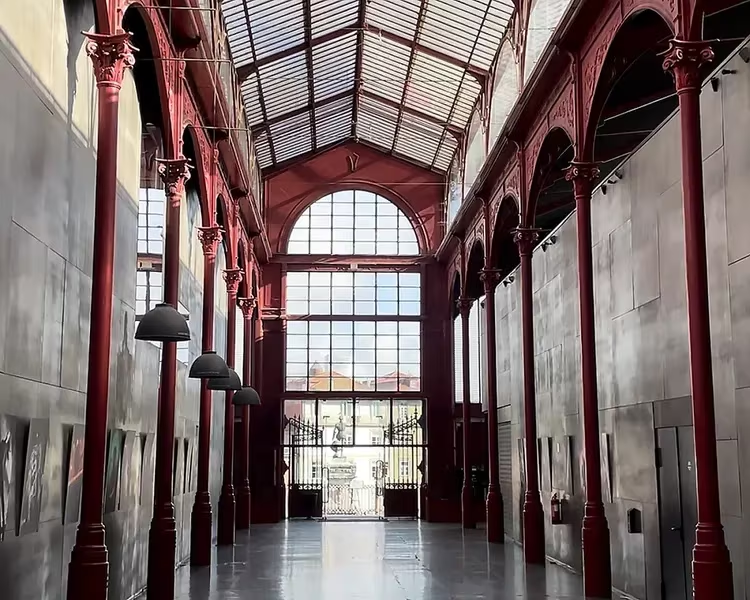
I. Bolsa Palace (Palácio da Bolsa)
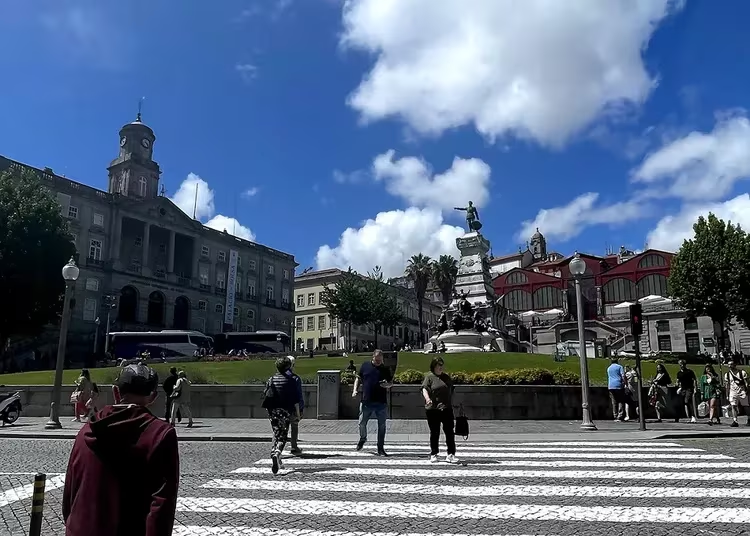
Near the Infante Dom Enrique Square there is another iconic building – the Palace of the Exchange or Bolsa. Local merchants did not favor representatives of the royal dynasty and constantly competed with Lisbon for the title of the best trading center. To demonstrate their strength, port merchants erected this building for their trade association in the 19th century.
It is worth noting that the neoclassical façade does not reflect the full richness of the palace. But its interiors are in full force. By the way, the interior decoration of the halls reached us in perfect condition. Now there is a museum with a collection of sculptures and paintings.
J. Ribeira Pier (Cais da Ribeira)
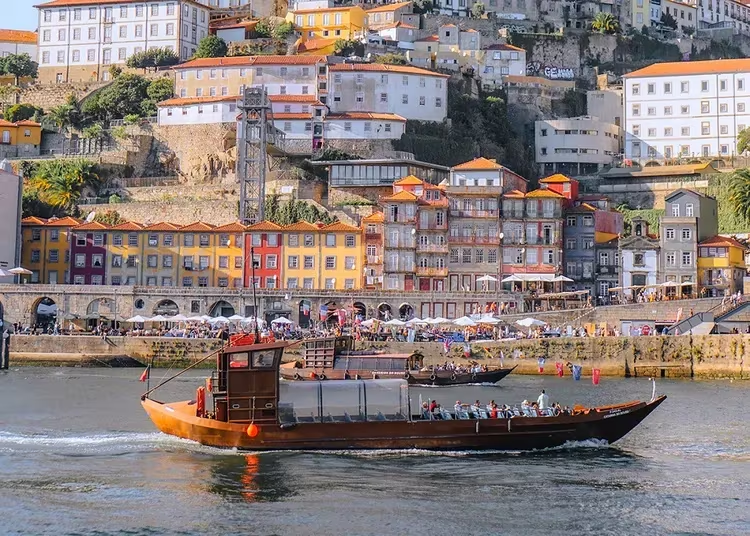
Before heading out to the Douro waterfront, wander around the Ribeira district. Multi-colored fishermen's houses, narrow cobbled streets, staircases with the river visible in the gaps, artisan shops and many bars – a very colorful place. This is where the city of Porto began.
The embankment itself is wide and beautiful, with a deep river that flows into the ocean a little further. From the pier you can go on a boat trip. From here, Tartu offers both cruises for a day or two to the Douro Valley, where the grapes for local port wine grow, and hour-long walks under the city’s six bridges. The last option will cost you from 15 euros. The ticket often includes a voucher for a glass of port.
Bridge of Luis I (Ponte Luis I)
The embankment offers a beautiful view of the Luís I Bridge. It was built at the end of the 19th century according to the design of a student of Eiffel himself. On the lower level there is a road for cars, on the upper level there is a road for the metro. Both there and there are paths for pedestrians.
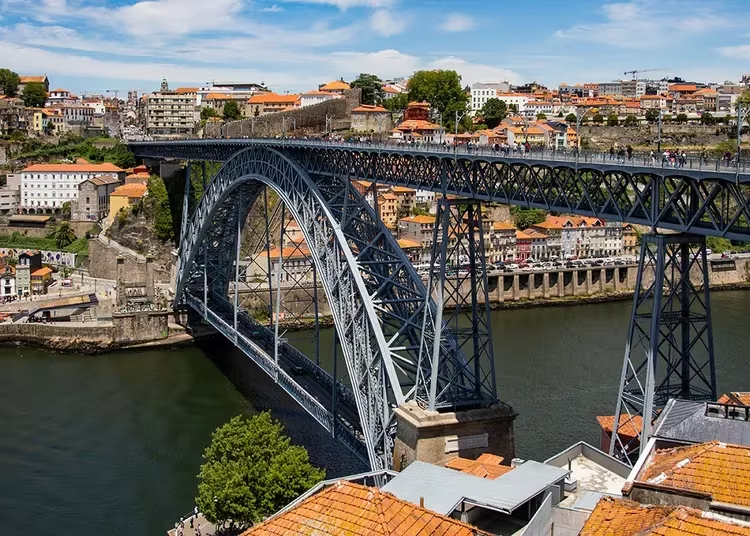
At this point you have walked over 2.5 km. If you managed to ride a river bus or have a snack in a cafe overlooking the bridge, you should definitely have the energy for the second part of the route.
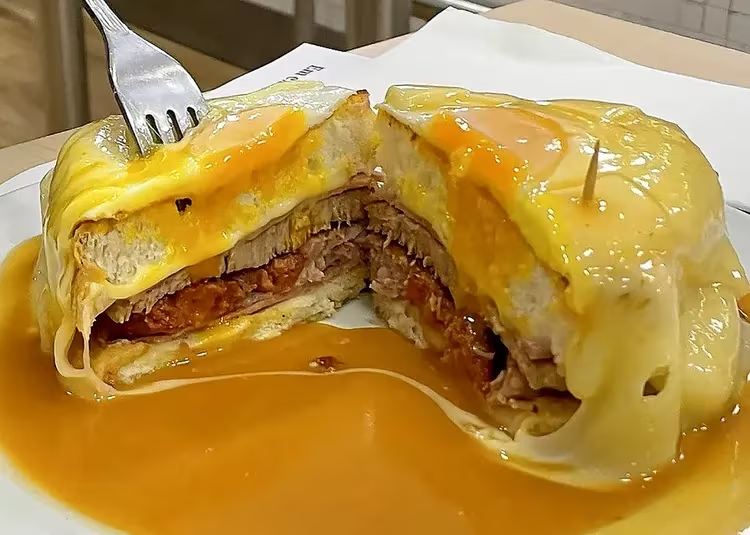
By the way, be sure to try Porto’s most famous dish, Francesinha. I talked about it in my review of the best Portuguese dishes.
- 10 Portuguese dishes every tourist should try
- What to see on the road from Lisbon to Porto?
- Personal experience: what is the best time to go to Portugal
A. Porto Cathedral (Sé do Porto)
From the embankment I suggest going up to the cathedral. The temple stands in the highest part of Porto. The austere gray building in the Romanesque style was built in the 12th century. I’ll say right away: the interior is also gloomy.
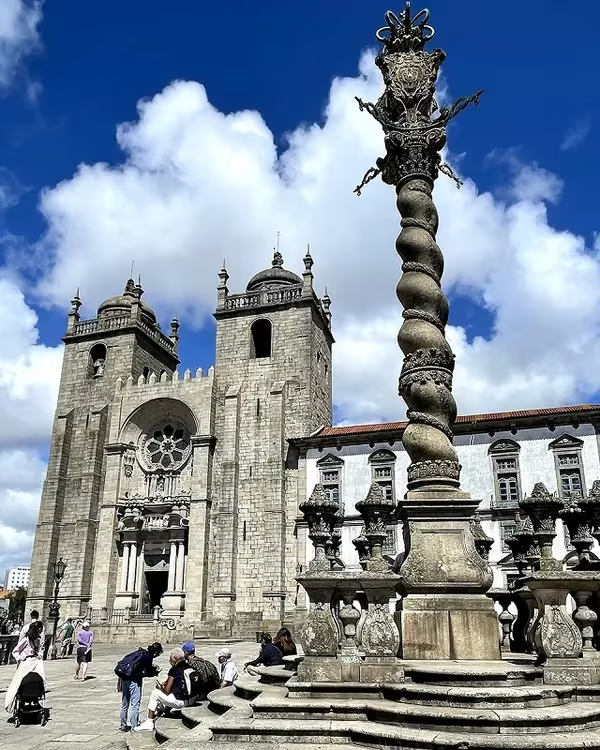
From here it is convenient to go to the upper tier of the Luis I Bridge. Where I invite you!
B. Ribeira Viewpoint (Miradouro da Ribeira)
Behind the bridge there is another city – Vila Nova de Gaia. From the observation deck, which I marked on the map, there is a cool view of Porto and its embankment.
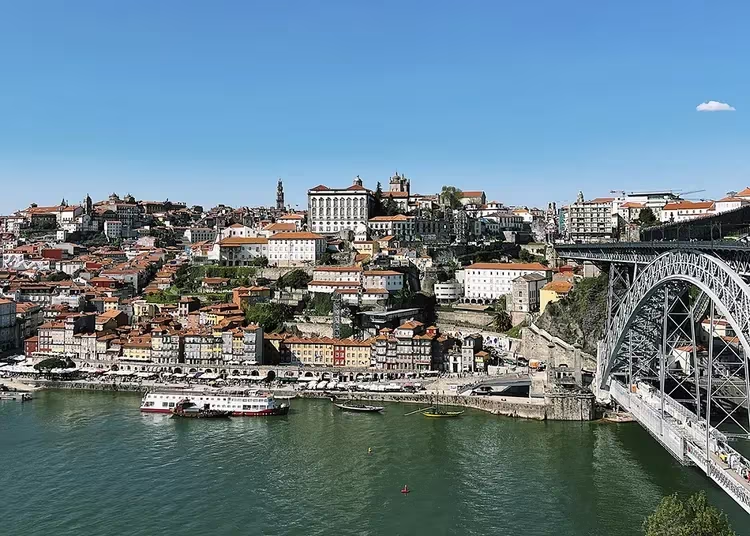
A little higher, on the other side of the road, there is another view point: Serra do Pilar (Miradouro da Serra do Pilar). You can go up to it – from there you can see the bridge better.

There is a funicular going down from Mirado da Ribeira. This cable car is a little over 10 years old. Its length is about 300 meters. The trip takes about 5 minutes at most. You can go down to the Vila Nova de Gaia embankment by funicular.
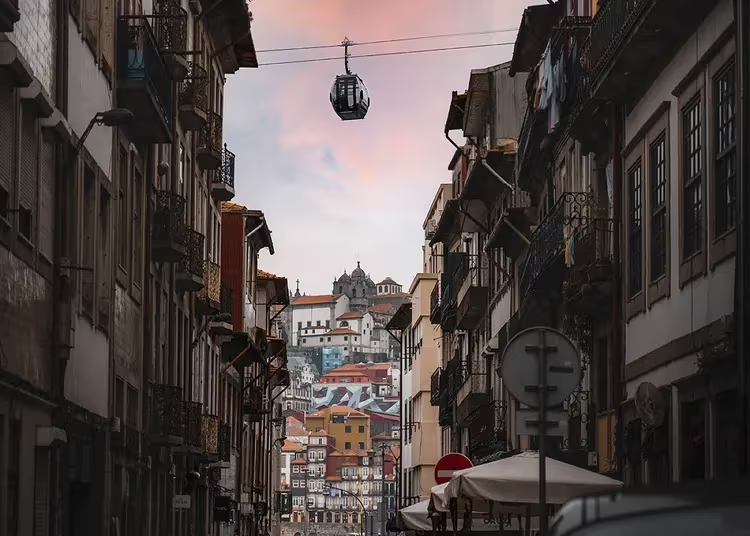
C. Ribeira de Gaia Pier
Like I said, you'll find plenty of other wineries along the waterfront, as well as great restaurants and bars. It is very beautiful here in the evening when the bridge and lanterns in the city of Porto are lit.
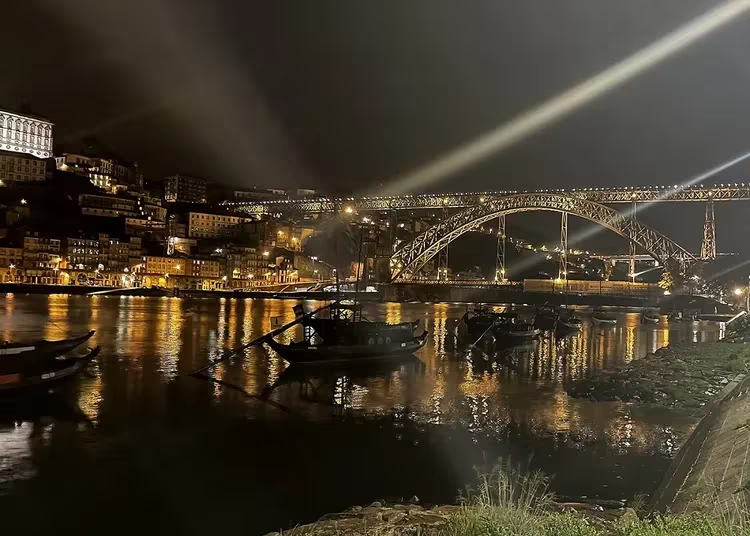
D. Sculpture “Half Rabbit”
On the way from Taylor's Port to the pier, don't miss the huge rabbit on the corner of the house. It is made from recycled waste collected from the city. This sculpture is a call for environmental conservation and the wise use of materials.
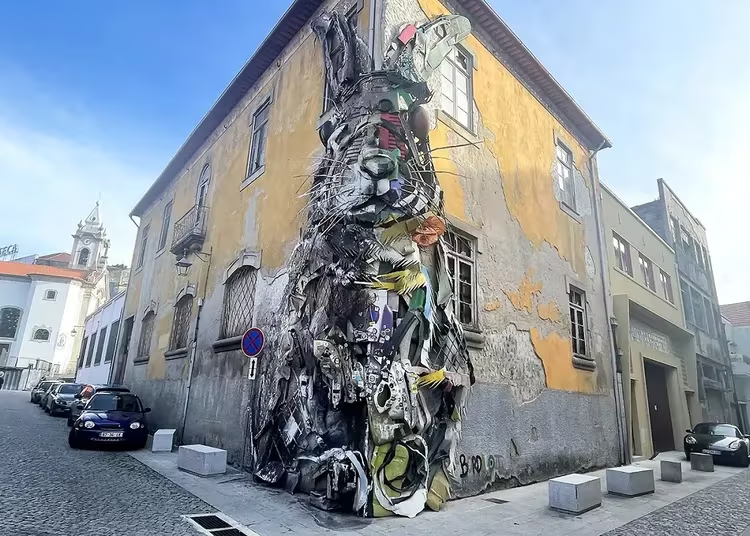
E. Port wine cellars
The main producers of port wine are stored on this shore: Taylor's Port, Caves Ferreira, Caves Cálem, Sandeman, as well as several smaller companies.
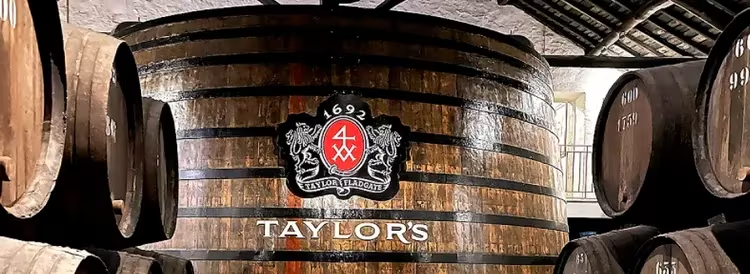
There is a mark on the map with the Taylor's Port Museum because that's where I visited. But you can choose any other factory. The cost of a standard ticket with tasting is around 15-20 euros. Audio guides are provided during the excursion. Thanks to them, you will learn the history of the drink, types of port wine and the production process.
Taylor's Port Winery has its own cozy restaurant overlooking the Luis I Bridge.
Second day
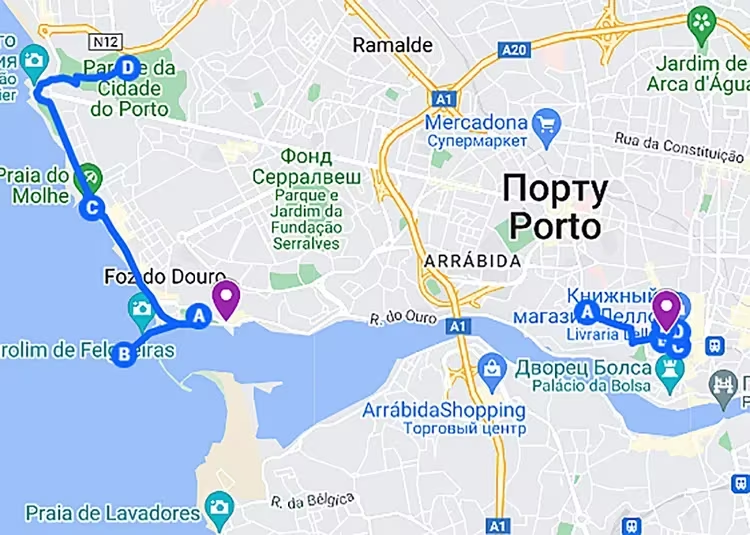
On this day, I suggest you see several parks in Porto, look into a very beautiful bookstore, take a ride on an old tram and walk along the ocean.
A. Palácio de Cristal Park
This park is located literally 2 km from the center. To save energy, I suggest getting to the starting point by bus or taxi. By the way, Uber and Bolt operate in the city – their prices are quite reasonable.
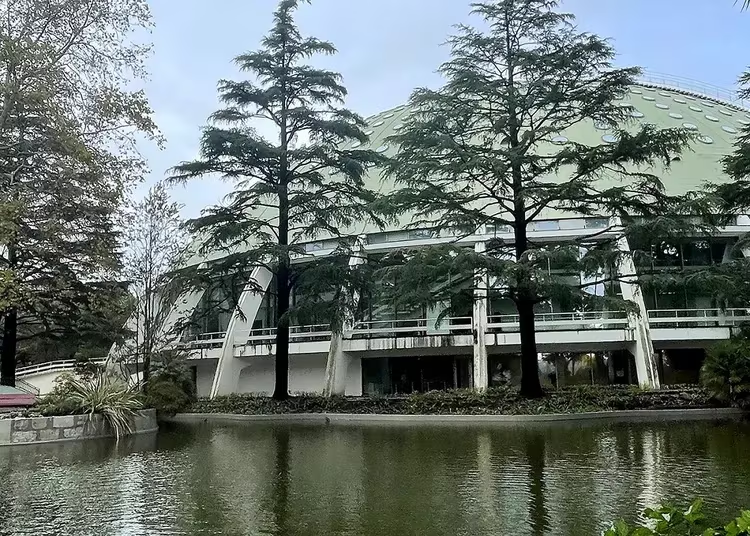
As for the Crystal Palace itself, only the name remains. Now on the site of the mansion there is a stadium with a concert venue and a food court. But the park, founded in the mid-19th century, has almost completely retained its original appearance. Beautiful alleys, flowers, ponds, fountains, sculptures, peacocks and chickens, as well as a beautiful view of the river and the city – that’s why it’s worth being here.
B. Corduaria Park (Jardim da Cordoaria)
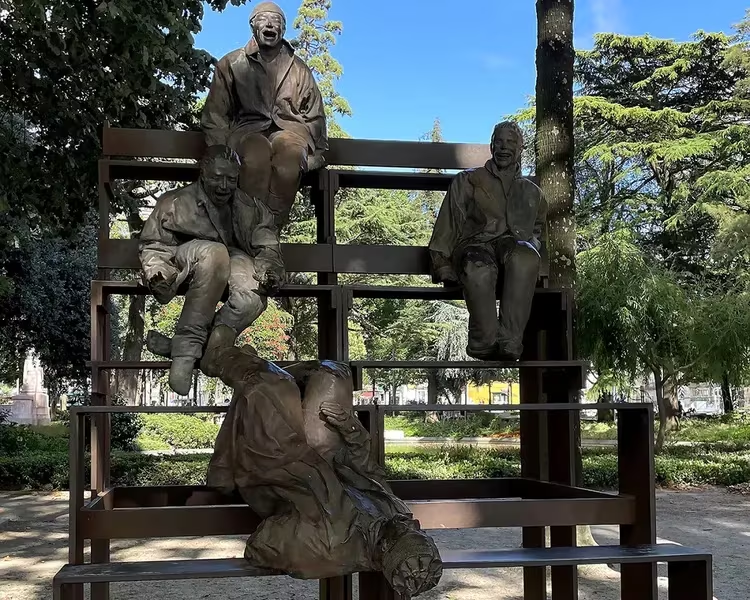
The next park area is located in the historical center of Porto. The territory is small, in the shape of a triangle. Plane trees with unusual trunks that look like bottles grow here. There are many sculptures in the garden. The episode I remember most is “Thirteen People Laughing at Each Other.”
C. Church and Tower of Clérigos (Igreja e Torre dos Clérigos)
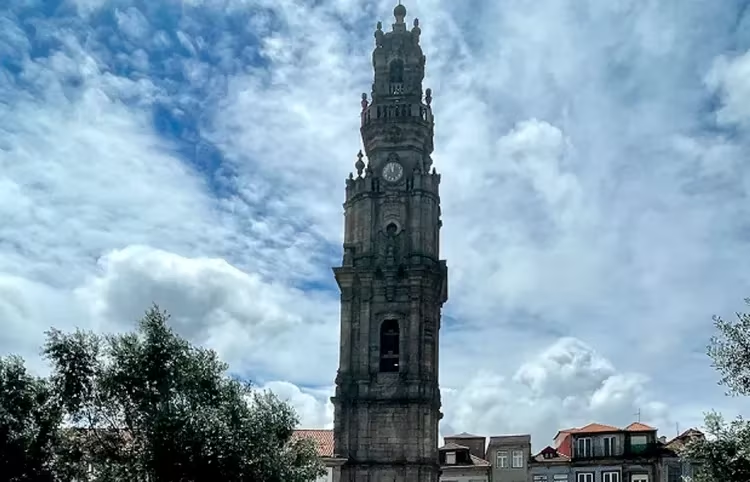
Near the park there is a landmark that you will definitely have noticed from afar – the Clérigos Tower. Its height is 76 meters. Previously, the town hall was the tallest building and a landmark for ships arriving in Porto. Even now, with such dense development of the city, it can be seen from almost any point. The tower is the bell tower of the temple. You can climb it if you are willing to climb 240 steps along a narrow spiral staircase for the sake of the Porto panorama.
The Clérigos complex was built in the 18th century. The temple itself is made in the Baroque style, which means: outside and inside it is richly decorated with reliefs and statues.
D. Bookstore ” Lello and Sons ” (Livraria Lello)
See the queue at the entrance? Get into it. While you wait, go to the store’s website and purchase an e-ticket. Book “Lello” is also a museum, the cost of entry to which when purchasing printed publications is deducted from the receipt.
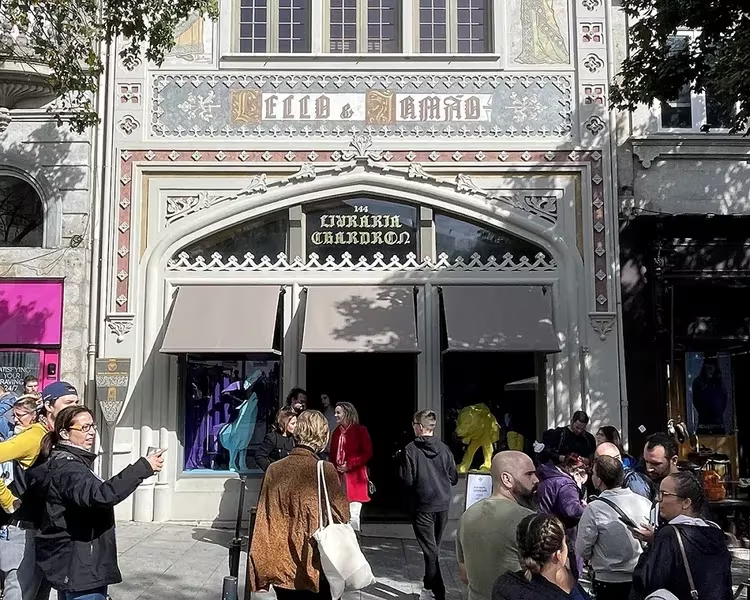
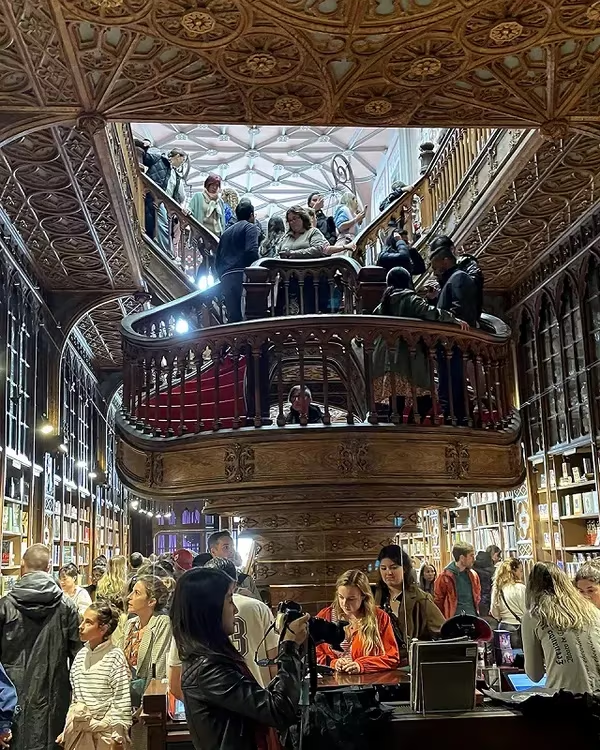
The architecture and decor of this place is just bomb. It was like being in Hogwarts. Do you know what's most interesting? JK Rowling visited here when she worked as an English teacher in Porto. There are many of her books on the store shelves, because Harry Potter fans have chosen “Lello” as a place of pilgrimage. Thanks to them, the store became so famous. Now there is a real anthill inside, and there is a long line at the entrance.
“Lello” is over a hundred years old. A luxurious facade, a curved staircase, skillful wood carvings, a stained glass window on the ceiling and a lot of freshly smelling books in beautiful covers – how can you resist? I didn’t intend to buy anything, but among the Portuguese publications I found “The Little Prince” in English and took it as a souvenir from Porto.
E. Churches of Carmo and Carmelites (Igreja do Carmo, Igreja dos Carmelitas)
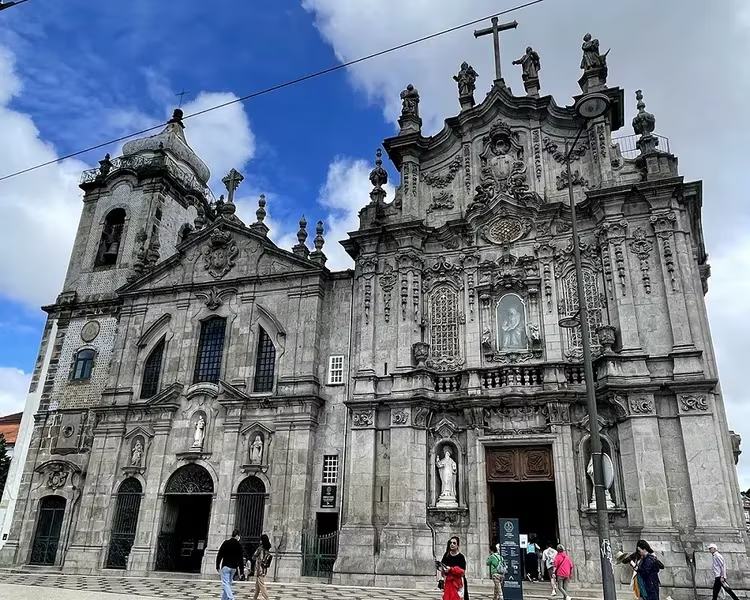
Walking around the University of Porto, you will see the Lions Fountain. At the end of the 19th century it supplied this part of the city with water. Across the road from the fountain are the temples of Karmu and Carmelites. Yes, yes, this is not one large building, but two separate ones, connected by the narrowest house – its width is only one meter.
Part of the complex appeared in the 17th century, the second was built in the 18th. The front façade is quite austere, but the side façade is decorated with azulejos. The interior is in Baroque style: with gilding and an abundance of decoration, which is very rich by Portuguese standards.
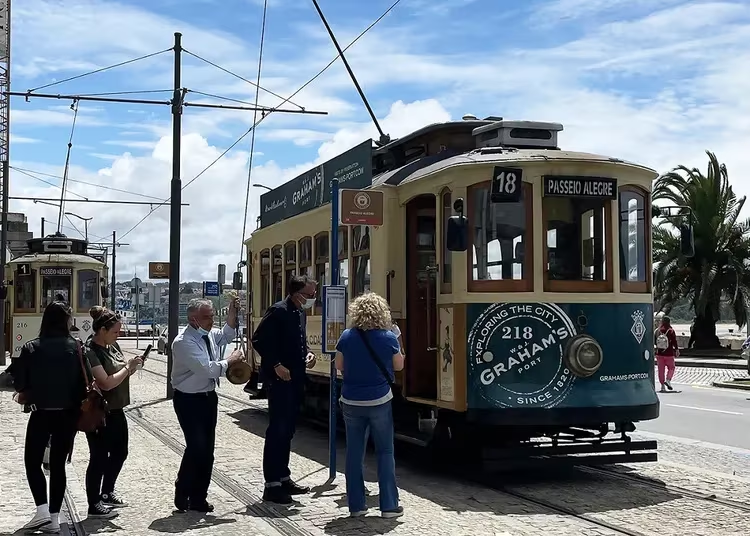
You are near the square with tracks for retro trams. They have been driving around the city since the 19th century. Inside, the yellow trams are decorated with wood panels, there is a lot of brass in the decor, the seats are upholstered in leather – well, very atmospheric!
The ticket is purchased from the driver. Ask him if the tram will take you to Passeio Alegre. They write on the Internet that route 18 does not go there, but I got there on it. The path to the ocean ran along the river.
A. Park Passeio Alegre (Jardim do Passeio Alegre)
You will walk towards the ocean through this park. In addition to Canary palms, Norfolk pines and other natural beauties, an interesting public toilet from 1910, decorated with a stove and utensils in the Art Nouveau style, is also interesting here.
B. Lighthouse of Barra do Douro (Farolim da Barra do Douro)
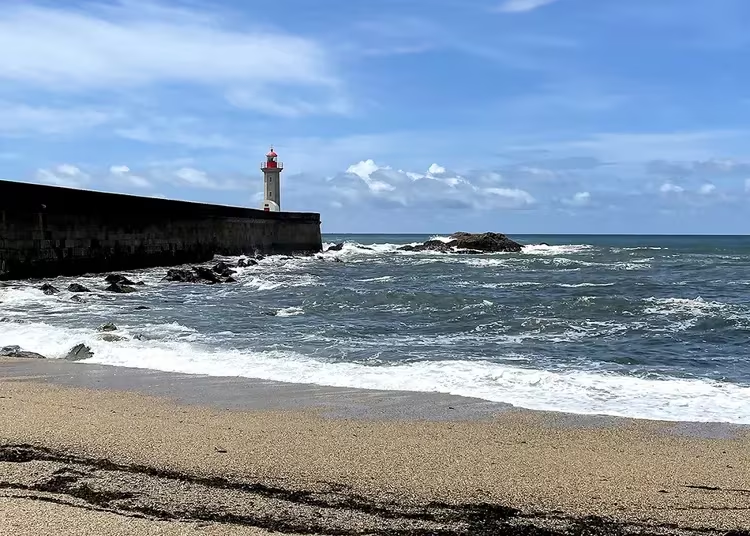
This navigational landmark, only 10 meters high, was built at the end of the 18th century. It has not worked since 2009. On one side of the lighthouse you will see the powerful waves of the Atlantic crashing against the rocks, and on the other there is calm: a calm meeting of the ocean and the Douro River.
The embankment near the lighthouse has delicate pebbles. Walking barefoot on it is an incredible pleasure, the best massage for the feet. Further on there will be both rocky and sandy beaches. If the weather permits, you can swim in the cool ocean. In Porto it's raining or sunny – be prepared for it.
C. Pergola da Foz
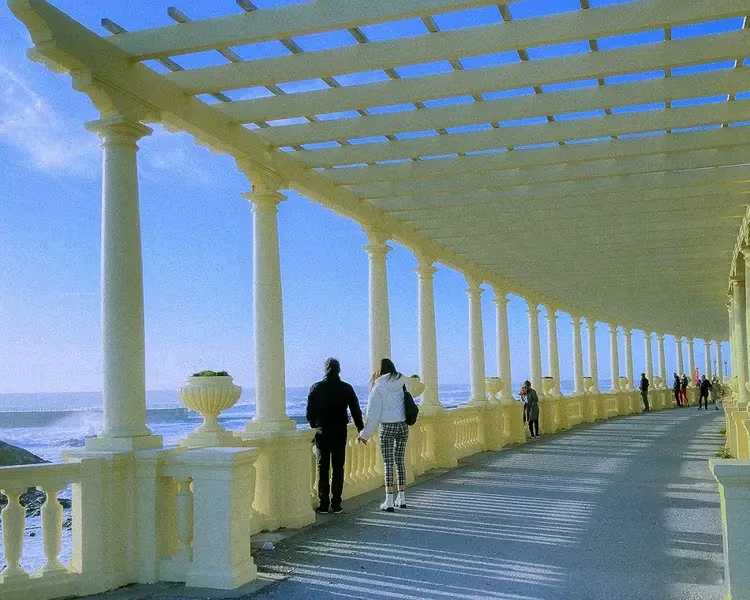
On the embankment you will come across a gazebo with a balustrade. This decoration was built here in the 30s of the last century. In 2008, during reconstruction, the walls of the pergola were covered with special paint, which allows graffiti to be washed off with a stream of water and a broom – the administration is against modernizing this monument.
Here, if you want, you can finish your route, admiring how the sun sinks into the ocean.
D. Porto City Park (Parque da Cidade do Porto)
If sunset is still far away, take a walk along the embankment to the main city park – it’s a little more than 2 km. There is an aquarium at the entrance. You can visit it. And then you will find the largest forested area in Porto: 83 hectares of green lawns, trees and ponds, with about 10 km of pedestrian paths.